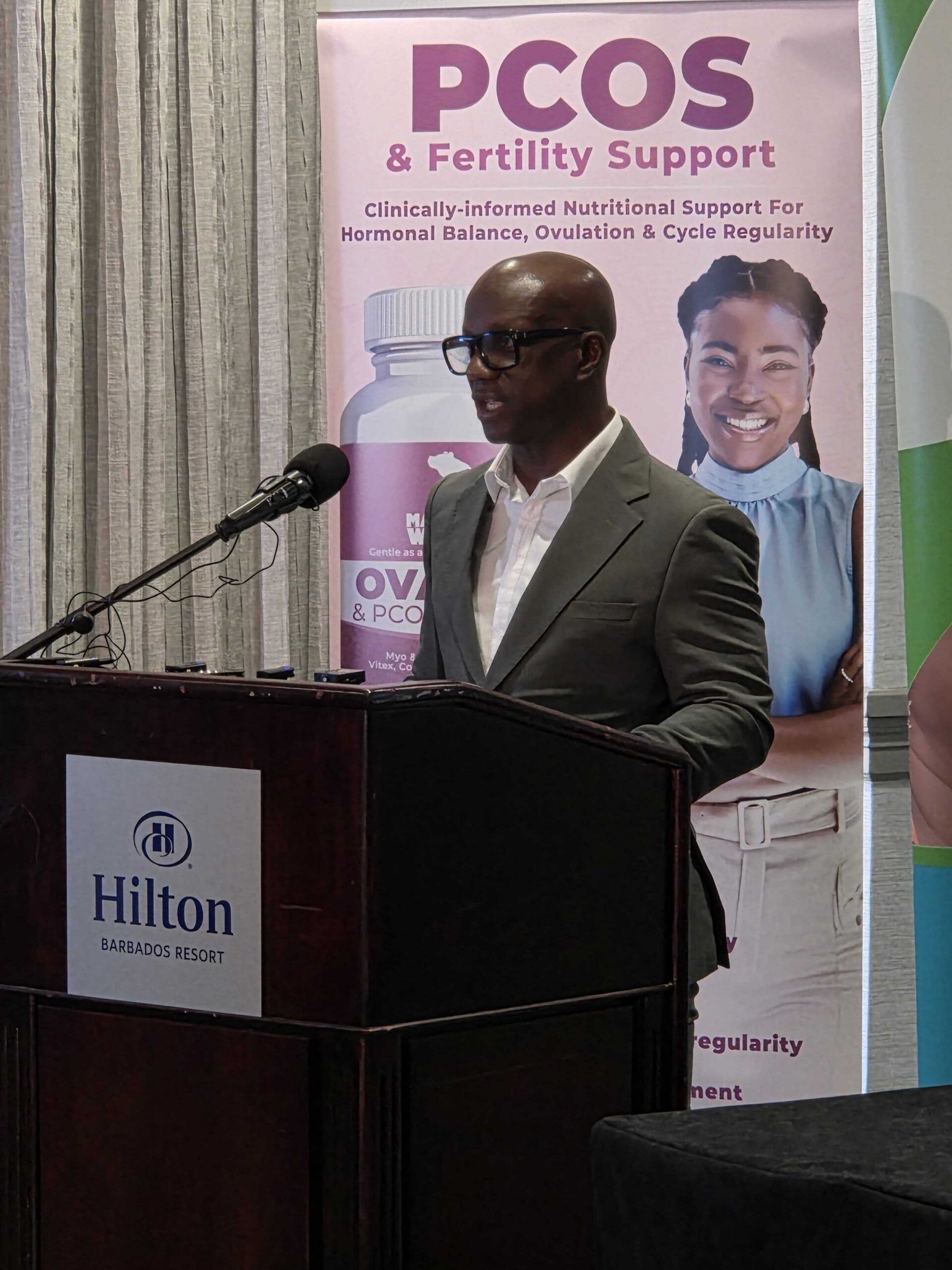
Barbados’ Technical and Vocational Education and Training (TVET) Council has launched its first-ever national health and wellness conference, launching a targeted effort to strengthen the country’s healthcare workforce to address two pressing public health challenges: a rapidly ageing population and a growing epidemic of non-communicable diseases (NCDs).
The three-day high-level forum, which kicked off Wednesday at the Hilton Barbados under the theme “Health, Education, and Promotion: Developing a Workforce that Supports Society and Ageing”, has drawn cross-sector participation from top government policymakers, post-secondary education leaders, and healthcare industry stakeholders to collaborate on workforce upskilling solutions.
At the core of the conference is an urgent goal: accelerating skills development for allied health practitioners and paraprofessional healthcare workers, who form a critical frontline in responding to the dual public health pressures currently facing Barbados. Official data highlighted at the event shows NCDs already account for approximately 80 percent of all deaths recorded on the island, making the need for workforce adaptation increasingly pressing.
Opening the gathering, TVET Council Chairman Dr. Albert Best emphasized that the conference is far more than a conventional industry event—it represents a targeted policy intervention aligned with Barbados’ evolving social needs. He noted the initiative marks a key expansion of the council’s core mandate, bringing together aligned stakeholders who share the core understanding that population health and wellness are foundational to national economic growth, labor productivity, and overall quality of life for Barbadians.
Dr. Best outlined the clear, urgent rationale for the gathering: Barbados’ demographic landscape is shifting rapidly, with residents enjoying longer life expectancies while simultaneously facing widespread, persistent lifestyle-related health risks. Currently, more than one-third of Barbadian adults live with hypertension, and nearly two-thirds of the adult population is classified as overweight or obese. These public health challenges cost the country hundreds of millions of dollars in lost economic productivity each year, placing direct strain on both public institutions and private businesses.
In response to this gap, the TVET Council designed the conference to advance the development of a skilled, adaptive, and forward-looking health and wellness workforce, with a specific focus on paraprofessionals and allied health practitioners. These workers, Dr. Best explained, play an irreplaceable role in closing gaps in patient care, community health education, and public outreach that would otherwise go unfilled by the existing primary care system.
“This conference is therefore not simply an event; it is an intervention. It reflects our commitment to ensuring that training remains relevant, practical and align with the realities of our society,” Dr. Best told attendees.
TVET Council Executive Director Henderson Eastman expanded on the connection between workforce health and national economic performance during his address, noting that employee absenteeism stemming from unaddressed chronic illness has a severe, measurable impact on institutional output. On days when a large share of staff are out sick, production levels drop directly, hitting the bottom lines of both public sector agencies and private sector businesses.
Eastman also noted that the rapid pace of technological and social change in recent decades has outmoded older approaches to vocational skills training and qualifications, requiring new, flexible approaches to workforce development. He echoed Dr. Best’s framing of the conference as a deliberate intervention, rather than a routine industry gathering, explaining that it aligns with the TVET Council’s core mission to oversee the development, coordination, and quality assurance of technical vocational training across Barbados, with a consistent focus on applied learning that equips people with practical skills for employment and entrepreneurship.
The event also forms a key pillar of the council’s long-term strategy to expand continuous professional development (CPD) opportunities and modernize skills certification processes across all sectors of the Barbadian economy. Eastman emphasized that conferences are far more than platforms for information sharing—they are powerful tools for lifelong learning and continuous professional development, occupying a unique space where theoretical knowledge meets real-world practical application, policy design meets on-the-ground implementation, and reflective analysis meets actionable change.
In today’s fast-evolving labor market, where new skills are required almost as quickly as new job roles are defined, the outdated model of “one and done” post-secondary education no longer meets the needs of workers or employers, Eastman argued. Instead, Barbados must fully embrace a culture of continuous, structured, measurable skills upgrading across all industries.
Over the course of the three-day event, attendees will dive into a range of priority topics, including the full scale of the NCD crisis across the Caribbean region, expanding access to high-quality home-based care for ageing patients, addressing gender-specific gaps in men’s and women’s health, and integrating new digital technologies that allow families to remotely monitor the health and safety of elderly relatives.
The event’s agenda will shift from closed-door policy and stakeholder discussions to public community outreach on Saturday, when it will host an interactive Open Day for Barbadian families to connect directly with local health practitioners and access free wellness resources. The conference will conclude on Sunday with an industry dinner and awards ceremony to recognize outstanding contributions and excellence across the Barbadian health and wellness sector.