博客

  • interCaribbean Airways dedicates aircraft Spirit of Turks and Caicos Islands

    interCaribbean Airways dedicates aircraft Spirit of Turks and Caicos Islands

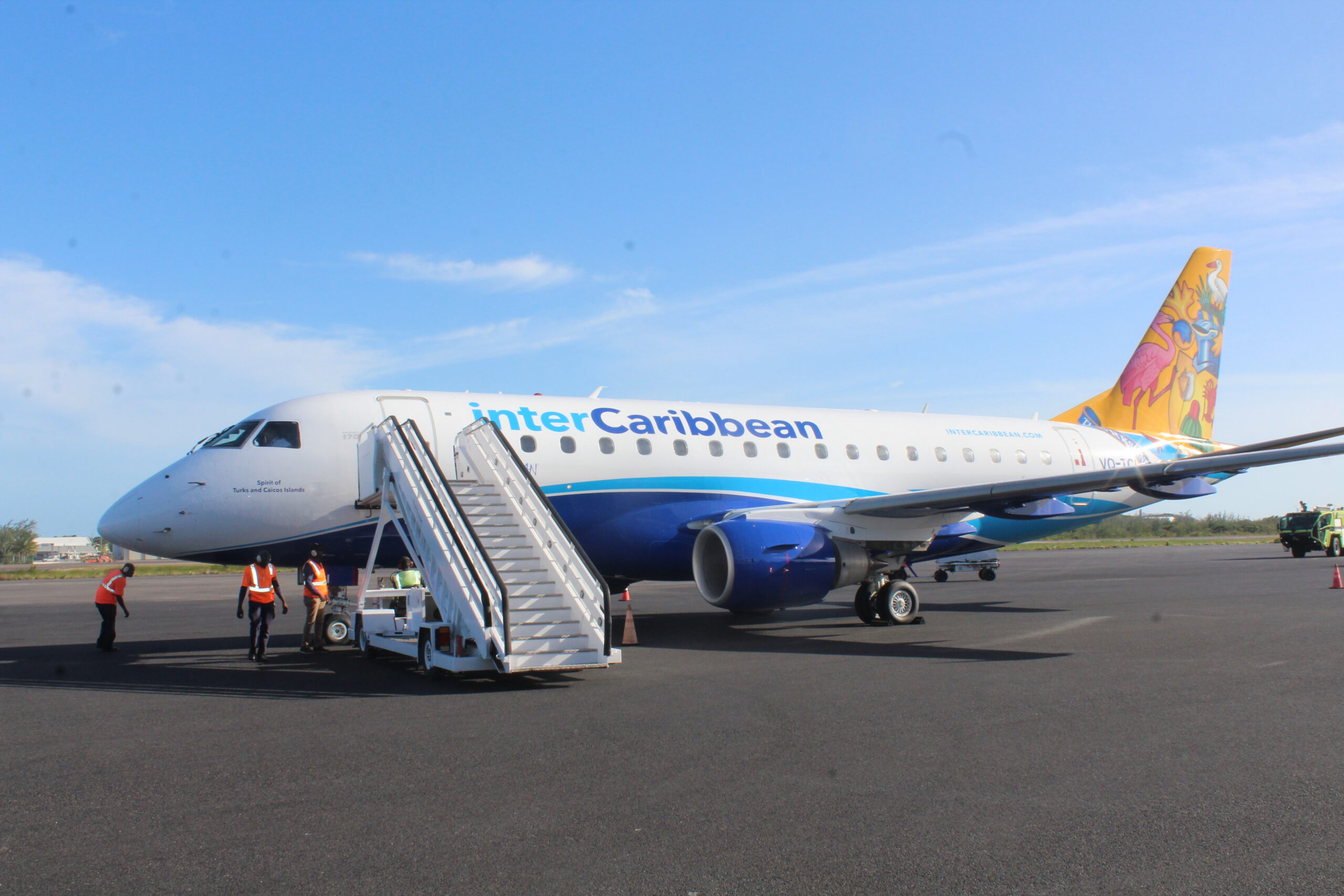
    In a landmark celebration of local heritage and corporate growth, interCaribbean Airways has debuted its uniquely customized Embraer E170 jet, registered as VQ-TCI, at the airline’s primary base in Providenciales, Turks and Caicos Islands. The aircraft bears the official name “Spirit of Turks and Caicos Islands” emblazoned across its nose, while the iconic coat of arms of the island nation adorns its tail, turning the commercial jet into a flying symbol of national identity for the carrier that calls the archipelago its founding home.

    The special dedication ceremony drew key senior leadership from both the public and private sectors. Attendees included Turks and Caicos Islands Premier Charles Washington Misick, the full cabinet of the local government, interCaribbean Chairman Lyndon Gardiner, and Chief Executive Officer Trevor Sadler. In a traditional warm welcome for new aircraft, the Turks and Caicos Airport Authority (TCIAA) greeted the jet with a ceremonial water cannon salute as it taxied into position in front of the gathered crowd of government officials, tourism industry leaders, and aviation stakeholders.

    For Chairman Gardiner, the rollout of the airline’s first ERJ170 marked a deeply meaningful milestone in the company’s ongoing fleet expansion. “We have named aircraft for individual destinations across our entire network for years, but this one carries the flag of the islands where interCaribbean was born and still calls home,” Gardiner explained during the ceremony. “Every time it takes off, it will carry the pride of these islands and our promise to connect the Turks and Caicos to the wider Caribbean through its culture, community and cuisine.”

    The event doubled as a tribute to interCaribbean’s decades-long roots in the Turks and Caicos, highlighting the airline’s central role in linking the archipelago to neighboring Caribbean markets and communities. The newly unveiled jet will operate across interCaribbean’s full route network, serving as a roaming ambassador for the Turks and Caicos Islands and its residents. This aircraft is the latest addition to the airline’s collection of custom “Spirit of” branded jets, which already honor other Caribbean nations including Grenada, St Kitts and Nevis, Guyana, and Barbados, each representing the airline’s deep ties to communities across the region.

    Founded and headquartered in the Turks and Caicos Islands, interCaribbean is a privately owned and operated regional carrier registered under the United Kingdom flag. Its modern mixed fleet includes Embraer E170 jets, 50-seat Embraer ERJ145 regional jets, 70-seat Bombardier CRJ700 aircraft, and a range of turboprop planes: 68-seat ATR72s, 48-seat ATR42s, 30-seat EMB120s, and 19-seat Twin Otters. Today, the airline’s network spans 28 cities across 17 Caribbean nations, reaching from Georgetown, Guyana in the south to Barbados in the east, Havana, Cuba in the west, and Nassau, Bahamas in the north. Travelers can find more information or book flights directly through the airline’s official website, interCaribbean.com.

  • World Cup’s New Hydration Breaks Spark Global Debate

    World Cup’s New Hydration Breaks Spark Global Debate

    As the 2026 FIFA World Cup unfolds across North America, it has already delivered no shortage of breathtaking goals, tense on-pitch drama, and iconic moments that have captured the attention of football fans worldwide. Yet far from the action of penalty shootouts and last-minute winning goals, one unexpected off-pitch issue has become the tournament’s most divisive talking point barely a week into the competition.

    The source of the heated debate is FIFA’s new mandatory hydration break policy, rolled out as a flagship player welfare initiative for this summer’s tournament. The rule requires play to stop for three minutes at the midpoint of each half of every match, giving players a scheduled window to replenish fluids and lower their core body temperatures amid the typically hot and humid summer conditions common across host cities in the United States, Canada, and Mexico.

    FIFA has defended the policy as a evidence-based measure to protect athlete health. The initiative has also received public backing from leading sports medicine and health experts, who have long warned of the risks of heat exhaustion and heat-related illness for elite footballers competing in high temperatures.

    But critics have quickly pushed back against the universal application of the rule, pointing out that the mandatory breaks are enforced for every fixture regardless of actual on-site weather conditions. Critics highlight recent matches played in far more moderate conditions, including a Toronto game where temperatures hovered around a comfortable 19 degrees Celsius. Even matches held in fully enclosed, climate-controlled stadiums are required to take the three-minute breaks, a quirk of the policy that has led many observers to question whether player welfare is the only driving force behind the new rule.

    A key point of contention is the structural impact of the breaks on match flow: the mid-half stoppages effectively split the traditional 45-minute halves into two distinct segments, turning the standard 90-minute match into four implicit quarters. This restructuring creates extra natural stoppages that television broadcasters can leverage for additional commercial advertising, and major network partners—particularly those in the large U.S. broadcast market—have already moved to capitalize on the extra airtime.

    This has fueled widespread speculation and concern that commercial revenue interests, rather than just athlete safety, have shaped the new policy. Despite the growing backlash from players, coaches, fans, and pundits alike, FIFA has given no public signal that it plans to review or adjust the rule for the remainder of the 2026 tournament.

  • President bij bevordering 150 militairen: Hogere rang, grotere verantwoordelijkheid

    President bij bevordering 150 militairen: Hogere rang, grotere verantwoordelijkheid

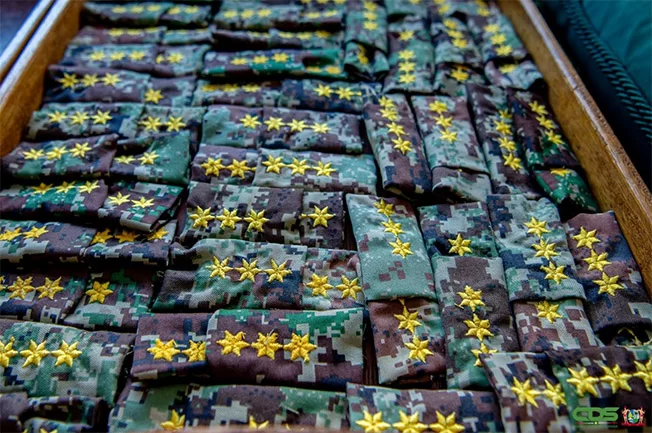
    On June 18, a major milestone ceremony was held for the National Army of Suriname, where more than 150 active-duty service members received promotions to the next higher rank in their military careers.

    Leading the ceremony, President Jennifer Simons, who also holds the position of Supreme Commander of the Surinamese Armed Forces, opened her remarks by framing the promotions as a formal state recognition of the consistent dedication, unwavering discipline, loyal service, courage and proven competence that these soldiers have demonstrated while serving the nation and its people.

    According to official statements released by the Suriname Communication Service, Simons emphasized that a military promotion carries far more meaning than simply wearing an upgraded rank insignia. “You have carried the core values of discipline, loyalty and courage with dignity throughout your service in the National Army,” she told the promoted service members. “Today, you advance to a new rank, and I congratulate you on this well-earned step forward in your careers.”

    The president also highlighted that the promotions reflect not only the professional growth of the individual soldiers, but also the constant personal sacrifices that service members and their families make on a daily basis to support national security. “When we see the men and women in green uniform, we do not always stop to acknowledge the person and the waiting family behind the uniform,” she added.

    Simons went on to stress that higher rank brings with it expanded responsibilities for the military personnel. “With your new rank, your authority increases, but so does the weight of accountability placed on your shoulders,” she said. “Higher expectations are placed on you now in terms of leadership and decisive decision-making. A higher rank also means a higher standard of duty to the nation.”

    She also publicly acknowledged the challenging working conditions that Surinamese soldiers face in their day-to-day service. “We know you operate under difficult circumstances, with limited resources at your disposal. Many of you are stationed deep in the country’s interior, far away from your loved ones for long stretches. The government is fully aware of these hardships, and we will never leave you or Suriname behind,” she assured the assembled service members.

    Per Simons, the Surinamese government has made a formal commitment to strengthening the country’s security institutions across both personnel and material infrastructure. A key part of this ongoing effort is improving the legal and employment status of active-duty military personnel. “Legal job security is the foundation for service stability, unity and motivation among our ranks,” she explained. “Our goal is clear: sustainable institutional strengthening and long-term capacity building for our armed forces.”

    Defense Minister Uraiqit Ramsaran echoed the president’s remarks, adding that the current round of promotions is part of a deliberate, step-by-step strategy to address long-standing backlogs in military career advancement. “This is not an isolated, one-off process,” Ramsaran noted. “It is a deliberate approach to deliver justice to our personnel, and to address existing backlogs one step at a time — not just with empty words, but with tangible, visible results that service members can see.”

    Closing the event, the minister called on all newly promoted soldiers to continue their dedicated service to advance the development of a strong, forward-looking defense organization that remains fully committed to serving Suriname and its population.

  • Neil Corbin leads BRC Driver’s Championship after mid-season shake-up

    Neil Corbin leads BRC Driver’s Championship after mid-season shake-up

    The Barbados Rally Club’s 202X Driver’s Championship has seen a dramatic reshuffling of the leaderboard following the completion of rounds four through six of its nine-round series, catapulting two-time former champion Neil Corbin into the sole top spot. The two back-to-back May events – the First Citizens King of the Hill on May 24 and the three-day BCIC RB26 rally held May 29 to 31 – proved to be a turning point for the season, where mechanical unreliability and sudden component failures altered the competitive landscape more than any driver could have predicted.

    Heading into this critical stretch of the racing calendar, Neil Corbin was locked in a three-way tie for first place, sharing the summit with fellow Barbadian driver Edward Corbin and Antiguan contender Stewart Gordon. What looked set to be a tight three-way battle for the lead quickly unraveled for his co-leaders, however. Edward Corbin was sidelined by a catastrophic engine blow partway through the BCIC RB26, while Gordon saw his title challenge fall apart after a string of unrelated mechanical and on-track setbacks. Both former top contenders, along with multiple other high-ranking drivers, slipped completely out of the overall top 10 in the updated standings.

    Now, Corbin holds a comfortable 13-point advantage over his nearest challenger, having notched a perfect 101 points from six rounds. The driver has secured a clean sweep of Modified 2 class victories in his Toyota GT86 CS-R3, holding a 100% win rate in the class so far this season. Climbing from ninth place to second overall after strong performances across the two May events is Kyle Gill. Gill has also secured a perfect record of wins in the Clubman 1 class driving his Mitsubishi Colt, though his point total has been constrained by the fact that only two drivers have entered the class in each round, resulting in reduced championship points for victories.

    The tight competition for positions below Corbin underscores the defending champion’s strong lead: only 15 points separate second-place Gill from the 10th-place driver, setting the stage for intense battles through the final three rounds of the series. Sitting just one point behind Gill in third place is rising young talent David-Anthony Balgobin, who climbed five spots from eighth place after strong results. Competing in his first full season of four-wheel-drive racing, Balgobin currently leads the Modified 4 class in his Mitsubishi Lancer Evo IX, marking his third turn leading the class standings this season.

    The only driver to retain their position in the top 10 through the recent reshuffle is Josh Read, who holds steady in fourth place overall. Piloting his Ford Fiesta Rally2, Read is currently the highest-scoring competitor in the FIA R5 class this season, with 73 total points. He holds a three-point lead over SuperModified 2 class leader Barry Mayers, who drives a Fiesta and is the highest-ranked of five new entrants to the overall top 10. Jamaican driver Kyle Gregg, who also pilots a Fiesta Rally2, dropped one position from fifth to sixth with 69 points.

    Rounding out the new top 10 are four drivers who climbed into the top ranking after the May rounds: Sean Corbin sits seventh with 68 points in his BMW 318ti Compact, currently second in the Modified 2 class behind Neil Corbin. Rally2 competitors Adam Mallalieu (Fiesta) and Stuart Maloney (Skoda Fabia RS) are tied for eighth place on 64 points each, while Jermin Pope completes the top 10 in 10th with 62 points, driving his Modified 2-class Honda Civic. With just three rounds remaining in the series, all eyes are on Corbin as he looks to defend his lead and secure a third championship title.

  • STATEMENT: Message from NCCU Chief Operations Officer (COO) on Ethics and Speak Up Culture Day – Risk & Compliance Week 2026

    STATEMENT: Message from NCCU Chief Operations Officer (COO) on Ethics and Speak Up Culture Day – Risk & Compliance Week 2026

    As the global financial cooperative community marks Compliance Week, leadership at NCCU Credit Union has delivered a message centered on elevating integrity as the foundational pillar of its member-focused mission. In an audio address released to the credit union’s membership, organizational leaders framed common conversations around integrity as more than just a box-ticking exercise for regulatory rules and compliance protocols.

    At its core, the address argues, integrity is inextricably tied to the trust that forms the backbone of every successful member-owned financial institution. Every single day, NCCU’s thousands of members place immense faith in the cooperative: they entrust the institution with their hard-earned savings, sensitive personal financial data, and long-term goals that range from homeownership to retirement planning. This entrustment, NCCU leadership emphasizes, carries a non-negotiable responsibility that sits at the top of the institution’s priorities. Upholding that responsibility ensures members can always feel secure knowing their credit union acts first and foremost to advance their individual and collective financial well-being.

    Importantly, the address frames integrity as a shared commitment rather than an obligation placed solely on institutional leadership. For the credit union itself, upholding this value means maintaining strict confidentiality around member data, full transparency around fees, policies and operations, and unwavering accountability to the membership that owns the cooperative. For individual members, upholding shared integrity means submitting accurate personal information when accessing services, proactively safeguarding their account credentials against fraud, and using the cooperative’s financial products responsibly to protect the entire community’s financial health.

    As the credit union observes this year’s Compliance Week, NCCU called on both leadership and members to reaffirm their commitment to this core value. Rather than positioning integrity as a mandatory regulatory requirement to satisfy, the message reminds all stakeholders that it is a living value that protects members from harm, strengthens the cooperative’s long-term stability, and ensures NCCU remains an institution that every stakeholder can be proud to be part of.

    Closing the address, leadership thanked the NCCU membership for their ongoing trust and collaborative partnership, noting that collective commitment to integrity will remain the driving force behind building a stronger, more resilient credit union for years to come.

  • Study Finds HPV Vaccine Can Nearly Eliminate Cervical Cancer Deaths

    Study Finds HPV Vaccine Can Nearly Eliminate Cervical Cancer Deaths

    A groundbreaking long-term study conducted by public health researchers in the United Kingdom has delivered transformative evidence that vaccination against human papillomavirus (HPV) given to 12 to 13-year-old girls cuts the risk of death from cervical cancer before age 30 to nearly zero. This research, the first of its scope to measure real-world population-level outcomes of national HPV vaccination programs, documents a historic public health milestone: between 2020 and 2024, there were zero recorded deaths from cervical cancer among women aged 20 to 24 in England, marking the first five-year period without any fatalities from the disease in this age group.

    Study projections indicate that without the national rollout of HPV vaccination that launched in 2008, roughly 23 deaths from cervical cancer would have occurred in this demographic over the five-year window. Cumulatively, researchers estimate that the program has already saved approximately 200 lives across England in the 18 years since school-based vaccination began. Lead researcher Professor Peter Sasieni of Queen Mary University of London called the results extraordinary, noting that it is rare for a single preventive intervention to come so close to eradicating a major form of cancer.

    Medical science has long confirmed that HPV, a common virus spread through close skin-to-skin intimate contact, is responsible for 99% of all cervical cancer cases. While most HPV infections resolve on their own without medical intervention, persistent infections can trigger abnormal cellular changes that develop into invasive cancer decades after the initial exposure, making early vaccination before sexual activity begins particularly effective for long-term protection.

    The landmark findings come amid ongoing debates over HPV vaccine access in other regions, including Belize. Since 2016, Belize’s Ministry of Health has administered the HPV vaccine to more than 46,000 fourth-grade students across the country. However, the program has faced pushback from some leaders in the Catholic Church, who have blocked vaccine administration in church-run schools over unsubstantiated claims that the vaccine encourages early sexual promiscuity. Earlier this year, Belizean Health Minister Kevin Bernard issued a public appeal to church leadership to reverse their opposition, emphasizing the vaccine’s proven life-saving potential and rejecting the misinformation driving their resistance.

  • Will Minister Mira Be Suspended?

    Will Minister Mira Be Suspended?

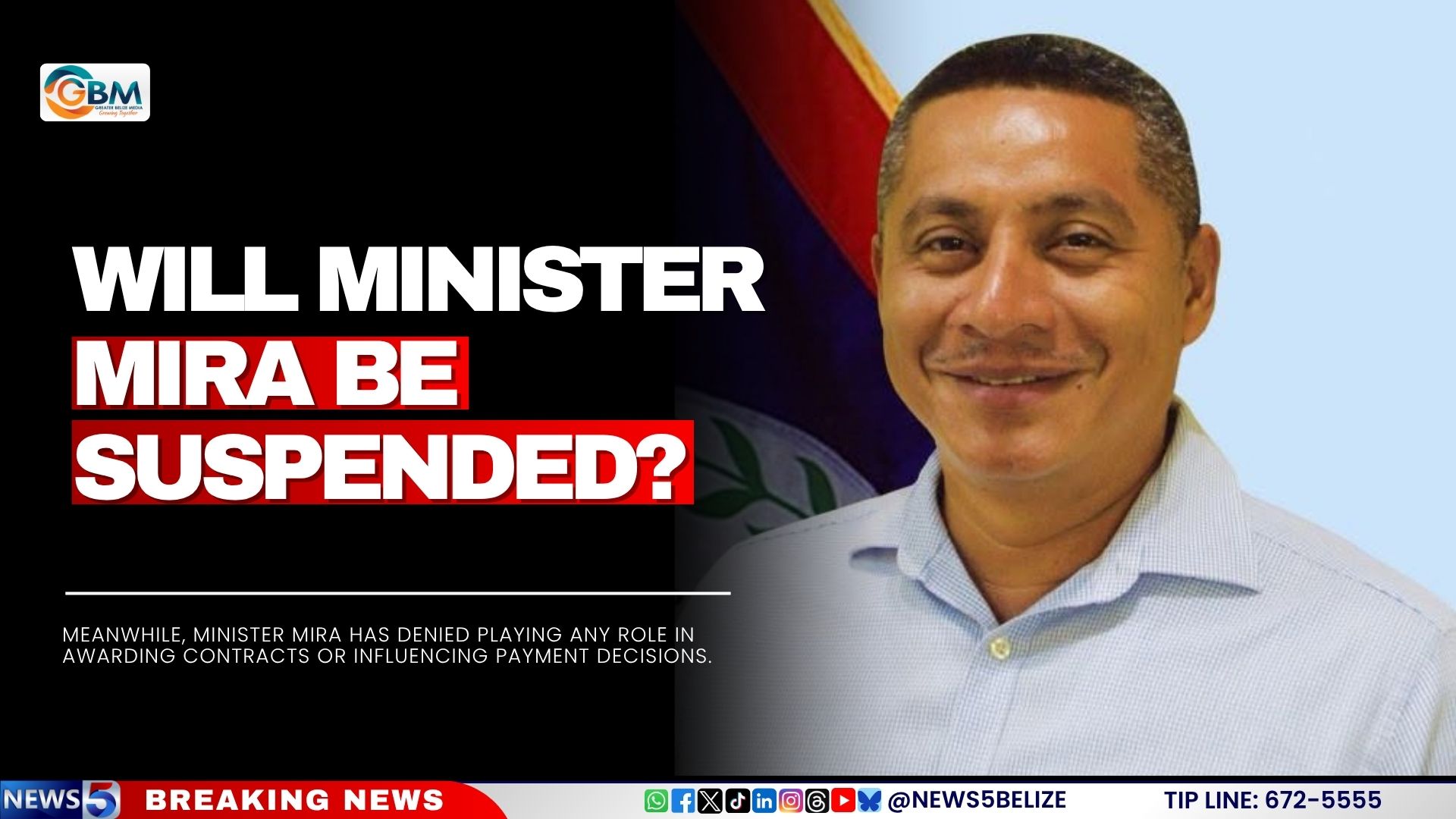
    In the wake of growing public scrutiny over hundreds of thousands of dollars in questionable state payments to enterprises connected to the family of Belizean Minister Oscar Mira, Prime Minister John Briceño has announced the launch of a fully independent review to investigate the controversial transactions.

    During an exclusive interview with CTV3 News held in Orange Walk Town, Briceño outlined that his administration will formally ask the Financial Secretary to formally request the Auditor General carry out a comprehensive audit of the time period at the center of the controversy. The core objectives of this probe are to verify whether all required public procurement protocols were strictly followed throughout the process, and to confirm that the government received fair value for every dollar disbursed through these payments. Briceño emphasized that he will not pre-judge the outcome of the independent investigation, stressing that any future administrative or disciplinary action, including the potential suspension of Minister Mira, will be determined exclusively by the audit’s final findings.

    The controversy gained new momentum after leaked internal records from government services provider Smart Stream, obtained by local outlet News Five, revealed that MP Farms — a company owned by Brian Mira, Oscar Mira’s younger brother — received 44 separate payments on September 25, 2025, adding up to a total of $389,796.85. Each individual payment was registered below the $10,000 threshold that triggers mandatory formal procurement oversight, a pattern that has sparked widespread allegations that official procurement safeguards were intentionally bypassed to avoid scrutiny.

    This latest disclosure is not an isolated incident. It follows previous public concerns over separate state payments made to Jenny Mira, Oscar Mira’s sister, as well as unconfirmed reports of a major public contract awarded to another brother, Stanley Mira. Against this backdrop, Defence Minister Florencio Marin Jr. has clarified that routine payment processing falls under the remit of career finance officers and independent procurement professionals, rather than political appointees. Marin Jr. also confirmed that the Ministry of National Defence is currently holding active discussions with the Ministry of Finance to conduct a full review of existing procurement procedures, with the goal of closing any existing loopholes that could enable abuse.

    For his part, Minister Mira has issued a categorical denial of any wrongdoing. He has repeatedly stated that he never intervened in the contract award process or attempted to influence any payment approval decisions, noting that all public tenders are openly advertised and award decisions are the sole responsibility of independent procurement committees, not sitting cabinet ministers.

    Beyond the audit into the questionable payments, Prime Minister Briceño also announced plans to dissolve and reconstitute the full board of the Reconstruction and Development Corporation Limited (ReconDev), the state-owned development entity at the heart of the contracting allegations. The move comes amid persistent claims that members of the Mira family hold undue influence over decision-making within the organization.

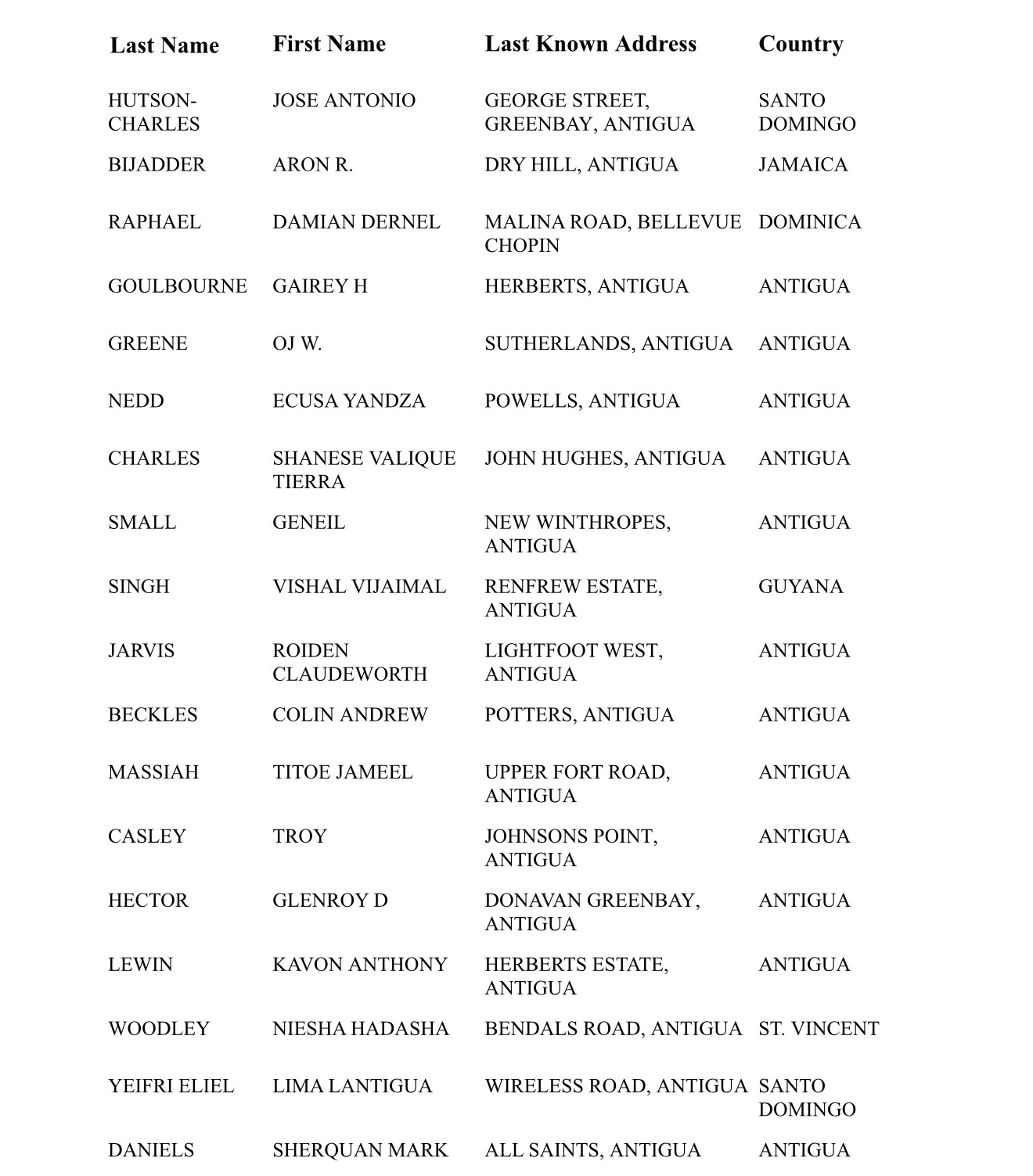
  • We are trying to reach the following persons as a matter of urgency. Are you listed below? Do you have information as to their whereabouts or how to contact these persons?Then contact 464-1977/ 464-1238

    We are trying to reach the following persons as a matter of urgency. Are you listed below? Do you have information as to their whereabouts or how to contact these persons?Then contact 464-1977/ 464-1238

    A pressing public call has been issued by authorities or organizers seeking to urgently locate a group of people that have not been named in the initial announcement. The appeal directly asks two critical questions of anyone reading or hearing the notice: first, whether the individual seeing the message is among the group being sought, and second, whether any member of the public holds details about the current location or accessible contact information for the people the organizers are trying to reach.

    No additional context about why these individuals are being sought, how many people are on the list, or what the nature of the matter requiring contact is has been released alongside the urgent appeal. The notice emphasizes that establishing connection with these people is a time-sensitive matter, meaning a prompt response from anyone with relevant information is requested. It remains unclear whether the search is related to a legal matter, a public safety issue, a family notification, or another type of urgent inquiry, as the originating body has only released the basic appeal for information to date.

  • OECS launches ‘PEARL Legacy’ campaign to sustain education transformation across the region

    OECS launches ‘PEARL Legacy’ campaign to sustain education transformation across the region

    As the official implementation phase of the Organization of Eastern Caribbean States (OECS) Programme for Educational Advancement and Relevant Learning (PEARL) approaches its June 30, 2026 end date, regional education leaders are shifting focus to cementing the initiative’s decades of progress and embedding transformative change into local education systems across the Eastern Caribbean.

    To guide this critical transition, the OECS Commission has announced the launch of a new Communication for Development (C4D) initiative named “The OECS PEARL Legacy.” The campaign marks a deliberate shift away from centralized regional project management, moving into a new era centered on local ownership and community-led progress for education across the bloc’s eight participating member states.

    Over the course of PEARL’s implementation, the programme delivered sweeping improvements to education across the Eastern Caribbean. Key achievements included targeted investments in school infrastructure, comprehensive updates to outdated curricula, landmark policy reforms for early childhood education (ECE) and special education needs (SEN) support, and the rollout of regional digital learning infrastructure to boost classroom teaching and remote learning access.

    The PEARL Legacy campaign is built on the foundation of these gains, with a core goal of transferring long-term stewardship of the programme’s improvements from regional project teams to national and local education stakeholders. The initiative engages a broad cross-section of the education ecosystem, from cabinet-level policymakers and school administrators to classroom teachers, parents, and primary caregivers, to mobilize continued action at every level of the system.

    Beyond simply preserving existing progress, the campaign frames its work as advancing “educational regeneration” — a long-term vision that lets local leadership, community innovation, and broad public participation drive continuous evolution of regional education systems. To advance this mission, the initiative centers on six clear priority areas designed to strengthen PEARL’s lasting impact:

    First, the campaign will support regional education leaders to translate overarching PEARL policy frameworks into actionable national education policies and on-the-ground initiatives. Second, it will prioritize educator wellbeing, pushing for the elimination of non-essential administrative tasks that contribute to widespread teacher burnout across the region.

    Third, the campaign will expand the role of the OECS Learning Hub, home to the bloc’s Harmonized Primary Curriculum. Leaders are positioning the platform as a culturally responsive, locally tailored alternative to generic global AI learning tools, designed specifically to meet the unique needs of OECS students and classrooms.

    Fourth, the initiative advocates for sustained long-term public and private investment in three core areas: early childhood education, special education needs programming, and curriculum and assessment infrastructure, to guarantee equitable access to opportunity for all students across the region. Fifth, it aims to reframe public perception of national and regional diagnostic assessments, shifting the narrative from these tools being seen as high-stakes evaluations to diagnostic “educational health checks” that drive student growth and systemic improvement. Sixth, the campaign will highlight the value of the MyPD teacher professional development platform, demonstrating how ongoing upskilling for educators directly translates to broader social and educational progress across the Eastern Caribbean.

    To reach diverse stakeholders across the region, the OECS Commission has developed a full suite of multi-channel outreach tools and engagement activities, including branded posters, data infographics, explanatory videos, live virtual broadcasts, stakeholder surveys, regular newsletters, and press updates. The three-month campaign will run through June, July, and August 2026, leveraging a mix of traditional and digital channels: from in-person community meetings and regional broadcast programming to social media, email campaigns, and local print newspapers, to ensure broad public access and participation.

    The launch of the PEARL Legacy initiative coincides with the upcoming OECS PEARL official close-out conference, scheduled to take place in Saint Lucia from June 24 to 26, 2026. The OECS Commission is encouraging education stakeholders and members of the public to follow official social media channels of the Commission and national education ministries across the region for the latest updates. It has also extended an open invitation to media organizations and community members to join this historic transition from a time-bound regional project to permanent, community-owned education transformation across the Eastern Caribbean.

  • Cayman Islands defeat Barbados in hard fought match

    Cayman Islands defeat Barbados in hard fought match

    On June 13, the Truman Bodden Stadium played host to a physically demanding Rugby XV showdown that ended with the Cayman Islands securing an emphatic 46–21 win over regional rival Barbados.

    Barbados arrived at the match brimming with confidence, riding a wave of dominant form from their recent regional campaign. Just two weeks prior, on May 30, the side steamrolled St Vincent and the Grenadines with a lopsided 68–0 victory, and followed that up with a tightly controlled 21–3 win over Guyana on June 6 at the iconic Historic Garrison Savannah. A major setback hit the side ahead of kickoff, however, as long-time captain Enrique Oxley was forced to miss the encounter due to an unexpected injury.

    The host nation got off to a flying start, crossing the try line within the opening minutes through winger Bryce Dean. Fly-half Harry Clark successfully converted the score, putting the Cayman Islands on the board early and setting the tone for a fast-paced contest. The first half was packed with end-to-end action, with both sides throwing everything into attacking play. When the referee blew the halftime whistle, the Cayman Islands held a narrow six-point lead, 27–21.

    The second half opened with a flurry of substitution changes from both coaching staff, as managers looked to inject fresh energy into their fatigued lineups. For the opening 12 minutes of the half, aggressive defense from both sides kept the scoreboard unchanged. It was not until the 57th minute that the Cayman Islands broke through the Barbados defensive line again, extending their advantage to 39–21.

    Over the remaining 23 minutes of play, Barbados threw everything they had at the Cayman Islands defense, launching repeated attacking waves in an attempt to close the gap. Despite relentless pressure and constant physical contact across the pitch, the side was unable to add any points to their tally in the final period. On the opposite side of the ball, Justin May, Bryce Doran and Harry Clark all added late scores for the Cayman Islands, padding the final margin to 25 points.

    Heading into the match, World Rugby rankings reflected the close parity between the two sides: Barbados sat 68th in the global rankings, while the Cayman Islands entered the contest five spots higher at 62nd, a gap that the final result on the scoreboard reflected.