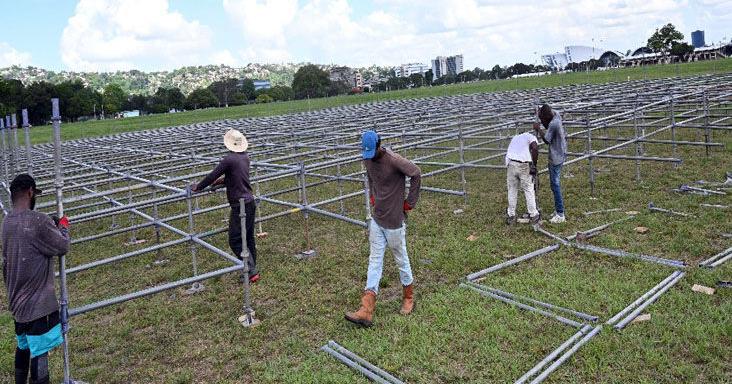
Trinidad and Tobago is set to shake up its annual Independence Day celebrations this year, with the national parade moving to a new section of the iconic Queen’s Park Savannah, directly opposite the President’s House. The shift has drawn mixed reactions from political figures, with one opposition lawmaker framing the change as a long-overdue chance to reinvent national traditions while delivering millions in taxpayer savings, and a ruling party MP raising urgent alarms over potential harm to the park’s protected green spaces.
Shadow Member of Parliament for Port of Spain North/St Ann’s West Phillip Edward Alexander confirmed the venue change for the August 31 parade in an interview with local outlet Express on Wednesday, noting that the move is not a signal of a scaled-back celebration, but rather an opportunity to test a new, more cost-effective format for the national holiday.
For decades, the Independence Day parade has been hosted on a different stretch of the Queen’s Park Savannah, with senior government dignitaries including the Prime Minister gathering at the site’s historic Grand Stand to review the procession. Last year, however, the traditional parade and accompanying fireworks display were canceled entirely after the government imposed a national state of emergency to support ongoing security operations. Officials heeding security expert advice replaced the public event with a low-key National Day of Prayer and Reflection, leaving many citizens without the iconic annual celebration.
Alexander argued that the break from tradition created the perfect opening to reimagine how the country marks its independence. He noted that the new, tree-lined venue opposite the President’s House offers naturally shaded viewing areas for spectators and a more scenic backdrop for the procession, qualities that could turn the one-time experimental change into a permanent improvement. “This could very well be a grand reinvention of the parade in a nice picturesque part of the Savannah. It is a really good location for the event. I am surprised it was not done before,” Alexander said.
Beyond aesthetic improvements, Alexander highlighted a major financial benefit to the relocation: the existing Carnival North Stand remains in place at the traditional parade route, and moving the Independence Day event eliminates the need to fully dismantle the stand ahead of the parade and rebuild it ahead of the annual Carnival celebration. Alexander estimates that this annual dismantling and reconstruction process costs the country roughly TT $5 million, a sum that can be redirected to other pressing public needs if the venue change becomes permanent. “That is a substantial saving,” he noted, adding that the new format could deliver a better experience for attendees while cutting unnecessary public spending.
Pointing to the 2026 Trinidad and Tobago Carnival as evidence that updating long-held traditions can produce positive results, Alexander noted that the government’s new free-admission Flava Village culinary and cultural hub was met with initial skepticism but quickly became a fan-favorite addition to the festival, with attendees calling for it to be hosted year-round. “Everything this government has done so far has been bigger and better than what obtained before,” Alexander said, urging citizens to approach the parade change with an open mind rather than pre-judging the new format. “Change is good. Change can be beneficial. We have been carrying on a certain way for some time and now we have the opportunity to experiment with different ways of doing things, better ways of doing things. This new location may become something we never knew we always needed,” he added, saying he is eager to see the reinvented parade come to life on August 31.
Not all political figures have welcomed the change, however. Stuart Young, the incumbent MP for Port of Spain North/St Ann’s West, took to Facebook earlier this week to raise urgent environmental concerns after observing active construction at the new parade site, including piles of construction aggregate, a steamroller, and work on what appeared to be a substantial new permanent structure.
Young called on the ruling Kamla Persad Bissessar government to provide immediate transparency around the work, asking multiple pointed questions about the project: what structure is being erected, what paving work is planned for the green space, is the construction directly tied to the relocated Independence Day parade, who is funding and carrying out the work, and what long-term impact will the development have on the Queen’s Park Savannah’s protected green areas? “The green spaces in our beloved Savannah should not be destroyed and desecrated. What is taking place? I look forward to urgent answers,” Young wrote alongside photos of the active construction site.
Port of Spain Mayor Chinua Alleyne echoed Young’s concerns, noting that any permanent damage to the Queen’s Park Savannah’s green spaces would have a lasting negative impact on capital city residents. Alleyne said he has already instructed the Port of Spain City Corporation’s leadership to launch an inquiry into the construction activity, though the section of the park where work is underway falls under the jurisdiction of the Horticultural Services Division of the Ministry of Agriculture, not the city corporation.
As of Wednesday, multiple requests for comment and information from Mayor Alleyne, Agriculture Minister Ravi Rattiram, and Defence Minister Wayne Sturge went unanswered, leaving key questions about the construction project and parade plans unresolved as the country approaches the August 31 holiday.