In the wake of the United States launching a coordinated, whole-of-government campaign to undermine and dismantle the International Criminal Court (ICC), Japan has publicly reaffirmed its unwavering commitment to supporting the tribunal’s critical operations in upholding global justice and international order.
Founded in 2002 and headquartered in The Hague, Netherlands, the ICC is the world’s first permanent international judicial body tasked with prosecuting individuals for four of the gravest crimes recognized by the international community: genocide, war crimes, crimes against humanity, and the crime of aggression. The institution traces its origins back to a 1989 proposal put forward by Arthur NR Robinson, former Prime Minister and President of Trinidad and Tobago, during a United Nations General Assembly address. Today, the ICC is led by President Tomoko Akane, a Japanese jurist elected to the role in 2024.
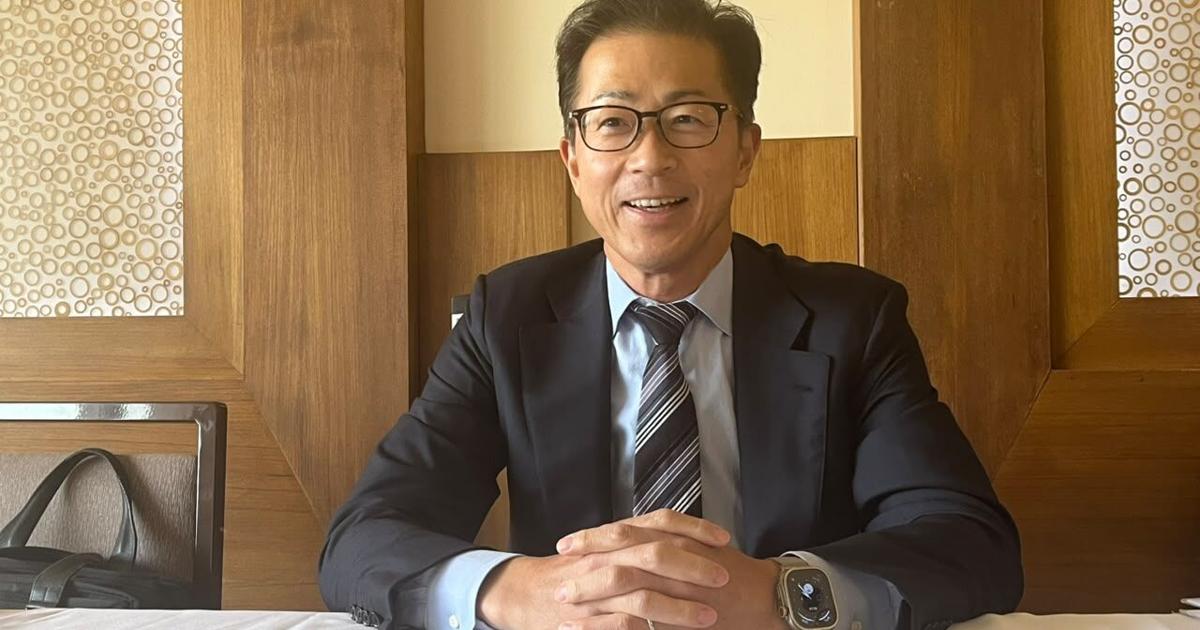
The statements of Japanese support came during an official visit to Port of Spain, the capital of Trinidad and Tobago, by Japanese Foreign Minister Toshimitsu Motegi. In remarks at the Trinidad Hilton, Toshihiro Kitamura, Director General for Press and Public Diplomacy at Japan’s Ministry of Foreign Affairs, addressed questions regarding Japan’s stance on the U.S.-led push to dismantle the court. Kitamura acknowledged that member states hold a range of differing perspectives on the ICC’s work, but emphasized the institution’s irreplaceable role in sustaining a rules-based international order.
“Japan maintains a very strong commitment to support ICC in its operation. We also maintain close discussion and communication with the US government, but at the same time, we always say to other countries that the role of ICC is very important to maintain the international order,” Kitamura said, noting the national ties through the ICC’s current Japanese president.
For Trinidad and Tobago, the connection to the ICC runs deep: as the originator of the initial proposal for a permanent global criminal tribunal, the Caribbean nation was among the first group of countries to ratify the Rome Statute, the foundational treaty that formally established the court. Even as the country has deepened bilateral alignment with the United States in recent initiatives, including joining the U.S.-led Americas Counter Cartel Coalition (ACCC) and U.S. Southern Command’s Joint Task Force Western Hemisphere (JTF-WHEM), local stakeholders have publicly pushed for Trinidad and Tobago to retain its ICC membership. This call comes in the wake of neighboring Venezuela announcing its formal withdrawal from the court earlier this year.
The U.S. campaign against the ICC was first announced in mid-July by U.S. Secretary of State Marco Rubio, who framed the tribunal as a direct threat to American sovereignty. The State Department argues the ICC has overstepped its authority by claiming jurisdiction to prosecute and imprison American service members and public officials acting in pursuit of U.S. national interests, noting that the U.S. never ratified the Rome Statute and has long rejected the court’s jurisdiction over American citizens. All U.S. presidents since the ICC’s founding have maintained this position, and the court remains under fire from Washington for refusing to close a previously opened investigation into alleged misconduct by U.S. service members and intelligence personnel.
Under the whole-of-government strategy, senior U.S. officials including Secretary Rubio, U.S. ambassadors, and other top leaders have been directed to engage with foreign governments to highlight what the U.S. frames as institutional abuses by the ICC. The administration has also called on all nations that partner with U.S. law enforcement and the U.S. military to reject the ICC’s claimed authority to prosecute American officials and service members.