博客

  • Young: Petrotrin revival could ‘sink’ T&T

    Young: Petrotrin revival could ‘sink’ T&T

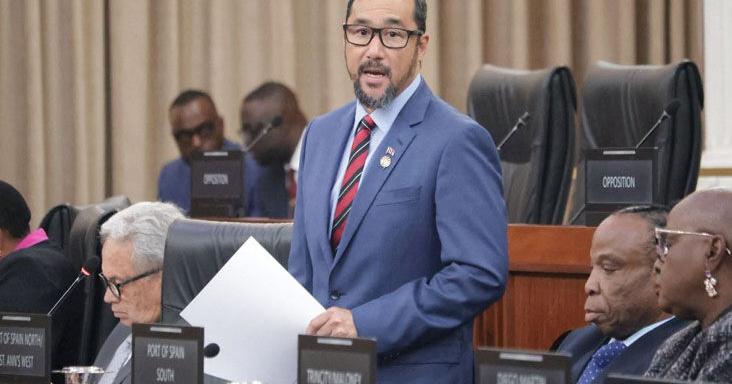
    A heated parliamentary debate over Trinidad and Tobago’s energy sector has reignited tensions over the legacy of the defunct Petrotrin refinery, as former energy minister Stuart Young has issued a stark warning that the current government’s proposal to restart operations at the shuttered facility could inflict irreversible fiscal damage on the small island nation.

    Speaking on the floor of the House of Representatives during deliberations over the 2026 Miscellaneous Provisions (Heritage Petroleum, Paria Fuel Trading and Guaracara Refining Vesting) (Amendment) Bill, Young doubled down on his defense of the 2018 restructuring of Petrotrin carried out by the former People’s National Movement (PNM) administration. He firmly rejected claims that the restructuring amounted to union busting, a charge frequently leveled by opponents of the original overhaul.

    The bill under debate would formalize the extension of all collective bargaining agreements originally signed by Petrotrin, and legally designate two state-owned holding companies, Heritage Petroleum Company Ltd and Paria Fuel Trading Company Ltd, as the official successors to Petrotrin for the purposes of these agreements and the country’s Industrial Relations Act. The legislation paves the way for the current government’s campaign promise to bring the idled refinery back online.

    Young pushed back against the plan, arguing that Trinidad and Tobago simply cannot shoulder the massive financial burden that the refinery would place on public coffers. He emphasized that the PNM never permanently closed Petrotrin – instead, it split the struggling entity into separate holding companies to manage its viable assets, isolating the refinery’s crippling debts and operational inefficiencies.

    He criticized the current government for ramming the legislation through parliament, scheduling the debate just one day ahead of Labour Day with what he called empty, voter-pleasing rhetoric. Young explained that even at the time of restructuring, the refinery was draining Petrotrin’s resources: the facility was losing between $5 and $6 US dollars for every single barrel of crude it processed, a gap that could not be sustained by public finances. Compounding these operational challenges, Trinidad and Tobago’s own domestic oil reserves have been in steady decline for years, forcing the refinery to import roughly 120,000 barrels of crude per day to keep operating, adding even more to its costs.

    Outlining the scale of the refinery’s unsustainable losses, Young noted that the facility racked up $4.3 billion in losses in 2016 alone, and accumulated a total of $5.9 billion in red ink over the three years leading up to restructuring. In contrast, he pointed out that Heritage and Paria – the two companies that took over Petrotrin’s viable upstream and midstream assets – have operated profitably for the eight years since the restructuring, with Petrotrin’s restructured debt already fully paid off by Heritage. Under the current government’s revival plan, Young argued, the crippling costs, liabilities and labor obligations of the refinery will now be forced onto these two profitable firms, putting their strong financial standing at risk.

    Young warned that the plan would create massive, far-reaching fiscal consequences for the entire country, shifting a massive unsustainable burden onto the national treasury that could ultimately sink the nation’s finances. He also pushed back against claims from the Oilfield Workers’ Trade Union (OWTU) that its members were victimized in the original restructuring, noting that the former PNM government granted the OWTU exclusive bargaining rights in the refinery restructuring process, contradicting claims of unfair treatment.

    In a closing rebuke to the ruling United National Congress (UNC) for its repeated criticism of the PNM’s original decision to idle the refinery, Young highlighted that the UNC previously laid off more than 40,000 workers from government programs including the Unemployment Relief Programme (URP), the Community-based Environmental Protection Enhancement Programme (CEPEP) and the Forestry Division without providing any severance compensation to affected workers.

  • Court awards welder over $100,000

    Court awards welder over $100,000

    A Trinidadian blue-collar worker has secured a significant legal victory against the state, after a high court judge ruled he was wrongfully arrested, imprisoned and maliciously prosecuted over a 2016 drunk driving charge that was ultimately thrown out due to fatal police evidence errors.

    Thirty-eight-year-old Narace Dwarpaul, a welder by trade, was pulled over on June 11, 2016, during a routine roadside traffic enforcement operation on the M2 Ring Road in La Fortune. Police arrested him on charges of failing to provide a valid breath specimen for alcohol testing, in violation of the country’s Motor Vehicle and Road Traffic Act. But when the case went to a lower magistrate’s trial, law enforcement submitted a breath test result slip that was clearly erroneous: it carried a woman’s name and was dated 2015, a full year before the stop. The magistrate subsequently dismissed the charge, finding Dwarpaul not guilty, and he launched a civil claim against the state for damages in 2019, three years after his arrest.

    Dwarpaul, represented by attorneys Ramesh Deena and Christian Deena, laid out his account of the 2016 incident in his witness testimony. He told the court he had not consumed any alcohol that evening before he was stopped, and he complied fully with officers’ instructions to blow into the breath testing device. Instead of processing the result correctly, Dwarpaul said officers accused him of wasting their time. He claimed he was never shown any test reading, was handcuffed, transported to a local police station, and held in a dirty holding cell for roughly seven hours, where he was also denied access to a telephone call.

    The state, defended by attorney Rachael Jacob, called two witnesses to support its case: the Assistant Superintendent of Police (ASP) who oversaw the traffic operation, and the constable who filed the original drunk driving charge against Dwarpaul. The constable’s testimony painted a very different picture. He claimed Dwarpaul admitted to having consumed alcohol, a field sobriety test returned a reading of 91 micrograms of alcohol per 100 milliliters of breath – nearly three times the 35 microgram legal limit – and that the welder deliberately manipulated the breath test mouthpiece, leading to three consecutive void readings on subsequent tests. The officer also asserted he showed Dwarpaul every invalid result, allowed the claimant to make four phone calls from the scene of the stop, and held him in a newly painted, well-kept single cell.

    The ASP’s account contradicted the constable’s testimony on key points: under cross-examination, he said Dwarpaul was never handcuffed, and that all four of his phone calls were made from the police station, not the roadside. These conflicting statements became a central pillar of the high court’s eventual ruling.

    Delivering judgment in the case, Justice Robin Mohammed highlighted that the inconsistencies between the two state witnesses were not minor errors – they touched on the core facts of Dwarpaul’s arrest and treatment in custody. The judge also emphasized that the submission of the incorrect test slip, bearing another person’s name and the wrong year, raised serious red flags about the prosecution’s conduct.

    Mohammed ruled that Dwarpaul had successfully proven the prosecution against him lacked any reasonable or probable cause. He pointed to a series of failures in the constable’s investigation and evidence: inconsistent witness testimony, no accurate contemporaneous records, the missing valid test slip, the failure to call the officer who initially stopped Dwarpaul to testify, and the submission of the erroneous test document all confirmed the prosecution was not built on legitimate grounds.

    “The court finds that the claimant has proved on a balance of probabilities an absence of reasonable and probable cause,” Mohammed wrote in his judgment. The judge further ruled the constable had acted with malice, finding that “the inference is that he was prepared to use questionable means – including an erroneous test record – to secure a conviction. I find that it is an improper and wrongful motive.”

    In terms of damages, the judge awarded Dwarpaul $85,000 in general damages, with 2.5% annual interest accruing from 2020 through 2026. He also ordered the state to pay $7,500 in special damages, with 1.5% annual interest running from 2017 to the present. While Mohammed declined to award aggravated or exemplary damages, he ordered the state to cover all of Dwarpaul’s legal costs in the case. Total compensation, including accrued interest, exceeds $100,000.

    The Deena brothers were instructed on the case by attorney Vishwanath Rambaran, while Jacob was instructed by attorney Sara Muslim.

  • Russia attacks Panama and St. Kitts and Nevis ships in Black Sea; one person killed and others injured

    Russia attacks Panama and St. Kitts and Nevis ships in Black Sea; one person killed and others injured

    In a new aggressive incident targeting civilian maritime traffic in the Black Sea, Russian unmanned aerial vehicles have attacked two commercial vessels flying the flags of Panama and St. Kitts and Nevis, leaving one crew member dead and five others wounded, Ukrainian officials confirmed Friday.

    Oleksii Kuleba, Ukraine’s Deputy Prime Minister for Restoration and Minister of Communities and Territories Development, shared the details of the attack via his Telegram channel, confirming the fatal casualties and varying degrees of injury among the civilian crews.

    “As a result of the attack by Russian UAVs on civilian vessels in the Black Sea, a crew member of a Panamanian-flagged vessel was killed, and two other sailors were injured, one of them severely,” Kuleba said in his statement. “My sincere condolences to the family and loved ones of the deceased.”

    The second vessel, registered under the flag of St. Kitts and Nevis, was also hit in the drone assault. Three crew members on board suffered minor injuries, Kuleba added.

    The Ukrainian official stressed that this attack is not an isolated event, but further evidence of Russia’s deliberate campaign against global rules-based maritime order. Kuleba pointed out that Russia is actively targeting civilian crews, merchant ships and critical maritime infrastructure that support the UN-brokered humanitarian and grain export routes that have been vital to stabilizing global food supplies since the start of the full-scale invasion.

    “This is yet another proof that Russia is waging a war against freedom of navigation, international trade, and global food security. Civilian crews, merchant ships, and maritime infrastructure that support humanitarian and export routes are targeted,” Kuleba said. “But such crimes must be clearly classified internationally as terrorism. The world cannot grow accustomed to civilian sailors becoming targets for Russian weapons.”

    This latest assault comes less than two weeks after another fatal Russian attack on Ukrainian civilian maritime assets in the same region. On June 8, Russian forces struck two civilian search and rescue boats that were carrying out a humanitarian mission within Ukraine’s established temporary maritime corridor, leaving multiple casualties. Separate Russian attacks on Ukrainian infrastructure in the southern Mykolaiv region on the same day as this latest drone strike also left one civilian dead, according to prior reports from Ukrainian news outlet Ukrinform.

  • New Joshua Obadiah Williams Primary School Set for January Opening

    New Joshua Obadiah Williams Primary School Set for January Opening

    BASSETERRE, St. Kitts — More than a year after breaking ground, the ambitious reconstruction of the Joshua Obadiah Williams Primary School in Molineux is moving toward completion, with government officials planning to welcome students to the upgraded facility at the start of the January 2027 academic term. All on-site construction work is on track to be finished by October 2026, according to updates from local public works authorities.

    The EC$8 million transformation project is being delivered by three construction firms working in parallel across different zones of the campus, keeping the build on schedule after 11 and a half months of steady progress. What was originally planned as a simple replacement of the aging original structure has evolved into a comprehensive expansion and modernization initiative that will serve both the school population and the entire surrounding Molineux community.

    Structural Engineer Jared Joseph shared project details during a recent press briefing, noting that the project team made a deliberate decision to go far beyond replicating the old school’s footprint. “It would have been straightforward to rebuild to the same dimensions and specifications we had before,” Joseph explained. “Instead, the Public Works Department opted to design a cutting-edge educational facility focused on lifting quality of life for students, staff and the whole neighborhood.”

    The scale of the upgrade is dramatic: the original 8,400-square-foot school has been expanded to roughly 25,500 square feet, tripling the total usable space of the campus. Every section of the facility has been reimagined to address longstanding gaps in the old building. Classrooms for students are now 50% larger than they were in the previous structure, providing more room for interactive learning and student movement. The new campus also features upgraded science laboratories, a dedicated student library, expanded faculty workspaces, private restrooms for teaching staff, and dedicated amenities for employees, including a larger staff lounge, a designated lunch area, and extra open spaces for relaxation and collaborative planning.

    One of the most community-focused additions to the campus is a new multi-purpose auditorium, a flexible space designed to meet multiple needs across different contexts. “The first role this space will fill is hosting the school’s assemblies, plays and student performances,” Joseph said. “But for local residents, it will operate as a public community center, and in emergency situations, it is engineered to serve as a certified hurricane shelter.”

    To support reliable operation during crises, the school is also outfitted with a large capacity cistern for water storage and a full-size backup generator, ensuring the facility remains functional during power outages or disruptions to public utilities, a critical feature for both daily operations and its emergency shelter role.

    Joseph emphasized that the project’s impact will extend far beyond the school gates. “We’re confident this development will deliver lasting benefits not just to teachers and students, but to the entire community,” he said. “We hope this model of inclusive, multi-purpose public infrastructure will be replicated in other districts across the country in coming years.”

    With structural work largely complete, the project is now moving into the final phase of fixture installation and interior finishing, all scheduled for completion by October. Government project leads confirmed that the timeline remains on track, and they are looking forward to welcoming the first cohort of students to the new facility when the January academic term begins.

  • Economic and Social Transformations presented to Cuban Parliament

    Economic and Social Transformations presented to Cuban Parliament

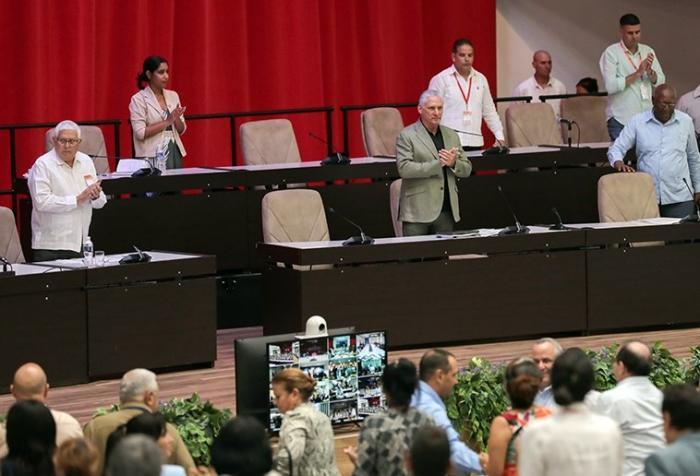
    On June 18, 2026, Cuba’s National Assembly of People’s Power (ANPP) held its Third Extraordinary Session of the 10th Legislature at Havana’s Convention Palace to evaluate landmark proposals for national economic and social transformation. The hybrid gathering brought Havana-based deputies together in person, with legislators from across the country joining remotely, and included virtual participation from revolutionary leader Army General Raúl Castro Ruz. In-person attendees were led by Miguel Díaz-Canel Bermúdez, First Secretary of the Central Committee of the Communist Party of Cuba and President of the Republic, while ANPP President Esteban Lazo Hernández opened the session by commemorating the 19th anniversary of the death of Vilma Espín Guillois, a iconic heroine of the Cuban Revolution.

    Cuban Prime Minister Manuel Marrero Cruz presented the transformation plan to the assembly, framing the reforms as a sovereign strategic adaptation to the most challenging economic context the country has faced since the 1990s Special Period. Marrero Cruz outlined the multiple pressures weighing on Cuba’s economy: decades of coercive U.S. sanctions that have intensified since 2019, with additional escalations implemented in January 2025, have severely disrupted fuel supplies, cut off foreign currency revenue, damaged national energy infrastructure, and reduced household quality of life. He acknowledged longstanding internal shortcomings alongside external pressure, noting that these combined factors have slowed progress on reforms first approved during the 6th Party Congress in 2011, which delivered positive results through mid-2019.

    Rooted in the legacy of Fidel Castro Ruz’s guidance during the 1990s Special Period and Raúl Castro Ruz’s principles of pragmatic economic updating, the plan rejects rigid dogma and redefines the relationship between socialist planning and market mechanisms. Marrero Cruz emphasized that the proposed reforms are not a retreat from socialism, but a sovereign adjustment of development tools to fit Cuba’s current circumstances, designed to preserve core revolutionary gains while adapting to new realities. The proposal emerged from a broad consultative process that incorporated 390 public submissions, 66.7% of which were accepted, plus 69 additional recommendations approved by the Communist Party Political Bureau, resulting in a final document of 176 proposals organized across 23 core axes covering all areas of Cuban economic and social life.

    The first axis overhauls the governance of state-owned enterprises, granting greater operational autonomy, decentralizing price-setting authority, eliminating rigid national salary scales in favor of company-level wage negotiation tied to financial performance and inflation, and allowing state firms to convert to share-based commercial entities with minority non-state participation, while guaranteeing state majority control over strategic sectors. For non-state economic actors, the plan eases approval requirements, raises the 100-employee cap on private businesses, allows individual ownership of multiple companies, expands permitted corporate structures including public limited companies, reduces the list of banned activities for non-state firms, and integrates artificial intelligence to streamline approval processes on the national Economic Actors Platform. The plan also opens agricultural production to private participation, creates a national production linkage platform that requires state-owned firms to publish local sourcing needs, and offers tax incentives for purchasing domestic inputs.

    On ownership reform, the plan reaffirms social ownership of the fundamental means of production while expanding non-state management of assets, authorizing the purchase of state enterprise shares by domestic and foreign, state and non-state entities, and creates targeted investment incentives for Cuban residents and Cubans living abroad to invest in national companies, while banning exploitative labor practices and guaranteeing labor and social rights. The reform of economic planning transitions from centralized physical resource allocation to a market-oriented financial planning model, incorporates non-state economic activity into national development plans through 2030, and decentralizes investment approval authority to individual firms based on their financial capacity.

    Additional core reforms include a significant downsizing of the central state administration, with a planned reduction in the number of ministries and budgeted agencies to improve bureaucratic efficiency, and a broad devolution of authority to municipal governments, including powers over strategic planning, local economic development, foreign investment promotion, and retention of foreign currency earnings. In the energy sector, private and foreign capital is permitted to enter fuel import, distribution and retail, and major tax incentives are offered for renewable energy investment. Agricultural reforms include indefinite usufruct land rights for all types of producers, elimination of the requirement for permanent on-site land cultivation, direct foreign trade authority for agricultural cooperatives, full decentralization of agricultural price-setting, and expanded decentralized financing for primary production.

    Social reforms center on digitizing and targeting social assistance for vulnerable populations via the new SOBERANIA platform, requiring all economic actors to contribute to community social support initiatives ranging from pension administration to supporting care institutions and providing food aid to low-income households. The plan replaces universal product subsidies with targeted personal subsidies to vulnerable groups, funded by savings from subsidy elimination, and implements a comprehensive wage reform that ties annual minimum wage and pension adjustments to inflation, eliminates administrative barriers to multiple job holding for skilled professionals, and offers training stipends for unemployed young people.

    Banking and financial sector reforms open the sector to private capital under equal regulatory conditions with state-owned banks, eliminate prior authorization requirements for foreign currency accounts, implement a regulatory framework for virtual assets and fintech, and authorize private currency exchange houses as part of a plan to unify Cuba’s exchange rates through gradual currency devaluation. Tax reforms introduce a value-added tax with reduced rates for essential goods, reduce corporate profit tax burdens, adjust personal income tax brackets to account for inflation, and offer targeted incentives for agricultural production and renewable energy investment. Foreign investment is expanded through extended land right terms up to 99 years, decentralized approval with tacit approval for most projects, elimination of mandatory employment agency requirements for hiring, and permission for foreign investment in heritage tourism zones. Additional reforms open tourism to new business models including real estate development, remove restrictions on electric vehicle imports, formalize street vending, expand insurance products, recognize data as a formal factor of production to support the digital and knowledge economy, and create a new cross-institutional working group to update national regulatory frameworks, requiring changes to more than 140 existing Cuban laws and the creation of 32 new high-level regulations.

    During the plenary debate, deputies broadly supported the plan while offering constructive amendments, with many emphasizing that the reforms do not represent a departure from socialism, but a necessary adjustment to preserve it amid external pressure. Deputy Danhiz Díaz Pereira called for prioritizing the creation of the social protection fund and wage reform before other transformations to protect vulnerable households, and highlighted the need for strong anti-corruption safeguards as reforms advance. Deputy Carlos Miguel Pérez Reyes argued that partial reform poses a greater risk than full transformation, and called for clear, swift implementation and increased social responsibility from the private sector. Deputy Emilio Interián Rodríguez praised the agricultural reforms as revolutionary, noting they address longstanding barriers to increasing domestic food production.

    Closing the debate, President Díaz-Canel stressed that the transformations are the product of decades of national debate, expert input, and the study of international experience, and do not signal a retreat from socialism. He noted that preserving and expanding the revolutionary social justice that Cuba has built requires a productive, dynamic economy to generate the necessary resources, stating: “If we don’t produce, if we don’t generate wealth, if we don’t provide quality services that are inclusive and comprehensive, what kind of social justice are we going to defend?” He emphasized that innovation is the only path forward in the current challenging context.

    Prime Minister Marrero Cruz announced that the working group will immediately revise the draft to incorporate deputies’ amendments, and outlined clear institutional responsibilities for implementation: the Cuban Government will lead overall management, the National Assembly will draft required legal changes, and senior party leadership will provide political oversight. The session concluded with a letter from Raúl Castro Ruz, read by Council of Ministers Secretary José Amado Ricardo Guerra, expressing full support for the plan and affirming that the reforms will strengthen socialism and preserve revolutionary gains in Cuba’s current complex circumstances.
  • Cuba kiest voor ingrijpende economische hervormingen; meer ruimte voor particuliere sector

    Cuba kiest voor ingrijpende economische hervormingen; meer ruimte voor particuliere sector

    On the cusp of the most sweeping economic transformations Cuba has seen in more than 30 years, the island nation’s government has outlined a bold package of changes designed to pull its struggling economy out of a years-long downward spiral while retaining the country’s existing socialist political structure.

    The reform proposals, presented this week to Cuba’s national parliament, center on expanding space for private enterprise, attracting greater foreign investment, and reducing heavy centralized state control over economic activity. Officials stress that the changes do not mark a shift toward capitalism; instead, they frame the plan as a modernization of Cuba’s socialist model, where the Communist Party will remain firmly in power, and the state will retain full oversight over all strategic economic sectors.

    Among the most notable measures in the package is a provision that allows for the restructuring or partial privatization of state-owned enterprises. Small and medium-sized private businesses will gain significantly broader operating freedoms to grow and conduct commerce. To boost capital inflows, Cuba will open investment opportunities not only to foreign firms but also to Cuban citizens living overseas who wish to invest in their home country.

    Additional reforms include legalizing the operation of private banks, granting greater economic autonomy to local municipal governments, and giving state-owned enterprises more flexibility in their day-to-day management. The country will also streamline import and export processes to make cross-border trade easier for businesses of all sizes.

    A core policy shift in the plan is the gradual phase-out of broad, universal government subsidies. Instead, the government will target financial support directly to the most vulnerable populations across the country. Going forward, prices for most goods and services will also be increasingly determined by market forces rather than state setting.

    The ambitious reform push comes in response to a severe, multi-year economic crisis that has gripped the island. Cuba currently faces sky-high inflation, widespread shortages of food, medicine and fuel, persistent extended power outages, and a slow recovery of the critical tourism sector following global disruptions. Cuban officials also point to the long-standing U.S. trade embargo and recently tightened U.S. sanctions as major external factors exacerbating the country’s economic woes. According to government statements, the reforms are a necessary step to boost domestic productivity, draw in much-needed outside investment, and restart sustainable economic growth.

    In framing the changes, the Cuban government explicitly draws parallels to the market-oriented reform paths pursued by China and Vietnam: expanding the role of market forces while maintaining the state’s political control and oversight of key strategic sectors. Beyond Cuba’s borders, the reforms could reshape economic dynamics across the Caribbean region. A more open Cuban economy is expected to increase regional trade and investment flows, creating new collaboration opportunities for member states of the Caribbean Community (CARICOM), including Suriname, across sectors such as tourism, agriculture, logistics, and healthcare.

    As Cuba embarks on this transformative economic shift, all eyes now turn to the coming months, when stakeholders on the island and across the globe will watch to see how quickly the proposed reforms are translated into concrete policy, and what tangible impacts they will deliver for the daily lives of the Cuban people.

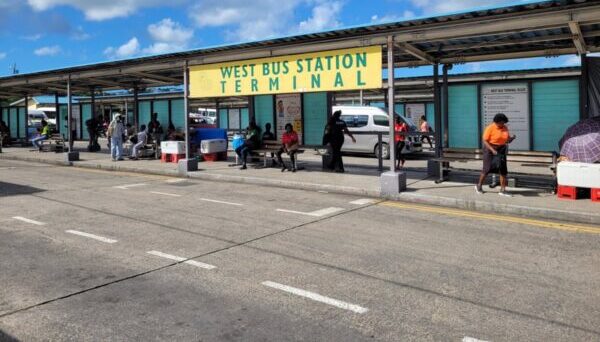
  • Government Warns Vandalized Bus Stops Could Lead to Prosecution

    Government Warns Vandalized Bus Stops Could Lead to Prosecution

    Authorities in Antigua and Barbuda are advancing a broad national initiative to upgrade and preserve community public assets, with new plans to ramp up surveillance and pursue legal consequences against people who intentionally vandalize shared infrastructure such as bus stops. The policy outline was revealed during a post-Cabinet media briefing held Thursday, where government officials also unveiled a nationwide package of infrastructure improvements including renovated bus stops, updated road signage, and refreshed road markings.

    The conversation around harsher anti-vandalism measures followed repeated incidents of deliberate damage to public bus shelters, which have left many existing facilities in a state of severe disrepair that requires costly major repairs. Maurice Merchant, the country’s Director General of Communications, explained that the administration is currently evaluating a range of strategies to deter further destruction of facilities built and maintained using public taxpayer funds.

    “Surveillance represents one key strategy to make sure these facilities stay intact and accessible for public use,” Merchant noted in his remarks to reporters. He confirmed that constructive discussions are already ongoing between government officials and national law enforcement agencies to establish processes for identifying and prosecuting anyone found guilty of intentional public property damage. “Conversations are already underway with the law enforcement community to target these individuals who recklessly destroy public assets for no discernible reason,” Merchant added.

    Under the proposed new accountability framework, people found responsible for damaging public infrastructure will be held financially liable for the cost of repairs. Merchant clarified that this requirement already applies to damage caused by reckless driving, and will be extended to cases of intentional vandalism: “If public property is destroyed, those responsible will be required to repay the full cost of repairs.”

    The broader infrastructure rehabilitation project, which includes the installation of new directional, road and traffic signs, is being funded through the national Tourism Fund, and will bring upgrades to bus stops across both islands of the nation. In addition to formal enforcement measures, Merchant issued a public call for greater collective responsibility to protect shared community assets, urging residents to embrace a greater sense of national pride. He questioned why any member of the public would seek to destroy facilities designed for the benefit of the entire community.

    As of the briefing, the government has not yet released a specific timeline for the rollout of new surveillance measures, but officials confirmed that stricter enforcement and clearer personal accountability for damage will be core components of the ongoing national effort to upgrade and maintain public infrastructure across Antigua and Barbuda.

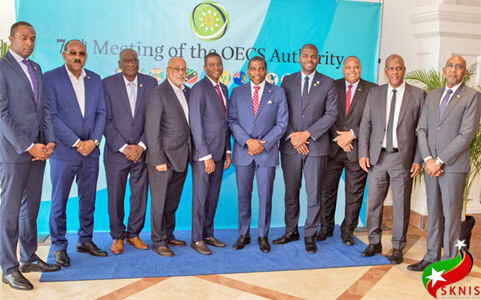
  • OECS Marks 45 Years of Regional Integration and Cooperation

    OECS Marks 45 Years of Regional Integration and Cooperation

    On June 18, the Organisation of Eastern Caribbean States (OECS) celebrated a major milestone: four and a half decades of advancing cross-border cooperation and unity across the Eastern Caribbean. The 45th anniversary festivities and official reflections centered on the chosen theme, “One Vision, One Voice: Navigating Challenges, Shaping Our Future,” a slogan that underscores the bloc’s core commitment to collective problem-solving.

    The anniversary itself commemorates the 1981 signing of the Treaty of Basseterre, the foundational agreement that formally established the OECS as the institutional successor to the earlier West Indies Associated States Council of Ministers. From that starting point 45 years ago, the organization has grown dramatically, expanding both its membership and the scope of its collaborative work across the region. Today, OECS coordinates joint action among member states across a wide range of critical policy areas, from inclusive economic development and public health system strengthening to educational advancement, transnational security, environmental sustainability, and aligned foreign policy.

    In an official statement released to mark the occasion, the OECS framed the anniversary as both a moment to celebrate past gains secured through regional unity and an opportunity to reaffirm the bloc’s commitment to tackling emerging shared challenges together. “For 45 years, the OECS has championed regional integration, strengthening the bonds that unite our Member States and advancing a shared vision for a resilient and prosperous future,” the statement read.

    The anniversary theme was intentionally crafted to highlight the urgency of solidarity at a time when Eastern Caribbean nations face overlapping systemic pressures, including global economic volatility, accelerating climate change impacts, and repeated destructive natural disasters, all of which demand coordinated cross-border solutions.

    Looking back at the OECS’s 45-year evolution, the organization highlights several key transformative milestones beyond its 1981 founding. Most notably, member states signed the Revised Treaty of Basseterre in June 2010, which entered into force the following January. This updated agreement established the OECS Economic Union, deepening economic integration and reinforcing institutional cooperation across all participating nations.

    The OECS has also steadily expanded its membership to reflect growing interest in regional collaboration across the Eastern Caribbean. After its original founding group, Martinique joined as a member in February 2015, followed by Guadeloupe in March 2019, and most recently Saint Martin in March 2025. Regional officials frame these new accessions as clear proof of the expanding appeal and proven benefits of coordinated collective action across the subregion.

    To mark the 45th anniversary, the OECS has organized a series of public engagement activities open to residents across all member states. The organization encourages local communities to participate in events and share public photos showcasing the OECS’s official colors: yellow, white, green, and navy blue. A public commemorative fun walk is also scheduled to take place in Antigua and Barbuda as a centerpiece of the celebrations.

    In closing, the OECS emphasized that the anniversary is far more than a retrospective celebration of past progress. It is also a collective call to action, urging member states to continue building a stronger, more resilient, and more prosperous Eastern Caribbean through sustained cooperation, shared strategic purpose, and coordinated collective action.

  • Number Portability Set for July Rollout in Antigua and Barbuda

    Number Portability Set for July Rollout in Antigua and Barbuda

    Consumers across Antigua and Barbuda are on the cusp of a long-awaited shakeup to the country’s telecommunications market, as the government confirms a July rollout for mobile number portability — a policy that will let mobile users switch between local service providers without surrendering their existing phone numbers.

    When fully implemented, the reform will extend number portability rights to customers of the nation’s three major mobile and internet providers: Flow, Digicel, and APUA Inet. Officials argue that eliminating the requirement to change phone numbers when switching networks will deliver tangible benefits to consumers, unlocking greater choice for users and injecting healthier competition into a relatively concentrated local telecommunications sector.

    Maurice Merchant, Director General of Communications, outlined the government’s timeline during a post-Cabinet media briefing held Thursday, confirming that the long-delayed system is on track to go live next month. “Government believes that this should become effective in July of this year,” Merchant stated, clarifying the core function of the policy for consumers: “If you wish to switch from APUA Inet to Flow, you can take your number with you. That’s what number portability is.”

    The upcoming launch comes years after the national legislature passed legislation to enable number portability, with implementation held up for an extended period by persistent coordination challenges between the competing telecom operators. When pressed about the years-long delay, Merchant explained that cross-firm collaboration between market rivals has been the biggest barrier to progress. “We must recognize that they are competitors in this field and so collaboration sometimes is not the easiest thing and hence it has taken a while,” he said.

    Merchant also highlighted that the policy has the potential to reshape the dynamics of Antigua and Barbuda’s telecom market by lowering the barrier to exit for customers unhappy with their current provider’s service or pricing. “It may mean good for certain providers and it may not, because there may be an exodus of individuals from any particular service provider to another,” he noted.

    The number portability plan formed part of a broader Cabinet review of Antigua and Barbuda’s national communications infrastructure, which also covered progress updates on the country’s ongoing subsea cable project and ongoing government efforts to attract new internet service providers to the twin-island nation. All these linked initiatives are designed to boost network reliability for local users, expand competition across the sector, and strengthen the country’s digital communications backbone to support long-term economic development.

    Additional details on the rollout schedule, customer registration process, and any associated fees are expected to be announced by Utilities Minister Melford Nicholas in the coming weeks.

  • Female Labour Force Participation Across CARICOM Ranges From 45% to 71%

    Female Labour Force Participation Across CARICOM Ranges From 45% to 71%

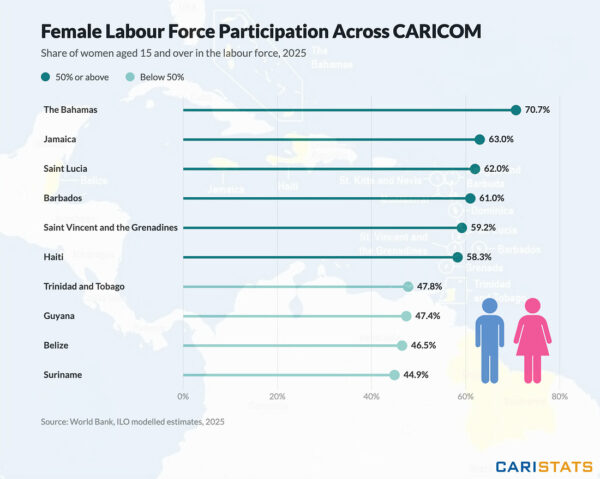
    Female labor market engagement stands as one of the most fundamental catalysts for expanding national economic output and boosting household earnings across the globe. Within the Caribbean Community (CARICOM), however, this critical metric shows greater divergence between member states than almost any other key economic indicator, according to the latest 2025 data. When measuring the share of women aged 15 and above who are either actively employed or searching for work, figures span from a low of 44.9% in Suriname to a regional high of 70.7% in The Bahamas. To put this gap in perspective, less than one out of every two adult women participates in the formal labor market in Suriname, while nearly seven out of 10 do so in The Bahamas.

    Across the 10 CARICOM member states tracked, six nations record female labor force participation rates above 58%, with The Bahamas claiming the top spot followed closely by Jamaica and Saint Lucia. The remaining four member states fall into a tight cluster between 45% and 49%, with Guyana emerging as a notable success story of gradual growth. Once sitting in the upper 30% range back in 1990, Guyana has lifted its female participation rate to 47% today, marking meaningful progress over three and a half decades.

    Disparities are also stark when comparing labor force engagement between women and men within individual CARICOM countries. In two nations, The Bahamas and Barbados, women’s probability of participating in the labor market comes almost level with that of men. The World Bank has highlighted that the gender gap in both countries is actually smaller than the average gap recorded across the world’s group of highest-income economies. At the opposite end of the spectrum, Belize shows one of the widest gender gaps globally, with men far more likely to participate in the labor force than their female counterparts.

    Uniquely among all CARICOM member states, The Bahamas achieves two standout milestones: it boasts not only one of the highest female labor force participation rates in the entire region, but also one of the smallest gender participation gaps among all its member nations.