博客

  • Annisette ‘shaken’

    Annisette ‘shaken’

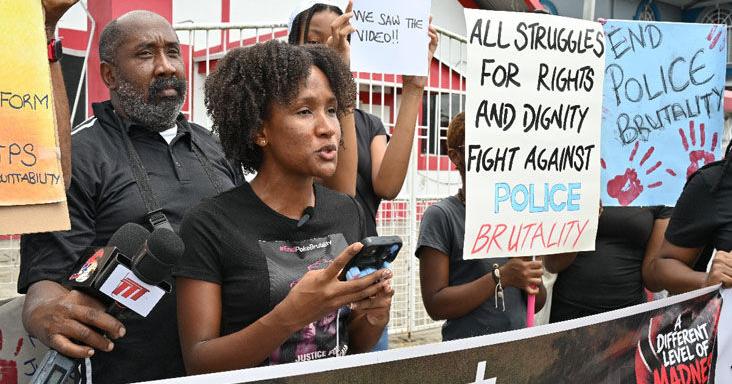
    On a yearly Labour Day march held through the streets of Fyzabad, a prominent Trinidadian justice advocate who has drawn public attention to a fatal police-involved shooting was taken into custody by riot-clad officers mid-proceeding, sparking sharp condemnation from labor leaders and opposition political figures.

    Alyssa Phillip, who has organized more than a dozen public demonstrations and vigils calling for accountability and transparency over the January 2025 shooting that left Joshua Samaroo dead and her friend Kaia Sealy injured, was detained around noon on Monday. The encounter unfolded just hours after Police Commissioner Allister Guevarro was photographed publicly greeting Phillip at the Avocat Junction starting point of the march.

    Officials from the Trinidad and Tobago Police Service (TTPS) did not immediately release details surrounding the basis for Phillip’s arrest. Eyewitness accounts confirm that at least two dozen officers surrounded both Phillip and her mother, Camille Caresquero, before escorting the pair to a police vehicle. As Phillip was placed into the vehicle, onlookers shouted cries of protest, labeling the arrest “shameful” and a display of institutional overreach.

    This arrest marks the second time Phillip has been taken into custody in connection with her advocacy work. Last month, Phillip and Caresquero were arrested during a demonstration outside the Office of the Director of Public Prosecutions (DPP) in Port of Spain, where activists gathered to oppose the decision to charge Sealy with manslaughter and firearms offenses linked to Samaroo’s death. Sealy, who had received medical treatment overseas for her gunshot wounds, returned to Trinidad to face the charges. Both women pleaded not guilty to charges of disorderly conduct and violating Section 11(A) of the Emergency Powers Regulations during a Port of Spain Magistrates’ Court hearing earlier this month, and were granted reduced bail.

    As of Monday evening, no new charges had been filed against Phillip following the Fyzabad arrest. Local media outlet the Express reports that Phillip told officers she felt unwell after being taken to Fyzabad Police Station, and was subsequently transferred to the Siparia District Health Facility for medical evaluation.

    Michael Annisette, general secretary of the National Trade Union Centre (NATUC) and president of the Seamen and Waterfront Workers Trade Union, delivered a blistering rebuke of the arrest to the gathered crowd at Charlie King Junction. Annisette, who was present during the detainment, said “The only crime that she has committed is not a crime, is that she stood up in defence of something she believed in. And if you cannot stand up for what you believe in in this society, then crapaud smoke your pipe.”

    He further noted the striking irony of the arrest: “What was ironic to me was that in 2026 someone who stood up for her right, is deemed to be a target of the police. There was no reason; she was doing nothing wrong, she was celebrating, like all workers, Labour Day.” Annisette added that when he approached officers to ask for an explanation of the arrest, he was turned away and told the matter was not his business.

    “Today is a sad day for me, as a father, and citizen of T&T to realise that in 2026, we have a police force, who believes that we are still living in the colonial past and therefore they can disrespect a young lady,” Annisette said. “I say to those police officers, ‘time longer than twine’.”

    Annisette also claimed that his own daughter was physically pushed aside by TTPS officers to clear the way for Phillip’s arrest, saying “almost 35 police, about two or three of them pushed her aside, then surrounded the young lady who was marching with me. That young lady fearlessly protested the shooting of the young man.”

    He called on Prime Minister Kamla Persad-Bissessar and government officials, who were in attendance at the Labour Day march, to intervene immediately to secure Phillip’s release. “When we voted, we voted for change. The change must be substantial, material, worker-centred and people-centred. We cannot, honourable Prime Minister, live in a society where the police can do whatever they feel,” he said.

    David Abdulah, political leader of the Movement for Social Justice (MSJ), echoed Annisette’s calls for clarity, questioning the legal foundation for Phillip’s arrest. “We need to know why she was arrested,” Abdulah stated. “If this were a peaceful march, then there must be a clear explanation for her detention.”

    Abdulah emphasized that Phillip and her group remained fully peaceful throughout the march, framing the arrest as a deliberate act of institutional retaliation. “This is a straight case of attempting to intimidate and harass Phillip because she is fearless. The police are scared of her for standing up for justice and speaking out for what she perceives to be wrong in this country,” he said.

    Despite the incident, official Labour Day observances continued through the rest of the day as scheduled.
  • Penny: Govt  mum on $3.4b  HDC ‘fiasco’

    Penny: Govt mum on $3.4b HDC ‘fiasco’

    A major political firestorm has erupted in Trinidad and Tobago over a canceled $3.4 billion public housing procurement process, with opposition leader Pennelope Beckles demanding Prime Minister Kamla Persad-Bissessar immediately dismiss three senior housing ministers and the entire board of the state-run Housing Development Corporation (HDC).

    The controversy centers on HDC’s June 17 announcement that it was terminating award proceedings for the massive housing construction contracts, a move that came months after the Office of Procurement Regulation (OPR) ordered a suspension of the process to launch a formal review. The contracts had been provisionally allocated to a group of vendors that included recently incorporated firms with no proven track record delivering large-scale public housing projects, a detail that first raised red flags among opposition critics in mid-April.

    In a scathing rebuke of the ruling People’s Partnership (UNC) administration, Beckles condemned the opaque manner in which HDC framed the cancellation, which was listed only under the vague tender identifier RFP No. 050126 – DBF – Portfolio 1. She argued that the vague labeling was intentional, designed to prevent ordinary taxpayers from grasping the full scope and significance of the decision to scrap the award process.

    For Beckles, the cancellation itself amounts to an unspoken admission that the original contract awards were improper, awarded under deeply suspicious, corrupt circumstances that reflect poorly on the entire UNC government. With thousands of Trinidadian households struggling with housing insecurity and many on the brink of economic hardship, Beckles said the opposition is committed to holding what she calls a “self-serving, corrupt administration” accountable, and rooting out graft before it becomes entrenched in national governance.

    Beckles also slammed the government for failing to address the fiasco during more than 50 hours of parliamentary debate over the previous week, noting that not one government official acknowledged the scandal or addressed widespread public frustration over ongoing failures in the national housing sector. She claimed that the three targeted ministers—David Lee, Phillip Alexander, and Anil Roberts—have delivered no meaningful progress for the housing sector, arguing that Roberts and Alexander have instead focused on launching divisive, vitriolic attacks on the public while turning a blind eye to mismanagement at the HDC, allowing what is now one of the largest public procurement scandals in recent national history to unfold unchecked.

    “The UNC can run, but they will have no place to hide. The war Barry Padarath seeks is just starting, and it is against a corrupt Government caught red-handed in the act in less than one year in office,” Beckles said, reaffirming her demand for the immediate dismissal of the ministers and HDC board.

    The timeline of the scandal traces back to April, when the OPR ordered HDC to suspend the contract award pending a full review of procurement procedures. HDC has stated that its final decision to cancel the process was made in accordance with Section 33 of the 2015 Public Procurement and Disposal of Public Property Act, following completion of bid evaluations and the end of the mandatory statutory standstill period. As of press time, OPR chair Beverly Khan has not responded to repeated requests for comment on the review, and Housing Minister David Lee told local outlet the Express he would issue a formal statement soon, but had not released any comment as of Wednesday evening.

    Speaking in defense of the government, Minister in the Ministry of Housing Phillip Alexander pushed back against corruption claims, insisting that the government’s core target of delivering thousands of new affordable homes to Trinidadian families remains firmly on track, despite the cancellation of the original procurement process. Alexander stressed that the first phase of the planned 3,700-unit national housing program has only been paused, not scrapped entirely, and the government remains fully committed to expanding access to homeownership across the country.

    Alexander argued that progress on the housing initiative cannot be delayed indefinitely, noting that pre-vetted developers lined up for the project already have private financing in place to deliver units at no direct cost to the state, and that financing cannot be held in limbo indefinitely. He rejected opposition claims that the program was designed to reward political allies and financial backers of the UNC, contrasting the current process with what he claimed was widespread crony contracting during the previous 10-year PNM administration.

    “This is not a friends and financier plan as the PNM did for the entirety of their ten years. All other developers who qualify and have the capacity to deliver within set timeframes and budgets are welcome to tender,” Alexander said.

    He reaffirmed that all of the Prime Minister’s housing delivery promises remain in place, and the government’s goal of placing as many families as possible into homeownership during this parliamentary term has not changed. Going forward, Alexander pledged that all future procurement processes for the housing program would meet and exceed the transparency requirements set by national oversight bodies, with the overarching goals of lowering housing costs, improving construction quality, and making homeownership accessible even to low-income households earning minimum wage.

    Additional details on the restructured procurement process, including new calls for proposals and tender invitations, will be released to the public in the coming weeks, Alexander confirmed.

    The controversy first erupted in mid-April, when former prime minister Stuart Young first raised alarms about the composition of the selected vendors, urging the public to closely monitor how taxpayer dollars are being allocated for the project. Young pointed out that multiple firms selected for the contracts had little to no experience delivering large-scale public housing projects for the HDC, with only a small handful of the awardees holding the necessary industry experience and financial capacity to complete the massive construction work. The proposed allocations ranged from a $1 billion award to Mootilal Ramhit and Sons Contracting Ltd down to a $201 million contract for Adam’s Construction Ltd, across 11 selected vendors.

  • TDC Donates Emergency Response Kit to Strengthen Port Health Services at RLB Airport

    TDC Donates Emergency Response Kit to Strengthen Port Health Services at RLB Airport

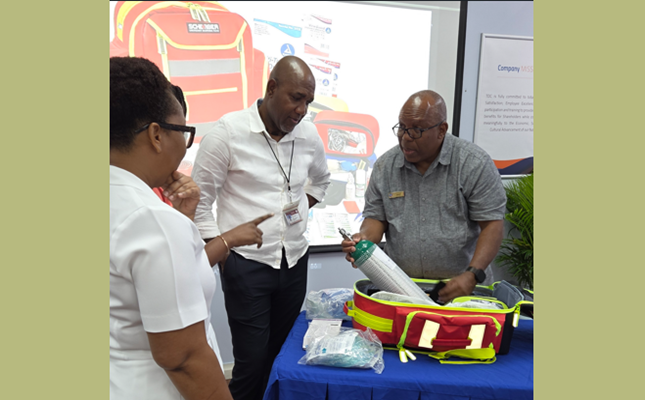
    BASSETERRE, St. Kitts – June 20, 2026 – In a landmark demonstration of corporate social responsibility, the TDC Group of Companies has donated a fully outfitted Scherber First Responder Backpack to the Port Health Unit at Robert L. Bradshaw (RLB) International Airport, aiming to reinforce the airport’s capacity to handle sudden medical emergencies for travelers and staff alike.

    The handover ceremony, held at TDC’s Basseterre headquarters, marked the latest step in the company’s long-standing commitment to supporting public health infrastructure across St. Kitts and Nevis. Lester Hanley, Chief Transportation and Logistics Officer at TDC, officially presented the kit to health authorities, outlining the critical gap the new equipment is designed to fill.

    As the largest ground handling service provider at RLB Airport, TDC identified the urgent need for dedicated on-site emergency supplies after observing multiple past incidents where fast, effective medical intervention was critical to passenger safety. Hanley explained that relying on aircraft onboard medical oxygen for on-ground emergencies creates costly and disruptive outcomes: if an aircraft’s supplemental oxygen is used during a ground-level incident, the plane is unable to depart until its supplies are replenished, causing cascading delays across flight schedules.

    The donated Scherber backpack is a purpose-built emergency response solution stocked with more than 250 individual first-aid and critical care items, including comprehensive supplies for emergency medical technician (EMT) response, emergency medical services (EMS) operations, trauma care, and oxygen administration. The kit also features four color-coded removable pouches for fast, organized access to supplies, plus a dedicated secure compartment for oxygen storage – a design tailored to the unique needs of high-traffic airport environments.

    “Recognizing this unmet need, TDC was eager to step in and equip the port health team with the tools they need to protect the traveling public,” Hanley said.

    Dr. Hazel Laws, Chief Medical Officer of St. Kitts and Nevis, accepted the donation on behalf of the Ministry of Health, praising TDC’s targeted contribution to the country’s public health preparedness. The donation arrives amid a strong rebound in tourism to the island nation: nearly 83,000 visitors have entered the country through RLB Airport in the first half of 2026, pushing passenger volumes to near pre-pandemic levels.

    “In an increasingly connected world, international travel drives economic and cultural growth for small island nations like St. Kitts and Nevis, but rising cross-border movement also brings greater responsibility to keep ports of entry safe and prepared for any event,” Dr. Laws noted. She emphasized that RLB Airport, as the country’s primary international entry point, is a high-volume setting where medical emergencies can occur without warning. In most cases, the Port Health Team is the first to arrive on scene, often several minutes before external ambulance services can reach the airport, making on-site access to high-quality equipment a matter of life and death.

    Dr. Laws added that the new emergency kit will fill a critical gap in the team’s existing resources, drastically cutting response times and improving outcomes for anyone experiencing a medical event at the airport. “This purpose-built kit gives our frontline health personnel all the essential supplies they need to effectively manage medical emergencies and other critical incidents. It will boost our preparedness, expand our response capacity, and directly advance the safety and well-being of travelers, airport employees, and the broader community,” she said.

  • VS kondigt nieuwe ronde Israël-Libanon gesprekken aan in Washington

    VS kondigt nieuwe ronde Israël-Libanon gesprekken aan in Washington

    Six weeks after a landmark ceasefire agreement between Israel and Hezbollah and a breakthrough memorandum of understanding between the United States and Iran aimed at de-escalating regional tensions, a new round of official negotiations between Israel and Lebanon is scheduled to kick off next week in Washington D.C., U.S. Secretary of State Marco Rubio has confirmed.

    The upcoming talks, set for June 23 and 25, mark the third round of direct negotiations between the two nations since the start of 2025, a historic milestone as the first formal direct discussions between the governments since 1993. In a phone conversation with Lebanese President Joseph Aoun, Rubio underscored that these bilateral negotiations remain the only viable path forward to lasting stability, enabling post-conflict reconstruction, long-term economic recovery, and an end to the recurring cycles of violence that have plagued the Israel-Lebanon border region for decades.

    This new round of dialogue builds on incremental progress made during two earlier negotiation sessions held in April and June this year, which paved the way for the recent renewed ceasefire agreement between Israel and Hezbollah that halted the worst outbreak of border fighting in years. While Hezbollah, the armed political movement based in southern Lebanon, is not participating directly in the official government-to-government talks, low-level skirmishes and persistent tensions between the group and Israeli forces continue to test the fragile truce. The most recent outbreak of clashes left at least 47 people dead in southern Lebanon before the latest ceasefire took effect.

    Under a U.S.-backed peace roadmap, Lebanon’s national government has committed to advancing efforts to disarm Hezbollah, a core demand of Israeli negotiators, while Lebanon also pushes for the full withdrawal of Israeli military forces from contested territories in southern Lebanon that have been under Israeli occupation since the 2006 Lebanon War. The recent U.S.-Iran memorandum of understanding reaffirms the international commitment to upholding Lebanon’s full territorial integrity and national sovereignty, even as ongoing security challenges threaten to derail the fragile peace process. The photo accompanying this announcement shows Israeli and Lebanese ambassadors during earlier negotiations held in June at the U.S. State Department headquarters in Washington D.C.

  • Derde helft WK 2026: Paraguay houdt hoop levend, Turkije na tweede nederlaag dichtbij WK-exit

    Derde helft WK 2026: Paraguay houdt hoop levend, Turkije na tweede nederlaag dichtbij WK-exit

    On the ongoing 2026 FIFA World Cup stage, Paraguay breathed new life into their knockout stage qualification hopes with a hard-fought 1-0 victory over Turkey in their second group stage encounter. The game’s only goal came just two minutes in, when Matías Galarza struck one of the fastest goals of the entire tournament to put the South American side ahead immediately.

    Paraguay got off to a blistering start, capitalizing on uncertainty in Turkey’s defensive line within the opening minutes of play. Galarza finished Paraguay’s first dangerous attacking opportunity with clinical composure, setting his side up for exactly the game plan head coach Gustavo Alfaro had envisioned: holding a compact defensive shape and hitting opponents on the counter-attack.

    Turkey quickly recovered from the early setback and dominated possession for large stretches of the first half. Led by captain Hakan Çalhanoğlu and creative playmaker Arda Güler, the European side continuously probed Paraguay’s defensive block, with Kenan Yıldız also creating several dangerous moments in the final third. However, every Turkish attacking effort was repelled by Paraguay’s well-drilled defense and an outstanding performance from goalkeeper Orlando Gill.

    The match took an unexpected turn just before halftime, when Paraguay was reduced to 10 men. Following a VAR review, Miguel Almirón was shown a red card under a new 2026 FIFA rule that prohibits players from covering their mouths during verbal altercations with match officials or opponents. This marked the first time at this World Cup that a player has been sent off directly for violating this new regulation.

    With a numerical advantage, Turkey ramped up the pressure in the second half, creating multiple clear-cut scoring chances to find an equalizer. Mert Müldür came agonizingly close to leveling the score with a header that struck both the crossbar and goalpost before bouncing clear off the goal line. Despite playing with 10 men for nearly 45 minutes, Paraguay held firm, battling for every inch of the pitch and maintaining their defensive organization. Their discipline and sheer fighting spirit ultimately proved to be the difference between the two sides.

    The defeat is a devastating blow for Turkey, who remain rooted at the bottom of their group without a single point after suffering a second consecutive loss, following an opening 2-0 defeat to Australia. A group stage exit now appears almost inevitable for the European outfit. In contrast, Paraguay bounced back impressively from a heavy 4-1 opening defeat to tournament hosts the United States, and have put themselves firmly back in contention for a spot in the knockout round.

    Heading into the final group matchday, Paraguay will face Australia, while Turkey will take on the United States. For Turkey to advance, a win is the minimum requirement, and they will still need favorable results from other group matches to keep their knockout hopes alive.

    This match served as a reminder of how a single moment can define an entire 90 minutes at a World Cup. Galarza’s lightning early strike was enough to secure three invaluable points for Paraguay, who demonstrated that tactical organization and relentless determination can be just as decisive as possession and fluid attacking play on the world’s biggest football stage.

  • Russia strikes St. Kitts and Nevis-registered vessel in Black Sea, injuring 3 crew members – WIC News

    Russia strikes St. Kitts and Nevis-registered vessel in Black Sea, injuring 3 crew members – WIC News

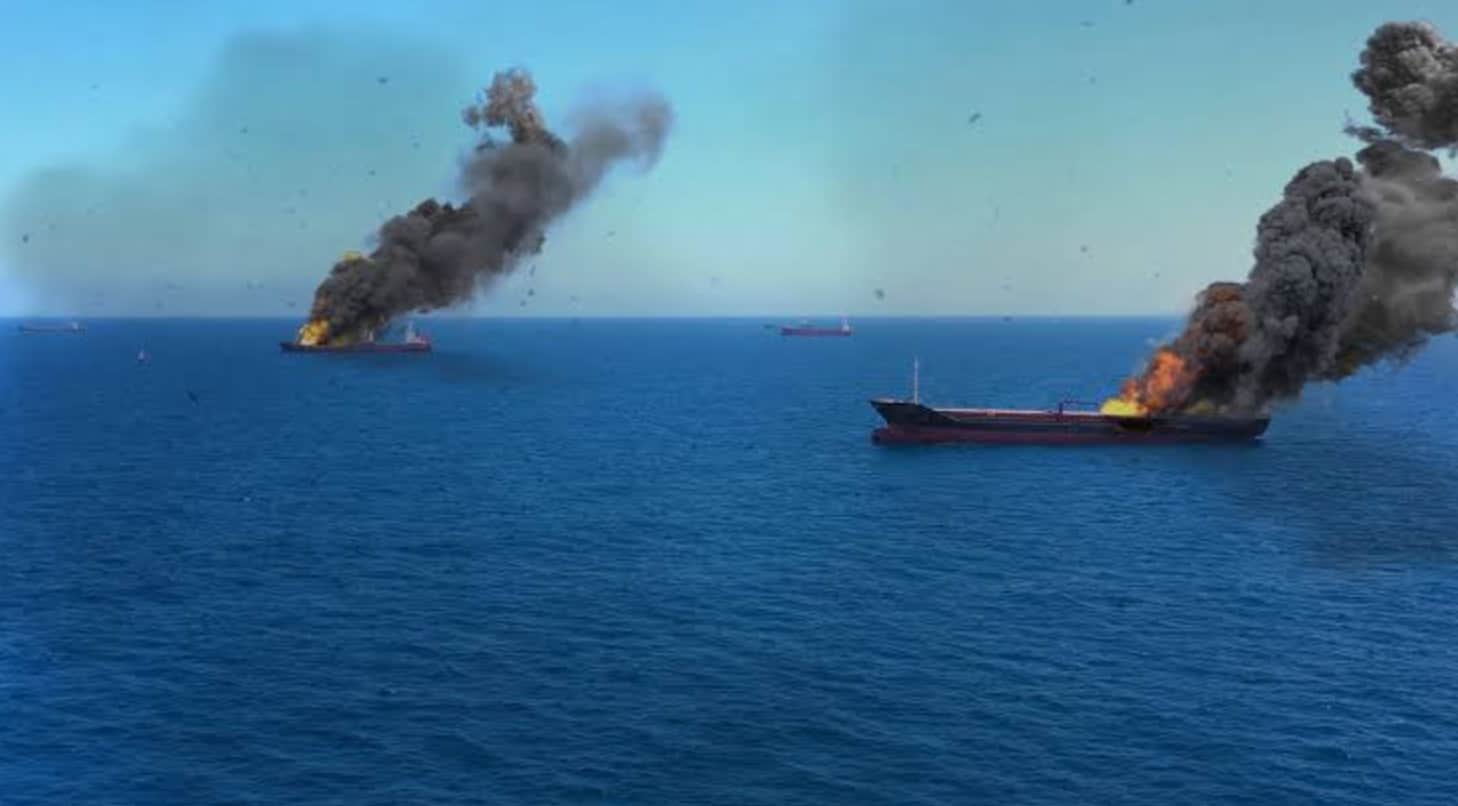
    In the latest escalation of targeted attacks against civilian maritime traffic in Ukraine’s Black Sea corridor, Russian drones struck two foreign-flagged cargo ships on June 19, leaving one crew member dead and five others injured, Ukrainian officials confirmed. The attack has renewed international alarm over Moscow’s campaign to disrupt global grain trade and undermine freedom of navigation in the key waterway.

    One of the targeted vessels was registered in Panama, and the other flies the flag of St. Kitts and Nevis. According to Oleksii Kuleba, Ukraine’s Deputy Prime Minister for Restoration and Minister for Development of Communities and Territories, the attack on the Panamanian-registered ship killed one crew member and wounded two more. The St. Kitts and Nevis-flagged vessel also sustained direct damage from the strike, leaving three of its crew members injured. Both ships were en route to a port in the Greater Odesa region to load grain for export when the drone attack occurred, per official details released by Ukrainian authorities.

    The strike ignited an onboard fire and knocked out critical navigation systems on the attacked vessels, though neither ship sank. Emergency response teams dispatched a patrol vessel to assist the damaged craft, and both have since resumed their voyages. Oleh Kiper, head of the Odesa Oblast Military Administration, emphasized that the incident is part of a broader, sustained Russian offensive against civilian shipping operating near Ukraine’s internationally recognized Black Sea maritime corridor.

    “This attack underscores the ongoing threat Russia poses to civilian shipping, legitimate international trade, freedom of navigation, and global food security,” Kiper stated, adding that port operations in the region have continued under heightened security protocols following the strike.

    For Kuleba, the June 19 attack is fresh evidence that Moscow is deliberately targeting critical infrastructure that supports global food supplies. “This is yet another proof that Russia is waging a war against freedom of navigation, international trade, and global food security,” Kuleba told Ukrainian state news agency Ukrinform. He called on the international community to formally classify these targeted attacks on civilian merchant vessels, crews and humanitarian export infrastructure as acts of terrorism, noting that the world cannot normalize the targeting of innocent civilian sailors by Russian forces.

    “Civilian crews, merchant ships, and the maritime infrastructure that supports humanitarian and export routes are under the sights. But such crimes should receive a clear international assessment – terrorism. The world cannot get used to civilian sailors becoming targets for Russian weapons,” Kuleba added.

    This latest incident fits a clear pattern of repeated Russian attacks on civilian maritime routes in the Black Sea, stretching back months. Since the outbreak of full-scale war in Ukraine, commercial vessels, grain shipments and port infrastructure in the region have faced consistent targeting. Just last month, Russian forces carried out multiple similar attacks: on May 18, a Russian Shahed drone struck a Chinese-flagged vessel in the corridor, just days before Russian President Vladimir Putin’s scheduled visit to Beijing. Eleven days later, on May 29, Russian drones hit three additional foreign-flagged ships in the same waterway. On June 8, a Russian attack on two Maritime Search and Rescue Service boats on a humanitarian mission left multiple casualties.

    The targeting of a St. Kitts and Nevis-registered vessel has sparked particular concern for the small Caribbean nation, whose open ship registry hosts thousands of internationally operating commercial vessels that sail across global trade routes.

  • Regering werkt aan energieagenda met routekaart tot 2035

    Regering werkt aan energieagenda met routekaart tot 2035

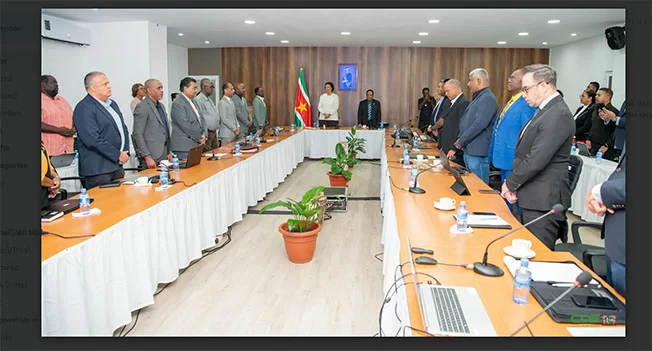
    On June 20, Suriname’s government took a foundational step toward building a resilient, future-ready national energy system, convening a high-profile Strategic Energy Roundtable at the President’s Cabinet alongside public and private sector stakeholders. The meeting marks the first milestone in a process that will culminate in the release of a binding National Energy Roadmap spanning 2026 to 2035, a comprehensive policy document that will outline investment trajectories, regulatory frameworks and implementation roadmaps for energy projects across the decade.

    Chaired under the overarching theme of “Energy Security, Investment, and Strategic Partnership for Suriname’s Future”, the roundtable serves as a precursor to a full national energy conference scheduled for later this year. Attendees included senior representatives from key national entities: Suriname Energy Company NV (EBS), Staatsolie, the Suriname Bankers Association (SBV), the Suriname Energy Chamber, the Suriname Business Association (VSB), the Suriname Investment and Trade Agency (SITA), the Energy Authority Suriname (EAS), alongside top government officials. Over the course of discussions, participants mapped out core challenges and untapped opportunities for advancing the sustainable growth of Suriname’s energy sector.

    In her opening address, President Jennifer Simons emphasized that energy security is a non-negotiable prerequisite for Suriname’s long-term economic and social development. She noted that affordable, consistent energy pricing is critical to expanding housing development, supporting local entrepreneurship, and maintaining national social stability. “No one wants to see an increase in energy tariffs,” the President stated. She acknowledged that government subsidies have helped ease cost burdens for households in recent years, but stressed that structural, systemic solutions are required to build a truly sustainable, accessible energy supply for all Surinamese.

    Vice President Gregory Rusland echoed this sentiment, underlining that reliable, affordable energy is a foundational utility for households, commercial operations, agriculture, education and public healthcare. He pointed out that Suriname holds enormous untapped potential in hydropower and solar energy, but that these abundant natural resources remain underutilized and require more strategic development. He added that future revenue streams from the country’s oil and gas reserves should be directed toward advancing sustainable development and lowering overall energy costs for the general population.

    Minister of Natural Resources David Abiamofo noted that investment can only deliver meaningful impact if paired with sufficient implementation capacity. He identified securing financing for the expansion of electricity infrastructure as one of the sector’s most persistent challenges, with a specific focus on extending access to rural and remote communities that are currently not connected to the EBS national grid. In addressing this gap, Abiamofo emphasized that international partnerships and robust public-private collaboration are indispensable to delivering infrastructure expansion.

    Chief of Staff Sergio Akiemboto added that the roundtable was intentionally focused on actionable solutions rather than abstract discussion, with clear near-term commitments already agreed. In the short term, EBS will prepare a public tender for expanded electricity generation capacity. Working groups will also conduct a review of existing national regulations to identify necessary legislative updates that will streamline and accelerate future investment approvals.

    For the medium and long term, the government’s priorities include finalizing a list of high-priority energy projects, securing committed financing for infrastructure development, and making preparations for planned commercial gas production set to launch in 2030, which is expected to drive down costs for domestic electricity generation. Following the roundtable, a results-focused action document will be drafted to formally assign responsibilities, rank priorities, and outline clear next steps. A follow-up meeting with international investors, financial institutions and technology suppliers is also being organized to formalize partnerships for project execution.

    The outcomes of the Strategic Energy Roundtable will form the foundational framework for the 2026–2035 National Energy Roadmap, a new Energy Action Memo, and the launch of a dedicated cross-sector Energy Task Force. Through these initiatives, the Surinamese government aims to lay the groundwork for an energy system that will be progressively more affordable, more reliable, and capable of meeting growing national energy demand for decades to come.

  • Minister Wijnerman: regering moet zich buigen over afbouw brandstofsubsidie

    Minister Wijnerman: regering moet zich buigen over afbouw brandstofsubsidie

    Suriname’s government is set to imminent deliberations on the future of the nation’s temporary fuel subsidy scheme, with Finance and Planning Minister Adelien Wijnerman publicly advocating for a gradual phase-out of the emergency fuel price cap instead of an abrupt elimination, a change framed as critical to preserving the country’s long-term fiscal health.

    Minister Wijnerman laid out the administration’s position during ongoing budget discussions Friday, responding to multiple questions from members of the national assembly regarding the policy’s status. She reminded lawmakers that the temporary price cap was first approved by the cabinet on March 18 this year, implemented as a buffer to shield Surinamese households and businesses from skyrocketing global crude oil prices.

    Under the current policy, retail fuel prices are capped at 53.27 Surinamese dollars (SRD) per liter for diesel and 48.32 SRD per liter for unleaded gasoline. Without the government intervention, Wijnerman confirmed, retail prices would jump to roughly 64 SRD per liter for diesel and 62 SRD per liter for unleaded. The gap between the capped market price and the actual cost of fuel is covered by the government through reduced state energy revenue, a mechanism that has created growing pressure on public finances.

    This foregone state income, Wijnerman explained, creates a persistent drag on government budgets, a situation that could worsen if global oil prices remain elevated for an extended period. When making a final decision on the subsidy’s future, the minister emphasized, four core factors must be weighed: ongoing trends in international crude markets, fluctuations in the Surinamese dollar exchange rate, the available fiscal space in the national budget, and the broad socioeconomic impact that any change would have on local households and business operations.

    A phased wind-down of the price cap, Wijnerman argued, delivers dual benefits: it eases the growing strain on government finances, while also creating policy space to redirect support toward the communities and economic actors that need it most. The current blanket subsidy structure, she noted, disproportionately benefits higher-income households and more profitable businesses that do not require public support to absorb fuel price increases. This is why the minister suggested that targeted social assistance programs represent a more efficient and equitable alternative to the broad, untargeted fuel subsidy currently in place.

    In addition to addressing the future of the policy, Wijnerman clarified that the Finance and Planning Ministry currently holds no outstanding overdue payments to oil companies operating in the country. Any arrears connected to the scheme that may be held by other sector-specific ministries, she added, have yet to be formally reported to the finance department for reconciliation.

  • Derde helft WK 2026: Brazilië overtuigt niet, maar wint wel van Haïti

    Derde helft WK 2026: Brazilië overtuigt niet, maar wint wel van Haïti

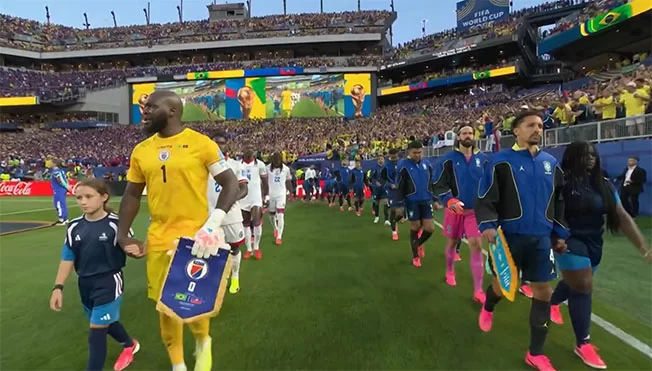
    In a Group C 2026 FIFA World Cup clash held at Philadelphia’s stadium on June 19, Brazil claimed a decisive 3-0 win over Caribbean side Haiti, bouncing back from a lackluster opening match that left them with only one point. The fixture was officiated by Spanish referee Alejandro Hernández Hernández, in a game that defied early expectations of a one-sided Brazilian rout.

    Heading into the match, global football fans and pundits widely anticipated that the five-time World Cup champions, the experienced South American giants, would cruise past the Concacaf representative easily after their underwhelming tournament opener. But Brazil started the contest slowly, playing disjointed, sloppy attacking football for much of the opening half-hour. For their part, Haiti, sitting at the bottom of Group C with zero points after a loss in their first fixture, entered the match determined to put up a far better fight and avoid another lopsided defeat.

    Though Brazil dominated possession throughout the first period, their attack was blighted by repeated offside calls and wasteful finishing, keeping the scoreboard locked at 0-0 until just before the mandatory hydration break. The deadlock was finally broken when Haiti goalkeeper Johnny Placide could only parry a shot from Vinicius Junior into the center of the box, where Brazil’s Matheus Cunha tapped the loose ball into the empty net to open the scoring at 1-0.

    Brazil doubled their advantage in the 36th minute, as Cunha once again found space in the penalty area, firing a clinical shot past Placide into the top corner of the net. On the stroke of halftime, Vinicius Junior put the result beyond doubt, tapping in a third goal to send Brazil into the break with a comfortable 3-0 lead.

    The pattern of play remained largely unchanged after the halftime interval. Brazil continued to control the ball and create opportunities, but sloppy finishing and recurring offside calls prevented them from adding to their tally. Haiti managed to carve out a handful of dangerous counter-attacks, but the Caribbean side was undone by inaccurate shooting, solid Brazilian defending, and their own offside errors. Haiti came closest to pulling a goal back just after the hour mark, but a last-ditch intervention from Brazil’s backline blocked the effort. In the 76th minute, Brazil’s Douglas Santos missed a golden opportunity to extend the lead further, and no more goals were scored for the rest of the match. When the final whistle blew, Brazil held on to their three-goal advantage to collect all three points, boosting their chances of advancing to the knockout stage of the 2026 World Cup.

  • Derde helft WK 2026: Canada’s Kone ondergaat zware operatie aan been; mist de rest van het toernooi

    Derde helft WK 2026: Canada’s Kone ondergaat zware operatie aan been; mist de rest van het toernooi

    A devastating injury during Canada’s 2026 FIFA World Cup group stage match against Qatar has ruled out Canadian starting midfielder Ismael Kone for the rest of the global tournament, but a successful surgery has left medical and team officials optimistic about his full long-term recovery.

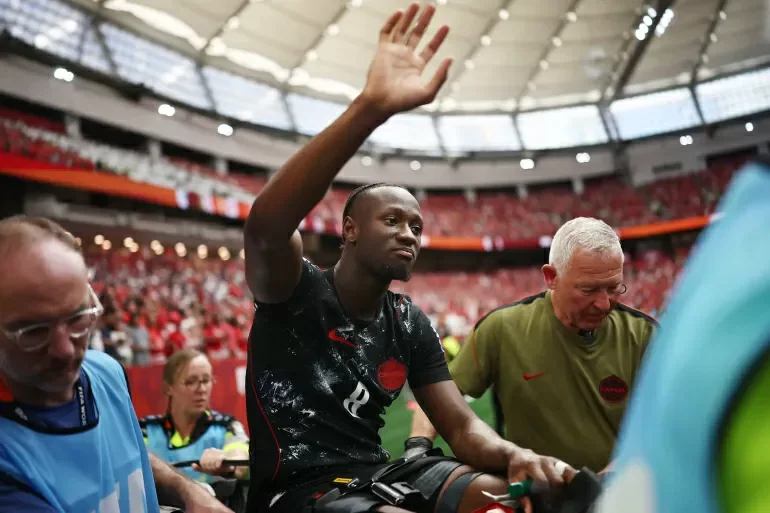
    The incident unfolded in the 51st minute of Thursday’s match, held in Vancouver — the same city that would later host Kone’s emergency procedure. A tackle by Qatari midfielder Assim Madibo went wrong: Madibo’s right foot connected awkwardly with Kone’s lower left leg, causing an immediate and severe fracture to the bone. Kone was visibly in extreme pain right after the contact, prompting on-field medical staff to rush to his aid almost instantly. He was carried from the pitch on a stretcher within minutes, even managing to give a thumbs-up to the crowd of fans while receiving supplemental oxygen as he was wheeled off.

    After reviewing video footage of the tackle, match officials issued Madibo a red card — the second ejection of the game for Qatar, leaving the side to play out the rest of the fixture with only nine players on the pitch. Madibo later issued a public apology to Kone for the accidental tackle that caused the injury. Following the match, Canadian head coach Jesse Marsch told reporters he had been close enough to the tackle to audibly hear the bone break.

    In a statement released by Canada Soccer on Friday, the national football association confirmed that Kone had undergone a successful surgery the previous evening to repair the broken lower leg. The procedure, which involved a team of three specialized surgeons, lasted approximately 90 minutes, with medical staff standing by ready to treat Kone as soon as he arrived at the Vancouver hospital. “When we visited him after he was admitted, he had already received medication to manage his pain and was being prepped for surgery,” Marsch shared in his update Friday. “Even through everything, he was in good spirits, absolutely determined to come back stronger from this.” Marsch added that the surgical team moved quickly to prioritize Kone’s care after seeing the injury broadcast on television, and that the entire procedure went according to plan.

    While Kone is expected to make a full recovery, the extended rehabilitation timeline means he will not return to the pitch for the remainder of the 2026 World Cup. Canada, which defeated Qatar 6-0 in Thursday’s match, currently sits level on four points with Switzerland after two Group B matches. The two sides will face off next Wednesday in Vancouver to decide which team claims the group’s top spot.