博客

  • Telesur en Liberty versterken internationale digitale verbindingen voor groei oliesector

    Telesur en Liberty versterken internationale digitale verbindingen voor groei oliesector

    As Suriname prepares for a rapid expansion of its offshore oil and gas industry and broad-based economic digitalization, national telecommunications provider Telesur and regional digital infrastructure operator Liberty Networks have agreed to deepen their long-standing cooperation to strengthen the country’s international digital connectivity. The expanded partnership, formalized via a signed Memorandum of Understanding (MoU) during the 41st annual CANTO conference held in the Dominican Republic from August 9 to 12, is designed to deliver increased network capacity, greater reliability, and enhanced redundancy for Suriname’s cross-border digital links.

    This collaboration builds on the two firms’ existing work on international submarine connectivity, most notably through the Suriname-Guyana Submarine Cable System (SGSCS), which has supported Suriname’s international telecommunications links since 2009. Industry analysts note that demand for robust digital infrastructure in Suriname is set to surge in the coming years, driven first and foremost by the needs of the fast-growing offshore energy sector. Modern offshore oil and gas operations rely heavily on uninterrupted data flows, real-time digital communication, and constant connections to global corporate networks, requirements that outdated or overstretched infrastructure cannot meet.

    Yet the need for improved connectivity extends far beyond the energy industry. Banks, government agencies, healthcare providers, educational institutions, cloud service users, and private sector businesses across Suriname are increasingly dependent on stable international data connections to operate effectively. To address this growing demand, the partnership will add new international connectivity routes, integrating Telesur’s national network more deeply with Liberty Networks’ regional fiber-optic footprint. This integration will drastically reduce Suriname’s vulnerability to single-point connection outages, a critical improvement given the persistent risk of damage or faults to submarine cables.

    By diversifying routes and adding network redundancy, the two firms will ensure that internet and other digital services remain operational via alternative pathways if one connection fails. The agreement also includes plans to boost joint response capabilities to address cable faults and service interruptions more quickly when they do occur. Beyond reliability, the expanded partnership will add substantial new international capacity to accommodate surging consumer and business demand for internet access, online communication, digital financial services, streaming entertainment, and e-government services.

    Speaking at the conference, Ray Collins, Senior Vice President for Infrastructure and Corporate Strategy at Liberty Latin America and CEO of Liberty Networks, noted that Suriname is entering an extraordinary period of economic transformation, where reliable connectivity will play a foundational role in supporting sustainable growth. Collins added that Liberty is committed to leveraging its extensive regional network infrastructure to support Suriname’s development goals.

    Telesur CEO Doric Ramlakhan echoed this sentiment, emphasizing that the MoU formalizes the two organizations’ shared ambition to scale their cooperation in lockstep with Suriname’s growing digital and economic needs. Ramlakhan specifically highlighted that the upgraded infrastructure is being designed to meet the strict reliability and capacity requirements that the expanding oil and gas sector will demand in the coming years.

    Ultimately, the partnership aims to deliver greater stability, scalable capacity, and long-term consistent availability of international connectivity for Suriname. The expanded collaboration carries broad economic significance for the country: the upgraded digital infrastructure will not only keep pace with current internet usage growth but will also proactively prepare Suriname for the wave of new economic activity that offshore oil and gas development is expected to bring over the next decade.
  • Athletes selected for Olympic development programme

    Athletes selected for Olympic development programme

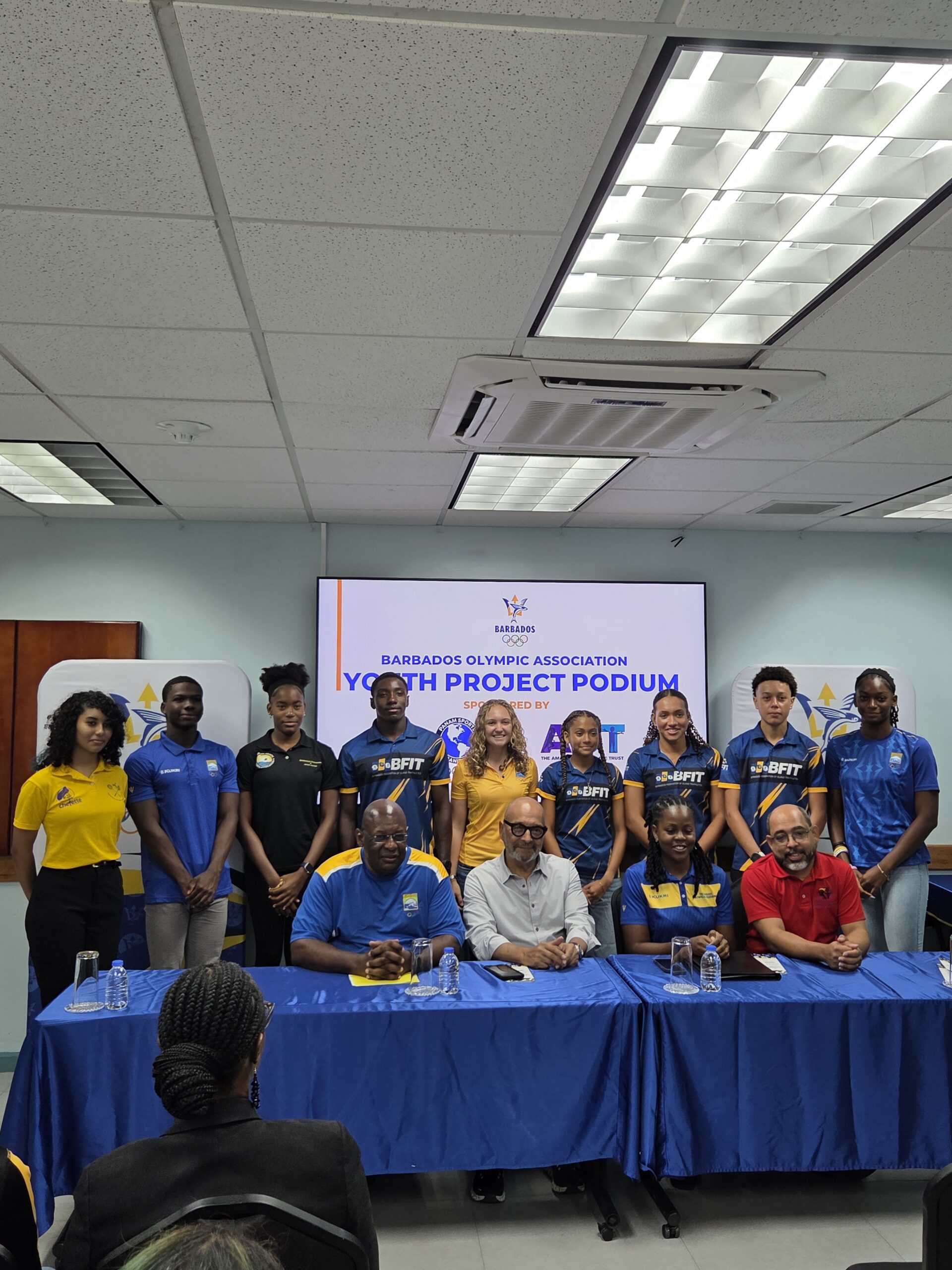
    The Barbados Olympic Association (BOA) has announced the selection of 11 rising young Barbadian athletes for the second iteration of its elite Youth Project Podium initiative, launched this week at the BOA’s headquarters with funding backing from two major supporters. This targeted development program is built to nurture emerging athletic talent throughout the current Olympic cycle, with the long-term goal of preparing competitors to compete and excel at top-tier international events, ranging from the Youth Olympics and Junior Pan Am Games all the way to the senior Olympic and Pan Am Games.

    The selected athletes, who range in age from 16 to 23, represent a diverse set of Olympic sports: Deann Walton competes in judo, Savannah Stuart in sailing, Lenna Hamati in squash, four athletes — Victor Ashby, Amiya Harrison, Jaiya Simmons, and Mihael Sobers — come from swimming, and five competitors round out the cohort in triathlon: Matthew Briggs-Legall, Alexis Lashley, Laila McIntyre, and Zindzele Renwick-Williams. Funding for the 2024 cohort is made possible through grant support from the Amarone Charitable Trust and Panam Sport, enabling the program to deliver comprehensive support beyond just competitive training.

    BOA Secretary General Erskine Simmons framed the program as a key continuation of the association’s ongoing investment in the future of Barbadian sport. “Our first Youth Project Podium taught us a great deal about the unique needs of developing athletes and the importance of supporting them beyond just competition results,” Simmons explained. “We have taken those lessons and used them to strengthen this second edition. This year we welcome a smaller cohort which represents a more focused approach to athlete development, with each athlete identified as having clear potential to progress along the BOA’s performance pathway.”

    Kendia Brathwaite, BOA Senior Operations Officer and lead for the Youth Project Podium, outlined the rigorous multi-stage selection process the organization used to pick this year’s participants. “We reached out to all our national sport federations and distributed a structured questionnaire to guide them in putting forward their most promising athletes,” Brathwaite said. “On top of that, we also used competitive results from recent editions of the Youth Commonwealth Games and Youth Olympics as a performance benchmark to evaluate all nominated candidates.”

    Unlike many athlete development programs that focus solely on physical training, Youth Project Podium takes a holistic approach to supporting young competitors. Brathwaite detailed the full range of resources available to selected athletes, covering both athletic and personal growth: access to specialized sports medicine doctors, nutrition guidance, physical therapy support, mental skills coaching, podiatry care, personal branding training, and communications development.

    The program’s core mission, Brathwaite explained, is to identify and nurture junior talent early in their careers, laying a structured pathway for them to advance to higher levels of competitive performance and achieve long-term success. “We of course, at the Olympic Association, would love to win medals at the junior level. These athletes selected for this cohort have the potential to go on to represent Barbados at the Youth Olympic Games later this year, the Youth Commonwealth Games next year, and then the Junior Pan Am Games after that,” she said, adding that the second cohort is part of a broader BOA push to strengthen junior athlete pipelines across all national federations.

    David Csumrik, a trustee with funding partner Amarone Charitable Trust, expressed his organization’s pride in partnering with the BOA on the initiative. “We feel the first edition was very successful and I am sure the second edition will be successful,” Csumrik said. “I am hoping the athletes have fun and enjoy the experience. Work hard but remember sport is supposed to be fun. Make us all proud.”

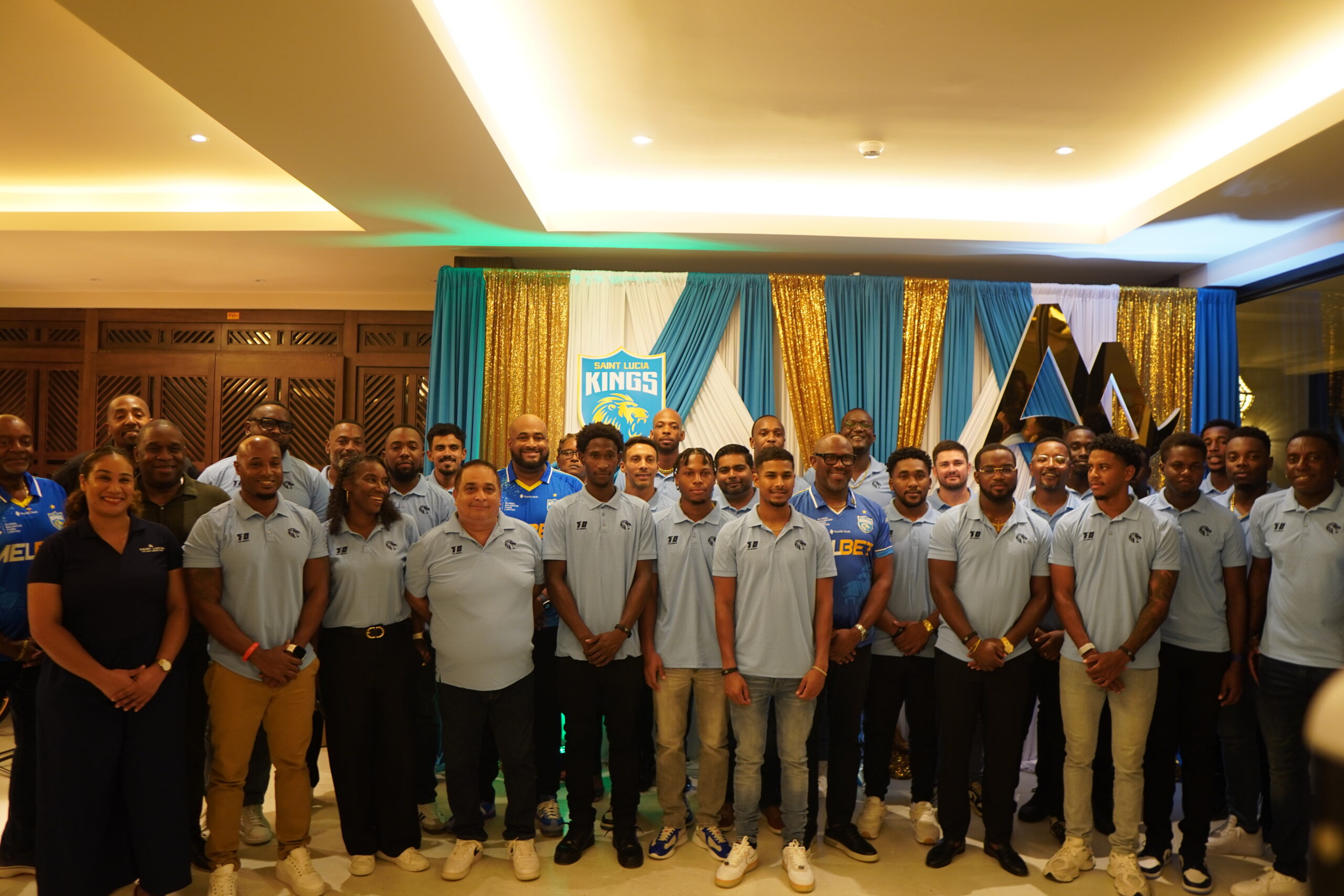
  • Kings welcomed home for local CPL leg

    Kings welcomed home for local CPL leg

    As the 2024 Republic Bank Caribbean Premier League (CPL) enters its home stretch for regional fixtures, the Saint Lucia Kings have made their much-anticipated return to their home island, kicking off their local campaign with a celebratory welcome event hosted by Bay Gardens Resorts. The cocktail reception, held at the Kimchi and Callaloo Restaurant located within Sapphire Sands Villas, brought together team players, league officials, and sports journalists to mark the franchise’s homecoming and rally support ahead of the upcoming matches.

    In a keynote address during the event, Daren Sammy — the former Saint Lucia Kings captain who now leads the side as head coach — formally introduced this year’s roster to attendees. Sammy highlighted the unique makeup of the 2024 squad, noting that while the team brings together players from diverse cricketing backgrounds, every member shares an intense passion for the sport that aligns perfectly with the iconic, resilient spirit of the Saint Lucian people.

    For Sammy, returning to the island for home fixtures carries more than just sporting significance; it represents an opportunity to put Saint Lucia’s vibrant culture and hospitality on a global stage. “It’s always good to be back home. Saint Lucia is a place where people love to travel. And I think Saint Lucia Kings have a part to play in showcasing Saint Lucia to the world,” he shared at the reception.

    The CPL currently draws a global audience of more than 1 billion viewers across broadcast and streaming platforms, a reach that Sammy says gives the franchise a unique platform to highlight what makes the island special. “Saint Lucia Kings, the way we play, the excitement we bring, people love to watch us, and we have a team of players that… when they wear that blue, they bleed Saint Lucian spirit,” he added.

    The event also drew attendance from senior tourism leadership, including Louis Lewis, Chief Executive Officer of the Saint Lucia Tourism Authority. Lewis emphasized the significant commercial and promotional value that the Saint Lucia Kings bring to the island’s economy, particularly through the global exposure the CPL provides, and reaffirmed the tourism authority’s full support for the team throughout the 2024 season.

    Lewis also shared his confident hopes for the franchise’s performance this year, telling attendees: “I’m already looking forward to September when I’ll be going across to Barbados to see the finals. But I want you to make it real for me so that we can get there.”

  • Belizean Volunteers Dig Through Rubble, Feed Thousands After Venezuela Earthquakes

    Belizean Volunteers Dig Through Rubble, Feed Thousands After Venezuela Earthquakes

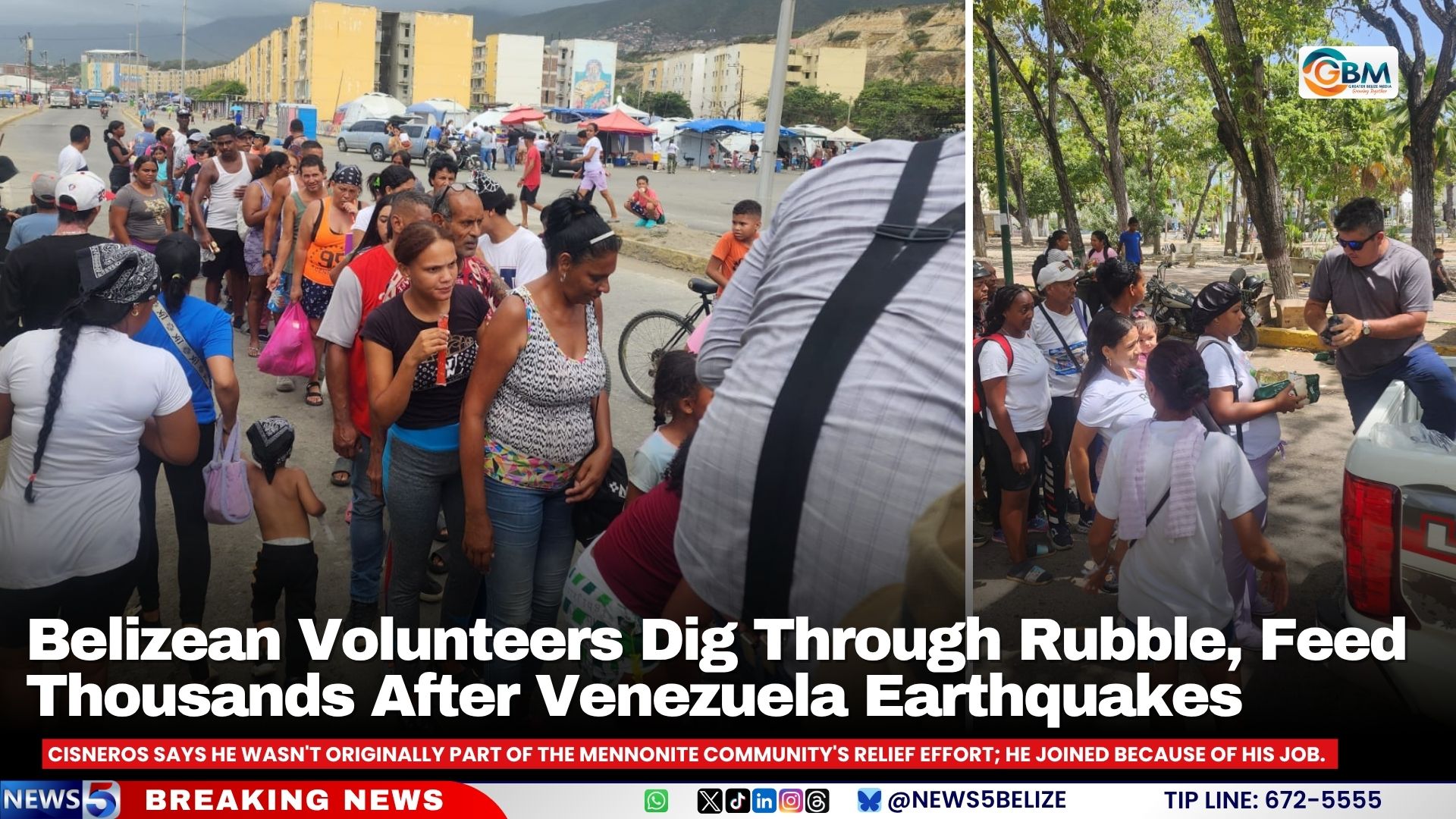
    Months after a devastating pair of back-to-back earthquakes ripped through Venezuela in June 2026, volunteer teams from neighboring Belize remain on the ground, carrying out critical relief work that has touched thousands of displaced and grieving survivors. As of August 11, the official death toll from the twin seismic events climbed to 6,301, with search and recovery operations still ongoing in communities reduced to rubble by the disaster.

    Oscar Alexander Cisneros, a resident of Cayo, Belize, is among the volunteers currently supporting recovery and aid operations. Cisneros, who works as a driver for the Mennonite community of Centerville in western Belize, joined the relief mission at the community’s invitation, with all travel and supply costs covered out of the group’s own pockets. He shared that this is his second deployment to the affected region, having already spent three weeks supporting recovery efforts shortly after the quakes struck.

    In the first days of his current week-long mission, Cisneros and his team focused on the grim, physically demanding work of recovering victims trapped beneath fallen buildings, supporting heartbroken local families who lacked the equipment and manpower to reach their loved ones on their own. After three days of recovery operations, the team shifted to distributing life-sustaining food supplies. Purchasing staple goods including rice, beans, vegetable oil, salt and noodles, the Belizean volunteer group has already provided meals to roughly 4,000 Venezuelan residents who lost access to basic supplies when the disaster destroyed their homes and infrastructure.

    Cisneros noted that the reception from local Venezuelan communities has been overwhelmingly warm and grateful. When the team departed the region for a short break earlier this week, residents repeatedly asked when they would return, underscoring how deeply the cross-border aid has resonated with a population still grappling with the aftermath of a catastrophic natural disaster. Even as international response efforts scale back, the volunteer mission from Belize continues to fill critical gaps in support for survivors, highlighting the power of grassroots solidarity across national borders in times of crisis.

  • Agriculture Minister reacts as egg shortage hits Saint Lucia

    Agriculture Minister reacts as egg shortage hits Saint Lucia

    A persistent egg shortage that has left supermarket shelves across Saint Lucia empty for more than a month has spurred the country’s top agriculture official to call for stronger alignment and communication between the Ministry of Agriculture and local poultry producers. Speaking to reporters outside the country’s parliament on Tuesday, August 11, Agriculture Minister Lisa Jawahir publicly acknowledged the ongoing supply crunch, confirming that the ministry only reached out to egg producers after the shortage began to escalate. By the time government officials initiated contact, a number of farmers had already completed their scheduled flock replacement, a routine operational step that triggered an unexpected drop in domestic egg output that continues to impact consumers.

    In the wake of the disruption, Jawahir emphasized that the current crisis highlights a critical gap in collaboration that must be addressed as Saint Lucia pursues its long-term goal of expanding domestic food production and achieving national food self-sufficiency. When asked what policy and procedural changes would prevent similar shortages from occurring in the future, the minister pointed to consistent, open dialogue between producers and government stakeholders as the foundational solution. “We have to build closer, more transparent working relationships between the farming community and the ministry,” she noted, framing improved coordination as central to advancing the country’s food sector expansion agenda.

    Jawahir also made clear that the government of Saint Lucia has no intention of entering commercial egg production or investing directly in state-run hatcheries, noting that a robust community of large-scale private farmers already operates in the sector. Instead, she reaffirmed that the government’s core role is to create supportive policy frameworks for the agricultural industry and provide targeted assistance to producers when challenges arise.

    One key policy priority the ministry will move forward with in response to the shortage is expanding farmer registration, Jawahir revealed. Currently, a large share of the country’s egg producers are not formally registered with the Ministry of Agriculture, a gap that leaves the government unable to quickly coordinate support during supply disruptions or connect unregistered producers with existing sector incentives. The minister encouraged both active and aspiring poultry farmers to engage with the ministry’s extension officers and technical staff, who can guide producers through the registration process.

    Formal registration unlocks tangible benefits for farmers, Jawahir explained, including access to government subsidies, tax concessions, and other agricultural incentives that are only available to formally registered producers. The minister also clarified that there is no current government policy restricting farmers from selling eggs directly to supermarkets or other private distributors, noting that commercial agreements, quality standards, and inspection requirements are negotiated directly between producers and retailers. Registration becomes particularly critical during large-scale industry disruptions, she stressed, as government support will only be extended to producers that are formally documented with the ministry in the event of a widespread crisis.

  • Somohardjo wil nationaal actieplan voor waarheidsvinding en slachtofferbescherming

    Somohardjo wil nationaal actieplan voor waarheidsvinding en slachtofferbescherming

    On August 11, a senior Surinamese politician has launched a formal push for systemic reforms to strengthen truth-finding processes and victim protection, sparked by widespread public unrest following the recent death of a 39-year-old woman.

    Bronto Somohardjo, leader of the PL parliamentary faction, has submitted separate formal letters to Suriname’s prosecutor-general and Minister of Justice and Police Harish Monorath, laying out a call for long-term structural change that goes far beyond the single controversial case that ignited current public debate.

    In his correspondence with the prosecutor-general, Somohardjo stresses that he fully respects the independent mandate of the Public Prosecution Service. His request does not seek to influence the specific outcome of the ongoing high-profile death investigation, but rather to draw attention to the critical importance of upholding public trust in truth-finding processes for deaths that trigger broad societal turmoil.

    “My request explicitly does not concern any predetermined outcome for this individual case,” Somohardjo wrote. “I ask only that every Surinamese citizen can trust that the truth will be established independently, carefully, and without favor based on a person’s status.”

    In the separate letter to Justice Minister Monorath, Somohardjo formally proposes the development of a National Action Plan for Truth-Finding and Victim Protection, a framework designed to embed lasting improvements across the justice system. He outlined that the plan should prioritize multiple key objectives: boosting the quality of forensic investigative work, establishing clear standardized protocols for handling deaths that generate large-scale public attention, improving transparency and communication with surviving family members, expanding support services for victims, and rebuilding broader public confidence in the rule of law.

    “A rule of law must not only be fair – it must also be visibly fair,” Somohardjo argued in the letter, emphasizing that perceived fairness is just as critical as actual fairness to maintaining public trust in state institutions.

    The parliamentarian went on to clarify that his initiative is not limited to the current case that has dominated public discourse in recent weeks. “These letters are not about just one case file,” he explained. “They are about every Surinamese, who deserves to be able to trust that when a death raises major public questions, the truth will be pursued with equal effort, no matter the person’s name, social standing, or financial means.”

    Somohardjo confirmed that the two letters mark only the opening phase of a broader parliamentary push to strengthen public trust in truth-finding processes, victim protection frameworks, and the national rule of law. “No one may stand above the truth. No one may stand above the law,” the PL faction leader emphasized, underscoring the core principle guiding his proposal.

  • BTL Chairman Defends Speednet Deal After Cabinet Presentation

    BTL Chairman Defends Speednet Deal After Cabinet Presentation

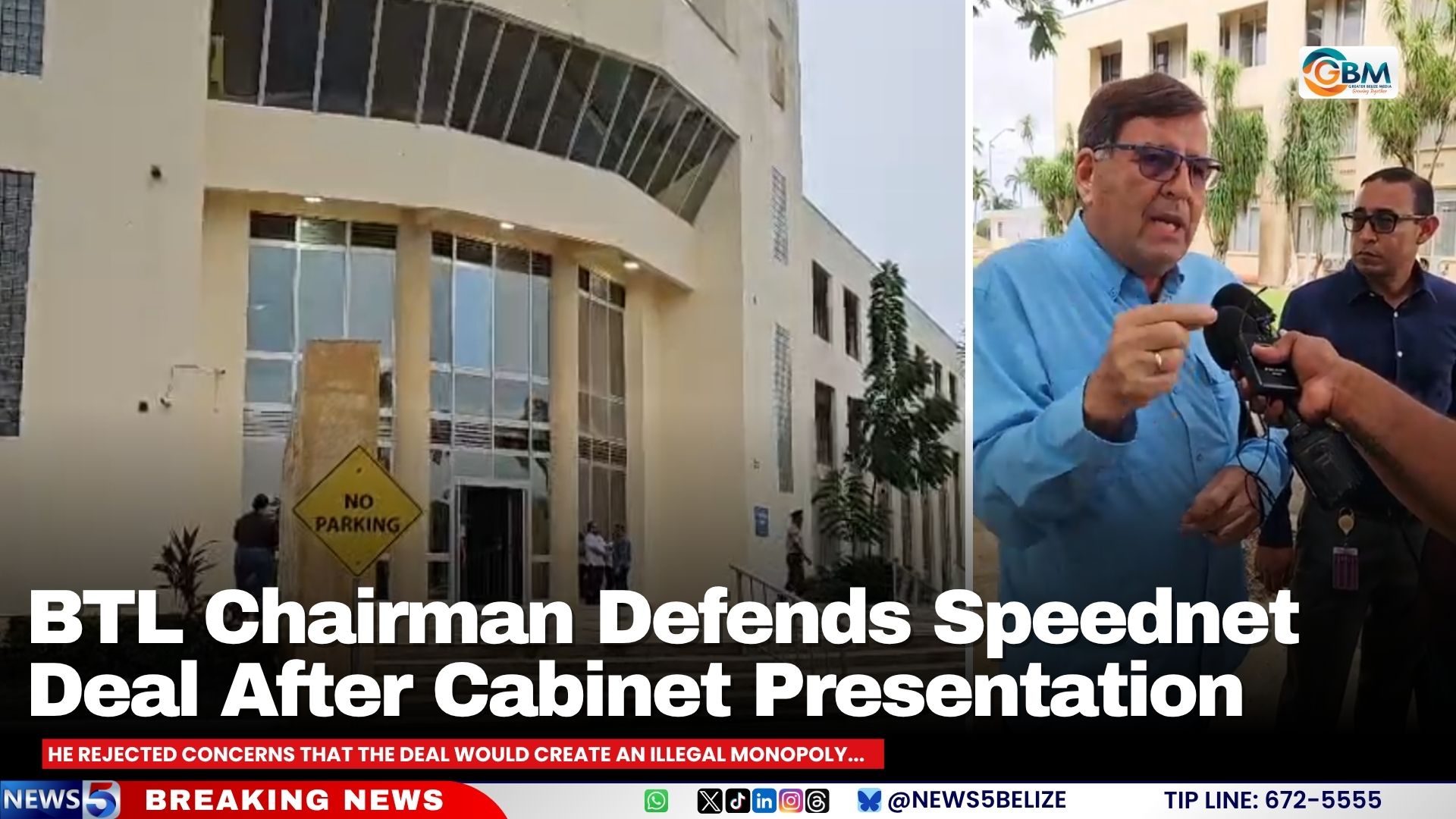
    On August 11, 2026, Belize Telemedia Limited (BTL) Chairman Mark Lizarraga emerged from a scheduled cabinet meeting prepared to address widespread public and regulatory scrutiny over the company’s planned acquisition of rival telecom provider Speednet. Following the hours-long session, where Lizarraga confirmed the BTL board faced extensive questioning from government officials, he told reporters that the leadership team had successfully responded to every concern raised, and stood firmly behind every term of the proposed merger.

    One of Lizarraga’s core arguments in defense of the deal centers on long-standing industry inefficiency in Belize’s telecommunications sector. He explained that BTL’s existing network infrastructure is built to support up to one million mobile and broadband subscribers, yet currently serves only 225,000 customers, while competitor Smart (Speednet’s parent brand) serves an additional 100,000 users. Even after the acquisition is finalized, combined usage would only consume roughly 33% of BTL’s existing network capacity. Lizarraga pointed out that maintaining two separate, underutilized systems—complete with duplicate fibre optic cables, cell towers, and back-end infrastructure—unnecessarily drives up costs for consumers, leaving the sector overcapitalized and inefficient.

    Critics, including a coalition of social partners, have pushed back against the deal for BTL’s decision to rely on just one year of audited financial statements from Speednet, rather than the five years of full financial records they have requested. Lizarraga countered this critique by noting that BTL has independently verified Speednet’s financial performance using the company’s own network analytics tools. These tools allow BTL to cross-check customer usage patterns, traffic volume, and per-customer revenue directly, rather than relying solely on historical third-party audits.

    Another major point of contention has been the claim that the acquisition would create an illegal monopoly that stifles competition and harms consumer choice. Lizarraga rejected this claim outright, pointing to the existing Mobile Virtual Network Operator (MVNO) framework that allows third-party brands to operate their own telecom services over BTL’s existing network infrastructure. This model, he argued, acts as a built-in safeguard against anti-competitive behavior, ensuring new providers can still enter the market without building their own full network from scratch.

    On financial terms, Lizarraga confirmed that the negotiated purchase price for Speednet currently stands at $80 million, pending the completion of final due diligence. The purchase will be repaid in installments over a 4.2-year period, he added.

    He also addressed widespread public concerns that BTL would use control of Speednet’s network to suppress independent media outlets that are critical of the current government, dismissing these fears as unfounded. He also pushed back on claims that the BTL board moved forward with the deal without completing required public consultation and securing approval from the Public Utilities Commission (PUC). Under Belizean law, the PUC must sign off on major telecom mergers before they can be finalized. “We can’t do that. The law is very clear. We need to have the PUC’s approval,” Lizarraga said. “We’re not in the business of doing illegal stuff. We haven’t landed there yet. We’re still working on warranties and representations, buyer protection.”

    Lizarraga also addressed long-running speculation over a potential conflict of interest tied to the Prime Minister’s family ties to the deal. He emphasized that initial discussions for the transaction date back to 2018, years before the current administration took office, and that the BTL board has not factored political considerations into its evaluation of the merger. “This is a business transaction that was contemplated way back from 2018. Personalities aside, this is strictly business,” he said.

    In addition to the rate freeze commitment, Lizarraga used the cabinet presentation to correct widespread misinformation that has circulated in media coverage of the deal. He also confirmed that BTL has formally committed to freezing consumer service rates through December 2028, a commitment designed to reassure consumers that the consolidation will not lead to immediate price hikes.

    BTL workers have publicly opposed the acquisition, leading a pushback campaign against what they have labeled the “SMART deal,” adding another layer of public pressure on officials and the BTL board to reject the proposal. A full interview with Lizarraga is set to air on News 5 Live at 6 p.m. local time the same day.

  • Residents Urged to Report Blocked or Restricted Public Beach Access

    Residents Urged to Report Blocked or Restricted Public Beach Access

    In a push to preserve the island nation’s long-held commitment to open coastal access, the Development Control Authority (DCA), operating under Antigua and Barbuda’s Ministry of Social and Urban Transformation, has launched a public appeal asking local residents to step forward and report any instances of unlawful barriers blocking public access to the country’s beaches.

    The authority has made clear that all beaches across Antigua and Barbuda are legally designated as public spaces, and the right of all people to access these coastal areas without obstruction is a core principle that must be actively protected. Unauthorized restrictions on this public access run counter to national regulations governing coastal land use, the DCA emphasized.

    Under the appeal, residents who spot unauthorized infrastructure including gates, permanent fencing, temporary barriers, or any other man-made structures that cut off established public pathways to the shore are being encouraged to file reports with the DCA. Each submission will trigger a formal investigation into whether the restriction violates existing land development and access rules.

    In its public statement, the DCA also reminded private developers and coastal landowners that long-term, uninterrupted public use of a beach access route can formalize a legal right of way under local regulations. Any new coastal development project is required to preserve or construct adequate public access points in line with legal requirements, the authority added.

  • Pomona Farmer Shot by Police Wants to Know Why

    Pomona Farmer Shot by Police Wants to Know Why

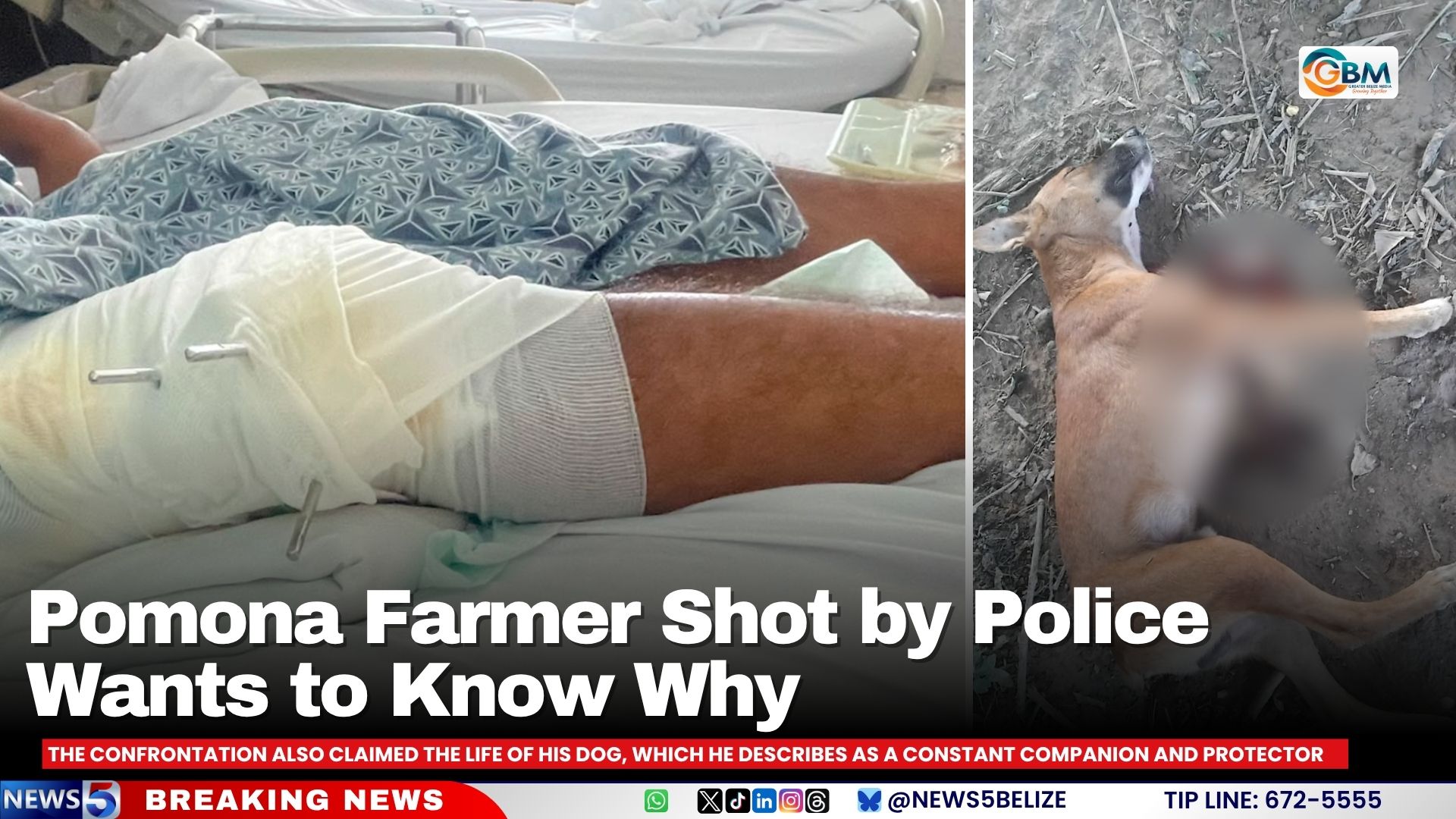
    On a quiet Thursday resting on his Pomona cattle farm, a 46-year-old former soldier’s routine was upended by a violent encounter that left him wounded, his beloved guard dog dead, and still no explanation for what prompted the incident more than a week later, according to the farmer’s first public account of the confrontation.

    The farmer told reporters he was napping near an equipment shed when his constant companion – his working guard dog – began barking frantically to alert him of approaching strangers. When he jumped to his feet, he found three men with weapons drawn, all pointing their guns directly at him and shouting for him to raise his hands. What made the situation terrifying, he recalled, was that none of the men wore uniforms, displayed police badges, or identified themselves as law enforcement before issuing commands. For the farmer, the scenario matched a classic armed farm robbery, a risk that many rural property owners prepare for.

    Drawing on his military training, the farmer quickly assessed his options. He carried a licensed personal firearm in his pocket, but with three armed assailants already aiming at him, he judged that drawing his weapon immediately would guarantee fatal consequences. He chose to run for safety, with the decision rooted in pure self-preservation: he resolved to only return fire if he was first struck, a choice he says saved his life.

    As he ran, the armed men opened fire, and a bullet struck the farmer, knocking him to the ground. Following his pre-planned reaction, he pulled out his licensed weapon and returned fire toward the men. The exchange of gunfire forced the three unidentified men to retreat, the farmer says. Only after the shooting stopped did one of the men finally approach and reveal he was a police officer.

    “I want justice – this is completely unfair,” the farmer stated in his account of the encounter. “I told the officer who approached me not to come near me: he was the one who shot me.”

    To date, the farmer says law enforcement has not offered any explanation for why officers arrived at his property with weapons drawn that day, nor have they clarified what operation they were conducting that led to the confrontation. The tragedy also extends beyond the farmer’s injury: his dog, who first alerted him to the approaching men and stayed by his side through all his daily work on the farm, was killed in the police gunfire.

    The case has highlighted ongoing concerns about the risks of unmarked plainclothes police operations in rural areas, where property owners often prepare for criminal robbery and may have no way to distinguish armed intruders from undercovered law enforcement in the moments before a confrontation.

  • Stop Feeding Crocodiles, FD Warns After Caye Caulker Incident.

    Stop Feeding Crocodiles, FD Warns After Caye Caulker Incident.

    In the wake of a recent close call between humans and crocodiles on Caye Caulker, Belize’s Forest Department has put out a critical public appeal, urging both local residents and visiting tourists to avoid feeding, approaching, or engaging directly with the region’s native crocodile populations. The advisory follows a growing stream of public reports and viral social media content documenting increasingly frequent close encounters between people and the large reptiles across the coastal nation.

    Though the Caye Caulker incident did not result in any physical contact or human injuries, wildlife authorities stress it serves as a vital wake-up call about the urgent need for responsible behavior in shared crocodile habitats. Department officials partnered with two regional wildlife organizations — ACES Wildlife Rescue and the Crocodile Research Coalition — to release the updated guidelines, emphasizing that complacency around crocodiles can quickly lead to life-threatening outcomes.

    Crocodiles are an indigenous species to Belize, naturally thriving in the country’s extensive network of mangroves, coastal lagoons, freshwater wetlands, river systems, and nearshore coastal zones. But as residential and tourism development expands into these traditional crocodile territories, human-wildlife overlap has grown dramatically. Officials have noted a sharp uptick in not just encounters, but in intentional feeding and luring of crocodiles by people — a dangerous practice that authorities say must stop entirely.

    Even occasional or indirect feeding triggers long-term shifts in crocodile behavior, experts explain. Over time, the reptiles learn to associate human presence with a source of food, erasing their natural wariness of people and drastically increasing the likelihood of aggressive, dangerous interactions in the future. Instead of engaging with crocodiles, the public is encouraged to practice ethical, low-impact wildlife viewing that prioritizes maintaining a safe, respectful distance from the animals in their native environment.

    The Forest Department has outlined clear, actionable rules for the public to follow to reduce risk: never feed, touch, or provoke a crocodile, and never attempt to capture, handle, or relocate a crocodile on your own. People are strongly advised to avoid swimming after dark or swimming in mangrove zones that are known crocodile habitats, and to always supervise children and keep pets leashed and well back from the water’s edge in these areas. Local residents and tourism-related businesses are also asked to keep coastal waterways clear of food waste, fish scraps, and other organic debris that could attract crocodiles to populated shorelines. For any crocodile displaying unusual or threatening behavior, the public is instructed to contact authorities to file a report rather than attempting to intervene directly.