博客

  • Dominican Republic and Brazil sign agreement to explore new trade and investment opportunities

    Dominican Republic and Brazil sign agreement to explore new trade and investment opportunities

    In a strategic move aimed at deepening economic connections between two Latin American economies, the Embassy of the Dominican Republic in Brazil and Brazil’s prestigious Getulio Vargas Foundation (FGV) have formalized a collaborative partnership through a signed Memorandum of Understanding. The ceremony, held at FGV’s headquarters in Rio de Janeiro, lays the groundwork for joint research projects, technical analysis, industry-focused seminars, and co-authored publications centered on topics that benefit both nations. The core mission of this new agreement is to generate data-driven insights that will uncover untapped opportunities for expanded trade, increased cross-border investment, and broader institutional cooperation between the Dominican Republic and Brazil.

    Speaking after the signing, Robert Takata, Dominican Ambassador to Brazil, pointed to the unique window for strengthening bilateral economic ties against a backdrop of major global shifts in trade routes and supply chain networks. Takata noted that while current commercial activity between the two countries is well-documented, significant untapped potential remains in under-explored products and emerging sectors that could drive new growth for both economies. He further emphasized the geographic and trade advantages the Dominican Republic offers, particularly its position as a convenient access point to the large U.S. market through the Dominican Republic-Central America Free Trade Agreement (DR-CAFTA). According to Takata, the joint research collaboration will help pinpoint high-potential areas where bilateral commerce can be expanded strategically.

    Under the terms of the Memorandum of Understanding, research teams from both the Dominican Republic and FGV will work collaboratively, sharing expertise and data on areas of shared economic interest. The Dominican Embassy has additionally committed to streamlining access for researchers to key statistical data, official documents, and industry and government contacts based in the Dominican Republic to support the project’s research goals. Both signatory parties have aligned on the expectation that this partnership will translate into tangible, actionable projects and deliver measurable outcomes that strengthen not only economic ties but also institutional connections between the Dominican Republic and Brazil for years to come.

  • New York to host 2026 Juan Pablo Duarte Games from August 14 to 23

    New York to host 2026 Juan Pablo Duarte Games from August 14 to 23

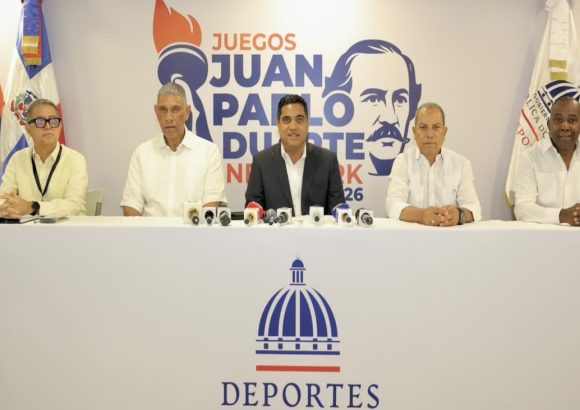
    SANTO DOMINGO — Dominican Republic’s Minister of Sports Kelvin Cruz has officially unveiled plans for the 2026 iteration of the Juan Pablo Duarte Games, a major cross-border sporting event set to take over New York City from August 14 to 23. The multi-day competition is projected to draw over 2,000 participants, including competitive athletes based in the Dominican Republic and young athletes with Dominican heritage residing in the United States.

    Far more than a typical sports tournament, the 2026 Games carry three core objectives: to foster widespread participation in athletic activity across the Dominican community, deepen the cultural and social bonds between the Dominican Republic and its large diaspora spread across the U.S., and create spaces that encourage greater cultural exchange and community integration between native and diaspora Dominican populations.

    This year’s edition holds special honors, with the full event dedicated to two iconic figures in Dominican sports: José Joaquín Puello, the lifetime president emeritus of the Dominican Olympic Committee, and veteran sprinter Felicia Candelario. The dedication comes as recognition of the pair’s decades-long contributions to Dominican athletics and their recent induction into the Dominican Sports Hall of Fame.

    Competitors will travel from across the Northeastern United States to take part, with registered delegations already confirmed from New York, Rhode Island, Lawrence (Massachusetts), Pennsylvania, and Boston. Organizers also expect additional teams to join from Connecticut and New Jersey, with large groups of local athletes coming from three of New York City’s most populated boroughs: the Bronx, Brooklyn, and Queens. In total, 22 different sports will be contested throughout the 10-day event.

    The primary hub for all competition will be the athletic facilities at George Washington High School, located in the Manhattan borough of New York. Beyond athletic matches, the full event schedule also includes a lineup of cultural and artistic programming that highlights Dominican heritage, giving attendees and participants a well-rounded experience beyond sports.

    Minister Cruz emphasized that the 2026 Games are made possible through a collaborative public-private partnership, bringing together the Dominican Ministry of Sports, the Dominican Consulate in New York, Banreservas (the Dominican Republic’s largest public financial institution), and a range of additional supporting community and institutional partners.

    The 2026 tournament marks a key milestone for the event: after a multi-year hiatus, the Juan Pablo Duarte Games were revived in 2025 during Cruz’s tenure as Sports Minister, and 2026 will mark the second consecutive year the event has been held since its return.

  • Will the solar eclipse be visible in the Dominican Republic? Here’s what to know

    Will the solar eclipse be visible in the Dominican Republic? Here’s what to know

    One of 2024’s most anticipated astronomical events is just around the corner: a total solar eclipse set to occur this Wednesday, August 12, that is expected to draw millions of observers across the Northern Hemisphere. The rare celestial phenomenon happens when the Moon aligns perfectly between Earth and the Sun, completely obscuring the solar disk for viewers along its narrow path of totality.

    The eclipse’s journey will kick off over the Bering Sea before tracking east across the Northern Hemisphere. The path of totality, where the entire Sun is blocked by the Moon, will cut across portions of the Arctic Ocean, northwest Greenland, Iceland, northern Russia, the Atlantic Ocean, and much of Spain before ending in a small section of Portugal. For residents across a far broader swath of the globe—including large parts of North America, Europe, and northwest Africa—a partial eclipse, where the Moon only covers a fraction of the Sun, will still be visible to the naked eye with proper protection.

    Among all locations along the path, Spain stands out as one of the premier spots to view the total eclipse. Roughly 40% of the country’s total land area falls within the path of totality, including 23 of its provincial capitals, as the eclipse moves from the country’s western edge to its eastern border.

    The peak of the eclipse, when the Moon covers the maximum portion of the Sun and totality is longest, is scheduled to take place near Iceland at 5:46 p.m. GMT. At this location, the total phase of the eclipse will last approximately 2 minutes and 18 seconds.

    As hundreds of thousands of skywatchers are expected to converge on popular viewing spots along the path of totality, public safety officials have issued a series of critical warnings to prevent incidents. The most urgent reminder centers on eye protection: all people looking directly at the eclipse, even during the partial phase, must use certified solar viewing glasses that meet the international ISO 12312-2 safety standard. Unprotected viewing can cause permanent, irreversible damage to the retina of the eye. Beyond eye safety, authorities have also warned attendees to prepare for risks including extreme heat, dehydration, overcrowding at viewing sites, congestion of cellular communication networks, elevated risk of forest fires in dry viewing areas, and accidental environmental damage from large crowds.

    Beyond being a breathtaking visual spectacle, this solar eclipse also presents a one-of-a-kind research opportunity for astronomers and space scientists. The event will allow experts to study solar physics, patterns of space weather, and complex interactions between solar activity and Earth’s systems, turning the Iberian Peninsula into an improvised, open-air natural laboratory for the duration of the event.

    For people unable to travel to the path of totality or those who live in regions where only a partial eclipse is visible, the U.S. National Aeronautics and Space Administration (NASA) will host a free, public live broadcast of the entire event. NASA’s coverage will begin at 1:15 p.m. EDT, and will feature high-resolution images from multiple observation points along the eclipse’s path, professional telescope footage of the solar corona, and live commentary from leading astronomical experts.

    Residents of the Dominican Republic, for example, lie entirely outside the eclipse’s path of totality, meaning a total eclipse will not be visible from the island nation. Even so, local astronomy enthusiasts can still experience the event in real time through NASA’s official online livestream.

  • Rainieri Cultural Center launches La Cantera to showcase emerging Dominican artists

    Rainieri Cultural Center launches La Cantera to showcase emerging Dominican artists

    In Punta Cana, the nonprofit Rainieri Cultural Center has unveiled a groundbreaking new initiative for the Dominican art community: La Cantera, a compact temporary exhibition space purpose-built to lift up emerging creative voices and redefine the trajectory of local visual arts.

    Tucked alongside the center’s main auditorium, this 35-square-meter venue was crafted specifically to address a longstanding barrier for young and early-career artists: the high barriers to entry and logistical hurdles that come with mounting shows in large, formal exhibition spaces. Where the center’s primary temporary exhibition hall stretches across more than 400 square meters, creating cost and installation pressures that often exclude emerging creators, La Cantera strips away those burdens, allowing artists to direct their full energy toward the core of their practice: developing and sharing meaningful work with audiences.

    Beyond giving creators a low-pressure platform to show their work, the initiative also carries a broader mission: to cultivate a new generation of art collectors invested in Dominican talent, and to cement La Cantera’s reputation as a launching pad for artists who will go on to shape the future of the national art landscape.

    La Cantera kicked off its exhibition calendar with *Visions of Yauya*, a thought-provoking show from interdisciplinary artist and writer José Carlos Nazario. The exhibition opened to the public on June 10 and will run through mid-September, inviting visitors to engage with Nazario’s unique artistic vision.

    The series draws its core inspiration from Nazario’s personal experiences during the global COVID-19 pandemic. When lockdowns and social distancing upended daily life, the artist found solace, quiet reflection, and unexpected creative spark in the untamed landscapes of Punta Cana’s Indigenous Eyes Ecological Reserve, a protected natural area that became his creative sanctuary during that uncertain period.

    The exhibition features four large-scale mixed-media works, produced with a range of materials from traditional art supplies like ink, watercolor, and acrylic to organic, everyday substances including turmeric and coffee, all applied to paper. Rather than creating photorealistic depictions of the reserve’s scenery, Nazario reinterprets the landscape through the lens of personal memory, intuitive feeling, and unbridled imagination, incorporating technical approaches rooted in surrealist automatism to create evocative, one-of-a-kind pieces.

    Through this opening exhibition, Nazario also challenges common global perceptions of Punta Cana, which is most often framed solely as a sun-and-sea tourist destination. *Visions of Yauya* reframes the region’s rich natural landscapes as a profound source of artistic inspiration, highlighting a side of the area that rarely receives international attention.

    For the Rainieri Cultural Center, the launch of La Cantera advances the institution’s longstanding commitment to elevating homegrown Dominican creative talent, while fostering new connections between artists, local and visiting audiences, and emerging and established art collectors. As a nonprofit organization based in Punta Cana, the center’s core mission centers on advancing Dominican culture through a rotating slate of exhibitions, public educational programs, and community-focused cultural events, with a particular focus on preserving and celebrating the unique historical and cultural heritage of the Dominican Republic’s eastern region.

  • Indotel highlights digital connectivity as key to Dominican Republic’s economic growth

    Indotel highlights digital connectivity as key to Dominican Republic’s economic growth

    PUNTA CANA — As regional technology leaders gathered this week for one of the Caribbean’s most important telecommunications gatherings, a top Dominican regulator has framed universal digital access as the foundational pillar for shared growth across the island region.

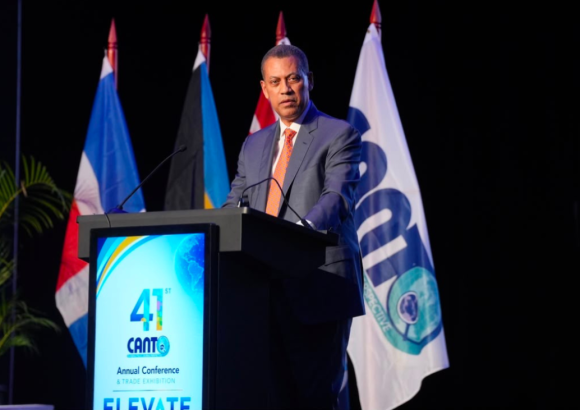
    Speaking at the opening ceremony of the 41st Annual Conference and Exhibition of the Caribbean Association of National Telecommunications Organizations (CANTO), hosted August 9 to 12 at Punta Cana’s Hard Rock Hotel & Casino, Guido Gómez Mazara, president of the Dominican Institute of Telecommunications (Indotel) Board of Directors, emphasized that robust digital connectivity has evolved from a convenience to a core strategic driver of national competitiveness, foreign direct investment, social equity, and broad-based economic development across the entire Caribbean.

    Gómez Mazara outlined the Dominican Republic’s ambitious national agenda to reshape its domestic production model by prioritizing large-scale investment in digital infrastructure and expansion of the digital economy. At the heart of the country’s plans is a commitment to inject more than $500 million into upgrading digital exchange infrastructure, boosting international connectivity through new and expanded submarine cable routes, and advancing the implementation of the national Artificial Intelligence Strategy. Beyond infrastructure, the country is actively working to build homegrown AI innovation capacity and carve out a sustainable role for Dominican stakeholders in global semiconductor supply chains.

    Indotel’s immediate regulatory priorities also focus on closing long-standing access gaps across the country, Gómez Mazara noted. The agency is pushing forward with aggressive expansion of 4G and 5G mobile networks, modernizing management of the public radio spectrum to accommodate growing demand, cutting the persistent digital divide that leaves marginalized communities disconnected, and fostering healthy, pro-consumer competition across the telecommunications sector.

    A core principle of the country’s regulatory approach, he stressed, is balancing two critical goals: creating a clear, attractive policy environment that draws in private and public investment, while ensuring that all telecommunications services remain affordable and accessible to every segment of the population. This balance is designed to prevent exclusion from the digital economy rooted in cost barriers, geographic isolation, or gaps in digital literacy, he explained.

    The conference also marked a milestone for Indotel: the Dominican regulator formally joined CANTO as a full member, making this year’s event its first annual participation as an official member of the regional association. Gómez Mazara highlighted that cross-border cooperation between Caribbean nations is not optional, but essential, to tackle shared technological challenges, harmonize regulatory frameworks, and exchange successful policy experiences that benefit the entire region.

    This year’s CANTO conference gathers hundreds of telecommunications providers, regulators, technology innovators, and policy stakeholders from across the Caribbean and beyond. Attendees are engaging in four days of discussions covering pressing industry topics including universal connectivity expansion, emerging digital innovation, new investment opportunities, adaptive regulatory policy, and building long-term digital competitiveness for small and medium economies across the region.

  • Four Americans unharmed after helicopter makes emergency landing in Samaná

    Four Americans unharmed after helicopter makes emergency landing in Samaná

    On a Tuesday flight over the northern Dominican province of Samaná, an unexpected mechanical malfunction forced a helicopter to carry out an emergency landing on the sandy shores of Las Cañas Beach, located in El Limón municipal district.

    All four people on board the aircraft, who hold United States citizenship, walked away from the incident completely uninjured. Local emergency management officials confirmed that there have been no reports of injuries or deaths connected to the landing.

    Within minutes of receiving the distress alert, first responders from the 911 Emergency and Security System were dispatched to the coastal landing site. They were joined by personnel from the Dominican Republic Navy and the National Police, who worked together to secure the area and provide immediate support to the helicopter’s occupants.

    After being assessed at the scene, three of the four individuals on board were transported to a nearby accommodation, where they will stay temporarily while logistical and technical arrangements are finalized. A specialized aviation technician has been called in to conduct a full inspection of the helicopter to identify the root of the technical issues and outline what repairs will be required.

    Local law enforcement and aviation authorities have launched an official investigation into the circumstances that led to the emergency landing. The full assessment of the aircraft’s structural and mechanical condition will be the key factor in determining whether the helicopter can eventually return to active service.

  • Dominican Republic receives more than 436,000 vaccine doses to protect children

    Dominican Republic receives more than 436,000 vaccine doses to protect children

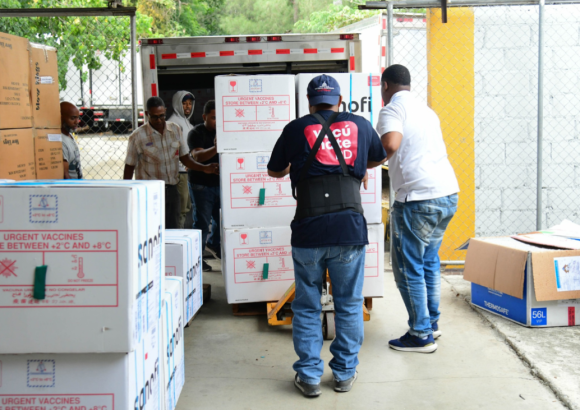
    In a major step forward for public health protection in the Dominican Republic, the nation’s Ministry of Public Health has added nearly 440,000 new vaccine doses to its national immunization stockpile, reinforcing the country’s longstanding Expanded Program on Immunization (EPI) and guaranteeing free, life-saving protection for children against a range of serious, vaccine-preventable illnesses. The delivery includes 386,990 doses of acellular hexavalent vaccine and 50,000 doses of acellular quadrivalent vaccine, both critical to the country’s routine childhood vaccination schedule.

    The hexavalent vaccine included in this shipment is designed to guard against six life-threatening conditions: diphtheria, tetanus, pertussis (whooping cough), polio, hepatitis B, and infection from Haemophilus influenzae type b. The latter is a bacterial pathogen that can trigger severe, potentially fatal complications such as bacterial meningitis, particularly in young children with underdeveloped immune systems. Per Dominican national health guidelines, this hexavalent vaccine is introduced to children starting at two months of age, with follow-up primary doses at four and six months, and a final booster shot administered once a child reaches 18 months old.

    The 50,000 doses of acellular quadrivalent vaccine, meanwhile, target four major diseases: diphtheria, tetanus, pertussis, and polio. This formulation is used exclusively as a booster dose for children once they reach four years of age, to extend and reinforce the immunity they received from earlier childhood vaccinations.

    Aida Lucía Vargas, who leads the Ministry’s Division of Vaccine-Preventable Diseases, explained that the new doses were purchased through the Pan American Health Organization’s (PAHO) Revolving Fund, a regional mechanism that streamlines vaccine procurement for countries across the Americas. A key benefit of this procurement pathway, Vargas noted, is that it guarantees all vaccine products meet strict international standards for quality, safety, and clinical efficacy, eliminating concerns about substandard biological products.

    All doses have already been pushed out through the country’s National Vaccination Network, and are currently available at no cost to families at more than 1,350 active vaccination centers spread across every region of the Dominican Republic. Beyond this immediate shipment, the Ministry of Public Health has confirmed it maintains robust strategic reserves of routine childhood vaccines, enough to keep immunization services running without interruption even if global supply chains face unexpected disruptions. Looking ahead, the ministry also anticipates receiving additional shipments of routine vaccines in the coming weeks, which will further bulk up national stockpiles and help the country maintain high rates of immunization coverage across all age groups.

  • PM Browne Seeks Public’s Advice on Removing Judges Over Lenient Sentences

    PM Browne Seeks Public’s Advice on Removing Judges Over Lenient Sentences

    The prime minister of Antigua and Barbuda, Gaston Browne, has reignited a long-running debate over the separation of powers between the executive and judicial branches of government, after announcing that his administration is considering action against justices who have overseen lenient sentencing for serious gun-related offenses.

    Years ago, Browne confirmed, parliament approved legislation that raised the maximum prison sentence for gun crimes to 15 years, a change driven by growing public concern over rampant gun violence in the country. At the time of the reform, members of the national judiciary advised the government against enacting mandatory minimum sentencing for these offenses. They argued that binding minimum sentences would unnecessarily limit judicial discretion, amounting to an overreach into the independent authority of the judicial branch.

    But despite the government’s compromise on that point, Browne says the current arrangement has led to a troubling outcome: a significant portion of the judiciary is misusing the discretionary power granted to them. Specifically, justices have been handing down unusually light sentences to repeat violent offenders and individuals convicted of particularly heinous violent crimes connected to illegal firearms.

    The prime minister warned that this pattern of lenient sentencing has created a tangible public safety crisis across the nation. To date, he estimates, roughly 250 convicted repeat offenders have been released early after serving short sentences, placing an unprecedented strain on local law enforcement agencies that are forced to continually re-arrest and re-process the same offenders. More importantly, Browne emphasized, these early releases put the broader public at constant risk of additional violent gun crime.

    Under the nation’s constitutional framework, Browne noted, the executive branch holds the legal authority to request the removal of underperforming or non-compliant judicial officials from active judicial jurisdiction. He went on to raise a second, more extreme option for non-citizen justices who refuse to step back from the bench after a formal request: if the judiciary fails to act to remove these lenient-sentencing justices, should the executive exercise its power to deport them from the country entirely? Browne framed the step as a measure justified by national security interests, arguing that the government has a core duty to protect citizens from the threat of violent crime enabled by irresponsible sentencing.

    Rather than moving forward unilaterally, the prime minister announced he is actively seeking input and guidance from the general public on how the government should proceed, opening a rare public consultation on a sensitive constitutional issue.

  • 15 Scarlet Macaws Released Into the Wild

    15 Scarlet Macaws Released Into the Wild

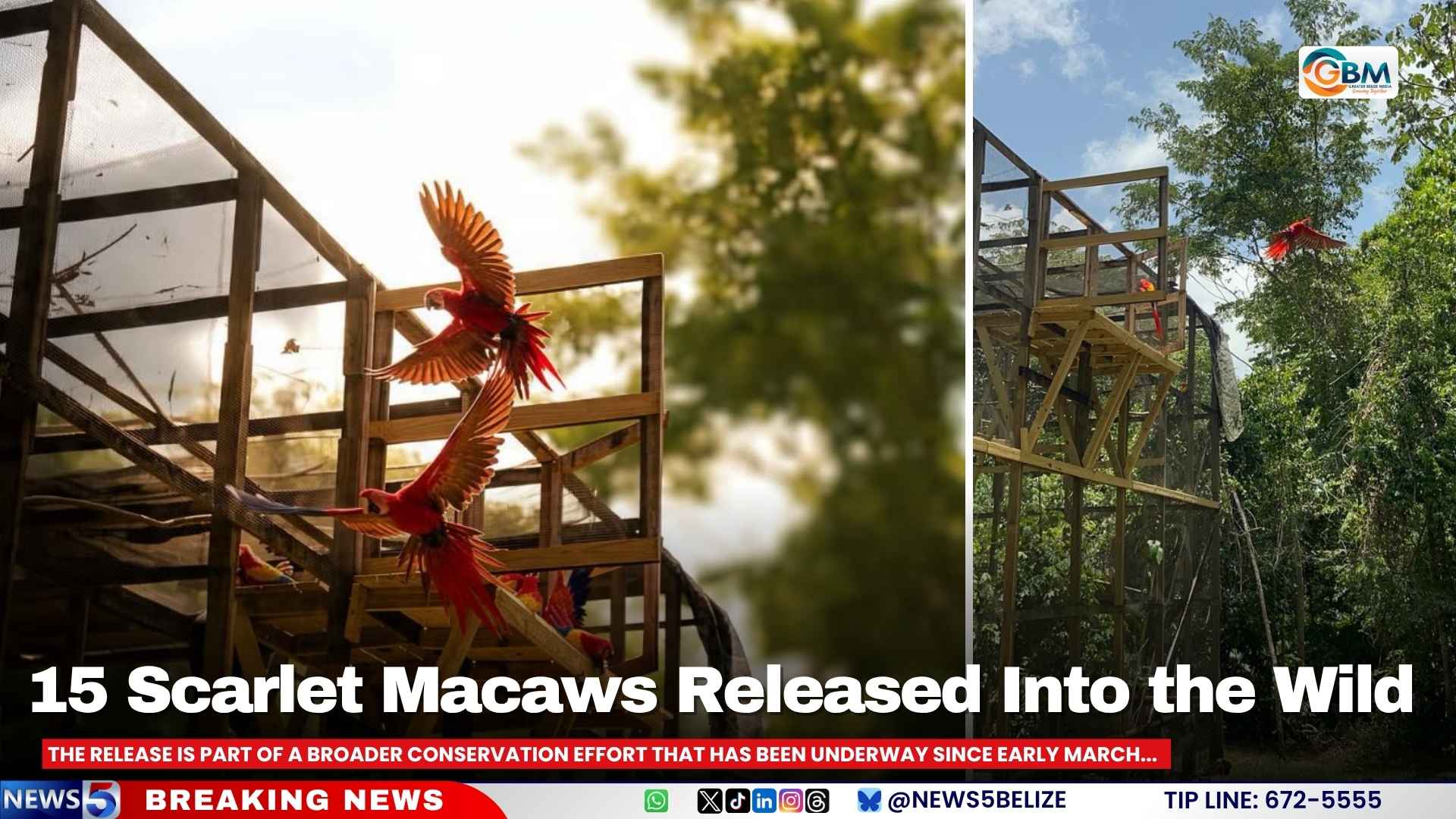
    On a Monday morning in August 2026, a landmark moment for Central American biodiversity unfolded in Belize’s forests: 15 rescued scarlet macaws took their first independent flights into the wild, marking a major milestone for a years-long collaborative conservation push led by two local organizations. The release, carried out jointly by Friends for Conservation and Development (FCD) and Belize’s Forest Department, capped off an intensive rehabilitation process that began when the birds were pulled from high-risk survival situations.

    Rescue interventions for Belize’s scarlet macaws are only authorized as a last resort, following strict protocols established by the Forest Department. Most triggers for rescue stem from scenarios that drastically raise the risk of poaching or death, such as three macaw chicks competing for space and resources in a single nesting cavity. After being pulled from these dangerous situations, each bird spent an average of 100 days receiving specialized care in a dedicated rehabilitation facility before release.

    The rehabilitation process was carefully designed to prepare the macaws for full independence in their natural habitat. After initial feeding and medical care, the birds were transferred to large flight cages, where they built muscle mass, honed their flying skills, and regained the natural instincts needed to forage and avoid threats in the wild. When the release cage door swung open on Monday, the macaws first gathered at their familiar supply of fruit and nuts, before one by one venturing into the open forest. Some soared deep into the tree canopy immediately, while others lingered near the release site, testing their new freedom. For minutes after the release, the forest echoed with the macaws’ distinctive squawks as the flock settled into their new home.

    This release is just one component of a broader, ongoing scarlet macaw conservation initiative that launched in early March 2026, when FCD’s Research Unit began systematic biological monitoring of wild macaw populations across Belize. The core of this effort is consistent, on-the-ground presence near macaw nesting cavities, a strategy that serves two key goals: tracking the growth and development of wild chicks, and deterring poachers who target young macaws before they are able to fly. To date, the program has supported 24 macaw chicks that have successfully fledged from their natural nesting sites.

    Despite these gains, the conservation program continues to face significant challenges from the illegal wildlife trade. Already this year, two wild macaw chicks have been stolen by poachers, who are locally referred to as “guaqueros.” Stolen macaws are typically smuggled across the border into Guatemala for the illegal pet trade, a multi-million dollar black market that has decimated parrot populations across Central America. To counter this transnational criminal activity, FCD and Belize’s Forest Department have partnered with Guatemalan authorities to maintain a binational taskforce that shares intelligence and coordinates cross-border operations to disrupt trafficking networks. Even with this collaborative framework in place, conservation officials acknowledge that gaps remain: it is still nearly impossible to track the exact number of scarlet macaws lost to illegal trafficking each year, leaving long-term population projections uncertain.

  • Belangrijkste spelers om dit seizoen in het Europese voetbal in de gaten te houden

    Belangrijkste spelers om dit seizoen in het Europese voetbal in de gaten te houden

    As top European football leagues enter their final pre-season preparations with friendly matches and training camps in full swing, the global football community has turned its full attention to the ongoing summer transfer window, where clubs are rushing to fill final roster gaps for both their starting lineups and depth squads ahead of the 2026-27 campaign. This season, three global superstars — Kylian Mbappé, Erling Haaland, and Lamine Yamal — stand out as the most anticipated players to watch across the Premier League, La Liga, and the UEFA Champions League.

    This summer’s transfer market has already delivered several high-profile moves: English international Elliot Anderson made the switch from Nottingham Forest to reigning Premier League champion Manchester City, while Ivorian talent Yan Diomandé moved from German side RB Leipzig to Spanish giant Real Madrid. Persistent transfer rumors also continue to swirl around Manchester City midfield anchor Rodri, with FC Barcelona emerging as a reported potential destination. Even with these big-name moves, this summer’s transfer activity has been surprisingly muted compared to recent years, marking one of the most stable off-seasons for European top-flight rosters in the last decade.

    Below, we break down the most influential players whose form will likely define their clubs’ title chances this coming season, backed by on-pitch performance data from recent campaigns:

    ### Declan Rice – Arsenal
    Fresh off a disappointing 2026 World Cup campaign with England, 27-year-old Declan Rice is fully focused on reaffirming his status as an irreplaceable cog for Mikel Arteta’s Arsenal side. Since joining from West Ham United, Rice has become the backbone of Arsenal’s defensive structure and ball retention system, while emerging as a lethal threat on set pieces – a major weapon for the Gunners last term. Arsenal scored a league-high 24 goals from set pieces last season, with eight coming from Rice’s deliveries and three more directly from his assists. The summer arrival of Bruno Guimarães from Newcastle United has slightly eased the physical and tactical burden on Rice, but his role remains non-negotiable as Arsenal chases its first Premier League title in decades.

    ### Bruno Fernandes – Manchester United
    Bruno Fernandes has been the beating heart of Manchester United’s first team since his arrival in 2020, and he remains the club’s most irreplaceable player — a long-term injury to Fernandes would leave United with no easy replacement. Last season, Fernandes delivered a career-best performance in the Premier League, notching 21 assists, more than any other player in the league, while leading the division in total chances created and progressive passes. He generates a large share of United’s attacking opportunities, but the summer departure of midfield partner Casemiro is expected to increase his defensive workload, a shift that could have a major impact on his attacking output this season.

    ### Cole Palmer – Chelsea
    Cole Palmer’s value to Chelsea lies in his versatile attacking threat, which has quickly made him the focal point of the Blues’ rebuild. After a breakout 2024/25 season where he was directly involved in 29 Premier League goals, Chelsea has built its entire attacking structure around Palmer’s creative ability. His unique skill set, which allows him to both score consistently and create high-quality chances for teammates, makes him impossible to replace for the West London side. After a underwhelming 2025/26 campaign, the 2026-27 season represents a key test: Palmer needs to return to his top form to push Chelsea back into title and European contention.

    ### Erling Haaland – Manchester City
    Erling Haaland’s outsized importance to Manchester City is underscored by his 27 Premier League goals in the 2025/26 season, which earned him his third consecutive Premier League Golden Boot. As City’s elite finisher, he converts the team’s sustained attacking dominance into valuable points on the table. His mere presence forces opposing defenses to assign multiple markers to him, opening up space and opportunities for City’s other attacking playmakers. If Rodri does leave the club this summer, Haaland will face increased pressure to create and finish more goals to keep City at the top of the league.

    ### Dominik Szoboszlai – Liverpool
    Szoboszlai was a key driving force behind Liverpool’s 2024/25 Premier League title win, and he stepped up again to carry the team through a disappointing 2025/26 campaign. He led Liverpool in both chances created and successful passes in the final third of the pitch last season, and his positional versatility — which has seen him fill in effectively at right back when needed — makes him nearly irreplaceable for Arne Slot’s side.

    ### Kylian Mbappé – Real Madrid
    Mbappé’s form will go a long way toward determining whether Real Madrid can end Barcelona’s run of two consecutive La Liga titles. Last season, Mbappé notched 25 goals and five assists in 31 La Liga appearances, and he finished as the top scorer in the Champions League with 15 goals. The biggest challenge for Real Madrid is not Mbappé’s ability, but rather integrating his talent alongside fellow superstar Jude Bellingham to maximize both players’ impact. New Real Madrid manager José Mourinho has been tasked with solving this tactical puzzle ahead of the new season.

    ### Lamine Yamal – Barcelona
    The influence of 19-year-old Lamine Yamal has grown steadily at Barcelona, especially as former star striker Robert Lewandowski’s on-pitch impact has declined. Last season, Yamal recorded 16 goals and 11 assists in just 28 appearances, directly contributing to 27 competitive goals for the club. His ability to create chances and beat defenders one-on-one forces opposing defenses to completely adjust their structure to contain him. Yamal’s impact was a core factor in Barcelona’s domestic treble win last season.

    ### Ousmane Dembélé – Paris Saint-Germain
    Current Ballon d’Or winner Ousmane Dembélé remains invaluable to PSG, thanks to his unique combination of finishing, creativity, and all-around attacking contribution. In the 2024/25 season, Dembélé scored 35 goals and was directly involved in 51 total goals for the French champions. He notched a solid 17 goals in 22 Ligue 1 appearances and 10 goals in eight Champions League matches last season, though the campaign was seen as a step down from his record-breaking 2024/25 form.

    ### Harry Kane – Bayern München
    Since joining Bayern München from Tottenham Hotspur, Harry Kane has transformed into one of the most lethal finishers in European football. Last season, he scored 36 goals in 31 Bundesliga appearances, earning him his third consecutive Bundesliga Golden Boot, and added another 14 goals in the Champions League. His relentless goalscoring instinct remains one of Bayern’s most valuable assets as they chase both domestic and European glory.

    ### Marcus Rashford – Manchester United (Tentative)
    After a rocky spell at Manchester United that saw him fall out of favor under former manager Ruben Amorim, Rashford revived his career last season on loan at Barcelona, where he reconnected with his best form. He is still not confirmed to be at Old Trafford for the 2026-27 season, but new interim manager Michael Carrick is open to giving Rashford a second chance at his boyhood club. In 32 La Liga appearances for Barcelona last season, Rashford scored eight goals, and his play showed clear signs of a return to the elite level he reached in previous years. Wherever he plays next season, if Rashford can fully regain his top form, his pace and clinical finishing will make him a nightmare for opposing defenses.

    From defending champions to title-chasing contenders, these 10 players are unquestionably the ones who will decide the story of the 2026-27 European football season.