博客

  • Boy Found Stabbed After Alleged Kidnapping

    Boy Found Stabbed After Alleged Kidnapping

    Law enforcement officials in Antigua have opened a full criminal investigation into an alleged kidnapping that left a young boy hospitalized with multiple stab wounds across his body.

    According to initial reports, the injured child was discovered several hours after the alleged abduction took place. Emergency responders immediately transported him to the island’s main healthcare facility, Sir Lester Bird Medical Centre, to receive urgent medical intervention for his wounds.

    Insiders familiar with the case confirmed that the boy suffered lacerations and puncture wounds across multiple areas of his body. Fortunately, medical teams have assessed that his injuries are not expected to prove fatal, though no further updates on his current progress have been released to the public as of yet.

    To date, investigating authorities have not disclosed any public information about the potential motive behind the incident, nor have they confirmed details about how the alleged kidnapping unfolded. Detectives are currently working through evidence and witness statements to piece together a full timeline of events and identify any persons of interest connected to the attack.

    The investigation remains ongoing, and officials have confirmed that additional details will be released to the public once further progress is made in the inquiry.

  • Man to compensate ex-girlfriend for beating her at work

    Man to compensate ex-girlfriend for beating her at work

    A 44-year-old security guard from St. Vincent and the Grenadines has been found guilty of assault causing actual bodily harm against his former girlfriend and former coworker, and has been ordered by the court to pay thousands of dollars in combined fines and compensation to his victim.

    Roen Richardson, a resident of Ottley Hall, stood before Senior Magistrate Tammika McKenzie at the Kingstown Magistrate’s Court on June 2 to face judgement for the September 12, 2025 incident that left victim Cleopatra Harris, a Largo Heights resident, with a permanent scar on her hand.

    Court testimony laid out the background of the case: Harris and Richardson had worked together at the Kingstown Town Board and maintained a romantic relationship for two and a half years, before the couple split roughly six weeks ahead of the attack.

    On the morning of the assault, Harris was working her shift along Bedford Street when Richardson approached her to ask if she would reconcile and restart their relationship. Shortly after his request, a man with a non-Vincentian accent approached Harris for directions to a local park, and hugged her to thank her for her assistance.

    Witnessing the brief hug, an enraged Richardson immediately confronted Harris: he shoved her hard in the chest, publicly claimed that he was her romantic partner, and launched into a stream of aggressive, misogynistic insults targeting her character.

    When Richardson returned to the worksite before 2 p.m. that same day, he brought a chair that Harris says was made of metal and loaned it to her to sit on, but continued to hurl abusive language at her. Fed up with his harassment, Harris stood up and called Richardson foolish, asserting that as an independent woman, she had full right to make her own choices about her interactions and personal life.

    In response to Harris’s rebuke, Richardson picked up the same chair he had loaned her and struck her hard on the hand with the furniture. Richardson disputed the description of the chair during cross-examination, claiming it was made of plastic rather than metal, the only point of contradiction he raised against the victim’s testimony.

    After the attack, Harris first reported the incident to her workplace supervisor, who arranged an internal meeting with Richardson. When the matter was not resolved through workplace mediation, Harris filed an official report with the Kingstown Criminal Investigation Unit (CID), which provided her with medical documentation for her injuries and launched a formal investigation. Harris presented investigators with text messages Richardson sent her following the attack, in which he admitted he had not intended to hurt her. The victim told authorities she wanted no further contact with Richardson at all.

    Richardson also introduced court documents showing that Harris had reached out to him after the incident, though Harris clarified that the messages only served to repeat her demand that he stop contacting her. The defendant chose not to deliver a full testimony in his own defense, stating simply that he only wished to conclude the court proceedings as quickly as possible.

    During the sentencing phase, Harris shared that the two-and-a-half-year relationship with Richardson had been consistently abusive. She told the court that she had chosen to stay in the relationship for far longer than she should have, because she lived in constant fear of his retaliation. While Harris requested that the court not sentence Richardson to prison, she asked for EC$5,000 (roughly $1,850 USD) in compensation, noting that the visible scar from the chair attack still remains on her hand years after the incident.

    Prosecutors, led by Police Corporal Samuel Stapleton, informed the court that Richardson had a prior criminal conviction from 2016 on a charge of damaging personal cellular property. The prosecution did not push for a custodial prison sentence for the 2025 assault.

    In her final ruling, Senior Magistrate McKenzie ordered Richardson to pay a total of EC$750 (around $278 USD) in compensation to Harris: EC$450 of that sum is due immediately, with the remaining balance required by June 26. Richardson was also issued an additional fine of EC$250, with EC$150 due by June 26 and the rest to be paid by July 15. If Richardson fails to meet the payment deadlines for either the compensation or the fine, he will serve a five-month prison sentence for each unpaid amount.


  • BPMSI restructures ahead of August international

    BPMSI restructures ahead of August international

    Barbados-based motorsport organization Bushy Park Motorsports Inc. (BPMSI) has announced a targeted restructuring of its senior leadership team, a strategic move designed to boost preparations for the highly anticipated GT Challenge de las Americas, set to take place at the venue on August 29 and 30. In the executive reshuffle, two-time national champion Neil “Shocky” Corbin has stepped into the role of chairman, while prominent karting community leader Jamal Estwick has been appointed vice-chairman. Corbin, who claimed top honors at the St. Philip circuit in 1998 and 2000 as a competitive Group 3B racer, brings a unique blend of on-track prowess and off-track administrative experience to the new post. After departing from active motorsport leadership several years ago to prioritize his family and professional business commitments, Corbin has maintained close ties to the local racing community, following every development in the sport closely. Now returning to lead the organization, he expressed enthusiasm for reconnecting with longtime colleagues and steering the club into its next chapter. “We have laid out solid, actionable plans to capitalize on the momentum generated by the arrival of the GT Challenge,” Corbin said in a statement following his appointment. “Watch this space for exciting updates as we move forward.” For his part, new vice-chairman Estwick is no stranger to grassroots motorsport development in Barbados. He is one of the founding members of Track Champs Motorsport Barbados (TCMB), a community-focused collective that brings together racing enthusiasts of all skill levels. Over recent years, the group has provided consistent opportunities for new and experienced drivers alike to refine their abilities through regular competitive events hosted at the Bushy Park Karting Experience. In a nod to continuity amid the reshuffle, long-serving Competition Secretary Kurt Seabra will retain his position, while immediate past chairman Sean Maloney will remain on the organization’s board of directors to provide institutional knowledge and transition support. BPMSI officials confirmed that three additional board positions are still open, and the organization will work to fill these roles over the coming weeks as final preparations for the August international event accelerate. The leadership shakeup comes as Barbados gears up to host one of the most high-profile regional motorsport events of the year, drawing competitors and fans from across the Americas to the Bushy Park facility.

  • Cyclist struck by vehicle on Factory Road

    Cyclist struck by vehicle on Factory Road

    A traffic collision involving a cyclist and a motor vehicle has been confirmed on Factory Road, leaving the bicyclist with unspecified injuries. Local emergency response teams were dispatched to the scene shortly after the incident was reported, providing immediate medical attention to the affected cyclist before transporting them to a nearby medical facility for further evaluation and treatment. As of the initial reporting, authorities have not released additional details regarding the circumstances that led to the crash, including the identity of the individuals involved, the severity of the cyclist’s injuries, or whether any traffic citations or criminal charges will be filed. The collision prompted temporary traffic flow disruptions along Factory Road while first responders cleared the scene and conducted an initial on-site investigation, with local law enforcement urging motorists and non-motorized travelers to exercise additional caution when traveling through the area as the investigation into the crash continues. Community members have been reminded to remain alert for vulnerable road users, particularly during peak travel times when visibility can be reduced and traffic volumes are higher.

  • CARICOM Must Accelerate Digital Transformation to Safeguard Competitiveness, Resilience and Sovereignty

    CARICOM Must Accelerate Digital Transformation to Safeguard Competitiveness, Resilience and Sovereignty

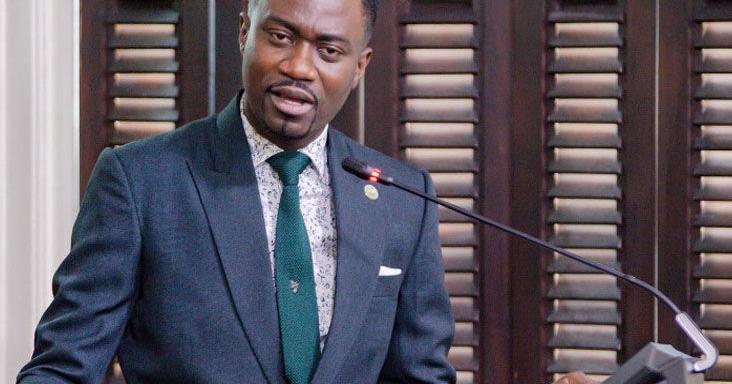
    Against a backdrop of shifting global digital dynamics and rising economic uncertainty, Grenada Prime Minister Dickon Mitchell has issued a clarion call for accelerated, deeper regional collaboration to drive forward digital transformation across the Caribbean Community (CARICOM). As the Lead Head of Government responsible for Science and Technology within CARICOM’s Quasi Cabinet, Mitchell made his case at the opening session of a gathering of the bloc’s ICT ministers, an event convened around the core theme ‘Accelerating Digital Development to 2030’.

    In his opening remarks, Mitchell emphasized that modern digital technologies have transitioned from optional innovations to foundational pillars of lasting economic resilience, robust national security, and inclusive sustainable development across the region. He pointed to the tangible progress CARICOM has already unlocked through collective action, including the advancement of the CARICOM Single ICT Space, formal adoption of the 2025–2030 Strategic Framework for Digital Resilience, and enhanced cross-regional coordination on critical cybersecurity initiatives.

    “If CARICOM is to retain its global competitiveness and remain relevant in the 21st century, we must act collectively and strategically to guarantee our region is not sidelined on the margins of the fast-growing global digital economy,” Mitchell told assembled delegates. The prime minister stressed that small island states are particularly vulnerable to the ripple effects of global uncertainty, economic volatility, and shifting geopolitical tensions, making coordinated action non-negotiable as the world updates rules for key digital domains including artificial intelligence, digital trade, and data and internet governance. No individual CARICOM member state can successfully navigate the complex digital transition in isolation, Mitchell argued, noting that coordinated regional action is the only path to collective strength.

    “It is time we move decisively from policy discussions to measurable implementation and tangible outcomes to build a unified CARICOM digital economy,” he added.

    A key focus of Mitchell’s remarks centered on the transformative potential of artificial intelligence, a technology increasingly recognized as a defining force reshaping the global economic landscape. He noted that AI can streamline public service delivery, boost cross-sector productivity, and catalyze the creation of entirely new industries across the Caribbean. For CARICOM’s small developing economies, AI opens an unprecedented opportunity to leapfrog traditional, slower development pathways. Still, Mitchell cautioned that widespread adoption of the technology must be rooted in core principles of inclusion, public trust, and ethical governance to ensure benefits are shared broadly.

    Mitchell also highlighted two under-prioritized priorities for the bloc: expanding investments in foundational digital infrastructure, strengthening cybersecurity systems, advancing digital skills training, and updating regulatory frameworks that can keep pace with rapid technological change, as well as equipping the region’s large youth population with the tools they need to participate and thrive in the growing digital economy. With 60% of CARICOM’s 16 million citizens under the age of 30, investing in youth digital inclusion is critical to unlocking the bloc’s long-term digital potential.

    During the three-day meeting, ministers reviewed and formally approved new frameworks covering cross-regional digital cooperation, AI governance, cybersecurity standards, and digital skills development.

    Established in 1973 via the signing of the Treaty of Chaguaramas, CARICOM revised its founding agreement in 2001 to enable the creation of a single market and single economy. Today, the bloc counts 15 full member states and six associate members, serving a combined population of roughly 16 million people. Its work is organized around four core pillars: economic integration, coordinated foreign policy, human and social development, and security cooperation. Widely regarded as one of the most successful integration projects in the developing world, CARICOM’s overarching mission is to build an integrated, inclusive, and resilient community driven by knowledge, innovation, excellence, and productivity, where every citizen has equal opportunity to pursue their potential amid guaranteed human rights and social justice, and shares in the bloc’s collective prosperity. The CARICOM Secretariat, the bloc’s central administrative body, is headquartered in Georgetown, Guyana.

  • Wijnerman erkent inconsistenties in begrotings- en schuldcijfers

    Wijnerman erkent inconsistenties in begrotings- en schuldcijfers

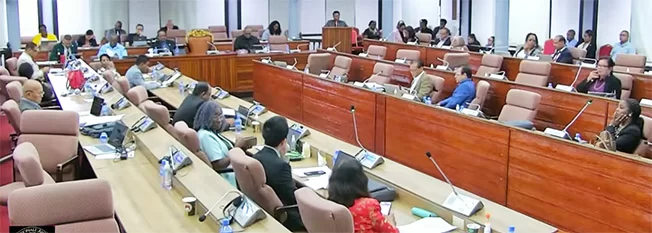
    Suriname’s Minister of Finance and Planning Adelien Wijnerman has publicly acknowledged conflicting numerical discrepancies across three key government fiscal documents: the 2026 national budget, annual financial plan, and national debt schedule. The admission came during Friday’s parliamentary budget debate, after multiple members of the National Assembly raised questions about mismatched spending and revenue figures across the policy papers.

    Wijnerman explained that the inconsistencies stemmed from the documents being drafted at separate time points, rather than intentional misreporting. She has committed to updating all conflicting figures and submitting revised versions of the documents to the National Assembly before the second round of budget deliberations gets underway. Government ministers will continue responding to parliamentary questions on Monday, with seven cabinet members having already spoken to lawmakers as of Friday’s session.

    The minister laid out the core 2026 fiscal projections to the assembly, confirming that total state revenues are forecast at roughly 65 billion Surinamese dollars (SRD), while total annual expenditures are projected at approximately SRD 77 billion. This produces a projected budget deficit of SRD 12.8 billion, equal to 5.1% of the country’s gross domestic product.

    Wijnerman also noted that Suriname’s current debt-to-GDP ratio remains above the legal cap of 60% set by national law. Under recent legislative changes, the country has until the end of 2029 to bring the national debt back down to the 60% threshold. The government plans to meet this target through a combination of scheduled debt repayments, constrained fiscal deficits, sustained economic growth, and prioritizing financing from multilateral and bilateral institutional sources.

    For the second half of 2026, the minister projected total debt service obligations will reach roughly SRD 9.8 billion. Around SRD 6 billion of that total will go toward foreign interest payments and principal repayments, while SRD 4 billion will cover domestic debt obligations. Wijnerman added that approximately 19% of the government’s total projected 2026 revenue will be allocated to debt interest and repayment costs.

    She clarified that all funds reflected in the current debt plan are tied to previously finalized loan agreements, not new borrowing. The funds are earmarked for program-related spending in the 2026 fiscal year. The updated national debt plan will be submitted to parliament alongside the revised budget documents ahead of the next debate round.

  • Domino team targets success on world stage in DR

    Domino team targets success on world stage in DR

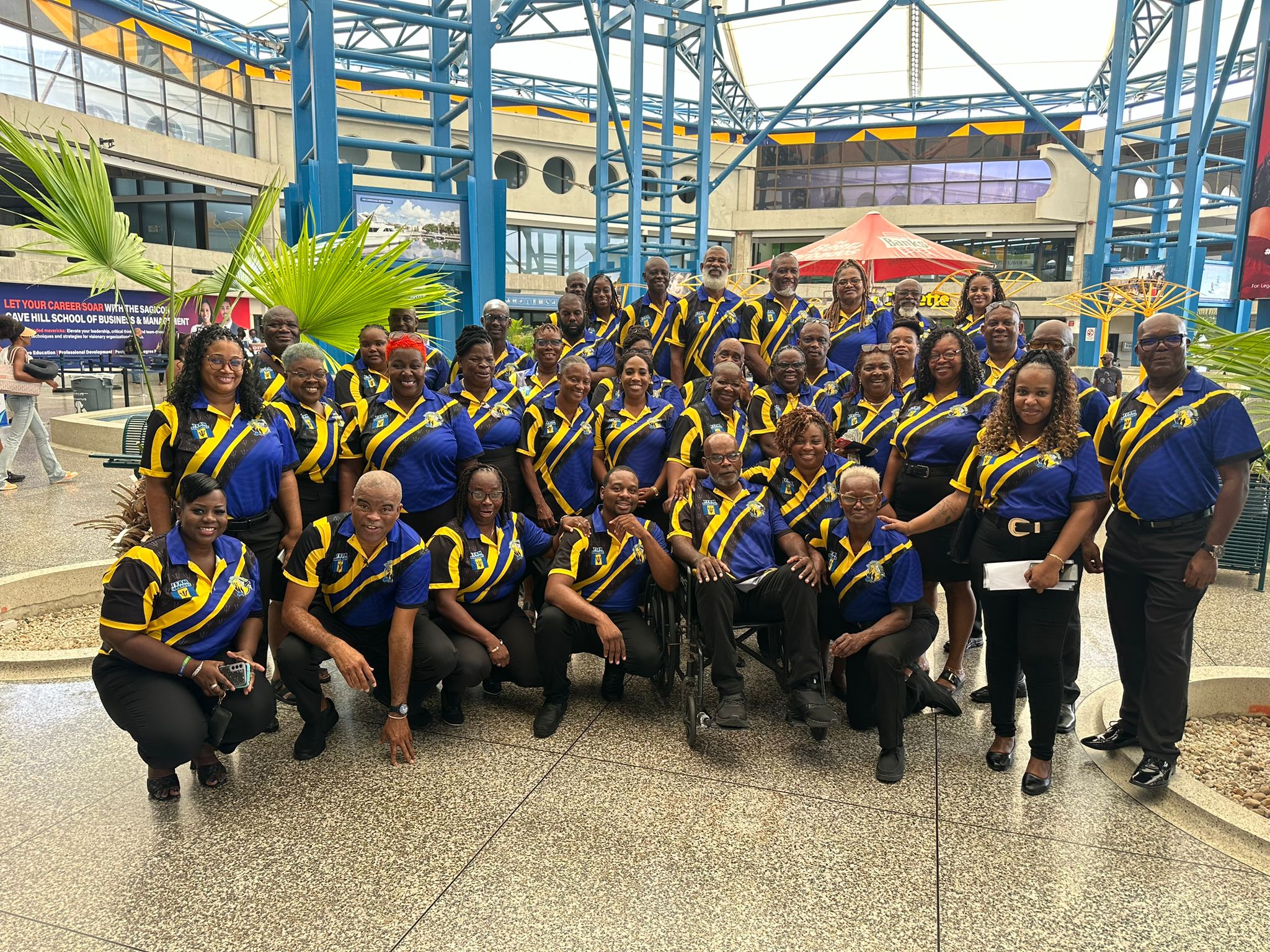
    One of Barbados’ most ambitious competitive domino squads, De Bajan Travelers, is gearing up to deliver a standout performance at the upcoming FEMUNDO World Domino Championships, scheduled to run from October 28 to November 2 in the Dominican Republic. This annual elite tournament draws hundreds of top domino players from across the globe, with approximately 500 athletes competing across three distinct divisions: individual, four-person team, and pairs play.\n\nFor De Bajan Travelers, competing in high-profile international domino events has become a yearly tradition, rooted in a mission far broader than just chasing trophies. Team president Alicia Harewood outlined the group’s core goals ahead of the 2024 tournament: to grow awareness of 200-style dominoes, encourage new participants to learn the variant, test the team’s skill against the world’s best players, and secure a place on the podium to claim the event’s prize money.\n\nThis year, Barbados will field one of the largest national contingents in the team’s history, a marked shift from 2023 when the squad hosted the tournament and competed with a much smaller roster. Currently boasting 55 registered members, De Bajan Travelers expects all but roughly six members to make the trip to the Dominican Republic, and has added extra participants to bring the total delegation size to an estimated 60 athletes.\n\nTeam vice president Eric recalled the squad’s strong showing at the 2023 tournament, when the small but mighty delegation outperformed expectations to claim multiple top placements. “We took home the individual title, finished second in the four-person team competition, and had three to four individual players rank in the top 12 overall,” Lewis explained. This year, the team is aiming to build on that 2023 success and climb even higher in the rankings.\n\nSending a 60-person delegation to the international tournament requires substantial financial backing, so the team has already launched a series of community fundraising initiatives to cover travel and entry costs. Upcoming events include a three-hand domino tournament kicking off June 29, which will open with four preliminary rounds before moving to an elimination bracket to determine winners, followed by a fundraising cruise scheduled for September 25. Harewood noted that the squad is also actively seeking additional financial support from local sponsors and community partners to help the large contingent reach the starting line in October.

  • COVAB en Streekziekenhuis Marowijne starten samenwerking voor zorgopleidingen

    COVAB en Streekziekenhuis Marowijne starten samenwerking voor zorgopleidingen

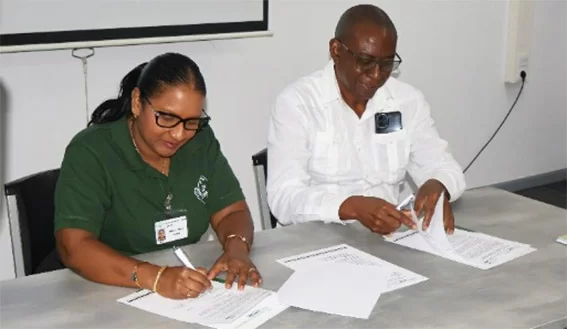
    A groundbreaking public health partnership was signed on Friday in Suriname, designed to expand access to local healthcare training and address longstanding staffing gaps in rural regional care. The agreement was formalized by Angèle A. Wallerlei-Kumbangsila, director of EFS College COVAB, and Henk Aviankoi, director of Streekziekenhuis Marowijne (Regional Hospital Marowijne), with Suriname’s Minister of Public Health, Welfare and Labor André Misiekaba in attendance.

    For years, Suriname’s healthcare education and clinical capacity have been heavily concentrated in the capital city of Paramaribo, creating a critical shortage of qualified medical personnel in outlying districts like Marowijne. This new collaboration forms a core part of the national government’s policy to decentralize healthcare training, with the explicit goal of improving the resiliency and quality of regional care across the country.

    Under the terms of the partnership, students from Marowijne and neighboring districts will now be able to complete their full healthcare training close to home, eliminating the need to relocate to Paramaribo for their education. EFS College COVAB will lead the academic instruction component of the program, while the Marowijne Regional Hospital will serve as an on-site practical training and clinical learning hub for participating students.

    Project organizers emphasize that training local students in their home regions significantly increases the likelihood that graduates will remain and work in the area after completing their program. This pattern is consistently supported by global healthcare workforce data, which repeatedly shows that learners trained in their native rural or regional communities are far more likely to build long-term careers in those same underserved areas.

    The initiative is expected to deliver a wide range of tangible benefits beyond expanded access. It will boost enrollment of local Marowijne students by removing the financial barriers of long-distance travel and off-site housing costs that have historically prevented many qualified candidates from pursuing healthcare careers. Higher graduation rates are also projected, as students no longer face the added stress of relocation and unexpected living expenses. Over time, the partnership aims to grow the pool of qualified local care workers and create a more balanced distribution of healthcare professionals across the entire nation.

    A key infrastructure component of the project is the development of fully equipped distance learning classrooms, which leverage modern educational technology to deliver high-quality instruction without mandatory travel to the capital. By combining local clinical training with connected remote learning tools, partnering institutions aim to make healthcare education more accessible while building long-term, sustainable strength for regional healthcare systems.

    Suriname’s Ministry of Public Health has framed the partnership as a critical milestone in building a future-ready national healthcare system, one that integrates academic training, clinical practice, and regional development into a cohesive, community-centered model.

  • Farley promises a  smooth transition

    Farley promises a smooth transition

    The long-awaited opening of Tobago’s upgraded ANR Robinson International Airport terminal has a confirmed opening date, according to top regional official Farley Augustine, Chief Secretary of the Tobago House of Assembly (THA). Augustine shared preliminary details about the milestone project during a press briefing held Wednesday at Scarborough Library, where he addressed growing concerns from local airport concessionaires over proposed high relocation and rental costs.

    While Augustine confirmed that a concrete launch timeline has been finalized, he noted that the official public announcement will be made this coming Monday, keeping the exact date under wraps for the short term. A core priority for the THA throughout the transition process has been addressing complaints from small and micro local vendors, many of whom have spoken out against steep proposed space rental fees in the new facility. Some vendors even reported having their applications for commercial space rejected outright, while others pulled out of the process entirely due to cost barriers.

    Augustine moved to ease these concerns this week, emphasizing that punitive exorbitant pricing is neither supported by the THA nor aligned with the Airports Authority of Trinidad and Tobago’s (AATT) goals for the new terminal. “I will not support nor do I think it is the intention of the Airports Authority to be punitive in any way or to be extremely harsh in terms of their fees…and so I think with some patience and some time people would be moved into the airport effortlessly,” he told reporters.

    To make the transition seamless and accessible for local small businesses, the THA has pledged direct support and dedicated funding for booth and kiosk construction for micro-entrepreneurs. Augustine acknowledged that covering custom build-out costs to meet the new terminal’s design and quality standards would pose a major financial burden for small operators working with limited budgets. That is why the regional assembly is stepping in to cover this work, ensuring local vendors can meet requirements without taking on unsustainable debt.

    Earlier on Wednesday, Augustine led a coordinated stakeholder meeting directly at the new terminal site alongside AATT representatives and affected concessionaires. The session included a guided walkthrough of all assigned commercial spaces, designed to answer questions, clarify logistics, and confirm readiness ahead of the official relocation. This on-site engagement is part of a broader series of preparation activities leading up to the terminal’s opening.

    In a formal statement released by the Office of the Chief Secretary, officials confirmed the AATT has guaranteed that all existing small and micro-business operators currently working out of the old terminal — including local sweet vendors and other micro-enterprises — will receive the opportunity to relocate to the new facility. Augustine emphasized that this inclusive approach is intentional: the entire transition process is structured to center local enterprise, support small business growth, and ultimately deliver a better, more authentic experience for visitors arriving in Tobago.

  • Burnout worries CoP

    Burnout worries CoP

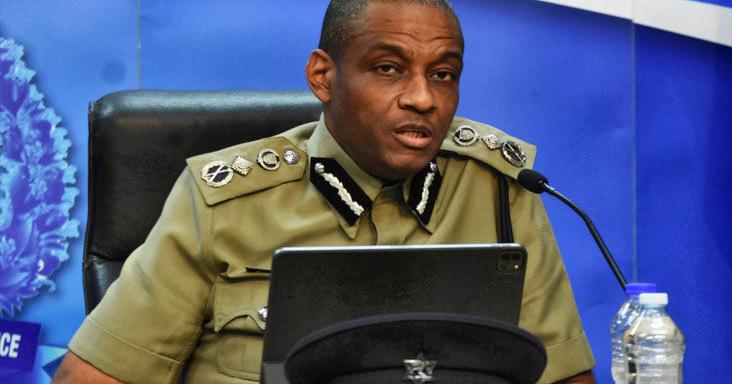
    Top law enforcement leaders in Trinidad and Tobago are calling for urgent systemic changes to address a growing crisis of chronic understaffing, widespread officer burnout and unaddressed mental health strains across the national police service. Speaking at a press conference held Thursday at the Police Administration Building in Port of Spain, Police Commissioner Allister Guevarro detailed how persistent manpower gaps have stretched the service’s personnel to their breaking point, a crisis that has worsened dramatically since the onset of the COVID-19 pandemic six years ago.

    Guevarro explained that over the past half-decade, officers have worked almost continuously, repeatedly called on to exceed their regular duty obligations to provide security for a packed calendar of major national events and public gatherings year-round. Even during extended periods of national state of emergency, officers have been required to maintain full public presence during peak holiday and celebration periods including Christmas, Trinidad and Tobago’s world-famous Carnival, and Independence Day observances, placing unrelenting pressure on the existing limited workforce.

    This sustained strain is the core motivation behind Guevarro’s long-running campaign to expand the TTPS’s authorised officer headcount. He emphasized that the crisis demands both immediate interventions and long-term structural solutions, rather than the ongoing government delays that have kept the service understaffed.

    Addressing widespread reports that officers have been denied vacation leave due to operational demands tied to the current state of emergency, Guevarro clarified that the TTPS has not implemented a blanket ban on leave. Instead, all leave requests are reviewed and approved on a case-by-case basis, a policy designed to balance the force’s operational readiness with officers’ critical need for rest and recovery. “One of the decisions I made, I spoke to the Deputy Commissioner of Police Administration…We have not been restricting vacation leave to officers, even though the state of emergency exists,” Guevarro said. “We are trying to manage the leave of the officers in a manner that will still allow them the opportunity to get that much-needed refresh and reflection.”

    The Commissioner’s comments came on the heels of two back-to-back traumatic deaths of serving officers that have rocked the law enforcement community, underscoring the urgency of addressing unmet mental health needs. Last week, one officer was fatally shot in Sangre Grande, and a second officer died in prison custody just days later; Guevarro noted that both tragedies have weighed heavily on TTPS leadership, with investigations still ongoing to clarify the circumstances of the second death. Most recently, a suspected suicide on June 16 left Corporal Yohanis Joseph of the Sangre Grande Police Station dead, and a member of the Inter-Agency Task Force wounded, bringing the crisis into the public spotlight.

    These incidents, Guevarro said, reinforce how critical it is to prioritize mental health support for law enforcement. He added that mental health struggles are not unique to policing, cutting across all sectors of Trinidad and Tobago society, urging anyone showing signs of distress to reach out for professional help without delay. The Commissioner also raised concerns about the additional toll that constant public criticism, particularly unregulated attacks on social media, has had on rank-and-file officer morale.

    Ishmael Pitt, president of the Trinidad and Tobago Police Service Social and Welfare Association and an Assistant Superintendent of Police, echoed Guevarro’s warnings in comments to local outlet *Express* on Wednesday. Pitt renewed the association’s longstanding call for greater investment in officer mental health and stronger protections for work-life balance, noting that the suspected suicide of Corporal Joseph has highlighted the severity of long-unaddressed issues the association has flagged for years.

    “We are deeply concerned as to the mental health of our officers. We have been seeing a lot of strange developments recently, and this incident yesterday [Tuesday] emphasises the consistent call we have been making regarding the work-life balance of police officers,” Pitt said. He noted that policing is inherently an emotionally and physically demanding occupation, but officers also carry private personal responsibilities, family obligations and personal struggles that must be accommodated. Pitt closed by urging any officer overwhelmed by personal or professional challenges to reach out for available support services.