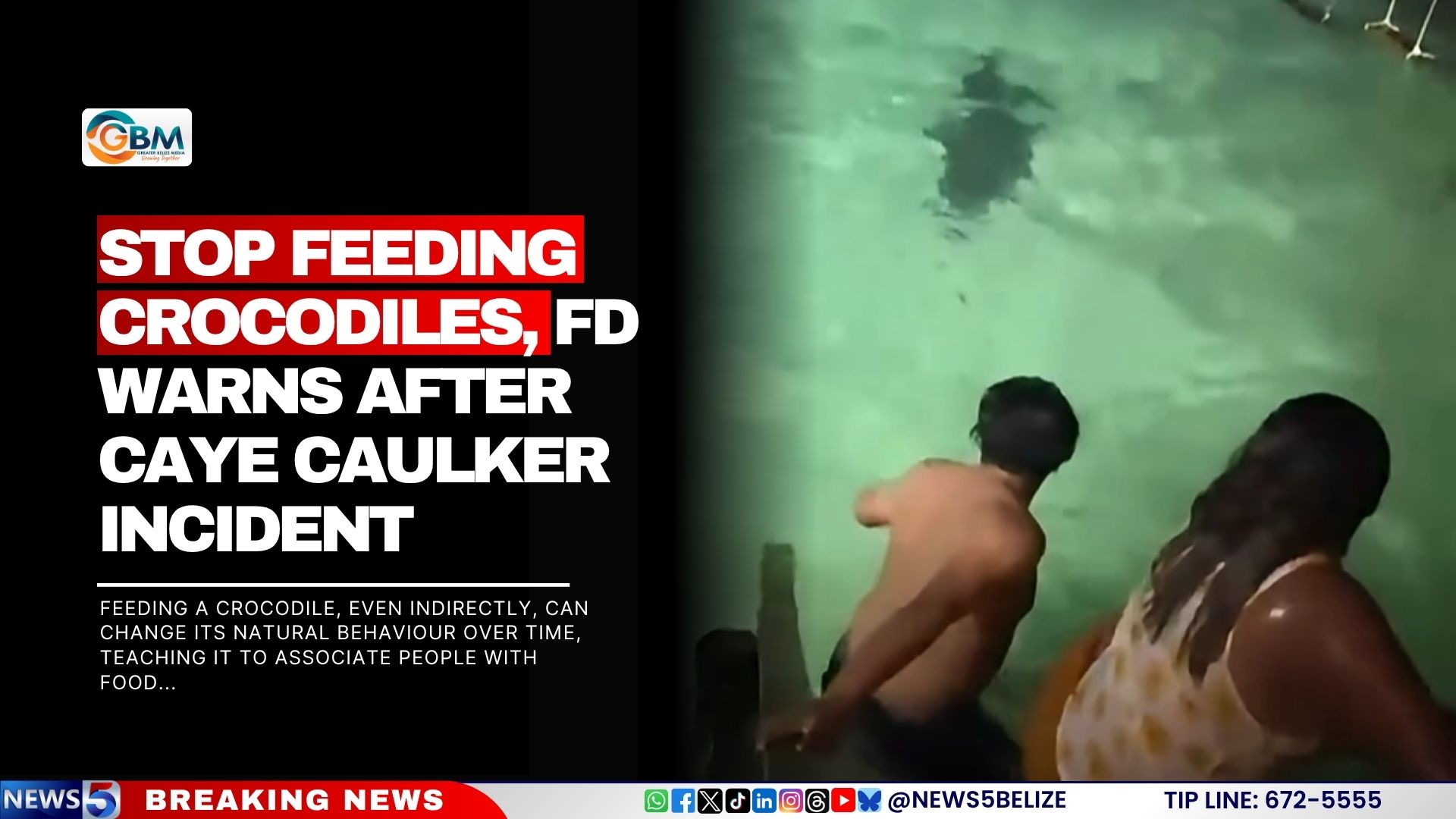
In the wake of a recent close call between humans and crocodiles on Caye Caulker, Belize’s Forest Department has put out a critical public appeal, urging both local residents and visiting tourists to avoid feeding, approaching, or engaging directly with the region’s native crocodile populations. The advisory follows a growing stream of public reports and viral social media content documenting increasingly frequent close encounters between people and the large reptiles across the coastal nation.
Though the Caye Caulker incident did not result in any physical contact or human injuries, wildlife authorities stress it serves as a vital wake-up call about the urgent need for responsible behavior in shared crocodile habitats. Department officials partnered with two regional wildlife organizations — ACES Wildlife Rescue and the Crocodile Research Coalition — to release the updated guidelines, emphasizing that complacency around crocodiles can quickly lead to life-threatening outcomes.
Crocodiles are an indigenous species to Belize, naturally thriving in the country’s extensive network of mangroves, coastal lagoons, freshwater wetlands, river systems, and nearshore coastal zones. But as residential and tourism development expands into these traditional crocodile territories, human-wildlife overlap has grown dramatically. Officials have noted a sharp uptick in not just encounters, but in intentional feeding and luring of crocodiles by people — a dangerous practice that authorities say must stop entirely.
Even occasional or indirect feeding triggers long-term shifts in crocodile behavior, experts explain. Over time, the reptiles learn to associate human presence with a source of food, erasing their natural wariness of people and drastically increasing the likelihood of aggressive, dangerous interactions in the future. Instead of engaging with crocodiles, the public is encouraged to practice ethical, low-impact wildlife viewing that prioritizes maintaining a safe, respectful distance from the animals in their native environment.
The Forest Department has outlined clear, actionable rules for the public to follow to reduce risk: never feed, touch, or provoke a crocodile, and never attempt to capture, handle, or relocate a crocodile on your own. People are strongly advised to avoid swimming after dark or swimming in mangrove zones that are known crocodile habitats, and to always supervise children and keep pets leashed and well back from the water’s edge in these areas. Local residents and tourism-related businesses are also asked to keep coastal waterways clear of food waste, fish scraps, and other organic debris that could attract crocodiles to populated shorelines. For any crocodile displaying unusual or threatening behavior, the public is instructed to contact authorities to file a report rather than attempting to intervene directly.