
On a Sunday morning in Suriname, inmates held at the Uitvlugt police station’s detention block launched a coordinated uprising, fueled by long-simmering grievances over provided meals and visitation policies. Authorities from the Suriname Police Corps confirmed on Wednesday that the unrest, which began at approximately 10 a.m., has been fully contained, and a potential mass escape has been successfully prevented. According to the police’s public relations division, the unrest originated from two core complaints from the incarcerated individuals: first, widespread dissatisfaction with the quality of state-provided meals delivered to the facility, and second, strong objection to existing regulations that ban visitors from bringing in certain personal items, most notably instant noodles like popular Indomie brand soup. What began as a collective protest quickly escalated into open insurrection. Inmates ripped cell block doors from their hinges, constructed barricades at the main entrance to the detention wing, and caused extensive property damage throughout the facility. Multiple reports also confirm that protestors threw contaminated water and waste at on-duty police officers stationed at the complex. In response to the rapidly escalating crisis, police leadership ordered an immediate evacuation of the entire cell block. All inmates were swiftly transferred to other detention facilities across the region, with identified suspected ringleaders of the uprising moved to the central prison, the House of Detention, to prevent further unrest. In a post-incident briefing, police officials clarified that the catering service responsible for meals at Uitvlugt also supplies food to multiple other detention facilities in Suriname, and no complaints about meal quality have been recorded at any other location. This lack of parallel complaints has led investigators to conclude that the uprising was deliberately incited by a small group of inmates, rather than being a spontaneous response to poor conditions. Police spokesperson further noted that the unrest is likely linked to recent severe sentencing demands brought against several of the suspected ringleaders. The protest was allegedly orchestrated to create chaos that would enable an escape attempt, a plot that law enforcement successfully dismantled before it could progress. The operation to regain control of the facility was led by Haimee Hip, regional commander for Paramaribo and chief inspector, who coordinated closely with the Uitvlugt regional commander and his command staff. Additional tactical support was provided by the specialized Arrest Team and the Paramaribo Regional Assistance Team, allowing authorities to regain control of the facility without extended conflict.
博客
-

Authorities Seek Relatives of Unresponsive Woman Believed to Be From Bendals
Law enforcement officials have issued an urgent public call for community help to track down the family and acquaintances of a local woman, identified as Kerrianne Eubanks, who was discovered unconscious over the weekend. The woman is believed to be a resident of Bendals, and was found unresponsive this past Saturday, according to an official public notice distributed by relevant authorities. The primary goal of the appeal is to connect with Eubanks’ closest immediate relatives, as well as any individual who holds information that could help law enforcement get in touch with her family members. Authorities have stressed that time is of the essence, asking any member of the public who knows Eubanks personally or has information about where her family can be reached to step forward immediately. As of the latest update, officials have not released additional details regarding the woman’s current medical condition or the circumstances surrounding how she was found.
-
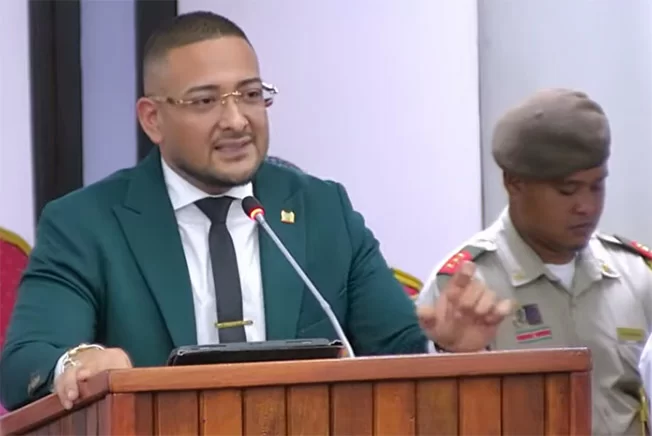
Ramsaran wil militairen behouden met betere arbeidsvoorwaarden
Suriname’s Minister of Defense Uraiqit Ramsaran has identified the steady outflow of military personnel as a critical threat to the operational readiness of the country’s National Army, and is advancing a comprehensive strategy to boost personnel retention and recruitment while keeping the option of reinstating mandatory conscription under careful consideration. During recent parliamentary budget debates, Ramsaran acknowledged that the armed forces have faced a steady decline in total personnel strength over a period of multiple years, noting that the crisis did not emerge suddenly but developed gradually as a result of long-standing policy gaps. The minister pointed to years of insufficient new recruitment intakes as one of the core drivers of the shortfall, which left the military unable to replace departing service members in a timely manner.
To address the growing personnel gap, the Ministry of Defense has already launched preparations for a new round of the military’s Elementary General Training (EAO). The ministry is also actively exploring a proposal put forward by members of the National Assembly to hold two separate recruitment intakes per year, a shift that would double the frequency of new personnel entry into the force. Beyond bringing in new recruits, the ministry is prioritizing retaining experienced currently serving personnel, who are increasingly choosing to leave the force for more attractive opportunities. Ramsaran outlined a suite of retention-focused changes: improved overall employment terms, higher salary allowances, expanded pathways for career advancement, and increased institutional focus on staff motivation and recognition of service members’ contributions.
Ramsaran explained that many departing service members leave the military for better working conditions offered by other employers, both within Suriname’s domestic labor market and abroad. In addition to voluntary departures for external opportunities, the minister noted that natural retirements, voluntary resignations, and desertion also contribute to the ongoing reduction in the military’s total personnel roster. While Ramsaran stressed that the accumulated shortfall cannot be resolved overnight, he reaffirmed that strengthening the National Army is a top priority for his ministry. “We will not fix backlogs with empty rhetoric, we will solve them through implementation, discipline, and a phased, structured approach,” the minister stated during the debate.
On the topic of reinstating mandatory national conscription, a policy that has been suspended since 1992, Ramsaran said the Surinamese government does not rule out the option permanently, but any final decision would require two critical preconditions: broad public support from across Surinamese society, and sufficient allocated government funding to implement the policy successfully. The minister responded to questions from National Assembly members about the prospect of bringing back conscription during the budget proceedings, noting that the Conscription Act has not been enforced since its suspension three decades ago. Previous attempts to revive conscription, including efforts in 2014 and 2015, ultimately failed due to a lack of sustained political support, Ramsaran recalled.
He emphasized that any potential reinstatement of mandatory service goes far beyond a routine policy change, calling it a transformative decision that carries substantial organizational and financial consequences. To implement a well-functioning, responsible conscription system, the government would need to make major investments in training infrastructure, barracks facilities, overall institutional capacity, and additional staffing to run the program, Ramsaran explained. While the Ministry of Defense remains open to a broad public discussion on the future of conscription, Ramsaran clarified that the government is currently prioritizing other policy measures to grow the National Army’s personnel strength. These ongoing initiatives include expanded annual recruitment intakes and the recently announced Defense Crafts and Training Program targeted at Surinamese young people.
-
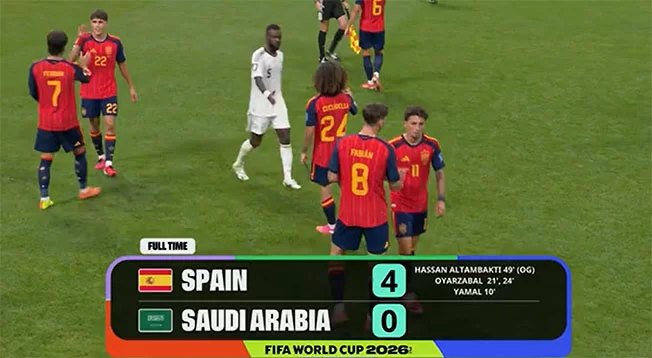
Derde helft WK 2026: Spanje herpakt zich tegen Saoedi-Arabië: 4-0
In a critical Group H World Cup fixture held at Atlanta Stadium on June 21, Spain delivered a dominant 4-0 victory over Saudi Arabia, bouncing back from a underwhelming opening-match draw that left fans and analysts questioning their form.
Refereed by Brazilian official Raphael Claus, the high-stakes encounter carried equal pressure for both sides: while Spain needed a win to get their campaign back on track, Saudi Arabia knew a heavy defeat would all but crush their hopes of advancing to the knockout stage.
Spain came out of the kickoff with aggressive, possession-based attacking football, controlling the tempo of the match from the opening whistle. With Saudi Arabia parking deep in their own half to absorb pressure, Spain sought to break the low block through long-range efforts and wide crosses. After a handful of early missed attempts, 18-year-old winger Lamine Yamal opened the scoring in the 10th minute, slotting a cross from Mikel Oyarzabal past Saudi goalkeeper Mohammed Al-Owais to put La Roja up 1-0.
Just three minutes later, Álex Baena squandered a clear chance to double Spain’s lead, firing an uncontrolled shot well over the crossbar. Oyarzabal made no mistake minutes later, pouncing on a chaotic scramble inside the Saudi penalty area to tap home from close range, extending the score to 2-0. Before the first-half hydration break, the Real Sociedad forward struck again, tapping in his second of the match to put Spain up 3-0.
In the 34th minute, Al-Owais gifted Oyarzabal a golden opportunity to claim a first-half hat trick after a misplayed pass landed straight at the forward’s feet inside the box, but Oyarzabal failed to convert the gift chance. The Spaniard had two more close opportunities to complete his hat trick before halftime, but the score remained 3-0 when the two sides headed to the changing rooms for halftime.
Both Yamal and Oyarzabal were held out of the second half for rest, having done their damage in the opening 45 minutes. Shortly after the restart, Spain extended their lead to 4-0 when Marc Cucurella’s driven effort took an unlucky deflection off a Saudi defender and looped into the back of the net. Despite multiple additional chances for Pedro Porro and Ferran Torres to add to the scoreline, both players failed to convert their opportunities.
After notching their fourth goal, Spain eased off the pressure and ceded possession to Saudi Arabia, who failed to capitalize on their newfound control of the ball and were unable to break down Spain’s defense to get on the scoresheet. The 4-0 result catapults Spain back into contention in Group H, significantly boosting their knockout stage qualification hopes while leaving Saudi Arabia’s tournament future hanging in the balance.
-
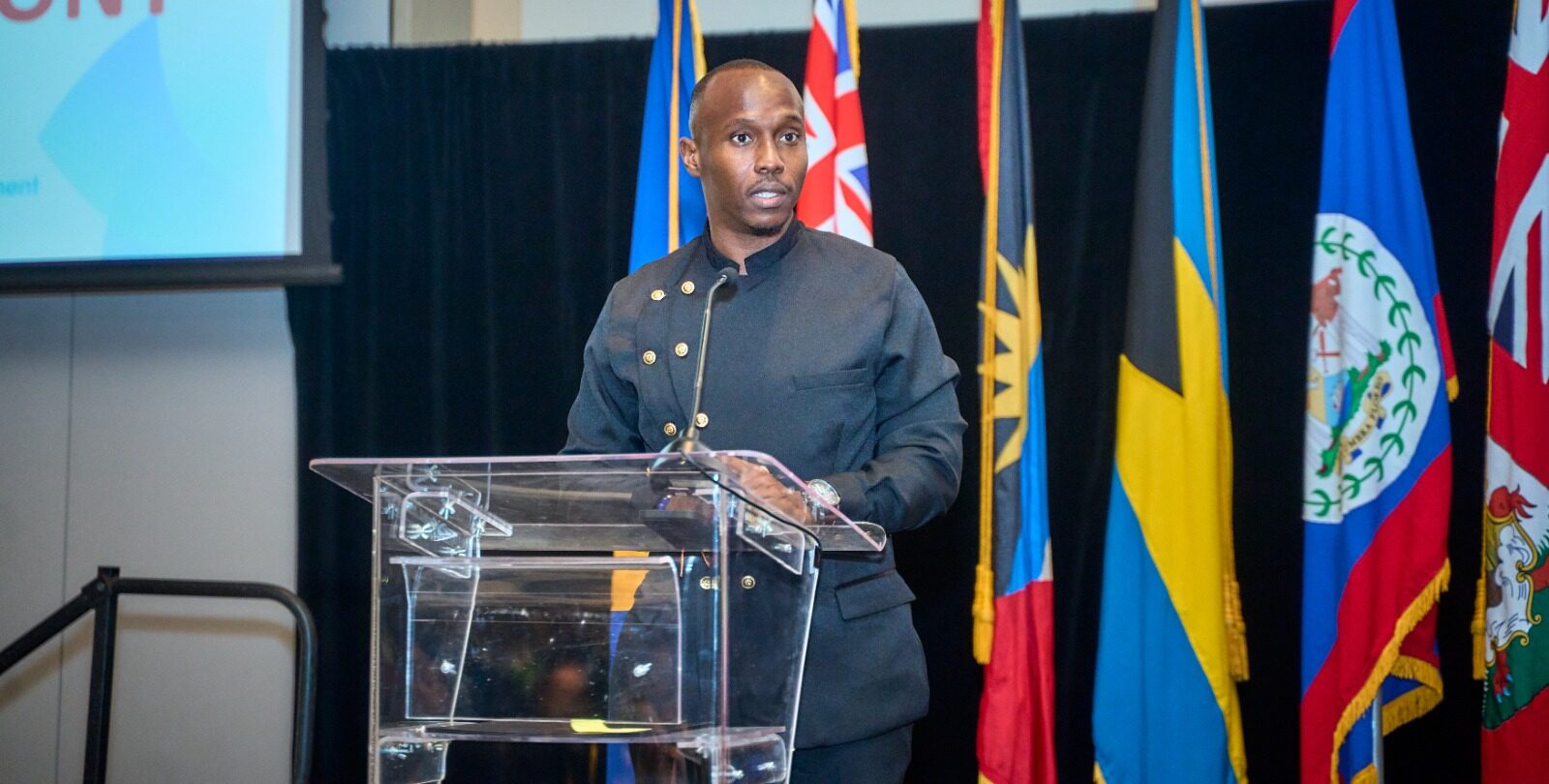
Government to table deposit insurance legislation for credit unions
Barbados’ credit union industry is days away from reaching a milestone more than a decade in the making, with long-awaited deposit insurance legislation set to be introduced to the country’s parliament for formal consideration. That announcement was made Saturday by Kemar Cumberbatch, president of the Barbados Cooperative and Credit Union League, during the opening session of the Caribbean Confederation of Credit Union (CCCU) Annual Conference, hosted at the Wyndham Grand Sam Lord’s Castle.
-
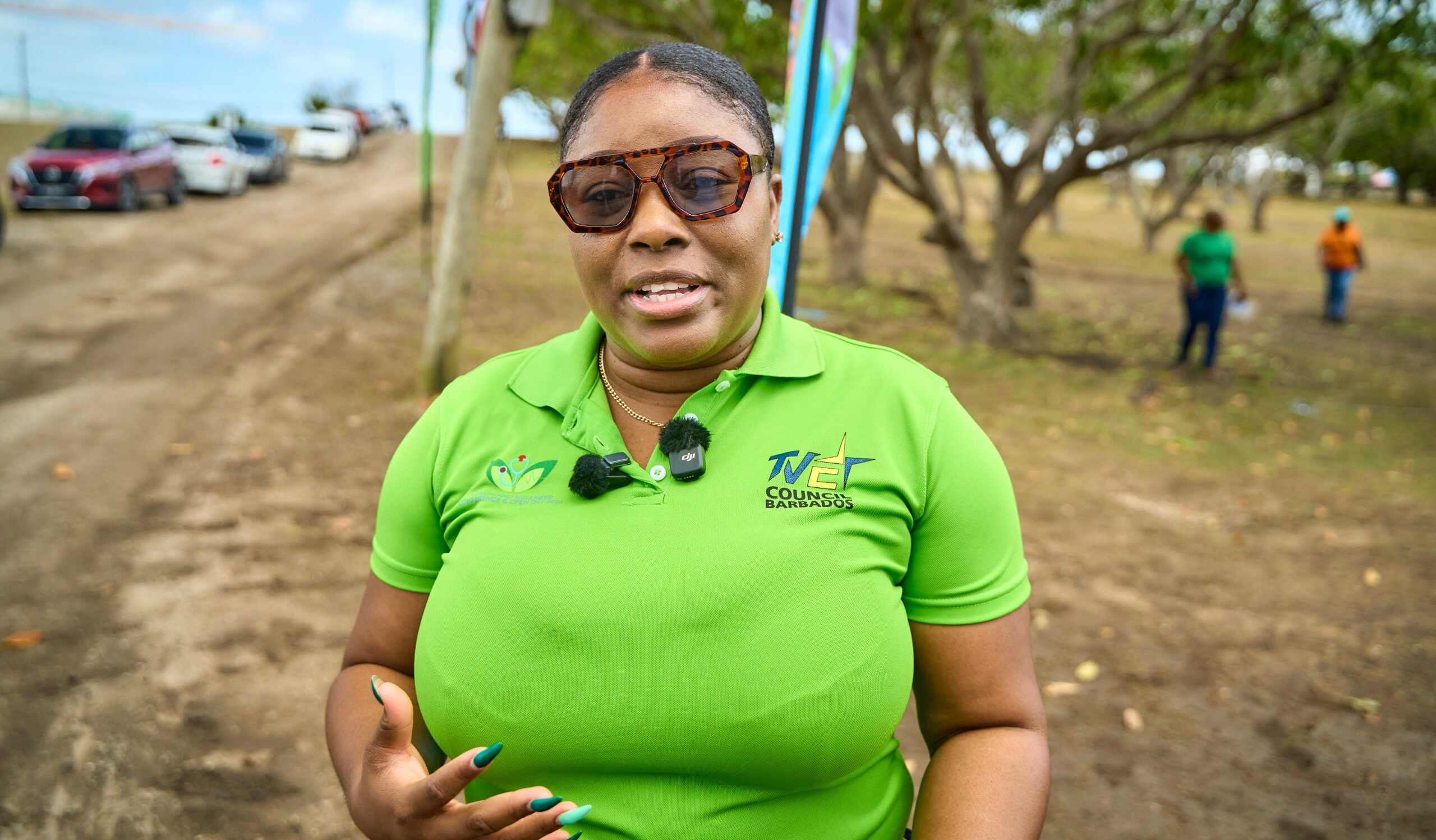
TVET targets stronger links in health and wellness industry
Barbados’ Technical and Vocational Education and Training (TVET) Council is moving to address longstanding fragmentation in the island’s health and wellness sector, pointing to a critical lack of cross-professional networking and coordinated professional development that has created measurable gaps in service delivery. The organization recently wrapped up a multi-day national health and wellness conference, culminating in an open day held Saturday at the National Botanical Gardens in Waterford, St. Michael, where industry stakeholders gathered to align on shared priorities and build new professional connections. Acting Senior Technical Officer Kimisha King shared details of the initiative in an interview with Barbados TODAY on the sidelines of the open day, explaining that the event was crafted to bring disparate practitioners under one roof while centering the most pressing public health challenges facing Barbadian communities today.
The open day was the final public component of a week-long slate of activities, which kicked off with three days of targeted conference sessions hosted at the Hilton Barbados Resort. During these closed-door and panel sessions, attending professionals delved into a broad spectrum of timely health topics that impact both the sector and the general public. The agenda covered a range of priority areas including brain health, gender-specific health concerns such as women’s health and prostate health, evolving workplace wellness policies, and the unique public health and service implications of Barbados’ ageing population. King emphasized that the diverse programming was intentional, designed to create dedicated space for conversations about emerging issues that are increasingly reshaping workplaces and community health outcomes across the island.
One of the core driving forces behind the entire conference initiative was the TVET Council’s longstanding observation that health and wellness professionals across Barbados operate largely in silos. “We recognised that there was a gap that needed to be bridged,” King explained. “There are so many persons in the health and wellness industry, but there’s no association, there’s no network and there’s limited collaboration.” Against that backdrop, the conference was structured explicitly to create tangible opportunities for practitioners to build lasting professional relationships, exchange evidence-based knowledge, and explore collaborative partnerships that can lift the entire sector’s capacity. Beyond networking, the initiative also prioritizes expanding access to structured continued professional development (CPD) training to keep the island’s practitioners up to date.
“ We wanted to be able to help them to offer continued professional development training, which gives them the opportunity to keep at the cutting edge where they’re practising,” King said. She added that ensuring all health and wellness practitioners maintain current knowledge of evolving industry trends, research, and best practices is non-negotiable for upholding the high standards of service and patient care that Barbadians deserve. To cap off the week of engagement, the conference concluded with a formal dinner and industry excellence awards ceremony at Sandals Royal Barbados, where standout individual practitioners and leading organizations were honored for their exceptional contributions to advancing health and wellness across the island.
-
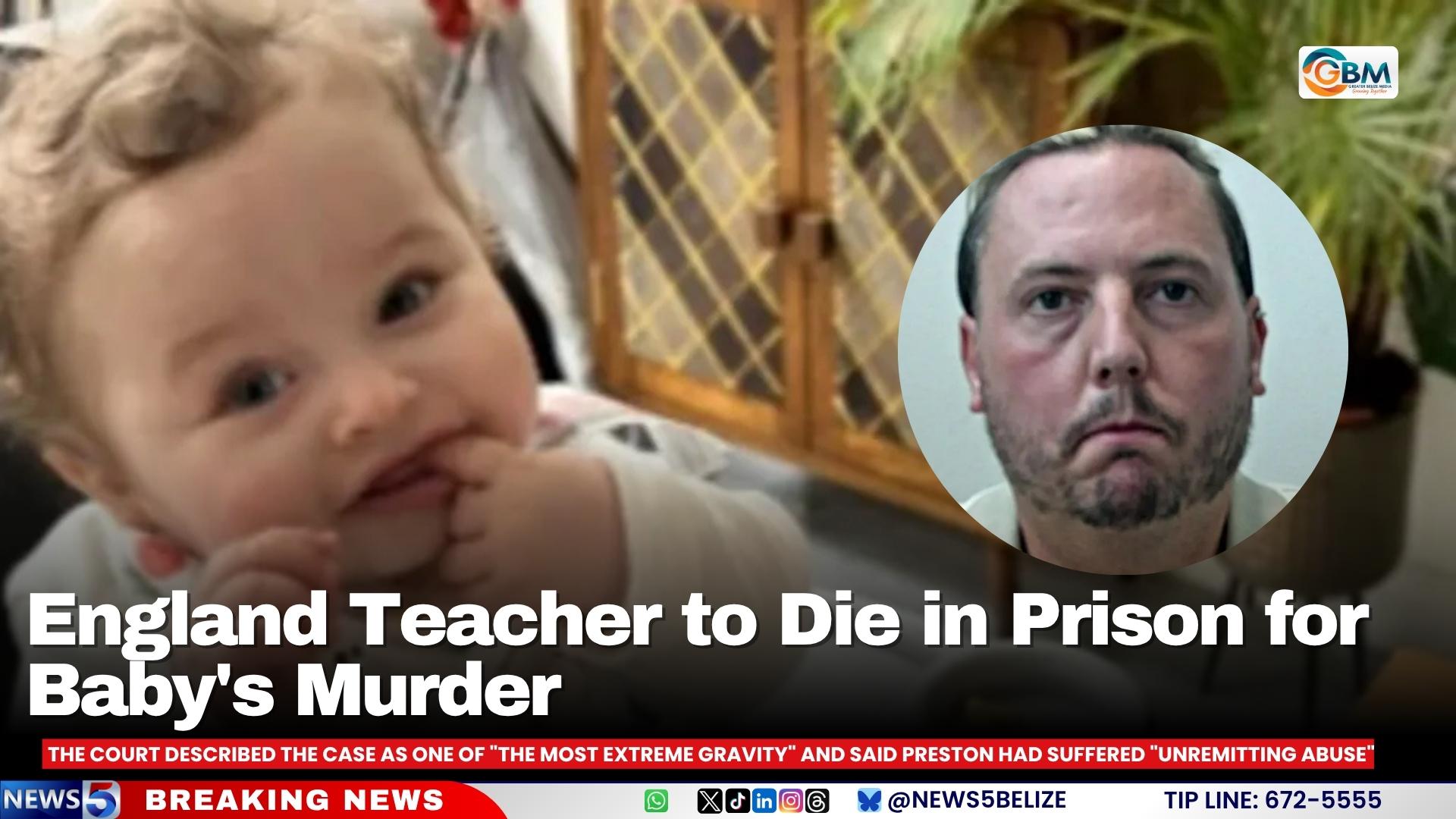
England Teacher to Die in Prison for Baby’s Murder
In a high-profile sentencing that has shocked communities across the United Kingdom, a 37-year-old former teacher from England has been ordered to spend the rest of his life behind bars following his conviction on charges of sexual abuse and murder of his 13-month-old adopted son, Preston Davey.
Jamie Varley was handed a whole-life life imprisonment order — the most severe sentence available under UK law — after a jury found him guilty of Preston’s killing, which took place in July 2023. His long-term partner, 32-year-old John McGowan-Fazakerley, was convicted of three additional serious offenses: sexual assault, child cruelty, and allowing a child’s death, and has been sentenced to 25 years in custody.
Delivering the sentence at trial, presiding judges emphasized that the case ranked among “the most extreme gravity” encountered in the court system, detailing the unrelenting pattern of abuse and neglect that Preston endured while under Varley’s care. Court documents lay bare months of systemic harm inflicted on the toddler: a post-mortem examination uncovered 40 separate external and internal injuries across the child’s body, many of which were confirmed to be consistent with documented sexual abuse.
In the immediate aftermath of Preston’s death, Varley attempted to mislead investigators by claiming the toddler had drowned accidentally during a bath. However, comprehensive forensic and medical analysis quickly debunked this false narrative, ruling out drowning entirely as the cause of death.
Preston was born in June 2022, and entered the foster care system just weeks after his birth. After Varley and McGowan-Fazakerley completed adoption approval processes, the toddler moved into their home in April 2023. Over the four months he lived with the couple, trial evidence presented over the eight-week court proceeding confirmed Preston suffered repeated non-accidental injuries. Records show he was admitted to hospital three times before his death, for treatment of seizures, unexplained bruising, and a fractured elbow — none of which prompted intervention that would ultimately save his life.
The fatal incident unfolded on July 27, 2023, when Varley rushed an unresponsive Preston to emergency care, where medical teams were unable to resuscitate the child.
During the sentencing phase, victim impact statements from Preston’s biological parents were read aloud in court, describing the irreversible devastation his death has caused their family, and the endless pain of learning the prolonged abuse their son endured before his passing.
-

How Saint Lucia can get to the World Cup
For decades, football fans on the Caribbean island of Saint Lucia—known locally as the Helen of the West—have only ever experienced the FIFA World Cup as distant spectators. The tiny island nation has never secured a spot in the world football’s most prestigious tournament, leaving local supporters to cheer for foreign squads that capture their attention through exciting playing styles and elite player talent.
Now, a groundbreaking historic achievement by a fellow Caribbean CONCACAF nation has sparked serious discussion about what it would take for Saint Lucia to finally break its qualifying drought and earn a place at football’s top table. The potential blueprint? Curaçao’s 2026 World Cup run, which redefined what small nations can achieve on the global football stage.
This year, Curaçao made its first-ever appearance at the World Cup finals, earning a spot in the Guinness World Records as the smallest nation by population to ever qualify for the tournament. With just 156,115 residents at the time of qualification, the island outperformed every other small nation in history to secure its historic spot. Though Curaçao suffered a lopsided 7-1 defeat to Germany in its opening match, simply reaching the finals stands as a landmark achievement for the autonomous constituent country of the Kingdom of the Netherlands.
What makes Curaçao’s success particularly notable is its unorthodox team-building strategy: the overwhelming majority of its 26-man World Cup squad did not hail from the island itself. In fact, just one player was born in Curaçao; all other squad members were born in the European mainland, raised and professionally trained in the Netherlands’ elite youth football system. Thanks to Curaçao’s constitutional ties to the Kingdom of the Netherlands and familial heritage, these players were eligible to represent the island at the senior international level, and many chose to embrace their ancestral roots to play for the Blue Wave.
The Curaçao model has drawn the attention of Saint Lucia’s top sports official, who is now exploring whether a similar approach could unlock his own country’s first World Cup berth. Speaking after observing Curaçao’s historic tournament run, Minister for Youth Development and Sports Kenson Casimir laid out his vision for regulatory and systemic changes to tap into Saint Lucia’s own large global diaspora of talented players.
Casimir emphasized that Curaçao’s success was no accident: the island’s football federation invested years of intentional work into connecting with and recruiting second- and third-generation footballers of Curaçaoan heritage from across the Kingdom of the Netherlands, building a cohesive, professionally structured squad that small Caribbean nations have rarely been able to field. While the 7-1 opening match result was far from ideal, Casimir noted that Curaçao’s organized, structured style of play made clear that the strategy had delivered long-term results that few expected.
“As a Minister of Sport, I was extremely jealous, and I pretty much got up the following morning thinking that we definitely need to do more by way of legislation to be able to attract more of our second and third generation footballers who are in England, who are in different parts of Europe, and, of course, South America and North America,” Casimir said.
FIFA’s eligibility rules, laid out in Article 7 of the association’s statutes, already clear the way for this approach. Any player not born in a representative nation can qualify to play if they meet at least one of four criteria: they have at least one parent from the nation, at least one grandparent from the nation, they hold permanent residency or naturalized citizenship, or they lived in the nation from an early age. This framework has already been leveraged by other CONCACAF nations: Jamaica used diaspora recruitment to qualify for past World Cups, and Haiti followed the same strategy for its 2026 qualification.
Curaçao’s path to the World Cup was also boosted by high-profile leadership. Former Barcelona and Netherlands striker Patrick Kluivert, who has Curaçaoan and Surinamese heritage, took over the national team in 2015 (and returned for an interim stint in 2021), using his global name recognition to convince talented diaspora players to commit to the side. This tactic of bringing in high-profile external leadership is not new: Trinidad and Tobago hired legendary Dutch manager Leo Beenhakker, formerly of Real Madrid and the Netherlands men’s national team, in 2005 to turn around their faltering qualifying campaign, ultimately helping them reach their first-ever World Cup.
Casimir says big names—whether on the sidelines or the pitch—could deliver the same boost for Saint Lucia. He pointed to Arsenal youth star Myles Lewis-Skelly, who has Saint Lucian heritage, as an example of the untapped talent the nation could attract. “Can you imagine another nine or ten players on his level playing for Saint Lucia? We probably would have beaten Curaçao, we would have been Saint Lucia playing in that tournament,” he said.
-
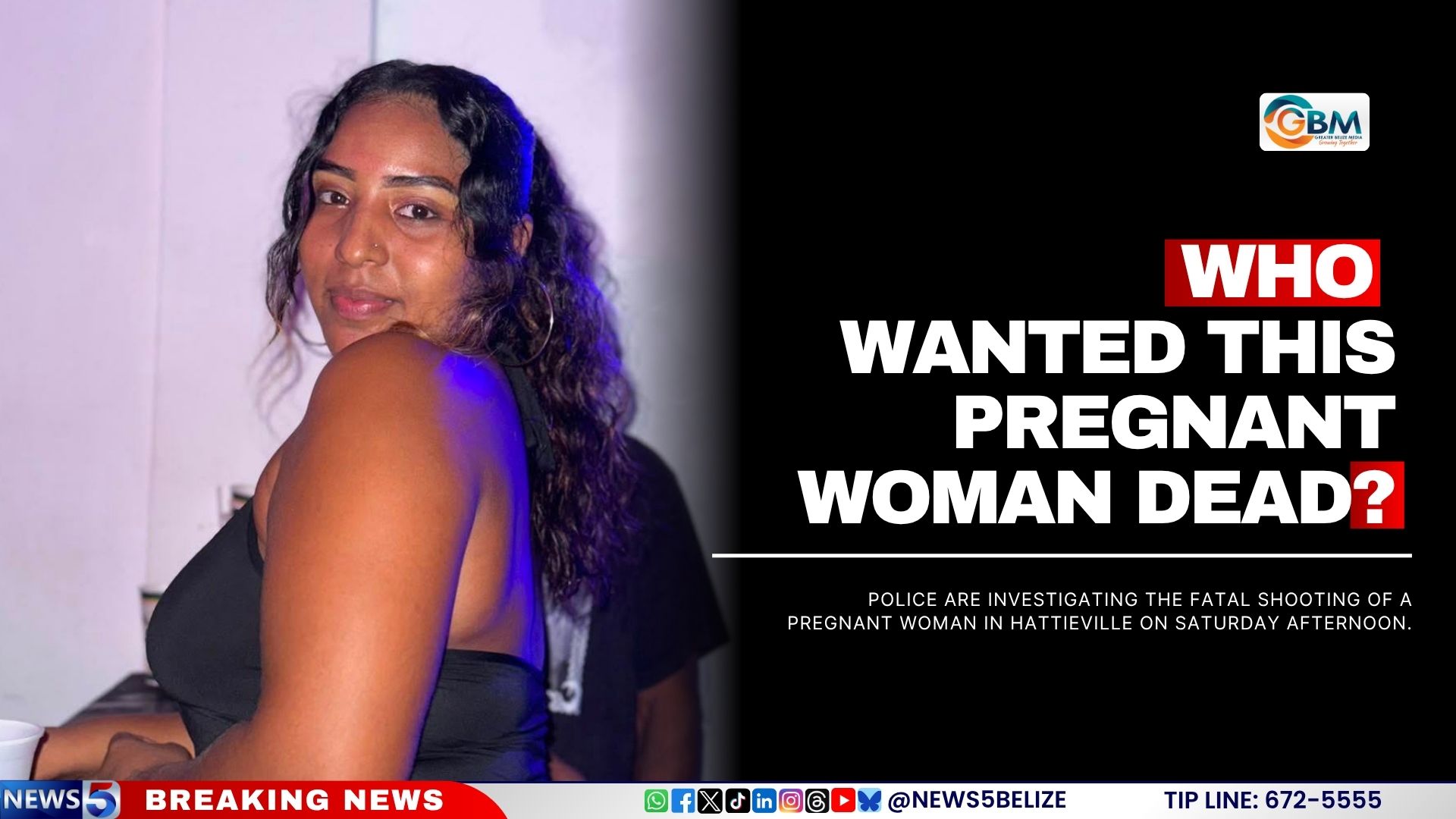
Who Wanted This Pregnant Woman Dead?
On a Saturday afternoon in the quiet community of Hattieville, Belize, a brutal fatal shooting has left two people dead and local law enforcement racing to uncover who targeted a pregnant mother and why. The victim has been formally identified as Jane Urbina, a resident of Santa Elena in the Cayo District, who was waiting for public transportation outside the village when the attack unfolded. Neither Urbina nor her unborn child survived the gunfire, marking a devastating double tragedy that has rocked the small Central American nation.
Court and law enforcement records show that shortly before the gunman struck, Urbina had completed a visit to her brother at Belize Central Prison. Her brother, Lionel Rodolfo Urbina, is an active duty police constable currently being held on remand. He was charged in June 2025 with the murder of 19-year-old Kevin Matthew Depaz, who was fatally stabbed in a violent incident on the popular tourist island of Caye Caulker.
Witness accounts outline that Urbina had just left the prison facility and was gathered at the local bus stop, making arrangements to travel back to her Santa Elena home, when an unidentified armed suspect approached her, fired multiple shots, and immediately escaped the scene on a waiting motorcycle. Emergency responders rushed to the area after receiving panicked calls from bystanders, but were unable to save Urbina or her unborn child.
In the days following the shooting, speculation about potential motives has spread rapidly across social media platforms, with countless theories emerging connecting the attack to the pending murder case against Urbina’s brother. However, officials from the Belize Police Department have confirmed that they have not yet publicly verified or confirmed any established motive for the brazen daytime attack. Investigators are currently working through evidence collected from the crime scene, interviewing witnesses, and following up on leads to identify and apprehend the gunman responsible for the double killing.
-
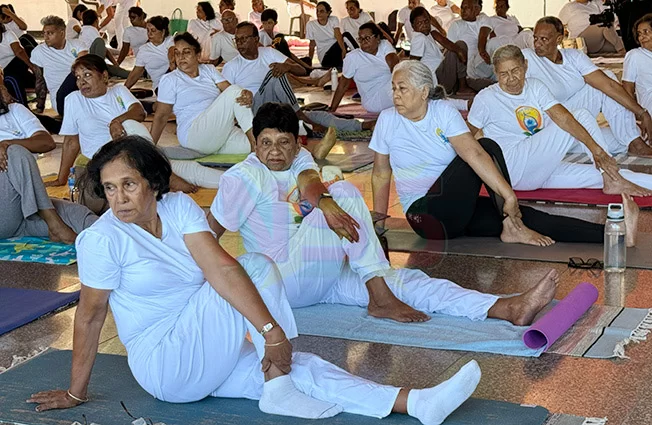
Ook in Suriname staan jong en oud vandaag op hun matje
Millions of yoga enthusiasts across the globe unroll their mats on June 21 each year to mark International Yoga Day, and 2025’s 12th iteration of the annual observance brought young and old practitioners together at Suriname’s Arya Diwaker Hall to honor the ancient wellness practice centered on physical and mental balance.
Hosted by the Embassy of India, the event drew a high-profile guest list including India’s Ambassador to Suriname Subhash Gupta, members of his family, Indian diplomatic staff, Suriname’s Minister of Foreign Affairs Melvin Bouva (also accompanied by his family), and parliamentarian Ameerani Jarbhandan. All participants followed a structured yoga protocol led by instructors and students from the Swami Vivekananda Indian Cultural Centre (ICC).
Far from framing yoga as just a series of complex stretching routines, Ambassador Gupta emphasized that it represents a complete, holistic lifestyle rooted in balance. As one of the six classical schools of Indian philosophy, yoga holds a core position in Vedantic thought, he explained. Summarizing centuries of ancient tradition, Gupta cited the Sanskrit phrase *samatvam yoga uchyate*, which translates to: yoga is the state of equilibrium, harmony and equanimity. Beyond individual wellness, he added, yoga serves as a powerful tool for humanity’s collective pursuit of sustainable living that aligns with planetary health, framing the practice as a journey from individual self-interest to collective harmony.
This year’s International Yoga Day carried the global theme “Yoga for Healthy Ageing,” a focus that Minister Bouva explored in depth. Noting that global life expectancy has risen dramatically in recent decades, Bouva argued that longer lifespans bring a shared responsibility to ensure those extra years are lived in good health, dignity, inclusion and fulfillment. “Healthy ageing is not just about adding more years to life; it is about adding more life to those years,” he said, noting that yoga’s gentle yet effective movements support the retention of flexibility, strength, balance and mobility — all attributes critical to maintaining quality of life as people age.
Bouva also stressed that yoga offers tangible benefits for people of all ages in today’s hyper-connected digital era. For children and young people, the practice boosts focus, self-discipline, emotional regulation and self-confidence, he said. For working adults juggling packed professional and personal schedules, yoga provides an essential pause for mindfulness and self-care that underpins overall well-being.
The 2025 celebration gained extra symbolic significance this year, as it coincided with the 50th anniversary of formal diplomatic relations between India and Suriname. Both Gupta and Bouva reflected on the milestone, noting that beyond official political and historical ties, the two nations share deep common cultural heritage, values and traditions. Gupta called yoga a shining example of that shared heritage, saying it reflects the cultural kinship between the two countries and symbolizes the enduring bonds between their peoples and societies.
Bouva echoed that sentiment, noting that people-to-people initiatives like collective yoga practice remind the world that diplomacy is not conducted only through formal official channels. “It also happens through the sharing of ideas, values and traditions that enrich all our societies,” he said.
The event also acknowledged that June 21 also marks Father’s Day, with Bouva noting that group yoga practice acts as a unifying activity for families and communities. It promotes healthy lifestyles and strengthens social bonds, he added, reminding attendees that well-being is not just an individual pursuit, but a collective one — a reality made clear by the gathering of practitioners at Arya Diwaker Hall.
In closing, Gupta shared his wish that “the light of yoga will illuminate our lives and the world.” Bouva called on all attendees to embrace the spirit of this year’s theme by promoting healthy lifestyles and supporting the well-being of older adults, while also encouraging people of all ages — from children to working adults — to invest in their own physical, mental and emotional health.
International Yoga Day was formally established by the United Nations in 2014, which designated June 21 — the summer solstice, the longest day of the year in the Northern Hemisphere, when sunlight stretches across more of the globe than any other day — as the annual date for the observance.
In Suriname, interest in yoga has grown steadily in recent years, with a expanding ecosystem of yoga schools offering a wide range of traditions to suit every practitioner’s preferences. The broader philosophy includes multiple distinct branches: Hatha Yoga, the physical-focused path that builds strength and cleanses the body through poses and muscle work; Karma Yoga, which centers on selfless action and service to others; Raja Yoga, often called the “royal path,” which focuses on deep meditation; Jnana Yoga, the path of knowledge, wisdom and self-inquiry; and Bhakti Yoga, the path of devotion and unconditional love.
To cap off the day’s celebrations, the Art of Living organization will host closing yoga activities including asanas, mantras, meditation and relaxation sessions at the Yoga Peetha Happiness Centre for local enthusiasts.
Since the UN designated International Yoga Day in 2014, the Indian Embassy has worked to introduce yoga as a formal wellness program in Suriname’s public schools. Over the years, embassy officials have held discussions on the proposal with multiple ministers of education, though the initiative has so far only advanced to the stage of stated intent, with no formal policy adoption to date.