博客

  • Belize Launches First Homegrown Dental Academy

    Belize Launches First Homegrown Dental Academy

    In a landmark step to strengthen Belize’s public health infrastructure and expand access to oral care training, the Central American nation has launched its first homegrown dental training institute, the Magazine Dental Academy, set to welcome its first cohort of students this summer.

    For years, Belizean residents hoping to enter the dental profession have been forced to travel abroad to complete accredited training, a pathway that comes with prohibitive costs that block many talented aspiring clinicians from pursuing their career goals. This new academy eliminates that barrier, keeping training local and making dental education accessible to a far broader pool of applicants.

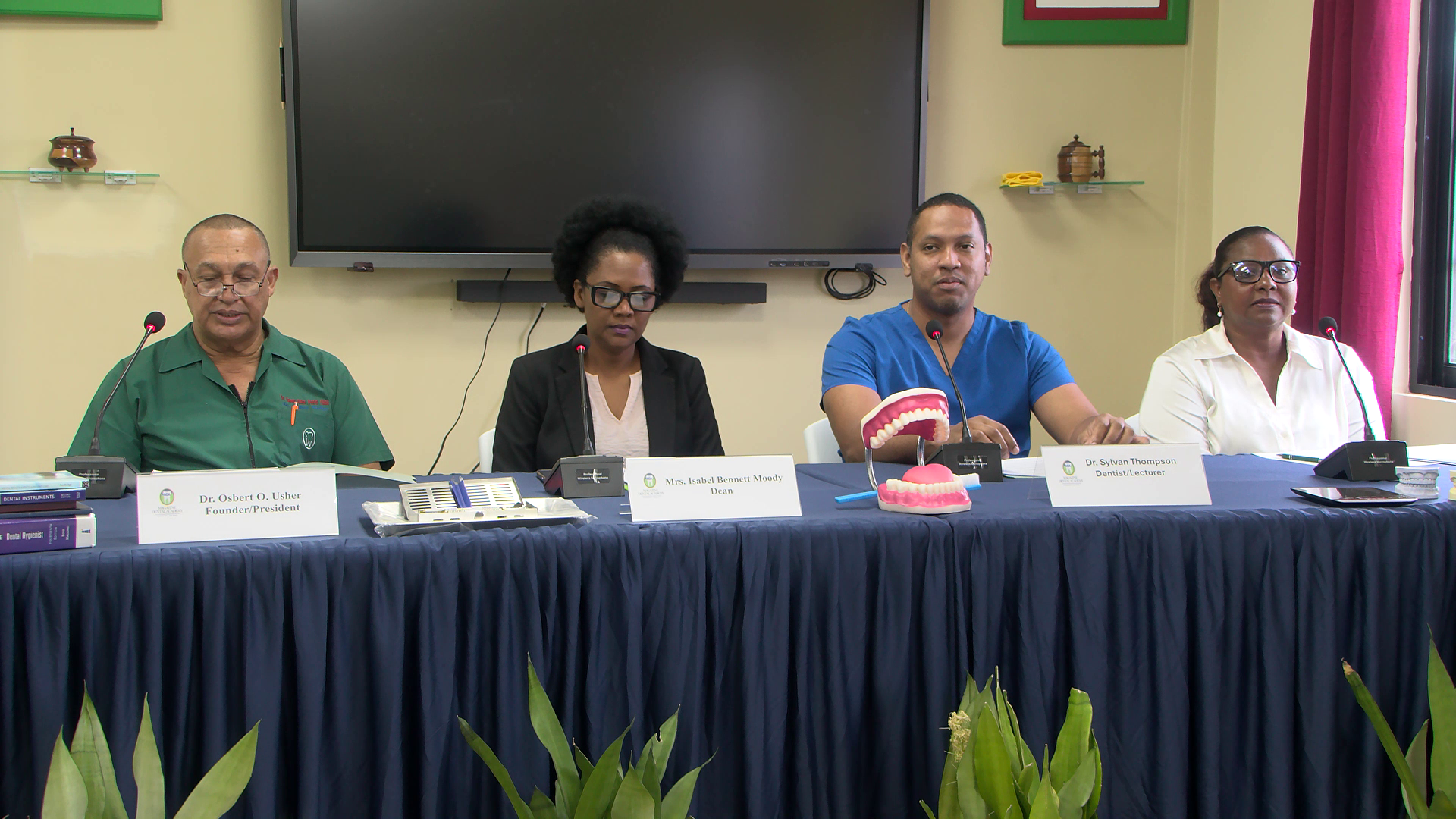
    Founded by Dr. Osbert Usher, who also serves as the academy’s president, the institution has a dual mission: growing the domestic dental workforce and tackling the root causes of widespread chronic disease across Belize. Medical research has long established a clear connection between poor oral health and the development of serious systemic conditions including heart disease, diabetes, and respiratory illness – a link Usher aims to address through expanded prevention and community education.

    “In Belize, we do have a lot of systemic disease that plague our population. And most of these things initiate from the oral cavity. And as such, we want to educate more cadre of students so that they can go out eventually and treat and educate patient so that in their latter years they don’t end up with these systemic diseases,” Usher explained in an interview ahead of the academy’s official launch this Friday.

    The academy is designed to train mid-tier dental providers who can fill critical gaps in Belize’s current care system. Each 12-month training program will have capacity for 25 new students, allowing the institution to graduate a new cohort of qualified professionals every year. Usher estimates that Belize currently needs roughly 100 additional trained dental care workers to meet existing demand for oral health services that link directly to preventing long-term chronic illness.

    Graduates of the program will earn qualifications that allow them to carry out a wide range of core dental services: they will deliver oral health education to communities and local schools, treat early-stage gum disease, conduct screenings for cavities and other oral conditions, administer fluoride treatments, and refer patients with more complex health needs to fully licensed specialist dentists.

    Applications for the academy’s inaugural cohort, which is scheduled to begin classes on July 16, are still open to interested candidates. The initiative marks a foundational shift in Belize’s approach to public health, turning local training into a tool for long-term improvement in population health outcomes that extends far beyond oral care.

  • Daly Challenges Young Athletes After Successful Super Nationals

    Daly Challenges Young Athletes After Successful Super Nationals

    In a motivational address to emerging athletic talent across Belize, Minister of State for Tourism, Youths and Sports Devin Daly has issued a bold challenge to participants of the just-concluded first-ever Super Nationals, urging the young competitors to chase ambitious long-term goals rooted in personal discipline and clear purpose.

    Launched as a groundbreaking new multi-sport initiative for Belizean youth, the inaugural Super Nationals brought together hundreds of the nation’s most promising young athletes from every region of the country. Far more than a simple competition, the event was crafted to fill a critical gap in the national youth sports ecosystem: it serves as a dedicated platform to nurture young talent, identify standout athletes for future development, and elevate the standard of domestic youth competition across all disciplines.

    Drawing from his own journey from youth athlete to senior government leader, Daly connected with the audience through a deeply personal backstory that resonated with the student-athletes in attendance. “Not so many years ago, I was standing right where you are,” he shared. Daly’s own athletic path began with basketball, a passion he still holds today. Balancing academic progress with skill development, he earned a high school opportunity after primary education, then parlayed strong academic performance and dedicated training into an athletic scholarship to study in the United States. After completing his college degree, he went on to compete professionally in basketball before entering public service.

    Daly emphasized that his story holds a lesson for every young athlete still navigating their own path, noting that it is normal for competitors to adjust their goals or switch sports as they grow and explore their strengths. Regardless of where an athlete’s journey leads, he said, three core principles will always serve as a foundation for lasting success – what he calls the “three Cs”: communication, commitment, and consistency.

    “First, you have to be clear about what you want, and communicate that openly to the people around you – your parents, your family, your coaches and support team,” Daly explained. Once your goals are out in the open, the next step is unwavering commitment: if a coach offers to train at 6 a.m. every day for your sport, whether that’s football, basketball, track or any other discipline, you show up on time, ready to work. The final and most often overlooked principle, Daly said, is consistency. While a tiny fraction of the population boasts innate talent that requires little effort to excel, the vast majority of successful athletes build their achievements through steady, repeated work over time.

    The first edition of the Super Nationals has been hailed as a resounding success, laying the groundwork for what organizers hope will become a staple annual event for Belizean youth sports, opening new pathways for athletic and personal growth for generations of competitors to come.

  • Twee krachtige aardbevingen treffen Venezuela, gebouwen ingestort

    Twee krachtige aardbevingen treffen Venezuela, gebouwen ingestort

    On a Wednesday evening, Venezuela was hit by an extremely rare geological event: two powerful earthquakes struck within just one minute of each other off the nation’s northern Caribbean coast. Recorded at magnitudes 7.1 and 7.5 respectively, the consecutive quakes rank among the most intense seismic events to strike the South American nation in more than 100 years.

    Data published by the U.S. Geological Survey (USGS) details the exact positioning of the two seismic events. The first tremor had its epicenter located west of the coastal community Morón, roughly 168 kilometers west of Venezuela’s capital Caracas, at a shallow depth of 13 kilometers below the Earth’s surface. Less than 60 seconds after the first shock, a second, stronger 7.5-magnitude quake hit just 16 kilometers southwest of Morón, at an even shallower depth of 10 kilometers.

    The powerful shaking was felt sharply across the entire northern region of the country, including the capital Caracas, where widespread structural damage was immediately reported. Multiple buildings collapsed across the capital, forcing panicked residents to evacuate swaying, unstable structures and gather outside in the wake of the tremors. Witness accounts and on-site photos show crumbled exterior walls in multiple residential neighborhoods, with damaged household furniture visible out in the streets from partially collapsed buildings. Dense clouds of dust and debris were also reported in heavily trafficked commercial areas including popular restaurants and retail stores, leaving many residents visibly shaken by the sudden disaster.

    In response to the large coastal quakes, the U.S. Pacific Tsunami Warning Center issued an emergency tsunami warning for the Virgin Islands shortly after the seismic event. Authorities in the Dominican Republic quickly followed with their own public safety warning for coastal areas. A tsunami warning issued for Puerto Rico was lifted within a short timeframe after no abnormal sea level movements were detected.

  • Shyne Teases Big Names for Upcoming Tour Dates

    Shyne Teases Big Names for Upcoming Tour Dates

    Nearly two decades after first rising to fame as a hip-hop artist, Shyne Barrow is stepping away from a career in politics to reembrace his first passion: full-time work in the entertainment industry. Fresh off a high-profile, sold-out collaborative performance in Atlantic City over the weekend, the multi-hyphenate creator opened up about his new professional chapter, upcoming projects, and heavily anticipated national tour in an exclusive interview.

    Barrow, who most recently served in political office in Belize, confirmed that his first official full headline tour will launch at the end of September, and he already has lined up a slate of major guest acts to join him on the road. While he is holding off on confirming the full roster of supporting artists, he teased that an official announcement revealing all participating names is scheduled for mid-July, giving fans just a few weeks to wait for the full details.

    The Atlantic City warm-up performance gave audiences a taste of what to expect from the upcoming tour: Barrow shared the Boardwalk Hall stage over the weekend with A-list hip-hop and R&B acts Meek Mill, T.I., and Eve, playing for a packed crowd of more than 15,000 excited concertgoers. He added that a handful of additional small preview dates will take place before the official full tour kicks off this fall.

    Beyond touring, Barrow is juggling a robust slate of new entertainment projects set to launch over the coming year. His new full-length studio album is scheduled to drop this coming November, followed by a currently untitled original TV series and a book set for release in 2027. Even as he shifts his focus to growing his entertainment career, Barrow emphasized that he remains fully committed to his public service work for the people of Belize, blending his cultural influence and political experience in this new chapter of his professional life.

    This report is adapted from a transcribed evening television broadcast, with original Kriol language content preserved via a standardized spelling system for accuracy.

  • Tsang wil onderzoek naar UNESCO-risico voor historisch Paramaribo

    Tsang wil onderzoek naar UNESCO-risico voor historisch Paramaribo

    Paramaribo, the capital city of Suriname, has held a prized spot on UNESCO’s World Heritage List since 2002, recognized globally for its one-of-a-kind fusion of Dutch colonial architectural traditions and indigenous Caribbean building styles. But that protected status is now under unprecedented threat, with two recent construction projects — a new National Assembly parliamentary chamber and a privately owned parking garage — identified as violations of UNESCO’s heritage conservation rules that could push the historic downtown district onto the organization’s *List of World Heritage in Danger*.

    In remarks delivered Tuesday during budget debate in Suriname’s National Assembly, Minister of Public Works and Spatial Planning Stephen Tsang sounded the alarm over the looming risk, calling for a full, independent investigation into how the unregulated construction moved forward despite clear UNESCO guidelines for the protected site. In a frank address to legislators, Tsang emphasized that the threat to Paramaribo’s heritage status was entirely avoidable, noting that both high-profile projects were already nearly complete when he took office, leaving little room for intervention to reverse the damage.

    “When I assumed my post, the Yogh parking garage was 95 percent finished, and the new parliamentary assembly chamber had already been built up to its roof,” Tsang told lawmakers. He added that during his previous term as a member of parliament, he repeatedly raised formal questions about the design and approval process for the new parliamentary chamber, but never received clear, satisfactory answers from previous administrations. According to Tsang, the National Assembly never formally approved the final design of the chamber that was ultimately constructed, and all key recommendations UNESCO issued to guide construction work on the site were ignored by project planners and previous officials.

    The minister stressed that the international community now views the unregulated construction as a direct threat to the outstanding universal value that earned Paramaribo its World Heritage designation, and he has proposed launching a joint investigation with the National Assembly to trace the full chain of decision-making that led to the crisis. “We need to sit down together as a legislature and executive to unpack exactly how this situation was allowed to develop,” Tsang said.

    UNESCO’s *List of World Heritage in Danger* does not immediately strip a site of its World Heritage status, but it functions as a formal, high-level warning that the site’s unique cultural and historical value is under severe threat. The designation is designed to pressure national governments to implement corrective measures to remove threats to protected heritage sites. Placement on the danger list can also have long-term impacts on a destination’s international reputation and cultural tourism economy, which often relies heavily on the cachet of World Heritage designation to draw visitors.

    Tsang’s call for an investigation comes as debate over balancing heritage conservation, restoration work, and modern urban development within Paramaribo’s historic center grows increasingly urgent across Suriname’s political and cultural spheres. The minister made clear his priority is to full uncover how the two unauthorized projects moved forward, and to assess the full scope of potential damage to Paramaribo’s standing as a globally recognized cultural heritage site.

  • Derde helft WK 2026: Marokko breekt taai Haïti na spectaculaire strijd

    Derde helft WK 2026: Marokko breekt taai Haïti na spectaculaire strijd

    On Tuesday evening, a high-scoring, action-packed Group C clash at Foxborough’s Gillette Stadium near Boston sealed Morocco’s place in the knockout stage of the 2026 FIFA World Cup, as the 2022 semi-finalists edged a valiant Haiti side 4-2. The Caribbean underdogs pushed their more fancied opponents to the final minutes, but Morocco’s greater tournament experience and elite individual quality ultimately proved decisive in a game that swung wildly from start to finish, bringing Haiti’s inspiring World Cup run to an end.

    The match got off to a sensational start, with Haiti grabbing an early lead in the 10th minute. An unlucky deflection off Moroccan goalkeeper Yassine “Bono” Bounou sent the ball rolling into his own net, sending thousands of travelling Haitian supporters into raptures and boosting the underdogs’ belief that they could pull off another major upset. After the early setback, Morocco dominated possession and pushed forward in search of an equaliser, but struggled to break down Haiti’s well-drilled defensive block. It was not until the 39th minute that the North Africans finally found a deserved leveller, as Paris Saint-Germain star Achraf Hakimi finished off a fine team move to draw the score level at 1-1.

    Before the first half could wrap up, the match delivered another twist. In the 43rd minute, Wesley Isidor put Haiti back in front after a clever build-up from Jean Duverne, leaving the Moroccan side reeling. But the Caribbeans’ joy was short-lived: deep into first-half stoppage time at 45+1, Ismael Saibari netted off another assist from Hakimi to restore parity at 2-2, sending both sides into the halftime break all square.

    The second half continued to deliver end-to-end entertainment. Haiti maintained its aggressive, high-energy approach, looking to hit Morocco on the counter with pace and intensity, while the North Africans held most of the ball and probed patiently for gaps in the Haitian defence. The game’s decisive moment arrived in the 78th minute, when Soufiane Rahimi collected a pinpoint pass from Chadi Riad and fired home to put Morocco ahead for the first time all game, making the score 3-2. Barely had Haiti processed the setback when another blow followed just a minute later, as tempers flared in a heated passage of play that saw Duckens Nazon and Haitian goalkeeper Johny Placide both receive yellow cards.

    In the closing stages, Haiti threw everything forward in search of an equaliser, but their all-out attacking approach left space at the back for Morocco’s dangerous forwards to exploit. The Atlas Lions capitalised on the space in stoppage time, netting a fourth goal to put the result beyond doubt and secure a 4-2 full-time score.

    The three points from the win confirm Morocco’s progression to the knockout round as Group C’s second-placed team, finishing behind group leaders Brazil, who topped the table to secure their own knockout spot. While Haiti exits the tournament, the underdog side leaves the competition with heads held high. Throughout their 2026 World Cup campaign, the Caribbean side proved they can compete with the world’s top teams, impressing audiences and pundits alike with their fearless attacking style, relentless fighting spirit, and uncompromising approach to the game. Bosnia and Herzegovina also closed out their tournament with a win, but fell short of the points required to advance to the knockout stage.

    This result once again underlines why Morocco has emerged as one of Africa’s strongest men’s football nations over the past decade. The side that made history as the first African nation to reach a World Cup semi-final in 2022 once again showed their composure under intense pressure, stepping up when it mattered most to see off a spirited challenger. For Haiti, the match proved that Caribbean football is continuing its rapid development. Playing without fear of their more established opponent, Haiti attacked from the first whistle and pushed Morocco to the very final whistle. While Morocco left the pitch relieved to have secured their progression, Haiti departed with disappointment balanced by a quiet pride in a performance that earned the side new respect on the global football stage.

  • Storm batters over 100 Essequibo Coast buildings; one injured

    Storm batters over 100 Essequibo Coast buildings; one injured

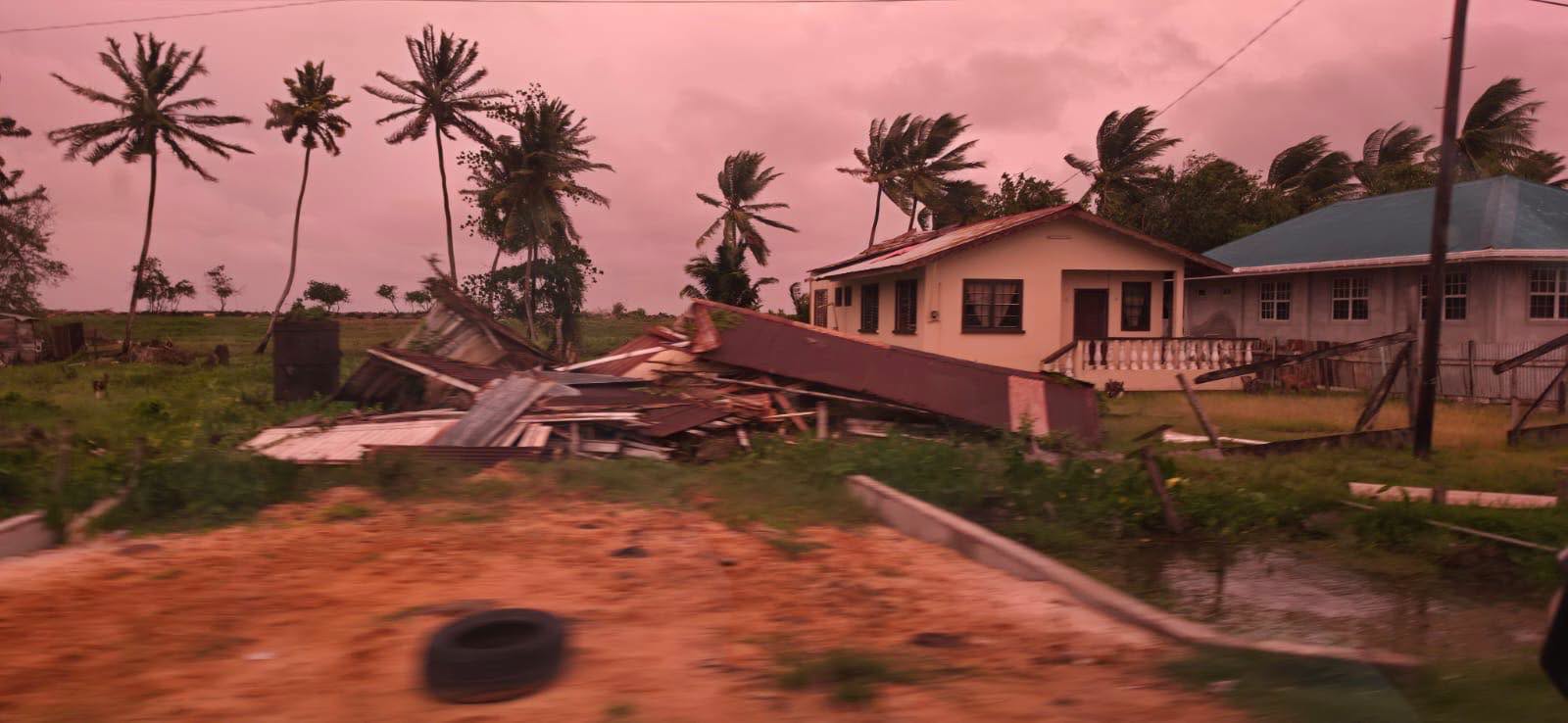
    On Wednesday, 24 June 2026, a severe windstorm with gusts exceeding 30 kilometres per hour swept across Guyana’s Essequibo Coast, leaving a trail of destruction across more than 100 public and private structures, local authorities confirmed. The extreme weather event left one person injured and forced four residents to temporarily leave their damaged homes in Henrietta village.

    Visual evidence shared on President Irfaan Ali’s official Facebook page shows multiple structures with their entire roofs torn away by the strong winds. One local resident described the sudden violence of the storm, recounting that wind combined with heavy rain lifted all the zinc roofing from his home and dragged it across the property, leaving all of his personal belongings destroyed with nothing salvageable.

    Retired Colonel Nazrul Hussain, head of Guyana’s Civil Defence Commission (CDC), told local outlet Demerara Waves Online News that the injured person was a teacher working at Riverstown Primary School, who was hurt when a section of the school’s wall collapsed under the wind. No other injuries were reported at the school, and the teacher has been placed under ongoing medical observation to monitor her recovery. “They are conducting all necessary precautionary tests to confirm she is out of danger and on track to recover,” Hussain stated.

    The four residents displaced by the storm, all elderly, have been moved to stay with relatives while repair works are carried out on their damaged properties. Regional administration for Pomeroon-Supenaam (Region Two) alongside Guyana’s central government have already launched full rehabilitation efforts, with the displaced residents’ homes prioritized for rapid repairs to allow them to return as soon as possible. Outside of the Essequibo Coast, damage across other parts of Guyana remained minimal, Hussain added.

    Among the damaged infrastructure was an under-construction regional stadium, which sustained mild to moderate damage from the gale-force winds. “Overall damage is not widespread across the region, but we have seen a partial structural collapse in Charity and measurable harm to the new stadium currently under development,” Hussain explained. A senior Region Two official briefing President Ali and Junior Public Works Minister Madanlall Ramraj confirmed that the storm caused severe damage to both government and privately owned properties along the entire Essequibo Coast, with 10 roofs destroyed in the village of Lima alone.

    In response to the disaster, President Ali announced that the Guyana Defence Force’s Engineering Corps has been deployed to support the CDC’s roof replacement and recovery operations. The storm also knocked out power across the entire Essequibo Coast, but utility crews from Guyana Power and Light quickly restored service after clearing fallen utility poles, downed power lines and wind-torn mangled zinc roofing that had tangled electrical infrastructure.

  • Derde helft WK 2026: Brazilië langs Schotland naar knockout-fase

    Derde helft WK 2026: Brazilië langs Schotland naar knockout-fase

    As the only nation to have qualified for every edition of the FIFA World Cup, five-time tournament champions Brazil entered their final Group C match against Scotland facing a do-or-die battle to advance to the knockout round. Two underwhelming opening results – a draw with Morocco and an unconvincing victory over Haiti – left the South American giants needing at least one point to keep their tournament alive. Widespread skepticism has grown around the current Brazilian squad following mediocre performances in recent World Cup cycles, with many questioning whether this generation can retain the trophy on South American soil.

    For Scotland, the path to the knockout stage was similarly uncertain. The European side got off to a strong start with an opening win over Haiti, but fell to Morocco in their second group match. Sitting on three points, they were also not guaranteed a spot in the next round, setting the stage for a high-stakes, competitive clash that ultimately ended in a 3-0 final score in favor of Brazil, with the five-time champions holding a 2-0 lead at halftime.

    Brazil launched aggressive attacking chances from the opening whistle, as expected, and Scotland held firm in defense for the first several minutes. But in the 7th minute, Scott McKenna gave Brazil an unplanned gift while under pressure from young prospect Rayan, and Vinícius Júnior pounced to slot the ball home, putting Brazil up 1-0. Before the first-half hydration break, the Scottish defense made another error that saw Vinícius find the back of the net a second time, but VAR overturned the goal to Scotland’s benefit, with Mexican referee César Palazuelos ruling out the score after a review.

    After the hydration break, Scotland stepped up their attacking play, putting significant pressure on Brazil’s defensive line. However, the side’s forwards failed to test Brazilian captain and goalkeeper Alisson Becker, despite multiple promising build-up sequences. For Brazil, the attacking combinations and creativity were consistent, but the team’s finishing was far from clinical. It was not until first-half stoppage time that Vinícius broke through again, heading a cross from Bruno Guimarães past Scottish goalkeeper Angus Gunn to double Brazil’s lead to 2-0. In the final seconds of the first half, young Rayan had a golden opportunity to mark his World Cup debut with a goal on his first tournament appearance, but Gunn made a solid save to keep the scoreline unchanged heading into halftime.

    After the break, Scotland pushed forward in search of an equalizer that would keep their tournament hopes alive, and carved out several clear chances to get back into the match. In the 51st minute, Brazil had a chance to put the game out of reach when Vinícius went for his third goal of the night, but he failed to convert. Nine minutes later, Matheus Cunha put the result beyond doubt, finishing a pass from Guimarães to extend Brazil’s lead to 3-0. Minutes after Cunha’s goal, Scotland had a prime opportunity to pull one back, but Scott McTominay was denied by a sharp save from Alisson. McTominay missed a second close-range chance just minutes later, firing wide of the target.

    Scotland continued to push for a consolation goal and fought until the final whistle, but Alisson held firm to keep a clean sheet for Brazil. In the final 15 minutes of the match, Brazil brought on Neymar for his first appearance in three years, and the forward received a warm welcome from the crowd. McTominay had one final late chance to break Alisson’s clean sheet, but once again could not beat the Brazilian goalkeeper, confirming Brazil’s 3-0 victory and their place in the knockout round.

  • Top female performer Skai Cox swims, earns way to Harrison College

    Top female performer Skai Cox swims, earns way to Harrison College

    Eleven-year-old Skai Cox, Head Girl at Barbados’ St George Primary School, has defied the pressure of high-stakes testing by earning a spot at the coveted Harrison College while thriving across academics, sports, and extracurricular activities. Cox placed seventh across the entire island in this year’s 11-Plus examination, and claimed the title of the highest-performing female student at her school — a result that came as no surprise to the determined 11-year-old, who never doubted her dream school would accept her.

    Unlike many young test-takers gripped by anxiety in the lead-up to the 11-Plus, Cox approached her exam with remarkable calm. “I wasn’t really too nervous,” she shared of the testing period. Immediately after turning in her exam, she said she felt nothing but relief: “I was just happy to have that off my schedule.”

    Cox’s standout performance is part of a historic showing for St George Primary School, which saw two of its students place among the top 10 across the island. To prepare for the high-stakes exam, Cox added structured Saturday tutoring and extra review sessions during the Easter break to her already packed schedule. Though she never enjoyed the extra academic work, she stayed fully committed to her preparation, showing the discipline that would carry her to success.

    As she prepares to close this chapter of her education and move on to Harrison College, Cox is open about her mixed emotions. Leaving behind the campus where she served as Head Girl, and saying goodbye to beloved teachers and current classmates has left her sad — but she is also brimming with excitement for what comes next. When asked what she looks forward to most at her new school, she answered simply: “Probably getting to meet new people.”

    What makes Cox’s achievement even more notable is how skillfully she has balanced rigorous academics with a wide range of other interests. She is a competitive competitive swimmer with the Alpha Sharks Swim Club, a member of her school’s chess team, plays varsity volleyball, and has even represented St George Primary in bodybuilding competitions. Unlike many families that pull children out of extracurriculars to focus solely on exam preparation, Cox’s parents prioritized balanced development from the start.

    Her mother, Katrina Holder, explained that the whole family made a deliberate choice to never let academic success require sacrificing her daughter’s passions. “We were very supportive of Skai. Skai always did well at school, but we decided to let her take some lessons on Saturday morning just to help with the preparation for the exam itself,” Holder said. She added that while Cox was not eager to add extra lessons to her routine, she showed up consistently and put in the work. Holder credited one of St George Primary’s Class Three teachers for helping keep Cox motivated and on track, and noted that her daughter’s calm demeanor on exam day was a testament to the low-pressure, balanced approach the family adopted.

    “We were not the type of parents that said she had to drop things to focus solely on the 11-Plus,” Holder explained. “I wanted her to be able to balance — still going to swim sessions, still competing, still going to Brownies, and still focus on academics.”

    This commitment to balance extended even to how the family celebrated the good news. When Cox earned her spot at Harrison College, her parents offered to take her out for an elaborate celebratory dinner, but the 11-year-old opted for a much simpler reward: three scoops of ice cream in one sitting, a small treat she had never allowed herself before.

    Cox’s goal of attending Harrison College was entirely her own, from start to finish. She never wavered in that ambition, even when her parents encouraged her to consider backup options. “Skai always had it in her head that she wanted to go to Harrison’s College,” Holder said. “She always said, ‘I do not know what my second option would be. I just know I have to get to Harrison’s College.’ When she told me ‘Mommy, it is going to happen. I am going to Harrison’s College,’ that confidence won out.”

    Skai’s father, Courie Cox, said his daughter’s top-ranked result is the product of years of consistent discipline and commitment. “I’ve just been impressed, really, with Skai’s dedication and commitment to her work,” he said. While he is proud of her extraordinary academic achievement, he emphasized that her all-around development is just as important a milestone. “She’s been a national swimmer on the Barbados team, she has also danced, competed in sports and maintained a healthy social life. She’s a very well-rounded student. She’s always happy. She’s always ready. There’s never a dull moment with Skai.”

    Cox also praised the entire staff of St George Primary School for nurturing his daughter from her earliest years in kindergarten, singling out Class Four teacher Kathy-Ann Spencer for special recognition, calling her contribution “the icing on the cake.” “From the time she was in kindergarten, every single teacher that she had, they were all impressive, their dedication, their commitment, their professionalism,” he said.

    Even amid the celebration, the young achiever’s parents are keeping her grounded. Courie Cox reminded his daughter that admission to a top school is just the first step, not a guarantee of long-term success. “Just because she’s going to Harrison College does not mean she’s going to be successful in life,” he said. “You still have to go to school and you’ve got to put in the work.”

    For other parents navigating the pressure of the 11-Plus examination, Holder shares one key piece of advice drawn from her family’s experience: prioritize balance. “There’s no need to take away one over the other. You just have to be there to support them in everything that they do,” she said.

  • Saint Lucian author blends music, storytelling in first novel

    Saint Lucian author blends music, storytelling in first novel

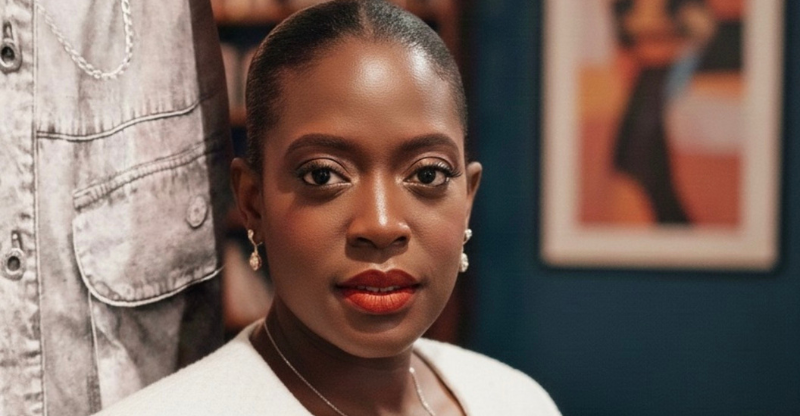
    For debut author Kaluwa Avril from Saint Lucia, storytelling extends far beyond the pages of a book. Her new release *Worthy of Love From Hohoho to Housewife* merges immersive narrative with an original custom soundtrack to unpack deeply resonant themes of personal healing, cultural identity, and radical self-worth, centering a nuanced Afro-Caribbean heroine whose journey challenges widespread social biases around judgment and resilience.

    Avril first began crafting the novel in 2019, a project that took years of consistent dedication to reach completion. “This book didn’t happen overnight,” she shared in an interview with St Lucia Times, crediting her own stubborn persistence and unwavering support from her family for helping her cross the finish line. The protagonist, Isabella, draws from both Avril’s personal lived experiences and the stories she has witnessed in others. While Avril emphasizes she does not share Isabella’s exact life path, she feels a profound connection to the story’s core questions. “I know what it is to carry things that, if someone looked in from the outside, they’d judge me for in a heartbeat,” she explained.

    Through her work mentoring young women, Avril has seen firsthand how many people silently grapple with uncertain senses of self and feelings of unworthiness. Too often, society reduces people to a single mistake or their hardest circumstances, she says—a harmful habit she set out to challenge through Isabella’s story. Instead of boxing the protagonist into one-dimensional judgments, Avril paints a full, compassionate portrait of a woman shaped equally by struggle and quiet resilience. Isabella emerges as a complex lead: both fiercely strong and unapologetically vulnerable, able to love deeply and build connection with others even amid overwhelming challenges.

    A unique creative choice that sets this novel apart is its companion original soundtrack, a addition that felt natural to Avril, who has long linked music to narrative. “Whenever I read a really good book, I could literally hear the most fitting song for a particular scene or character,” she said. What started as a curated playlist of existing songs evolved into a fully original project, with Avril writing and composing tracks that match the story’s emotional beats. Standout tracks include the soulful self-love anthem *Worthy of Love*, alongside *Worth the Wait* and *Playing for Keeps*. For Avril, the soundtrack deepens the reader’s experience, acting as a universal medium that can articulate feelings words alone cannot capture. “By combining music and story, I hope readers can feel the energy of the book through music,” she said.

    Cultural identity sits at the heart of the narrative, with Isabella’s mixed background as an Afro-Caribbean and Afro-Latina woman with ties to both Saint Lucia and the Dominican Republic shaping her voice and journey. Avril notes that across Caribbean communities, women are often socialized to prioritize giving to others without centering their own needs—a dynamic Isabella embodies while also challenging it by claiming space for her own peace and self-fulfillment. Avril calls Isabella’s journey “deeply a Caribbean woman’s story,” designed to honor women who have long been overlooked or undervalued by broader society. Vivid, specific details of Caribbean culture run throughout the novel, from colorful depictions of local Saint Lucian restaurant scenes to authentic portrayals of shared cultural traditions and language.

    Avril also pushes back against the common myth that professional discipline and creative work cannot coexist. “Some people believe a structured professional side can’t coexist with a creative one,” she noted, but her own experience proves the opposite: skills like discipline, analytical thinking, and clear communication have only strengthened her work as a writer and music producer, and she embraces all parts of her identity as a whole person.

    At its core, the novel carries a simple, transformative message: a person’s past does not define their future. “One’s past, mistakes, and trauma do not disqualify them from becoming the best version of themselves, or from being loved unconditionally,” Avril said. Themes of forgiveness, courage, and healing run through every chapter, as Avril encourages readers to confront their own fears and pursue healing. Her greatest hope is that every reader leaves the story feeling the truth of the book’s core declaration: that they are worthy of love.

    *Worthy of Love From Hohoho to Housewife* is available for purchase now on Amazon, and the full original companion soundtrack can be streamed for free on YouTube.