博客

  • New Flood Warning Procedures Being Developed for Antigua and Barbuda

    New Flood Warning Procedures Being Developed for Antigua and Barbuda

    Against a backdrop of escalating climate-driven extreme weather across the Caribbean, Antigua and Barbuda is taking a major step forward in strengthening its national disaster preparedness and climate resilience. The Antigua and Barbuda Meteorological Service (ABMS), in partnership with the World Meteorological Organization (WMO), has announced it will host a two-day national institutional workshop focused on developing comprehensive Standard Operating Procedures (SOPs) for flood forecasting and early warning, scheduled to run June 25–26, 2026 at the National Office of Disaster Services (NODS) facility in Saint John’s, American Road.

    This workshop is not an isolated effort; it forms a core component of the broader Early Warning Systems for Floods (EWS-F) Project, funded by the United States Department of State. It marks a defining milestone in Antigua and Barbuda’s long-term strategy to boost climate resilience, cut disaster risk, and build robust multi-hazard early warning infrastructure. The initiative is coordinated by ABMS as part of the agency’s ongoing institutional transformation under its Meteorological Renaissance 2030 agenda, aligned with the United Nations-led global Early Warnings for All (EW4ALL) initiative that aims to deliver early warning protection to every person on Earth by 2027.

    To reflect the cross-cutting nature of effective flood risk management, the workshop will bring together a diverse group of national stakeholders from across public, private, and academic sectors. Participating institutions include the Antigua Public Utilities Authority Water Business Unit, the Ministry of Agriculture, the Ministry of Works, the Survey Department, the Department of Environment, the Development Control Authority, the St. John’s Development Corporation, the National Office of Disaster Services, Antigua and Barbuda Search and Rescue (ABSAR), private sector insurance representatives, The University of the West Indies, and ABMS itself. This broad participation underscores a growing global consensus that functional flood early warning systems depend on a whole-of-government and whole-of-society approach: only when forecasters, infrastructure planners, land use managers, water resource regulators, emergency responders, academics, and private industry align their efforts can communities effectively protect lives, livelihoods, and hard-won development gains.

    Over the course of the two-day event, collaborating stakeholders will tackle a series of key objectives designed to build a durable, integrated flood warning framework. Participants will conduct a full review of end-to-end flood forecasting and warning workflows, clarify institutional roles, responsibilities, and cross-agency decision-making protocols, strengthen interagency coordination and communication channels, refine protocols for warning dissemination and turning warnings into concrete protective action, draft the first national Standard Operating Procedures for flood forecasting and warning, and lay the groundwork for a fully integrated, sustainable national flood early warning system.

    A central priority of the workshop is preparing national institutions for the rollout of the Urban and Flash Flood Information System (UFFIS), a cutting-edge flood forecasting and decision-support platform being rolled out as part of the EWS-F Project. When fully operational, UFFIS will deliver best-in-class capabilities for monitoring, forecasting, and issuing warnings for both urban and flash flood events. This technology will allow national authorities to accurately anticipate flood impacts, boost community preparedness, and make more informed, science-backed decisions at every stage of a flood emergency – before, during, and after the event.

    Notably, Antigua and Barbuda is set to become one of a small number of Caribbean nations, and potentially among the first three countries in the region, to access and benefit from this advanced technology. This positions the island nation at the leading edge of regional efforts to modernize flood forecasting and reinforce climate resilience through data-driven decision support systems.

    ABMS Director Dale Destin emphasized the transformative potential of the initiative in his remarks, noting that effective flood communications must extend beyond raw forecasts to deliver clear, actionable guidance that drives timely protective action. “This workshop represents a critical step toward building a truly integrated, impact-based flood early warning system for Antigua and Barbuda,” Destin said. “By bringing together all relevant stakeholders, we are strengthening the institutional partnerships and operational procedures necessary to ensure that warnings reach the right people at the right time and lead to meaningful action.”

    Destin added that the initiative is a key pillar of ABMS’s Meteorological Renaissance 2030 agenda and Antigua and Barbuda’s commitment to the global Early Warnings for All framework. It demonstrates that strategic investment in national meteorological and hydrological services delivers benefits that go far beyond basic weather forecasting, he explained: “Every dollar invested in the Meteorological Service strengthens public safety, protects critical infrastructure, supports economic development, enhances climate resilience, and reduces disaster losses. Strong meteorological services are not a cost; they are a national investment in resilience, sustainability, and prosperity.”

    Organizers expect the workshop to lay the critical institutional groundwork needed to successfully implement and sustain long-term flood early warning services across Antigua and Barbuda, directly advancing the country’s national climate adaptation goals and core disaster risk reduction priorities. ABMS has publicly thanked the National Office of Disaster Services for providing the event venue and supporting the landmark national initiative.

    Outcomes from the workshop will directly shape the final development of operational flood forecasting and warning SOPs, with the ultimate goal of ensuring all future flood warnings are timely, cross-agency coordinated, impact-focused, and actionable. In turn, this will strengthen the safety and climate resilience of communities across both islands of Antigua and Barbuda.

    As a cornerstone of national safety and sustainable development, ABMS is the national authority entrusted with delivering weather, climate, marine, and tsunami early warning services for the country. The agency’s work delivers measurable economic value, with estimates showing investments in ABMS generate annual avoided disaster losses and efficiency gains equivalent to as much as 6% of the country’s gross domestic product – equal to roughly 200 to 400 million Eastern Caribbean dollars (74 to 150 million USD) per year. ABMS’s forecasts, warnings, climate services, and hazard monitoring programs play an irreplaceable role in protecting lives, livelihoods, property, and critical infrastructure, while supporting national disaster risk reduction and climate resilience goals. Its services underpin key economic sectors from aviation and maritime transport to the blue economy, tourism, agriculture, water resource management, health, energy, and emergency management, making a substantial contribution to national safety, economic stability, and long-term sustainable development.


  • Pokie: bijna 2.000 klachten onderzocht, bestanden worden opgeschoond

    Pokie: bijna 2.000 klachten onderzocht, bestanden worden opgeschoond

    When Diana Pokie took office as Suriname’s Minister of Social Affairs and Housing, she inherited a social welfare system riddled with systemic backlogs, administrative ambiguity, and critical gaps in record-keeping and oversight. Now, just months into her tenure, the minister is leading a sweeping, multi-pronged reform effort to clean up messy beneficiary databases, root out fraud, and improve public service delivery for vulnerable populations.

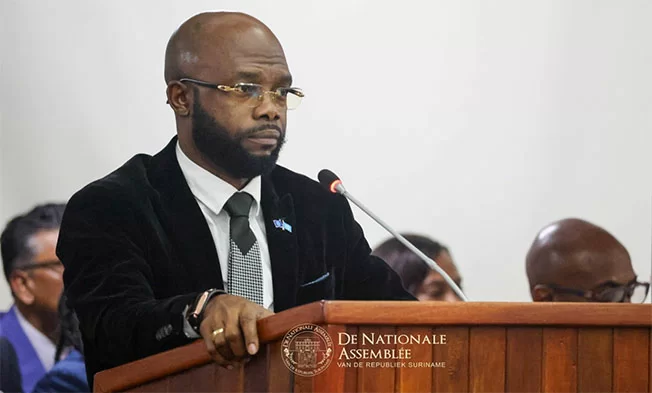
    One of the most pressing challenges Pokie’s team has prioritized is resolving the backlog of issues related to the country’s Moni Karta social welfare payment cards. When Pokie assumed office, the ministry was flooded with public complaints: thousands of eligible beneficiaries never received their payment cards, and had no way to track their missing documents. Speaking during the national budget debate in the National Assembly, Pokie outlined the core dilemma her ministry faces: it confronts widespread public need on a daily basis, but operates with severely limited public resources, all while tackling deep-rooted organizational and administrative dysfunction inherited from previous administrations.

    To address citizen concerns directly, the ministry established a dedicated communications unit that reports straight to the minister’s office. Since January alone, the unit has registered 1,719 individual Moni Karta cases. As of the latest update, 947 of these cases have been fully resolved, 117 remain active while duplicate cards are produced, and hundreds of additional citizen reports are still being processed. To fix the systemic issues that led to the distribution crisis, the ministry has moved all Moni Karta operations under a centralized specialized backoffice that now manages full oversight, registration, and distribution of the cards, ending the lax controls that allowed the crisis to develop.

    Beyond the Moni Karta backlog, Pokie has uncovered widespread irregularities in national social benefit beneficiary rolls. Investigations have found multiple cases of ineligible individuals collecting unauthorized benefits, alongside forged medical documents, incorrect beneficiary registrations, and cards routed to the wrong recipients. To combat these issues, the ministry has launched a full national database cleaning initiative and tightened verification protocols. The new measures include publishing public name lists of registered beneficiaries, investigating all citizen complaints of fraud or error, and blocking cards for individuals found to be ineligible for support.

    Currently, the main national social welfare registry includes more than 180,000 registered individuals. There is also a separate registry of more than 50,000 people who registered online for the national Purchasing Power Enhancement program, many of whom have never gone through the ministry’s standard eligibility verification process.

    Pokie emphasized that the reform initiative is not aimed at cutting social support for vulnerable people who qualify for assistance. Instead, the goal is to build a more targeted, efficient system that ensures benefits actually reach the intended groups: senior citizens, people living with disabilities, low-income households, and children in need.

    “We cannot help every single person,” Pokie stated. “But we must make sure that our scarce resources go to the people who actually need them most.”

    Alongside the database cleaning effort, the ministry is rolling out broader reforms including full digitalization of administrative processes, improved direct communication between staff and beneficiaries, strengthened local neighborhood service offices, and new permanent control systems designed to reduce fraud and administrative error in the long term.

  • Column: Selectieve rechtvaardigheid van de VAR

    Column: Selectieve rechtvaardigheid van de VAR

    The 2026 FIFA World Cup is currently in its early group stage, and the tournament has already delivered no shortage of drama, unexpected results and breakout performances that have kept global football fans on the edge of their seats. A number of underrated nations have exceeded all pre-tournament expectations to put in dominant displays, while several historically elite sides have underperformed drastically and already crashed out of contention after just two group matches. Even teams from the Concacaf confederation, often dismissed as lesser competitors at the global stage, have held their own against higher-ranked opponents, while traditional football powerhouses have dropped unexpected points against tournament debutants.

    Though off-field stories have dominated headlines during this edition of the World Cup, it is impossible to discuss the tournament’s on-pitch action without addressing the growing controversy surrounding the Video Assistant Referee (VAR) system, which has come under fire for inconsistent decision-making that has altered the course of multiple matches.

    VAR made headlines just days into the tournament, when it intervened to overturn an on-field referee’s decision and issue a yellow card to Paraguay star Miguel Almirón under a new rule covering identity confusion. Many football observers praised this early intervention, arguing that the expanded authority of VAR would help crack down on unsportsmanlike behavior and ensure players could no longer escape punishment for rule breaks that match officials missed on the pitch. That goodwill quickly evaporated, however, when VAR failed to intervene in a high-profile incident where global superstar Lionel Messi was caught stepping directly on the Achilles tendon of an Algerian opposition player. While the on-pitch referee likely missed the intentional foul, VAR protocols require the system to flag obvious missed violations – leaving fans and analysts stunned that no action was taken, with many arguing Messi should have received a straight red card for the incident.

    The pattern of inconsistent decisions continued just a few matches later, when VAR once again intervened to flag an infringement by Almirón, this time resulting in a red card for the Paraguayan. Beyond these high-profile cases, multiple contentious incidents inside the penalty area went unpunished, leaving several nations at a unfair disadvantage. The most controversial decision came when a valid goal by Brazil star Vinícius Júnior was disallowed, with VAR ruling that he had impeded an opposition defender in the build-up. Critics have pointed out that the ruling made little sense, given that football is inherently a contact sport – FIFA even runs an official 11+ youth coaching program specifically designed to train players on legal forms of physical contact with opponents, leaving the logic of this disallowed goal impossible to follow.

    This pattern of wildly inconsistent VAR decision-making has sparked serious public questions about the integrity of the tournament. Has the outcome of the 2026 World Cup been pre-orchestrated? If so, who is pulling the strings? Are decisions being manipulated to deliver a specific desired outcome, and what interests does that outcome serve? Are financial or other hidden incentives driving the questionable calls?

    Regardless of the answer to these questions, the selective enforcement of rules and apparent bias of VAR at this tournament is completely unacceptable. Inconsistent decision-making has ruined the flow of matches and drastically reduced the entertainment value of the world’s biggest sporting event. The World Cup is meant to be a showcase for the world’s most talented footballers to display their skills to a global audience, not a stage for VAR to take center stage and negatively alter the outcome of matches. Critics argue that now is the time for a full independent review of VAR’s performance at this tournament, before irreversible damage is done to the reputation of the World Cup.

  • Cricket West Indies Plans Full-Time Cricket Academy at Antigua Campus

    Cricket West Indies Plans Full-Time Cricket Academy at Antigua Campus

    Cricket West Indies, the governing body for the sport across the Caribbean region, has announced an ambitious long-term plan to establish a purpose-built, full-time cricket academy based at its Antigua campus. This initiative marks a significant strategic shift from the organization’s previous occasional training camps and ad-hoc development programs, aiming to create a sustained hub for nurturing young cricketing talent from across all member territories.

    The proposed academy will offer year-round training facilities, professional coaching staff, sports science support, and academic education tailored to young aspiring players, addressing a long-standing gap in the region’s cricket development infrastructure. Antigua was selected as the permanent site for its existing sporting facilities, favorable climate for outdoor training year-round, and central geographic location that makes it accessible to prospects from across the Caribbean.

    Officials from Cricket West Indies have emphasized that the full-time academy is designed to reverse the region’s recent declining performance in international cricket by building a stronger pipeline of homegrown talent. The project is expected to attract partnerships with international cricket governing bodies and private sponsors, with plans to open the academy’s doors to its first cohort of players within the next three years. Local stakeholders in Antigua have welcomed the plan, noting that it will also boost tourism and create local jobs in the sports and hospitality sectors.

  • Leisure : Did you know ? #36

    Leisure : Did you know ? #36

    In the 36th installment of HaitiLibre’s popular twice-weekly general knowledge series “Did You Know?”, readers are invited to discover a little-known Haitian craft that has quietly earned acclaim in international luxury fashion: high-end handwoven straw hats, often mistaken for their more famous Panamanian counterparts.

    Unlike mass-produced headwear, these premium Haitian hats are crafted from the youngest, softest fibers of the latan palm, also referred to as Jipijapa, following a traditional technique refined over generations. Artisans begin by painstakingly processing raw palm fibers into thin strips, some as fine and smooth as silk thread, before starting the slow process of hand braiding. A single completed hat can require weeks of steady, careful work to finish.

    The quality of a finished Haitian straw hat is defined by the tightness of its weave: tighter braids create a finished product that is exceptionally flexible, lightweight, and naturally water-resistant. A true mark of an authentic high-end Haitian hat is its ability to be rolled tightly for travel or storage without cracking or breaking, a testament to the skill of its maker. For centuries, this specialized craft has been concentrated in small Haitian communities, where the closely guarded secrets of fiber preparation and weaving have been passed down through matrilineal lines, from mother to daughter.

    Creating one of these luxury hats demands extraordinary manual dexterity and sharp visual focus, turning a simple natural material into a product of extreme sophistication. By preserving and promoting this exceptional basketry tradition, Haiti has secured a respected spot in the global landscape of artisanal fashion, proving that patience and masterful craft can elevate natural materials to luxury status.

    Beyond this deep dive into Haitian craft, the “Did You Know?” segment is hosted by Quiz.HaitiLibre, a free, no-registration quiz platform that offers general knowledge content for learners of all ages. As part of its monthly platform update on June 1, 2026, the site added 31 new quiz games, bringing its total library of interactive content to 150 games, with new additions scheduled every month. All quizzes are available in both French and English, and feature three difficulty levels—easy, intermediate, and hard—to suit every type of learner, from curious beginners to trivia experts. Readers can explore the full collection of quizzes covering Haitian culture, global events, and a wide range of other topics at the Quiz.HaitiLibre official website.

  • Derde helft WK 2026: Zuid-Afrika wint historisch duel van Zuid-Korea en bereikt knock-outfase

    Derde helft WK 2026: Zuid-Afrika wint historisch duel van Zuid-Korea en bereikt knock-outfase

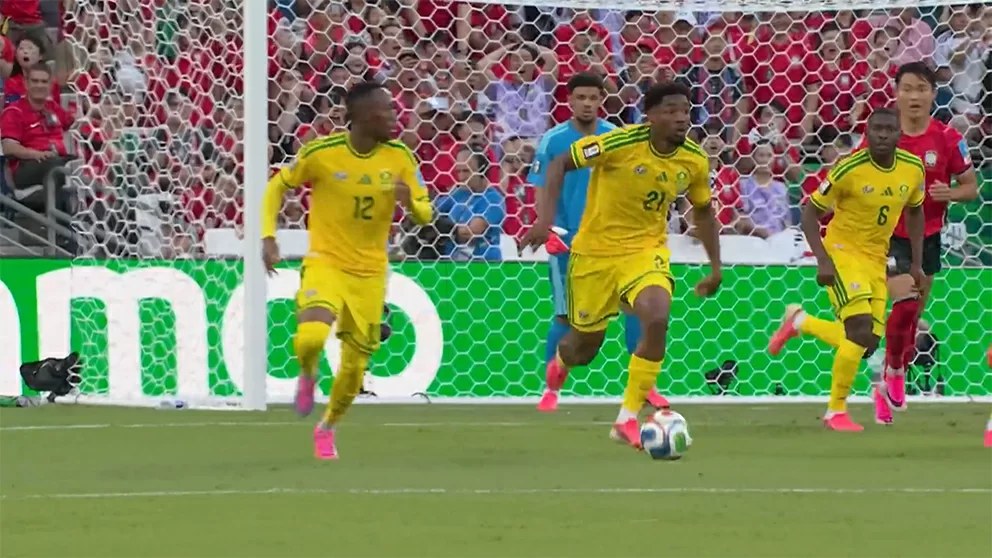
    The 2026 FIFA World Cup Group A produced one of the tournament’s most memorable underdog stories on June 25, as South Africa claimed a tense 1-0 victory over South Korea to secure their first-ever knockout stage berth in World Cup history. The result has turned the Group A standings on their head, leaving South Africa firmly in position to advance while South Korea faces a devastating early exit from the competition.

    A major talking point ahead of kickoff was the surprise omission of South Korean star forward Son Heung-min from the starting lineup, marking the first time the Tottenham Hotspur attacker had not started a World Cup match for his nation since 2010. Despite the unexpected change, South Korea got off to a flying start, creating a clear goalscoring chance within the opening two minutes. After a corner into the box, Bayern Munich defender Kim Min-jae directed a powerful header toward goal that was cleared off the line by South Africa’s Aubrey Modiba, and the ball went just wide of the post.

    South Korea continued to carry the bulk of the attacking threat for much of the first half, with Paris Saint-Germain’s Lee Kang-in firing a low effort narrowly off target. South Africa looked shaky at times in their build-up play from the back, but when they won possession, they posed consistent problems on the counter. Midfielder Thalente Mbatha forced a strong save from South Korean goalkeeper Kim Seung-gyu to prevent an early South African lead, while striker Evidence Makgopa also sent a header just inches away from the goal.

    South Korean center-back Lee Gi-hyuk put in a string of solid defensive interventions to keep the game scoreless, most notably blocking a close-range effort from South Africa winger Oswin Appollis. Just before halftime, Thapelo Maseko sent a long-range effort over the crossbar for South Africa, and the first 45 minutes ended goalless, with tension building steadily as both sides fought for the vital result that would secure their knockout stage hopes.

    South Korea manager made three attacking changes at halftime, bringing on star man Son Heung-min along with Jens Castrop and Kim Jin-gyu in place of Hwang Hee-chan, Lee Tae-seok and Paik Seung-ho, looking to inject more attacking thrust into his side. The substitutions upped the tempo of the match, and the deadlock was finally broken in the 63rd minute: Maseko received a well-timed through ball from Tshepang Moremi, cut inside onto his strong foot, and fired a blistering shot into the bottom right corner of the net to put South Africa ahead.

    The late goal completely flipped the Group A qualification outlook. Before the strike, a 0-0 draw would have seen South Korea comfortably through to the next round, but the result now leaves South Africa in pole position to finish in the top two of the group.

    South Africa dug in deep after taking the lead, showing immense defensive discipline and organization to protect their slender advantage. Despite South Korea throwing everything forward in the final half-hour and winning multiple late set pieces, South Africa’s compact defensive block held firm every time. Son, who had entered the game to turn the tide, found every space closed down quickly by the South African backline, and he could not create the clear chance South Korea desperately needed.

    Six minutes of stoppage time gave South Korea one last chance to find an equalizer, but their desperate late attacks failed to break down South Africa’s resistance. When the final referee’s whistle blew, it sparked jubilant celebrations among the South African squad and fans, as the nation celebrated a groundbreaking milestone: their first ever appearance in the World Cup round of 16.

    This historic victory, built on a foundation of stubborn, organized defense and clinical, purposeful attacking play, marks a landmark turning point for South African football, and sets the stage for what promises to be an exciting knockout stage run for the African side at the 2026 World Cup.

  • News : Zapping…

    News : Zapping…

    Haiti is currently navigating a complex landscape marked by persistent security challenges on one hand and incremental development progress across rural and urban regions on the other, with multiple developments unfolding across the country between late June 2025 and June 24, 2026.

    In the mountainous commune of Kenscoff, local authorities have confirmed that armed factions linked to the “Viv Ansanm” terrorist coalition have seized control of multiple communal sections. Massillon Jean, the sitting mayor of Kenscoff, issued an urgent appeal to Haiti’s national security forces, calling for a rapid escalation of counter-terrorism operations to dislodge the armed groups. The ultimate goal of these operations, Jean emphasized, would be to create the safe conditions needed for thousands of displaced residents to return to their homes and communities.

    Security tensions also boiled over in the capital region on June 24, 2026, when widespread violence erupted in the lower districts of Port-au-Prince. Residents and law enforcement sources reported sustained bursts of heavy automatic gunfire across the area, alongside multiple explosions carried out by kamikaze drones. In response, specialized tactical units of the Haitian National Police (PNH) deployed armored vehicles to launch a large-scale security operation targeting insurgent strongholds in the capital’s second and third arrondissements and their surrounding outskirts.

    Amid these security challenges, development initiatives are moving forward in northern Haiti’s rural zones. One key project, the rehabilitation of the 12-kilometer agricultural road connecting the communes of Limbé and Bas-Limbé, is advancing steadily under the national Ministry of Agriculture’s PAPAIR program — the Agricultural and Fisheries Productivity Support Program and Improvement of Rural Infrastructure for Market Access. The project is backed by $12 million in financing from the Inter-American Development Bank (IDB). To date, construction teams have completed four new culverts designed to divert floodwater from mountain ravines, boosting the road’s long-term durability and resilience to extreme weather. Once complete, the upgraded road will open up isolated surrounding communities, cut transportation costs for smallholder farmers moving their goods to regional markets, and drastically improve travel conditions for daily commuters.

    Also in Limbé, a four-month advanced training program focused on sustainable peanut farming wrapped up on June 23, 2026, run by the non-profit development organization Meds & Food For Kids (MFK). At a closing ceremony held this week, MFK officials awarded certificates of completion to more than 120 participating smallholder farmers from the La Soufrière region of the commune. To support immediate adoption of new farming techniques, the organization also distributed a full set of agricultural tools and inputs to all trainees, including machetes, rakes, wheelbarrows, digging picks, soil sampling bags, sprinkler irrigation pumps, and approved pesticides. The initiative is designed to help local farmers boost crop yields, increase their incomes, and strengthen food security across the region.

    In the northern coastal city of Cap-Haïtien, municipal officials announced a long-awaited milestone for urban infrastructure this week. After months of negotiations, technical planning sessions, and inter-agency coordination with development partners, the city administration has officially launched the public tender process for a major project to upgrade and improve traffic flow on the key arterial road connecting the Barrière Bouteille neighborhood to the city’s central downtown district. The project is expected to reduce chronic congestion, cut travel times for commuters and businesses, and support the city’s ongoing economic recovery.

    On the diplomatic front, Haiti’s ambassador to the State of Qatar, Pierre-Richard Cajuste, held a high-level working meeting this week with Dr. Omar bin Mohammed Al Ansari, President of Qatar University, during an official visit to the university’s main Doha campus. The two sides held in-depth discussions on expanding academic cooperation between Haitian higher education institutions and Qatar University, with a particular focus on creating new full scholarship opportunities for Haitian students and establishing formal student exchange programs. The initiative aims to expand educational access for young Haitians and build long-term people-to-people ties between the two nations.

  • Derde helft Wk 2026: Mexico wint overtuigend van Tsjechië en sluit groepsfase foutloos af

    Derde helft Wk 2026: Mexico wint overtuigend van Tsjechië en sluit groepsfase foutloos af

    June 25, 2026 — Co-host nation Mexico has wrapped up its 2026 FIFA World Cup Group A campaign in dominant fashion, clinching a 3-0 victory over Czechia at Mexico City Stadium to secure a full nine points from three matches and book its place in the knockout round with soaring momentum.

    The first half of the match unfolded as a tight, tactical stalemate, just as many pre-match analysts had predicted. Czechia set up in a compact, deep defensive block, limiting the space for Mexico’s attacking players to exploit and allowing the co-hosts to hold the majority of possession without creating clear-cut high-quality chances. While Mexico pushed continuously forward, probing the flanks and testing through central runs, they could not break through the organized European defense. Czechia, meanwhile, looked for opportunities to hit on the counterattack, keeping the Mexican back line honest and ensuring the half ended goalless as both sides headed to the locker rooms to reset.

    It was a completely different story after the break, as manager Jaime Lozano’s side upped their intensity and shifted into a higher gear. The pressure on Czechia’s goal grew rapidly, and it did not take long for the deadlock to be broken. In the 55th minute, Miguel Chávez García opened the scoring after a beautifully crafted build-up play from Luis Romo, the opening goal lifting the pressure off the hosts and unlocking their confidence.

    Just six minutes later, Mexico doubled their advantage to put the game almost out of reach. Julián Quiñones found the back of the net in the 61st minute, tapping home a well-placed cross from Jorge Sánchez to put the co-hosts 2-0 up. While midfielder Edson Álvarez picked up a yellow card in the 64th minute for a late challenge, the booking did nothing to slow Mexico’s momentum or disrupt their control of the match.

    In stoppage time, Mexico added a third goal to put the final gloss on an already impressive performance. In the 94th minute, Álvaro Fidalgo finished off a neat counterattack, tapping in a cross from Roberto Alvarado to seal the 3-0 scoreline, prompting a roar of celebration from the tens of thousands of cheering home fans inside the stadium.

    The result capped a flawless group stage for Mexico, which had previously secured 2-0 and 1-0 wins over South Africa and South Korea respectively. With three wins from three matches, Mexico finishes top of Group A and advances to the round of 16, a result that confirms the team’s steady improvement as the tournament progresses.

    For Czechia, the result brings an early end to their 2026 World Cup journey. The European side finished the group stage with just one point from three matches, having drawn with South Africa and lost to South Korea and Mexico, failing to accumulate enough points to qualify for the knockout round. Post-match, analysts acknowledged that Czechia put up a stubborn defensive fight for much of the match, but ultimately could not match Mexico’s higher intensity, superior combination play and greater individual quality in the final third.

    As co-hosts, Mexico heads into the knockout round with growing expectations. The side has long been plagued by a history of early exits at the World Cup, consistently falling in the round of 16 in previous tournaments. But their error-free, dominant group stage performance has dramatically boosted confidence within the squad, with veteran leaders like Álvarez, Romo and Quiñones leading a balanced side that combines polished positional play with the raucous support of home fans, leaving the co-host dreaming of a deep run in the tournament this year.

  • Misiekaba wil verpleegkundigen historisch beter belonen; nieuwe loonreeks naar regering

    Misiekaba wil verpleegkundigen historisch beter belonen; nieuwe loonreeks naar regering

    Suriname’s Minister of Public Health, Welfare and Labor (VWA) André Misiekaba has unveiled an ambitious plan to deliver long-overdue recognition for the nation’s nursing workforce, marking a landmark step toward addressing the country’s growing health care staffing crisis. Speaking for over three hours during the national budget debate in the National Assembly, Misiekaba firmly threw his support behind a special working group’s proposal to significantly boost nurse salaries, a move designed to slow the steady exodus of skilled health personnel to higher-income countries abroad.

    Misiekaba emphasized that fair financial compensation for nurses stands as the top priority for his ministry’s sweeping health care reform agenda. The working group’s draft pay framework proposes setting entry-level nurse salaries between $700 and $1,000 U.S. dollars, converted to local Surinamese dollars, with final pay levels adjusted based on the classification and size of the facility where a nurse works. According to the minister, the proposal will undergo additional technical and financial reviews before being submitted to the Surinamese cabinet for approval around August.

    Making his stance on nurse compensation unmistakably clear, Misiekaba stated firmly: “No one will touch my nurses.” He described nurses as the literal backbone of Suriname’s entire health care system, noting they have gone without adequate recognition and fair pay for far too long. For years, the minister explained, nurses have been systematically underpaid and undervalued despite bearing full responsibility for keeping health care services running every single day. He specifically highlighted the irreplaceable role nurses played in the country’s response to the COVID-19 pandemic, and pointed to the ongoing global shortage of skilled health care workers that has created intense competition for qualified nursing staff.

    Official data shared by the minister shows that between 2020 and 2025 alone, Suriname lost more than 1,000 nurses to migration, with most relocating to the Netherlands, Belgium, and Sint Maarten. Left unaddressed, Misiekaba warned, this damaging brain drain will only continue to erode the capacity of Suriname’s health care system.

    The minister rejected a piecemeal alternative proposal that would have only increased nurse allowances, arguing that the administration is intentionally pursuing a structural, long-term solution. The new standardized pay scale will harmonize salaries across the entire health sector and bring compensation in line with the value of nurses’ work, he explained.

    Beyond salary adjustments, the plan includes additional measures to retain nursing talent. Starting in 2027, the Surinamese government will fully cover the cost of nursing training for students at the COVAB nursing school, in exchange for a requirement that graduates work in the country for a set number of years after completing their program. Officials are also exploring targeted housing support for nurses, and are negotiating with the Netherlands to develop joint nursing training programs that align with Suriname’s long-term staffing needs.

  • Economy : Monthly inflation up 3.4%

    Economy : Monthly inflation up 3.4%

    Inflation in Haiti has snapped the steady disinflationary pattern that defined the first half of the 2025-2026 fiscal year, with official data released in June 2026 showing a sharp acceleration of price growth in April. Monthly inflation hit 3.4% last April, a more than four-fold increase from the 0.8% rate recorded in March, pushing annual inflation up to 21.0% from 20.6% the prior month.

    This sudden uptick in price pressures is largely driven by the ripple effect of rising petroleum product costs, which have pushed up transportation expenses and filtered through to multiple core categories of the consumer spending basket. Breakdown data from Haiti’s central bank (Banque de la République d’Haïti, BRH) shows that the transportation sector alone contributed 57.4% of April’s monthly inflation, with prices in the category rising 25.5% month-over-month.

    Three key sectors account for the vast majority of Haiti’s current inflationary pressure: food and non-alcoholic beverages, transportation, and housing, water, electricity and other fuels. Combined, these three categories make up 94.1% of April’s monthly inflation growth and 80.1% of annual inflation. Other notable price increases in April included a 3.0% jump in restaurant prices and a 2.8% rise in housing and utility costs, while food and non-alcoholic beverages recorded a 2.2% monthly increase.

    The reversal of the disinflationary trend that held between November 2025 and March 2026 marks a notable shift in Haiti’s economic trajectory, putting renewed pressure on household budgets already strained by years of elevated price growth. Looking ahead to the May to July 2026 period, BRH economists project that monthly inflation will gradually slow as the energy shock eases and fuel prices decline, a trend already observed in May 2026. The central bank forecasts monthly inflation will fall to 2.6% in May, 2.0% in June, and 1.7% in July.

    However, the outlook for year-on-year inflation remains mixed, with BRH projecting the annual rate will tick upward to 21.6% in May and 21.7% in June before edging down to 21.3% in July. The full detailed inflation report for April 2026 is available for public download via the HaitiLibre official website.