
A significant blaze has left a multi-story building on Kentish Road heavily damaged, leaving local authorities and property stakeholders assessing the full scope of destruction in the wake of the emergency. Emergency response teams were dispatched to the scene immediately after reports of smoke and flames emerged from the structure earlier this [relevant time frame]. Firefighters worked tirelessly for multiple hours to bring the blaze under control, coordinating closely with local law enforcement to secure the surrounding area and evacuate any individuals who had been in or near the affected building. Preliminary investigations indicate that the fire started in an unoccupied section of the structure, though the exact cause remains under active review by local fire inspection officials. No reports of serious injuries or fatalities have been confirmed by response agencies, a outcome that local fire department leaders have described as a welcome relief. Nearby residents reported seeing plumes of dark smoke rising from the building for several hours before the fire was fully contained, with many saying the incident prompted temporary road closures that disrupted local traffic flow through the neighborhood. Property owners have already begun arranging for structural inspections to determine whether the damaged building can be repaired or will require full demolition. Local community leaders have noted that the incident has raised minor questions about fire safety protocols for older buildings in the area, though they have emphasized that there is no early indication of negligence at this stage of the investigation.
博客
-

Is Iran Turning Hormuz Into a Toll Booth? Trump and Iran Clash Over Fees
A fresh and rapidly escalating diplomatic clash between the United States and Iran over control of the strategically critical Strait of Hormuz has emerged as a major threat to the ongoing fragile bilateral peace negotiations, even as both parties have publicly stated that the key waterway remains open to global commercial traffic. The confrontation over Iran’s reported plan to institute a new toll system for vessels passing through the strait has erupted at a particularly sensitive juncture: the two nations are currently in a 60-day negotiation window aimed at forging a final peace agreement, and Iranian negotiators have already confirmed that the disagreement remains far from resolution.
-

Common Entrance results show ‘worrying fall’ in English scores
Barbados is facing a growing crisis in primary education, after newly released results from the national Secondary Schools’ Entrance Examination revealed a dramatic drop in English performance alongside persistent gaps in literacy and numeracy skills. Leading literacy specialist Shawntelle Morgan, founder of the educational consultancy I-Teach Transformative Knowledge Solutions Ltd, is sounding the alarm that the current state of young learners’ grammar and reading comprehension falls far short of acceptable standards, with long-term consequences for students moving into secondary education.
Official data shows the national average English score tumbled from 72.5 in 2025 to 64.2 in this year’s examination. While Acting Chief Education Officer Julia Beckles framed overall results as broadly aligned with trends from recent years, she did confirm longstanding concerns around students’ core competencies: mastery of grammar and vocabulary, reading comprehension, and the ability to apply learned mathematical concepts to new problems.
Morgan pushed back against framing the results as a status quo that can be accepted, telling local outlet Barbados TODAY that the declining scores demand far more aggressive action to close persistent learning gaps. She singled out deficits in expository text comprehension as a particularly pressing threat to secondary school success, noting that this type of informational writing forms the backbone of the secondary curriculum across all subjects. Students who struggle to parse expository text will face steep, avoidable barriers to learning as they advance, she explained.
The literacy expert emphasized that gaps in foundational literacy identified at the primary level do not disappear when students transition to higher grades — they follow learners into secondary school and undermine their ability to engage with new, more advanced content. Instead of students shifting from “learning to read” to “reading to learn” as expected, many arrive at secondary school still needing to fill gaps in core foundational skills. Even high-performing overall students are not immune, Morgan added: while they may have solid general literacy skills, they often lack the disciplinary literacy specific to individual high school subjects, which demands more complex analytical reading skills.
Morgan argues that the 2025 exam results should push educators and national policymakers to conduct a root-cause review of existing literacy initiatives. She questioned whether current programs are actually delivering meaningful improvements, or merely covering up deeper systemic flaws in the education system. “If we look at the data and see that we are regressing somewhat, then we have to ask ourselves why, and how do we pivot from where we currently are,” she said.
While Morgan acknowledged that significant public and private investment has already gone into expanding literacy programs across Barbados, she said a one-size-fits-all approach is not working. Instead, the education system needs a more individualized model that assesses each learner’s unique gaps and adjusts instruction to meet those needs, she argued, noting that “you cannot build on a weak foundation.” She also called for a shift away from social promotion — moving students to the next grade simply based on age, rather than mastery of core skills — to ensure all learners have a solid foundational base before advancing.
To address the crisis before the next academic year begins, Morgan is calling for a coordinated national response that brings together Ministry of Education officials, primary and secondary school teachers, and school administrators for targeted consultation. She stressed that incremental, short-term fixes such as summer intervention programs followed by a return to traditional outdated teaching methods are not enough to reverse current trends. “It cannot be business as usual,” she said.
Among the key changes Morgan is pushing for: universal comprehensive diagnostic assessments to map learning gaps early, increased targeted funding for schools serving vulnerable student populations, and expanded learning resources to support students as the education system shifts toward more project-based learning models. Morgan emphasized that all preparations and resourcing must be completed before the new school year opens, saying meaningful change requires intentional pre-term planning to set students up for success.
-
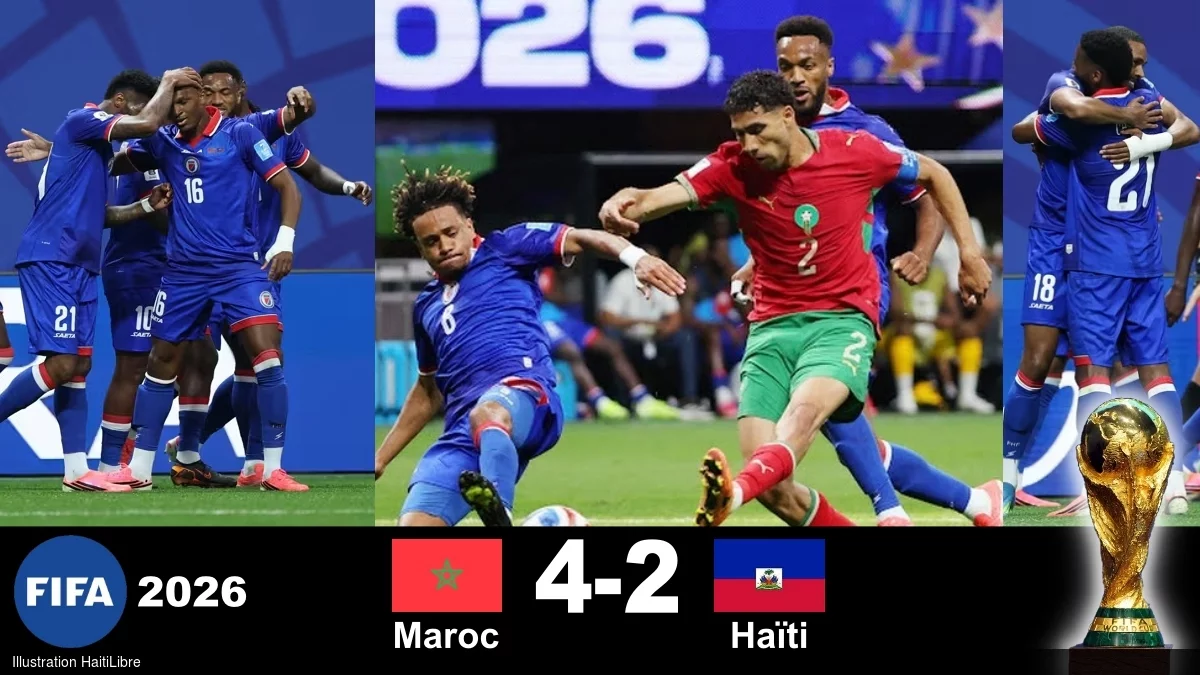
2026 World Cup : Morocco narrowly defeats Haiti (4-2)
On June 24, 2026, history was made at Atlanta’s Mercedes-Benz Stadium, when Haiti’s men’s national football team – nicknamed the Grenadiers, ranked 83rd globally – faced 7th-ranked Morocco’s Atlas Lions in their final Group C match of the 2026 FIFA World Cup, marking the first ever meeting between the two sides at the tournament, in front of a sold-out official crowd of 68,324 spectators. Though the North African side claimed a hard-fought 4-2 win, the Caribbean underdogs exited the tournament with widespread praise, pushing the tournament favorites to the final whistle in a performance that defied expectations.
French head coach Sébastien Migné made two adjustments to Haiti’s starting lineup from their previous match against Brazil, bringing in forward Wilson Isidor of England’s Sunderland AFC and winger Lenny Joseph of Hungary’s Ferencváros TC, while regular starters Carlens Arcus and Frantzdy Pierrot started the game on the bench. Haiti set up in a 4-4-2 formation, with Johnny Placide (SC Bastia, France) starting in goal, Ricardo Adé (LDU Quito, Ecuador), Duke Lacroix (Colorado Springs Switchbacks, USA), Martin Experience (AS Nancy-Lorraine, France), and Josué Casimir (AJ Auxerre, France) forming the defensive line, Ruben Providence (Almere City FC, Netherlands), Jean-Jacques Danley (Philadelphia Union, USA), Jeanricner Bellegarde (Wolverhampton Wanderers, United Kingdom), and JK Duverne (KAA Gent, Belgium) completing the midfield, and Isidor and Joseph leading the attacking line.
Migné made five substitutions throughout the second half to refresh his side: Louicius Deedson replaced Isidor, and Duckens Nazon replaced Providence in the 67th minute; Carlens Arcus replaced Duverne, and Dominique Simon replaced Danley in the 80th minute; and Pierrot came on for Joseph in the 83rd minute.
The opening 45 minutes delivered end-to-end drama, with four goals split evenly between both sides. Haiti shocked the global football audience in the 10th minute, opening the scoring for their first ever World Cup goal when a low cross from Duverne deflected off Lenny Joseph’s backheel attempt, wrong-footing Moroccan goalkeeper Yassine Bounou and rolling into the back of the net for an own goal, putting the underdogs up 1-0.
Haitian goalkeeper Johnny Placide put in a string of impressive saves in the 13th, 23rd, and 36th minutes to keep Morocco off the scoresheet, but Atlas Lions captain Achraf Hakimi finally found an equalizer in the 39th minute, slotting home after a cross took a deflection off a Haitian defender.
Haiti refused to back down, and retook the lead just four minutes later in the 43rd minute. After Brahim Díaz gave away possession in Morocco’s half, Isidor hit a powerful long-range strike into the top corner, leaving Bounou with no chance and putting the Grenadiers up 2-1.
Morocco leveled the score right before the halftime whistle, when Hakimi cut the ball back into the path of Ismael Saibari, who converted the chance to make the score 2-2 going into the break.
After halftime, Morocco, the higher-ranked side, began to dominate possession and territory, putting consistent pressure on Haiti’s defense. The breakthrough finally came in the 78th minute, when substitute Soufiane Rahimi converted from a corner to put Morocco ahead 3-2, the first time the North African side had led in the match.
The match’s final goal came in the 89th minute, when young substitute Gessime Yassine capitalized on a defensive miscommunication from Haitian defender Carlens Arcus, who had assumed the ball had gone out of play. A VAR review confirmed the goal was valid, sealing Morocco’s 4-2 win.
In the final Group C standings, Brazil and Morocco both advanced to the knockout stage with seven points each: Brazil claimed first place on goal difference, with two wins, one draw, seven goals scored, and one conceded, while Morocco finished second with two wins, one draw, six goals scored, and three conceded. Scotland finished third with three points from one win in three matches, while Haiti ended their historic first World Cup campaign in fourth place with zero points, having scored two goals across three group matches.
-

Derde helft WK 2026: Bosnië wint cruciale duel van Qatar dat veerkracht toonde
The 2026 FIFA World Cup Group B clash in Seattle delivered a dramatic, action-packed encounter between Bosnia-Herzegovina and Qatar on June 24, with Bosnia securing a critical 3-1 victory that puts them on the cusp of a knockout stage spot. The result comes just days after Qatar suffered a heavy 6-0 opening defeat to Canada, leaving the 2022 World Cup hosts already facing elimination heading into their final group fixture. For Bosnia-Herzegovina, the match carried extra significance: it marked veteran striker Edin Dzeko’s 150th senior international cap, a personal milestone the 40-year-old football icon was determined not to celebrate with an early tournament exit. Dzeko, Bosnia’s all-time record appearance holder and leading goalscorer with 72 international goals entering the game, had missed Bosnia’s opening match through injury but returned to the starting lineup to anchor his side’s attack, coming within inches of adding a landmark 74th goal to his legendary career. Both sides headed into the fixture on a five-game winless run, amplifying the pressure to secure three points, and the tension was palpable from kickoff in what was the first meeting between the two nations since 2010. Bosnia started the match on the front foot, dominating possession and carving out early chances, with 18-year-old young talent Kerim Alajbegovic producing one of the tournament’s standout goals to open the scoring. The teen prodigy glided past two Qatari defenders before firing an unstoppable strike into the top corner, leaving the goalkeeper with no chance. Bosnia doubled their lead shortly after, when a dangerous cross from Dzeko deflected off Qatari forward Sultan Al-Brake for an unlucky own goal. Far from folding under pressure, Qatar responded with a stunning fightback, led by captain Hassan Al-Haydos, who pulled a goal back with a powerful strike to reignite the contest. Energized by their breakthrough, Qatar shifted up a gear, stringing together quick combinations and pushing Bosnia onto the back foot. A shot from Pedro Miguel cannoned off the post, ramping up the tension as Qatar finished the first half with the momentum firmly on their side. After the break, Dzeko remained a constant threat in attack for Bosnia, and he too saw a shot bounce off the woodwork, denying him the milestone goal he chased. Near-29 degree temperatures in Seattle slowed the overall pace of the game, but the intensity and fighting spirit from both sides never dropped. Qatar lost Al-Haydos to cramp late in the contest, but his replacement injected fresh energy into the side, and the underdogs remained dangerous on the break. With full-time approaching, substitute Ermin Mahmic sealed the three points for Bosnia, slotting home after a mistake from the Qatari goalkeeper. Mahmic received a yellow card for removing his shirt in celebration of his decisive goal. In the simultaneous Group B fixture, Switzerland beat Canada 3-1 to finish top of the group with seven points, while Canada and Bosnia-Herzegovina both finished on four points. Bosnia edged out Canada on goal difference to secure their knockout stage spot, while Qatar finished bottom of the group without a single point, confirming their elimination. Despite their early exit, Qatar turned in a spirited display that earned praise, showing impressive resilience and fighting spirit after their heavy opening defeat, giving the nation optimism for future international competitions. For Bosnia-Herzegovina, the result capped off an evening of memorable milestones: the performance blended the experience of a generational talent in Dzeko with the exciting potential of young star Alajbegovic, creating a promising foundation for what fans hope will be a deep run in the knockout stage of the 2026 World Cup.
-

Derde helft WK 2026: Canada ondanks nederlaag door naar de volgende ronde
The final group stage match between Switzerland and Canada, held at Vancouver’s host stadium, carried high stakes: both sides had accumulated four points from their opening two fixtures, and a draw would have been enough for both to advance to the knockout round of the World Cup.
Many Canadian supporters hoped their side would push for a full three points after securing their first ever World Cup victory earlier in the tournament. For most pre-match observers, however, a low-tempo, cagey draw seemed the most likely outcome – and the first half of the match played out exactly according to that script. The opening 45 minutes delivered almost no attacking action of note, with both sides reluctant to commit players forward and leave themselves exposed at the back. The only clear-cut chance fell to Swiss striker Breel Embolo, who was caught by surprise by the unmarked scoring opportunity and failed to convert from close range.
Beyond the lack of goals, the first half was marked by frequent fouls and repeated theatrical falls designed to draw yellow cards from the referee. When the halftime whistle blew, the scoreboard still read 0-0, with neither side having made a breakthrough.
That all changed immediately after the break, when Canada grabbed the opening goal against all expectations. Rubén Vargas fired a low shot into the far corner off a precise layup from Johan Manzambi, putting the co-hosts ahead 1-0. Just 11 minutes later, the tide turned again: it was Manzambi who turned goal scorer, tapping home a cross from Embolo to put Switzerland in front 2-1.
The two-goal swing finally woke the Canadian side up, which launched a sustained wave of attacking pressure that pinned Switzerland back in its defensive half for the rest of the match. Rushing to find an equalizer in front of its home crowd, however, Canada grew careless in its final passes and finishing. With 15 minutes remaining, substitute Promise David pulled one back for Canada. Getting on the end of a cross from Nathan Saliba, David nudged the ball past Swiss goalkeeper Gregor Kobel to cut the deficit to 2-1.
In the closing minutes, Canada had multiple golden opportunities to salvage a draw and claim the top spot in the group. In the final seconds of stoppage time, striker Alphonso Johnston got a free header on goal that would have leveled the score, but his attempt lacked the power to beat Kobel. When the final whistle blew, Switzerland held on to the 2-1 win, finishing the group stage top of the table and booking its place in the knockout round. Canada’s late comeback fell just short, leaving the co-hosts to wait to confirm its own knockout stage qualification.
-
Babonneau farmers get water lifeline
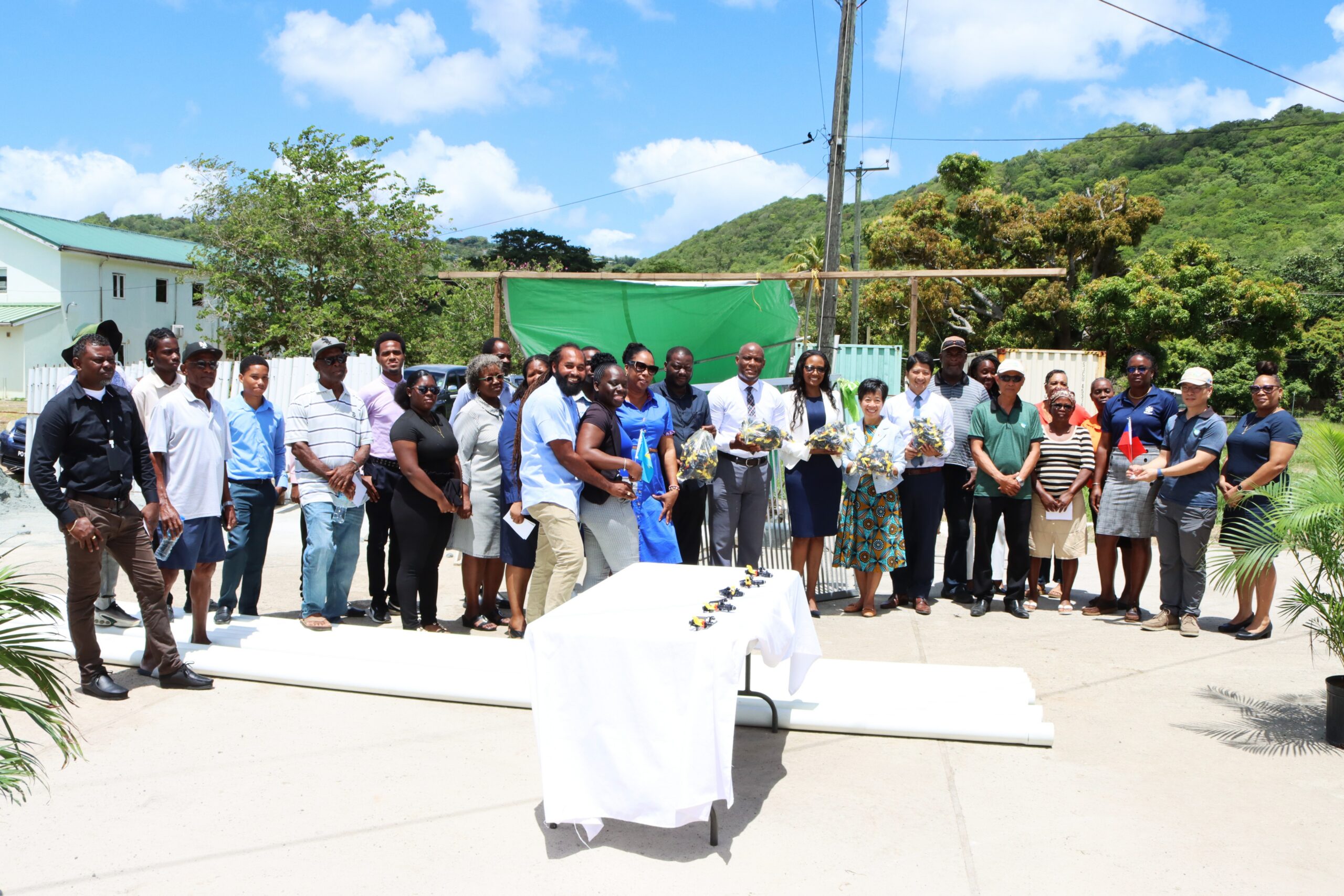
For years, small-scale agricultural producers in Chassin, a farming community nestled in Babonneau, Saint Lucia, have grappled with persistent water scarcity that threatened their crops and livelihoods. Decades of unmaintained infrastructure had left the local irrigation network choked with accumulated silt, cutting off access to the reliable water supply farmers depend on – a problem that grew even more urgent as the island entered a prolonged dry season exacerbated by climate shifts. Now, thanks to a targeted rehabilitation initiative carried out under the Seven Crops Project, supported by Taiwan, the community’s water access has been completely transformed.
The scope of the project addressed every core flaw plaguing the original 16-year-old water system. Teams carried out extensive desilting work to clear the community dam, which had become almost completely blocked by years of sediment buildup. They also installed a new filtration system to boost water quality, and reconnected and upgraded worn sections of the wider irrigation distribution network. Once the work was completed, the revamped system is now able to deliver approximately 30,000 gallons of water to the region, covering roughly 100 acres of cultivated farmland and serving around 50 local producers. The project was officially marked as complete during a handover ceremony held earlier this month, where key stakeholders, partner representatives, and participating farmers gathered to celebrate the milestone.
Speaking at the ceremony, Nicole Su, Taiwan’s Ambassador to Saint Lucia, emphasized the foundational role that reliable irrigation infrastructure plays in supporting agricultural communities. “We understand how important it is to have reliable water access for our daily lives, and how essential a functioning irrigation system is for farming communities,” she told attendees. Su noted that the intervention will directly boost production of seven key staple crops – tomatoes, cabbage, cucumbers, eggplants, watermelons, pumpkins and okra – grown in Babonneau, which is widely known as Saint Lucia’s agricultural “bread basket” that feeds much of the island. She also publicly recognized the hard work and dedication of Chassin’s farmers, who collaborated with the project team throughout the renovation, assisting with removing excavated silt, and supporting the installation and reconnection of new infrastructure.
Lisa Jawahir, Saint Lucia’s Minister for Agriculture, Fisheries, Food Security and Sustainable Development, framed the project as a critical investment in both national water security and food sovereignty at a time of growing climate uncertainty. She warned that climate change has steadily increased pressure on the island’s farming sector, bringing longer dry spells, more intense drought conditions, and increasingly unpredictable rainfall patterns that make water planning extremely difficult.
“Without water, there can be no crops. Without water, there can be no livestock. Without water, there is no agriculture,” Jawahir said, outlining the cascading risks of unaddressed water scarcity. “When water becomes scarce, crops decline. Production costs will increase because we now have to buy more irrigation lines, water tanks, and rainwater harvesting systems. Incomes for farmers will, of course, be reduced, and ultimately, our national food security will be threatened.” She added that Chassin’s farmers had struggled with the dam’s failing infrastructure for years, making the rehabilitation project both extremely timely and necessary.
Jawahir also confirmed that the Government of Saint Lucia will continue pursuing collaborative partnerships, including with the government of Taiwan, to invest in upgraded agricultural infrastructure and climate-resilient technologies that help farmers not only adapt to changing conditions, but grow their operations. “We remain committed to strengthening irrigation systems to help improve climate resilience and provide the support necessary to help our farmers succeed,” she said.
Project coordinator Adline Eudovic echoed these remarks, noting that water security is inextricably linked to both agricultural output and the long-term stability of rural livelihoods. She added that this rehabilitation project is just one of several similar irrigation upgrades the Seven Crops Project has completed across the island, with previous interventions successfully improving water access for farming communities in Micoud and Choiseul.
Agricultural officer Nicholas Doxily explained that the Chassin water system was first constructed 16 years ago, but gradual silt buildup over time choked the network, leading to regular water shortages, widespread crop losses, and steadily declining farm yields. He framed the handover as far more than just a transfer of renovated infrastructure: “This handing-over ceremony represents not just the handing over of equipment, but also the opportunity for resilience and a stronger foundation for sustainable farming. These resources will help improve water security, improve productivity, and support farmers in adapting to the growing impacts of climate vulnerability. It is an investment not only in crops, but in livelihoods, food security, and the future of this community.”
Aldric Edward, representing Member of Parliament for Babonneau John Paul Estephane, noted that local farmers from the constituency are the primary suppliers of fresh local produce to the entire northern end of Saint Lucia, making their productivity critical to the wider region’s food access. “We all know of the water woes in Saint Lucia, and inasmuch as many households are affected, the farmers are also affected. Water truly is life, and farming plays a fundamental role in the livelihoods of all Babonneau residents,” he said, thanking the Taiwan Technical Mission for its ongoing support for Babonneau residents.
Members of the Chassin Farmers Group welcomed the completed project, with representative Theona Albert noting that the local dam has long been a lifeline for the community, even supporting production through extreme weather events including Hurricane Tomas. Albert recalled that the Seven Crops Project launched in the region back in 2010, initially supporting just a small number of households, but has expanded over time to bring benefits to hundreds of local farmers. “I’m happy that farmers will be receiving the mesh and pipes to continue the project,” she said. “While other people have challenges sourcing water, we do not have that problem because the dam has sustained us… I would like to thank the Government of Taiwan, Ministry of Agriculture, farmers and residents for the success of this project.”
According to the Water and Sewerage Company Inc. (WASCO), the Babonneau irrigation network was one of the hardest-hit systems across the island during this year’s extended dry season, making the completed upgrade even more critical for producers ahead of the next planting cycle.
-

Simone Biles Fires Back at Critics Over Belize Trip Following Health Emergency
Four-time Olympic gold medal-winning gymnast Simone Biles has pushed back against online criticism after facing backlash for traveling to Belize just two weeks after surviving a life-threatening medical emergency.
The controversy ignited after Biles shared vacation photos from her trip on social media, prompting harsh comments from users who questioned her decision to travel so soon after her health scare. One high-profile comment mocked her situation, writing, “Almost died, but look at these travelling selfies….”
Rather than ignoring the negative feedback, Biles responded directly to address her critics. “Ugh, these comments make me sad,” she wrote in her reply. “A little over two weeks ago, I experienced a serious medical emergency that could have ended very differently, and this trip has been part of allowing myself to heal & appreciate being here.”
The 29-year-old athlete added that the near-death experience fundamentally shifted her perspective on life, urging social media users to extend more grace to people navigating recovery after traumatic health events. “Life-changing experiences can alter a person’s outlook,” she explained.
Biles first opened up about the health scare earlier this June, when she posted a photo of hospital wristbands to her social media with the caption, “Almost dying wasn’t on my bingo card earlier this week.” She later called the incident “one of, if not the scariest, experiences of my life.” As of this week, Biles has not disclosed the specific cause of the medical emergency, noting she is not yet prepared to share public details about her condition.
Biles traveled to Belize on June 14 alongside her husband, NFL player Jonathan Owens. The Central American country holds deep personal meaning for the gymnast: her mother Nellie Biles was born and raised in Belize, and Biles holds Belizean citizenship through her mother’s family. She has previously spoken about visiting the country as a child, making the trip a meaningful personal retreat rather than an impulsive luxury getaway.
-

Antigua Carnival Countdown Begins. One Month To Go Before The Summer Festival
With just 30 days until kickoff, the twin-island nation of Antigua and Barbuda is putting the finishing touches on preparations for its world-famous annual Antigua Carnival, set to run from July 25 to August 4, 2026. The 11-day celebration of Caribbean heritage, pageantry, and music expects to draw thousands of international visitors and returning nationals ready to join in non-stop revelry centered around this year’s official theme: ‘Feel the Rhythm’.
Organized under the stewardship of the Antigua and Barbuda Festivals Commission, the 2026 iteration will turn the entire destination into a continuous, island-wide celebration. From sunup to sundown, the air will thrum with the iconic sounds of the Caribbean: rhythmic steelpan melodies, sharp-witted calypso lyricism, and high-energy soca beats. Colorful masqueraders in elaborate custom costumes will dance through city streets, while traditional Carnival characters keep centuries-old cultural traditions alive, and all-night fetes keep crowds partying from dawn long into the next night.
Ambassador Elizabeth Makhoul, chair of the Antigua and Barbuda Festivals Commission, extended a global invitation to travelers ahead of the event. “Antigua Carnival 2026 invites the world to ‘Feel the Rhythm’ as we host the Caribbean’s Greatest Summer Festival,” Makhoul shared. “Visitors can immerse themselves in the heartbeat of Antigua and Barbuda through vibrant celebrations, energetic performances of steelpan, soca, calypso, mas, and authentic cultural experiences that capture the true rhythm of the Caribbean.”
Makhoul also noted that the 2026 festival carries extra meaning as a lead-up to a major historic milestone for the event. “Antigua Carnival is more than a festival; it’s a rhythm you feel, a culture you experience, and memories you carry long after the music fades. As we celebrate this year, we also pave the road to Carnival 70, a historic milestone awaiting us in 2027,” she said.
Beyond the carnival festivities, the event offers travelers the perfect balanced summer getaway, pairing high-energy celebration with Antigua and Barbuda’s world-famous natural attractions. “Coupled with our stunning beaches, a visit during Antigua Carnival presents the perfect summer getaway for travellers seeking relaxing beach days and evenings filled with the rhythm of the Carnival. It is the ideal combination of relaxation, culture and festivities,” added tourism representative Spencer.
This year’s packed event schedule features all the iconic Carnival staples that attendees love, starting with the official Opening of Carnival and T-Shirt Mas on July 25, followed by the fan-favorite early-morning J’ouvert celebration, the massive Carnival Monday and Tuesday Parade of the Bands through the capital city of St. John’s, and the festival’s climactic closing event, Last Lap, on August 4.
Music lovers will have no shortage of standout performances and competitive events to enjoy. Top local talent will battle for two of the festival’s most prestigious crowns: Party Monarch and Calypso Monarch. One of the most anticipated matches of the 2026 festival is the star-studded *Face Off: Antigua vs. Dominica*, which will see Antigua and Barbuda’s legendary Burning Flames band go head-to-head with Dominica’s beloved bouyon group Triple K International. Regional soca royalty including Patrice Roberts, Machel Montano, Voice, Skinny Fabulous, and Mudlo will also take the stage as headliners, alongside homegrown Antiguan soca stars Tian Winter and Tizzy. The annual Panorama competition will once again showcase the depth of Antigua and Barbuda’s steelpan tradition, with dynamic, soulful performances from some of the best steelpan ensembles in the region.
With excitement building for the 11-day celebration, organizers are urging prospective attendees to lock in travel arrangements early to secure the best rates and availability. Travelers can find full schedules, ticketing details, and planning resources on the official Antigua Carnival website to craft their ultimate 2026 carnival experience.
The full 2026 Antigua Carnival key event schedule is as follows:
– Face Off: July 24
– T-Shirt Mas and official opening of Carnival City: July 25
– Junior Carnival: July 26
– Rhythm Court and Band-Meet-Band Junior: July 27
– Patrice Roberts: I Am Woman concert: July 28
– Long Bay Lager Caribbean Melting Pot: July 30
– Calypso Monarch: July 31
– Watch Night: July 31
– Panorama: August 1
– Party Monarch: August 2
– J’ouvert: August 3
– Monday Mas Parade & Parade of Bands: August 3 & 4
– Last Lap: August 4 -

News 5 Journalists Strengthen Investigative Skills Through International Training Programme
Against a global backdrop of rising public demand for accountable, in-depth reporting, the newsroom of Greater Belize Media’s News 5 has completed a targeted two-day skills-building workshop to elevate its investigative journalism capacity.
Hosted by veteran award-winning Canadian journalist Cecil Rosner, who currently serves as managing editor of the Investigative Journalism Foundation, the workshop brought together reporters, editors, digital content specialists and newsroom leadership to refine core investigative practices. The training initiative was made possible through a Trainer Grant from the Public Media Alliance, a component of the organization’s Global Grants programme that receives financial backing from the Grace Wyndham Goldie (BBC) Trust Fund.
Unlike generic journalism training, the workshop focused heavily on hands-on, practical skills tailored to the realities of 21st-century reporting. Curriculum modules covered cutting-edge open-source intelligence gathering methods, protocols for accessing and analyzing public government records, ethical frameworks for integrating artificial intelligence into investigative work, advanced interviewing techniques, and narrative strategies for crafting compelling, impactful stories. Attendees also engaged in deep discussions about the complex legal and ethical dilemmas that investigative journalists frequently encounter when pursuing accountability reporting.
Marleni Cuellar, CEO of Great Belize Productions Ltd., which operates News 5, framed the training as a direct response to shifting audience expectations. Today’s news consumers do not settle for quick daily headlines, Cuellar explained: “Audiences globally are demanding more of their local newsrooms, not just answers from those in power, but the fuller picture: the context, the consequences, and the impact and relevance of each story on their lives. Belizeans are no different.”
News Editor Isani Cayetano emphasized that the workshop comes at a critical turning point for Belize’s journalism sector. Local newsrooms across the country face mounting pressure to produce more in-depth reporting even as they operate with constrained resources and increasingly tight production deadlines. “The programme strengthens our capacity to dig deeper, ask tougher questions, and follow stories beyond the surface, journalistic skills that are essential in holding power to account and serving the public interest,” Cayetano said.
For Digital Editor Hipolito Novelo, the training reinforces the News 5 newsroom’s longstanding commitment to moving beyond superficial, surface-level coverage. “Strong investigative reporting is built on persistence, verification and context. This training gave our team valuable tools to strengthen those areas while adapting to the realities of modern journalism. Ultimately, it helps us tell more meaningful stories and better serve the Belizean public,” Novelo added.
Rosner, the workshop lead, drew on more than four decades of cross-platform journalism experience spanning print, broadcast and digital media to lead the sessions. Throughout his decades-long career, Rosner has built a reputation for unpacking complex, underreported stories and training new generations of investigative journalists across the globe.