博客

  • Belize Unveils Bold 5-Year Plan to Strengthen Healthcare Workforce

    Belize Unveils Bold 5-Year Plan to Strengthen Healthcare Workforce

    On June 25, 2026, Belize’s Ministry of Health and Wellness introduced a landmark five-year initiative aimed at reversing long-standing challenges in the country’s healthcare sector, centering its efforts on shoring up the national medical workforce.

    Named the Belize Human Resources for Health Policy and Strategic Plan 2026–2030, the roadmap targets persistent gaps in staffing distribution, professional training, and equitable access to skilled care across all regions of the small Central American nation. Health Minister Kevin Bernard framed the plan as a critical turning point for the country’s health system, noting that its development was directly shaped by stark vulnerabilities laid bare during the COVID-19 pandemic.

    During the height of the global public health crisis, Bernard recalled, every tier of Belize’s healthcare workforce—from frontline physicians and nurses to laboratory technicians, community health workers, and administrative support staff—shouldered unprecedented burdens. Working extended hours under constant pressure and adapting to rapidly changing public health guidelines, these workers were the backbone of the country’s response, enabling Belize to navigate one of the most turbulent periods in modern public health history.

    Belize’s push to revamp its healthcare workforce strategy comes amid a global crisis of medical professional shortages, worsened by the steady migration of skilled clinicians and widespread challenges retaining trained staff in low- and middle-income nations. Currently, Belize counts 38.2 physicians, nurses, and midwives per 10,000 residents, according to Dr. Andre Chell, director of policy, research and planning at the Ministry of Health and Wellness and head of the new strategic plan project. That falls well short of the 44.5 per 10,000 threshold the World Health Organization has identified as the minimum requirement to advance toward universal health coverage.

    Unlike top-down policy frameworks developed without on-the-ground input, Chell emphasized, the five-year plan was crafted following extensive consultations with a broad range of stakeholders, including practicing clinicians, healthcare administrators, and global and local health partners. The resulting strategy is designed not only to ease immediate staffing pressures but also to proactively address future healthcare demands as Belize’s population and care needs evolve.

    One of the plan’s earliest and highest priorities is the development of a comprehensive national retention strategy that covers all categories of healthcare workers, expanding on the government’s current targeted retention policy for nurses. Chell noted that this initiative is marked as a quick win, with progress expected within the first few months of the plan’s rollout.

    The urgency of the reform has been amplified by an upcoming transition: the planned departure of the Cuban Medical Brigade, a longstanding contributor to Belize’s healthcare workforce that has filled critical staffing gaps for years. When the brigade exits, the total number of healthcare workers per 10,000 residents will decline further, stretching the country’s already overstretched existing staff even thinner. This policy and strategic plan, officials say, will put in place systems to offset that loss and build a self-sustaining, robust national healthcare workforce for years to come.
  • Five Days After Hattieville Tragedy, Violence Strikes Again

    Five Days After Hattieville Tragedy, Violence Strikes Again

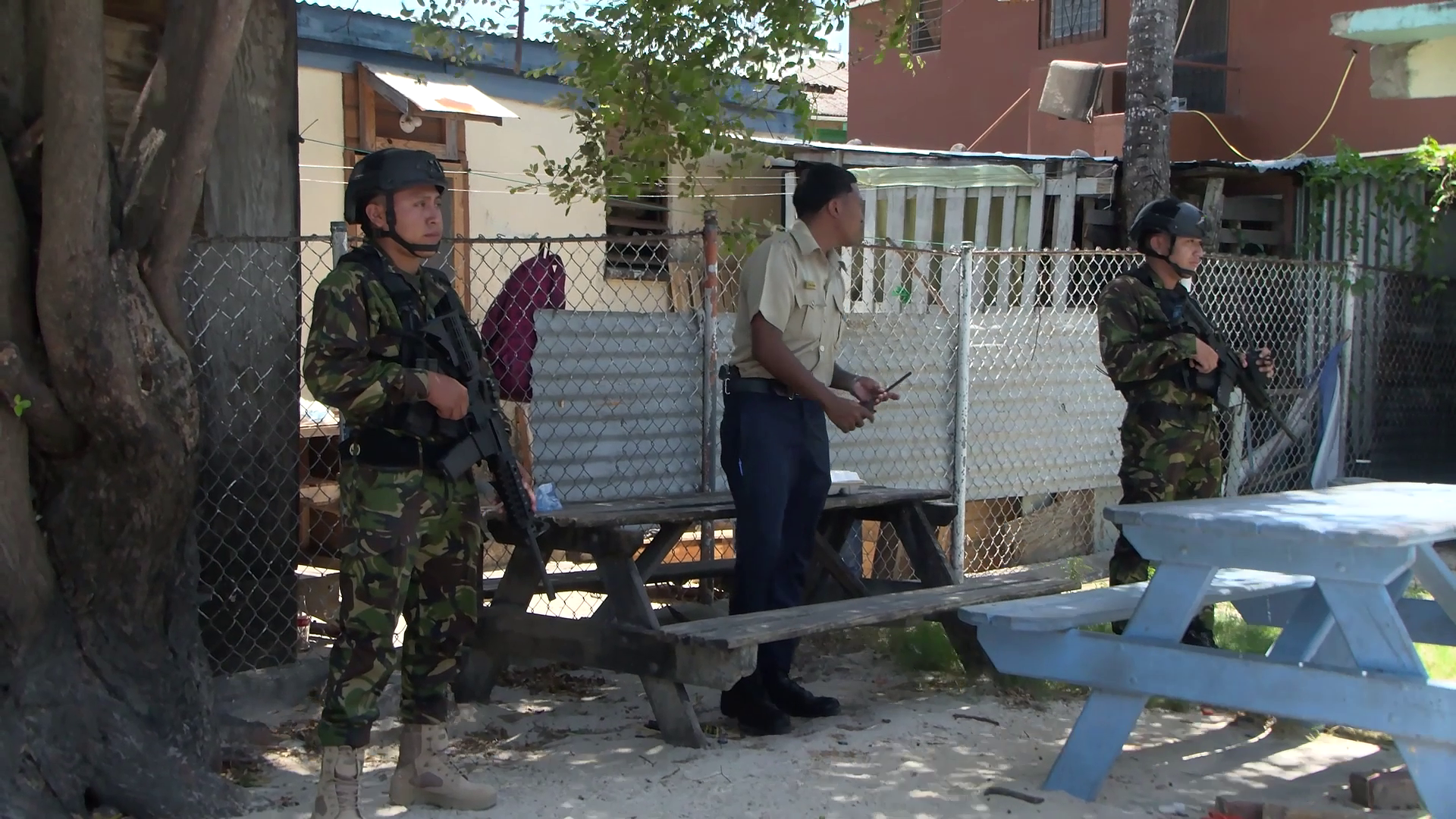
    Five days after a horrific double killing that claimed the life of expectant mother Jane Urbina and her unborn child in Hattieville, Belize has been shaken by another outbreak of gang-related violence, leaving one man dead and another wounded in a shooting in Lord’s Bank. The latest attack has fanned growing public anger and anxiety over the country’s persistent crisis of violent crime, and thrown into sharp question the effectiveness of the recently declared state of emergency (SOE) that was meant to curb bloodshed in high-risk zones.

    Authorities believe the Hattieville killing was carried out by perpetrators based out of Belize City, and the Lord’s Bank shooting falls within the boundaries of the areas placed under heightened security through the SOE. Critics of the measure have quickly pointed to the back-to-back attacks as proof that the emergency order has failed to deliver on its core promise of improving public safety in the most violence-prone communities across the nation.

    Despite the widespread criticism, Belize Police Commissioner Dr. Richard Rosado has defended the SOE, arguing that the measure has already met its central operational objective: giving law enforcement investigators the unimpeded space needed to crack open unsolved homicide cases. In comments to reporters, Dr. Rosado noted that the declaration of emergency has already allowed police to clear at least four separate murder cases, a key win for an overstretched force grappling with a years-long surge in violent crime.

    When pressed by reporters about why a brazen murder was able to occur on Albert Street, a central thoroughfare that sees steady police presence even during peak Saturday shopping hours, Dr. Rosado acknowledged that criminal actors often exploit unexpected opportunities to carry out attacks. He emphasized that protecting the safety and security of all Belizean citizens remains the top priority for the national police force, and rejected suggestions that a small cohort of violent offenders would be allowed to upend public order across the country.

    “ We will not allow a few criminal-minded individuals to dictate the security environment of our country,” Dr. Rosado told reporters, confirming that the department has already redirected additional personnel and resources to stabilize the security situation in Belize City. He added that police remain committed to identifying all perpetrators of recent violence and bringing them before the courts to face justice.

    As of the latest update, no suspects have been arrested or charged in connection with the killing of Jane Urbina, a case that has galvanized national outrage over Belize’s ongoing crime epidemic. This report is a edited account of an original televised evening news broadcast, transcribed and adapted for online publication.

  • Haiti’s Minister Sandra Paulemon addresses the UN

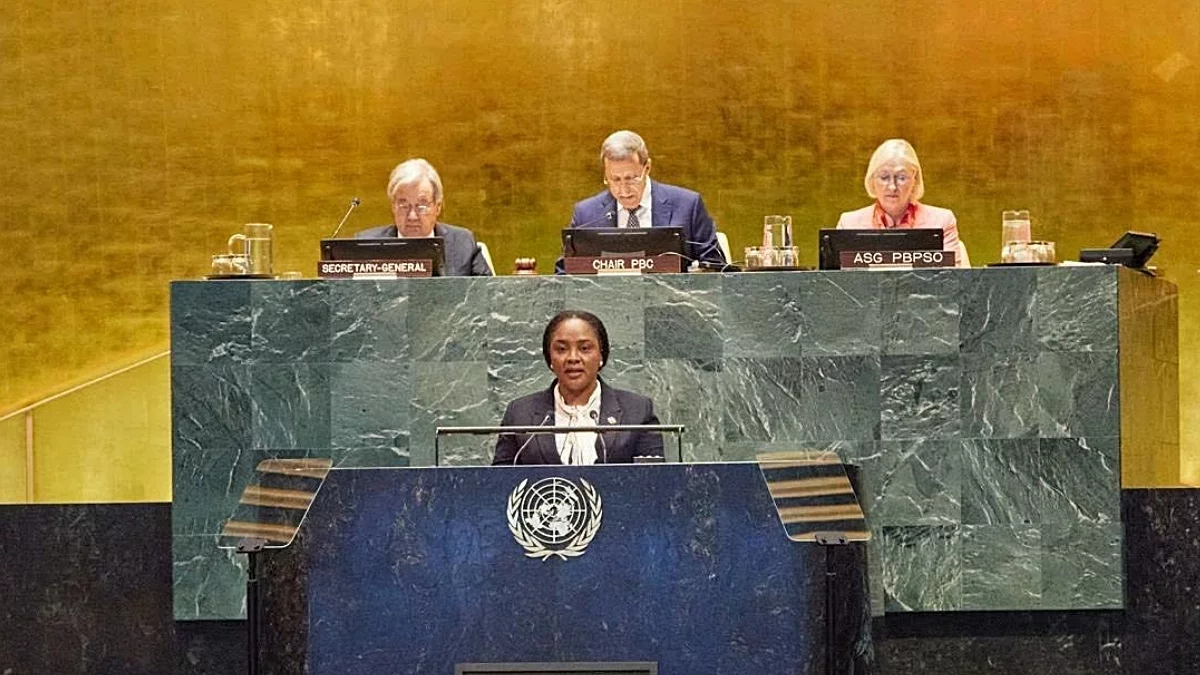
    Haiti’s Minister Sandra Paulemon addresses the UN

    On June 25, 2026, during the annual gathering of the United Nations Peacebuilding Commission held in New York, Haiti’s Planning Minister Sandra Paulemon took the stage to deliver a impassioned address to the global body, centering her argument that sustainable peace in the Caribbean nation can only be built on a foundation of expanded opportunity and collective hope.

    Paulemon opened her remarks by extending public praise to UN Secretary-General António Guterres for his ongoing commitment to Haiti, specifically highlighting his recent official visit to the crisis-stricken country. She pushed back against the dehumanizing effect of generic statistical reporting on Haiti’s instability, stressing that behind every headline and data point are millions of ordinary people navigating the daily, life-altering harm brought by widespread gang violence.

    To ground her argument in human experience, Paulemon shared the stories of two young Haitians whose lives have been upended by ongoing conflict. The first was a teenage girl whose ambition to train as a nurse was cut short when violence forced her school to permanently close its doors. The second was a 13-year-old boy, who should be focused on classroom lessons like mathematics and planning for his adult future, but was instead coerced into joining a violent gang.

    “These two stories remind us of a fundamental truth: women must not be condemned to remain victims. Children are not born to become criminals. With opportunities, they can once again become builders of peace,” Paulemon told the assembly.

    The minister emphasized that while robust security interventions are a non-negotiable first step to curbing violence, they alone cannot resolve Haiti’s deep-rooted crisis. Lasting peace, she argued, requires parallel progress on multiple interconnected fronts: advancing accountability through functional justice systems, creating formal employment pathways for out-of-work young people, expanding protections for women and girls, supporting the gradual reestablishment of state authority across the country, and repairing broken trust between Haitian citizens and their government institutions.

    “Security can silence the guns. But only peace can rekindle hope,” she said. “Peace is a mother regaining her dignity. Peace is also a father returning home with the hope of being able to feed his family and watching his children sleep, believing that tomorrow will be better than today.”

    Paulemon also pushed for deeper integration between three core global efforts in Haiti: emergency humanitarian response, long-term peacebuilding work, and sustainable development programming. She argued that this coordinated, complementary approach is the only viable path to lasting national stability. “When humanitarian aid saves lives, when peacebuilding restores confidence, and when development creates opportunities, then we create the conditions for true stability,” she stated.

    On behalf of Haiti’s transitional government, the minister reiterated the country’s gratitude to the UN Peacebuilding Commission and its associated Peacebuilding Fund (PBF) for their ongoing support. PBF investments have already delivered tangible progress, she noted, including strengthening the capacity of Haiti’s state institutions, backing core Disarmament, Demobilization, Reintegration and Community Violence Reduction (DDR-CVR) initiatives, advancing the global Women, Peace, and Security agenda, and funding a range of community-focused infrastructure projects across the country.

    Closing her address, Paulemon delivered a clear, uncompromising message to the entire international community: “Haiti is not asking for charity. Haiti is not asking for pity. Haiti is asking for peace.”

  • ComPol Defends Controversial Promotion Despite Shocking Video Evidence

    ComPol Defends Controversial Promotion Despite Shocking Video Evidence

    Public trust in Belize’s national police force is facing fresh pressure this June 2026, as a controversial promotion of an officer with documented violent conduct on camera has sparked widespread calls for transparency and accountability. The high-profile case centers on Corporal Wilbert Coc, who was recorded choking a woman in the town of Benque Viejo. Despite the viral video evidence capturing the altercation, Coc has been advanced to the rank of sergeant – a decision that has drawn fierce criticism from community groups and observers calling out the force’s purported zero-tolerance policy for domestic violence.

    At a recent press briefing addressing growing scrutiny of multiple senior promotions, Police Commissioner Dr. Richard Rosado defended the controversial decision to promote Coc. Dr. Rosado explained that the woman involved in the incident made the personal choice not to file formal criminal charges against the officer. Instead of pursuing legal prosecution, she requested access to family counseling services to resolve the underlying conflict. Under existing departmental protocol, the commissioner noted, police cannot force an unwilling victim to move forward with legal action. Without a formal complaint or pending investigation, there is no legal barrier that would disqualify Coc from meeting promotion requirements, he argued.

    The Coc promotion is not the only controversy putting the police’s promotion processes under the microscope. Multiple anonymous sources have raised allegations that a number of recent promotions went to officers who never completed the mandatory promotional examination required under the Police Act, the national legislation that governs personnel processes for the force. Questioned directly on these claims during the briefing, Dr. Rosado rejected the allegations entirely as unfounded misinformation.

    He walked reporters through the full legislated promotion process to underscore its rigor: all applications are first open to eligible officers, then vetted by a specialized review committee, shortlisted candidates are required to pass a standardized promotional exam, and only top-performing candidates proceed to a final review by the promotional board. Every promotion approved in recent months has followed this process in full compliance with the Police Act, Dr. Rosado insisted, dismissing claims of skipped exams as “stupidity” with no basis in fact.

    Commissioner Rosado also addressed a separate question regarding the recent transfer of Sergeant Obed Arzu from the Police Headquarters in Belmopan, which followed reports that Arzu was moved after a verbal dispute with a civilian official. Dr. Rosado clarified that all recent personnel transfers, including Arzu’s, were carried out based solely on operational needs and service priorities, rather than as a disciplinary response to the reported disagreement.

    This controversy comes just two months after two separate domestic violence cases involving sitting police officers already triggered public outcry in April 2026. At that time, Dr. Rosado publicly reaffirmed the force’s commitment to accountability for officer misconduct, even as he noted that protocol prevents the department from taking punitive action when victims choose not to pursue formal prosecution. The latest promotion has renewed questions about how the force balances due process for officers with public expectations of accountability for violent behavior, particularly amid a stated zero-tolerance policy for domestic aggression.

    This report is adapted from a verbatim transcript of a televised evening news broadcast, with all statements from speakers accurately preserved for publication.

  • Police Commissioner Calls LIU Suspension a “Necessary Reset”

    Police Commissioner Calls LIU Suspension a “Necessary Reset”

    As public speculation continues to surround the government’s decision to temporarily pause the Leadership Intervention Unit (LIU) program, top law enforcement officials have framed the halt as a critical, necessary step to refresh and improve the initiative. In a recent public briefing dated June 25, 2026, Police Commissioner Dr. Richard Rosado argued that the temporary suspension creates a critical window to conduct a full, evidence-based review of whether the LIU’s social intervention work is delivering the tangible outcomes the public expects.

    Rosado emphasized that all government-run social programs must be held to strict standards of measurable impact and empirical proof of success, a stance that aligns with earlier remarks from former Home Affairs Minister Oscar Mira. Mira, who is currently on approved leave from his post, previously defended the decision to freeze funding for the LIU until the program can demonstrate clear, quantifiable progress in meeting its core goals.

    “Any effective social intervention program has to be rooted in hard evidence,” Rosado stated during the question-and-answer session with reporters. “During Minister Mira’s tenure, feedback emerged that required us to conduct a full assessment of our social intervention initiatives, to judge based on facts whether they are actually creating the impact we promised. This review gives us the chance to prove we are accountable, transparent, and fully committed to an evidence-based approach and continuous improvement. It allows us to map out exactly what adjustments are needed.”

    When pressed by reporters for details on the timeline of the review and whether findings will be released publicly — given that the program serves local youth as its primary beneficiaries — Rosado clarified that only a small number of programs, including the LIU, are currently under review on a temporary basis. He explained that Mira, the LIU director, the service CEO and he held a joint meeting to outline the government’s position directly to LIU leadership, and frontline program staff received one to two months advance notice of the pause to inform on-the-ground participants. This advance notice, Rosado noted, provided sufficient time for all necessary logistical adjustments and ensured no stakeholder was caught off guard by the review.

    When reporters pressed whether this advance notice indicates the assessment is already complete, Rosado confirmed that the review is in its final wrapping-up stage. He added that regardless of the outcome of the assessment, any social intervention program the government moves forward with must deliver meaningful, long-term behavioral change for the communities it serves.

    Despite the ongoing review, Acting LIU Director Andrew Dawson pushed back on the perception that the program is failing to deliver results. Dawson noted that the LIU already has formal accountability mechanisms in place, and that the initiative has already delivered measurable positive outcomes for participants, even as the leadership team continues to pursue incremental improvements.

    This report is adapted from a transcript of an evening television newscast, with all statements from speakers preserved accurately for this online publication.

  • Derde helft WK 2026: Nederland verslaat Tunesië in laatste groepswedstrijd met 3 – 1

    Derde helft WK 2026: Nederland verslaat Tunesië in laatste groepswedstrijd met 3 – 1

    The 2026 FIFA World Cup group stage campaign for the Netherlands wrapped up on a winning note, with a 3-1 victory over Tunisia at Kansas City Stadium locking in their place in the knockout round. The Dutch side, widely known as Oranje, held a comfortable 2-0 lead by halftime, cementing their top-tier standing in competitive Group F ahead of the knockout phase.

    Despite delivering an underwhelming overall performance on the day, and Tunisia equally failing to hit their expected form, the Netherlands controlled large swathes of the match from kickoff. Sustained possession and high forward pressure pinned Tunisia back in their own half for most of the opening 45 minutes. The North African side set up in a compact defensive block to soak up pressure and looked to threaten on the counterattack, but they could barely break free from the Netherlands’ relentless pressure in the first half.

    After the interval, Tunisia adjusted their game plan to take more initiative going forward, and their increased push eventually yielded a consolation goal, which reintroduced a brief period of tension to the tie. The strike carried symbolic weight for Tunisia, allowing the side to leave the tournament with their pride intact. However, the Netherlands remained composed under the late pressure, and a third goal put all uncertainty to rest, restoring the two-goal advantage and letting the Dutch see out the remainder of the match in full control.

    This three points against Tunisia caps off a solid group stage run for the Netherlands, who shared the points with Japan in their opening tournament fixture before securing a comfortable win against Sweden. With three results on the board, the side progressed to the knockout round in convincing fashion.

    For Tunisia, the 2026 World Cup campaign ends in disappointment. The North African nation suffered defeats to both Japan and Sweden in their earlier group matches, and never managed to mount a genuine challenge for a knockout spot. Even so, the team fought until the final whistle against the Netherlands, showing fight despite being eliminated.

    The Netherlands has ranked among the top footballing nations in World Cup competition for decades, but the side is still chasing its first ever World Cup trophy. This latest win demonstrates the squad’s focused approach to the 2026 tournament and their ability to grind out results when required. While the Dutch will need to sharpen their performance ahead of the knockout stage, their successful navigation of the group stage has built valuable momentum and confidence, with the attack finding consistent form going into the next round.

  • Death toll rises as SKN prepares to assist Venezuela

    Death toll rises as SKN prepares to assist Venezuela

    On June 26, 2026, new updates emerged from Venezuela following a devastating pair of powerful earthquakes that have shaken the South American nation, leaving a trail of death, destruction, and disrupted lives, with regional and global bodies stepping forward to offer emergency aid. According to official reports confirmed by international outlets, two back-to-back seismic events registering magnitudes 7.1 and 7.5 on the Richter scale struck multiple regions of Venezuela, including the capital city of Caracas, leaving widespread ruin in their wake.

    As of the latest update, more than 150 people have been confirmed killed by the disaster, with hundreds more recorded as injured. Search and rescue teams are currently working around the clock to pull survivors from the rubble of collapsed buildings, with dozens of people still unaccounted for and trapped under destroyed infrastructure. Local emergency authorities have publicly warned that the final death toll is likely to climb as crews continue to clear debris and access hard-hit, remote areas. Beyond the human cost, the earthquakes have inflicted severe damage to critical public infrastructure, cutting off electricity, cellular and communications networks, roadways and transit links, and other essential services for thousands of residents in impacted communities.

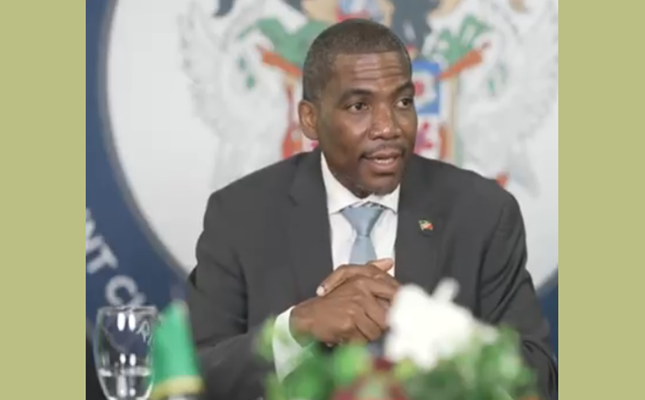
    In response to the unfolding humanitarian crisis, the government of the Federation of St. Kitts and Nevis has formally pledged its full support to Venezuela, announcing it stands prepared to deploy assistance in whatever form is most needed. Speaking during his weekly Roundtable public address on June 25, St. Kitts and Nevis Prime Minister Dr. Terrance Drew confirmed that he has already reached out to Venezuelan leadership both via direct communication and written correspondence to convey the federation’s deepest condolences over the national tragedy and formally offer disaster relief support. “I have spoken to our Ambassador to Venezuela, H.E. Dr. Norgen Wilson, who has been in touch with Venezuelan authorities and is expected to travel there very, very soon. I think within the next week or so,” Drew shared in his address.

    Alongside regional support from Caribbean nations, the United Nations has already mobilized a full coordinated humanitarian response to back Venezuela’s national emergency recovery efforts. The UN Humanitarian Country Team has begun working hand-in-hand with Venezuelan national authorities and local partner aid agencies to coordinate relief delivery, while the UN Office for the Coordination of Humanitarian Affairs is actively facilitating the deployment of specialized urban search and rescue teams to speed up survivor recovery operations.

    In an official statement released by his spokesperson Stéphane Dujarric, UN Secretary-General António Guterres expressed profound sorrow over the loss of life and widespread destruction brought by the earthquakes. “I extend my sincere condolences to the families of those who lost their lives and wished a speedy recovery to those who were injured,” the statement read, adding that the United Nations stands in full solidarity with the government and people of Venezuela as they begin the long process of recovery and reconstruction.

  • Ocean Academy Rejects Government Takeover Plan

    Ocean Academy Rejects Government Takeover Plan

    On the small Caribbean island of Caye Caulker, Belize, a beloved local high school has made the firm decision to stand its ground and remain independent, turning down a government proposal that would have absorbed the institution into a new state-run secondary campus. The June 2026 announcement caps months of tense negotiations between school leadership and government officials, and comes amid longstanding infrastructure challenges that have disrupted classes for the school’s student body.

    What was initially framed as a collaborative solution to Ocean Academy’s pressing space and infrastructure crisis quickly unraveled after government negotiators made a non-negotiable demand: the private nonprofit school would have to voluntarily surrender its operating license to make way for the new public institution. Under the original proposal, floated late last year, the government planned to partner with Ocean Academy to address the school’s long-running issues with chronic flooding, toxic mold infestations, and rampant mosquito populations that have forced the school to shift to online learning and host classes in borrowed community spaces for months. Construction on the new state high school is still scheduled to break ground next month, but it will move forward without Ocean Academy’s participation.

    Principal Noemi Zaiden confirmed that the school’s stakeholder community — including parents, students, alumni, and local supporters — overwhelmingly rejected the government’s terms. “What we’ve been told is that the new government high school would have no ties to Ocean Academy, and we were also asked to voluntarily revoke our license,” Zaiden explained. “After consulting our stakeholders, it was clear they did not want us to surrender our license, so Ocean Academy will remain an independent high school serving Caye Caulker.”

    To address its immediate infrastructure needs, the school has already begun adapting its current campus to the island’s flood risks, moving all core instructional and administrative spaces to the second story and permanently abandoning the flood-prone ground floor. School leadership aims to have all students back on a physical campus by the start of the new academic term in August. In the short term, two modular movable classrooms will be installed on a nearby elevated parcel of land to keep students close to the existing campus while long-term plans are finalized. Counselor Elizabeth Usher noted that the modular solution was designed to accommodate the upcoming rainy season, as the school continues to monitor flood risks on the original site.

    Andre Perez, the Area Representative for Belize Rural South who has been shepherding the government’s new high school project, said he respects Ocean Academy’s right to retain its independence, but made clear he is disappointed by the outcome. “That is most unfortunate. Deeply disheartening,” Perez told reporters. “We all recognized the urgency of expanding high school access on the island, and we thought we could work together to make that happen. There were unfounded allegations that ministry officials had sold off public beachfront land for the project, which we clarified, and we had a productive meeting. The Ministry of Education was clear that this would be a government-run institution, with all teachers and students transferred to the new campus, but Ocean Academy wanted to retain its own unique curriculum and institutional identity, which did not align with the government’s plan.”

    Now Ocean Academy is turning to community and donor support to fund its independent path forward, launching a public fundraising campaign to cover the cost of the temporary modular classrooms and secure a larger plot of land for a permanent, flood-resilient campus. Founder Heidi Curry says the school already has preliminary commitments from donors ready to contribute to a down payment for the permanent campus once a suitable property is finalized, and project updates will be posted regularly on the school’s official website. “The next update will include specific numbers for the cost of the temporary classrooms, and as soon as we lock in the parcel for our permanent home, we will share full details about the down payment and construction timeline we’re targeting,” Curry said.

    While Perez confirmed that Ocean Academy currently qualifies for free tuition for its students through the national government’s Education Upliftment program, it remains unclear whether the school will retain access to this public funding in future years after rejecting the government’s takeover proposal.

  • Derde helft WK 2026: Japan en Zweden spelen gelijk in spannende strijd om tweede plaats in Groep F

    Derde helft WK 2026: Japan en Zweden spelen gelijk in spannende strijd om tweede plaats in Groep F

    The final round of Group F matches at the men’s international football tournament delivered a tense, evenly contested battle between Japan and Sweden at Dallas Stadium on June 25, ending in a 1-1 draw that reshaped the group’s final standings and set up a tricky knockout round matchup for Japan.

    Sweden came out of the gate flying, putting Japan under immediate pressure just 20 seconds into the game with a corner kick. The Asian side held firm, however, with goalkeeper Zion Suzuki turning in a heroic performance between the sticks, pulling off a string of critical saves in a crowded penalty area to keep Sweden off the scoreboard. Midway through the first half, Japan earned its first clear scoring opportunity when Daizen Maeda was brought down inside the 18-yard box. Despite loud calls from the Japanese side for a penalty, the referee waved away the appeals. Sweden continued to create openings, but Suzuki’s sharp reflexes kept the game scoreless.

    The match was defined by physical, hard-fought challenges throughout the first half. Japanese central midfielders put in tight tackles on Sweden’s star winger Anthony Elanga, narrowly avoiding yellow cards for their aggressive defending, while Japan’s Ao Tanaka stood out for his tireless work rate and relentless defensive pressure that kept Sweden’s build-up play disjointed. A hydration break planned amid warm conditions was met with boos from the crowd, who grew frustrated by the brief pause in the open, end-to-end action. The first half also saw an forced early substitution for Sweden, as defender Isak Hien was forced off with an injury that required a last-minute reshuffle of the Scandinavian side’s backline. Japan also made an early change, replacing captain Ko Itakura. When the halftime whistle blew, the score remained goalless, with both sides locked in a tight tactical battle for control of the midfield.

    Japan picked up where it left off in the second half, continuing to build on its solid first-half foundation, with Tanaka once again turning in a standout performance in the center of the pitch. The breakthrough finally came in the 56th minute: after a sharp, flowing combination between Ritsu Doan and Ayase Ueda opened up Sweden’s defense, Daizen Maeda finished the move with a deft lob over the onrushing Swedish goalkeeper, sending the crowd into celebration and putting Japan ahead.

    Sweden responded quickly, drawing level just six minutes later through Elanga. The winger cut inside from the right flank and curled a stunning shot beyond Suzuki’s reach into the far corner of the net, the finish reigniting Sweden’s hopes of taking all three points and top spot in the group. The equalizer injected new energy into the Scandinavian side, and the match grew increasingly tense as both sides pushed for a winning goal. Japan made a series of substitutions to keep their attack fresh, and regained more of the ball possession following the second hydration break. Physical challenges remained intense, and players from both sides picked up yellow cards for hard tackles. Sweden was forced into another late change when captain Victor Lindelöf came off with cramping.

    In the closing minutes of regulation and seven minutes of stoppage time, both sides pushed hard for the decisive winning goal. Sweden saw two late good chances fall to Elanga and Zlatan Ibrahimović (note: consistent with original text reference ‘Isak’, correcting to Alexander Isak), but Suzuki remained unbeatable between the posts, turning away every effort to keep the score level. When the final whistle blew, the scoreline remained 1-1.

    In the other final Group F match, the Netherlands secured a 3-1 win over Tunisia to finish top of the group with three wins from three matches. The draw means Japan claims the second spot in Group F and advances to the round of 16, where they will face a difficult test against tournament favorites Brazil. Sweden leaves the group stage with one point from the draw, having missed out on the top spot that would have changed their knockout round trajectory, while securing the valuable point that confirmed their progression from the group stage.

  • $1.1 Million In Grants to Tourism Entrepreneurs

    $1.1 Million In Grants to Tourism Entrepreneurs

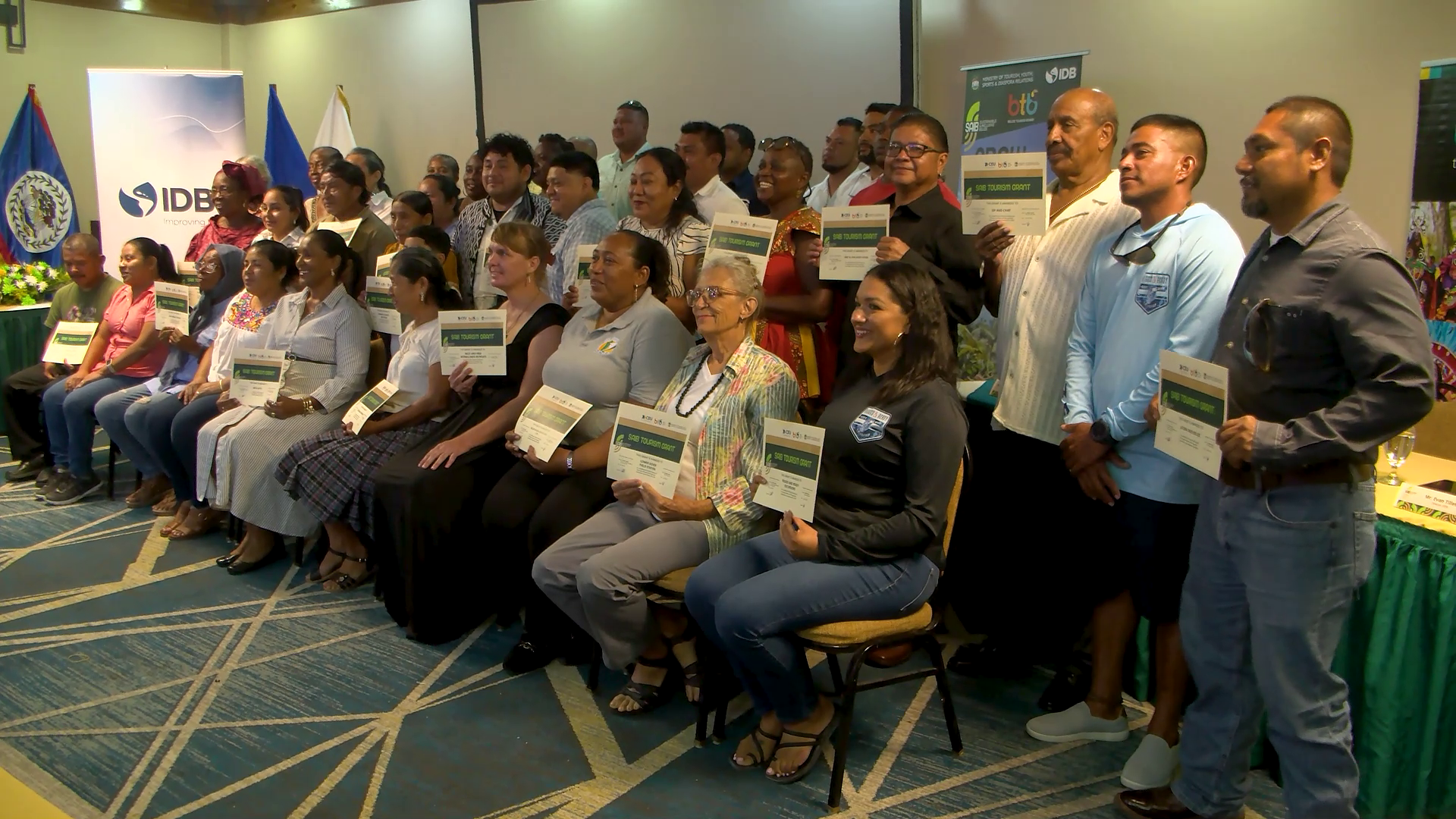
    Belize’s critical tourism sector is set for targeted, sustainable expansion after a multi-million dollar grant program disbursed over $1.1 million in funding to local small and medium-sized tourism business owners on June 25, 2026.

    Thirty-nine entrepreneurs drawn from across the entire country received awards through the Sustainable and Inclusive Belize program, with individual grants capped at $30,000 per business. Far from just providing unrestricted capital, the initiative is designed to address three core priorities for Belize’s tourism ecosystem: helping operators refine and strengthen their tourism products, build greater climate resilience to withstand environmental and economic shocks, and elevate the quality of visitor experiences for travelers exploring the country.

    Simone Bell, an Investment and Innovation Specialist at the Belize Tourism Board, explained that the program combines financial support with targeted capacity building to set businesses up for long-term success, rather than short-term growth. “This program is one of the core tools we are using to strengthen Belize’s overall tourism product,” Bell shared in an on-record interview. “Our national brand is our most valuable asset, and we work every day to protect it. Every local business involved in tourism—from independent artisans and adventure tour operators to small lodgings, hotels and neighborhood restaurants—plays a part in shaping that brand. We want every visitor experience to be truly memorable, and that means making sure every business has the tools they need to succeed. That’s how we strengthen Belize’s standing and become a more competitive destination across the region.”

    When asked how the accompanying training components benefit participating entrepreneurs and the broader tourism sector, Bell outlined the core curriculum focused on closing common skill gaps for small business owners. Training modules cover formal business planning, hands-on capacity building for financial management, and strategic growth planning. In a recent training session held in partnership with Belize’s Development Finance Corporation (DFC), participants walked through a line-by-line review of financial statements to build literacy around core financial documents, a skill many small operators lack.

    Bell noted that many small tourism business owners spend almost all of their time working day-to-day in their operations, rather than stepping back to work on long-term strategic planning for their businesses. The program creates structured space to identify growth opportunities, address operational gaps, and build intentional resilience. “When you take the time to step back, plan and restructure your business, you quickly see how much more you can do to grow your offering, expand your reach, tap into new markets and adopt sustainable practices that build climate resilience,” Bell explained. “When unexpected shocks hit, you already have a plan in place. That’s the core mission of this program and its tourism-focused component.”

    The initiative is already scaling its impact: a second cohort of 40 additional tourism entrepreneurs is currently completing required training and will receive their own grant disbursements in the near future. The entire Sustainable and Inclusive Belize program is financed by the Inter-American Development Bank, and its reach extends far beyond the tourism sector. To date, the initiative has also provided grant support to more than 600 small and medium-sized entrepreneurs across Belize’s agricultural industry, supporting broad-based economic growth across multiple key sectors of the national economy.