As Trinidadian calypsonian David Rudder once described, the small island nations of the West Indies have long been stages for small conflicts that expose far deeper ideological and identity-driven crises across the region. This reality reaffirms that Bob Marley’s iconic call – to emancipate ourselves from mental slavery, for only we can free our minds – remains just as urgent in the 21st century as it was when he first sang the words in the 1970s.
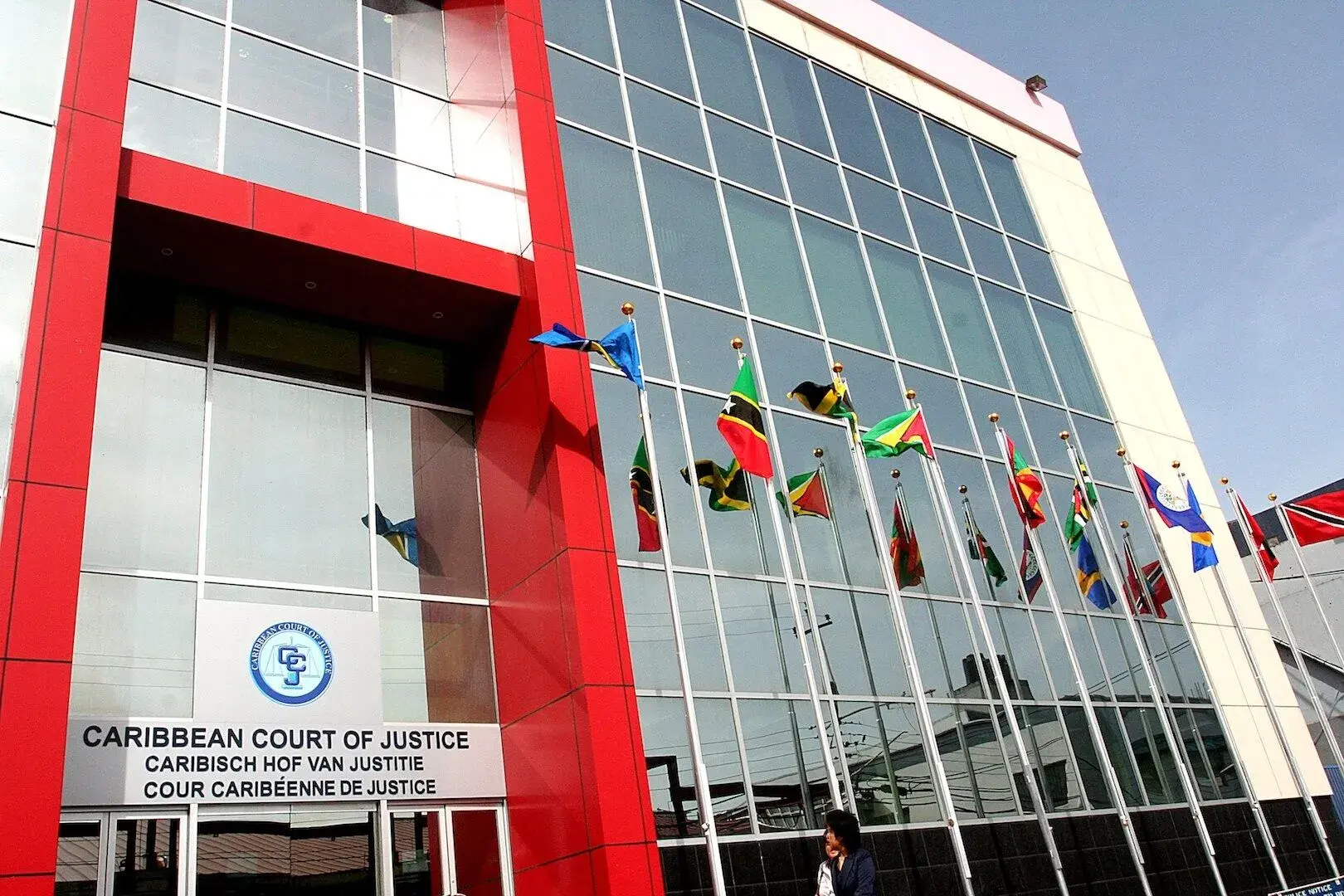
Nowhere is this dynamic clearer than in the recent media frenzy surrounding the Caribbean Court of Justice (CCJ) across regional news outlets. For months, Caribbean audiences have been fed a constant stream of sensationalized coverage surrounding the CCJ saga, with almost no investigative journalism to separate verifiable fact from speculative fiction. This gap is particularly consequential for an independent judiciary: in any liberal democracy, courts must uphold strict standards of integrity and impartiality to retain public trust as a fair arbiter of disputes. A court’s responsibility extends beyond delivering just rulings – it must also preserve the public perception of justice.
What stands out most sharply is that this scandal has dominated headlines far more than the CCJ’s 20 years of groundbreaking contributions to Caribbean jurisprudence. Clickbait and negative coverage generate far more engagement than nuanced reporting on the court’s landmark rulings and institutional work, turning the old saying on its head: where success often claims many fathers, this controversy has left the CCJ’s long legacy of achievements overlooked and orphaned.
This analysis will not rehash leaked allegations of professional misconduct or rehash unproven claims circulated by media outlets. Readers seeking an immediate, definitive judgment on the existing claims will not find it here – and that is intentional. Just as we would not rush to judge a friend before hearing their full side of a story, these allegations require a full, fair airing of facts before any credible determination of their veracity can be made.
Instead, this piece focuses on a far more troubling undercurrent: the immediate wave of anti-intellectual, anti-indigenous backlash to the scandal among certain groups across Caribbean civil society. The first and most vocal group includes segments of the political elite in several Caribbean countries, who have long held baseless distrust of the CCJ rooted in nothing more than conjecture and innuendo. This scandal has given them the first concrete-looking excuse they have ever had to justify that pre-existing opposition.
Worse, their opposition reflects a deep-seated bias against institutions built by and for Caribbean people. For these elites, any institution born from Caribbean experience, thought and creativity is immediately assumed to be flawed and unworthy of public trust, when compared to the UK-based Privy Council, the remaining colonial-era appellate court for many Caribbean states. This attitude aligns with scholar Greg Thomas’ description of a colonial mindset marked by profound self-hatred, contempt for Black Caribbean communities, and obsessive reverence for white Western values and institutions.
This bias was laid bare in the elite’s immediate reaction to the scandal. Rather than expressing disappointment that a homegrown Caribbean institution had found itself in controversy, their response was a knee-jerk ‘you see it, we were right’ – a moment of validation, even relief, after 20 years of unsubstantiated criticism. This reaction ignores the fact that the CCJ had no credible record of misconduct across its first two decades of operation. It also ignores a key distinction: disagreeing with a court’s rulings is never a legitimate basis to reject the entire institution, as the CCJ was never created to pander to political elites’ ideological preferences.
For these elites, the scandal finally gave them a talking point to argue that the CCJ could never match the Privy Council’s supposed standard of incorruptibility, impartiality and judicial integrity. They frame the Privy Council, thousands of miles removed from Caribbean legal and social life, as a spotless alternative with no blemishes on its record.
But this argument is deeply disingenuous. These elites never had any intention of joining the CCJ in the first place; the scandal is merely a convenient fig leaf to cover up their longstanding, baseless opposition. What makes this argument even more hollow is that local Caribbean judiciaries and state institutions carry the same inherent risk of misconduct as the CCJ – yet these elites do not call for disbanding those institutions. Most importantly, they falsely frame accountability and regional institutional participation as mutually exclusive, when in reality they reinforce one another. True Caribbean integrationists would respond to this moment by doubling down on strengthening the CCJ through reform, because they recognize the court’s core importance to regional sovereignty. A truly independent Caribbean intellectual and integrationist embraces our homegrown institutions first, then works to resolve flaws when they emerge, and rebuilds when institutions stray from their founding vision. Should this not be the standard we apply to all regional institutions if they fall into disrepute? Would we abandon the institutions our ancestors built with their own hands, courage and inspiration at the first sign of trouble, simply because it is easier to criticize than to reform?
That said, there is one point of agreement: if the allegations against the CCJ have merit, all available internal remedies should have been utilized to address the issues before details were made public. A growing trend across the region, inspired by political culture from the Global North, encourages officials to air potentially damaging details publicly that could be resolved privately, with little regard for the long-term survival of the institutions involved. We need a far more sober, mature approach to resolving our internal regional issues – a point I emphasized recently during an address to CARICOM Heads of Government in Saint Lucia.
Too many of these critical elites position themselves as spectators on the sidelines, complaining about every flaw in the CCJ’s operations while offering no concrete suggestions for reform, and refusing to participate in the institution to strengthen its guardrails and legitimacy. It is far easier to sit outside and criticize than to step up and be part of the solution.
Compounding this problem is the lazy, bad-faith argument that this scandal proves the Caribbean should never have left the Privy Council in the first place. Committed regionalists understand that one controversy does not erase an institution’s entire history of contributions; it only reinforces the need for ongoing accountability and reform. We do not condemn a person to the harshest punishment without due process after a single mistake, and we should not do the same to our own regional institutions.
At the core of this argument is the false claim that the Privy Council’s geographic distance from the Caribbean makes it inherently fair and impartial, as if the court has no ideological ties to its colonial origins. The Privy Council is a relic of colonial rule that the Caribbean should have moved past long ago. Advocates for retaining the Privy Council also deliberately ignore the CCJ’s proven track record: its efficiency, its effectiveness, and its commitment to accessible justice for low-income Caribbean people who could never afford to bring appeals to London. Caribbean countries have already invested significant public resources into building the CCJ, and it makes far more sense to strengthen that existing investment than to abandon it for a colonial-era alternative.
The irony of the pro-Privy Council argument becomes even starker when one considers two key facts: the Judicial Committee of the Privy Council (JCPC) itself has repeatedly encouraged Caribbean nations to develop their own final appellate court, and the UK government now requires entry visas for citizens of many Caribbean countries. Imagine being a Caribbean litigant required to travel to London to have your case heard, with no guarantee that you or your lawyer will even receive a visa to enter the country for your hearing. This reality alone makes it clear that the Caribbean must look inward, even amid controversy, to strengthen its own institutions to serve its people. Doing so is an act of confidence in the skill, passion and dignity of Caribbean people, even in times of crisis.
Buried in the elites’ ‘we told you so’ narrative is a quiet contempt for Caribbean sovereignty: the argument that the region should never join the CCJ, or should wait for some mythical perfect moment when the institution is infallible before joining. This is nothing more than a modern iteration of colonial paternalism, which argued that Caribbean nations were not ready for independence, and that they would be better off remaining dependencies of European powers. When would the region ever be ‘ready’ to complete its decolonization process, and who gets to define what readiness looks like anyway? Caribbean citizens must see this tactic for what it is: a moving goalpost that ensures the region never makes progress on decolonization, regional integration and sovereignty, with no clear standard for what the ‘right time’ would ever look like. Elites often frame this as a pragmatic focus on economics over justice, but in reality it is just a cover for their longstanding opposition to Caribbean institutional independence, and we must continually call out this bad-faith tactic.
In the end, defenders of the CCJ and the broader Caribbean integration project must stand firm: they must demand accountability for any wrongdoing, while continuing to explain why the court matters so much to ordinary Caribbean people. Doing so embodies the words of the iconic Haitian revolutionary Toussaint L’Ouverture: ‘They may have cut the branches, but the roots run deep.’ Even in moments of disappointment, Caribbean people must stand behind their own institutions, hold them accountable, and reject the urge to look to former colonial powers for rescue from our own mistakes. The Caribbean is home to extraordinary talent, and we have no need to continually seek validation from former colonizers to run our own affairs, even when we make missteps along the way. We cannot allow bad-faith critics to dominate the discourse, especially when their actions have always shown they never believed in the promise of Caribbean-led institutions in the first place.
*Rahym R. Augustin‑Joseph, the 2024 Rhodes Scholar for the Commonwealth Caribbean, is currently pursuing a Master of Public Policy at the Blavatnik School of Government, University of Oxford. He holds two First Class Honours degrees in Political Science and Law from the UWI Cave Hill Campus. An award‑winning debater, public speaker, youth leader, and advocate, Rahym is passionate about law, politics, and governance, and is committed to shaping the future of Saint Lucia and the wider Caribbean.*