博客

  • Panton: Auditor General Should Not Await Instructions From Briceño

    Panton: Auditor General Should Not Await Instructions From Briceño

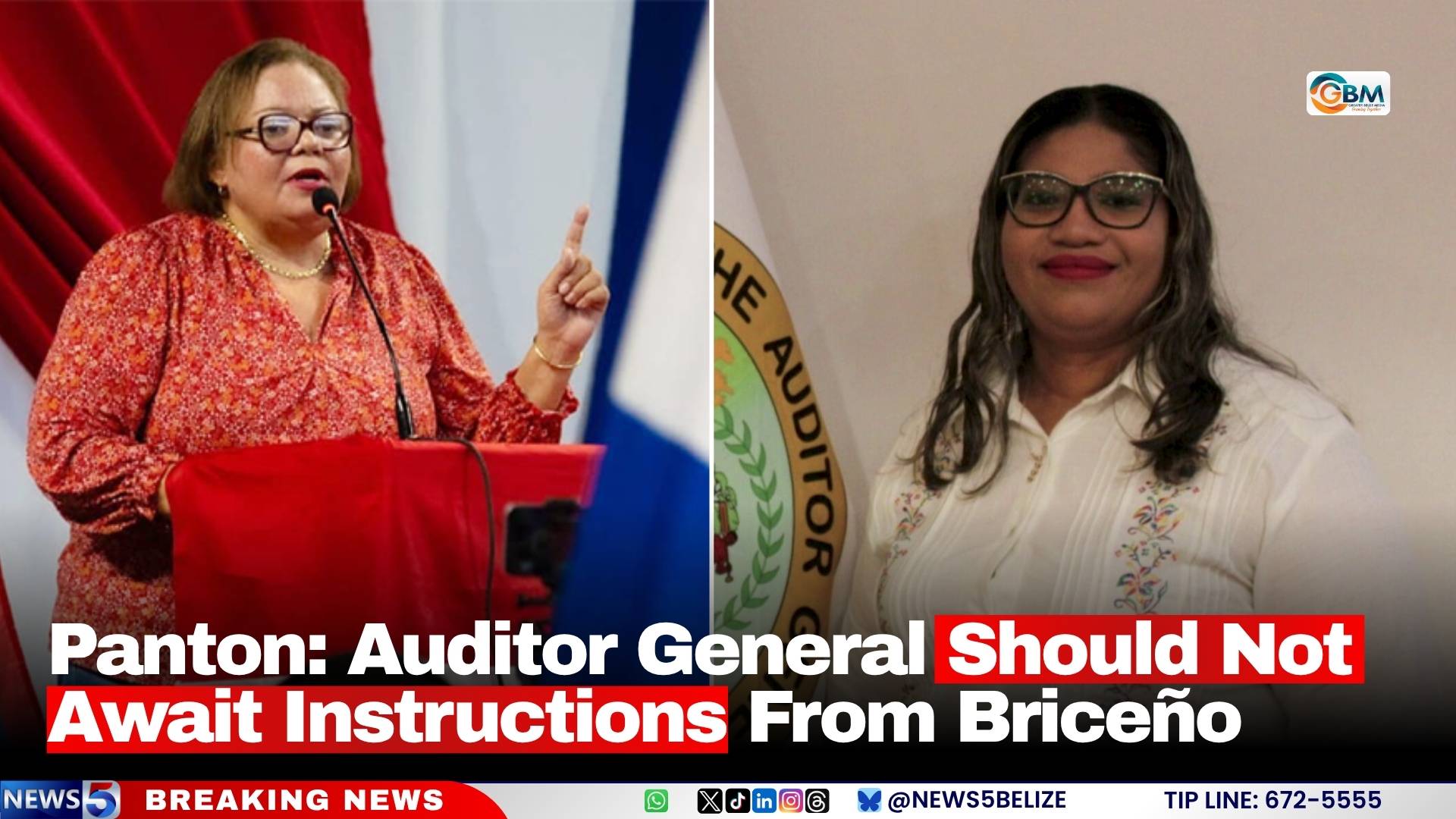
    In a high-stakes political development out of Belize dated June 25, 2026, Opposition Leader Tracy Panton has delivered a formal letter to Prime Minister John Briceño that pushes for full transparency and upholds institutional independence amid an ongoing probe into Cabinet Minister Oscar Mira.

    At the core of Panton’s letter is a firm rebuke of any executive overreach into the work of the Auditor General. Panton stresses that the Auditor General’s office holds a constitutional mandate to function free from interference by the executive branch, arguing that the independent oversight body should never be required to wait for direction from any government official to launch or advance an inquiry. She says public comments made by Prime Minister Briceño regarding directives issued to the Auditor General have raised troubling questions about the probe’s integrity.

    Panton has laid out a clear set of non-negotiable areas that the investigation must cover to be considered credible. These include full disclosure of the full membership of the investigative team, confirmation of whether the Auditor General will personally lead the inquiry, and a deep dive into whether Minister Mira exerted any direct or indirect influence over the awarding of government contracts to companies linked to his family members. She warns the public against taking unconfirmed circulating information as a final conclusion to the matter, emphasizing that a legitimate probe must move beyond surface-level fact-checking to address deeper systemic questions of governmental accountability.

    Beyond the Mira investigation, Panton’s correspondence also raises pointed concerns about a recent announcement from Prime Minister Briceño that he had directed the Cabinet Secretary to start the process of appointing a new board for the country’s RECONDEV development authority. Panton is demanding immediate, clear answers on multiple outstanding questions: what the Cabinet Secretary’s legal statutory role is in board appointments and removals, which government body actually holds the legal authority to make or remove board members under existing legislation, whether the current RECONDEV board has been removed, forced to resign, or replaced prematurely, and what legal framework supports any such action.

    In closing her appeal to the prime minister, Panton emphasized that the Belizean public is owed full confidence that these matters will not be wrapped up in a rushed, restricted administrative review. Instead, she argued, the country deserves a comprehensive, unbiased, rigorous and fully open inquiry that follows the evidence wherever it may lead. Further updates on this developing story are set to be aired during News 5 Live’s 6 o’clock broadcast this evening.

  • Low coverage leaves Barbados vulnerable to disaster costs

    Low coverage leaves Barbados vulnerable to disaster costs

    As Barbados prepares to enter another annual Atlantic hurricane season, a stark vulnerability threatens the Caribbean island’s economic stability: tens of thousands of residential properties remain without natural disaster insurance, leaving the nation exposed to mounting costs from increasingly frequent extreme weather events, local outlet Barbados TODAY has confirmed.

    The General Insurance Association of Barbados (GIAB), the industry’s leading trade body, has sounded the alarm over the persistent coverage gap, warning that far too many property owners have failed to secure protection despite the country’s constant exposure to hurricanes, seasonal flooding, and seismic activity. Current industry data shows that roughly 40,000 homes across the island hold active insurance policies, leaving a large share of residential properties uninsured for a range of interconnected reasons.

    “Property owners should not only think about disaster risk when a hurricane is already bearing down on the island,” a GIAB spokesperson noted. “Barbados faces multiple natural hazards, from earthquakes to flash floods, and even moderate events can leave property owners facing devastating repair costs. Insurance is not just a personal safety net—it is a critical pillar of financial stability for individual households and the national economy as a whole.”

    According to GIAB, the uninsured population breaks down into several groups: some homeowners opt for self-insurance, choosing to set aside personal funds to cover potential damage rather than pay annual premiums, while other properties fail to meet standard underwriting requirements due to outdated construction methods or poor structural condition. The association also confirmed that insurance coverage is typically required as a condition of mortgage approval, meaning the share of uninsured properties is heavily concentrated among homeowners who own their properties outright with no outstanding financing. GIAB is urging all property owners to assess their coverage and secure a policy before the peak of hurricane season, rather than scrambling to arrange protection after damage has already occurred.

    The industry’s warning comes just one week after Minister of Economic Affairs Marsha Caddle publicly called for expanded insurance coverage across high-risk sectors including housing and agriculture, echoing concerns that the current coverage gap leaves the nation financially vulnerable. Caddle explained that when uninsured properties are damaged in natural disasters, the bulk of recovery costs ultimately fall to the national government, stretching public budgets already constrained by other economic priorities.

    Speaking during parliamentary debate on the Protection of Depositors Bill earlier this week, Caddle acknowledged that the new deposit insurance scheme for credit union members marked an important step forward for the country’s financial resilience, but stressed that critical gaps remain for homeowners, small-scale farmers, and other groups disproportionately impacted by climate-fueled natural disasters. “Countries with higher insurance penetration are able to recover much faster after extreme weather events,” Caddle noted, “because private insurers absorb the majority of recovery costs, rather than passing that full burden on to taxpayers and the public purse.”

    GIAB emphasized that recent major hurricanes that have struck the island offer clear proof that natural disaster coverage should not be treated as an optional expense. During Hurricane Beryl, roughly 240 residential and commercial properties suffered damage, while Hurricane Elsa damaged more than 1,100 properties across Barbados. “Most of these incidents were partial losses, not total destruction of the property,” the association explained. “But that doesn’t make the cost any less significant—even partial damage can create crippling financial strain for households that have no insurance coverage to offset repair bills.”

    Addressing common concerns that insurance coverage is unaffordable for low- and middle-income households, GIAB pointed to low-cost basic policies that can offer meaningful protection at an accessible price point. For example, a basic fire-only policy for a timber residential property valued at 50,000 Barbadian dollars costs roughly 150 Barbadian dollars per year, a rate the association says is manageable for most households. “We encourage homeowners to start with these accessible options, rather than writing off insurance entirely as unaffordable,” the spokesperson said.

    GIAB also encouraged homeowners to invest in structural improvements to harden their properties against severe weather, noting that insurers factor construction quality, roof integrity, and pre-existing hazard mitigation into risk assessments and premium pricing. The association advised property owners to complete retrofitting work to strengthen older structures, and to ensure all new construction and renovations fully comply with the national Barbados Building Code to reduce risk and lower premium costs.

    While coverage is still available for beachfront properties, which are classified as higher risk due to their exposure to storm surge, coastal flooding, and extreme wind, GIAB confirmed that these properties face stricter underwriting standards to account for their elevated hazard profile.

    Closing the persistent natural disaster insurance gap, GIAB argues, will require coordinated cooperation between homeowners, insurance providers, financial institutions, and national policymakers. “Insurance is far more than just a financial product,” the association said. “It is a cornerstone of national climate resilience as we face growing risk from extreme weather. Improving the country’s ability to withstand and recover from disasters will require continued collaboration across all stakeholders, as Barbados adapts to a changing climate and rising natural hazard risk.”

  • ‘There’s No Regulation for That’: Ministry Promises New Law for Seaweed Industry

    ‘There’s No Regulation for That’: Ministry Promises New Law for Seaweed Industry

    Belize’s fast-expanding seaweed farming industry, which has operated in a legal grey area for years despite its rapid growth, is set to get its first formal regulatory framework after government officials confirmed that a long-awaited Mariculture Bill has entered its final drafting stages.

    Speaking at the Fourth Blue Economy Climate Resilience Forum on Wednesday, Beverly Wade, Chief Executive Officer of Belize’s Ministry of Blue Economy and Marine Conservation, announced that following a recent public consultation period, the Fisheries Department is now putting the finishing touches on the draft legislation ahead of its formal submission to lawmakers.

    Wade emphasized that the lack of clear industry rules has been a major barrier to unlocking the sector’s full potential, limiting not only the ability of small-scale producers to operate formally but also discouraging outside investment that could drive further growth. “Without the requisite regulatory framework, you cannot attract the kind of long-term, serious investment that transforms a small informal industry into a major contributor to the blue economy,” she explained.

    Once enacted, the new law will put in place a clear, transparent permitting and application process for prospective seaweed farmers, grant formal legal tenure to producers over their designated cultivation areas, and establish structured oversight mechanisms to monitor and regulate all marine-based aquaculture operations. For the hundreds of producers already working in Belize’s waters, the legislation will end their status as informal operators and bring their activities under legal protection.

    “What this bill does is lay out exactly what producers need to operate legally, from application to approval, and build an enabling environment that lets the sector grow responsibly,” Wade added.

    Even without formal regulation, Belize’s seaweed industry has seen explosive growth in recent years, with a wave of entrepreneurs launching operations and developing a range of value-added seaweed products for domestic and regional markets. To ensure that the formalization of the sector translates directly to better livelihoods for producers, the ministry is simultaneously working to expand product development support and open new national and international market access routes. Wade noted that the government is prioritizing this work to avoid a scenario where newly legalized farmers have no outlet to sell their harvest after the bill comes into force.

    “We’re not just putting a legal framework in place and walking away,” Wade said. “We’re making sure that when producers are able to operate formally, they have guaranteed markets to sell their crop and earn a sustainable income.”

  • Derde helft WK 2026: Ecuador boekt historische winst op Duitsland en plaatst zich voor knock-outs

    Derde helft WK 2026: Ecuador boekt historische winst op Duitsland en plaatst zich voor knock-outs

    June 25, the 2026 FIFA World Cup delivered one of its most stunning upsets yet at the New York New Jersey Stadium, as underdog Ecuador secured a dramatic 2-1 victory over four-time world champion Germany to book a spot in the tournament’s knockout round. For Argentine Ecuador head coach Sebastián Beccacece, the result capped off a truly unforgettable evening that will go down in Ecuadorian football history. Germany had already confirmed its place in the round of 16 heading into the final group stage match, but the loss marks a surprising sour note heading into the knockout phase for the tournament favorites.

    Germany got off to a blistering start, opening the scoring within just two minutes of kickoff. Playmaker Florian Wirtz slid a perfectly timed pass through Ecuador’s defense to winger Leroy Sané, who fired a low, sharp shot past goalkeeper Hernán Galíndez to put Germany ahead early. The early goal rattled Ecuador, and tensions flared moments later when a high tackle from Germany’s Aleksandar Pavlovic on Ecuador’s Pedro Vite went unpenalized after a VAR review, leaving the South American side furious. Despite falling behind inside the opening two minutes and facing early controversy, Ecuador refused to fold under the pressure.

    Just five minutes after Sané’s opener, the packed stadium erupted as Nilson Angulo leveled the score with a sensational strike. Angulo controlled the ball outside the box, drilled a precise, powerful shot through the legs of a German defender into the far corner, leaving Manuel Neuer with no chance to save. The goal was Ecuador’s first of the entire 2026 tournament, and it immediately injected new confidence into the side, which pressed forward aggressively for the rest of the opening half.

    Throughout the first 45 minutes, Ecuador maintained consistent attacking pressure, stringing together smooth combinations, including dynamic one-two plays from winger Gonzalo Plata and dangerous crosses from defender Alan Franco that repeatedly stretched Germany’s backline. The underdog’s attacking intensity pushed four-time champions Germany into rare defensive trouble, though Germany still created clear chances of its own: striker Kai Havertz sent a header on target that was comfortably saved by Galíndez to keep the score level.

    Controversy over the early unpenalized tackle lingered throughout the first half, fueling frustration among Ecuador’s players and the thousands of South American fans in attendance. Just before halftime, yellow cards were issued to Ecuador’s Piero Hincapié and Germany’s Pavlovic after a tussle over shirt pulling, and the two sides went into the break tied 1-1.

    Germany made an early adjustment to start the second half, pulling Pavlovic off for Angelo Stiller to shore up the midfield. Shortly after, Germany thought it had been awarded a penalty after Joel Ordóñez tangled with Havertz in the box, but VAR overturned the decision after spotting an earlier foul by Sané in the build-up to the play.

    Ecuador came out with high energy and relentless fighting spirit to open the second half, but struggled to maintain a consistent attacking tempo at times, with captain Enner Valencia slowing play to manage the score, drawing some frustration from fans calling for more aggressive offensive play. With around 25 minutes left in regular time, Beccacece made a game-changing substitution, bringing on Kevin Rodríguez and Angelo Preciado to boost Ecuador’s attacking threat.

    Pressing higher up the pitch, Ecuador quickly turned up the heat on Germany, and got a golden opportunity after a miscommunication between Neuer and center-back Jonathan Tah left Plata with an open goal, only for the winger to put the chance just wide of the post.

    The decisive moment finally arrived in the 77th minute. Rodríguez took a corner that was flicked back into the path of Plata just outside the box. Plata curled a stunning first-time shot into the top far corner, leaving Neuer completely stranded as the ball hit the back of the net. The strike sent the Ecuadorian fans and bench into absolute delirium: players and coaching staff flooded onto the pitch to celebrate, with tears of joy flowing freely. A misjudgment from Neuer when attempting to intercept the initial corner opened the space for Plata’s match-winning strike.

    After taking the lead, Ecuador faced a nervy finish: the referee added seven minutes of stoppage time, and the South American side defended resolutely to hold onto their one-goal advantage through the additional minutes. When the final whistle blew, the stadium erupted in celebration, as Ecuador confirmed its place in the knockout round of the World Cup.

    Players embraced one another, tears of joy and relief pouring out after the historic upset. For Beccacece, whose job security had been called into question heading into the tournament, the result was a career-defining triumph. The stunning comeback victory stands as proof of Ecuador’s unbreakable determination, collective belief and relentless fighting spirit, proving that the side refused to be intimidated by Germany’s status as one of the tournament’s heavy favorites. Ecuador has made history, and kept its unlikely World Cup dream alive heading into the knockout stage.

  • Venezuela quake renews warning for Barbados

    Venezuela quake renews warning for Barbados

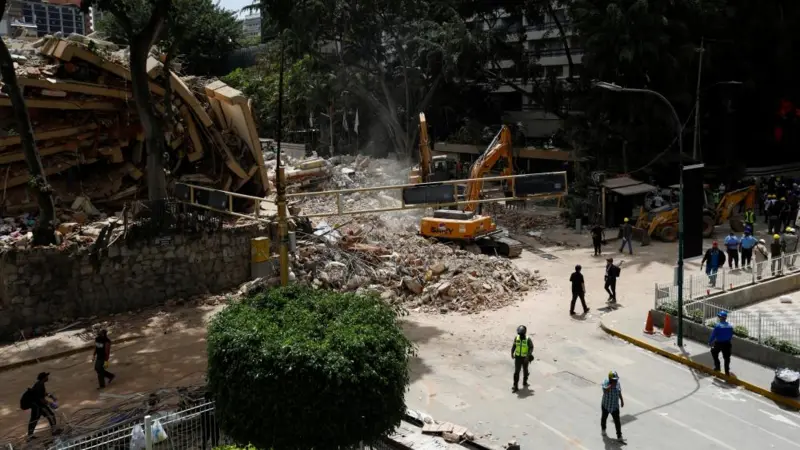
    A pair of powerful back-to-back earthquakes that devastated coastal Venezuela this week has reignited urgent warnings for residents of nearby Barbados to prioritize earthquake and tsunami readiness, as disaster management officials emphasize the island nation’s persistent geological risk in a seismically active zone.

    The unfolding disaster began Wednesday evening, when two tremors measuring magnitudes 7.2 and 7.5 struck off Venezuela’s northern coast less than 60 seconds apart. As of the latest updates, the disaster has claimed at least 164 lives, flattened widespread infrastructure across affected regions, and launched a large-scale multinational search-and-rescue operation focused on pulling survivors from collapsed buildings. Acting Venezuelan President Delcy Rodríguez confirmed that La Guaira, a coastal state located just north of the capital Caracas, suffered the most severe damage and loss of life.

    According to the United States Geological Survey (USGS), the second of the two quakes was the most powerful seismic event to hit Venezuela since 1900, and the agency has warned that the final death toll is likely to climb substantially as rescue teams work to reach remote and heavily damaged areas.

    In the immediate aftermath of the Venezuelan quakes, regional seismic and tsunami monitoring systems quickly dispatched an alert to Barbadian authorities, outlining a potential tsunami risk for the island, Department of Emergency Management (DEM) Deputy Director Major Robert Harewood explained in an exclusive interview with Barbados TODAY.

    “Barbados’ meteorological services received an official tsunami information statement noting that the size of the earthquake created a non-zero possibility of a tsunami reaching our coast,” Harewood said. “Because both earthquake and tsunami threats — especially tsunamis — demand immediate public awareness, we cut through all bureaucratic red tape to share the alert directly with media outlets and emergency response teams right away, no delays.”

    Within a short window, a follow-up assessment confirmed that no tsunami posed a danger to Barbados, but the incident served as a critical wake-up call for the island’s population, which sits in a geologically vulnerable region long identified as overdue for a major seismic event.

    Harewood noted that Barbados has made significant investments in recent years to upgrade its emergency alert infrastructure, rolling out the Common Alerting Protocol that allows authorities to push time-sensitive warnings directly to the public via participating local radio stations. “Right now, we have at least six radio stations across the island equipped with the technology to broadcast emergency messages immediately when we issue an alert, and that network has expanded in recent years,” he added.

    The DEM deputy director emphasized that the recent Venezuelan disaster is a stark reminder of Barbados’ inherent seismic risk: the island sits just adjacent to the subduction zone boundary where the Atlantic tectonic plate meets the Caribbean plate, the very geological force that created Barbados through tectonic uplift centuries ago. “The fact of our creation alone tells us we live in a susceptible area,” Harewood explained. “While major earthquakes are low-frequency events here, seismologists have repeatedly warned that the Caribbean basin is long overdue for a large-scale seismic event.”

    He pointed to a string of recent seismic activity across the region to underscore the ongoing risk: the 7.5 quake that hit Venezuela this week is the largest recorded in the country in more than a century, the Seismic Research Center records measurable seismic activity across the Caribbean almost every week, a magnitude 6+ tremor was recorded off Barbados’ own coast just a few weeks ago, and a significant quake struck near Antigua just a few years back.

    Unlike Atlantic hurricanes — which give days of advance warning to prepare, evacuate, and secure property — earthquakes offer no lead time for preparation, a key difference that makes ongoing public readiness all the more critical, Harewood argued. “With hurricanes, we see them coming days in advance. We can board up our homes, move to safe shelter, and prepare supplies. With earthquakes, there is no warning. There’s no time to shut down infrastructure, and there’s no advance all-clear to plan around,” he said.

    Harewood added that Wednesday saw major seismic events strike not just Venezuela, but also California and Japan, underscoring that the risk is global and constant. He encouraged all Barbadians to learn from the ongoing crisis in Venezuela, study how survivors navigated the disaster, and take proactive steps to prepare their households. “There is no magic bullet that eliminates earthquake risk entirely,” he noted. “The best thing we can do as a community is understand our vulnerabilities, learn from past disasters elsewhere, and know what to do when an earthquake hits.”

    In addition to preparing emergency kits and identifying safe spots in homes and workplaces, Harewood urged residents to pursue first aid and life-saving training, so they can assist themselves and others in the critical window after a major quake before emergency response teams can reach every affected area. “We have distributed plenty of public guidance outlining what hazards to look for, what steps to take during and after a quake, and what challenges we may face,” he said. “The goal is for every person to understand what they can do to survive, and to take steps to be ready before a disaster strikes.”
  • Derde helft WK 2026: Curaçao verlaat WK met opgeheven hoofd; Ivoorkust door naar volgende ronde

    Derde helft WK 2026: Curaçao verlaat WK met opgeheven hoofd; Ivoorkust door naar volgende ronde

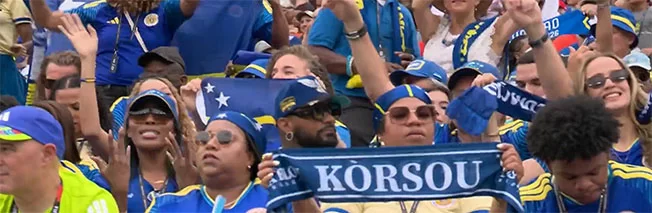
    The 2026 FIFA World Cup group stage has wrapped up its final matches in Group E, bringing an end to a historic underdog run that captured global football fans’ attention: the tournament debut of Curaçao, the smallest nation by population to ever qualify for a World Cup finals. While a 2-0 defeat to Ivory Coast at Philadelphia’s Lincoln Financial Field on Wednesday eliminated the Caribbean side, their performance across the group stage cemented a legacy far beyond knockout stage qualification, proving that smaller footballing nations can compete with the world’s elite.

    For Curaçao, even reaching the 2026 World Cup was a history-making achievement. After a crushing 7-1 opening defeat to group winner Germany, many wrote off the side as a mere symbolic participant. But the Caribbean team, led by veteran Dutch manager Dick Advocaat, rallied in spectacular fashion, earning a surprise 0-0 draw with Ecuador that secured the country’s first ever World Cup point. That result, driven by goalkeeper Eloy Room’s 15 game-saving stops, earned widespread international acclaim for Curaçao’s grit and tactical discipline.

    Against Ivory Coast, the underdogs showed that same fighting spirit from the opening whistle, even after falling behind early. The Elephants struck first in the 7th minute, when winger Nicolas Pépé finished a clinical attack off an assist from Yahia Diomande, setting an early tone for the African side. Unshaken by the early concession, Advocaat’s side maintained their structured defensive shape and looked to threaten on quick counterattacks, going into halftime with just a one-goal deficit that remained well within reach.

    Curaçao continued to push for an equalizer after the break, but Pépé once again proved the difference-maker for Ivory Coast. In the 64th minute, the in-form forward netted his second of the match from an Ibrahim Sangaré pass, doubling his side’s lead. As Curaçao pushed harder for a late consolation goal in the closing 25 minutes, chances remained limited, and tempers flared slightly: Leandro Bacuna picked up a yellow card in the 75th minute, followed by Gervane Kastaneer in the 83rd minute. When the final whistle blew, the scoreboard confirmed a well-earned 2-0 win for Ivory Coast.

    The result sees Ivory Coast progress to the knockout stage as Group E’s second-placed team behind Germany, living up to their pre-tournament status as a favorite to advance. The 2015 Africa Cup of Nations winners enter the knockout round with momentum, led by standout performer Pépé and a solid team structure, with high hopes for a deep run in the tournament.

    While Curaçao’s World Cup adventure ends here, the tournament will be remembered for generations on the small Caribbean island. Advocaat, who praised his players’ resilience after the Ecuador draw, doubled down on that pride following the elimination. “They fought like lions,” he said after the draw, noting that the squad showed enormous character to bounce back from the lopsided opening loss to Germany. He also thanked the people of Curaçao for their unwavering support through the difficult start, emphasizing that his team proved they could compete with far higher-ranked nations.

    Those words hold true after their final group stage match. Though Curaçao failed to reach the knockout round, they won widespread respect across the global football community. Playing with fearless attacking intent, fighting for every inch of the pitch, and leaning into tight organization, team spirit and mental toughness, the side known as the Blue Wave proved that small nations can push even the world’s top teams to their limit. For their first ever World Cup appearance, the team leaves the tournament not just with a historic point to their name, but with a legacy of exceeding every expectation – and proving they belong on the world’s biggest football stage.

  • 100+ Leaked Invoices Show $1.5 Million Paid to FAST

    100+ Leaked Invoices Show $1.5 Million Paid to FAST

    In a newly uncovered leak of internal corporate documents, more than $1.5 million in taxpayer-funded government payments have been revealed to have flowed to F.A.S.T. Construction and Road Development Limited between 2021 and 2025. The company has documented ties to the family of Prime Minister Oscar Mira: its senior project manager is listed as Keith Mira, Oscar Mira’s biological brother.

    The 114 leaked invoices, obtained and independently verified by local media outlet News Five, follow a payment pattern identical to that previously observed in leaked documents linked to other companies owned or operated by members of the Mira family, according to the outlet’s analysis. A striking detail of the disclosures is the deliberate structuring of most payments to fall below a $10,000 threshold that triggers automatic formal oversight from the national Treasury: just 10 of the 114 reviewed invoices exceed that amount, while the remaining 104 all clock in at under $10,000.

    Crucially, the leaked documents are not a complete record of all government payments made to the construction firm, meaning the total value of contracts awarded could be significantly higher than the $1.5 million already exposed.

    One of the most notable transactions uncovered comes from late 2021, when the Prime Minister’s Office issued a payment of nearly $29,000 to F.A.S.T. Construction. The corresponding invoice included no details describing what construction or development work the payment was intended to cover. Just three days after that first undisclosed payout, a second payment of $19,687 was processed under invoice reference PMBZ-CDF, again with no public breakdown of services rendered.

    While the vast majority of the leaked payments originated from the Ministry of Defence (MOD), a smaller share of payouts were issued by two other government departments: the Ministry of Infrastructure Development and Housing (MIDH) and the Ministry of Economic Transformation (MET). All payments issued by these two departments exceeded the $10,000 oversight threshold, requiring formal sign-off from Treasury officials before being processed.

    The largest single batch of payments recorded in the leak came in March 2021, immediately after the ruling People’s United Party (PUP) secured a landslide victory in national municipal elections. Eighteen separate invoices were submitted to the government that month, 16 of which were fully processed and paid on March 4—just one day after the election results were finalized. All 16 of those post-election payments, issued by the MOD, combined to total nearly $147,000. The remaining two payments from that March 2021 batch, processed on March 2 and March 12 respectively, each exceeded $20,000.

    A second large cluster of structured payments was documented in February 2023, when 17 separate invoices all dated February 7 were submitted for payment. Each individual invoice fell just below the $10,000 Treasury oversight threshold, and the 17 invoices combined to total more than $157,000 in public funds paid to the firm.

    News Five has confirmed it will continue its investigative reporting into the payments and any potential conflicts of interest or improper contracting practices, with further updates expected as more information becomes available.

  • Belize Falls Below WHO Healthcare Staffing Target

    Belize Falls Below WHO Healthcare Staffing Target

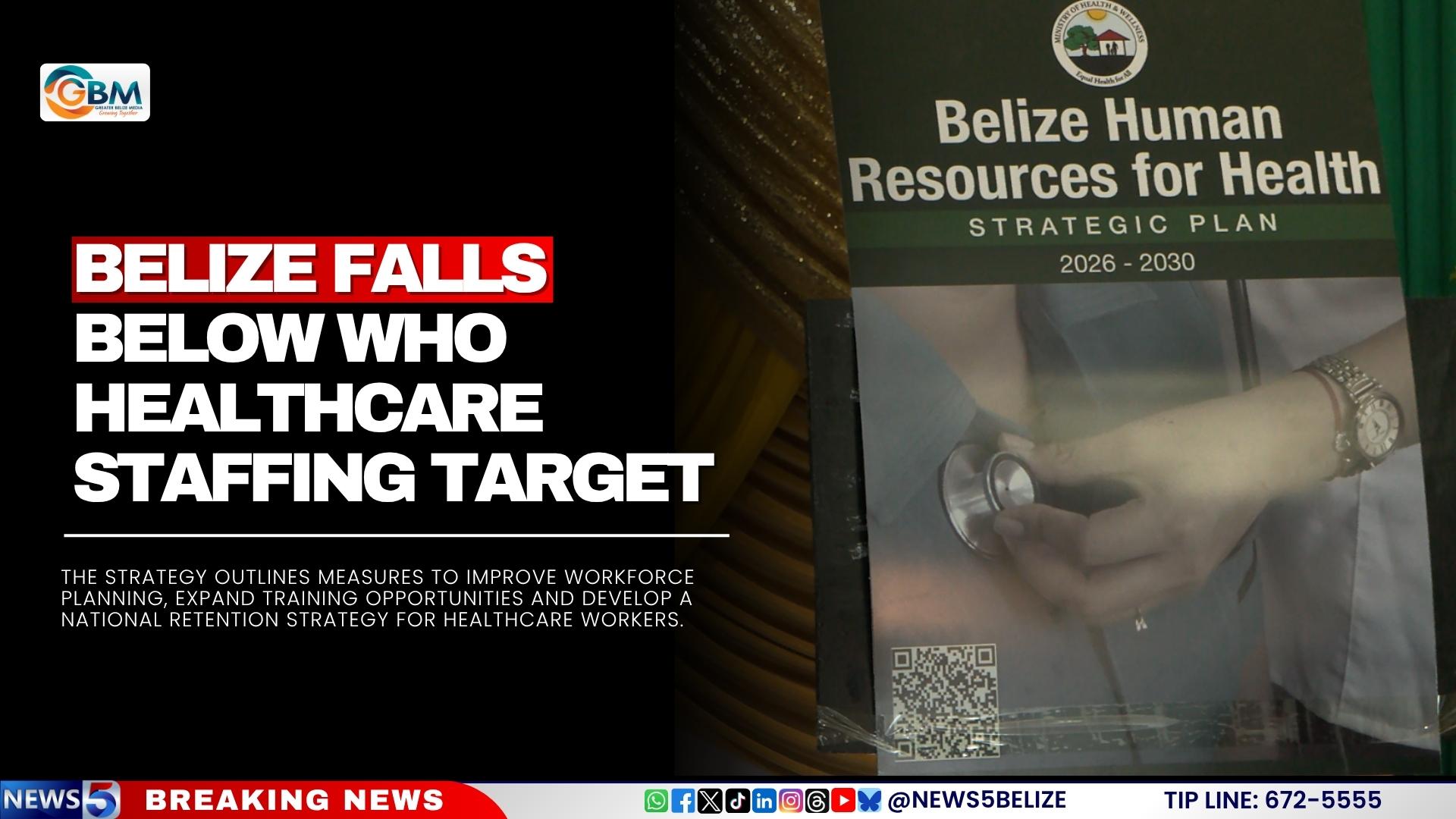
    On June 25, 2026, Belize formally introduced a bold new five-year policy and strategic framework aimed at resolving a persistent shortage of healthcare workers that has left the country below the World Health Organization’s (WHO) minimum staffing threshold for universal health coverage.

    Current official data from Belize’s Ministry of Health and Wellness shows the nation counts just 38.2 practicing physicians, nurses, and midwives per 10,000 residents — a figure that falls 6.3 workers short of the 44.5 per 10,000 minimum recommended by the WHO to deliver accessible, quality universal health care. This deficit comes as Belize already confronts two overlapping pressures: long-standing struggles to both recruit new healthcare professionals and retain existing skilled staff, and the upcoming departure of the Cuban Medical Brigade, which is projected to further stretch the country’s already strained health system.

    Dr. Andre Chell, Director of Policy, Research and Planning at the Ministry of Health and Wellness, confirmed that the gap in healthcare staffing is a well-documented challenge for the nation, and the newly unveiled Belize Human Resources for Health Policy and Strategic Plan 2026-2030 was designed to directly tackle these barriers. “We know that we have shortage of healthcare workers,” Chell noted. “These two documents try to address those challenges.”

    The strategic framework lays out a multi-pronged approach to closing the staffing gap: strengthening national workforce planning systems, expanding accessible training opportunities for aspiring healthcare workers, and developing the first comprehensive national retention strategy that covers all categories of health sector employees. While the Belizean government has already rolled out targeted retention initiatives for nursing staff, Chell explained that the new strategy extends these protections and incentives to every role across the health system. “We now want to look at the other cadres of healthcare workers,” he said. “Both the policy and the strategic plan speak to actually developing a national retention strategy for all cadres of healthcare workers.”

    Belize Health Minister Kevin Bernard emphasized that the COVID-19 pandemic served as a critical wake-up call, laying bare existing vulnerabilities in the country’s healthcare workforce and underscoring the urgent need for targeted investment in frontline staff. “The COVID-19 pandemic reinforced something many of us already knew, but perhaps did not fully appreciate until our health system was tested,” Bernard said. He paid tribute to the country’s healthcare workers for their efforts during the public health crisis, noting that they “worked long hours, adapted quickly to changing circumstances, and continued providing care under significant pressure.”

    Unlike top-down policy proposals, the new framework was developed through months of collaborative consultations with practicing healthcare workers and a broad range of sector stakeholders, ensuring the plan directly addresses the most pressing, on-the-ground challenges facing Belize’s health system today.

  • Organisers happy with execution of NSC Netball Competition

    Organisers happy with execution of NSC Netball Competition

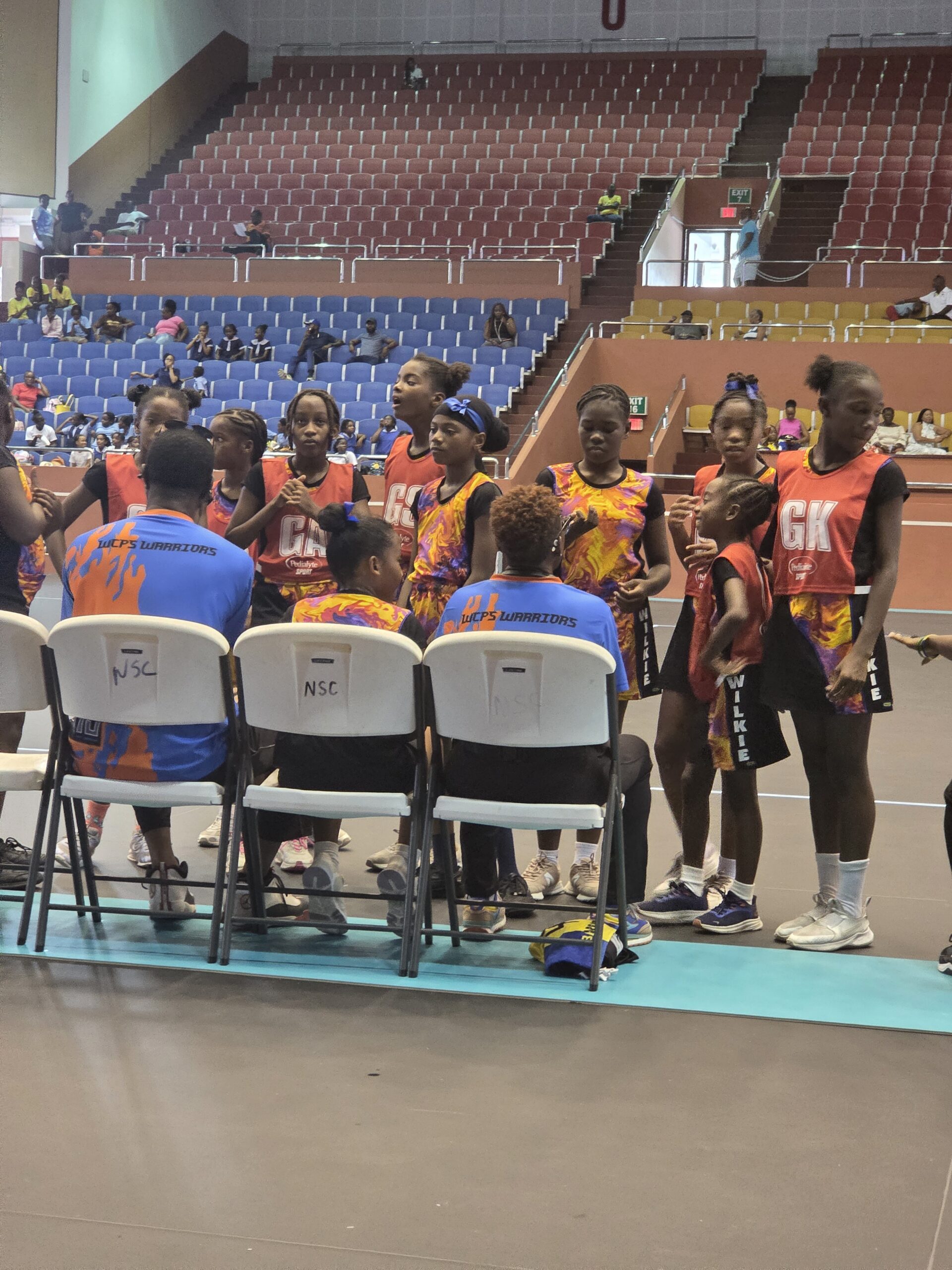
    One of the most anticipated annual youth netball tournaments in the region wrapped up this week with a dramatic final, leaving organizers and spectators praising the quality of play and seamless event execution. Tracey Leacock, senior netball coach at the National Sports Council, delivered a glowing assessment of the 2024 Pedialyte Sport Primary Schools Competition following Wednesday’s championship match, where Shirley Chisholm Primary extended its historic winning streak to five consecutive titles with a hard-fought victory over runner-up West Terrace Primary.

    In Leacock’s assessment, every stage of this year’s tournament — from the early zonal qualifying rounds to the final championship clash — went far better than many expected. She highlighted three key factors behind the event’s smooth running: meticulous advance planning by organizers, cooperative, favorable weather that eliminated weather-related delays, and well-coordinated logistics across every venue. “The execution was almost seamless this year,” Leacock shared in a post-final interview. “We had the competition in the zones which ran really well and even the weather cooperated this year. We went on to our playoffs, which were held in Gall Hill St John and that too went off effortlessly and culminated in a successful final.”

    Beyond the smooth event logistics, Leacock expressed particular satisfaction with the dramatic improvement in playing standards across all participating schools this year. She attributed this rising quality to a growing grassroots passion for the sport, with more young female athletes competing regularly outside the primary school tournament, including in the Barbados Netball Association (BNA) league. “The final was tremendous and generally throughout the tournament we’ve seen high standards of netball,” Leacock said. “I believe this can be attributed to girls playing more netball, playing in the BNA league as well and just generally having a love for netball and playing more. So we were able to see a very high standard of netball, especially from the playoffs where teams had to literally fight tooth and nail to advance.”

    Wednesday’s final cemented Shirley Chisholm Primary’s status as the undisputed dominant force in primary school netball over the past decade. With five back-to-back championship titles, the Vauxhall-based school has set a benchmark that other competing programs are now actively working to match. Leacock noted that Shirley Chisholm’s consistent success stems from intentional extra work put in by players and coaches behind the scenes, a model that rival programs have begun adopting to close the performance gap.

    “Over the years, we have recognised that the schools who have succeeded are the ones who are putting in the extra work,” Leacock explained. Even runner-up West Terrace Primary, she pointed out, has built a reputation for consistent hard work that brought them to the final this year. Competing schools including All Saints Primary and Christ Church Girls have also taken note of the winning formula, and are increasing their training commitments to earn a spot in future championship matches. “We are seeing across the board, persons are working hard so that they too can come to the finals,” Leacock added.

  • Grenada Diaspora Homecoming 2026 kicks off with warm welcome for returning nationals

    Grenada Diaspora Homecoming 2026 kicks off with warm welcome for returning nationals

    Thousands of Grenadians who have built lives across the globe are now heading back to their Caribbean home, kicking off the highly anticipated Grenada Diaspora Homecoming 2026 – a two-week national event designed to celebrate shared identity, foster cross-border collaboration, and drive forward the island nation’s ongoing development. The official opening ceremony took the form of a warm Welcome Reception hosted at the iconic, history-rich Belmont Estate, where Foreign Affairs, Trade and Export Development Minister Joseph Andall personally greeted returning diaspora members and invited stakeholders.

    Unlike a simple family or community reunion, this year’s Homecoming initiative is built on a deliberate, purpose-driven framework that goes far beyond nostalgic celebration. The multi-day agenda weaves together cultural immersion activities, community service projects, targeted investment roundtables, professional networking sessions, and structured opportunities for diaspora contributions to local growth. Held within the sprawling, culturally significant grounds of Belmont Estate, the opening reception brought together a diverse cross-section of attendees: returning Grenadians from every corner of the world, sitting government officials, local community leaders, domestic business partners, and other key stakeholders. The evening was rooted in core themes of reconnection and collective national pride, setting a collaborative tone for the weeks ahead.

    In his opening address to attendees, Minister Andall underlined the critical, long-standing role that overseas Grenadians play in the country’s social and economic progress. “Grenada’s diaspora has never been an afterthought – it has always been a core chapter of our national story,” he told the crowd. “This Homecoming is about extending a warm welcome that is rooted in purpose. It gives us space to deepen the bonds between Grenadians at home and abroad, reinforce shared ties of identity and belonging, and explore how our collective connection can drive meaningful, lasting development across the country.”

    Terrance Forrester, Ambassador for Diaspora Affairs, expanded on the initiative’s long-term goals, noting that the program was intentionally structured to build durable partnerships that deliver sustained benefits to Grenada. “Grenada Diaspora Homecoming is about far more than just coming back to visit,” Forrester explained. “It is about intentional reconnection. Our diaspora represents an incredible, untapped network of talent, global influence, specialized expertise, and untold possibility. When we create intentional spaces for Grenadians at home and abroad to meet, exchange ideas, and experience our country side by side, we unlock new doors for collaboration, foreign direct investment, global advocacy, and long-term national value that will benefit generations.”

    Opening night guests got an early taste of Grenadian hospitality, traditional cultural practices, and the tight-knit community spirit that organizers have centered as a core pillar of the entire Homecoming experience. The opening reception also served as a launchpad for the full lineup of events scheduled across the two-week program, which will be hosted across Grenada and its sister islands of Carriacou and Petite Martinique. Key activities on the agenda include immersive cultural heritage experiences, grassroots community outreach projects, guided island tours highlighting ecological and historical sites, the high-profile Diaspora Forum and Marketplace, the National Spice Replanting Day environmental initiative, and dozens of smaller community-focused events.

    Running from June 21 through July 5, 2026, the initiative is organized around five core pillars: reconnection, national celebration, cross-sector collaboration, business development, and national pride. Event organizers and government officials share the long-term vision of continuing to strengthen people-to-people and institutional ties between local and overseas Grenadians, while unlocking new opportunities for cross-border investment, knowledge sharing, and inclusive, sustainable national growth for the entire country.