博客

  • Regering houdt vast aan standpunt over Tigri na ophef rond kaart op SEOGS

    Regering houdt vast aan standpunt over Tigri na ophef rond kaart op SEOGS

    A diplomatic row over a displayed map at a major Surinamese energy conference has put the long-running Tigri territorial dispute back in the spotlight, with Suriname’s vice president reaffirming the country’s long-held position while committing to peaceful negotiations with neighboring Guyana.

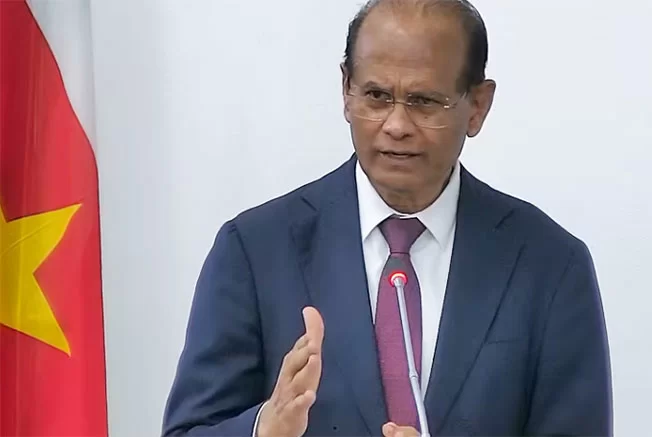
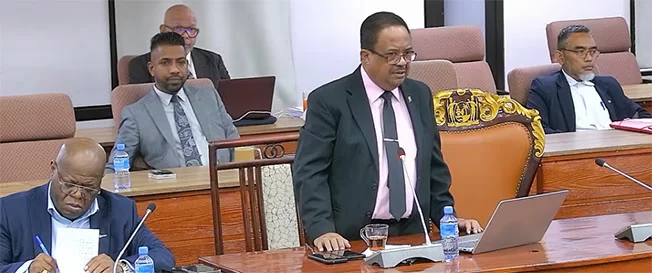
    Speaking Thursday during budget debates in Suriname’s National Assembly, Vice President Gregory Rusland addressed questions from ruling VHP party legislator Mahinder Jogi, who pressed for government clarity following cross-border criticism of the map shown at the 2026 Suriname Energy, Oil & Gas Summit (SEOGS). Guyanese parties had raised formal objections to the map’s depiction of the contested Tigri region, prompting Jogi’s request for details on what concrete actions Suriname’s administration had taken in response.

    Rusland confirmed that the Surinamese government has reviewed statements from multiple Guyanese private sector organizations regarding the map presented at SEOGS 2026. He stressed that the government maintains its long-standing, unchanged position on the disputed border region. At the same time, Rusland emphasized that Suriname remains committed to building positive, constructive ties with Guyana, rooted in the principles of mutual respect, good neighborly relations and peaceful diplomatic dialogue.

    The vice president pushed back against framing the energy summit as a stage for territorial tensions, noting that SEOGS functions as an international platform designed to drive investment, innovation and cross-border collaboration in the energy sector, not to advance political or territorial disputes. He acknowledged that maps including contested border areas can lead to diverging interpretations, but reiterated that such disagreements should only be resolved through official diplomatic channels, not public controversy.

    “Suriname attaches great importance to expanding cooperation with Guyana across energy, trade, infrastructure and regional development. This cooperation must continue to grow in an atmosphere of mutual trust and respect,” Rusland added. His comments echo earlier statements from Foreign Minister Melvin Bouva, who had previously confirmed that Suriname’s position on Tigri is unambiguous and that the country has already taken official diplomatic action with Guyana regarding the dispute.

    Opposition NDP legislator Ebu Jones, a former Surinamese ambassador to Guyana, voiced full support for the government’s response. Jones drew on his own diplomatic experience, recalling that he had personally filed a formal protest during an official meeting when an incorrect map of Suriname was presented by the other side. He noted that it is standard diplomatic practice for nations to issue protests when they disagree with a map or territorial stance, acknowledging that Guyana has a right to voice its objections.

    “That Guyana protests is their right. But that does not change our position,” Jones said, reaffirming that Suriname’s territorial claim remains unaltered. “Tigri belongs to Suriname, and Tigri will remain Suriname’s.”

    Despite the vice president’s explanation, Jogi said he accepted the government’s commitment to positive bilateral relations but argued that his core question about specific diplomatic steps Suriname has taken in response to the map controversy remains unanswered.
  • Antigua and Barbuda to Benefit from Donation of Eye Care Equipment from He Vision Group

    Antigua and Barbuda to Benefit from Donation of Eye Care Equipment from He Vision Group

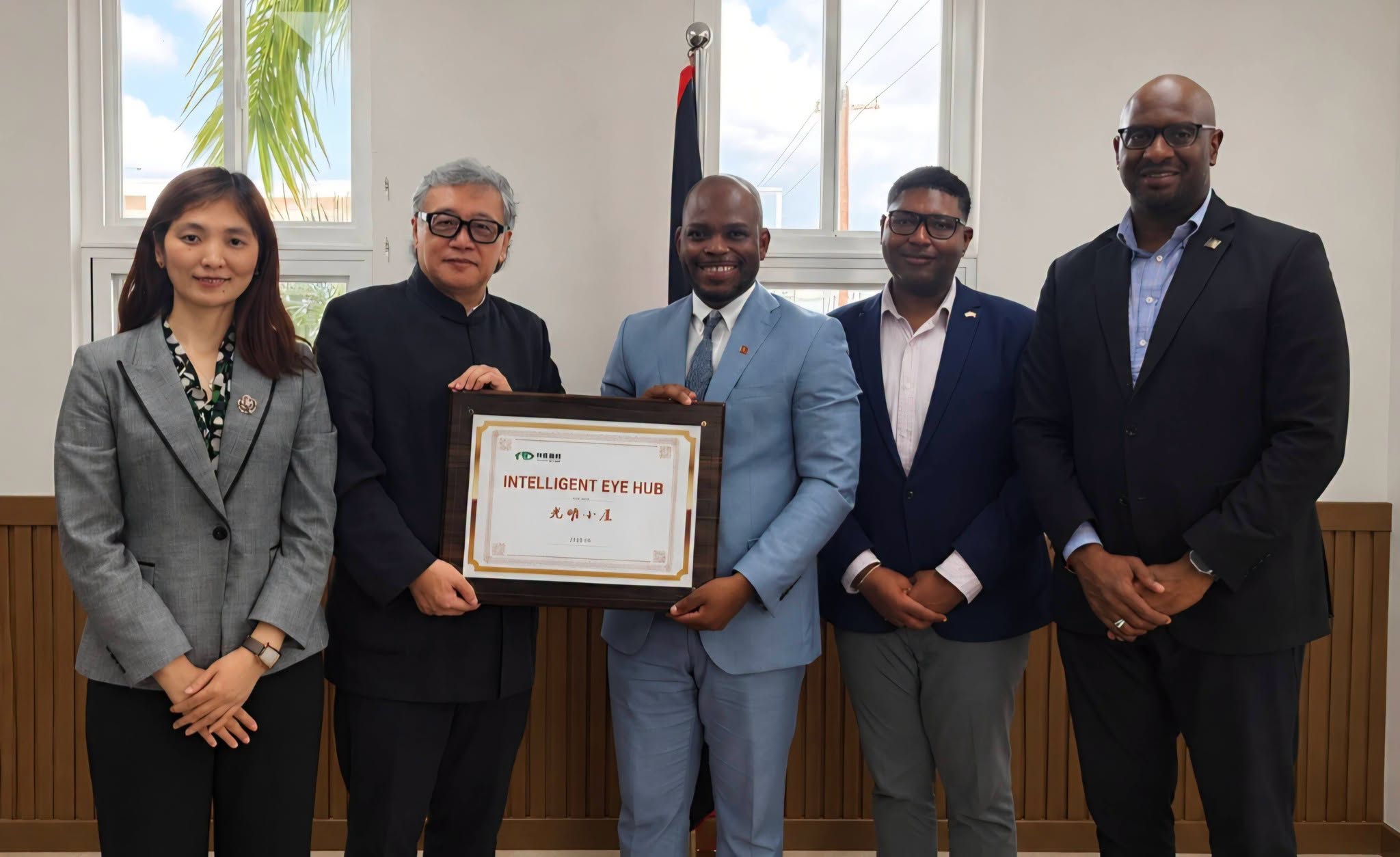
    A new strategic philanthropic partnership has been struck between Antigua and Barbuda’s Ministry of Health, Wellness, Environment and Civil Service Affairs and China’s He Vision Group, formalizing a donation of specialized eye care equipment designed to elevate the Caribbean nation’s ophthalmic care infrastructure.

    The agreement was cemented during an official working meeting attended by key stakeholders from both sides. Attendees included Hon. Michael Joseph, Minister of Health, Wellness, Environment and Civil Service Affairs of Antigua and Barbuda; Dr. He Wei, founder of He Vision Group; Helen Yan, Assistant to the President of He Vision Group and Director of the company’s Social Responsibility Department; alongside H.E. Clement Antonio, Antigua and Barbuda’s Ambassador to China, and H.E. Ian Marshall, Grenada’s Ambassador to China.

    Currently, the donated equipment is in the final preparation phase before being shipped to Antigua and Barbuda. Once it arrives and is deployed, it is projected to significantly expand the country’s ability to deliver high-quality specialized eye care, broadening access to critical diagnostic tools and treatment options for local patients who previously faced gaps in care.

    Minister Joseph opened up about the value of this collaboration, extending sincere gratitude to He Vision Group for its dedication to advancing local healthcare development in Antigua and Barbuda. “This partnership marks a meaningful milestone in strengthening eye care services across our national healthcare system,” Joseph stated. “We are deeply thankful to He Vision Group for this generous gift, and we eagerly await the arrival of the equipment, which will directly help drive better eye health outcomes for all people of Antigua and Barbuda.”

    He Vision Group has earned global recognition for its decades-long impact across the ophthalmic sector. The firm operates an extensive global network of specialized hospitals, cutting-edge research institutions, and professional medical training programs, with core focuses on advancing ophthalmic innovation, medical education, and global blindness prevention initiatives.

    Moving forward, Antigua and Barbuda’s Ministry of Health plans to maintain long-term collaborative engagement with He Vision Group. Both parties share a common goal of continuously improving eye health services and expanding equitable access to high-quality healthcare for all residents of Antigua and Barbuda.

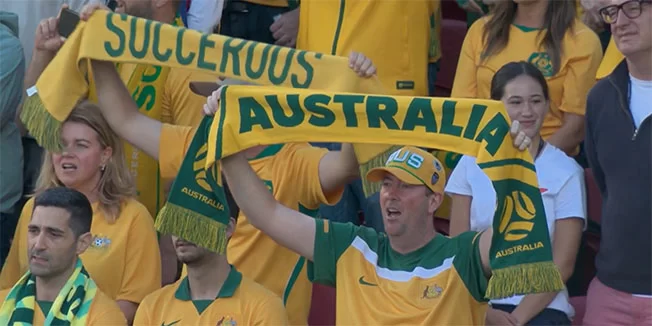
  • Derde helft WK 2026: Paraguay met 0-0 tegen Australië in wachtkamer voor volgende ronde

    Derde helft WK 2026: Paraguay met 0-0 tegen Australië in wachtkamer voor volgende ronde

    The final round of group stage matches at the 2026 World Cup delivered a dramatic afternoon of football in Group D, as a cagey goalless draw between Paraguay and Australia was overshadowed by a last-gasp thriller between Turkey and the United States that left knockout stage fates hanging in the balance.

    In their match played in Santa Clara, Paraguay and Australia both entered the final group fixture knowing any mistake could end their World Cup campaigns, leading to a cautious, defense-first 90 minutes that ended 0-0. Australia, already recovering from an opening defeat to the United States after picking up three points in their second match, only needed a positive result to secure progression and opted for controlled positional play rather than all-out attack. Paraguay, by contrast, was searching for chances to move up the group table but refused to open up space that would allow Australia’s rapid counter-attack to exploit. What unfolded was a tense tactical duel where defensive discipline trumped attacking flair, with neither side willing to take the high-risk risks that could lead to elimination.

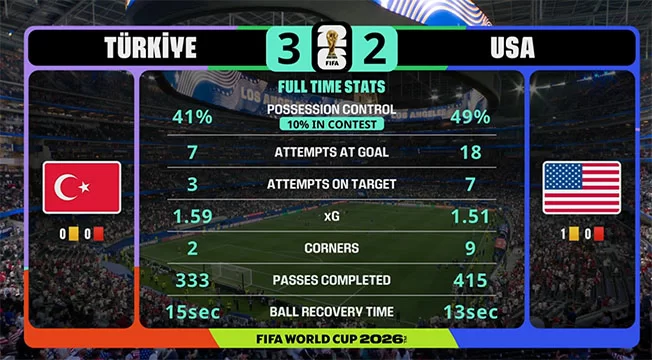
    While play was unfolding between Paraguay and Australia, a far more dramatic story was unfolding in the other Group D fixture. Turkey, who had already been defeated by Paraguay in their second match, pulled off a stunning late fightback to beat the United States 3-2 in stoppage time. After falling behind early, the United States rallied to take the lead late in the second half, only for Turkey to net a dramatic winning goal in the final moments of injury time. The result lifted Turkey to a final total of three points, keeping all title hopes for the side alive until the final second.

    When all full-time whistles blew, the final Group D standings barely changed at the top despite Turkey’s dramatic upset win. The United States held onto first place, thanks to their two prior wins and a superior goal difference that left them clear of the chasing pack. Australia finished level on four points with Paraguay, but claimed second place and an automatic spot in the knockout round thanks to a better goal difference.

    For Paraguay, the wait to learn their World Cup fate only just began. The South American side ended the group stage also on four points, after a opening heavy defeat to the USA, a critical win over Turkey and the final draw against Australia. As Group D’s third-placed team, they will now have to wait to compare their results with third-placed finishers from the tournament’s other seven groups to find out if they qualify as one of the four best third-placed teams for the knockout stage.

    Looking back on the group, the tight final standings highlight just how narrow the gaps between all four teams were. The USA got off to a flying start with two early wins, Australia bounced back resiliently after their opening loss, Paraguay fought their way back into contention after a poor first match, and Turkey proved they could compete with top sides even when their back was against the wall, fighting until the final second despite eventual elimination.

    For fans watching across the world, the 0-0 result between Paraguay and Australia may look like a dull affair on paper. But when placed in the context of high-stakes World Cup group stage football, every misplaced pass and defensive slip carried the weight of possible elimination, explaining the conservative approach from both sides. In the end, the biggest drama never came from the match in Santa Clara – it came from Turkey’s late winner, which left Australia breathing a sigh of relief and Paraguay stuck in an agonizing wait to learn if their World Cup journey will continue into the round of 16.

  • Derde helft WK 2026: Turkije ondanks winst op USA, naar huis

    Derde helft WK 2026: Turkije ondanks winst op USA, naar huis

    Going into the final Group D match of the 2026 FIFA World Cup co-hosted by the United States, the fixture at Los Angeles’ iconic stadium carried little tournament stakes for both sides. Turkey had dropped both of its opening two group matches, sitting pointless at the bottom of the table and elimination was already confirmed regardless of the result. For co-hosts USA, an already perfect start with two wins from two matches and six points had secured their spot in the knockout round long before kickoff, even before a single ball was kicked in this final group game. Algerian referee Mustapha Ghorbal officiated the dead-rubber clash, which would end up delivering a dramatic finish few expected.

    Opting to rest their key first-team stars ahead of knockout stage action, USA fielded a heavily rotated B-team for the fixture. The American side nearly opened the scoring inside the first 60 seconds, when Giovanni Reyna found himself in a prime goalscoring position, only for his effort to be parried away for a corner by Turkish goalkeeper Uğurcan Çakır. USA did not waste the resulting set piece, though: defender Auston Trusty fired a clinical low shot past Çakır in the 3rd minute to put the co-hosts up 1-0 early.

    Turkey responded quickly, leveling the score in the 10th minute through teenage star Arda Güler. The young playmaker finished off a neat setup from Barış Yılmaz, making history as the youngest Turkish player ever to score at a World Cup finals. Following the mandatory water break, Turkey turned momentum into a lead. Eren Elmalı broke down the left flank before cutting the ball back to Orkun Kökçü, who slotted home to put Turkey up 2-1 heading into halftime. Both sides created half-chances for the remainder of the first half, but no additional goals changed the scoreline before the interval.

    Coming out of the locker room after halftime, the USA shifted into a higher attacking gear, pushing Turkey deep into its own half for large stretches. The American equalizer came early in the second half, when Sebastian Berhalter pounced on a poorly cleared defensive clearance, firing the ball into the net from the top of the penalty area to level the match at 2-2. USA pushed hard for a winning goal shortly after, with substitute Christian Pulisic breaking through into Turkey’s penalty area only to miss the target with his finish. The co-hosts created several more clear chances to seal all three points, but wasteful finishing prevented them from taking the lead.

    With 15 minutes remaining in regular time, Turkey seized control of the match from the hosts, but the Turkish attack struggled to convert possession into clear-cut chances. Yılmaz came closest to winning the match in regulation, failing to make clean contact with the ball on a late run that left the chance unclaimed. As most spectators and pundits expected the match to end in a draw, Güler turned the American defense inside out late in stoppage time. His play set up a finish from Kaan Ayhan, who put the ball into the net after a pass from Can Uzun to seal a stunning 3-2 victory for Turkey, leaving the USA stunned in their home stadium.

  • Column: Meer dan een baard of een tatoeage

    Column: Meer dan een baard of een tatoeage

    Public discourse has long served as a mirror held up to society, reflecting more about the core values and unwritten norms of a community than it does about the specific topic being debated. The arguments people deploy, the reactions they share, and the priorities they highlight all combine to paint a clear picture of what a given society holds important. This truth has once again been proven by a fiery new conversation ignited by a recent op-ed from Revelino Eijk, chair of the Suriname Police Union.

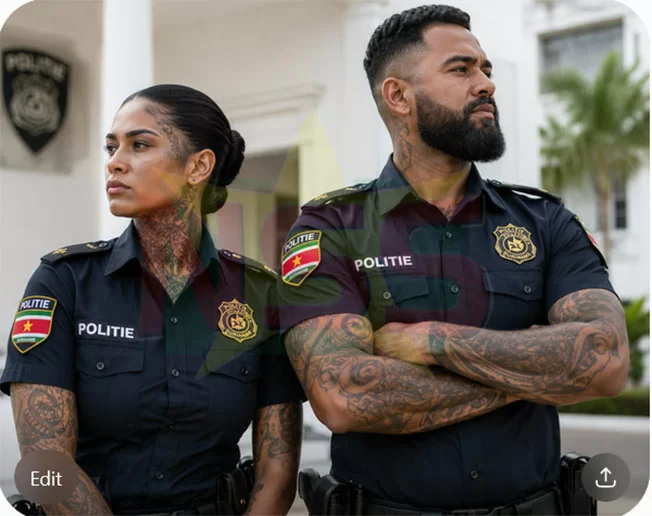
    In his submitted article, Eijk laid out a straightforward argument about grooming standards for officers of the Suriname Police Corps, specifically addressing the rules surrounding beards and visible tattoos. His core position is unambiguous: a beard does not interfere with an officer’s ability to carry out police work, and a tattoo does not impact an officer’s capacity to complete official reports. Eijk stressed that the quality of a police officer is not determined by superficial physical traits, but by four critical factors: training, discipline, integrity, and professional skill.

    This perspective is rooted in on-the-ground experience: anyone who has worked alongside an ethical, skilled police officer knows that character cannot be read from a person’s facial hair, haircut, or visible ink. A clean-shaven face, by the same logic, does not automatically make an officer more competent or trustworthy. Professionalism is defined by actions, not outward appearance.

    Yet despite this logical framing, hundreds of public comments on the Starnieuws platform reveal the debate is far from settled. In fact, the discussion has only grown more divided, with a large segment of Surinamese society arguing that police officers should be held to higher standards than just basic professional competence. For many ordinary citizens, an officer does not only represent themselves — they are the public face of state authority. And for a large share of the public, that authority demands a specific, traditional public image. This is not an unreasonable viewpoint.

    A police uniform is never just work clothing. Judges wear robes to signal their institutional role, military personnel wear uniforms to mark their service, and police officers interact with the public every day as representatives of the national government. Before an officer even speaks, members of the public already form an immediate first impression. Whether one considers this fair or not, outward appearance shapes how the public perceives authority. But this raises a critical, unanswered question: who ultimately gets to define what that appropriate public image is? Does that power lie with the police union, the police leadership, the national government, or is it ultimately the public that sets the norms, consciously or unconsciously, for what it expects from the people tasked with guaranteeing its safety? That question, many argue, is the most important takeaway from this entire conversation.

    Throughout the debate, many participants have pointed to international precedents to bolster their arguments, particularly pointing to grooming rules for police officers already in place in the Netherlands. But observers warn against adopting foreign standards wholesale. Suriname is not the Netherlands, they note. It has its own unique national history, its own distinct cultural identity, and a one-of-a-kind mix of population groups and religious communities. What is considered appropriate appearance for police in the Netherlands does not automatically translate to Suriname’s social context.

    For this reason, many commentators including this piece’s author argue that this conversation deserves more than a quick exchange of opposing views on social media. It requires a broad, inclusive public conversation across all layers of Surinamese society. This dialogue should not aim to exclude officers with beards or tattoos; instead, its goal should be to collectively define what public image Suriname expects of its national police force in the 21st century. A careful, broad conversation could ultimately lead to a modern, widely supported grooming and dress regulation that carefully balances competing priorities: professional competence, public representation, personal autonomy for officers, and societal expectations of authority.

    It is also important to acknowledge that societal norms change over time. There was once a time when no one debated topics like police hat standards, acceptable mustache styles, or hair length for officers. Today, the debate centers on beards and tattoos; tomorrow, it will likely shift to new, unforeseen topics. This is not a sign of division or chaos — it is simply proof that institutional authority must continuously adapt to a changing society.

    For all these reasons, the outcome of this debate should not be decided by emotion, personal preference, or foreign examples alone. It demands a deliberate, thoughtful public conversation that gives full weight both to the rights of individual police officers and the expectations of the communities they serve. At its core, this debate is not about ink under the skin or hair on the face. It is about public trust, it is about institutional authority, and it is about answering a fundamental question: what does Suriname want the public face of its police force to look like?

  • Police probe death of teen motorcyclist amid protest on Corentyne

    Police probe death of teen motorcyclist amid protest on Corentyne

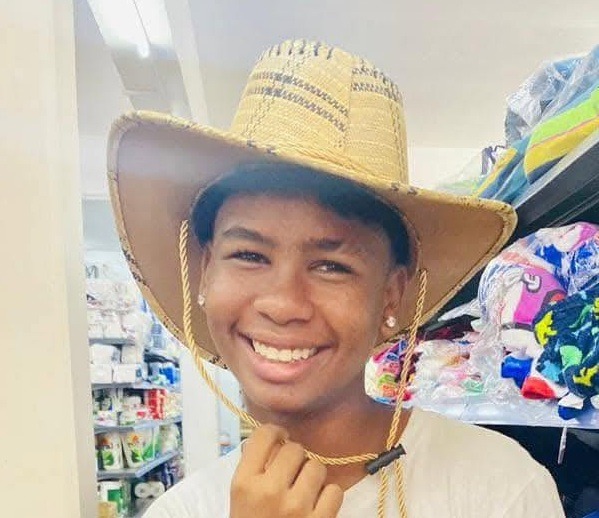
    On June 25, 2026, public outrage erupted across Corentyne, Berbice, after 16-year-old motorcyclist Aftaz King died following an encounter with local law enforcement, prompting widespread protests that saw demonstrators set fires along the Corentyne Public Road. By late Thursday night, the Guyana Police Force (GPF) bowed to mounting pressure from opposition political groups, announcing a formal investigation into the circumstances of the teenager’s death.

    According to the GPF’s initial account, King— a resident of Eliza Mary Race Course, Corentyne— was killed at approximately 6:45 p.m. on Princeton Access Road. Police investigators stated that King was operating motorcycle #CL 5607 when he attempted to evade a routine police patrol, lost control of his vehicle, and crashed head-on into a utility pole. King was rushed to the No. 75 Regional Public Hospital, where medical staff pronounced him dead on arrival, the force added.

    This official narrative has been directly challenged by opposition groups, who have alleged that police deliberately struck the teenager. The smaller opposition We Invest in Nationhood (WIN) party was the first to publicly dispute the police account, issuing a statement calling for “justice for young Altaf that was purposely hit by Police Officer in Corriverton.”

    Main opposition coalition A Partnership for National Unity (APNU), led by the People’s National Congress Reform (PNCR), amplified these calls hours later, demanding a full, independent, and transparent investigation. The coalition released a formal statement saying it was “deeply disturbed” by reports that King was being actively pursued by officers from the Springlands Police Station at the time of the crash. The PNCR-APNU called for immediate preservation of all relevant evidence, including internal police records, officer communications, and any available surveillance footage, and pushed for public release of investigation findings to uphold accountability and maintain public trust in law enforcement.

    “The PNCR/APNU stands with the grieving family in their pursuit of truth and justice. No family should have to endure the pain of losing a child under such circumstances without clear answers and accountability,” the coalition said in its statement.

    Just over two hours after APNU made its formal demand for an inquiry, the GPF announced that its Office of Professional Responsibility (OPR) had already launched an immediate probe into the incident. “The OPR investigation will examine all aspects of the incident and establish whether there was any criminal or disciplinary culpability,” the police force said in an official public statement.

    Acknowledging the profound public concern surrounding the case, GPF sought to reassure King’s family and the broader Guyanese public that it would handle the investigation with full impartiality. “Appropriate action would be taken should any criminal or disciplinary culpability be established,” the statement added.

    As of Thursday night, protests continued to disrupt traffic and daily life along the Corentyne Public Road, with local residents demanding swift and transparent answers about the teenager’s death.

  • Zapping Haiti of June 26, 2026

    Zapping Haiti of June 26, 2026

    As of June 26, 2026, Haiti is navigating a busy week of domestic and diplomatic developments, alongside expressions of solidarity with neighboring Venezuela following a devastating seismic event.

    On June 24, 2026, Venezuela was hit by two powerful back-to-back earthquakes: a magnitude 7.2 tremor struck at 6:04 p.m. local time, followed just one minute later by a 7.5-magnitude quake. In the wake of the disaster, Haitian Prime Minister Fils Aimé released a statement extending formal solidarity to Venezuelan Interim President Delcy Rodríguez, the Venezuelan government, and its people. Provisional casualty data collected as of June 26 confirms the disaster has left at least 589 people dead, 2,980 injured, and more than 50,000 unaccounted for. Aimé emphasized that long-standing fraternal ties between the two Caribbean nations remain unshaken amid this period of hardship.

    Domestically, telecommunications provider Digicel has reported substantial damage to its critical fiber optic infrastructure along Haiti’s National Road 2, sustained during seismic activity in the region on the night of June 24. The damage has disrupted multiple core services across southern parts of the country. While company technicians were deployed immediately to assess and repair the network, ongoing security instability in the area has blocked access to the damaged sites. Digicel confirmed its teams remain on standby to complete full repairs, and are coordinating closely with Haitian authorities to secure safe, expedited access to the affected corridor.

    In a gesture of recognition, Chargé d’Affaires Henry T. Wooster and the entire staff of the U.S. Embassy in Port-au-Prince issued public congratulations to Haiti’s national sports team, the Grenadiers, praising the squad for its exceptional recent performance. The embassy commended the team for representing Haiti with national honor and pride, noting that their play demonstrated how teamwork and persistence can turn ambitious goals into tangible achievements.

    As Haiti prepares to administer national academic exams, Minister of National Education Vijonet Déméro convened a high-level security meeting on June 25, 2026, with law enforcement and judicial officials covering the Port-au-Prince metropolitan area and the broader West Department. The session centered on developing comprehensive security protocols to ensure exams proceed safely and without disruption. In addition to security arrangements, officials have coordinated with the Mobile First Aid Unit/Motorized Emergency Medical Service (UMPS-SUMMOC) to have on-site medical support available for students who experience health emergencies during testing.

    Ongoing electoral reforms are also moving forward, with Haiti’s Provisional Electoral Council (CEP) confirming that a series of working meetings were held between June 11 and 23, 2026, by a bipartisan negotiating commission. The panel includes three CEP members and representatives from the Prime Minister’s Office, and is tasked with revising the June 2, 2026 electoral decree. The proposed adjustments target provisions related to the electoral body’s independence, as well as other clauses that could disrupt the smooth progression of the ongoing electoral process. Several political party representatives, invited by the Prime Minister’s office, also joined the deliberations. The talks come amid reported open tensions between the CEP and the Haitian executive branch over the terms of the reform process.

    On the diplomatic front, Haitian Foreign Minister Raina Forbin held a bilateral meeting with Chilean Foreign Minister José Francisco Pérez Mackenna on June 24, 2026, on the sidelines of the 56th Ordinary Session of the Organization of American States (OAS) General Assembly. The pair centered their discussions on migration management, a key issue for both nations, alongside plans to strengthen consular services, modernize migration documentation systems, and review the measures Chile has implemented to improve migration flow tracking and overall migration governance.

  • Parmessar eist opheldering over Havenbeheer-contract met Medserv

    Parmessar eist opheldering over Havenbeheer-contract met Medserv

    PARAMARIBO, SURINAME – June 26 – Rabin Parmessar, leader of Suriname’s National Democratic Party (NDP) and chair of the country’s Committee of Rapporteurs, has issued a formal call for the ruling administration to release full details of a controversial port development contract between state-owned N.V. Havenbeheer and international logistics firm Medserv, warning that the deal’s integrity directly impacts the South American nation’s reputation as an emerging player in the global oil and gas sector.

    Parmessar made the demand during the second round of parliamentary budget debates, confirming that public knowledge is already widespread regarding the partnership between N.V. Havenbeheer and Medserv, which was established to build specialized port infrastructure tailored to support the country’s growing oil and gas industry. According to the opposition leader, the signed agreement includes strict performance clauses, most notably requiring the on-time completion of a new pier engineered to support a load capacity of 20 tons per square meter.

    Parmessar has outlined a series of critical questions the government must answer for the National Assembly. Among the key points of inquiry are confirmation of the project’s mandatory December 21, 2026 completion deadline, an update on whether construction remains on schedule, and confirmation that the contract was awarded through a fully compliant public tender process. He has also called for clarity on whether required local preference policies for Surinamese companies were applied during the bidding process.

    A core point of concern raised by the opposition leader is the significant financial risk the country faces if the project fails to meet the contractual deadline. Parmessar says leaked details of the contract show that steep penalty clauses are in place for delays or failure to deliver on contractual obligations. He is seeking official confirmation that penalties start at a minimum of $150,000 U.S. dollars per week for delays, with additional indirect costs of up to $50,000 U.S. dollars per 24 hours in the event Medserv is forced to divert its operations to an alternative port.

    Adding to the controversy, Parmessar revealed that the Committee of Rapporteurs has received intelligence indicating Medserv has already begun partially diverting operations to a facility operated by Dordt N.V. in the Commewijne district, where an international construction firm has already started preliminary work. He is demanding the government confirm whether these reports are accurate, and whether this diversion leaves the Surinamese state exposed to massive damages claims from the contract breach.

    “Who will be held accountable for this outcome, and has the government prepared for this risk?” Parmessar asked during the debate. He emphasized that the issue extends far beyond a routine infrastructure project, directly impacting the nation’s credibility as it prepares to launch full-scale commercial oil production expected to start in 2028.

    “This is not a small operational file. This directly touches our credibility as a country positioning itself for large-scale oil and gas development,” Parmessar told the assembly. He added that for Suriname to attract sustained international investment to its energy sector, it must demonstrate it can deliver functional port infrastructure, run transparent procurement processes, enforce robust contractual frameworks, and maintain effective risk management.

    To address these concerns, the NDP leader has formally requested that the administration grant the National Assembly full access to all project documentation, including the full signed contract, tender records, construction timelines, progress reports, and official risk assessments. He closed his address by noting that good governance requires proactive intervention before damage occurs, not just post-hoc explanations after problems arise.

  • PM Briceño Urges Eluide Miller to Withdraw Mayoral Candidacy

    PM Briceño Urges Eluide Miller to Withdraw Mayoral Candidacy

    As Belize’s ruling People’s United Party (PUP) prepares for its delegate selection convention to pick a Belize City mayoral candidate, an unexpected behind-the-scenes political shakeup has thrown the race into flux, with top party leadership pushing the clear frontrunner to step aside.

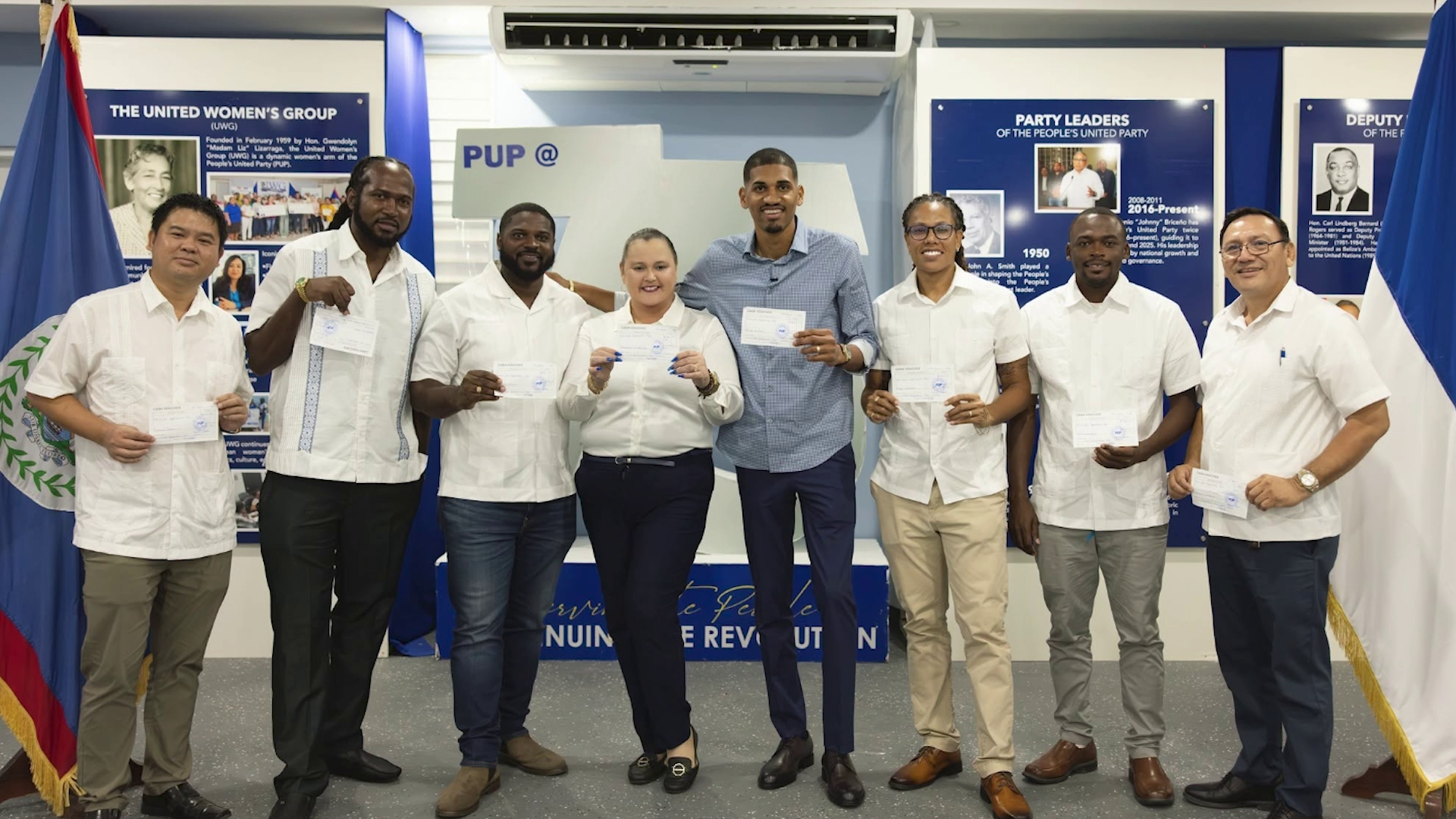
    Multiple insider sources confirm that Belize Prime Minister John Briceño has personally approached incumbent Deputy Mayor Eluide Miller, the leading contender for the party’s mayoral nomination, to request he withdraw his candidacy. The move would clear a path for city councilor Allan Pollard to secure the PUP endorsement, in a twist that traces back to a 2023 power-sharing deal within the party.

    Three years ago, Pollard struck an agreement with Deputy Party Leader Cordel Hyde, his political mentor, to pull out of the mayoral race to avoid challenging sitting Mayor Bernard Wagner – a concession made in the name of party unity. Now, with the mayoral seat open and the 2026 contest approaching, the same deal that sidelined Pollard is being used to push Miller out, even though Miller shares close family ties with Hyde himself.

    The shifting request reflects a broader rebalancing of power within the PUP’s Belize City caucus that has unfolded since 2023. Back then, Hyde held unchallenged influence as the party’s undisputed kingmaker in the city, and Pollard was an underdog challenger to an incumbent mayor. Today, the political landscape has transformed: the mayoral seat is open, new power blocs have emerged, and Hyde’s grip on local party politics has weakened as other heavyweights rise in prominence. PUP figures including former party leader Francis Fonseca, Anthony Mahler, Henry Charles Usher, and Kareem Musa have all grown their influence within the local party, creating a fragmented playing field with no single faction holding a clear advantage.

    PUP Secretary General Collet Montejo confirmed that the party will use a delegate-based convention to select its mayoral candidate, with delegate counts calculated based on voting results from past general elections. Each constituency receives one delegate for every 25 votes the PUP earned in the most recent national election, and local executive committees will select which delegates represent their constituencies.

    When broken down by constituency, the delegate math underscores just how competitive this nomination race will be. Pollard is expected to lock in the support of most delegates from Lake Independence, which brings a total of 192 delegates to the table. But that advantage is offset by a combined 203 delegates from the constituencies of Freetown, Albert, Collet, and Queen Square, which are expected to lean toward Miller. Most of Mahler’s delegate bloc is already projected to back Miller, leaving the final outcome hanging on the uncommitted delegates aligned with Henry Charles Usher and Kareem Musa. A shift in the balance of influence after the 2025 intra-party selection cycle has also reshaped delegate support: Usher gained momentum after running unopposed for his position, while Mahler’s clout softened after he faced no challenger in that cycle, further scrambling the odds.

    For now, all eyes are on Miller, who has just days to respond to Briceño’s request to withdraw. The frontrunner must weigh the party leadership’s appeal against the delegate support he already holds, as the PUP’s Belize City mayoral nomination race shapes up to be one of the most unpredictable intra-party contests in recent memory. This report was delivered by Shane Williams for News Five.

  • Growing Calls for Answers in Mira Family Money Scandal

    Growing Calls for Answers in Mira Family Money Scandal

    As of June 25, 2026, a growing financial scandal centered on Belmopan Area Representative and former Home Affairs Minister Oscar Mira has triggered escalating public demands for full transparency and accountability, after leaked documents exposed more than $9.4 million in state contract payments to multiple members of Mira’s immediate family.

    The controversy first erupted amid an ongoing audit of Belize’s Ministry of Defense, where Mira previously held a cabinet position as Minister of State. The leaked paper trail, which only accounts for confirmed invoiced transactions, links five of Mira’s ten siblings to millions in public funds. A breakdown of the verified payments shows that Stanley Mira alone earned more than $435,000 in government contracts. MP Farms, a company jointly owned by Stanley and Brian Mira, has received over $5.7 million in public payouts. Jenny Mira has collected more than $1.7 million, while Fast Construction – where Keith Mira serves as Senior Project Manager – earned upwards of $1.5 million through newly leaked invoices from utility provider Smart Stream. Most recently, Cyrus Mira was drawn into the scandal after reporters questioned Belize Police Commissioner Dr. Richard Rosado over whether Mira had pressured the police department to award an air conditioning servicing contract to Cyrus Mira’s firm, FT Williams.

    When asked about the contracts, Commissioner Rosado pushed back on any claims of political interference, stating that no minister or political figure had directed the police department to select any specific supplier. Rosado explained that the department’s procurement process is decentralized: the commanding officer serves as accounting officer, delegates procurement authority to the commissioner and his four deputies, and each deputy manages supplier selection for the units under their oversight. Rosado added that he does not track every individual supplier working with department units.

    The revelation of the family’s lucrative government ties has shocked the Belizean public, given Mira’s past public comments about his working-class upbringing and large family. During a March 25, 2026 address to the House of Representatives, Mira joked that he was blessed not just by the support of Belmopan voters, but by his large clan – ten siblings, multiplied by generations of nieces and nephews, who operate as a tight team. That comment has gained new, uncomfortable relevance as the audit progresses.

    Mira has repeatedly denied any wrongdoing, telling reporters on June 17, 2026 that all government tenders were conducted through official, public processes. He argued that any interested party could apply for open tenders, that successful awards go through a rigorous evaluation, and that he held no role on the procurement committees that review and approve contract bids. “If they did so, they did on their own,” Mira said. “Not with my influence or anything to do with me.”

    Despite Mira’s insistence that his family followed all procurement rules, public pressure has continued to mount, leading the government to place Mira on administrative leave while the audit is completed. Critics argue that the concentration of millions in public contracts among a single lawmaker’s family raises serious red flags about conflict of interest and the integrity of Belize’s government procurement system, with many citizens questioning whether taxpayer dollars were awarded to political connections rather than the most qualified bidders. As the audit continues to unearth new details, calls for a full independent public inquiry show no signs of fading.