博客

  • Mira Says Work Continues, But the Scandal Won’t Go Away

    Mira Says Work Continues, But the Scandal Won’t Go Away

    Nearly two weeks after stepping aside from his ministerial post to clear the way for an independent government probe into the high-profile Smart Stream scandal, Belmopan’s area representative Oscar Mira is still refusing to step away from his public duties—even as allegations of improper government payments to his family members continue to hound him.

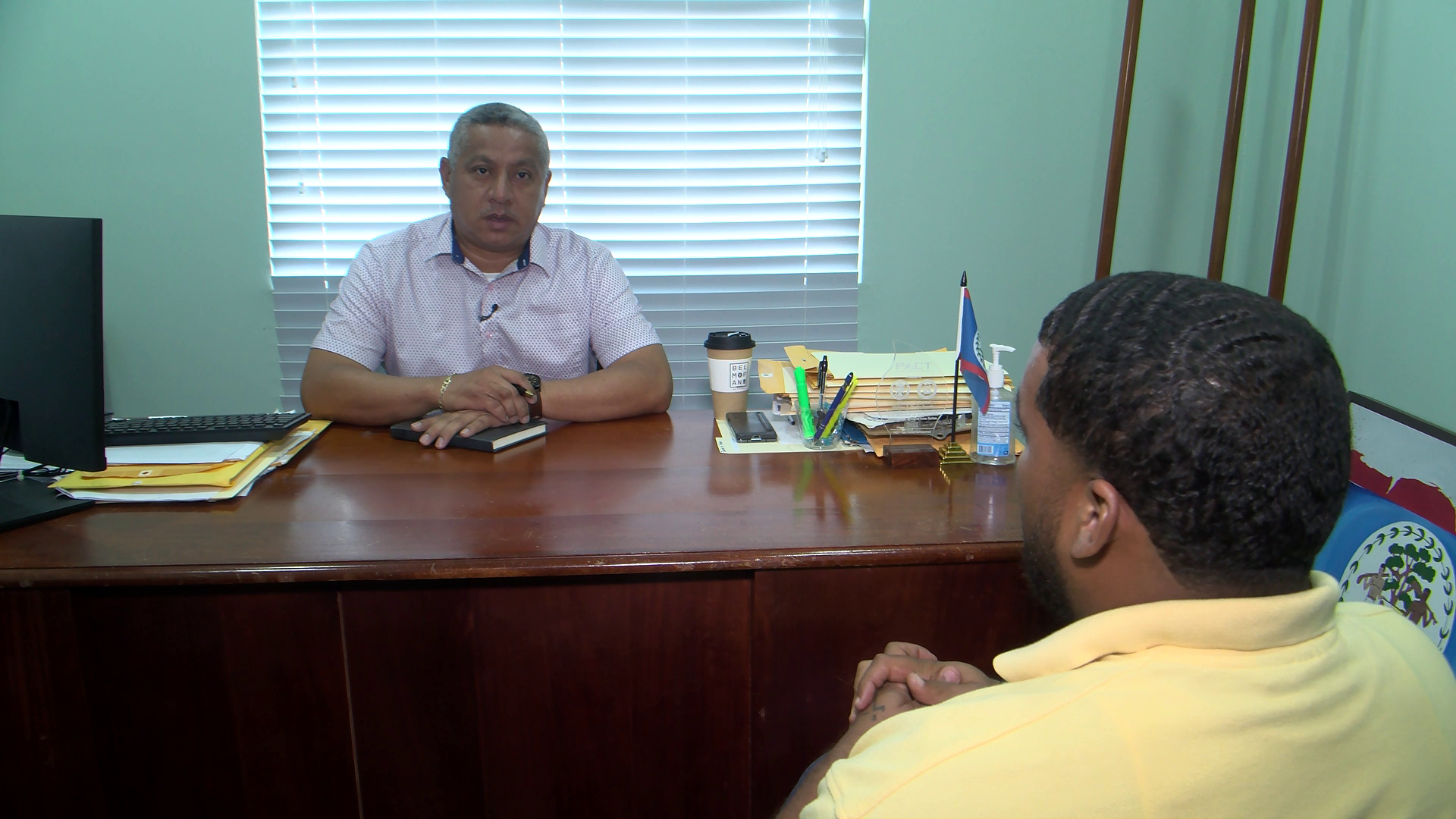
    The escalating scandal, which ties to the Belizean Ministry of Defense, has hit a critical turning point this week, with top government officials including Prime Minister John Briceno and suspended minister Florencio Marin set to address public concerns in the coming hours. In an exclusive interview with News Five’s senior correspondent Paul Lopez, Mira pushed back against growing public backlash, arguing that his priority remains delivering for the constituents who elected him, regardless of the cloud of controversy hanging over his tenure.

    “I did not get elected solely as a minister. First and foremost, I am the area representative for Belmopan, and I have never taken leave from that role,” Mira told Lopez during an on-the-record meeting in the capital Wednesday. “My responsibilities to the people of this district do not stop because of political noise, and you can see that for yourself in the progress we have made across the city.”

    Mira led Lopez on a tour of a rapidly developing residential neighborhood in Belmopan, where long-overdue infrastructure upgrades have recently been completed: new access roads have been graded, public utilities have been connected, and dozens of new homes are under construction in an area that was largely cut off from basic services just two years ago. “There is a lot of noise surrounding this situation, but I choose to block it out, because that noise will not slow down the work we are doing to improve life for Belmopan residents,” he said. “If residents drive through any of these developing areas, they will see a level of progress they have never seen before.”

    Public reaction to Mira’s decision to continue constituency work has been sharply divided online. Some members of the public argue that the ongoing corruption allegations have irreparably damaged his reputation and that he should step down from all public duties pending the outcome of the audit, while others credit him for staying focused on delivering visible development projects despite the pressure.

    Mira has repeatedly denied any wrongdoing in connection with the millions of dollars in Ministry of Defense payments that went to businesses owned by his siblings and close family members, payments that were approved during his tenure as Minister of State, then later as substantive minister of the department. He said he requested a leave of absence from his Cabinet post specifically to allow the audit to proceed without political interference, and he remains fully confident the process will clear his name.

    “That noise is just political posturing, and it will die out on its own once the audit is complete,” Mira said. “That is why I asked the prime minister to let me step aside temporarily. I welcome this audit, and I am confident I was not involved in any improper activity.” When asked directly if he believed the probe would vindicate him and his family, he answered firmly: “I am convinced that it will.”

    Addressing criticism that his family has enriched itself through improper public contracts at the expense of Belizean taxpayers, Mira defended his relatives’ work. “My family is a hardworking family. My parents raised us to prioritize education, and all of my family members are licensed professionals,” he said. “If they received payments from the government, those payments were for legitimate professional services they provided. I do not believe any of my family members would accept payment for work they did not complete.”

    The scandal has brought up new unresolved questions this week, after Lopez confirmed that Mira still retains access to a government-issued ministerial vehicle more than a week into his administrative leave. The vehicle was parked outside Mira’s constituency office Wednesday, and did not display an official Government of Belize license plate. When asked if he still collects his full ministerial salary and receives other executive perks such as allowances during his leave, Mira confirmed he still uses the government vehicle, but said he had not checked his pay status and could not provide a definitive answer.

    While Mira insists the upcoming audit will clear all questions of impropriety, the probe has so far failed to address growing public concerns over the continued benefits Mira receives, even as he is suspended from his ministerial duties. Reporting for News Five, Paul Lopez delivered this exclusive update from Belmopan.

  • Derde helft WK 2026: VS met tien man naar achtste finales na zege op Bosnië en Herzegovina

    Derde helft WK 2026: VS met tien man naar achtste finales na zege op Bosnië en Herzegovina

    Co-hosts United States have secured their place in the 2026 FIFA World Cup round of 16 after a disciplined 2-0 knockout stage victory over first-time qualifier Bosnia and Herzegovina, overcoming a second-half red card that left them a man down for more than 25 minutes of play.

    The opening goal of the match came right on the stroke of halftime, with Folarin Balogun breaking the deadlock to give the US a 1-0 lead going into the break. The timely strike gave the co-hosts a critical psychological boost heading into the locker room, setting the tone for a tense second half.

    The narrative of the game shifted abruptly in the 64th minute, when Balogun was shown a straight red card that forced the US to play the remainder of the match with 10 players. Bosnia and Herzegovina, making their first ever appearance in a World Cup knockout round, immediately pushed higher up the pitch to capitalize on their numerical advantage, searching for an equalizer to keep their historic campaign alive. However, the underdogs lacked the cutting edge and creative spark to break down a resilient American rearguard, failing to register any clear-cut scoring chances that truly tested the US defense.

    Against the odds, the United States refused to drop deeper into a purely defensive shape, maintaining compact defensive lines while still looking for dangerous transitions to catch the Bosnian attack out. This mature game management paid off in the 82nd minute, when Malik Tillman found the back of the net to double the US lead, putting the result beyond doubt and sealing the win for the co-hosts.

    Entering the match, the US carried high expectations as tournament co-hosts, targeting a deep run on home soil. They topped their group to advance to the knockout stage, and their performance against Bosnia and Herzegovina proved their ability to withstand pressure and adapt to adversity. For Bosnia and Herzegovina, the match was a historic milestone: this was their first ever qualification to a World Cup knockout round, and they entered the contest as underdogs hoping to pull off a shock upset. Despite their man advantage following Balogun’s red card, they could not convert the numerical superiority into goals, bringing their fairytale run to an end.

    With the 2-0 victory confirmed, the United States will next face Belgium in the round of 16 as they continue their home World Cup campaign. While Bosnia and Herzegovina are eliminated from the tournament, they exit the 2026 World Cup with pride after an unprecedented, history-making run that captured global attention.

  • News Five Asked Mira the Questions Everyone’s Asking

    News Five Asked Mira the Questions Everyone’s Asking

    In a high-profile interview with local outlet News Five, Belmopan Area Representative Oscar Mira has pushed back against growing public scrutiny over hundreds of questioned government contracts awarded to his siblings’ businesses, breaking weeks of silence to address the questions on every political observer’s mind.

    For weeks, Mira has consistently maintained that he had no knowledge of the controversial transactions that unfolded during his tenure, first as Minister of State and later as substantive cabinet minister. Interviewer Paul Lopez pressed Mira on the core public question: how could hundreds of contracts worth substantial public funds, awarded to his close family members, escape his notice in his senior government role?

    Rather than offering a direct, detailed response, Mira deferred all conclusions to the ongoing audit of the contracts. “I will leave it to the audit that is happening. I do not want to prejudice that audit,” Mira stated. He emphasized that he never involved himself in the day-to-day payment or service procurement processes handled by dedicated finance and accounting officers, roles he never held. He also noted the controversy highlights a pressing need to update Belize’s public procurement system, calling the current framework outdated.

    Lopez further pressed Mira on whether the contracts ever came up in casual family settings, pointing out that Mira and his siblings are known to be a close-knit family. Again, Mira declined to comment beyond calling for the audit to run its full course, arguing that all Belizean citizens deserve the right to bid for government contracts regardless of their family connections. “It is a rigid process, it is not an easy process,” he said of the existing procurement system, defending the right of his family members to participate in open government contracting.

    Critics have already decried the arrangement as a clear case of conflict of interest, but Mira argues the discourse around the controversy is misframed. He rejects the idea that relatives of elected officials should be automatically barred from bidding for state work, noting that in a small nation like Belize, most citizens share some degree of family connection. “If the work that you provide is to the standard and if it is competitive, then I don’t see the reason why [they should be excluded],” he explained, echoing a past statement from a former prime minister who similarly defended hiring a family member for qualified work. When asked to guarantee that all contracted goods and services were delivered as agreed, Mira confirmed they were provided to a high standard.

    The controversy has now moved to a formal investigative phase: the Integrity Commission of Belize is set to launch a full probe into the allegations of public office misconduct, following a formal corruption complaint filed by UDP caretaker Edward Broaster. Mira says he welcomes the independent scrutiny, insisting he has nothing to hide and is confident the investigation will ultimately clear his name.

    “It is their job, that is what an integrity commission is there for. I welcome the investigation,” Mira said. “Someone has made a complaint and it is their job to make sure they do the proper investigation. The investigation will bring out the truth. I fear nothing.” When asked directly if investigators would uncover evidence of corrupt activity, Mira firmly denied any wrongdoing, noting he never personally processed any payments tied to the contracts. “We are a democratic country and those things are there for this and I will make sure I clear my name,” he added, confirming he has retained legal representation for the probe.

    This report is adapted from a transcript of an evening television news broadcast, with original Kriol-language commentary standardized to written English for publication.

  • New Employment Record Fuels Ongoing Mira Controversy

    New Employment Record Fuels Ongoing Mira Controversy

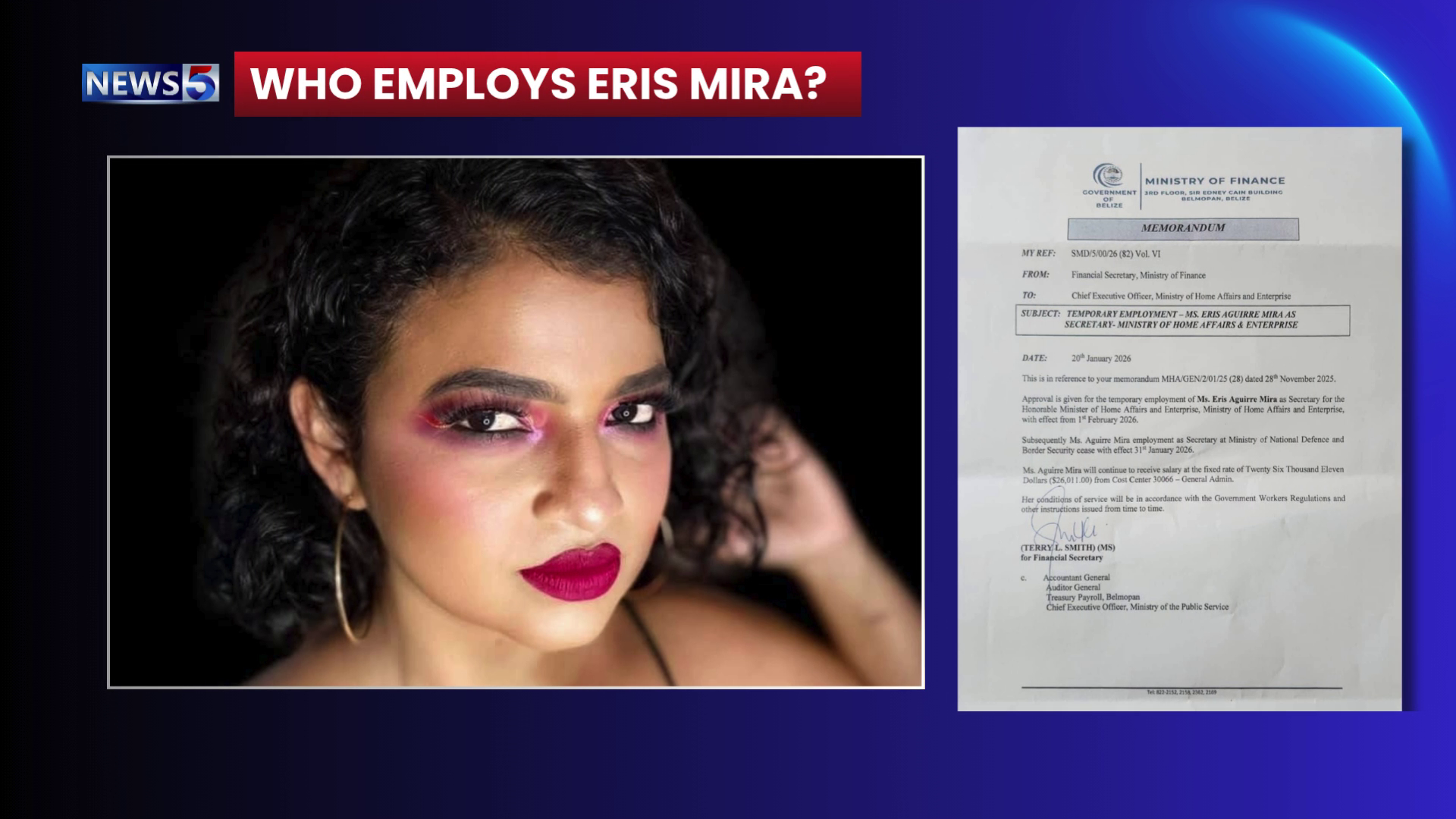
    As public scrutiny of the politically connected Mira family continues to escalate across Belize, a newly uncovered government document has reignited fierce debate over nepotism in public sector hiring, adding another layer to the ongoing controversy. On July 1, 2026, local outlet News Five verified the authenticity of a January 20 memorandum from the Ministry of Finance, which formally approved the temporary appointment of Eris Mira — wife of Brian Mira, a member of the prominent Mira political family — to the post of secretary at the Ministry of Home Affairs.

    According to the official document, the appointment went into effect on February 1, 2026. Prior to this reassignment, the memo confirms, Eris Mira held an identical secretary role at the Ministry of Defense, marking her second placement in a government ministry. The public document also discloses full salary details for the position: an annual pay rate of $26,011, which translates to just over $2,100 in monthly compensation.

    What has drawn the most public anger and raised new questions about the legitimacy of the appointment is the location of Mira’s work, which does not align with the official posting outlined in the government memo. News Five’s on-the-ground reporting confirmed on July 1 that Eris Mira was observed carrying out her work duties not at the Ministry of Home Affairs’ central offices, as the appointment document specifies, but instead at the constituency office of Oscar Mira, another high-ranking member of the Mira family who serves as a government minister.

    This latest revelation comes as public and political scrutiny of the Mira family’s influence and hiring practices has grown steadily in recent months. Back in mid-June, when criticism of Eris Mira’s government appointments first began to gain traction, she addressed the controversy directly via social media, issuing a defiant response to her critics. “If my shine bothers you, cover your eyes,” Mira wrote in her public post, a comment that further amplified public discussion of the nepotism claims.

    As of Tuesday, no official statement has been released by the Mira family, the Ministry of Home Affairs, or the Ministry of Finance addressing the newly revealed discrepancy between Mira’s official posting and her actual work location. The controversy continues to fuel calls for greater transparency in government hiring practices across the country.

  • Enter Kukulcan as Defense Spending Controversy Grows Larger

    Enter Kukulcan as Defense Spending Controversy Grows Larger

    Dated July 1, 2026, a deepening public corruption scandal is roiling the nation’s Ministry of Defense, as newly leaked financial records expand the scope of misconduct allegations far beyond the already high-profile “Mira Millions” controversy that has dominated national political discourse in recent weeks.

    Local news outlet News Five has acquired a fresh cache of internal Smart Stream transaction screenshots that link dozens of unexplained government payments to Kukulcan Limited, a private firm widely reported to have close personal connections to sitting Defense Minister Florencio Marin Jr. The newly uncovered invoices cover a four-year window stretching from 2021 through 2025, and they reveal a suspicious pattern that mirrors irregularities already documented in the Mira Millions investigation: the vast majority of the recorded payments fall just under the $10,000 reporting threshold, a common tactic used to bypass formal procurement oversight and public disclosure requirements for government spending.

    Prior to this leak, scrutiny of defense spending had been largely focused on questionable payments linked to the Mira family and their associated business interests. But these new documents, if authenticated, confirm that problematic procurement practices and mismanagement of public funds have persisted across multiple years and involve additional actors tied to the minister’s inner circle. The disclosure has amplified already serious questions about accountability, transparency, and ethical governance within one of the federal government’s most secretive and heavily funded departments.

    In the coming days, News Five has announced it will publish a full deep dive into the newly leaked records, with planned reporting that will unpack the ultimate recipients of the payments, document what (if any) public services were rendered in exchange for the public funds, and detail the full scope of systemic failures that allowed the unregulated spending to continue for years without oversight.

  • A center that contributes to scientific, health, and technological sovereignty  At

    A center that contributes to scientific, health, and technological sovereignty At

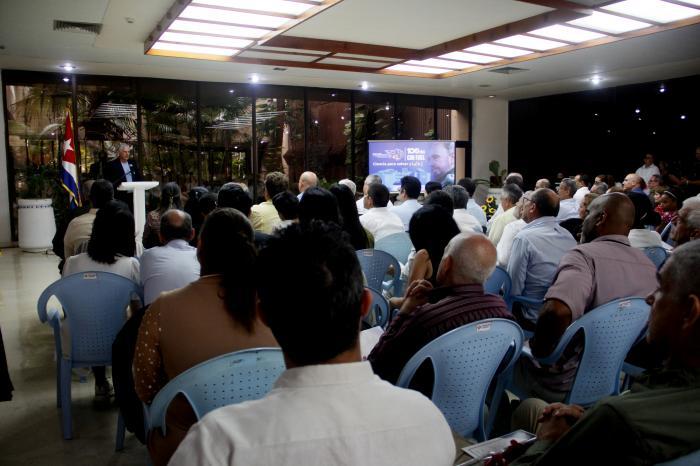
    Havana, Cuba – In a celebratory ceremony marking four decades since the founding of the nation’s landmark Center for Genetic Engineering and Biotechnology (CIGB), Cuban leaders and scientific stakeholders gathered to honor the revolutionary vision that built the country’s world-renowned biotech sector against long-standing geopolitical and economic challenges.

    The event opened with a moment of recognition for Army General Raúl Castro Ruz, leader of the Cuban Revolution, whose decades of contributions to advancing Cuban biotechnology were honored with a special institutional award from CIGB workers. Political Bureau member and CIGB Director General Marta Ayala Ávila presented the honor on behalf of the center’s staff, with Cuban President Miguel Díaz-Canel Bermúdez — who also serves as First Secretary of the Central Committee of the Communist Party of Cuba — accepting the award on Castro’s behalf.

    In his keynote address to CIGB workers, Díaz-Canel emphasized that the institution stands as a defining example of the resilience that has shaped Cuban national identity. Joined at the ceremony by Political Bureau member and Prime Minister Manuel Marrero Cruz, the president traced CIGB’s origins to the forward-thinking vision of revolutionary leader Fidel Castro, who prioritized scientific investment long before biotechnology became a global priority.

    Díaz-Canel recalled that as early as 1960, when nearly a quarter of Cuba’s population remained illiterate, Fidel Castro articulated a national vision centered on developing a generation of scientists and thinkers. That foundational commitment led to CIGB’s official founding in 1986, at a time when cutting-edge biotech research was limited almost exclusively to the world’s most industrialized nations. Díaz-Canel framed that founding decision as far more than a scientific investment: it was a politically transformative act rooted in humanist values that secured Cuba’s scientific, health and technological sovereignty, he said.

    Against a decades-long economic blockade and resource scarcity, Cuba’s revolutionary leadership chose not to wait for outside powers to solve the nation’s challenges, instead betting on domestic talent and collective effort to build an indigenous biotech sector, Díaz-Canel added.

    Forty years on, the results of that gamble are impossible to ignore. The president outlined a legacy of breakthrough milestones that have improved lives across Cuba and dozens of other countries, ranging from the interferon developed to curb Cuba’s 1981 dengue epidemic to the Abdala COVID-19 vaccine, which was developed and produced entirely at CIGB. He highlighted Heberprot-P, a one-of-a-kind treatment that reduces lower leg amputations from diabetic foot disease by up to 75 percent, alongside life-saving vaccines for hepatitis B and pentavalent Haemophilus influenzae type b, and widely recognized therapeutic products including streptokinase, Hebermin, Jusvinza and a range of interferons that have improved health outcomes globally.

    Beyond human health, CIGB’s research has advanced Cuba’s goal of food sovereignty, Díaz-Canel noted. The institution’s Gavac and Porvac vaccines protect the nation’s cattle and swine herds, while new high-yield soybean and corn seed varieties are already being rolled out across national planting programs, with growing demand from Cuban farmers.

    Today, CIGB continues to expand its research pipeline, with more than 40 active innovation projects in development, including candidate products HEBERSaVax, CIGB 300, CIGB 845 and CIGB 552. Díaz-Canel emphasized that CIGB is far more than a research hub: it is proof of what the Cuban Revolution can deliver when science is centered on public good, and a testament that Cuban scientists trained in the nation’s public education system can compete with the very best talent in the world.

    He acknowledged that the sector has faced persistent headwinds, from the long-standing U.S. economic blockade to chronic resource shortages and technological barriers, but noted that every obstacle has served to accelerate Cuban biotech’s progress — a hallmark of Fidel Castro’s enduring legacy. Díaz-Canel expressed confidence that CIGB will continue to drive national progress as Cuba implements targeted economic transformations aimed at unlocking productive capacity, generating shared prosperity and advancing social justice.

    Calling on the center’s workers to build on the revolutionary legacy, Díaz-Canel tied the next era of progress to the upcoming centennial of Fidel Castro’s birth, saying the milestone should serve as a catalyst for a new wave of innovation and achievement. “Fidel’s legacy calls upon you to continue being that beacon of innovation and progress that he envisioned,” he said. “Continue to be great.”

    For her part, CIGB Director General Marta Ayala Ávila reaffirmed the institution’s commitment to advancing public health through science amid growing external aggression, saying the center’s staff is more dedicated than ever to improving the quality of life for the Cuban people.

    The 40th anniversary ceremony included additional recognitions for the pioneering team that first produced leukocyte interferon in Cuba in May 1981, for long-serving CIGB staff who have contributed to the center’s work across four decades, and for domestic institutions that have partnered with CIGB to advance its mission over the years. The Cuban Workers’ Federation (CTC) also awarded CIGB its 85th Anniversary Seal, presented by CTC General Secretary Osnay Miguel Colina Rodríguez.

    Four decades after its founding, CIGB has solidified its standing as a leading high-tech institution focused on the research, development, production and commercialization of vaccines and biotechnological innovations, with far-reaching impacts on human, animal and plant health, and across key sectors of the Cuban economy.

  • Pinar del Río, Manuel Marrero Cruz, authorities, meeting

    Pinar del Río, Manuel Marrero Cruz, authorities, meeting

    In a high-stakes gathering with top political and governmental leaders from Cuba’s western Pinar del Río province, Prime Minister Manuel Marrero Cruz has laid out an ambitious agenda to accelerate the country’s ongoing economic and social transformation, centered on cutting red tape and unlocking untapped productive potential across the region.

    The core of Marrero Cruz’s directive centers on devolving greater authority to municipal governments, equipping local administrations to take on expanded decision-making responsibilities that were previously held by central bodies. He stressed that incremental, meeting-driven workstyles cannot deliver meaningful progress in this complex overhaul, calling for a fundamental review of outdated administrative systems to clear the way for change.

    Provincial governor Eumelin González Sánchez detailed the early advances Pinar del Río has already made in aligning with the national reform framework. He reported that nine of the province’s municipalities have already secured the full complement of resources and regulatory approvals to launch new non-agricultural micro, small, and medium-sized enterprises (MSMEs) and cooperative entities. To streamline operations and reduce public sector bloat, the province has completed restructuring of 1,575 positions at the provincial level and an additional 2,949 posts at the municipal level, generating more than 22 million pesos in cost savings that can be redirected to priority development initiatives.

    González Sánchez highlighted several key strengths that position Pinar del Río to capitalize on the new economic reforms. The region now hosts 55 distinct production chains, marking a 12% expansion since the end of 2015, with six of these chains holding enough potential to evolve into formal economic associations. A fully operational export-import hub is already in place at the La Conchita Fruit and Vegetable Canning Company, and planning is advancing for a slate of new foreign direct investment projects across key sectors.

    In a notable development that signals growing openness to global and diaspora engagement, the governor confirmed that four investment proposals from Cubans residing overseas are currently under active review. The proposals focus on high-priority areas for the province: energy development, domestic food production, and tourism infrastructure, all of which align with national economic priorities.

    Marrero Cruz doubled down on the urgent need to cut through bureaucratic delays that have slowed the approval of new economic actors. He articulated a bold target for regulatory streamlining: “Our goal is for someone to be able to submit an application to work as a self-employed worker in the morning and be doing so by the afternoon.”

    Looking ahead to the end of July, the prime minister outlined clear milestones for the reform process. He said significant progress is expected across multiple core reform pillars: granting expanded operational autonomy to state-owned enterprises, streamlining hierarchical management structures, developing robust non-state economic models, downsizing oversized central government agencies, implementing comprehensive salary reform, and building out modern social protection frameworks.

    On the critical topic of social protection, Marrero Cruz emphasized that all economic policy adjustments must be paired with targeted social policy interventions to offset any unforeseen negative impacts of the transition, ensuring that vulnerable populations are supported through the reform process.

    Beyond economic matters, the prime minister and his accompanying delegation of national ministers also reviewed preparations for upcoming national celebrations marking the July 26th Revolution, the main national holiday commemorating the 1953 attack on the Moncada Barracks that launched the Cuban Revolution. This year’s central commemorative events will be hosted in Pinar del Río, making the province the focus of national attention for the historic occasion.

  • A Temporary Exit or a Growing Crisis? Florencio Marin Jr. Steps Aside

    A Temporary Exit or a Growing Crisis? Florencio Marin Jr. Steps Aside

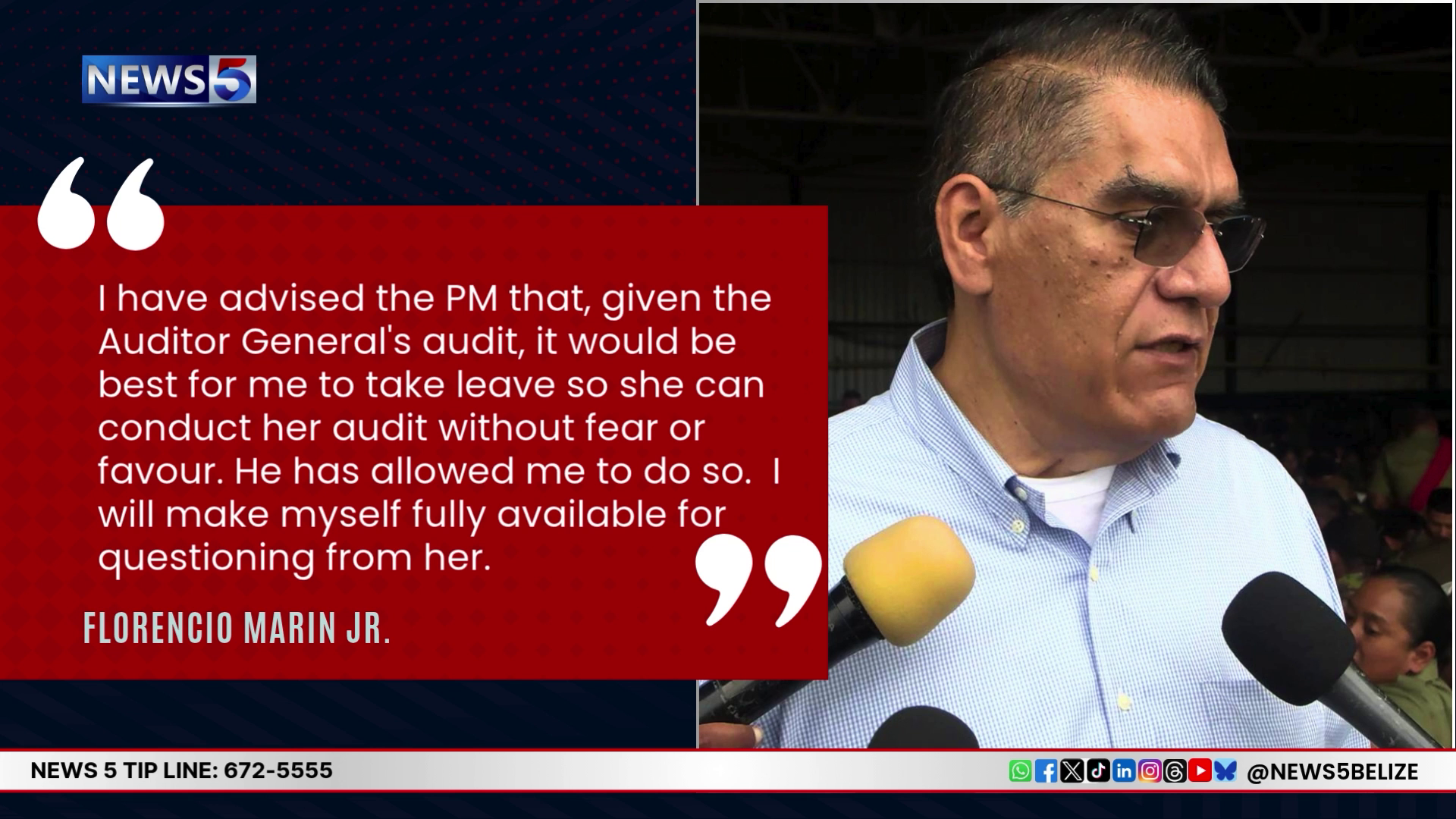
    In a developing political scandal that has already ensnared other figures linked to questionable government contracts, Belize’s governing administration is facing deepening scrutiny over dealings at the Ministry of Defense. As the investigation into the controversial Mira family contracts expands beyond initial suspect Oscar Mira, senior minister Florencio Marin Jr.—who oversaw the ministry through most of the period now under audit—has stepped down temporarily to facilitate the ongoing review.

    Prime Minister John Briceño confirmed the development publicly, noting that Marin himself requested the administrative leave ahead of the Auditor General’s full operational review of the defense department. While Briceño has stated he anticipates Marin will return to his post as senior minister once the 90-day review period concludes, the move makes clear that the investigation is extending into the highest levels of the ministry’s leadership, raising questions about systemic oversight gaps that have until now remained unaddressed.

    In a telephone interview shared with reporters, Marin, who also serves as area representative for Corozal South East, emphasized his commitment to full transparency and cooperation with the investigation. “It happened whilst I was the minister,” Marin stated in his remarks. “I believe I did nothing illegal, but I think it is best for the government for me to step back for the next 90 days, so that the Auditor General can conduct her work without fear or favour.”

    Marin added that Prime Minister Briceño approved his leave request, and that he will remain fully available to answer any questions auditors have during the review period. Once the Auditor General releases her final report, government officials will re-evaluate Marin’s position and determine next steps for the Ministry of Defense’s leadership.

    This report is adapted from a transcript of an evening television newscast, with original remarks preserved for accuracy.

  • Will the Audit Clear the Air? Defense CEO Weighs In

    Will the Audit Clear the Air? Defense CEO Weighs In

    As of July 1, 2026, Belize’s Ministry of National Defense remains mired in a growing procurement controversy, but top leadership is pushing back against narratives of operational disruption, framing an ongoing wide-ranging audit as a chance to rebuild public trust and strengthen institutional accountability. The ministry is currently operating without a permanent minister at its helm, after former Minister Marin requested 90 days of administrative leave, creating a temporary leadership vacuum that has drawn heightened public and regulatory scrutiny. To address growing public uncertainty, Chief Executive Officer Francis Usher, the ministry’s top accounting officer, sat down for an exclusive interview to lay out how the institution is navigating the ongoing review, which is being led by the Office of the Auditor General. Usher confirmed that auditors have been systematically reviewing all procurement and operational records spanning from 2019 through mid-2026, pulling requested documents and conducting line-by-line reviews of past spending as part of the probe. When questioned about the leadership gap created by Minister Marin’s leave, Usher emphasized that daily operations have not slowed or stalled despite the transition. He noted that an acting or permanent replacement minister is expected to be appointed imminently, possibly within 24 hours of the interview, and that he has already directed all ministry staff to continue carrying out their core duties without disruption. For Usher, the top institutional priority remains unchanged: ensuring that active-duty soldiers and sailors have all the equipment, supplies, and resources they need to carry out their national security mandates. “Coming from the belly of the beast, I take it personally,” Usher said of his commitment to delivering for frontline defense personnel. As the accounting officer for the ministry, he added, he bears ultimate responsibility for how public resources are allocated and spent, and his core mission is to make sure those resources reach the service members who need them most. When asked whether he has concerns about potential negative findings uncovered by the audit, Usher struck an unexpectedly optimistic tone, saying he is not worried — in fact, he feels relieved the review is moving forward. Usher said he is confident the audit will put lingering public questions about the procurement controversy to rest once and for all. Even if auditors identify procedural gaps, mismanagement, or areas for improvement — whether dating to before he took office or emerging during his tenure — Usher says the ministry is fully prepared to implement corrective reforms. He noted that continuous improvement has long been a core priority for his leadership, and any changes that strengthen the ministry’s ability to protect Belize’s national security will be welcomed. This report is a transcript of an evening television broadcast, with all Kriol-language comments transcribed using a standardized spelling system for accuracy.

  • The ILO Caribbean Office begins its first high-level mission to Haiti

    The ILO Caribbean Office begins its first high-level mission to Haiti

    Almost six weeks after formalizing a landmark cooperation framework with Haitian government, labor and industry stakeholders, the International Labour Organization’s Caribbean office has launched its inaugural high-level mission to Haiti, marking a new phase of on-the-ground engagement to advance decent work and economic recovery in the crisis-battered nation.

    The mission, which kicked off June 30 and runs through July 4, 2026, comes after responsibility for Haiti programming was transferred to the ILO Decent Work Technical Support Team for the Caribbean and ILO Caribbean Office, both headquartered in Port of Spain, Trinidad and Tobago. Leading the delegation is Joni Musabayana, Director of the ILO Caribbean office, alongside Senior Programming Officer Ingerlyn Caines-Francis.

    This in-person visit caps months of preliminary consultations and collaborative planning with Haiti’s tripartite partners – the national government, employer associations, and trade union bodies – that culminated in the official signing of the Haiti Country Programme on May 14, 2026, in Port of Spain. The agreement was signed by Haitian Social Affairs and Labor Minister Marc-Elie Nelson on behalf of the government; Association of Industries of Haiti (ADIH) President Maulik Radia for the country’s employer sector; and Yvel Admettre, Secretary General of the Confederation of Workers in the Public and Private Sectors, and Louis Fignole St Cyr, Secretary General of the Autonomous Central of Haitian Workers, for Haitian workers. Musabayana signed on behalf of the ILO.

    The two-year program lays out a structured framework for ILO technical support across four core priority areas: expanding social dialogue and protecting labor rights, strengthening national labor institutions and governance, boosting employment opportunities and livelihoods to support broad economic recovery, and expanding social protection while improving workplace safety across Haiti.

    In remarks at the opening of the mission, Musabayana emphasized that the visit signals a deliberate shift from planning to tangible action. “Haiti’s tripartite partners have worked with commitment and clarity to define shared priorities for decent work. Today’s discussions confirmed the importance of staying close to workers, employers and institutions on the ground as we support implementation of the country programme,” he said. “The ILO Caribbean Office is committed to working with Haiti’s constituents through practical technical assistance, social dialogue and partnership.”

    Beyond rolling out program activities, Musabayana noted that the on-the-ground mission serves a critical foundational purpose: deepening institutional relationships and building mutual trust between the ILO and its Haitian stakeholders. “It is important for us to be here, so that the ILO Caribbean Office can deepen its understanding of the realities facing constituents and give effect to our commitment to work with our Haitian partners in a spirit of mutual respect and shared responsibility,” he added.

    In the first two days of the mission, the delegation held a series of closed-door meetings with government officials, industry leaders, and trade union representatives in northern Haiti. These sessions gave the ILO team a chance to listen directly to local stakeholders, align on actionable priorities for the decent work program, and map out concrete steps to support collaborative social dialogue in sectors that are central to Haitian employment, livelihoods, and domestic economic activity.

    The mission also includes targeted site visits to active industrial and employment sites across the country, allowing the delegation to observe on-the-ground conditions firsthand, assess how social dialogue practices are functioning in local workplaces, and identify opportunities to strengthen industrial relations, build trust between labor and management, and foster more stable, productive cooperation between workers, employers, and state institutions.

    Citing ongoing security concerns across Haiti, ILO officials have declined to disclose the specific locations of mission activities to protect the safety of delegation members and local partners.