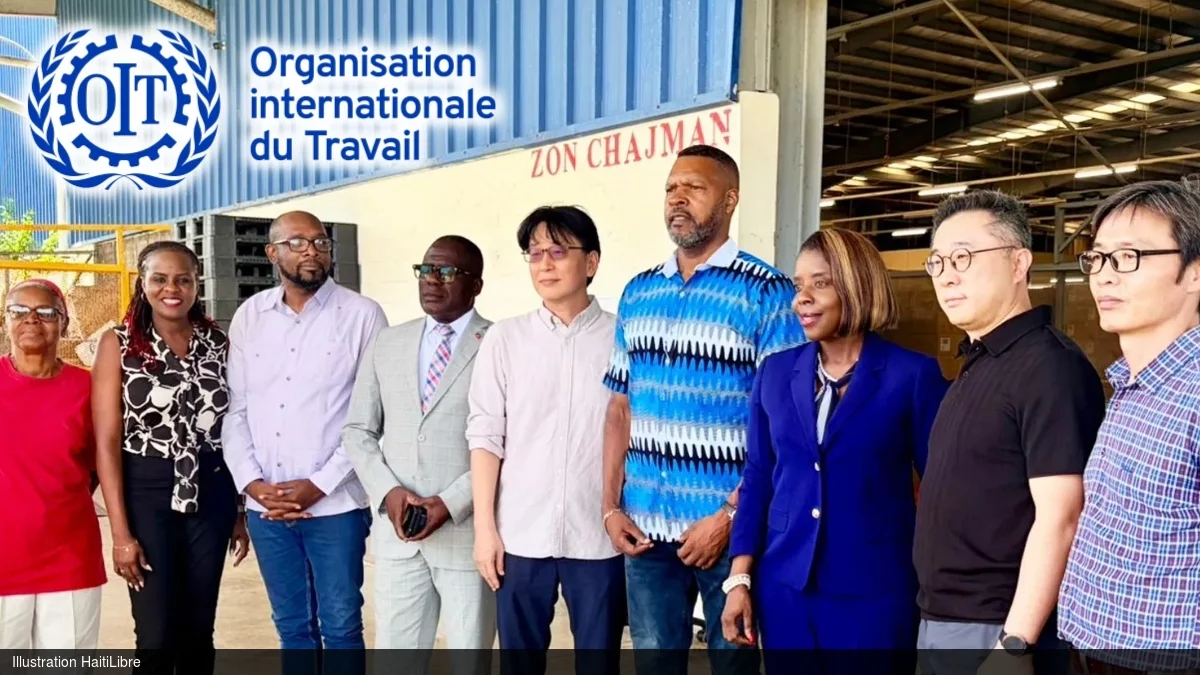
Almost six weeks after formalizing a landmark cooperation framework with Haitian government, labor and industry stakeholders, the International Labour Organization’s Caribbean office has launched its inaugural high-level mission to Haiti, marking a new phase of on-the-ground engagement to advance decent work and economic recovery in the crisis-battered nation.
The mission, which kicked off June 30 and runs through July 4, 2026, comes after responsibility for Haiti programming was transferred to the ILO Decent Work Technical Support Team for the Caribbean and ILO Caribbean Office, both headquartered in Port of Spain, Trinidad and Tobago. Leading the delegation is Joni Musabayana, Director of the ILO Caribbean office, alongside Senior Programming Officer Ingerlyn Caines-Francis.
This in-person visit caps months of preliminary consultations and collaborative planning with Haiti’s tripartite partners – the national government, employer associations, and trade union bodies – that culminated in the official signing of the Haiti Country Programme on May 14, 2026, in Port of Spain. The agreement was signed by Haitian Social Affairs and Labor Minister Marc-Elie Nelson on behalf of the government; Association of Industries of Haiti (ADIH) President Maulik Radia for the country’s employer sector; and Yvel Admettre, Secretary General of the Confederation of Workers in the Public and Private Sectors, and Louis Fignole St Cyr, Secretary General of the Autonomous Central of Haitian Workers, for Haitian workers. Musabayana signed on behalf of the ILO.
The two-year program lays out a structured framework for ILO technical support across four core priority areas: expanding social dialogue and protecting labor rights, strengthening national labor institutions and governance, boosting employment opportunities and livelihoods to support broad economic recovery, and expanding social protection while improving workplace safety across Haiti.
In remarks at the opening of the mission, Musabayana emphasized that the visit signals a deliberate shift from planning to tangible action. “Haiti’s tripartite partners have worked with commitment and clarity to define shared priorities for decent work. Today’s discussions confirmed the importance of staying close to workers, employers and institutions on the ground as we support implementation of the country programme,” he said. “The ILO Caribbean Office is committed to working with Haiti’s constituents through practical technical assistance, social dialogue and partnership.”
Beyond rolling out program activities, Musabayana noted that the on-the-ground mission serves a critical foundational purpose: deepening institutional relationships and building mutual trust between the ILO and its Haitian stakeholders. “It is important for us to be here, so that the ILO Caribbean Office can deepen its understanding of the realities facing constituents and give effect to our commitment to work with our Haitian partners in a spirit of mutual respect and shared responsibility,” he added.
In the first two days of the mission, the delegation held a series of closed-door meetings with government officials, industry leaders, and trade union representatives in northern Haiti. These sessions gave the ILO team a chance to listen directly to local stakeholders, align on actionable priorities for the decent work program, and map out concrete steps to support collaborative social dialogue in sectors that are central to Haitian employment, livelihoods, and domestic economic activity.
The mission also includes targeted site visits to active industrial and employment sites across the country, allowing the delegation to observe on-the-ground conditions firsthand, assess how social dialogue practices are functioning in local workplaces, and identify opportunities to strengthen industrial relations, build trust between labor and management, and foster more stable, productive cooperation between workers, employers, and state institutions.
Citing ongoing security concerns across Haiti, ILO officials have declined to disclose the specific locations of mission activities to protect the safety of delegation members and local partners.