博客

  • Derde helft WK 2026 : De vloek van de vijfde wedstrijd

    Derde helft WK 2026 : De vloek van de vijfde wedstrijd

    For most national football teams, a opening knockout stage victory at a FIFA World Cup is just one more step closer to lifting the global trophy. For Mexico’s beloved national side, known affectionately as El Tri, this win carries far greater weight. For nearly 40 years, every World Cup campaign the country has competed in has been overshadowed by the same lingering question: Can this generation finally break the infamous Curse of the Fifth Match?

    The curse traces its origins back to the 1986 World Cup, a tournament that Mexico hosted on home soil. In front of thousands of cheering local fans, El Tri fought its way to the quarterfinals, where they were ultimately eliminated by West Germany in a tense penalty shootout. No one watching that match could have predicted that 1986 would mark the last time Mexico reached the final eight teams at a men’s World Cup for almost four decades.

    What followed was a striking, decades-long streak of near-misses. From 1994 through to the 2018 tournament, Mexico qualified for the knockout stage seven consecutive times. Each cycle, hope flared among fans that this would finally be the year the curse fell. Every single time, El Tri’s run ended in the Round of 16. A long list of opponents have stepped into the role of the curse’s messenger: Bulgaria, Germany, the United States, Argentina, the Netherlands, and Brazil have all ended Mexico’s tournament dreams at this stage.

    This repeated pattern led Mexican sports media to coin the term “La Maldición del Quinto Partido,” or the Curse of the Fifth Match. Under the traditional World Cup format, reaching the quarterfinals meant a team had played exactly five matches in the tournament. That fifth match barrier has proven impossible for Mexico to overcome for generations.

    The 2026 World Cup, co-hosted by Mexico, the United States and Canada, brings a major format change: the tournament now features 48 teams and an expanded Round of 32 as the first knockout stage. That means the knockout phase kicks off one round earlier than it did under the old structure. As a result, Mexico’s recent 2-0 victory over Ecuador to advance out of the opening knockout round does not mean the curse is broken yet. The team has only cleared its first hurdle on the path to ending the dry spell. Only if El Tri wins their next match and secures a spot in the quarterfinals can they close the chapter on a near 40-year old narrative that has haunted Mexican football.

    Even with the curse still unbroken, the dream of ending it burns brighter in Mexico than ever before. The country is once again hosting the World Cup, the team is playing in front of home crowds, and a seasoned squad has what it takes to finally make history. For millions of Mexican fans, this run is about far more than just a spot in the quarterfinals. It is about throwing off a psychological weight that generations of players, coaches, and supporters have carried for decades.

    In the end, El Tri’s biggest opponent may not be the next team waiting for them on the pitch. It is the weight of history that rises every time the quarterfinals come into view, ready to loom over the side as they chase the breakthrough that has eluded them for generations.

  • OPINION: The Pitch Is the Map

    OPINION: The Pitch Is the Map

    Long before the opening kickoff of the 2026 FIFA World Cup, the broadcast cameras already begin their quiet work of cartography. As lenses pan across team lineups, they lay bare a truth that political rhetoric and fortified border walls have long tried to hide: the modern concept of nationhood can no longer be defined by racial purity, and global power no longer revolves around a single dominant pole. On the green grass of this tournament, hosted across North America, the most unflinching map of the 21st century is drawn with every pass, every tackle and every goal.

  • Saint Lucia launches platform to strengthen consumer protection

    Saint Lucia launches platform to strengthen consumer protection

    Consumers across Saint Lucia are set to benefit from a transformative new initiative that will reshape how they access support and resolve issues, following the formal launch of a multi-agency agreement to establish the unified Consumer Connect Platform. Marking a historic first for the Caribbean nation, the platform brings together all of the country’s leading consumer protection and regulatory bodies under a single, coordinated system, eliminating the fragmented service delivery that has long complicated consumers’ efforts to address concerns.

    The cross-agency partnership includes five key stakeholders: the Department of Consumer Affairs, the National Consumers Association, the National Utilities Regulatory Commission (NURC), the Saint Lucia Bureau of Standards (SLBS), and the National Telecommunications Regulatory Commission (NTRC). By aligning their operations through the new platform, the collaborating organizations aim to cut through bureaucratic red tape, ensure consumer complaints and inquiries are routed to the correct authority without delay, and deliver far more accessible assistance to everyday people.

    Emma Hippolyte, Saint Lucia’s Minister for Labour and Consumer Affairs, has hailed the unified platform as a landmark achievement for consumer rights in the country. In official comments accompanying the agreement, she emphasized that the project reflects a collective commitment across government and regulatory bodies to prioritize consumer needs above institutional silos.

    “No single entity can deliver comprehensive, effective consumer protection on its own,” Hippolyte noted. She added that government bears a dual responsibility: not only to put in place the robust legislative and regulatory frameworks that safeguard consumer interests, but also to guarantee that the support and services built into those frameworks are easily accessible to every member of the public.

    Developed by the National Consumers Association, the Consumer Connect Platform is designed to simplify three core consumer needs: accessing accurate product and service information, submitting formal complaints, and securing timely assistance. For consumers, the shift means an end to the frustrating process of navigating multiple separate agencies to resolve a single issue, replacing that disjointed experience with a far smoother, faster end-to-end process.

    Hippolyte stressed that the timing of the platform’s launch responds directly to rapidly shifting market conditions across the region. As digital transformation accelerates, e-commerce expands, and digital services become an increasingly central part of daily life, consumer protection frameworks must adapt to address new challenges that did not exist in decades past.

    Each participating agency brings unique specialized expertise to the partnership, from regulating utility and telecommunications services to setting national product standards and delivering public consumer education. By pooling these skills and coordinating through the shared platform, the entire consumer protection ecosystem grows stronger, Hippolyte explained, equipping the network to tackle 21st-century consumer challenges far more effectively than any disconnected body could alone.

    Beyond its function as an information-sharing and coordination tool, the minister framed the platform as a critical step forward for public trust. For her, the initiative represents both a reaffirmation of confidence in Saint Lucia’s public institutions and a renewed commitment to delivering tangible, improved outcomes for consumers across the country.

  • Government lowers fuel prices for July 4–10

    Government lowers fuel prices for July 4–10

    In a move designed to ease financial pressure on household and commercial consumers across the Dominican Republic, the nation’s Ministry of Industry, Commerce and Micro, Small and Medium Enterprises (MICM) has rolled out a new round of fuel price cuts for the week spanning July 4 to 10, backed by a 424.53 million Dominican peso (RD) government subsidy.

    The adjustments bring a RD$5.00 per gallon reduction to both regular-grade gasoline and standard diesel, while premium variations of both fuels will see a smaller RD$3.00 per gallon drop. Fuel oil will also follow the downward price trend, but two widely used consumer energy sources — liquefied petroleum gas (LPG) and natural gas — will remain at their current price points. According to MICM, holding LPG prices steady is a deliberate policy choice: as the primary cooking and heating fuel for the vast majority of Dominican households, stable pricing protects families from sudden swings connected to turbulence in global energy markets.

    Not all fuel products are seeing price cuts, however. The ministry confirmed that aviation fuel and kerosene will see price increases, driven by ongoing upward trends in global crude oil costs. MICM also outlined the broader context shaping the country’s fuel pricing: the Dominican Republic imports nearly all of the fuel it consumes for domestic use, and global refining margins for gasoline and diesel have skyrocketed since the start of 2024, spurred by ongoing conflict in the Middle East. This sustained rise in margins has directly pushed up the country’s import costs for most fuel products, creating the need for targeted government subsidies to keep consumer prices manageable.

  • Health Ministry warns of heat stroke risks amid soaring temperatures

    Health Ministry warns of heat stroke risks amid soaring temperatures

    Across the Dominican Republic, a dangerous spell of record-shattering extreme heat has put public health authorities on high alert, with officials issuing urgent guidance to residents as sweltering conditions are projected to hold for the next fortnight. In the hottest parts of the country, the real-feel heat index has already pushed past 40°C, bringing elevated risks of life-threatening heat-related illnesses for vulnerable populations.

  • Opposition warns of poor living conditions for Dominican seniors

    Opposition warns of poor living conditions for Dominican seniors

    In Santo Domingo, a senior leader of Dominican Republic’s main opposition party has drawn public attention to a unfolding humanitarian crisis facing the nation’s senior population, leveling sharp criticism at the current administration for failing to protect vulnerable older citizens. Yamel García, who leads the Secretariat for Older Adults and the Elderly within the opposition People’s Force party, made the remarks shortly after presiding over a party gathering to swear in newly recruited members. Citing official demographic data published by the Dominican Republic’s National Statistics Office, García revealed that more than one out of every five older adults in the country are currently living in precarious, high-risk conditions that leave them exposed to a range of systemic threats. According to García, the current government has systematically sidelined the needs of senior citizens, shifting policy priorities away from social protection programs that serve this demographic and leaving millions without a critical safety net. The situation is particularly acute for older residents living in marginalized, high-risk communities across the country, he explained. These groups already lack access to basic support services, and they are disproportionately ill-equipped to navigate cascading challenges ranging from ongoing national economic instability to the growing frequency of climate-fueled natural disasters. Without targeted government intervention to expand social assistance and adaptive infrastructure, millions of seniors will continue to face unnecessary hardship that violates their basic right to dignified aging, García added. The opposition’s announcement comes amid growing national debate over social policy and resource allocation ahead of upcoming electoral cycles, putting pressure on ruling party officials to respond to the accusations of neglect and outline concrete plans to address the unmet needs of the country’s expanding older adult population.

  • Luis Abinader and the Dominican Republic 2026: the data behind a narrative of stability

    Luis Abinader and the Dominican Republic 2026: the data behind a narrative of stability

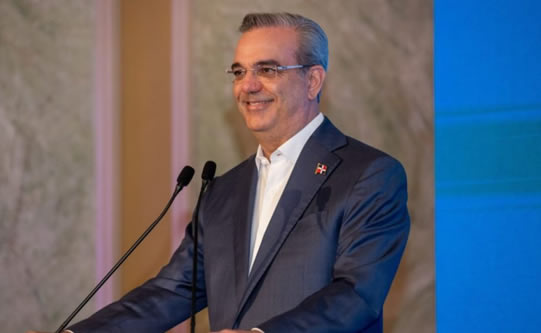
    As the Dominican Republic opens 2026, it carries a widely recognized narrative of macroeconomic stability, anchored by strong core fundamentals, bullish growth projections, and formal validation from leading international financial institutions. For President Luis Abinader, who begins his second four-year term this year, the central challenge is no longer securing this stability — it is converting this solid foundation into a new era of targeted structural reform, high-impact efficient public investment, and strengthened institutional resilience that delivers long-term shared growth.

    A core question frames this moment: how durable is the country’s stability story, and can it hold through Abinader’s second term? The answer does not hinge on a single economic metric, but rather on a confluence of positive signals: projected accelerating growth, inflation aligned with the central bank’s target range, robust macroeconomic fundamentals, external financing fully covered by steady foreign direct investment inflows, and existing policy space to counteract unforeseen risks.

    In its 2025 Article IV Consultation, the International Monetary Fund (IMF) formalized this positive baseline, confirming that the Dominican Republic boasts solid economic fundamentals and sufficient policy maneuverability to address any emerging risks. The multilateral lender projects the country’s economic growth will accelerate to 4.5% in 2026 before converging to a long-term potential growth rate of roughly 5%, with inflation holding steady within the official target range of 4% ± 1 percentage point. This projection gives Abinader a strong opening narrative for his second term: the administration inherits an economy with international credibility, macroeconomic momentum, and price stability, rather than one adrift without clear direction.

    Still, this foundation comes with clear, unaddressed challenges across fiscal policy, the electricity sector, institutional governance, and social equity. Today, stability is not just a communication talking point — it is the starting line for action. For a second-term administration, strong macro indicators become a benchmark, not an end goal: public attention has already shifted to whether this foundation can translate into tangible, lasting improvements for households and businesses.

    The IMF notes that while the balance of risks for the Dominican economy leans to the downside, the country is uniquely well-positioned to navigate headwinds thanks to its strong fundamentals and policy space. Key external risks include volatile global financial conditions, broad international economic uncertainty, and persistent vulnerability to climate-driven natural disasters. Crucially, the IMF does not frame the Dominican Republic as a risk-free economy — instead, it emphasizes the country has the institutional and fiscal capacity to respond to shocks, a distinction that strengthens the credibility of its stability narrative.

    One of the most critical tests for Abinader’s second term will be fiscal policy management. The IMF has urged the Dominican government to maintain prudent fiscal stewardship while scaling up public investment within the bounds of the country’s medium-term fiscal framework and Fiscal Responsibility Law. It also highlighted two urgent priorities: improving the efficiency of public spending and increasing domestic revenue mobilization. The core challenge here is to preserve macro stability without eroding the state’s ability to invest in high-priority infrastructure, education, health, and climate resilience. A stable macroeconomic environment creates the certainty needed for long-term public investment planning, allowing policymakers to prioritize high-impact projects and execute them with less market volatility.

    Notably, the IMF points out that expected reductions in electricity sector losses and improved targeting of energy subsidies will free up fiscal space for planned public investment increases. For the stability narrative to gain broader traction, it must be tied to tangible investment capacity, not just macroeconomic discipline. Improving spending efficiency will also be central to building institutional credibility: investing more is not enough — the government must invest better, prioritizing projects with clear economic and social returns, strengthening project execution, cutting waste, enhancing public impact evaluation, and publishing verifiable result data. This agenda will serve as a key test of the maturity of the Dominican economic model, turning stability into a platform to strengthen state capacity.

    The electricity sector emerges as a make-or-break policy frontier in the IMF’s assessment, with the institution stressing that full implementation of the national Electricity Pact is essential to reduce fiscal risks and build long-term economic resilience. This marks a clear shift from previous analyses: the sector is no longer a secondary technical issue, but one of the largest bottlenecks to fiscal sustainability, national competitiveness, and reliable public service delivery. Persistent distribution losses and poorly targeted subsidies drain public finances, crowding out investment in other priority areas. Progress here would directly boost fiscal stability and free up resources for public investment, turning a shallow macro stability into stability paired with deep structural reform. A reliable, financially sustainable electricity system is also critical for competitiveness across all sectors: from tourism and manufacturing to free-trade zones, hospitals, and households all depend on consistent, affordable power. As such, electricity reform is a prerequisite for boosting productivity and attracting new private investment.

    Looking further ahead, the IMF frames the country’s ongoing structural reform agenda as the pathway to reaching high-income economy status by 2036, as outlined in the government’s 2036 Target Plan. Key priorities include improving governance, advancing labor and social security reform, and making efficient investments in infrastructure, education, and health. This positions stability within a broader long-term vision: the goal is not just 4.5% growth in 2026, but a sustained trajectory that lifts the country toward higher productivity and better public services. Good governance is the bedrock of this transition: reforms across labor, social security, education, health, and infrastructure require coordinated execution, transparent implementation, and public legitimacy. Abinader’s second term offers a clear opportunity to turn existing macro stability into a full agenda of institutional transformation, with credibility growing when strong data is paired with tangible reform progress.

    World Bank open data for the Dominican Republic provides a independent, publicly available baseline to track progress across a full range of indicators, from population and GDP growth to education outcomes, health access, poverty rates, trade, carbon emissions, and infrastructure access. This independent data is critical for evaluating Abinader’s second term: evaluating performance will require more than just periodic headline economic releases, it will require tracking long-term data series to measure sustained progress. A credible stability narrative depends on consistent, transparent measurement, and World Bank data allows observers to verify whether strong growth translates into structural progress and improved social outcomes across the 2024-2028 term. Ultimately, macroeconomic stability is only half the story — the real test is whether it translates into higher investment, faster productivity growth, better public services, higher employment, and greater resilience to shocks.

    External risks remain a persistent factor in 2026. Beyond global financial and geopolitical uncertainty, the Dominican Republic’s geographic location leaves it highly vulnerable to climate-driven natural disasters. The IMF has emphasized the need for a comprehensive approach to risk mitigation and resilience-building, including integrated disaster risk management frameworks and explicit fiscal planning for climate events. For Abinader’s administration, embedding climate resilience into the core of economic planning is a non-negotiable part of a credible stability narrative — this requires proactive investment to protect lives, critical infrastructure, key export sectors like tourism and agriculture, and public finances, rather than just reacting to emergencies after they occur.

    Against a backdrop of global economic volatility, shifting trade patterns, and geopolitical disruption, the IMF notes the Dominican Republic is well-positioned to capture new opportunities from trade diversion and rising foreign direct investment flows linked to changing global trade policies. Abinader’s challenge is to leverage the country’s existing stability as a competitive advantage to adapt to this shifting international landscape.

    As it stands, the Dominican Republic’s 2026 stability narrative has a strong foundation: it is backed by independent analysis from leading international institutions, but its long-term credibility depends entirely on delivering tangible results. Abinader will not be evaluated solely on maintaining strong macroeconomic indicators — he will be judged on his ability to convert those indicators into structural reform, better public investment, improved services, faster productivity growth, and greater resilience.

    It is fair to credit the Abinader administration with building on previous progress to deliver the current stable macroeconomic framework and institutional continuity, but it is also important to acknowledge that economic performance depends on a wide range of factors beyond the presidency, including private sector activity, independent monetary policy, foreign investment, tourism and remittance inflows, external conditions, and long-standing institutional frameworks. In 2026, stability should not be framed as an end point — it should be framed as a promise of action. With solid fundamentals in place, the conversation rightly turns to reform. With projected growth on the books, the question becomes how to spread that growth into higher productivity. With policy space available, the challenge is to deploy that space to boost public investment and resilience. For Abinader, the core value of his second term is the opportunity to move beyond maintaining stability to delivering deep, lasting institutional and economic consolidation.


  • Dominican Republic participates in global civil aviation meetings in Morocco

    Dominican Republic participates in global civil aviation meetings in Morocco

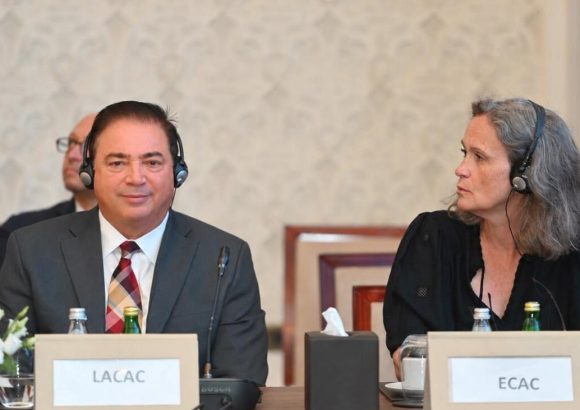
    Against a backdrop of growing industry-wide pressures ranging from climate action mandates to rapid technological change, two major international civil aviation gatherings have convened in Rabat, the capital of the Kingdom of Morocco, bringing together aviation leaders from across the globe to align on collective solutions for the sector’s future. The events, which mark the Seventh Meeting of Regional Civil Aviation Organizations and the 29th General Assembly of the Arab Civil Aviation Organization (ACAO), drew participation from a broad range of nations outside the Arab region, including the Caribbean nation of the Dominican Republic.

    Leading the Dominican delegation to the Rabat meetings, Héctor Porcella used the high-profile platform to outline a clear agenda for global aviation stakeholders. Porcella emphasized that fragmented, region-by-region approaches are no longer sufficient to tackle the interconnected challenges that currently shape the civil aviation landscape. Among the most pressing priorities he cited are consistent improvements to global aviation safety standards, accelerated progress toward the sector’s environmental sustainability goals, integration of emerging technological innovations into daily operations, strategic investment in skilled human capital, and the expansion of reliable global air connectivity that links distant markets and communities.

    In addition to his remarks on shared sector priorities, Porcella used the gathering to formally reaffirm the long-standing commitment of the Latin American Civil Aviation Commission to deepening cross-regional technical cooperation. He noted that this collaboration is a core building block for advancing the commission’s overarching mission: to develop a global air transport network that is safer, more operationally efficient, and aligned with international climate and sustainability targets.

    Beyond plenary sessions and formal addresses, Porcella held a series of closed-door bilateral meetings with leaders from multiple regional and international aviation organizations during the event. These discussions focused on strengthening joint work on key strategic initiatives that will shape the future of global civil aviation in the coming decade, laying the groundwork for future collaborative projects and information sharing between participating regions.

  • Fox criticises Parliament’s three-month break

    Fox criticises Parliament’s three-month break

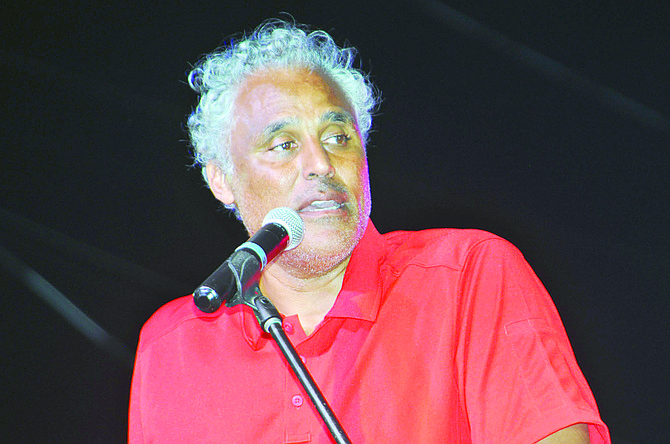
    A growing political firestorm has erupted in The Bahamas after a senior opposition lawmaker publicly condemned plans for parliament to take a three-month recess just weeks into its current sitting, arguing that elected representatives do not deserve an extended break while ordinary Bahamian citizens continue their daily work.

    Opposition Senator Rick Fox made the rebuke as an official government review of parliamentary salaries and benefits moves forward, a process that Prime Minister Philip “Brave” Davis has described as long overdue. Davis has openly questioned whether current pay rates for Bahamian politicians align with regional standards for comparable roles across the Caribbean.

    Local newspaper The Nassau Guardian has obtained details of a draft amendment to the nation’s Parliamentarians Salaries and Allowances Act, which has already been shared with opposition lawmakers for consultation. If approved, the amendment would introduce new annual allowances on top of existing base salaries: $32,000 per year for elected members of Parliament and $16,000 per year for sitting senators.

    Fox has raised sharp questions about the timing of the proposed compensation adjustments, linking the controversial pay hike plan to the unpopular extended parliamentary recess. The combination of a lengthy break from legislative work and a planned increase in politician benefits has sparked public debate over the priorities of the nation’s elected leadership, as many Bahamian workers continue navigating economic challenges and daily work obligations.

  • Wife pleads for answers after husband vanishes

    Wife pleads for answers after husband vanishes

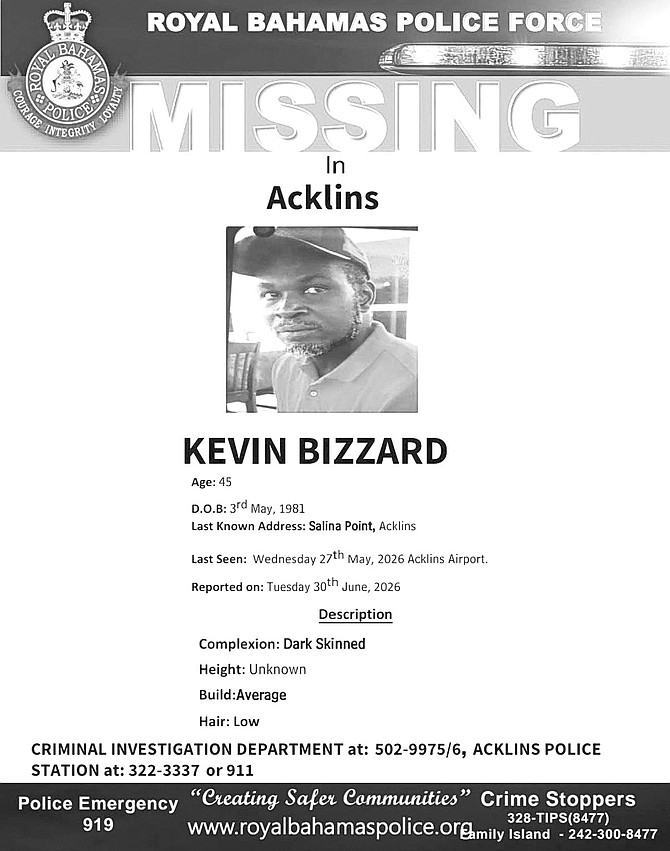
    Nearly five weeks after 46-year-old Kevin Bizzard, a resident of Acklins, The Bahamas, disappeared during a solo boat voyage between Bahamian islands, his wife Dianna Bizzard remains trapped in agonizing uncertainty, still waiting for any confirmation of whether her husband is alive or dead.

    The timeline of Bizzard’s disappearance began on May 27, when he left the family’s Acklins home bound for New Providence, where he planned to visit his brothers, according to Dianna. He checked in shortly after arriving, telling her he would depart that same evening for Abaco, a northern Bahamian island where he had previously worked repairing vessels for local owners. Dianna says she never received clear details on how he traveled to Abaco, only that local residents later confirmed he had reached the island’s main hub of Marsh Harbour and stayed there for several days.

    On May 30, Bizzard sent what would become his final communication to Dianna, and all attempts to reach him after that point have gone unanswered. “I sent messages on WhatsApp, I called his phone over and over — it doesn’t even ring anymore,” Dianna shared in an interview. She quickly reached out to local law enforcement in Abaco and island administrators to flag her concerns, but had not yet filed an official missing person report, choosing to wait two weeks in the hope that her husband would reemerge. It was not until June 30 that she formally reported him missing to the Acklins Police Station.

    In the weeks after contact was lost, Dianna learned new unconfirmed details about Bizzard’s final movements from local Abaco residents and a fishermen’s group chat. Multiple residents told her that Bizzard left Abaco alone on May 30 aboard a small black and white vessel, bound for Acklins. A relative later showed Dianna a screenshot from a regional fishermen’s chat group that claimed Bizzard had placed an emergency call for help, stating that his boat was rapidly taking on water in open water.

    Dianna says she was told the Royal Bahamas Defence Force launched an air and sea search for Bizzard the same morning the distress call was reported, but search teams failed to find any trace of Bizzard or his vessel. The Tribune has not been able to independently confirm the search effort or the distress report as of press time. To date, no trace of Bizzard or the boat has been found anywhere along the common route between Abaco and Acklins.

    For Dianna, the lack of closure has been devastating. Breaking down in tears during the interview, she described the constant uncertainty as unbearable. “I can’t eat, I can’t cook, I can’t stop thinking about where he might be,” she said. “All I want is to have him home, or to just know what happened. I just need to know where he is.”

    The couple, who have been married for nearly four years, share no children together, though Dianna says Bizzard has a child from a previous relationship whom she has never met. This is the first time Bizzard has ever disappeared without contact, Dianna says, and he is no stranger to danger at sea: years ago, he survived a boat sinking, swimming to shore alone before Dianna arranged for a private rescue boat to pick him up. Bizzard makes his living working as a boat builder and construction worker, and Dianna describes him as a kind, helpful man who was her closest friend. “He’s my best friend, I don’t know what to do without him,” she added.

    As weeks pass with no new information, Dianna continues to reach out to residents in both Acklins and Abaco, asking for any tip or sighting that could help solve the mystery of her husband’s disappearance.