博客

  • Wife pleads for answers after husband vanishes

    Wife pleads for answers after husband vanishes

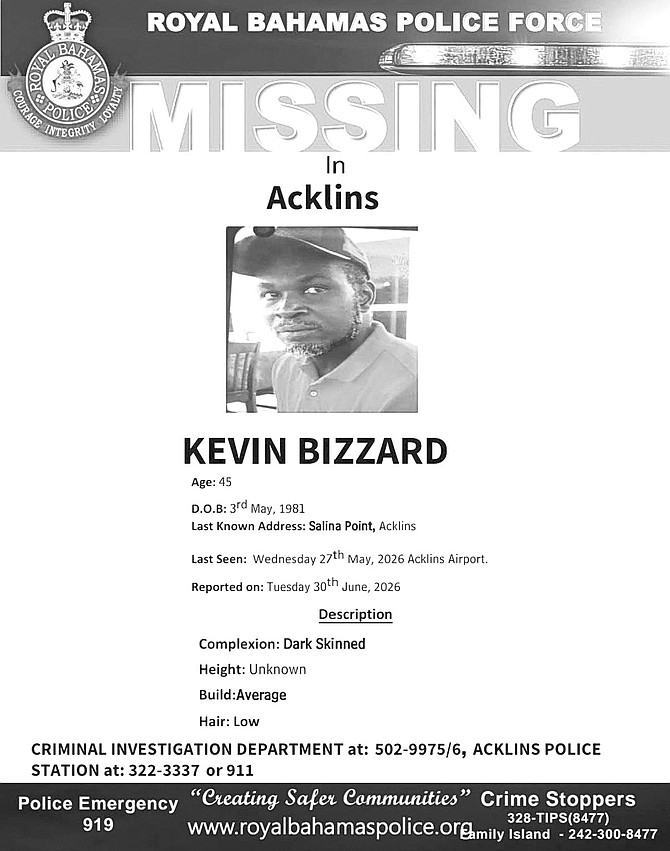
    Nearly five weeks after 46-year-old Kevin Bizzard, a resident of Acklins, The Bahamas, disappeared during a solo boat voyage between Bahamian islands, his wife Dianna Bizzard remains trapped in agonizing uncertainty, still waiting for any confirmation of whether her husband is alive or dead.

    The timeline of Bizzard’s disappearance began on May 27, when he left the family’s Acklins home bound for New Providence, where he planned to visit his brothers, according to Dianna. He checked in shortly after arriving, telling her he would depart that same evening for Abaco, a northern Bahamian island where he had previously worked repairing vessels for local owners. Dianna says she never received clear details on how he traveled to Abaco, only that local residents later confirmed he had reached the island’s main hub of Marsh Harbour and stayed there for several days.

    On May 30, Bizzard sent what would become his final communication to Dianna, and all attempts to reach him after that point have gone unanswered. “I sent messages on WhatsApp, I called his phone over and over — it doesn’t even ring anymore,” Dianna shared in an interview. She quickly reached out to local law enforcement in Abaco and island administrators to flag her concerns, but had not yet filed an official missing person report, choosing to wait two weeks in the hope that her husband would reemerge. It was not until June 30 that she formally reported him missing to the Acklins Police Station.

    In the weeks after contact was lost, Dianna learned new unconfirmed details about Bizzard’s final movements from local Abaco residents and a fishermen’s group chat. Multiple residents told her that Bizzard left Abaco alone on May 30 aboard a small black and white vessel, bound for Acklins. A relative later showed Dianna a screenshot from a regional fishermen’s chat group that claimed Bizzard had placed an emergency call for help, stating that his boat was rapidly taking on water in open water.

    Dianna says she was told the Royal Bahamas Defence Force launched an air and sea search for Bizzard the same morning the distress call was reported, but search teams failed to find any trace of Bizzard or his vessel. The Tribune has not been able to independently confirm the search effort or the distress report as of press time. To date, no trace of Bizzard or the boat has been found anywhere along the common route between Abaco and Acklins.

    For Dianna, the lack of closure has been devastating. Breaking down in tears during the interview, she described the constant uncertainty as unbearable. “I can’t eat, I can’t cook, I can’t stop thinking about where he might be,” she said. “All I want is to have him home, or to just know what happened. I just need to know where he is.”

    The couple, who have been married for nearly four years, share no children together, though Dianna says Bizzard has a child from a previous relationship whom she has never met. This is the first time Bizzard has ever disappeared without contact, Dianna says, and he is no stranger to danger at sea: years ago, he survived a boat sinking, swimming to shore alone before Dianna arranged for a private rescue boat to pick him up. Bizzard makes his living working as a boat builder and construction worker, and Dianna describes him as a kind, helpful man who was her closest friend. “He’s my best friend, I don’t know what to do without him,” she added.

    As weeks pass with no new information, Dianna continues to reach out to residents in both Acklins and Abaco, asking for any tip or sighting that could help solve the mystery of her husband’s disappearance.
  • AG Munroe blames ‘cynicism’ for poor election voter turnout

    AG Munroe blames ‘cynicism’ for poor election voter turnout

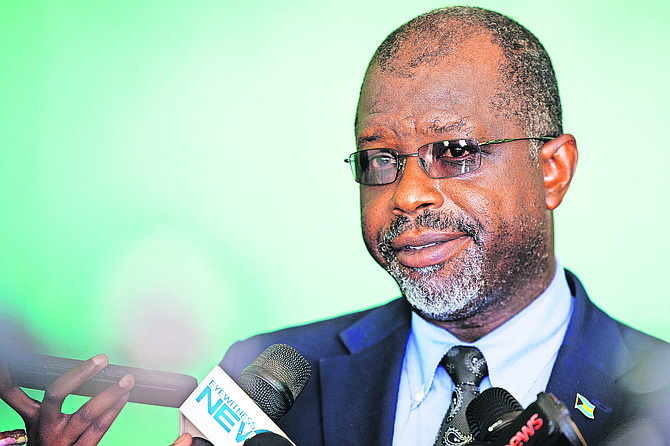
    Following the Bahamas’ recent general election, Attorney General Wayne Munroe has linked depressed voter participation to a persistent culture of national negativity, issuing a stark warning in the Senate that years of one-sided bleak commentary about the country’s governance could erode public faith in democratic processes long-term.

    Munroe pointed to emerging neurological research to back up his argument, explaining that sustained negative thinking reshapes neural pathways in ways that fuel disconnection, apathy and even depression. This pervasive pessimism, he argued, shapes how the public approaches all areas of national life, creating a mindset that always sees the cup as half empty. Against that backdrop, he said, low voter turnout comes as no surprise.

    Over the past four and a half years of the Davis administration, Munroe said he has observed a steady stream of negativity-driven talk on local radio. When this constant messaging convinces voters that the democratic system serves no meaningful purpose, he argued, it is illogical to expect people to turn out to engage with that system. Once that apathy takes root, the public has only itself to blame for the outcome of disengagement, he added.

    While Munroe acknowledged that voter turnout has not fallen as drastically in the Bahamas as it has in some other Caribbean nations, where turnout has dipped to as low as 40 percent, he warned that unbroken public cynicism could push the country down the same path if left unaddressed.

    Munroe also used his Senate address to defend the Davis administration’s governing record, noting that the current government has made considerable progress on deep-rooted systemic challenges that built up over decades of inaction. He pushed back against critics who say the administration has failed to deliver on its promises, pointing out that it is unreasonable to expect problems that have accumulated over generations to be fully resolved within a single five-year term. To date, he said, the government has delivered on the vast majority of the commitments it made to Bahamian voters during the last election cycle.

  • FNM senators blast PM over proposed MP salary review

    FNM senators blast PM over proposed MP salary review

    A fierce political clash has erupted in The Bahamas over a potential parliamentary salary adjustment, with the opposition Free National Movement (FNM) calling out Prime Minister Philip “Brave” Davis for a dramatic reversal of his decade-old stance on the issue. The confrontation unfolded during Senate debate on a routine resolution thanking the Governor General for the annual Throne Speech, bringing simmering tensions over economic equity to the surface of national politics.

    FNM Senator Elsworth Johnson opened the attack on Wednesday, pointing to stark contradictions between Davis’ current support for a salary review and his 2017 comments as opposition leader. At that time, then-Prime Minister Hubert Minnis had argued that sitting members of parliament could not make ends meet on their existing pay, a claim Davis publicly derided. He urged Minnis to “put himself in the shoes of the thousands of Bahamians who live from hand to mouth” back then. Today, the Davis administration has confirmed it is drafting legislative amendments to facilitate parliamentary pay adjustments, with the prime minister arguing the review is long overdue. Davis has defended the push by noting that Bahamian lawmakers earn far less than their regional peers on average salary scales.

    Johnson was cut off before he could fully lay out the opposition’s full case, but he made clear the FNM rejects any pay increase at the present moment. His position received immediate backing from fellow FNM Senator Rick Fox, who framed the timing of the pay discussion as tone-deaf to the struggles of ordinary Bahamians. Fox noted that the Throne Speech itself centered heavily on addressing the country’s soaring cost of living — a key campaign issue the ruling Progressive Liberal Party (PLP) ran on just months ago, when it pledged to fight for livable minimum wages that match household expenses.

    “Any statements we make about supporting Bahamian people through the cost of living crisis have to align with our actions,” Fox argued. “Right now, this conversation sends the wrong message: it suggests politicians are prioritizing their own paychecks over the needs of the public, when that should be the opposite of what we do.” While Fox acknowledged that Bahamian parliamentarians currently sit at the lower end of regional salary scales, he stressed that the timing of the review risks eroding public trust in elected officials.

    Attorney General Wayne Munroe, the ruling party’s lead respondent, pushed back against the opposition’s claims as factually misleading. Munroe pointed out that rank-and-file public servants across the Bahamian civil service have already received salary adjustments in recent years, while elected parliamentarians have gone without any increase. He also shared a little-noted structural detail of Bahamian government pay: top civil service posts often outearn the elected officials they serve. “The cabinet secretary earns more than the prime minister. My own permanent secretary earns more than I do. Senior lawyers in the Attorney General’s office earn more than the Attorney General,” Munroe said. “That is the context for this review.”

    Munroe also clarified that the draft legislation is still in development at his office, has not been released for public consultation, and no final details of the proposal have been settled. The debate ultimately came to an abrupt end when Senate President Mrs Adderley ruled the discussion out of order, noting that the Throne Speech contained no mention of parliamentary salary increases and no formal legislation has been tabled before the national legislature. “To my knowledge, there is no section or paragraph in the Speech from the Throne that addresses increasing parliamentary salaries,” Adderley said. “We have already wandered far down this path without any mandate to do so.”

  • U.S. Embassy celebrates 250th anniversary of American independence in Santo Domingo

    U.S. Embassy celebrates 250th anniversary of American independence in Santo Domingo

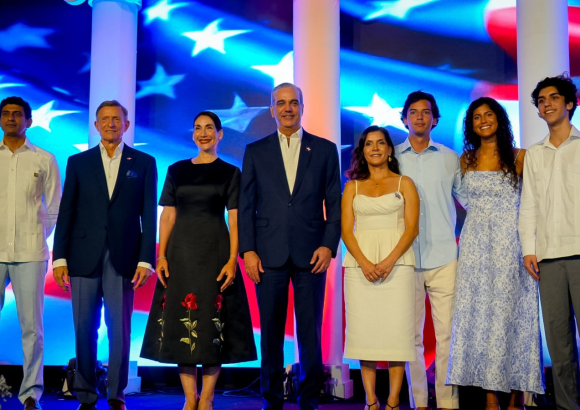
    SANTO DOMINGO – The United States Embassy in the Dominican capital has brought together nearly 1,000 prominent attendees for a special reception to honor the 250th anniversary of U.S. independence, hosted by U.S. Ambassador to the Dominican Republic Leah Francis Campos. The high-profile guest list included Dominican President Luis Abinader, alongside senior Dominican government officials, foreign diplomatic corps representatives, leading national business executives, and leaders of Dominican civil society organizations.

    Organized around the official theme “Freedom 250,” the celebration centered on the deep alignment of core values shared by the United States and the Dominican Republic: freedom, patriotic commitment, and shared faith. In her remarks at the event, Ambassador Campos drew clear connections between the historic 1776 adoption of the U.S. Declaration of Independence – the milestone this anniversary honors – and the modern, robust bilateral partnership that binds the two nations today. She used the occasion to reaffirm the United States’ ongoing commitment to strengthening collaboration and ties with the Dominican government and people.

    Beyond formal remarks, the event offered immersive cultural and historical programming to mark the occasion. Curated historical displays outlined the 248-year history of U.S. independence and the decades-long friendship between the two countries. Attendees were served a menu of American-inspired cuisine, and enjoyed a full lineup of live entertainment: sets from jazz musicians, and a performance from popular Dominican musical group Grupo Bonye, blending both U.S. and Dominican cultural traditions. The evening concluded with a vivid fireworks display, choreographed to display the red, white, and blue hues of the U.S. flag, serving as a visual capstone to the celebration of the longstanding friendship and cross-border cooperation between the United States and the Dominican Republic.

  • Santiago Chamber forges partnership to promote trade with the United Arab Emirates

    Santiago Chamber forges partnership to promote trade with the United Arab Emirates

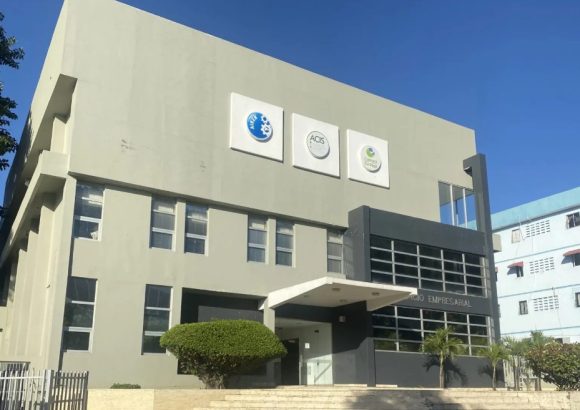
    In a landmark move designed to open new economic pathways between the Caribbean and the Middle East, the Santiago Chamber of Commerce and Production of the Dominican Republic has formalized a collaborative partnership with the Ras Al Khaimah Chamber of Commerce and Industry of the United Arab Emirates. The two organizations signed a formal memorandum of understanding this week in Santiago de los Caballeros, locking in a shared commitment to deepen cross-regional business engagement, expand two-way trade, and unlock new investment flows between their respective territories.

    The official signing ceremony was led by Luis Campos, representing the Dominican Santiago chamber, and Muhammad Ali Musabah Al Nuaimi, who signed on behalf of the UAE’s Ras Al Khaimah industry and commerce body. Beyond a symbolic agreement, the memorandum lays out a clear structural framework to advance multiple core economic priorities: accelerating bilateral trade growth, drawing new foreign direct investment to both regions, facilitating the open exchange of actionable business intelligence, and building a pipeline of tangible commercial opportunities for private enterprises across both the Dominican Republic and the broader Persian Gulf region.

    To turn this framework into real-world results, the partnership includes a slate of planned collaborative activities. These include reciprocal business exploration missions, joint participation in major industry trade fairs, academic and policy seminars focused on emerging market opportunities, structured programs for technology and knowledge sharing between local business communities, and targeted networking events designed to connect entrepreneurs and corporate leaders from both regions. A key overarching goal of these initiatives is to break down existing barriers to market entry, giving companies from both sides easier access to new customer bases and supply chain networks.

    Lead officials from both chambers have emphasized that the alliance carries strategic long-term value for the Dominican Republic’s business community. Beyond immediate commercial gains, the partnership is expected to help Dominican companies sharpen their international competitiveness by exposing them to new markets, best practices, and global industry trends. At the same time, it lays the foundation for durable, mutually beneficial economic ties between the Dominican Republic and the United Arab Emirates that are expected to generate shared growth for years to come.

  • Caribbean Cinemas reopens renovated theater complex at Ágora Mall

    Caribbean Cinemas reopens renovated theater complex at Ágora Mall

    After extensive renovation work, Caribbean Cinemas has officially thrown open the doors of its movie theater complex located at Santo Domingo’s popular Ágora Mall, debuting a completely overhauled entertainment space packed with cutting-edge upgrades and new customer amenities.

    Six individual auditoriums have received full makeovers, outfitted with state-of-the-art laser projection technology that delivers sharper, more vivid on-screen imagery, plush leather reclining seats for maximum comfort, immersive surround sound systems designed to draw viewers deep into the story, and a dedicated CXC giant-screen format that delivers a blockbuster-level viewing experience. Adding a new culinary dimension to the traditional cinema outing, the complex also introduces the brand-new Victor’s Kitchen & Bar concept, giving guests the option to enjoy full meals and craft beverages alongside their screenings.

    The official reopening ceremony was headed by Robert Carrady, President and Chief Executive Officer of Caribbean Cinemas. In remarks at the event, Carrady emphasized that this significant renovation investment is more than just an upgrade to one location – it stands as a clear testament to the company’s enduring dedication to both innovation in the cinema experience and its longstanding presence in the Dominican Republic, where the brand has built a loyal following across 50 years of operations.

    Silvia Rosales, General Manager of Ágora Mall, also shared her enthusiasm for the relaunched facility. She noted that the renovated cinema strengthens the shopping center’s overall entertainment portfolio, giving local families and out-of-town visitors a cutting-edge, comfortable leisure option right in the heart of Santo Domingo.

    Beyond the core auditorium upgrades, the renovated complex incorporates a host of customer-focused improvements that address common pain points for moviegoers. Self-service ticket kiosks have been added to cut down on wait times for guests who prefer to skip the box office line, concession areas have been expanded to offer more selection and shorter queues, and accessibility upgrades have been implemented throughout the space to better accommodate guests with disabilities.

    This reopening is not an isolated project: it forms a key part of Caribbean Cinemas’ wider regional modernization initiative that is rolling out across the company’s footprint across the Caribbean and Latin America. Currently, the chain operates more than 600 screens across 18 different territories, making it one of the largest cinema operators in the region, and the company plans to continue rolling out similar upgrades to additional locations in the coming months to bring the premium cinema experience to more guests.

  • Dominican Republic presents RD$32 billion Amber Highway project

    Dominican Republic presents RD$32 billion Amber Highway project

    In a formal gathering with business leaders and local government officials in Puerto Plata, the Dominican government has launched plans for a transformative infrastructure project: the Amber Highway, a development framed as a cornerstone initiative to bridge the Cibao interior region and the country’s popular Atlantic Coast.

    Leading the presentation, José Ignacio Paliza, Minister of the Presidency, outlined the massive scope of the project, which carries a total price tag of 32 billion Dominican pesos. Paliza emphasized that the highway is projected to become a major catalyst for expanded private investment, growing tourism arrivals, and increased employment opportunities across the entire northern region of the country.

    Hostos Rizik, Director General of the RD Vial Trust, which oversees national road infrastructure projects, detailed the engineering and functional specifications of the four-lane expressway. Once complete, the highway will cut travel time between Santiago de los Caballeros, the economic heart of the Cibao region, and the coastal tourism hub of Puerto Plata by roughly 60 minutes. It is designed to accommodate an annual traffic volume of more than 3.5 million vehicles, and incorporates modern infrastructure features including multiple tunnels and grade-separated express interchanges to streamline traffic flow.

    The full construction phase is scheduled to take 30 months, following the conclusion of an eight-month public bidding process that will select the project contractor. Pre-construction preparations, including environmental impact assessments and final adjustments to the highway’s alignment, are already underway, even as the broad route of the 32.7-kilometer corridor has been locked in. The overall timeline targets the start of construction for August 2026.

    According to government projections, the Amber Highway will generate approximately 6,800 direct and indirect jobs during its construction phase. Beyond job creation, the project is expected to strengthen key regional economic sectors: tourism, logistics, manufacturing, and agriculture, by reducing transport costs and improving access to markets and visitor destinations.

    The highway’s route begins at the Northern Ring Road (Circunvalación Norte) in Santiago, then cuts across the rugged Sierra Septentrional mountain range. To navigate this challenging terrain, engineers have planned two major tunnels with a combined length of 2.5 kilometers — one measuring 1.8 kilometers and a second spanning 700 meters. After crossing the mountain range, the route descends onto the Atlantic coastal plains, ending at the Gran Parada intersection, where it will provide direct, high-speed access to Puerto Plata and the popular coastal resort towns of Sosúa and Cabarete.

    Local business and tourism stakeholders in Puerto Plata have voiced strong, unified support for the initiative, describing the highway as a transformational development that the province has awaited for decades.

  • Casa de Campo’s first Cigars in Paradise festival draws international visitors

    Casa de Campo’s first Cigars in Paradise festival draws international visitors

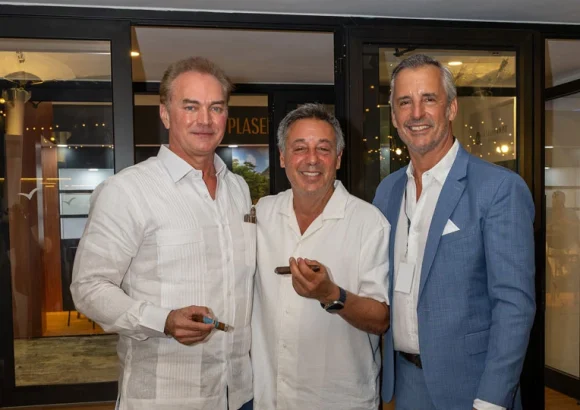
    The luxury Dominican destination of La Romana’s Casa de Campo Resort & Villas has marked a new milestone for the global premium cigar and luxury lifestyle space, playing host to the first-ever Casa de Campo Cigars in Paradise® festival between June 25 and 27. The three-day gathering drew a diverse crowd of cigar lovers, top industry executives, and international visitors, all united to celebrate the craft of premium tobacco and artisanal luxury spirits.

    Event organizers confirmed following the conclusion of the festival that the gathering will return yearly as a permanent staple on the global luxury events calendar, while also boosting the Dominican Republic’s standing as one of the world’s leading producers of premium quality cigars. The country has long been celebrated for its ideal climate and expert tobacco cultivation, and this new event cements that reputation on an international stage.

    Beyond the core celebration of cigars, the festival curated a full roster of exclusive luxury experiences for guests. Attendees had the opportunity to tee off at the world-famous Teeth of the Dog golf course, one of the most highly regarded tropical courses in the Caribbean, take guided tours of the historic Brugal rum distillery to learn about Dominican rum craftsmanship, and join educational seminars led by internationally recognized cigar experts that deepened knowledge of tobacco blending, aging, and appreciation. Evening social events showcased 28 of the most respected premium cigar brands from across the globe, giving attendees the chance to sample rare and exclusive blends. The guest list also included several high-profile celebrities, such as Puerto Rican actress Roselyn Sánchez, American actor Eric Winter, and veteran Hollywood performer Mekhi Phifer.

    A key highlight of the 2025 inaugural festival was hosting the fifth iteration of the Cigar Smoking World Championship, an international competition that draws top participants from across the globe. In this year’s competition, Rafael Solano Portoreal took home the first-place title after achieving a smoking time of 2 hours, 8 minutes, and 23 seconds.

    Organizers noted that the event exceeded expectations, with strong turnout from international attendees and overwhelmingly positive feedback from both guests and participating brands. This successful debut has laid a strong, stable foundation for the festival’s future annual editions, which are expected to grow in size and global reach in coming years.

  • Dominican Republic and Mexico join forces to boost hydrocarbon research

    Dominican Republic and Mexico join forces to boost hydrocarbon research

    In a landmark step to deepen bilateral collaboration in the strategic energy space, the Dominican Republic and Mexico have formalized a new partnership focused on elevating research, innovation and technological advancement across the energy and hydrocarbons sectors. The agreement, forged between the Dominican Ministry of Energy and Mines and Mexico’s prestigious Mexican Petroleum Institute, lays out a three-year framework for cross-border collaboration that extends far beyond a simple statement of intent.

    Under the terms of the pact, the two partners will advance a broad slate of collaborative activities, including co-developed research initiatives, cross-border technology sharing, joint academic programming, and specialized training for industry professionals. To further expand technical knowledge and build institutional capacity, the partnership also plans to host a regular roster of public and industry-facing events, from expert seminars and hands-on workshops to large-scale international conferences. All of these activities are targeted at boosting both countries’ technical and scientific capacity in high-priority energy areas that underpin long-term economic growth.

    The official signing ceremony brought together key stakeholders from both nations, led by Joel Santos, Dominican Minister of Energy and Mines, and Carlos Miguel Aysa González, Mexico’s ambassador to the Dominican Republic, with senior leaders from the Mexican Petroleum Institute in attendance to mark the occasion. Speaking after the signing, officials from both governments emphasized that the new collaboration will drive much-needed modernization across the Dominican Republic’s energy sector, promote more responsible and efficient use of existing national energy resources, and put in place clear formal protections to safeguard confidentiality and intellectual property rights for all outcomes developed through joint projects. The pact marks a significant expansion of energy diplomacy between the two Latin American nations, setting a foundation for long-term knowledge sharing and industry growth.

  • CARICOM to Examine Issues Affecting Rastafarians Across the Region

    CARICOM to Examine Issues Affecting Rastafarians Across the Region

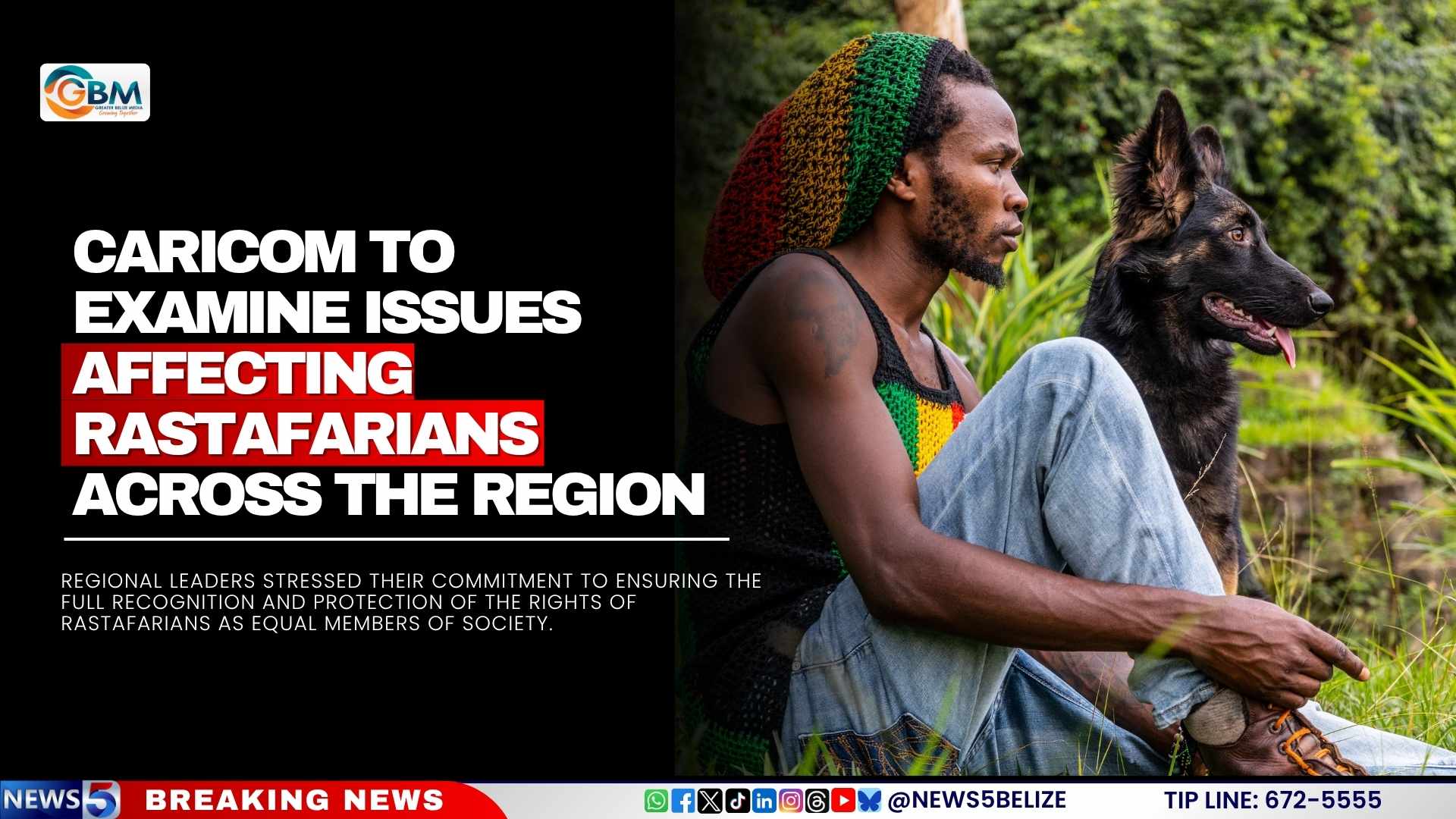
    In a landmark move advancing social equity across the Caribbean, the Caribbean Community (CARICOM) has formalized plans to confront decades of systemic discrimination and social exclusion faced by Rastafarian communities across the region. The initiative was greenlit by regional heads of government during their 42nd Inter-Sessional Conference of Heads of Government, held in May this year, marking a historic step toward redressing historical and ongoing harms against the religious and cultural group.

    Per CARICOM’s official announcement, Rastafarians continue to encounter disproportionate barriers to equal participation across core areas of public life, spanning access to education, employment opportunities, and routine social interaction — challenges that persist both within Caribbean borders and in global spaces where community members reside and work. Regional leaders have reaffirmed their unwavering commitment to securing full legal and social recognition of Rastafarians’ rights, framing equal inclusion as a core pillar of just governance across the bloc.

    To turn this commitment into coordinated action, CARICOM will convene a cross-regional gathering bringing together official representatives from all member states alongside key community stakeholders to map out the most pressing unaddressed issues impacting Rastafarian populations. Following these consultations, a permanent special committee will be established to advance advocacy and policy work at both regional and international levels. The committee will draw representation from five key Caribbean nations: Barbados, Jamaica, St. Kitts and Nevis, Saint Vincent and the Grenadines, and Trinidad and Tobago.

    CARICOM also highlighted that several member states have already taken unilateral action to redress historical injustices against Rastafarians, offering a foundation for coordinated regional action. These existing steps include formal government apologies for past discriminatory policies, targeted land grants to Rastafarian communities, and updated anti-discrimination legislation that explicitly protects workers from bias based on Rastafarian identity. The regional bloc notes that these local, successful measures can serve as a blueprint for a unified regional strategy to embed equality and inclusive governance across all CARICOM member states.