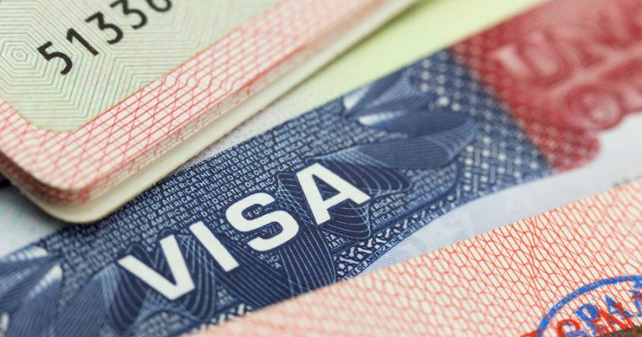
In a landmark ruling that marks a major blow to the Trump administration’s broader efforts to curtail legal immigration, a U.S. federal judge has invalidated a policy that froze immigrant visa processing for nationals of 75 countries across the globe, opening a path forward for thousands of aspiring permanent residents.
Issued on Friday, August 21 by U.S. District Judge Jeannette Vargas in the Southern District of New York (Manhattan), the ruling concluded that the blanket policy unlawfully overstepped the statutory authority granted to Secretary of State Marco Rubio and directly conflicted with the core provisions of the U.S. Immigration and Nationality Act (INA). Judge Vargas labeled the policy “patently unlawful” and ordered it fully vacated under the Administrative Procedure Act, erasing the policy from federal rulebooks.
The controversial suspension took root in January 2026, when the U.S. Department of State announced it would pause all processing of immigrant visas—documents that grant recipients the ability to settle permanently in the U.S. and eventually apply for a green card, or lawful permanent resident status. The freeze covered 75 countries spanning every major region: from the Caribbean (where Dominica was named among the affected nations) to Africa, Asia, Latin America, the Middle East and the Balkans. Notably, the suspension did not extend to non-immigrant visas such as tourist or business travel documents, but it halted processing for all family-sponsored and employment-based immigrant visa applicants from the listed nations.
In justifying the policy, the State Department argued that nationals from the 75 countries faced an elevated risk of becoming a “public charge” — a term describing immigrants who rely heavily on U.S. government assistance programs, placing what the department called an unacceptable burden on American taxpayers. Officials cited federal data claiming that more than 30 percent of immigrant households from the affected nations accessed some form of public support, asserting that a blanket suspension was necessary to screen out applicants who would draw on public resources.
The central legal question before Judge Vargas centered on whether the Secretary of State held the legal authority to implement a blanket, nationality-based suspension of immigrant visa processing, rather than requiring case-by-case assessments of individual applicants. The judge firmly ruled that no such authority exists.
Under existing U.S. immigration law codified in the INA, individual consular officers are granted the exclusive responsibility to evaluate whether each specific applicant meets all eligibility criteria for an immigrant visa, including assessments of whether they are likely to become a public charge. Vargas found that the Trump administration’s policy entirely eliminated this individualized decision-making process, replacing it with a categorical blanket rule: any applicant holding nationality from one of the 75 listed countries was automatically barred from receiving an immigrant visa, regardless of their personal circumstances.
In one of the most definitive passages of the ruling, Vargas wrote: “The Policy, which categorically prohibits the issuance of immigrant visas based upon the nationality of the applicant, represents a direct abrogation of this statutory scheme.” The judge emphasized that federal law does not permit the Secretary of State to predetermine visa eligibility for an entire national group, instead requiring that each applicant’s qualifications be evaluated on their own merits. The court further rejected the administration’s public charge justification, holding that a country-wide risk assessment cannot replace the individualized inquiry mandated by federal immigration law. The question of public charge, the ruling clarified, must be assessed for each specific applicant, not automatically assigned based on where a person was born or holds citizenship.
For applicants from affected nations including Dominica, the ruling removes the nationality-based barrier that had frozen their visa applications. It is important to note, however, that the decision does not guarantee automatic approval of immigrant visas for all affected applicants. All applicants will now return to the standard eligibility process, where consular officers will evaluate each case against existing U.S. immigration requirements, and applications can still be denied for other legitimate legal reasons.
The ruling is widely viewed as a significant legal victory for immigration advocates and a major setback for the Trump administration’s goal of reducing overall levels of legal immigration to the United States.