博客

  • Manning hits back after Sando East resignations

    Manning hits back after Sando East resignations

    An escalating internal conflict within the People’s National Movement (PNM)’s San Fernando East constituency branch has intensified in recent days, following the departure of two local executive members and renewed calls from constituency MP Brian Manning to address long-simmering grievances against branch chairperson Patricia Alexis. In an exclusive interview with the Sunday Express, Manning detailed the sequence of events that pushed two executive members to step down last week, tying their resignations directly to a controversial, unilaterally issued public statement critical of him that was posted to the constituency’s official Facebook page against party guidance.

    The August 20 statement was published even after senior PNM leaders explicitly called on all factions to avoid public displays of internal division. The public rebuke of Manning came in response to his earlier decision to go public with concerns over Alexis holding multiple overlapping key party positions. Beyond her role as San Fernando East constituency chair, Alexis serves as the PNM’s assistant general secretary, a San Fernando East representative on the party’s General Council, and a member of the PNM Central Executive. Manning argues that this concentration of roles risks undermining impartial decision-making for local constituency matters, and has also raised questions about an unannounced executive vacancy that was filled by an individual with close ties to Alexis.

    Manning pushed back against widespread framing that the dispute is a personal power struggle between himself and Alexis, emphasizing that the concerns stem from grassroots constituency members. “Many of these issues involve the chairman of the constituency. The constituency is crying out for a chairman they can trust. It is my job as MP to report such matters to the national executive of the party and I have done just that,” he told the Sunday Express.

    The MP also addressed unconfirmed reports of a recent no-confidence motion brought against him by factional opponents within the local executive, confirming the motion was introduced but failed dramatically before it could even reach a formal vote. “(It) was shouted down. It didn’t even get a vote because so many were against it,” he claimed. In the wake of the failed motion, the critical public statement targeting Manning was released, according to his account, without the knowledge or approval of the full executive. Most members were only informed after the statement went public, prompting the two resignations in protest of the undemocratic, unilateral action.

    Manning added that he has exhausted all internal party channels to escalate the concerns to PNM national leadership, but his complaints have been sidelined for months. When asked if he had received any outreach from Opposition Leader Pennelope Beckles, who leads the PNM, Manning confirmed no communication had been received. “No, the matter has been ignored for months,” he said.

    In the official executive statement defending its actions, members argued that Manning’s choice to name Alexis publicly and repeat what they call damaging allegations left them no choice but to respond publicly, breaking the party’s unwritten rule of keeping internal disputes private. The statement noted that Alexis had already cooperated fully with party processes, agreeing to an internal investigation led by national party leadership. PNM officials have confirmed that an investigative team met with both Manning and Alexis, and a full final report has already been submitted to the PNM leadership and General Council for review.

    The statement pushed back against Manning’s approach, arguing that he cannot simultaneously claim to support formal due process while publicly undermining the ongoing investigation. In a striking addition, the statement referenced Manning’s late father, former Trinidadian Prime Minister Patrick Manning, to argue that his political legacy cannot be exploited to avoid accountability. “(Patrick) Manning’s legacy was earned through discipline, service, accessibility and performance. That legacy cannot be reduced to a surname, nor can it be used as a shield against accountability. Heritage is not a substitute for leadership,” the statement read. “San Fernando East is greater than any one officeholder, personality or surname. Our responsibility remains service to the people, loyalty to the Party and respect for the democratic institutions upon which the People’s National Movement was built.”

    The Sunday Express attempted to reach Beckles for comment on the ongoing rift, asking whether she had reached out to de-escalate tensions between the two factions, but no immediate response was available as of press time. PNM national chairman Marvin Gonzales has called for all parties involved to exercise restraint and avoid making further public statements that could deepen the party split.

  • Bomb threats rise as SoE end looms

    Bomb threats rise as SoE end looms

    Trinidad and Tobago is facing a growing wave of bomb threats, with multiple new incidents reported across the nation on Wednesday, just days after seven separate threats were documented last week. This escalating pattern of security scares has put law enforcement on high alert and sparked renewed public discussion around the government’s upcoming decision on whether to extend the country’s current anti-crime state of emergency, set to expire on September 17.

    The first round of threats, which unfolded last Wednesday, prompted the Trinidad and Tobago Police Service (TTPS) to immediately bolster security measures at police stations nationwide. Those earlier threats targeted a range of high-profile and public locations: five regional magistrates’ courts in Arima, Princes Town, Chaguanas, Siparia and Sangre Grande; Kent House, the administrative headquarters for the Ministry of Rural Development and Local Government; an unnamed site in San Fernando; and Valpark Shopping Plaza in Valsayn. Following those reports, TTPS activated its full emergency security protocols, boosted its operational readiness, and dispatched officers to sweep all targeted sites for hazards.

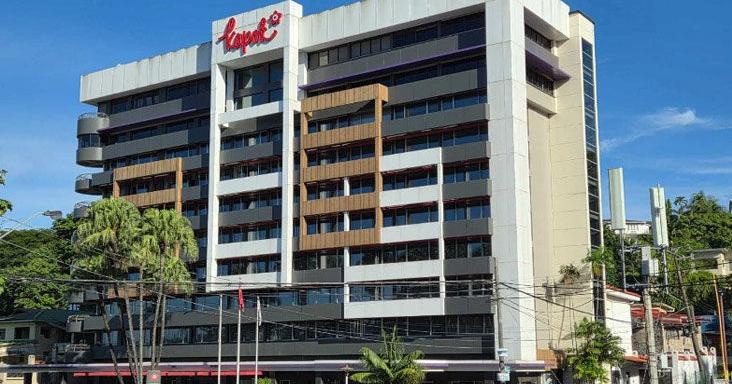
    The latest wave of threats brought two more locations into the crosshairs: the Forestry Division headquarters on Long Circular Road, and the well-known Kapok Hotel. In line with established response procedures, the TTPS deployed its specialized Explosive Detection and Disposal Unit (EDDU) to both sites, backed by local station officers and investigators from the Criminal Investigations Department.

    At the Forestry Division facility, EDDU teams conducted a full walk-through inspection alongside on-site staff, completing a comprehensive sweep that turned up no suspicious items and confirmed the building was safe for occupancy. The same protocol was carried out at the Kapok Hotel, where teams also completed a full check with staff assistance, finding no explosive devices and clearing the property as secure. When contacted by the *Sunday Express* for comment on the incident, a hotel operator said she was not authorized to speak to media and advised reporters to follow up with management on a weekday.

    In an official statement, the TTPS confirmed that it is continuing to assess all reported threats and run active investigations into the origins and circumstances behind the coordinated scare campaign. Authorities have issued a public appeal for residents to remain calm, avoid sharing unconfirmed information on social media and other platforms, and refrain from distributing content that could spark unnecessary public panic. Anyone with information that could assist investigators is urged to contact their nearest local police station immediately. The TTPS also reaffirmed its unwavering commitment to protecting public safety and pledged to release updated details as the investigation progresses.

    Speaking to reporters on the sidelines of a back-to-school community event in his Tunapuna constituency, Homeland Security Minister Roger Alexander praised law enforcement’s rapid and professional response to the ongoing string of threats. He emphasized the critical role of collaborative intelligence work, noting that the TTPS is already receiving valuable support from international partner embassies and allied security agencies in its efforts to crack down on the perpetrators and address broader criminal challenges. “It is important for us to have intelligence agencies supported by our colleagues on the outside, and now they are participating in the fight against crime,” Alexander said.

    Beyond the bomb threats, the incident comes as the government nears a key deadline for decision on the current state of emergency (SoE), which has granted law enforcement expanded powers to target organized crime and violent crime across the country. Justice Minister Devesh Maharaj, who also attended the Tunapuna back-to-school event, told reporters Wednesday that the cabinet has not yet reached a final decision on whether to extend the emergency measures, which are scheduled to end September 17.

    Maharaj explained that before any decision is sent to Prime Minister Kamla Persad-Bissessar and the National Security Council for formal approval, the government will first conduct a full review of the latest national crime data. “It will be premature of me at this stage to say what will happen,” Maharaj said, noting that any extension would require careful analysis of the emergency measure’s impact. As of Wednesday night, the national murder toll stood at 235, with four new killings confirmed overnight – two in Fyzabad and two in Arima. By comparison, the total murder count at the same point last year was 240.

    Despite the latest homicides, Maharaj asserted that the current state of emergency has been a clear success in reducing overall crime. He pointed to official police statistics that show both murder rates and rates of other serious crimes have dropped compared to 2024, when Trinidad and Tobago recorded a devastating all-time high of 626 murders, surpassing the previous record of 605 set in 2022. “The SoE has been a success. The murder rate and serious crime rate are down by police statistics,” he added.

    For his part, Alexander noted that murder statistics should be interpreted with context, saying that officials need to distinguish between gang-related killings, which represent a systemic threat to public safety, and domestic homicides rooted in private personal conflict. He explained that some types of killing are more readily addressed by expanded law enforcement powers, while others stem from deeper social and relationship challenges that require broader policy solutions.

    The question of whether the government can constitutionally call a new state of emergency immediately after the current one expires on September 17 was put to Marvin Gonzales, chairman of the opposition People’s National Movement (PNM). Gonzales confirmed that there is no formal constitutional barrier blocking the government from taking that step, but argued that such a move would violate the spirit of the nation’s founding document. “It will be an abuse of the Constitution because that was never intended by the framers of the Constitution, but nothing prevents them from doing it,” Gonzales said.

  • The dark underbelly of child pornography in T&T

    The dark underbelly of child pornography in T&T

    Across the encrypted messaging platform Telegram, a sprawling network of hidden underground chat groups has emerged as a dangerous hub for the trade of child sexual abuse material, non-consensual explicit content of local women and children, and coordinated stalking and harassment – and despite years of victim reports, court orders, and promised law enforcement action, the abuse continues to spread unabated.

    In interactions documented over three months of independent investigation by the *Sunday Express*, a user going by the alias “David” entered one such group, self-named “Trini-bad”, to peddle his personal archive of exploitative content targeting pre-teen children. David urged members to contact him privately to access graphic images and videos showing young children being sexually exploited, even boasting “I got good stuff” alongside a screenshot of his extensive cache of abusive media. In line with the trading culture that defines these groups, David offered to share 100 images of child rape in exchange for 100 additional abusive files from other users, and refused to move his illegal activity to any other platform, citing the relative anonymity and lax enforcement Telegram provides.

    Trini-bad, which currently counts more than 400 members, is just one small node in a far larger network. Some of the largest groups in this ecosystem amass tens of thousands of members, and entry is not open to just anyone: aspiring participants must pay hundreds to thousands of Trinidadian dollars for access, with some operators selling tiered weekly, monthly, and quarterly membership packages. One group administrator quoted in the investigation charges $250 Trinidadian for weekly access to a single specialized group, $750 for monthly access, and $2,400 for a three-month package that grants entry to three separate groups, with payments accepted via bank transfer or prepaid phonecards. Some operators even run segregated groups targeting women of specific ethnic backgrounds, marketed to paying members as exclusive collections of exploitative content.

    Inside these groups, abusive media is traded like collectible memorabilia, auctioned off for cash or bartered for additional content. Members openly mock the women and children whose privacy and safety are destroyed, often framing the trade as a casual hobby or a tool to punish former romantic partners. Many joke openly about evading law enforcement, claiming police lack either the knowledge or the will to shut down their operations. While some groups have adopted superficial rules banning overt child sexual abuse content to avoid prosecution, users like David regularly evade these safeguards to share and trade exploitative material targeting minors.

    In one 236-member group reviewed by investigators, members were polled on how they would sexually degrade a 13-year-old girl, whose image and identity were posted publicly for the group’s consumption. In other groups, explicit images and videos of women are sold for as little as a $250 prepaid phonecard. Tech consultant Shivam Teelucksingh, who infiltrated multiple groups as a decoy on behalf of the *Sunday Express* in May 2025, described the networks as “objectification engines” in his open-source intelligence report. Victims’ explicit images are posted publicly for the group to rate, with hundreds of comments containing explicit sexual threats and derogatory commentary pinned directly to the posts, creating permanent, localized harassment threads that follow victims across their digital and physical lives. Teelucksingh documented coordinated stalking campaigns, where members share victims’ personal phone numbers, workplace contact information, and family details to encourage widespread anonymous harassment via calls and messages. To evade platform detection and bans, members constantly create, delete, and re-create anonymous burner accounts dedicated to targeting victims, often fabricating damaging false backstories or weaponizing real personal information to destroy victims’ social standing within the anonymous echo chamber of the groups.

    The existence of these networks is not a new revelation. Victims have been reporting the groups to the Trinidad and Tobago Police Service (TTPS) for years, and the issue reached the national appellate court in a constitutional lawsuit brought by the Humanitarian Foundation for Positive Social Change (HFPSC) on behalf of abuse survivors. In that case, an anonymous survivor reported that explicit images of her taken when she was a child were uploaded to a pornographic site in 2020, leading to years of harassment, stalking, and blackmail. She reported the abuse to local police that year, but no action was taken. In 2021, she infiltrated multiple underground groups to gather evidence, ultimately turning over a flash drive containing links and evidence of abuse against hundreds of additional victims to law enforcement – only for police to later report that the evidence had been lost. The court ultimately ruled that police had failed to protect the survivor, awarding her $100,000 in damages, noting that her report had fallen “into a black hole” with no effective investigation between 2020 and 2022. The court did acknowledge that the TTPS had made limited efforts to address the issue after the case received media attention, and dismissed broader claims of ongoing constitutional breach.

    In court filings, police reported that investigations into reports filed after April 2022 are ongoing, and that a TTPS sergeant conducted an investigation between May and July 2023 in coordination with the Director of Public Prosecutions’ Office. Law enforcement has cited significant challenges to infiltrating the private groups, noting that investigators must be invited by group administrators to gain access. A female officer was assigned to infiltrate the networks, but as of the court judgment, she was still waiting for secure covert phone numbers to proceed with the investigation. The TTPS also told the court it requires additional resources – including dedicated devices, virtual private networks, and secure anonymous online identities – to effectively infiltrate and investigate the groups, and noted that officers require ongoing updated training to keep pace with evolving digital evasion tactics used by group members.

    Nearly five years after the first reported victim complaint, and months after the court ruling, little has changed. Three months ago, the *Sunday Express* filed a Freedom of Information Act (FOIA) request with the TTPS Legal Department seeking updates on the status of ongoing investigations into the networks. More than 100 days later, that request has not been fulfilled. For victims, the delay stretches far longer. In an April 2025 email to the TTPS, one survivor requesting an update on her case wrote that repeated delays and constant referral between different officers have been emotionally devastating, noting “This constant run-around is not the right procedure. It has also been very emotionally tasking for me as these are sexual offences.” As of the *Sunday Express* investigation, that survivor had still received no response from police. Other survivors shared similar accounts of frustration, with one noting “I’ve reached out several times in the past, and they can’t even point me in the direction of who’s looking into it.” Another said, “I think something in me kind of retreated because I really tried my best to have something done.”

  • Gang rivals join forces to promote peace

    Gang rivals join forces to promote peace

    In a groundbreaking moment that has raised hopes for lasting change across violence-battered communities in Trinidad and Tobago, two former adversaries from long-feuding gangs in Laventille have set aside their differences to launch a public push for peace. Senior government officials say this unprecedented reconciliation could open the door to a much-needed new chapter for regions that have been trapped in cycles of gang warfare for years.

    Twenty-four-year-old Kashif “K-Man” Sankar and 29-year-old Mescach “Plumpy Boss” Emmanuel made their joint public debut at a back-to-school outreach event hosted on Wednesday at Homeland Security Minister Roger Alexander’s Tunapuna constituency office. Standing side-by-side, the pair formally called for an end to inter-gang violence and urged young people across the country to walk away from the dangerous street lifestyles that have devastated generations of local communities.

    Their high-profile appearance came as Alexander and Justice Minister Devesh Maharaj extended a call to residents across Laventille, Beetham Gardens, Sea Lots, Morvant, Tunapuna and surrounding neighborhoods to seize this rare opening to build lasting peace. Speaking at the event, Alexander emphasized that just a few years prior, seeing the two former rivals share a stage would have been unthinkable.

    “A couple of years ago, there was open warfare, even in the local music space, but they are sitting here today, on the same platform, united by the same vision,” Alexander told attendees. “Let’s bring an end to this senseless war that has plagued Laventille, Sea Lots, Beetham, Maloney, Tunapuna, and communities across the country.”

    Alexander went on to outline the devastating human cost of years of gang violence, noting that communities have lost far too many young lives to gun violence, while countless young people have been robbed of access to education, employment and opportunity. Children growing up in these regions have been repeatedly forced to take cover from crossfire, growing up in a constant state of fear, he added.

    The minister confirmed that the government stands ready to back grassroots efforts to build safer communities, but stressed that sustainable change depends on local residents demonstrating their commitment to making peace a permanent reality. “This is the beginning of an opportunity for a second chance for these communities, to build a new legacy that puts violence in the past,” he said.

    Alexander first was approached about the peace initiative nearly two months ago by community organizers working directly in affected neighborhoods, and he committed to official government support on the condition that the push to end conflict was genuine. If successful, he noted, the peace deal could restore a sense of normalcy to communities where residents have grown accustomed to constant fear and social isolation.

    “We want gas trucks to be able to safely return to Laventille Hill and Beetham Gardens. We want taxis to resume routes through these neighborhoods, and we want local small business owners to be able to sell their goods to neighborhood parlours without risk,” Alexander said. “Businesses need to operate freely, and residents deserve to regain the ability to move through their own communities without looking over their shoulder.”

    Sankar, who has built a large following among young Trinidadians through his music, used the public platform to deliver an unflinching warning to young people considering a life of gang involvement. “The life of crime only holds two outcomes: poverty and death,” he said. “The street life gives you nothing worth having. When you get older, you want a family, a nice car, a comfortable home – you’ll never get any of that if you tie yourself to a life of crime.”

    Sankar added that public support for the peace push has grown rapidly across affected communities, as residents have grown exhausted by decades of unending violence. Sankar is no stranger to the violence he now condemns: he previously faced gang-related charges under Trinidad and Tobago’s Anti-Gang Act in 2024, following a police investigation into social media videos. In 2023, he survived a brazen daylight ambush on the Churchill-Roosevelt Highway in St Augustine, shortly after his entourage left Piarco International Airport. Four people were killed in the attack, including three members of his entourage and an innocent bystander.

    Emmanuel has a similar background: he was shot and injured in a 2024 attack in St Maarten, while traveling with his own entourage. According to police reports, Emmanuel had just finished performing at a concert in the Maho area and was leaving in a black minivan when a group of armed men opened fire on the vehicle. Five people, including a woman, were injured in the shooting. At the time of the attack, Emmanuel was out on bail after being charged with gang membership and drug trafficking.

    Following their joint appearance at the back-to-school drive, the pair was scheduled to perform together for the first time Wednesday night at the Summer Stage event at Queen’s Park Savannah in Port of Spain, where Emmanuel plans to deliver his full official statement on the peace initiative. Sankar added that the pair has already recorded new, positive-focused music set for release in the coming weeks, centered on their message of unity.

    Alexander said early signs of the peace deal’s impact are already encouraging, with reports that residents have already begun visiting areas they long avoided, and attending cross-community social gatherings for the first time in years. “If this peace lasts forever, we will stand with it forever. If we have a setback, we will de-escalate and start the journey over again – what matters is that we hold our communities together through this transition,” he said.

    With so many lives already lost to senseless gang warfare, Alexander issued a direct challenge to local residents to work together to ensure this new moment of peace is sustained for the next generation.

  • Guyana’s Rodrigues Birkett leidt informele stemming in race om volgende VN-leider

    Guyana’s Rodrigues Birkett leidt informele stemming in race om volgende VN-leider

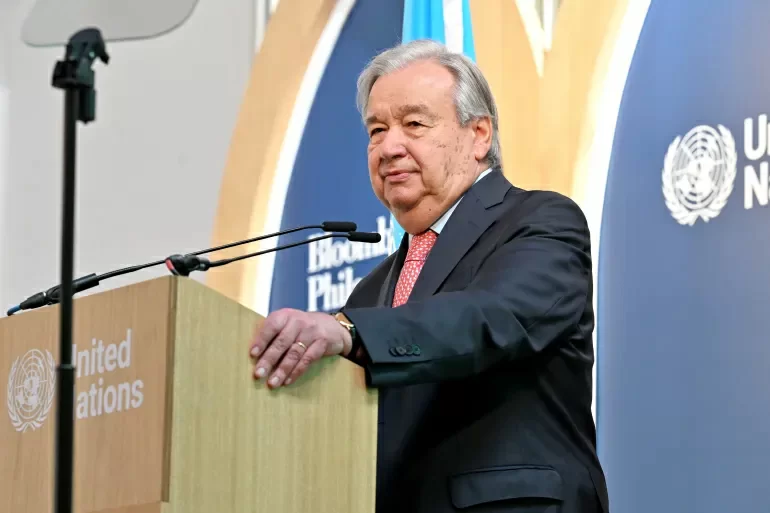
    The race to succeed António Guterres as the next United Nations Secretary-General has entered a new stage, with Guyanese diplomat Carolyn Rodrigues Birkett emerging as the early frontrunner following the second non-binding straw poll conducted by the UN Security Council. As the UN works to build consensus ahead of the end of Guterres’ current term this December, Rodrigues Birkett secured eight encouraging votes from Security Council members, putting her at the top of the eight-candidate field. Guterres, who has held the role of UN Secretary-General since 2017, will step down when his second term concludes at the end of 2025; while the UN charter does not impose a formal term limit on the position, no previous secretary-general has served more than two full terms. Trailing closely behind Rodrigues Birkett are two contenders: Costa Rican diplomat Rebeca Grynspan, who led the first informal straw poll held in July, and Rafael Grossi, the Argentine head of the International Atomic Energy Agency. Both candidates earned seven encouraging votes, but differ significantly in their levels of opposition: Grossi received six discouraging votes, while Grynspan only earned four. The remaining candidate pool includes a roster of high-profile global figures: former Senegalese President Macky Sall, former UN General Assembly President Maria Fernanda Espinosa of Ecuador, former Chilean President Michelle Bachelet, veteran Ugandan diplomat Olara Otunnu, and Ecuadorean diplomat Ivonne A-Baki. These informal, non-binding straw polls are a longstanding procedural step designed to gauge support for candidates among the Security Council’s 15 members, helping to winnow the field gradually before a formal vote is held. To advance to confirmation by the UN General Assembly, a candidate must secure a minimum of nine favorable votes in a formal Security Council vote – and crucially, cannot be vetoed by any of the body’s five permanent members: the United States, China, France, Russia, and the United Kingdom. Whoever ultimately claims the role will inherit one of the most challenging diplomatic briefings in modern UN history: the organization faces widespread calls to strengthen its global standing, which has eroded considerably in recent years. Critics have repeatedly highlighted that the UN has failed to effectively prevent or end major global conflicts and crises since its founding in the aftermath of World War II, pointing to ongoing crises including the devastating war in Gaza and Russia’s full-scale invasion of Ukraine as evidence of the organization’s structural and functional shortcomings.

  • Nieuwe cryptowet onderdeel strijd tegen witwassen en blacklisting

    Nieuwe cryptowet onderdeel strijd tegen witwassen en blacklisting

    On August 23, Suriname’s National Assembly (DNA) took a historic step toward modernizing its financial sector, unanimously passing the 2026 Virtual Asset Service Providers Supervision Act with all 32 present lawmakers voting in favor. The legislation marks the first time the South American nation has introduced a dedicated legal framework for firms offering virtual asset services, including cryptocurrency, placing regulatory oversight firmly in the hands of the Central Bank of Suriname (CBvS). Finance and Planning Minister Adelien Wijnerman presented and defended the bill on behalf of the Surinamese government.

    The new law lays out clear guidelines for the admission, licensing, registration, and ongoing supervision of virtual asset service providers, while also setting binding requirements for providers’ capital levels, operational governance, and corporate integrity. A core policy goal of the regulation is to strengthen Suriname’s defenses against money laundering and terrorist financing, bringing the country into compliance with Recommendation 15 from the global Financial Action Task Force (FATF). The legislative push comes as Suriname progresses through a compliance review process with the Caribbean Financial Action Task Force (CFATF), with both the executive branch and parliament emphasizing the urgent need to address existing regulatory gaps to avoid being placed on an international blacklist.

    During parliamentary debate, lawmakers raised a series of critical questions about key provisions, covering consumer protection, the treatment of foreign-based providers, the scope of the Central Bank’s regulatory powers, cybersecurity standards, capital requirements, and the controversial 51% maximum ownership cap for a single shareholder. One of the most heavily debated topics was the protection of customer funds in the event a service provider enters insolvency. In response, Wijnerman explained that all licensed providers will be required to hold a minimum amount of fully paid-in capital, with the CBvS set to issue detailed implementing rules for this requirement. Crucially, customer funds and virtual assets must be held separately from the service provider’s own corporate assets, a measure designed to keep these holdings outside of an insolvency estate and enable their return to rightful owners. The government did note, however, that general Surinamese insolvency law will still apply in bankruptcy proceedings.

    Capital requirements will not be a one-size-fits-all standard: the CBvS will tailor requirements based on the nature, scale, operational complexity, and risk profile of each provider, and will have the authority to conduct stress tests to assess firms’ resilience to financial shocks. The status of foreign virtual asset providers also received extensive discussion. Wijnerman confirmed that the CBvS cannot directly regulate foreign firms that do not maintain a physical establishment in Suriname; any foreign provider seeking to operate under the country’s regulatory framework must establish a local physical presence. The Central Bank will nonetheless actively identify foreign providers targeting the Surinamese market by reviewing indicators such as local language content on websites and social media, advertising targeted at Surinamese consumers, use of the local currency, partnerships with local influencers, and sponsorship of local events.

    The 51% single-shareholder ownership cap drew particular scrutiny from lawmakers, who warned the restriction could discourage investment from both domestic entrepreneurs and international fintech companies. The government defended the provision, however, arguing that it prevents excessive concentration of ownership and control in the hands of a single entity, and serves as a mechanism to promote checks and balances and risk diversification in this financially sensitive sector. Several amendments were adopted during the debate, including harsher penalties for regulatory violations, adjusted rules for engaging external experts, and updated vetting requirements for key personnel at virtual asset firms.

    Wijnerman stressed that the new regulation is not designed to stifle fintech innovation. Instead, the government’s core approach is to enable the healthy development of new financial technologies within a clear regulatory framework that mitigates risks for consumers and the broader national financial system. A public register of all licensed virtual asset service providers will also be established, maintained permanently on the CBvS website and updated in real time as new providers are added or licenses are revoked. The law will go into effect six months after its proclamation, a transition period the government says is necessary to allow for orderly implementation of the new rules and give affected parties time to adjust their operations to meet the new legal requirements.

    Committee Chair Rabin Parmessar highlighted during debate that the legislation’s most immediate priority is avoiding international blacklisting. VHP Parliamentary Leader Asis Gajadien added that the framework must retain sufficient flexibility to enable innovation and participation in the global digital financial system. Following the unanimous vote, Vice President Gregory Rusland called the bill a critical milestone in the modernization and protection of Suriname’s financial system. He noted that the new rules will not only counter money laundering and terrorist financing, but also help build confidence in Suriname as a credible international financial jurisdiction. The bill was first submitted to the National Assembly by the government on July 6, and with the unanimous support of all present lawmakers, it now lays the foundational legal framework for regulated virtual asset activity in Suriname.

  • SLM heeft totale schuldpositie nu in beeld; president-commissaris Telting diende geen ontslag in

    SLM heeft totale schuldpositie nu in beeld; president-commissaris Telting diende geen ontslag in

    Paramaribo, Suriname – Suriname’s national flag carrier Surinaamse Luchtvaart Maatschappij (SLM) has finalized a long-awaited updated financial report mapping the airline’s current total debt position, while its top supervisory leader has denied rumors of his resignation amid ongoing organizational and financial restructuring efforts. In an exclusive interview with local outlet Starnieuws, SLM President-Commissioner Marlon Telting laid out the state of the carrier’s turnaround work, addressing growing public discussion over the airline’s finances, audit costs, and internal board unrest.

    For years, SLM has lacked up-to-date, formally approved annual financial statements, making a new comprehensive audit a critical first step for any credible recovery plan, Telting explained. A prior quick-scan analysis released between December 2025 and January 2026 was only intended to deliver a preliminary high-level snapshot of the carrier’s financial health, he noted. The new audit, conducted under an Agreed Upon Procedure (AUP) framework, was designed to verify and update key balance sheet line items, answering core questions that any restructuring plan requires: what debts SLM actually owes, what receivables are outstanding, what open loans remain active, and what potential financial liabilities could stem from ongoing legal proceedings.

    Over recent years, multiple conflicting total debt figures have circulated publicly for SLM, most of which drew on incomplete or outdated accounting records and often excluded entire categories of obligations, Telting said. The new report is intended to resolve that inconsistency. While the full total debt figure has been finalized internally, it will not be released to the public yet, as stakeholders are still conducting a full content review and validation of the findings. The audit ultimately cost $78,000, a reduction from the original contracted price of $104,000 after the accounting firm offered a discount. Contrary to claims that a new auditor was hired specifically for this assessment, Telting clarified that the work was done by the same firm already contracted by the previous supervisory board to clear SLM’s backlog of uncompleted annual statements. The current board only issued an additional AUP mandate to this existing firm to generate the updated debt snapshot. Relevant sections of the final report have already been initialled by SLM’s director, finance leadership, audit committee members, and the auditors themselves, confirming agreement on the factual content of the assessment.

    Crucially, Telting emphasized that the raw size of SLM’s debt does not on its own determine whether the airline can return to long-term viability. Far more important, he argued, is having a credible, actionable plan that allows SLM to generate enough revenue to meet its outstanding obligations. “The total debt figure matters far less than the roadmap to fix it,” he said.

    Telting also pushed back on recent characterizations of the government’s monthly financial support to the carrier. Earlier this week, Minister of Finance and Planning Adelien Wijnerman stated that the government provides roughly $2 million in monthly support to SLM, which the ministry intends to formalize as formal government loans going forward. Telting noted that the $2 million figure is not a fixed monthly draw: in at least one month during the first quarter of 2026, SLM did not request any government support because operational cash flow did not require it. He did, however, acknowledge that the airline remains dependent on state financial backing, and confirmed that SLM has received no funding from state-owned mining company Grassalco since he took office, saying “We have not gotten a single cent since I was appointed.”

    The completed financial report will now serve as the foundation for upcoming talks between the finance ministry, SLM’s shareholder (the Surinamese government), the airline’s executive team, and the supervisory board. Only once all outstanding obligations are formally confirmed can stakeholders move forward to decide which debts require restructuring, where costs can be cut, and which revenue streams can be expanded.

    Alongside financial restructuring planning, SLM is already advancing operational improvements to strengthen its business. A new leased aircraft for the carrier’s Mid-Atlantic route is currently in the final stages of contract preparation, with delivery targeted for mid-September if all goes to plan. The newer, more modern aircraft will address reliability issues that have damaged SLM’s reputation with the current aging jet, which has faced repeated technical problems and service disruptions. Beyond better operational performance, the new plane will also include modern in-flight entertainment and other amenities expected from an international carrier, Telting said. For SLM’s regional fleet, the airline remains locked into existing lease agreements that run through 2030, and efforts to exit those contracts early have so far been unsuccessful.

    To expand revenue outside of passenger ticket sales, SLM has recently launched certified belly cargo services out of Miami, carrying freight in the underfloor cargo hold of its passenger aircraft to build a new stream of supplementary income.

    Addressing recent internal unrest within the supervisory board and rumors of his departure, Telting firmly denied that he has ever submitted a resignation, confirming he remains active in his role as President-Commissioner. He explained that there have been internal discussions about a potential move to the executive team, leveraging his extensive commercial experience, and he initially sought support from President Jennifer Simons, who represents the government as SLM’s sole shareholder. A board letter discussing the potential transition was poorly worded, Telting acknowledged, sparking internal debate. While the board discussed withdrawing the letter entirely, disagreements persisted on that step. President Simons subsequently convened the full board and confirmed she had never received a resignation letter from Telting, a position he reiterated publicly.

    “There has been no resignation, and I remain in my post,” Telting said, adding that SLM’s executive director and the majority of the supervisory board have confirmed his ongoing tenure. One board member continues to hold a differing legal view on his position, but no other board members have opposed the conclusion that he remains in office, Telting noted.

    He stressed that internal disputes should not overshadow SLM’s critical recovery efforts. The airline is in a fragile position, and public uncertainty can negatively impact ongoing negotiations with suppliers, lessors, and industry competitors, he explained. In the coming months, the priority will be to analyze the new financial report and translate its findings into concrete restructuring actions. Internal capacity building, cost control, a revised fleet strategy, expanded commercial activities, and a clear debt resolution plan will together determine whether SLM can eventually operate without ongoing state financial support.

  • Berbice Chamber President on GY$100,000 station bail after serious accident

    Berbice Chamber President on GY$100,000 station bail after serious accident

    A high-profile road accident in Guyana has sparked controversy after the head of a leading regional business association was released on bail despite leaving an e-bike rider with severe, life-disrupting injuries.

    Samantha Reid-Wade, President of the Berbice Chamber of Commerce and Industry, was granted GY$100,000 in station bail following the crash, which unfolded shortly before 5 p.m. local time Friday along the Fairfield Village Public Road, according to official investigators and a family member of the victim.

    The 59-year-old victim, Prakash Persaud, a resident of Providence on East Bank Demerara who was staying temporarily with his brother in Quaker’s Hall at the time of the incident, was rushed first to Mahaicony Hospital. Due to the severity of his injuries, he was quickly transferred to the country’s main public care facility, Georgetown Public Hospital, where he remains hospitalized. Persaud has been diagnosed with a fractured collarbone, a punctured injured lung, and multiple additional traumatic injuries, and requires ongoing supplemental oxygen to breathe, his brother confirmed to local outlet Demerara Waves Online News.

    Authorities confirmed the vehicle involved in the collision, registered with license plate PAL 7721, is not owned by Reid-Wade, and that third-party ownership is now part of the official ongoing investigation.

    Multiple investigators assigned to the case have privately expressed significant frustration over the decision to grant Reid-Wade bail, with the release justified on the grounds that the incident was classified as a minor accident. What has amplified this discontent, sources say, is Reid-Wade’s personal connection to a senior presidential bodyguard, a tie that has fueled allegations of favorable treatment in the early stages of the probe.

    Preliminary toxicology testing found that Reid-Wade’s blood alcohol content at the time of the crash was well below Guyana’s legal limit for drivers, ruling out impaired driving by alcohol as a potential cause of the accident, per official reports.

  • A demonstration by Haitians degenerates into violent incidents at the Haitian Embassy in Chili

    A demonstration by Haitians degenerates into violent incidents at the Haitian Embassy in Chili

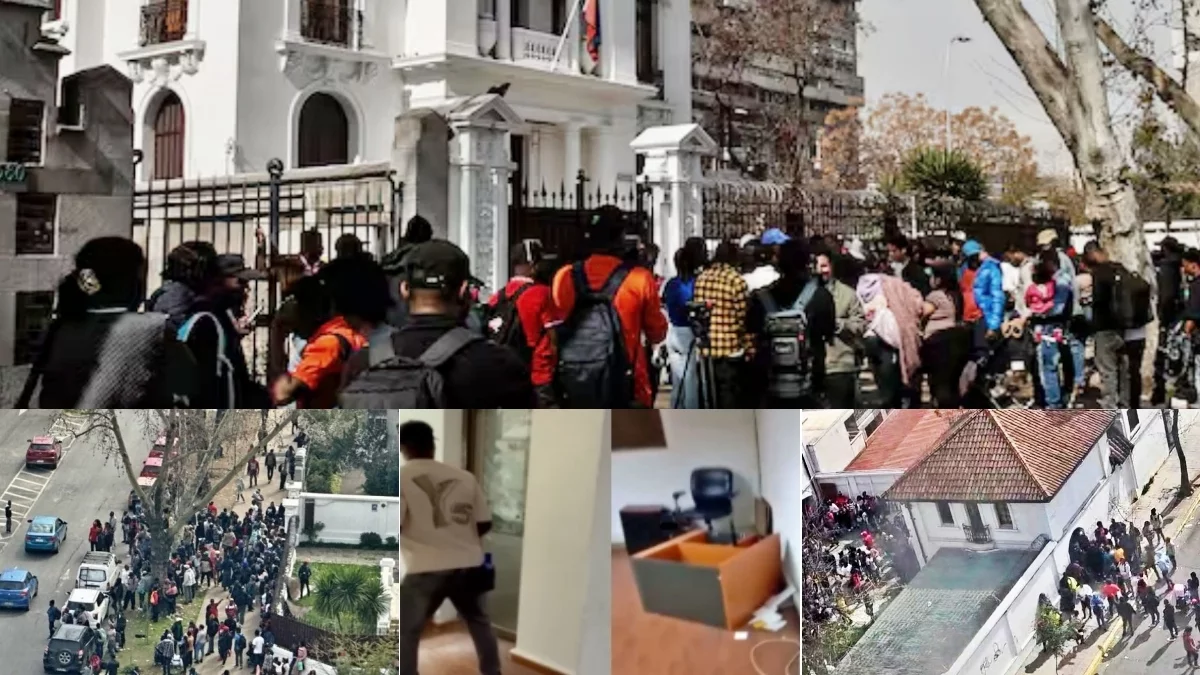
    On the morning of August 22, 2026, hundreds of frustrated Haitian migrants gathered outside the Haitian Embassy located at Avenida República 590 in Providencia, a central district of Santiago, Chile, kicking off a demonstration that would quickly escalate into unrest by the end of the day. What drove the crowd to the diplomatic mission’s doors was a seemingly insurmountable barrier to legal residency that has put hundreds of Haitian migrants at imminent risk of deportation: a mandatory criminal background certificate that neither Chilean authorities nor the Haitian Embassy can provide to eligible applicants.

    Under Chile’s current immigration rules, migrants seeking to regularize their migratory status must present a valid criminal record certificate issued by their home country’s diplomatic authorities to the National Migration Service (SERMIG). David Antoine, a leading spokesperson for Chile’s Haitian community, explained that the root of the crisis lies in the Haitian Embassy’s persistent inability to issue these required documents, leaving migrants caught between two government systems with no path forward.

    After hours of waiting for a response from consular officials, mounting collective frustration boiled over. A faction of the crowd pushed past the embassy’s perimeter gates and main entrance, accessing the diplomatic grounds to demand a direct meeting with the Haitian Consul. During the incursion, the embassy premises suffered significant vandalism. In comments following the unrest, Antoine acknowledged the severity of the violence while emphasizing that the outburst was the product of weeks of unaddressed desperation.

    “This situation is deeply worrying and shameful,” Antoine noted. “But what people don’t see is how many migrants show up at the embassy every day begging for this document. Demand is overwhelming, and almost everyone leaves empty-handed. Without that certificate, you can’t get your status sorted, and you get a 90-day exit order that puts you directly on track for deportation.”

    Migrant community leaders attribute the ongoing deadlock to a combination of administrative mismanagement at the Haitian Embassy and widespread misinformation that has circulated among migrants about the application process. Compounding the crisis is the persistent socio-political instability and economic collapse in Haiti, which has already left thousands of Haitian migrants in Chile in precarious living conditions.

    “Right now, unemployment among our community is skyrocketing, and most people can barely put food on the table without legal status,” Antoine explained. “You can imagine the level of despair here. When the embassy won’t issue the document you need to stay, and you’re facing deportation back to a country you fled for safety, what do you have left to lose? When people have nothing left to lose, situations like this are inevitable. I’m terrified more violence will follow if this isn’t fixed quickly.”

    Local police were called to the scene to disperse the demonstration once the incursion began, but embassy representatives had already partially de-escalated the situation before officers arrived. The embassy requested that demonstrators voluntarily leave the premises and announced that it would hold a meeting with community representatives to outline a path forward. As of Sunday, however, official representatives of Haitian diplomacy in Chile have maintained complete public silence, refusing to issue any statement or address questions from either media outlets or the Haitian community in Chile, deepening the uncertainty facing hundreds of at-risk migrants.

  • Suriname insists on suspension of MV Canawaima ferry service- Edghill

    Suriname insists on suspension of MV Canawaima ferry service- Edghill

    On a recent Sunday night, Guyana’s Minister of Public Works Juan Edghill made an announcement that has disrupted cross-border travel and trade between Guyana and Suriname: the Maritime Authority of Suriname (MAS) has ordered an immediate suspension of operations for the MV Canawaima, the vital ferry that moves passengers, commercial cargo and private vehicles across the Corentyne River, the shared water boundary between the two South American nations. Edghill emphasized that MAS’s order runs directly counter to the shared assessment of technical maritime experts from both Guyana and Suriname, who unanimously concluded the vessel was safe to continue regular operations for an additional three months, until its already scheduled full maintenance and retrofitting in drydock.

    The suspension has already had immediate real-world consequences: starting Friday, hundreds of passengers have been left stranded at the two primary ferry terminals, South Drain in Nickerie, Suriname, and Moleson Creek in Springlands, Guyana. There is currently no firm timeline for when service can resume, with the halt remaining in place until all technical concerns raised by MAS are fully addressed.

    In a full official statement released by the Canawaima Ferry Service, the management outlined the sequence of events that led to the suspension. In the days preceding the order, two independent technical inspections were conducted by qualified maritime specialists from both neighboring countries. The joint inspection report, submitted in formal writing to MAS, confirmed the MV Canawaima met all operational safety standards, and the flagged issues cited by Suriname authorities did not require immediate emergency repairs and could be resolved during the already planned drydocking three months later.

    Notably, the statement also clarified an important administrative detail: the legal and financial responsibility for all routine maintenance, repairs and drydocking of the MV Canawaima falls under the jurisdiction of the Suriname government, not Guyana. Despite the disagreement over the suspension order, the governing boards from both Guyana and Suriname have confirmed they maintain open, constant communication and are collaborating closely to resolve the outstanding issues and restore cross-border service as rapidly as possible.

    The ferry service acknowledged the widespread disruption the sudden halt has caused to local communities, cross-border businesses, and travelers, many of whom rely on the service for daily commuting, family visits, and commercial trade. Management apologized sincerely for the inconvenience and thanked the public for their patience as teams work to resolve the impasse and resume normal operations.