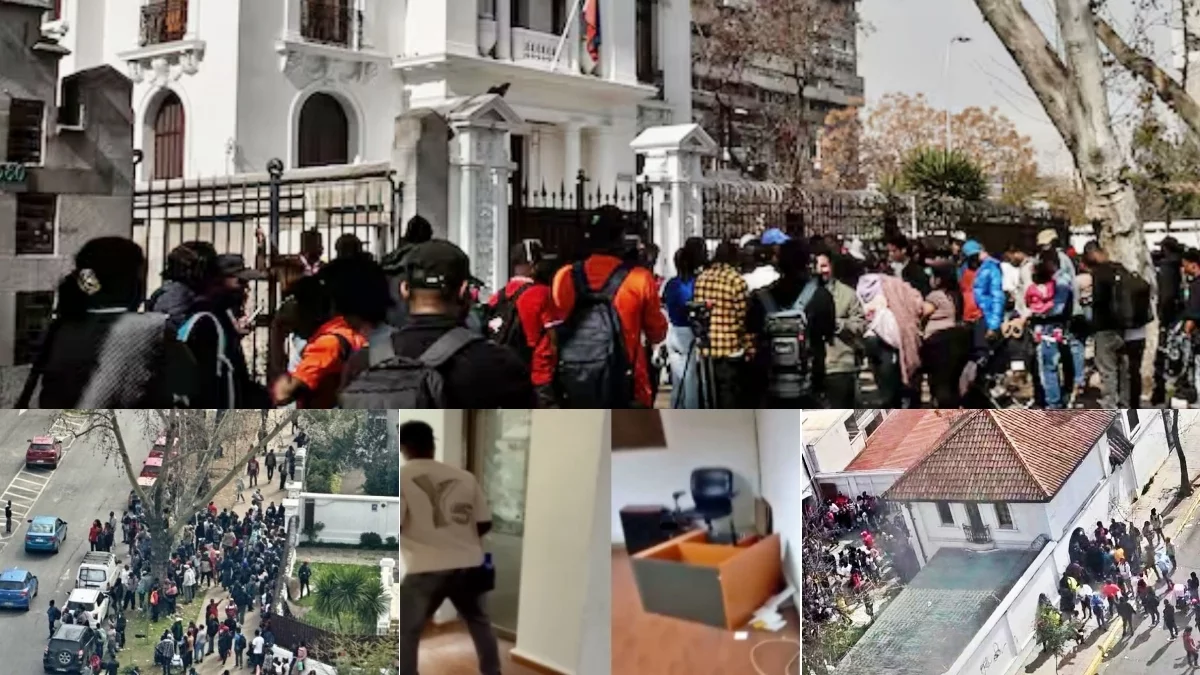
On the morning of August 22, 2026, hundreds of frustrated Haitian migrants gathered outside the Haitian Embassy located at Avenida República 590 in Providencia, a central district of Santiago, Chile, kicking off a demonstration that would quickly escalate into unrest by the end of the day. What drove the crowd to the diplomatic mission’s doors was a seemingly insurmountable barrier to legal residency that has put hundreds of Haitian migrants at imminent risk of deportation: a mandatory criminal background certificate that neither Chilean authorities nor the Haitian Embassy can provide to eligible applicants.
Under Chile’s current immigration rules, migrants seeking to regularize their migratory status must present a valid criminal record certificate issued by their home country’s diplomatic authorities to the National Migration Service (SERMIG). David Antoine, a leading spokesperson for Chile’s Haitian community, explained that the root of the crisis lies in the Haitian Embassy’s persistent inability to issue these required documents, leaving migrants caught between two government systems with no path forward.
After hours of waiting for a response from consular officials, mounting collective frustration boiled over. A faction of the crowd pushed past the embassy’s perimeter gates and main entrance, accessing the diplomatic grounds to demand a direct meeting with the Haitian Consul. During the incursion, the embassy premises suffered significant vandalism. In comments following the unrest, Antoine acknowledged the severity of the violence while emphasizing that the outburst was the product of weeks of unaddressed desperation.
“This situation is deeply worrying and shameful,” Antoine noted. “But what people don’t see is how many migrants show up at the embassy every day begging for this document. Demand is overwhelming, and almost everyone leaves empty-handed. Without that certificate, you can’t get your status sorted, and you get a 90-day exit order that puts you directly on track for deportation.”
Migrant community leaders attribute the ongoing deadlock to a combination of administrative mismanagement at the Haitian Embassy and widespread misinformation that has circulated among migrants about the application process. Compounding the crisis is the persistent socio-political instability and economic collapse in Haiti, which has already left thousands of Haitian migrants in Chile in precarious living conditions.
“Right now, unemployment among our community is skyrocketing, and most people can barely put food on the table without legal status,” Antoine explained. “You can imagine the level of despair here. When the embassy won’t issue the document you need to stay, and you’re facing deportation back to a country you fled for safety, what do you have left to lose? When people have nothing left to lose, situations like this are inevitable. I’m terrified more violence will follow if this isn’t fixed quickly.”
Local police were called to the scene to disperse the demonstration once the incursion began, but embassy representatives had already partially de-escalated the situation before officers arrived. The embassy requested that demonstrators voluntarily leave the premises and announced that it would hold a meeting with community representatives to outline a path forward. As of Sunday, however, official representatives of Haitian diplomacy in Chile have maintained complete public silence, refusing to issue any statement or address questions from either media outlets or the Haitian community in Chile, deepening the uncertainty facing hundreds of at-risk migrants.