博客

  • Pine thoroughfare named for road engineer

    Pine thoroughfare named for road engineer

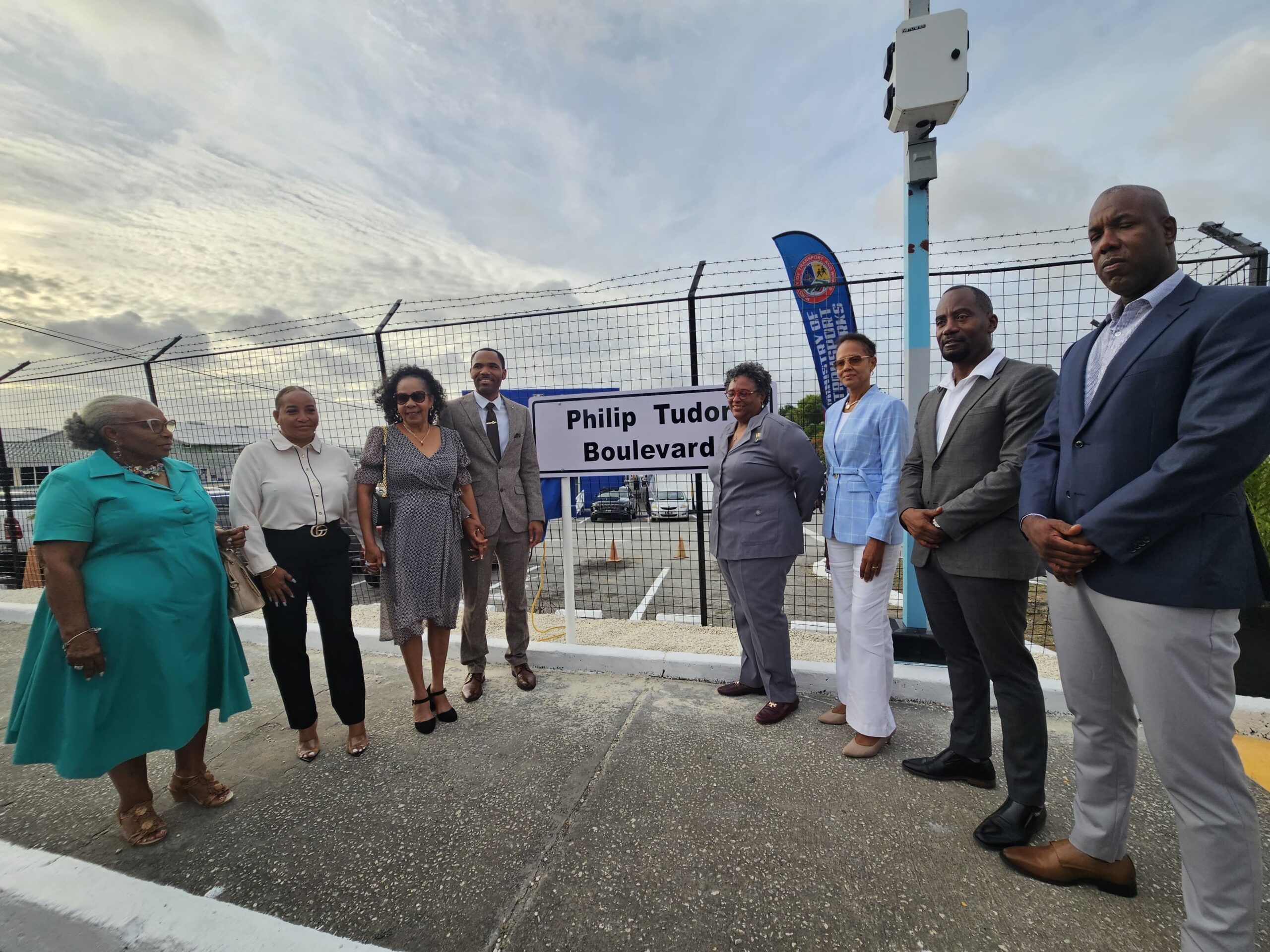
    In an unprecedented departure from long-standing local naming traditions, the government of Barbados has honored the decades-long infrastructure legacy of late senior engineer Philip Adrian Howard Tudor by renaming one of the island nation’s key thoroughfares after him. Previously known as Pine East-West Boulevard, the major road now officially carries Tudor’s name, marking a rare recognition of a career civil servant’s contributions that breaks from the norm of naming highways and public roads exclusively for heads of government, cabinet ministers, elected parliamentarians, and national cricket icons.

    The official unveiling ceremony, held Thursday afternoon as part of the country’s National Honours Ceremony themed around “Community, Service and Excellence”, drew top government leadership including Prime Minister Mia Mottley, Deputy Prime Minister and local Member of Parliament Santia Bradshaw, and Minister of Transport and Works Kirk Humphrey, alongside senior public officials and members of Tudor’s extended family. Government officials confirmed that the road renaming is the first of two permanent institutional tributes planned to preserve Tudor’s professional legacy, with the second being a renaming of the central laboratory at the Ministry of Transport and Works (MTW) headquarters, where the engineer spent the bulk of his decades-long career.

    Bradshaw, who collaborated closely with Tudor during her own tenure as Minister of Transport and Works, emphasized that these tributes are far more than empty symbolic acts. Instead, she framed them as enduring reminders of a lifetime spent advancing Barbados’ development and lifting the quality of life for all its citizens. She noted that the boulevard holds particular personal and professional resonance for Tudor, who commuted along this route to work for nearly 40 years while leading the design and expansion of the island’s entire road network.

    “There are people who work on roads, and then there are people who dedicate their entire lives to building them, improving them, and using them as instruments of national development,” Bradshaw said in her remarks. “Philip Tudor belonged firmly in the latter category.” Bradshaw added that Tudor possessed a rare understanding of the profound social role of infrastructure beyond asphalt and concrete: “He understood that roads were lifelines. They connected families to schools. They connect farmers to markets. They connect patients to healthcare and communities to opportunity.”

    Accepting the honor on behalf of the entire Tudor family, the engineer’s son Alair Tudor thanked the government for ensuring his father’s decades of quiet service would not be erased from national memory. Standing alongside his mother and Tudor’s wife Dr Lesandra Tudor beside the newly unveiled road sign, Alair noted that the permanent renaming enshrines his father’s legacy for coming generations, cementing his reputation as a dedicated professional who led by quiet example.

    “Today we’re celebrating a man that gave his all to his work, ensuring his name is enshrined in history for future generations to know of his dedication to his profession and his craft,” he said. “He silently encouraged many of us to be better and to give your all in what you do.”

    Prime Minister Mottley, who counted Tudor as a professional acquaintance for more than 30 years, echoed those remarks, praising the late engineer as the gold standard of public service. “the consummate public servant… but above all else, he was human. He was fair and he was a man who always displayed heart,” Mottley said. She added that Tudor served every successive national administration with equal levels of professionalism and impartiality, using the occasion to call for greater recognition of unsung career public servants whose work lays the foundation for long-term national growth long after their own tenures end.

  • FAO training equips Saint Lucian farmers with climate-smart irrigation skills

    FAO training equips Saint Lucian farmers with climate-smart irrigation skills

    Against a backdrop of growing climate uncertainty, small island agricultural communities are increasingly facing pressure to adapt their growing practices to shifting conditions. For the Caribbean nation of Saint Lucia, that adaptation is getting a boost from a targeted new capacity-building initiative that equips local farmers with practical, climate-smart farming techniques.

    Organized jointly by the United Nations Food and Agriculture Organization (FAO) and Saint Lucia’s Ministry of Agriculture, Fisheries, Food Security and Rural Development, a series of hands-on professional training workshops focused on integrated crop management, with a specific focus on improving irrigation, fertigation and nutrient strategies to boost yields and build long-term farm resilience. Titled “Practical Integrated Crop Management: Improving Crop Performance through Irrigation, Fertigation and Nutrient Management”, the workshops were held earlier this month across two locations: Soufrière in the southwest and Union in the north, to serve farming communities across the island.

    In total, 38 stakeholders took part in the sessions, representing a cross-section of Saint Lucia’s agricultural sector: small-scale and commercial farmers, plant nursery operators, government agricultural officers, extension service personnel, technical specialists, ministry support staff, and representatives from both public and private agricultural entities. Hosting the training in two geographically distinct regions of the island was a deliberate choice, FAO officials explained, that made the program far more accessible to participants from across the country while also allowing attendees to test how these modern practices work across Saint Lucia’s varied local growing conditions.

    Led by FAO Horticulture Specialist Marcko Theodoracopoulos and FAO Plant Production and Protection Specialist Anne Desrochers, who also serves as the project’s Lead Technical Officer, the workshops dug into the interconnected relationships between irrigation scheduling, fertigation application, crop nutrition requirements, plant growth stages, and unique local field conditions. Attendees learned how to weave all these factors into cohesive, effective daily farm management plans.

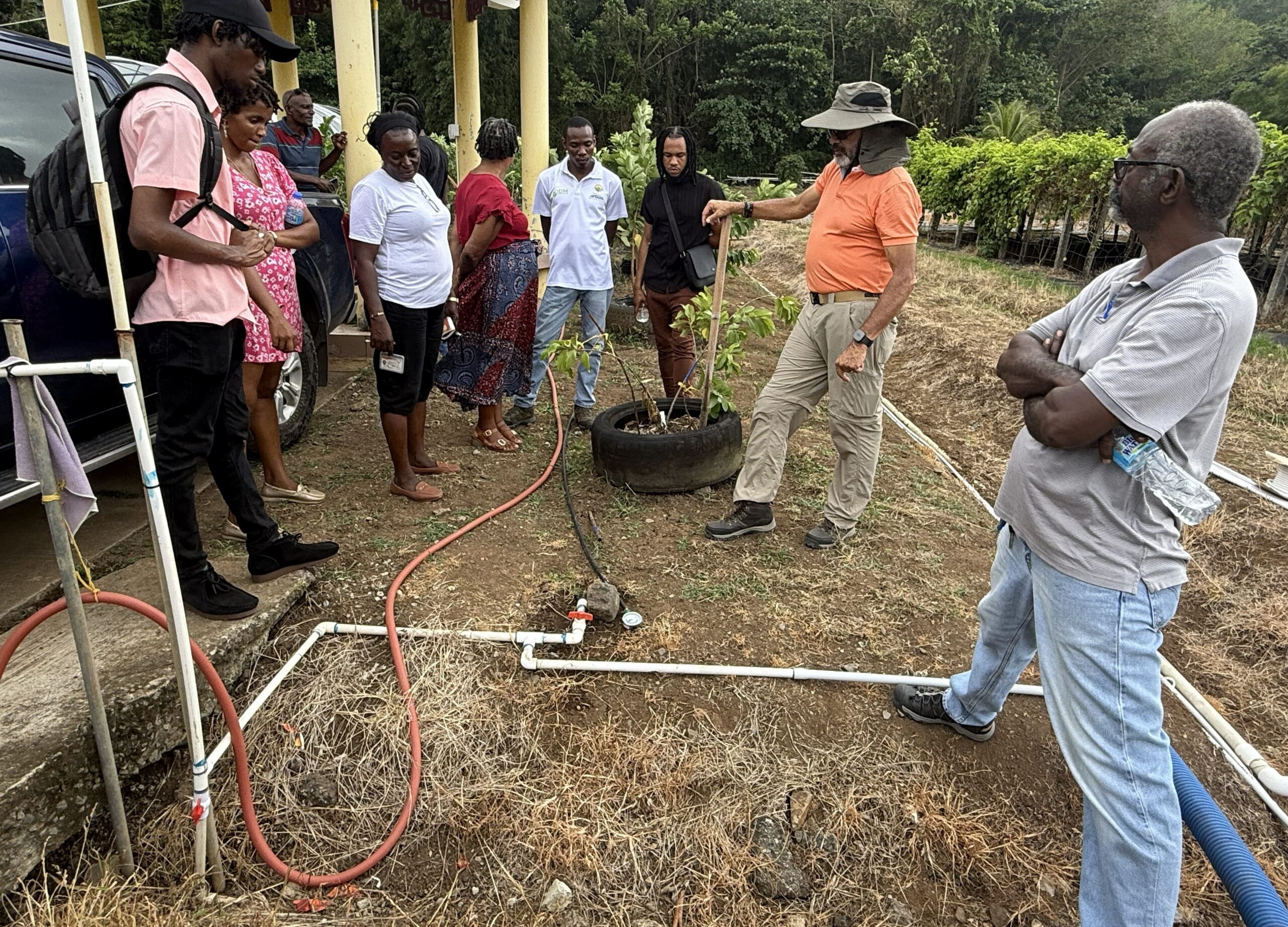
    Practical skill-building formed the core of the program. Participants received step-by-step instruction on how to design, operate, and maintain drip irrigation systems, covering critical operational details from filtration system maintenance and regular line flushing to leak prevention and water flow and pressure management. A major section of the training was dedicated to addressing the unique challenges of running irrigation systems on Saint Lucia’s famously hilly terrain, where changes in elevation can disrupt water pressure and lead to uneven distribution of both water and crop nutrients.

    Additional training modules covered the installation and calibration of Venturi fertiliser injectors, proper fertiliser preparation, and adjusting injection rates to match crop needs. Farmers learned actionable techniques to prevent common system blockages, prepare concentrated fertiliser stock solutions, and use electrical conductivity and pH measurements to fine-tune fertigation applications and reduce crop stress caused by inconsistent nutrient or water access.

    Live, hands-on demonstrations held on working commercial farms let participants observe irrigation and fertigation systems in real operating conditions. Attendees got the chance to troubleshoot common mechanical and operational problems firsthand, and discuss how to adapt these technologies to fit the specific size, terrain, and crop needs of their own farms.

    Desrochers noted that holding sessions across both the northern and southern regions of the island made the training far more relevant to participants’ on-the-ground experiences. “Delivering the training in the North and South allowed participants to relate the technical information directly to the conditions they manage on their farms,” she explained. “Irrigation and fertigation systems must be adapted to each site, particularly where terrain, water access and pressure vary. Strengthening farmers’ and extension officers’ capacity to make these adjustments is essential for ensuring that the technologies provided through the project are used effectively and sustainably.”

    Feedback from participating farmers has been overwhelmingly positive. Erbert Lionel, a local farmer who attended the Soufrière session, called the program both engaging and deeply valuable. “On behalf of the farmers, I would like to sincerely thank FAO for helping us better understand these practices and how to combine them to achieve better results,” he said.

    Anderson Emillaire, who participated in the Union workshop, added that the session reinforced existing farming knowledge while introducing innovative new approaches. “We really appreciate the knowledge provided during the session. Even where some of the topics were familiar, it was helpful to revisit them, and we would welcome more training as the project progresses,” he said.

    This crop management training forms one component of a broader FAO technical mission to Saint Lucia. During the mission, FAO specialists joined Ministry of Agriculture officials to visit farms that are already benefiting from the project, to assess progress on land preparation, greenhouse construction, water access development, irrigation needs assessment, and the installation of new project-funded technologies. Farmers also received customized one-on-one guidance on bed layout, contour alignment for sloped terrain, drainage system design, water flow and pressure adjustment, and the placement of mainlines and driplines ahead of upcoming installation work.

    The mission also included an inspection of a recently refurbished biological control laboratory that was commissioned as part of the same overall project. Once fully operational, the facility is expected to strengthen Saint Lucia’s domestic capacity to produce and deploy natural biological pest control agents, as part of the country’s broader push to expand integrated pest management and reduce agricultural reliance on chemical pesticides.

  • If Plastic Pouches are Banned, What Will Replace It?

    If Plastic Pouches are Banned, What Will Replace It?

    As a broad coalition of environmental and community groups pushes for a gradual three-year national ban on single-use plastic pouches, Belize’s top sustainability official has outlined the significant regulatory and economic barriers that must be overcome before the policy can move forward. Sustainable Development Minister Orlando Habet acknowledged growing public and organizational pressure to eliminate the ubiquitous single-use plastic items, which are a major contributor to marine and terrestrial plastic pollution across the Caribbean nation. But in recent comments, he made clear that policymakers are still grappling with unresolved challenges that have derailed previous efforts to transition away from conventional plastic packaging.

    Back when Belize first implemented formal biodegradability standards requiring plastic products to contain at least 52% biodegradable material, regulators moved faster than regional supply chains could support, Habet explained. The policy was crafted without first verifying whether alternative biodegradable inputs would be readily accessible for local and regional manufacturers, leaving the market unable to meet the new requirements. Today, the core obstacle remains a regional supply gap, he noted: without neighboring nations adopting similar restrictions on single-use plastics, there is little incentive for regional manufacturing industries to scale up production of biodegradable alternatives, keeping supplies scarce and prices high in Belize.

    Long-term, Habet said Belize could build a domestic biodegradable packaging industry using locally sourced, renewable raw materials such as bagasse (the fibrous byproduct of sugarcane processing), bamboo pulp, and plantain suckers. But developing this homegrown sector would require years of investment, infrastructure building, and market development to create a viable, affordable supply that can meet current demand for low-cost packaging. Minister Habet also echoed a concern widely shared by Belizean residents and small business owners: millions of consumers currently rely on low-cost single-use plastic pouches for affordable, portable drinking water, and many small entrepreneurs build their businesses around these low-cost packaging options. A premature ban without affordable, widely available alternatives would disproportionately harm low-income households and small business operators, he argued.

    The coalition of more than 40 organizations backing the ban has put forward a phased roadmap for implementation: the restriction would first take effect in all government buildings, then expand to public and private schools across the country, before moving to a full nationwide ban within three years. So far, the Belize Department of the Environment (DOE) has adopted a cautious approach, noting that it is still in the process of consulting with 36 major plastic importing companies to understand industry perspectives and potential impacts. Department officials have emphasized that the question of banning single-use plastic pouches is not a simple binary yes-or-no decision; rather, it is a complex policy process that requires broad stakeholder consultation and careful preparation to avoid unintended negative consequences for consumers and businesses.

  • West Indies aim to seal series victory against Sri Lanka

    West Indies aim to seal series victory against Sri Lanka

    Fresh off a dominant innings-and-217-run triumph in the opening Test of their head-to-head against Sri Lanka, the West Indies men’s cricket side has set its sights on completing a clean sweep when the second match gets underway this Friday at the iconic Sir Vivian Richards Cricket Stadium in Antigua.

    In a pre-match press briefing ahead of the first day of play, West Indies skipper Roston Chase projected unshakable confidence, noting that the side’s sole priority is locking in consecutive Test victories to close out the series. “Holding a 1-0 lead going into this second match, the only outcome we’re chasing is another win to wrap up the series and claim our first ever series victory in the ICC World Test Championship,” Chase explained. “That’s the goal that’s pushing every single one of the guys right now. I know the entire squad is confident and eager to take the field and put in our best performance for the region.”

    When asked about potential adjustments Sri Lanka could make to turn the tide of the series, Chase made clear the West Indies camp is staying focused on internal improvement rather than overanalyzing the opposition. “I can’t say for certain what changes Sri Lanka will make, and honestly, that’s not something we’re wasting energy worrying about. Our focus is leaning into our strengths, building on what worked so well for us in the opening Test, and fixing the small areas where we fell short. At the end of the day, the only performance we can control is our own.”

    Chase also drew motivation from the West Indies’ long-standing undefeated home record against Sri Lanka: the side has never dropped a Test series to the South Asian nation on home soil, but has not claimed a Test series win against Sri Lanka since 2003. “Securing this win would mean everything to this group,” Chase said. “This would be our first Test series win in the current cycle of the ICC Test championship, and that’s a milestone that would mean a lot after what we went through last year. 2023 was a tough year for us—we didn’t win a single series, or even a single Test match. We’re ready to leave that behind us. Getting a win in our first series of the year to kick off 2024 would be absolutely fantastic.”

    To shore up the side’s bowling unit, the West Indies has added seamer Kemo Paul to the match squad as an injury replacement cover for paceman Kemar Roach, who is continuing his recovery from a hamstring strain. Chase expressed full confidence that Paul is ready to deliver if called upon to step in. “Kemo has been in excellent form in this year’s four-day domestic championship, where he bowled long, demanding spells and consistently generated pace and movement off the wicket,” Chase noted. “If he gets the opportunity to play, I can’t wait to see him take the field. I’ve played alongside Kemo for years, and he’s a tough competitor who never backs down, no matter how tough the match situation gets. He’s always ready to step up for the team, and I have absolutely no doubt he’ll get the job done if he’s called on.”

    The Test series comes on the heels of the two sides’ limited-overs matches held earlier on the tour: Sri Lanka claimed a 1-0 win in a rain-disrupted three-match ODI series, while West Indies held on to take the T20I series 2-1.

  • Belizean Students in Venezuela to Return Home

    Belizean Students in Venezuela to Return Home

    In the wake of catastrophic back-to-back earthquakes that have left Venezuela reeling from widespread destruction and human loss, the government of Belize has announced plans to repatriate all of its citizens studying in the South American nation. Belize’s Foreign Affairs Minister Francis Fonseca confirmed the evacuation order in an official statement delivered Wednesday, noting that all five Belizean students currently enrolled in Venezuelan educational institutions have been confirmed unharmed, but will return to their home country due to the continued hazardous and unstable conditions across the affected regions.

    “This is a profound human tragedy,” Fonseca shared in his remarks. “Our hearts go out to the Venezuelan people who are enduring this unimaginable disaster. We stand in solidarity with our brothers and sisters there, and we are actively coordinating with the Caribbean Community (CARICOM) to organize and deliver much-needed relief assistance to support response and recovery efforts.”

    Fonseca explained that Belize’s ambassador to Venezuela, Annie Lou Burns, has maintained constant communication with the students alongside teams from Belize’s Ministries of Foreign Affairs and Education to monitor their situation closely. “We have received consistent updates that all of our students are safe and accounted for,” he said. “Nevertheless, given the extremely difficult living conditions across Venezuela right now, we have made the decision that evacuating them back to Belize is the best course of action to ensure their ongoing safety and well-being. We expect them to arrive home in the very near future.”

    As of the latest official update from the Venezuelan government, the confirmed death toll from the earthquakes has climbed to at least 2,295. More than 11,000 people have been reported injured, and an estimated 50,000 people remain unaccounted for in the aftermath of the quakes. While search and rescue operations are still ongoing across the hardest-hit areas, multiple independent observers have raised concerns about the accuracy of the official death count. Forensic investigators, opposition political figures, and United Nations officials have all warned that the actual number of fatalities is likely significantly higher than the figure published by Venezuelan authorities, as rescue teams continue to pull bodies from collapsed buildings and debris fields.

  • Barbados, Guyana launch historic ID Card travel initiative

    Barbados, Guyana launch historic ID Card travel initiative

    Starting July 1, a new historic milestone in regional integration has come into force for two Caribbean nations: Barbados and Guyana now allow their respective citizens to travel between their borders using ICAO-compliant digital national identification cards as valid travel documents, eliminating the mandatory requirement for a passport for most eligible travelers.

    The launch of this bilateral initiative was marked by a ceremonial inaugural travel on Caribbean Airlines flight BW 0217, which carried senior government and immigration officials from Guyana to Barbados to mark the occasion. The official delegation included Barbados’ Senator Jonathan Reid, Minister of Innovation, Industry, Science and Technology (MIST), Barbados Chief Immigration Officer Margaret Inniss, and Guyana’s Deputy Chief Immigration Officer Stephen Telford, a Senior Superintendent of Police.

    Minister Reid outlined that the agreement, first negotiated between Barbadian Prime Minister Mia Mottley and Guyanese President Dr Irfaan Ali, progressed from negotiation to full implementation in less than six weeks, a timeline he called remarkably efficient. He emphasized the collaborative work between his ministry and Guyanese authorities to align technical systems, share critical verification infrastructure, and standardize identity checking protocols to bring the leaders’ shared vision of easier cross-border movement to life. Calling the launch “a really exciting moment,” Reid noted that the cross-agency partnership laid the groundwork for broader regional expansion of the program.

    Chief Immigration Officer Inniss explained that the new system operates seamlessly alongside existing immigration protocols, streamlining the travel experience for ordinary citizens while maintaining strict border security. While it is a bilateral pilot initiative between the two countries, Inniss stressed that the program directly advances the broader free movement goals outlined in Article 45 of the Revised Treaty of Chaguaramas, the foundational agreement governing the Caribbean Community (CARICOM) bloc. “First of July 2024 is a historic moment indeed, a change that helps to integrate full free movement in accordance with Article 45,” she stated.

    The initiative includes specific caveats for travelers to ensure ongoing compliance. For Barbadian travelers under the age of 16, a valid passport remains mandatory for cross-border travel between the two countries. All travelers, regardless of age or nationality, are also advised to carry their passports as a secondary document, in the event that an airline diverts a flight to a third country that is not part of the bilateral ID travel agreement.

    Deputy Chief Immigration Officer Telford echoed his Barbadian counterparts’ enthusiasm for the initiative, noting that it represents a transformative shift for Guyanese travelers who previously needed a passport to enter Barbados. “Today is a significant day for Guyana. This is an exciting time for Guyana, and this is so wonderful to know that you can travel with a card from Guyana to Barbados and back, if you don’t have a passport,” he said. Addressing concerns over identity fraud, Telford confirmed that the approved digital ID cards include the same level of embedded security features as traditional passports. Hidden security markers can be detected using standard verification equipment used by immigration officials, allowing for fast, reliable authentication of document validity.

    To ensure a smooth travel process, officials have reminded all passengers of mandatory pre-departure requirements: all travelers must complete both the Guyana Embarkation/Disembarkation Form, accessible via the Guyana Police Force’s official portal, and the Barbados Online ED Card via Barbados’ official travel form website, before departing for their trip. Officials also clarified key details for filling out these forms: the document number requested on immigration forms is not the national ID number printed on the card, but a separate identifier located on the front of the ID card below the embedded chip, with Guyanese identifiers starting with a letter followed by a sequence of numbers.

    In closing, Inniss and Telford urged eligible Barbadian and Guyanese citizens to take advantage of the simplified travel process for upcoming trips between the two nations. They also extended an invitation to other CARICOM member states to join the initiative, advancing the regional bloc’s decades-long goal of establishing full free movement of people across all member borders.

  • The Belize-Guatemala ICJ Ruling Nears to ‘Settle the Unfounded Claim’

    The Belize-Guatemala ICJ Ruling Nears to ‘Settle the Unfounded Claim’

    As Central America stands on the cusp of ending one of its longest-running territorial disagreements, Belize is calling for national unity ahead of an upcoming binding judgment from the International Court of Justice (ICJ) that will finally settle Guatemala’s long-contested territorial claim over Belizean territory.

    The decades-long dispute between the two neighboring Central American nations is now approaching a historic, peaceful conclusion, according to Belize’s top diplomat. Foreign Affairs Minister Francis Fonseca emphasized that national solidarity is critical in the period leading up to the ICJ’s final ruling, particularly as Belize prepares to mark 45 years of independence in 2026.

    “In the next two years, we expect this decades-long issue to be permanently resolved and laid to rest through a peaceful, diplomatic process,” Fonseca stated. “Once and for all, we will settle this unfounded claim.”

    Just days before Fonseca’s remarks, both Belize and Guatemala took a key step toward cementing their commitment to a peaceful outcome. During the Organization of American States (OAS) General Assembly held in Panama, the two governments signed a joint declaration that reaffirmed their pledge to respect and implement the ICJ’s final decision. Both nations agreed the court’s ruling will be final and legally binding, and formally requested that the OAS continue supporting ongoing confidence-building initiatives between the two countries until the judgment is publicly delivered.

    While the ICJ’s upcoming decision will stand as one of the most defining milestones in the modern history of both Belize and Guatemala, Fonseca stressed that the unity and resilience of Belize’s people remain the nation’s most valuable asset as it approaches this turning point. “Our people are the greatest strength of our country,” he added, urging continued national cohesion through the final stages of the diplomatic process.

  • ABCAS Celebrates Historic First Graduating Class

    ABCAS Celebrates Historic First Graduating Class

    On July 2, Antigua and Barbuda’s higher education sector entered a new era, as the Antigua and Barbuda College of Advanced Studies (ABCAS) hosted its very first commencement ceremony at the SJPC House of Restoration to honor over 200 trailblazing graduates who make up the institution’s historic founding class. The celebratory event drew a diverse crowd of attendees, including graduates, their families, academic faculty and staff, senior government officials, key industry stakeholders, and invited guests, all gathering to mark the start of a transformative new chapter for public tertiary education across the dual-island nation.

    The 2026 graduating cohort left the institution with a wide range of credentials, spanning associate degrees, professional diplomas, and specialized certificates. Graduates completed programs across 11 diverse academic and professional fields: business administration, culinary arts, K-12 and higher education, engineering disciplines, health care services, hospitality management, information technology, liberal arts, creative industries, and core scientific fields.

    In his official address to the graduating class, Education Minister Daryll S. Matthew framed the landmark ceremony as the fulfillment of a years-long, ambitious vision to expand accessible, high-quality public tertiary education in Antigua and Barbuda. He extended warm congratulations to the founding cohort on their historic achievement, urged graduates to leverage their newly gained skills and knowledge to drive forward national development, and highlighted the growing School of Agriculture as a standout example of ABCAS’ commitment to expanding workforce readiness and addressing critical labor gaps across the country.

    The full ceremony featured a packed schedule of symbolic and celebratory moments. ABCAS President Dr. Ezra Jonah Greene delivered opening remarks, while 2026 Rhodes Scholar Resa Nelson delivered the featured commencement address. Valedictorian Fiona Benjamin, an Associate of Arts graduate in Secondary Education TVET from ABCAS’ Dr. Alister Francis Campus, delivered the traditional valedictory address, before the entire class took part in the iconic symbolic turning of tassels to mark their official graduation. The institution also formally recognized Salutatorian Micaiah Graham, an Associate of Science graduate in mathematics and natural sciences from the Dr. Alister Francis Campus, for his exceptional academic performance.

    Two particularly moving moments resonated with all in attendance. The first was the recognition of Tahjé Browne, a national competitive cyclist and graduating student, whose well-documented perseverance and resilience through personal and academic challenges left a lasting impression on the crowd. The second was a heartfelt tribute to Brianna Clarke, a promising culinary arts student who passed away before completing her degree. ABCAS reserved an empty honorary seat for Clarke during the ceremony and presented her posthumous graduation credential to her family, cementing her place forever in the college’s historic founding class.

    As the ceremony drew to a close, the Class of 2026 departed with a unique distinction that no future graduating cohort will ever hold: the honor of being ABCAS’ very first graduating class. Their successful completion of studies does not only mark a major personal milestone for each graduate, but also lays the foundation for a lasting legacy for both ABCAS and the future of tertiary education in Antigua and Barbuda.

  • Derde helft WK 2026: Oyarzabal leidt Spanje naar ruime overwinning op Oostenrijk

    Derde helft WK 2026: Oyarzabal leidt Spanje naar ruime overwinning op Oostenrijk

    On July 2 at the atmospheric Los Angeles Stadium, European champions Spain produced a masterclass in possession football to secure a dominant 3-0 victory over Austria, booking their spot in the 2026 World Cup quarter-finals and ending a 16-year drought for a knockout stage win at the tournament. Two clinical strikes from Mikel Oyarzabal and a polished debut international goal from Pedro Porro sealed a fully deserved win, as Austria never found a way to unlock Spain’s technically gifted, tactically disciplined side.

    From the first whistle, Spain seized control of the match and never relinquished their grip on possession. Teenage winger Lamine Yamal emerged as one of the standout performers, constantly stretching the Austrian backline with blistering pace, sharp close control and elite game awareness that kept opposition defenders on the back foot for the full 90 minutes. Early in the first half, Yamal drew a foul that led to a dangerous free kick, which Alex Baena struck against the crossbar, coming inches away from opening the scoring. Despite a string of impressive saves from Austrian goalkeeper Alexander Schlager, the side could never break Spain’s sustained pressure, with most of their attacking moves breaking down due to a lack of final-third precision.

    The opening goal finally arrived in the 36th minute. Marc Cucurella delivered a pinpoint cross from the left flank that found Oyarzabal unmarked inside the penalty area, and the forward produced a cool, clinical finish to tap the ball into the net. The goal was Oyarzabal’s third of the tournament, and it was Spain’s first knockout-stage goal at the World Cup since Andres Iniesta’s iconic match-winning strike in the 2010 final. Moments earlier, a Cucurella goal had been ruled out for a foul on the goalkeeper – a call that frustrated the Spanish camp, but did nothing to slow their dominant momentum.

    After halftime, Spain maintained their high tempo and extended their lead in the 66th minute, when Pedro Porro notched his first ever senior goal for the Spanish national side. The full-back directed a controlled header from Baena’s cross into the net, a finish that capped off a quick, incisive team move that perfectly showcased Spain’s brand of fluid attacking football. Austria attempted to turn the tide with tactical substitutions, bringing on experienced forwards Marko Arnautovic and Sasa Kalajdzic to add attacking threat, but their efforts never posed a serious test to Spain’s well-organized defense.

    Oyarzabal capped his outstanding individual performance with a second goal in the closing stages of the match, once again supplied by a perfectly timed Cucurella cross. With his brace, Oyarzabal became the first Spanish player to score two goals in a World Cup knockout match since Emilio Butragueno in 1986. Yamal continued to impress throughout the second half, forcing a goal-line clearance from Austrian defenders before being substituted for Gavi, whose energetic introduction off the bench added another layer of threat to Spain’s attack in the final minutes.

    Across the full match, Spain blended elite technical quality with impeccable tactical discipline, finishing with a possession percentage well above 80% and limiting Austria to almost no meaningful chances on goal. Austria was forced to accept that they were outclassed by the European champions, who never even needed to hit top gear to secure a comfortable win.

    With this convincing victory, Spain advances to the World Cup quarter-finals, where they will face the winner of the round of 16 match between Portugal and Croatia in Dallas on July 6. For the Spanish national side, the win marks a major milestone, ending a long run of knockout stage disappointments at the World Cup that stretches back to their 2010 title win.

  • Alwin Bully Foundation to host public forum on strengthening Dominica’s creative industries

    Alwin Bully Foundation to host public forum on strengthening Dominica’s creative industries

    As small island nations around the globe increasingly turn to creative industries as a driver of both cultural identity and economic growth, the Alwin Bully Foundation (ABF) Inc. has launched a new initiative to spark actionable progress for Dominica’s arts and cultural community. The non-profit, which carries forward the decades-long legacy of cultural champion Dr. Alwin Bully, has opened invitations to local artists, cultural workers and interested members of the public to attend a upcoming public panel discussion focused on expanding and strengthening the country’s creative economy.

    Scheduled to take place on Wednesday, July 8 at 7:00 PM local time, the discussion will be hosted at the UWI Global Campus in Roseau, with the campus’ Dominican branch providing on-the-ground support for the event. Centered on the timely theme “Building a Sustainable Arts and Cultural Industries Sector in Dominica,” the panel brings together a diverse cross-section of voices from across the country’s creative landscape to ensure a broad, nuanced conversation.

    In an official press release from the foundation, ABF Chairman Severin McKenzie framed the discussion as a timely response to shifting global and local attitudes toward cultural work. Across the world, governments and development organizations are increasingly recognizing that arts and culture do more than preserve national identity—they also act as a robust platform for inclusive social and economic advancement. This growing recognition has created a unique opening for Dominica to refine its approach to supporting its creative sector, and the foundation is eager to center community voices in that process.

    McKenzie, an architect and former assistant artistic director of the People’s Action Theatre who will also serve as the panel’s moderator, emphasized that the forum aligns with the foundation’s core mission. The organization is dedicated to advocating for stronger policy frameworks and evidence-based best practices to nurture a dynamic, inclusive cultural sector across Dominica. Beyond that, the initiative directly carries forward the vision of the late Dr. Alwin Bully, whose lifelong contributions to Dominican art and culture continue to guide the foundation’s work to position culture as a core driver of national and regional progress.

    To ensure the conversation draws from multiple decades of experience and emerging perspectives, the panel features four industry leaders representing different corners of the creative economy. The lineup includes Raymond Lawrence, a former Chief Cultural Officer, veteran media professional, celebrated dancer, choreographer and long-standing dance advocacy leader; Ian Jackson, a multi-disciplinary creative whose work spans poetry, calypso, songwriting, music production and radio broadcasting; Anita Bully, a seasoned cultural industries consultant and former Film Commissioner for Dominica; and Dylan Registe, an emerging young actor who also serves as First Vice-President of the National Youth Council of Dominica.

    Over the course of the public session, panelists will walk through the evolution of Dominica’s arts and cultural landscape, unpacking the long-standing systemic challenges that have held back growth while highlighting untapped opportunities to build a more resilient creative economy. Attendees can expect discussions of actionable, practical strategies to build a more interconnected, supportive creative ecosystem that can sustain a modern, globally competitive cultural industries sector.

    This panel discussion forms one part of the Alwin Bully Foundation’s broader ongoing program to uplift Dominica’s creative community. The foundation’s core priorities include strengthening professional capacity for local cultural practitioners, encouraging deeper collaboration across different creative sub-sectors, and creating consistent spaces for open, meaningful dialogue about the future of Dominican arts.

    Organizers have emphasized that all artists, cultural workers and interested members of the general public are welcome to attend. High community turnout, they note, not only enriches the quality of the discussion, but also creates space to build long-lasting cross-sector partnerships that will deliver tangible benefits to Dominica’s creative industries for years to come.