In a milestone moment for Caribbean judicial history, the Caribbean Court of Justice (CCJ) has issued its first ever judgment on a referral case originating from Belize, upholding the legality of the Central American nation’s corporate registration requirements in a ruling delivered on July 3, 2026. The landmark virtual judgment resolves a legal dispute that originated in Belize’s national court system, responding to a targeted question of law submitted by the Belize High Court. The case stemmed from a constitutional challenge launched against Belize’s Financial Services Commission (FSC) and the country’s Attorney General by prominent Belizean businessman G. Anwar Barrow, alongside seven companies registered under Belizean law. The claimants brought forward a key argument: registration rules that require companies with shareholders or directors hailing from other Caribbean Community (CARICOM) member states to maintain a locally based registered agent, submit all official documentation exclusively through that agent, and pay regulatory fees denominated in U.S. dollars placed non-domestic CARICOM entities at an unfair competitive disadvantage. They contended that these regulatory requirements directly violated Article 177 of the Revised Treaty of Chaguaramas, a core regional legal provision that bans the application of unequal terms in equivalent commercial transactions across CARICOM member states. Rejecting the claimants’ legal position outright, the CCJ ruled that Article 177 was never intended to bar regional governments from implementing reasonable regulatory requirements for companies tied to other CARICOM jurisdictions, including the mandates for local registered agents and document submission through those representatives. The court clarified a critical boundary in regional law: Article 177 is designed to police anti-competitive business practices undertaken by private companies, not legitimate regulatory measures enacted by member state governments. This outcome clears the way for Belize to continue enforcing the FSC’s existing registered agent requirements for CARICOM-connected companies operating in the country, ending months of legal uncertainty over the policy’s compliance with regional trade rules. Following the CCJ’s landmark ruling, the case will now be sent back to the Belize High Court to proceed with remaining proceedings in line with the CCJ’s binding legal interpretation. As the first referral case to reach a final judgment in the CCJ’s history, this ruling sets a significant precedent for future cross-border legal questions across the CARICOM region, clarifying the division between national regulatory authority and regional competition obligations enshrined in the Chaguaramas Treaty.
博客
-
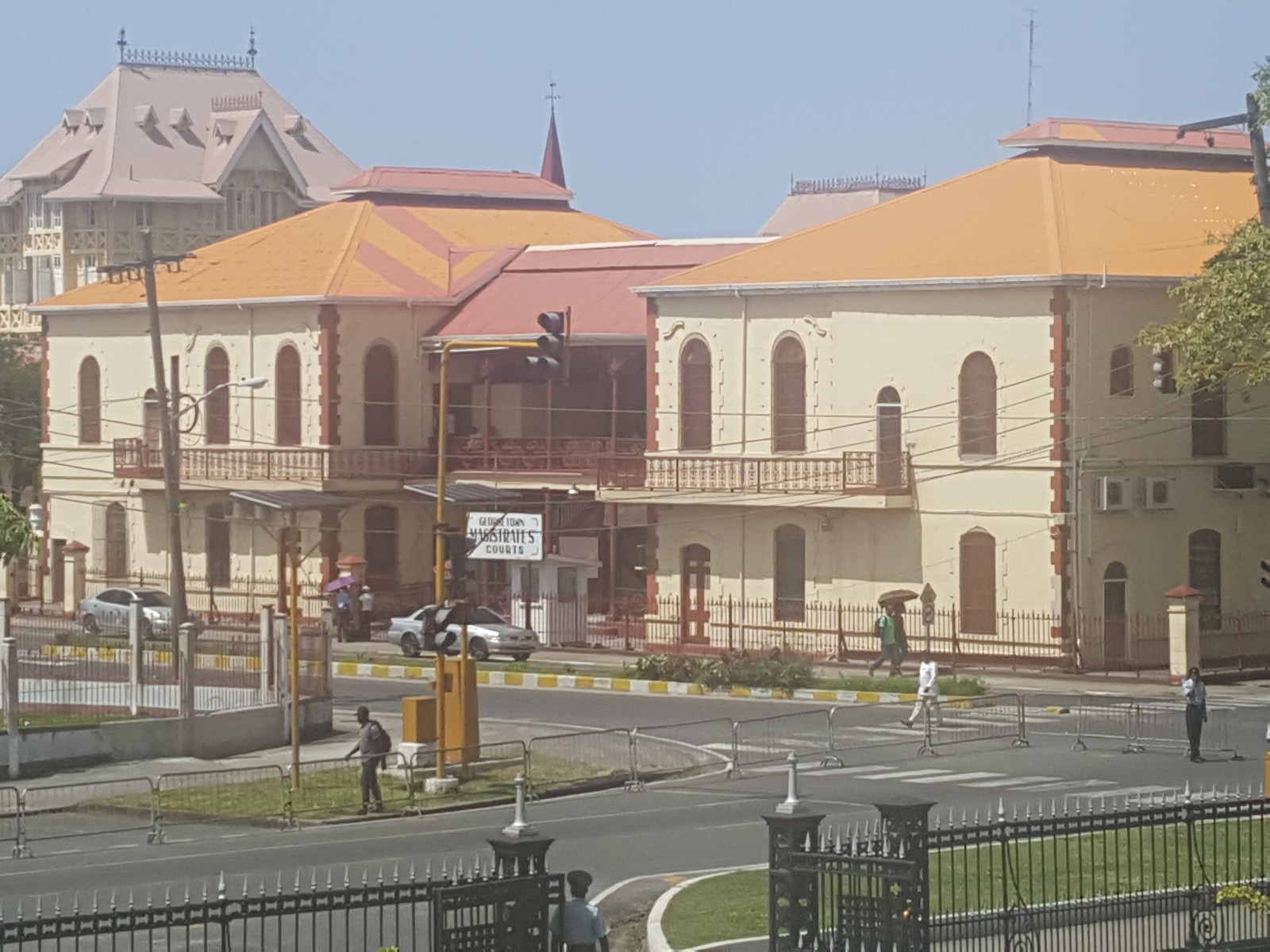
Businessman on attempted abduction charge granted GY$1 million bail
On Friday, July 3, 2026, a 36-year-old city businessman from Georgetown, Guyana was granted one million Guyanese dollars in bail after being formally charged with attempted abduction, court documents confirm.
Avishkar Singh, a resident of 208 Alexander Village in Greater Georgetown, faces an indictable charge connected to an alleged incident that occurred on June 30, 2026. The person identified as the intended target of the alleged plot is Joshua Samaroo.
Singh’s legal representative, attorney Joel Persid-Edmond, told local outlet Demerara Waves Online News that bail was approved by Chief Magistrate Faith McGusty following more than 60 minutes of legal arguments from both the prosecution and the defense. Persid-Edmond told reporters that he presented a clear case to the court asserting the charge against his client is unfounded, claiming the entire accusation is a failed conspiracy to frame Singh for a crime he did not commit.
The case is scheduled to return to court for further proceedings on July 29, 2026.
The incident traces back to a police operation launched by the Guyana Police Force, which initially categorized the event as an attempted kidnapping. According to initial police statements, investigators launched an operation that uncovered allegations Singh had arranged and handed over a sum of cash as partial payment to other parties to carry out the kidnapping of the male victim.
Following the operation, Singh was taken into police custody, and the sum of cash allegedly involved in the arrangement was seized as evidence for the ongoing case.
-
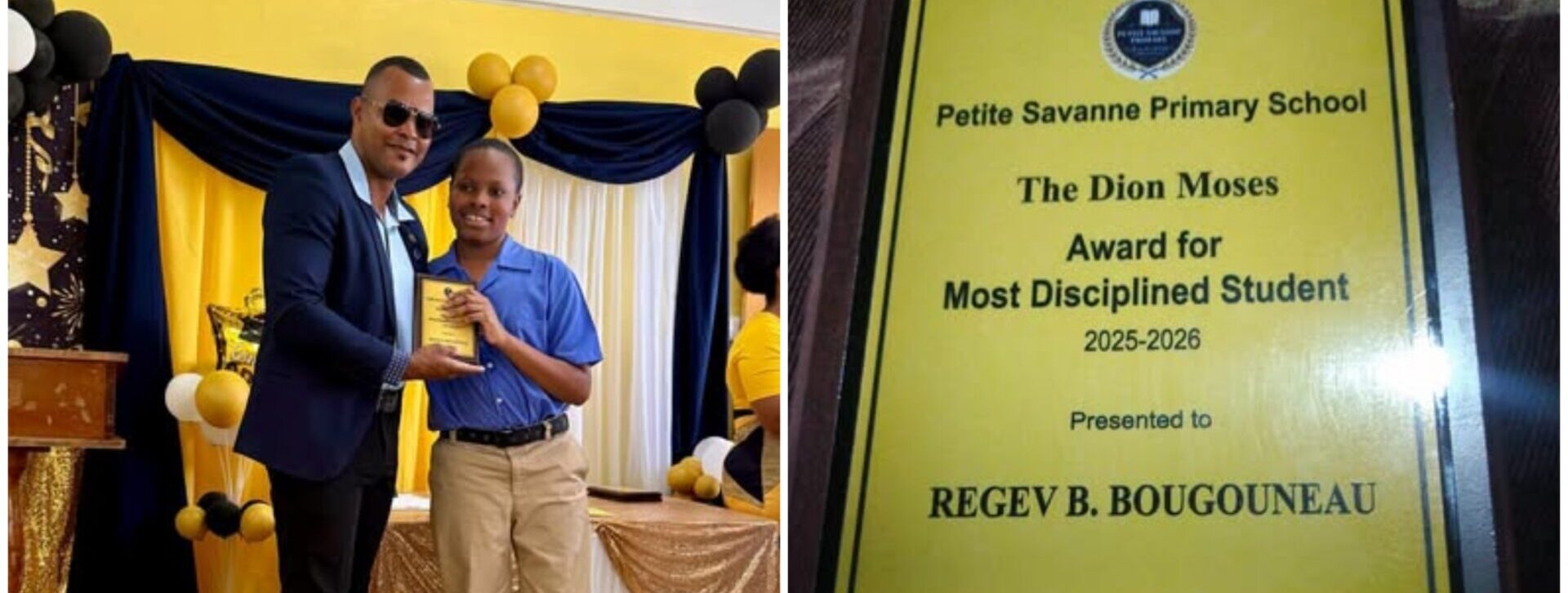
Acting Sergeant Dion Moses presents discipline award at Petite Savanne Primary graduation
On July 1, 2026, the graduation and annual awards ceremony of Petite Savanne Primary School in Dominica hosted a special recognition segment led by a local law enforcement officer, highlighting an ongoing partnership between the national police force and island educational institutions.
Acting Sergeant Dion Moses took to the stage during the event to present the inaugural Dion Moses Most Disciplined Student Award to graduating student Regev B. Bougouneau, who was selected for the honor out of all pupils at the school.
As outlined in an official announcement shared to the Commonwealth of Dominica Police Force’s public Facebook page, the award was created to celebrate students who maintain exceptionally high standards of conduct across an entire academic year. To earn the distinction, candidates must consistently show unwavering self-discipline, respect for peers and staff, a strong sense of personal responsibility, and behavior that serves as a model for other students throughout the school community.
This awards presentation is not an isolated event, but a core component of the Commonwealth of Dominica Police Force’s wider Community Policing Programme. The program was developed with a clear dual mission: to build deeper, trust-based connections between local law enforcement teams and educational institutions across the island, and to create consistent, positive opportunities for police officers to engage with Dominica’s young population outside of traditional law enforcement contexts.
In its statement, the police force emphasized that the long-term goal of this youth-focused initiative is to nurture strong moral character among school-aged children. By publicly celebrating positive behavior and outstanding conduct, organizers hope to inspire young Dominicans to practice intentional decision-making from an early age, empowering them to grow into engaged, responsible leaders who will contribute positively to their local communities in the years ahead.
Along with recognizing Bougouneau’s achievement, the police force’s Facebook post extended formal congratulations to every graduating student of Petite Savanne Primary School’s 2026 class, wishing each cohort member smooth transitions and ongoing academic achievement as they advance to the next stage of their educational careers.
-

Derde helft WK 2026: Van underdog naar helden, Egypte overwint Australië in epische strijd
The 2026 FIFA World Cup delivered another breathtaking, drama-filled encounter at Dallas Stadium on July 3, as Egypt etched their name into the nation’s football history books with a 4-2 penalty shootout victory over Australia to book their spot in the tournament’s Round of 16. After 120 minutes of intense, end-to-end action ended locked at 1-1, Hossam Abdelmaguid slotted the decisive spot-kick to seal a milestone long awaited by Egyptian football fans: the country’s first ever knockout stage win at a men’s World Cup, ending a 92-year winless drought in World Cup matches dating back to their debut appearance in 1934.
From the opening whistle, Egypt asserted themselves as the dominant side, holding 64% of possession in the first 15 minutes and displaying sharp, technically proficient build-up play. Australia set up in a flexible defensive shape, shifting between a 3-4-3 and 5-4-1 formation to soak up pressure and hit Egypt on rapid counter-attacks through wingers Jordan Bos and Nestory Irankunda. The Socceroos’ pace created several early scares for Egypt’s backline, but Rui Vitoria’s side retained firm control of the game’s tempo.
Egypt broke the deadlock in the 13th minute, when a short free-kick routine from captain Mohamed Salah left the ball bouncing loose inside Australia’s penalty area. Midfielder Emam Ashour launched a powerful, perfectly placed header past goalkeeper Patrick Beach to open the scoring, sending the Egyptian bench into celebration and shifting tangible pressure onto the Socceroos.
Australia responded with characteristic resilience, ramping up their attacking intensity in search of an equalizer. They came desperately close to leveling the score when Cristian Volpato’s long-range speculative strike cannoned off the crossbar, and Bos remained a constant threat down the left flank, but poor finishing let the Socceroors waste all their promising opportunities. The match grew increasingly physical as the first half wore on, with key players including Bos and Egypt’s Mohamed Hany picking up minor injuries that disrupted their rhythm. Egypt went into halftime holding a narrow 1-0 lead, with Australia facing an uphill battle to keep their World Cup campaign alive.
The second half exploded into action immediately, with Egypt missing a golden opportunity to double their lead through Omar Marmoush. Australia capitalized on their lucky break just eight minutes after the break, when Mohamed Hany deflected a cross into his own net to level the score at 1-1, breathing new life into the Socceroos and forcing Egypt onto the back foot. Both managers made tactical substitutions to inject fresh energy into their sides, but Salah was largely restricted by his ongoing injury issues, failing to influence the game as he had in the group stage.
As full-time approached, tension grew around the stadium with a string of physical duels and half-chances for both sides that failed to find the back of the net. In stoppage time, Beach pulled off a world-class save to deny Ramy Rabia’s point-blank header, keeping the score tied and forcing the match into extra time.
Fatigue and raw nerves dominated the extra 30 minutes, with Egypt continuing to hold the lion’s share of possession and push for a winning goal. Even carrying an injury, Salah produced several dangerous attacking runs that kept Australia’s defense scrambling, while captain Harry Souttar led the Socceroos’ rearguard with a series of critical blocks to keep Egypt out. With no additional goals after 120 minutes, the fate of both teams would be decided from the penalty spot.
The shootout got off to a disastrous start for Australia, when Souttar dragged his opening penalty high over the crossbar. Egypt held their nerve throughout the series: Salah even chipped a stylish Panenka penalty past goalkeeper Mat Ryan, who had been brought on at the last minute specifically for the shootout in a tactical swap that failed to pay off for the Socceroos. Two Australian defenders, including young prospect Lucas Herrington, missed their penalties, leaving Abdelmaguid to slot the winning spot-kick that sent Egypt through.
For Egyptian players and fans, the result was an emotional, historic moment. A visibly tearful Salah could barely contain his joy after the final penalty, celebrating a milestone that has eluded Egyptian teams for nearly a century. For Australia, the exit brings disappointment, but the side earned widespread praise for their spirited fightback against the pre-match favorites.
Egypt will now remain in Dallas for their Round of 16 clash, where they will face the winner of the group stage match between Argentina and Cape Verde, as they look to continue their historic run deep into the 2026 World Cup.
-
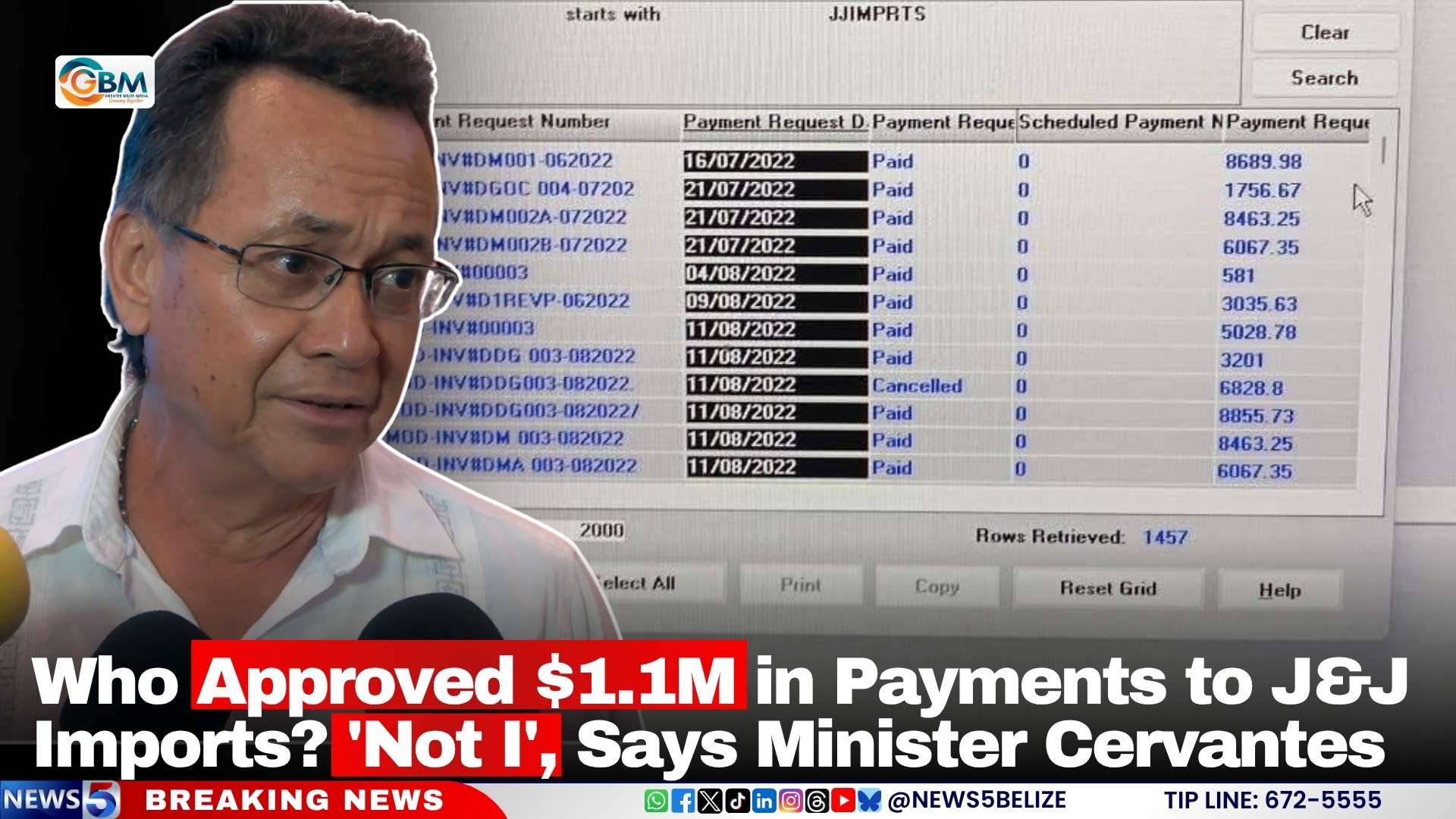
Who Approved $1.1M in Payments to J&J Imports? ‘Not I’, Says Minister Cervantes
In a developing political controversy rocking Belize’s governing administration, Orange Walk North Area Representative and Minister Ramon “Monchi” Cervantes has issued a categorical denial of any involvement in awarding more than $1.1 million in government procurement contracts to J&J Imports, a firm connected to his family, between 2022 and 2025.
The controversy emerged after local outlet News Five obtained and reviewed leaked internal government financial records from the SmartStream system, which detailed the steady stream of payments from the Ministry of National Defence to the import business. Cervantes, who acknowledged a personal familial tie to one of the company’s lead owners, pushed back against any implication of improper influence in an interview, stating firmly: “I had nothing to do with it. I had no involvement in that, at all.”
A deeper examination of the leaked documents reveals a notable pattern in the payment structure: the vast majority of the disbursements were split across dozens of individual invoices each valued below the $10,000 threshold. That same structure was used for more than $275,000 in separate payments to Enrique Javier Requena, another business associate linked to J&J Imports, between 2021 and 2022.
Crucially, as of this reporting, News Five has not uncovered concrete evidence that the invoicing structure itself is illegal, nor that J&J Imports or its associates have committed any explicit wrongdoing. The documents are part of a broader ongoing audit of procurement practices across the entire Ministry of National Defence, launched to examine transparency and compliance in government contracting.
Prime Minister John Briceño has moved quickly to reassure the public that political connections will not shield anyone found to have broken rules. “If there was any wrongdoing, be it public officers or politicians, they will have to answer,” Briceño stated, confirming that no political protection will be extended to individuals implicated in misconduct should the audit uncover violations.
-
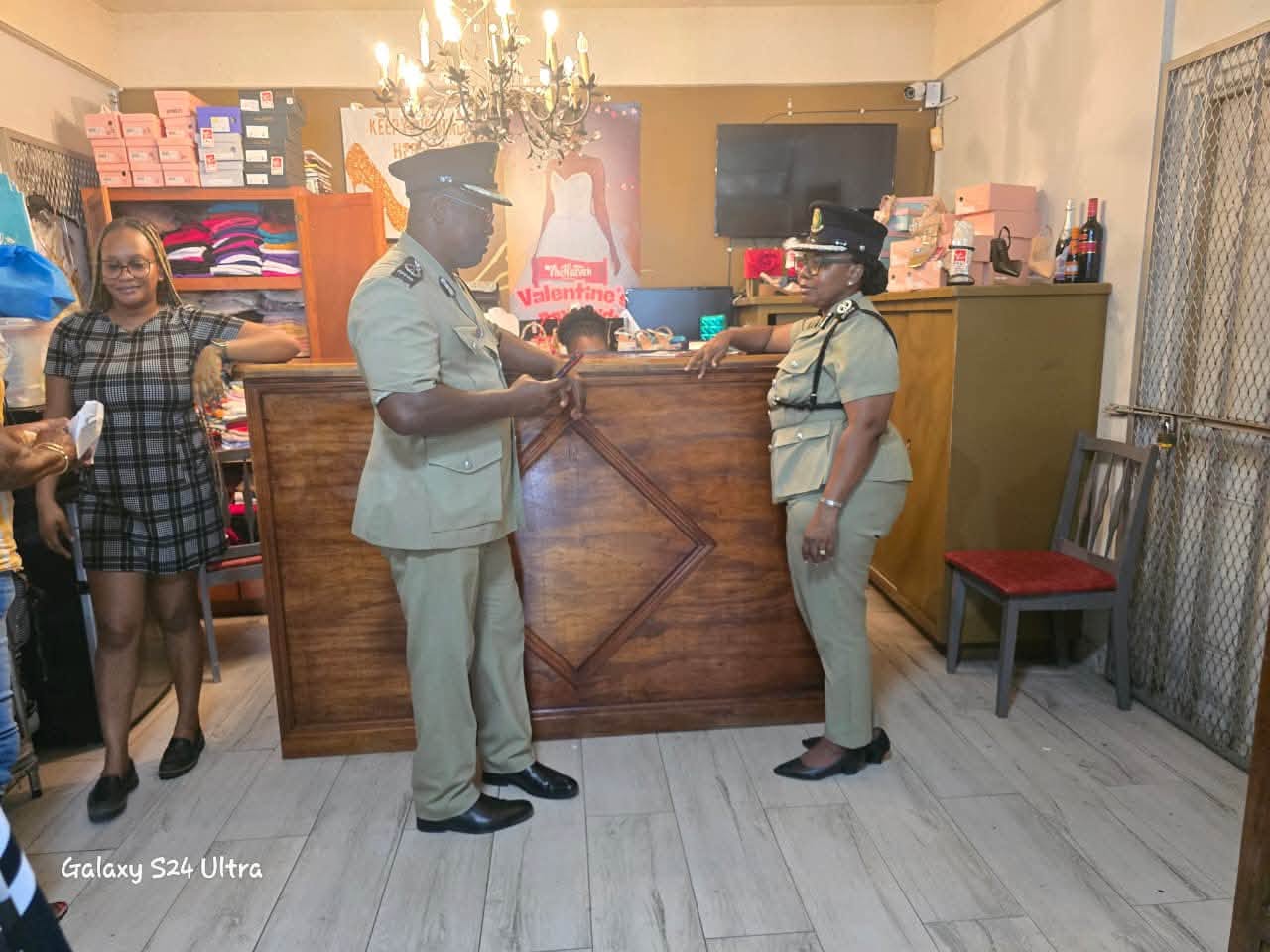
Police Launch Public Awareness Campaign Ahead of CHOGM Security Lockdown Exercise
As the Caribbean nation of Antigua and Barbuda gears up to host the 2026 Commonwealth Heads of Government Meeting (CHOGM), local law enforcement has kicked off a critical pre-event public engagement campaign to prepare communities for an upcoming major security test. Officers from the Royal Police Force of Antigua and Barbuda are currently holding face-to-face sessions with residents and local business owners to walk them through the details of next week’s Hard Lockdown Security Exercise, a key training milestone for the high-profile international summit.
During these information sessions, police personnel have outlined all key operational arrangements that will be in place during the simulation drill. Attendees have been briefed on the temporary disruption to daily movement and access, including planned temporary road closures, controlled entry limitations to specially marked security zones, and alternate traffic routing arrangements designed to keep essential movement flowing while the exercise is underway.
The primary goal of this proactive outreach campaign is to ensure that all community stakeholders have enough time to adjust their personal and professional plans ahead of the drill, minimizing avoidable disruption to local commerce and daily life while allowing security teams to run a full, unimpeded test of their protocols. Throughout the awareness drive, officers have also set aside time to address every query and concern raised by members of the public, ensuring clear and open communication between law enforcement and the communities they serve.
The full-scale Hard Lockdown Security Exercise is set to take place next Friday. The simulation is crafted to push Antigua and Barbuda’s security infrastructure and emergency response systems to the test, allowing organizers to identify gaps, refine protocols, and ensure that all teams are fully prepared to deliver a safe and secure environment for the 2026 CHOGM. This kind of pre-event drill is a standard and critical part of planning for major international gatherings, helping host nations mitigate security risks ahead of the arrival of global heads of state and other high-level delegates.
Police officials have publicly expressed their gratitude to Antigua and Barbuda’s residents and business community for their ongoing cooperation and support during the initial awareness phase of the project. They have also reiterated a call for all members of the public to stay updated on official announcements, adjust their upcoming plans accordingly, and work with law enforcement to ensure the exercise runs smoothly and delivers the data needed to successfully prepare for 2026’s major international event.
-

Earthquake Recorded East of Antigua and Barbuda
A seismic event has been registered in the Atlantic Ocean off the eastern coast of Antigua and Barbuda, according to preliminary data published in an interactive seismic map by the University of the West Indies Seismic Research Centre (UWI SRC).
Geographic data from the map confirms that the earthquake’s epicenter sits far east of the two-island nation, placing it outside the active earthquake zone of the Leeward Islands chain, a sub-region of the Lesser Antilles that sees frequent seismic activity. In the initial public release of this monitoring data, the UWI SRC did not include key technical details about the quake, such as its measured magnitude on the Richter scale, subsurface depth of the epicenter, or any anecdotal reports from local communities that the tremor was felt by residents.
As a regional scientific body, the UWI Seismic Research Centre holds the formal mandate of tracking all tectonic and seismic activity across the entire Eastern Caribbean. Through its expansive, interconnected regional monitoring network, the center regularly publishes fast preliminary location data for seismic events shortly after they are detected, as this monitoring work provides critical early awareness for local emergency management agencies across the Caribbean archipelago.
In the hours immediately following the detection of this event, no official or unofficial reports have emerged of structural damage to infrastructure, or harm to human populations in nearby island territories, suggesting the quake was too small or too distant to cause impact on land.
-
Police recover illegal firearms, more than 1 000 rounds of ammunition in operation
Against a backdrop of rising serious and violent crime across the Caribbean island nation of Saint Lucia, the Royal Saint Lucia Police Force (RSLPF) has concluded a sweeping, multi-unit law enforcement campaign that has delivered significant results against illegal weapons, drug trafficking and organised crime. The operation, codenamed Operation Zero Hour, ran for six weeks from May 24 through July 1, launched specifically to counter a growing wave of offences tied to unregistered firearms, prohibited narcotics, dangerous weapons and coordinated organised criminal activity.
Unlike scattered reactive patrols, Operation Zero Hour was built on actionable intelligence and coordinated collaboration across almost every branch of the RSLPF. Officers from the specialized Gangs, Narcotics and Firearms Unit (GNFU), Special Services Unit (SSU), Criminal Investigations Department (CID), Police Marine Unit (PMU), Division of Road Safety and Traffic Investigations (DRSTI), and Vulnerable Persons Team (VPT) joined forces with uniformed patrol teams and territorial police divisions covering the Northern, Central and Southern regions of the island. This cross-unit partnership allowed law enforcement to cover both land and maritime entry points that criminal networks often exploit to move contraband.
The operation’s core strategy centered on proactive intervention rather than just responding to crimes after they occurred. Teams focused their efforts on identifying and targeting known repeat offenders, executing court-authorized search warrants based on gathered intelligence, breaking up supply chains for illegal firearms and narcotics, increasing uniformed police presence in high-crime areas to deter potential offending, and stopping violent criminal acts before they could be carried out.
Over the six-week campaign, law enforcement officers carried out an extensive schedule of enforcement activity: 484 individuals were searched, 4,851 vehicles were stopped for checks, 216 of those vehicles and 17 private premises were searched, and 49 judicially approved search warrants were executed across the island. To counter smuggling through maritime routes, officers stopped and boarded 37 commercial and private vessels, and carried out seven targeted sweeps of courier services that are sometimes used to move illegal contraband. Four dedicated highway patrol operations were also run to intercept vehicle-borne shipments of illegal goods.
Enforcement outcomes of the operation reflect the scope of the effort: authorities made nine arrests for traffic-related offenses, 16 arrests on drug charges, seven arrests for illegal firearms possession, and a further 12 arrests for serious violent offenses including murder, attempted murder, armed robbery and aggravated assault. To date, 12 of the individuals arrested have been formally charged with criminal offences. Along with arrests, officers seized seven unregistered illegal firearms, 1,006 rounds of live ammunition, and 54 assorted dangerous weapons. Three dedicated cannabis eradication operations were also carried out to destroy illegal cannabis crops being cultivated for the illegal drug trade. Beyond contraband seizures, police impounded 48 unregistered or unroadworthy vehicles, issued 453 traffic citations for violations, and issued 45 formal police cautions for minor offenses.
In an official statement following the conclusion of the operation, the RSLPF emphasized that the removal of these illegal weapons and contraband from communities represents a major blow to criminal operations across the island. The force noted that the seizures have almost certainly prevented multiple planned acts of violence that would have otherwise threatened public safety. The wide range of activity carried out during Operation Zero Hour – from executing search warrants to drug arrests, crop eradication, and extensive checks of vehicles and vessels – demonstrates the RSLPF’s ongoing commitment to clearing illegal firearms, drugs and dangerous offenders from Saint Lucia’s communities, the statement added.
The operation also underscored the critical value of coordinated collaboration between specialized police units and territorial divisions, the RSLPF said. The combination of targeted intelligence gathering, sustained consistent enforcement, and proactive, prevention-focused policing has not only improved immediate public safety but also helped strengthen public confidence in local law enforcement. Looking ahead, the RSLPF is continuing to call on members of the public to support law enforcement efforts by sharing any information they have about ongoing criminal activity. Tips can be submitted anonymously through the dedicated Crime Hotline at 555, via the official Crime Hotline mobile app, or by visiting any local police station across the island.
-
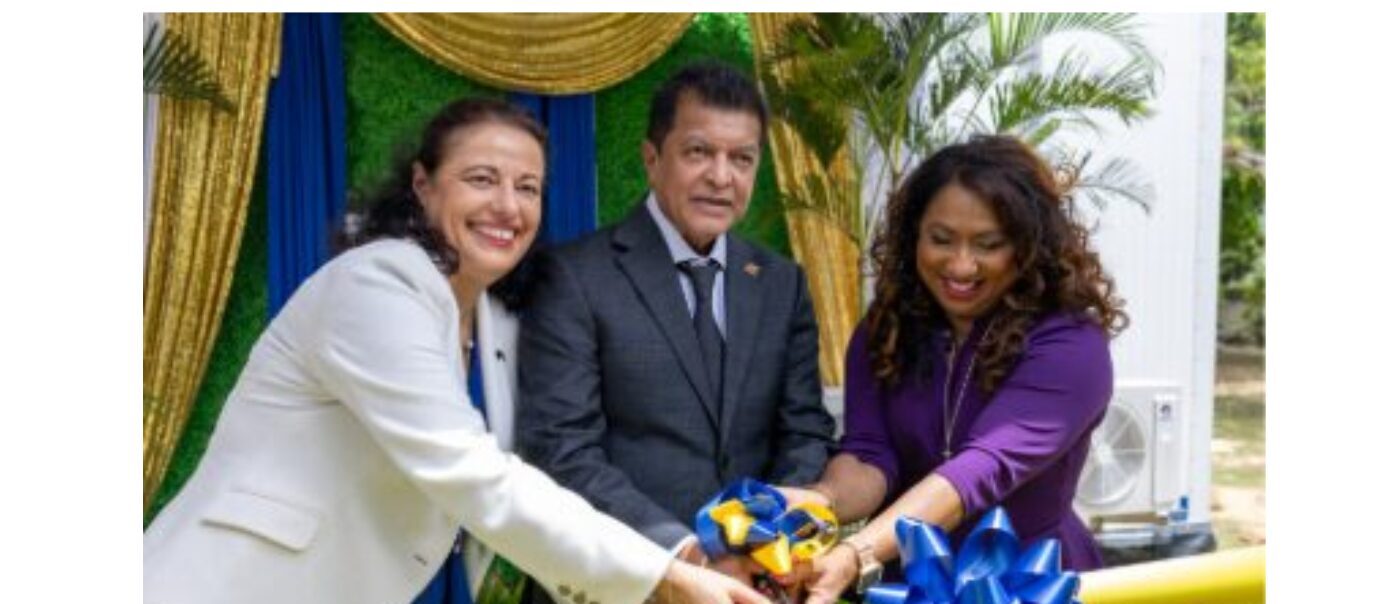
CARPHA launches regional emergency operations centre to strengthen Caribbean health security
On July 3, 2026, the Caribbean Public Health Agency (CARPHA) formally launched the long-awaited Caribbean Regional Emergency Operations Centre (CREOC) during an official inauguration ceremony held at its headquarters in Port of Spain, the capital of Trinidad and Tobago. This landmark public health infrastructure initiative, funded by the European Union through the 11th European Development Fund’s Health Security Strengthening Programme, marks a major step forward in the Caribbean’s collective ability to confront cross-border public health risks.
The opening ceremony was co-led by three key stakeholders: Trinidad and Tobago’s Minister of Health Dr. Lackram Bodoe, European Union Ambassador to Trinidad and Tobago Her Excellency Cécile Tassin, and CARPHA Executive Director Dr. Lisa Indar, underscoring the shared regional and international commitment to strengthening Caribbean health resilience. Designed to function as the central coordinating hub for public health emergency action across CARPHA’s 26 member states, the new facility fills a critical gap in the region’s disaster and outbreak response framework.
Speaking at the event, Dr. Bodoe emphasized that health security is inherently a collective responsibility. “No single country, regardless of its available resources, can tackle the modern cross-border public health threats we face today alone,” he noted. “Our greatest strength comes from intentional partnership and regional collaboration.” Dr. Indar echoed this sentiment, pointing to the unique vulnerabilities of the Caribbean’s Small Island Developing States that make coordinated action non-negotiable. “Our economies, borders, and communities are deeply interconnected, which means any public health threat can spread across the entire region in a very short timeframe,” she explained. “This new operations centre will dramatically upgrade our capacity to detect threats early, align regional response efforts, and safeguard the health and well-being of all Caribbean people.”
Ambassador Tassin framed the CREOC as more than just a physical facility—it is a tangible symbol of regional solidarity. “This Centre represents the Caribbean’s shared determination to work together, strengthen regional health security, and protect its people through collective preparedness and pooled expertise,” she said.
The facility has been built and structured in full alignment with the World Health Organization’s (WHO) Public Health Emergency Operations Centre Framework, and has earned a Type C classification—the highest operational ranking under the WHO’s global system. This classification enables the CREOC to coordinate large-scale, complex public health emergencies that span multiple countries, while also providing critical support to national emergency operations centres across the Caribbean.
Powered by CARPHA’s custom-built Regional Integrated Early Warning Surveillance and Response System (RIEWSS), a tool tailored specifically to the Caribbean’s unique public health landscape, the centre leverages advanced surveillance technology to speed up early threat detection and improve situational awareness for decision-makers. When paired with standardized timeliness metrics and integrated multi-sector response mechanisms, the system is expected to cut response times and improve coordination between member states during crises. Beyond outbreak monitoring, the CREOC will serve as the central regional coordination point for ministries of health, national disaster management agencies, regional intergovernmental bodies, and international partner organizations. It will oversee deployment of specialized technical response teams, coordinate emergency logistics, lead region-wide risk communication efforts, and maintain a unified, real-time operating picture for all stakeholders during public health events.
The development of the CREOC was directly shaped by hard-won lessons from recent regional crises. The COVID-19 pandemic, repeated large-scale dengue outbreaks, and climate-driven disasters including Hurricanes Melissa and Beryl all exposed critical gaps in fragmented regional coordination, creating a clear urgency for a dedicated central hub. To adapt to the full range of possible scenarios, the centre will operate under a flexible scalable activation model, ranging from routine daily surveillance and monitoring to full-scale regional emergency activation, allowing CARPHA to rapidly scale up coordination efforts as situations evolve.
Moving forward, the CREOC will lead and support regional responses to a broad spectrum of public health emergencies, including infectious disease outbreaks, severe weather events that carry public health risks, environmental and chemical incidents, mass gatherings, and any other emergency with regional or international public health implications. It will also support Caribbean countries in meeting their obligations under the International Health Regulations (2005) by strengthening regional surveillance systems, emergency coordination, operational readiness, and cross-border information management.
For CARPHA, the inauguration of the Regional Emergency Operations Centre reflects the agency’s long-standing commitment to advancing regional health security and ensuring all Caribbean nations are better prepared to confront both existing and emerging public health threats in the years ahead.
-
‘Share the Care’: Govt launches campaign to promote men as caregivers
Barbados has ushered in a historic shift in family dynamics and gender equity, rolling out a national public awareness campaign called ‘Share the Care’ to encourage men and boys to take on more active caregiving responsibilities, paired with the country’s first-ever legislated paid paternity leave policy. The dual initiative, spearheaded by the Ministry of People Empowerment and Elder Affairs in partnership with the Bureau of Gender Affairs, aims to dismantle centuries-old entrenched gender norms that have long confined care work exclusively to women across the Caribbean island.
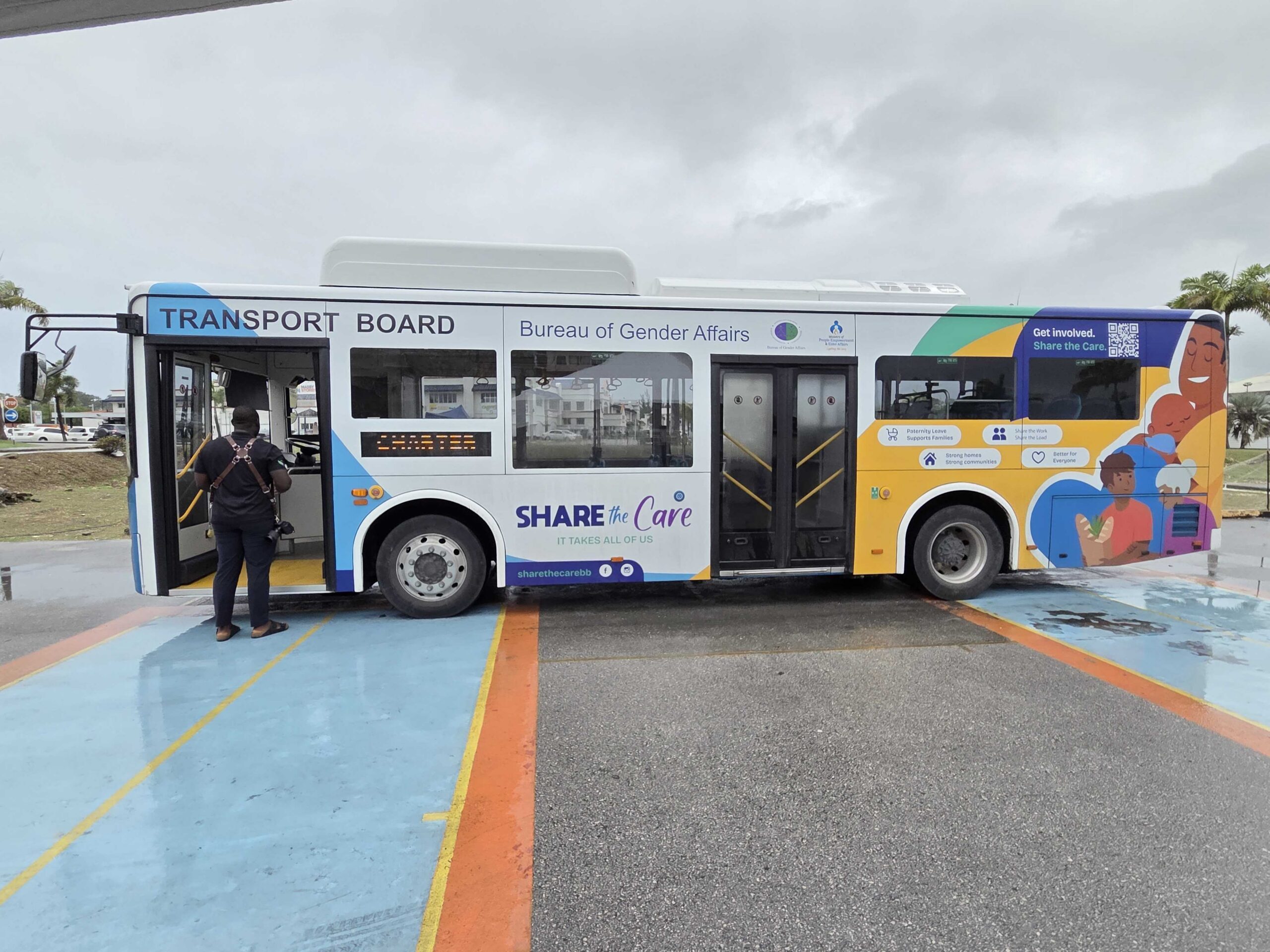
The campaign made its public debut on one of Barbados’ modern electric public buses, a deliberate choice to maximize visibility among everyday commuters as it builds support for the newly implemented paternity leave legislation contained in the updated Family Leave Act. Passed by the government in October of the previous year, the landmark law not only expands maternity leave from 12 to 14 weeks for single births and to 17 weeks for multiple births, but also guarantees all new fathers three weeks of paid paternity leave — a policy first for both Barbados and the broader CARICOM regional bloc.
Speaking at the official launch to journalists and government stakeholders, Minister of People Empowerment and Elder Affairs Adrian Forde stressed that building a truly progressive, inclusive society demands a nationwide cultural shift in how caregiving is framed and valued across all communities. He framed the ‘Share the Care’ campaign as an open call for Barbadian men to reevaluate their roles within their homes, extended families, and local neighborhoods.
“Share and care. We must understand and appreciate that sharing is caring, but equally, if you juxtapose it, caring is sharing as well,” Forde told attendees. “It is for us, especially our men, to be imbued with a sense and appreciation of caring — caring for their loved ones, caring for their extended family, caring for their neighborhoods, caring for their communities, and, by extension, caring for Barbados.”
Forde positioned the new paternity leave legislation as a foundational policy step toward closing gender equity gaps in domestic life, noting that the guarantee removes the structural barriers that once prevented fathers from being present for the earliest, most formative moments of their children’s lives. What was once a distant dream for many working fathers is now a protected right, he emphasized.
From the government’s earliest days in office, leaders have centered men as equal partners in national conversations around gender equity, Forde added. “We have said that paternity leave must not only be a part of men’s imagination, it must all be part of the active conversation, and that is why we moved a place to have paternity leave for men so that they take care of their little babies and share that love, care, and attention that is desperately needed.”
Local creative agency Visual Element has been tapped to lead the strategic and creative execution of the national campaign. Ardith Burgess, the agency’s marketing team lead, explained that the initiative’s core mission is to break down rigid gender stereotypes that have for generations assigned all care work — from childcare to elder care to caring for sick family members — to women. The need for more balanced caregiving has grown increasingly urgent as Barbados grapples with a rapidly ageing population, which has put growing pressure on women to take on unpaid care work, she noted.
“The whole focus of this campaign was generated by the legislation that has been recently enacted,” Burgess said. “We’ve been pigeonholed by gender roles where people only think that caring for children, caring for the elderly, caring for someone who’s ill, is a responsibility of our womenfolk. We want to move beyond that where anybody can share care and don’t have a complex about it or assume that that is the responsibility of the females in the household.”
Acknowledging long-standing societal challenges including widespread paternal absenteeism and a lack of positive male caregiving role models in many communities, Burgess said campaign leaders recognize shifting culture will take time. The initiative is designed to build a sustainable framework for long-term behavioral change, rather than offering a quick fix, she explained.
Looking beyond public media advertisements, the Bureau of Gender Affairs plans to integrate the campaign’s core values into national school curricula starting from primary education, to embed equitable caregiving norms in younger generations early on. “We want to be able to have our men and boys more engaged in terms of not just waiting for a partner or significant other to have a baby, but to be involved as their parents age, as their aunts age, that everybody puts their hand to the floor, in essence, to give care,” Burgess said. “Our whole intent is to spread the word, have people more aware of the legislation, and we would like to take it further into the school system — not just secondary schools, primary schools — to let boys know that sharing care starts at a young age.”
To reach broad audiences across the island, the campaign runs eye-catching mobile advertisements on Barbados’ national transit system, each equipped with scannable QR codes that connect commuters to free educational resources and the Bureau of Gender Affairs’ social media channels. In addition to transit ads, the ministry and its partner organizations will host community outreach pop-up events across every part of the island, featuring public information sessions and branded promotional materials to drive local engagement.
The official launch event brought together a cross-section of key leaders in policy and social development, including Wayne Marshall, Permanent Secretary in the Ministry of People Empowerment; William Warner, Director of the Bureau of Gender Affairs; Nicole Daniel, Social Project Development Manager from local non-profit One Family; and Kim Bobb-Waithe, Acting Director of the National Wellbeing and HIV Commission.