博客

  • A Government response to the twisted distortions of the Observer concerning the  White Paper on U.S. proposals on Third Country Nationals

    A Government response to the twisted distortions of the Observer concerning the  White Paper on U.S. proposals on Third Country Nationals

    A recent opinion piece published by the online edition of *The Observer* on July 3, 2026, framing the Government of Antigua and Barbuda’s White Paper on U.S. third-country national proposals as a cause for national alarm has been called out by the administration as a deliberate, partisan campaign of misinformation designed to sow public distrust rather than advance constructive national dialogue.

    At the heart of the *Observer*’s misleading narrative, the government argues, is the false framing of Antigua and Barbuda’s willingness to enter diplomatic discussions with the U.S. as an implicit surrender of core national principles. This characterization could not be further from the reality of the government’s approach, officials contend: for small island nations like Antigua and Barbuda, national security and sovereignty are not protected by shutting down dialogue with key international partners. Instead, strength comes from deliberate, careful engagement: clearly stating national red lines, and refusing any terms that would compromise the country’s sovereignty, legal framework, or core national interests – exactly the approach the current administration has adopted throughout the process.

    Contrary to claims of a secret backroom deal, the White Paper explicitly confirms that the non-binding Memorandum of Understanding signed in December 2025 grants Antigua and Barbuda full discretionary authority to accept or reject any individual third-country national case, with no automatic or permanent arrangement for receiving migrants in place. Far from representing capitulation to U.S. pressure, this structure preserves full sovereign control over every decision, the government emphasizes.

    The *Observer* has also attempted to manufacture scandal by accusing the government of hiding the diplomatic process from the public, arguing that failure to announce every incremental step of sensitive negotiations amounts to deception. The administration pushes back on this claim, noting that high-stakes diplomacy is not public performance, and responsible governance requires testing proposals, rejecting unacceptable terms, and refining the government’s position before bringing a formal proposal to parliament and the public – exactly the outcome delivered through the published White Paper.

    In fact, the publication of the White Paper itself is concrete proof of the government’s commitment to transparency, the government says. The document lays out full contextual background, identifies inherent risks, outlines flaws in the original U.S. draft proposal, states the government’s core concerns, and details the strict conditions under which any cooperation could be considered. No government seeking to conceal its actions would publish a full public White Paper and table it before parliament – a step no other country that has signed a third-country national agreement has taken to date.

    Another manufactured accusation from the *Observer* is the claim of hypocrisy, arguing the government projected public firmness while holding private negotiations. In response, the government notes there is no contradiction between these two stances: uncompromising firmness without negotiation is empty political posturing, while negotiation without clear firmness is unforced weakness. Instead of either accepting the original U.S. proposal outright or walking away in a gesture of performative outrage, Antigua and Barbuda engaged in good-faith discussions, identified unacceptable terms, rejected inadequate provisions, and put forward a counter-proposal tailored to the country’s unique legal framework, geographic size, and institutional capacity – a demonstration of skilled statecraft, not weakness.

    The *Observer*’s fixation on the figure of 10 proposed third-country nationals for 2026 is equally misleading, the government argues. The outlet frames the number as a major concession, inviting the public to treat the issue as a simple arithmetic question, but the reality is far different. The government has repeatedly stressed there will be no permanent program, no automatic flow of migrants, and no open-ended obligation. The figure of 10 is a tightly constrained provision of the government’s counter-proposal, bound by strict conditions including full pre-approval of documentation, full upfront funding, the right to reject any individual case, and a mandatory full review in 2027. Framing this limited proposal as the government throwing open the country’s borders is not objective analysis – it is intentional political propaganda.

    The same misrepresentation applies to the *Observer*’s coverage of legal risks, where the outlet frames concerns around non-refoulement, asylum, statelessness, legal uncertainty, and long-term support obligations as damning revelations hidden by the government. In reality, the government itself identified and published these exact concerns in the White Paper. The administration has not hidden these risks; it has laid them out clearly for parliament and the public. It is precisely because these risks are tangible that the government has rejected any permanent program, and insisted that no arrangement can move forward without strict eligibility rules, clear legal status for all individuals, full financial coverage, and binding responsibility for the U.S. to retake any migrants if needed.

    While the dramatic questions the *Observer* raises – around housing, employment, monitoring, ministerial responsibility, and contingency plans for unforeseen problems – are legitimate on their face, they do not undermine the government’s position. Instead, they reinforce the need for the careful, cautious approach the administration has already adopted, which addresses each of these concerns through its proposed conditions.

    The *Observer* also feigns outrage over the White Paper’s discussion of reciprocal national benefits, suggesting the document opens the door to Antigua and Barbuda trading acceptance of migration risk for vague diplomatic favors. But the government counters that any responsible administration must ask a core question: why would Antigua and Barbuda take on the burdens, risks, and political costs of addressing another country’s domestic migration challenges without receiving clear, proportionate benefits for its own people? Strict conditions around full funding, thorough vetting, clear legal status, and U.S. return responsibility are basic safeguards, not inappropriate concessions. Asking for reciprocal benefits for the Antiguan and Barbudan public is not cynical transactionalism – it is the baseline of good governance.

    The most telling partisan tell in the *Observer*’s piece, the government says, is its complaint that parliament should not be turned into a rubber stamp for the deal. In reality, placing the matter before parliament is the correct constitutional step: the government is not avoiding scrutiny, it is actively inviting it, by laying out the White Paper, core principles, risks, and proposed terms for cooperation to elected representatives. Disagreement with the government’s position is legitimate, but it is intellectually dishonest to frame the decision to bring the matter to parliament as evidence of bad faith.

    Nor is the claim that the issue should have been taken first to public town halls rather than parliament credible. The government agrees that public discussion is critical, and the publication of the fact-based White Paper creates space for that discussion to happen on a foundation of accurate information rather than unsubstantiated rumor. But parliament remains the nation’s highest representative body. For an issue touching on core national priorities including sovereignty, immigration policy, public spending, national security, and international obligations, prioritizing parliamentary consideration is not avoiding the will of the people – it is respecting the democratic institutions through which the public exercises self-governance.

    At its core, the *Observer*’s article fails to address the actual central issue of the debate, the government emphasizes. The administration has never proposed that Antigua and Barbuda become a permanent destination for other countries’ deportees. It has taken the exact opposite position: as a small nation with limited land, limited resources, and limited capacity to absorb new migrants, and already handling the return of its own nationals from the U.S., Antigua and Barbuda cannot accept a permanent expectation of receiving non-citizen deportees unless arrangements are put in place that do not place an unsustainable burden on the country’s already overstretched systems.

    This is not a partisan position – it is a national position that prioritizes the shared interests of all Antiguan and Barbudan people. The White Paper does not surrender national sovereignty; it exercises that sovereignty actively. It does not hide risk; it identifies and addresses risk openly. It does not evade public and parliamentary scrutiny; it invites that scrutiny. It does not unconditionally accept the U.S. proposal; it makes clear that any cooperation must be lawful, limited, fully funded, carefully controlled, and aligned with Antigua and Barbuda’s national interest.

    What *The Observer* has produced is not a defense of national interests, the government concludes. It is a partisan attempt to reframe responsible prudence as reckless panic, and professional diplomacy as deliberate deception. On issues of this national importance, the country deserves far better: it deserves serious, honest debate grounded in the full set of facts the government has now openly laid out for parliament and the public.

  • Necasia Ralph of J.T. Ambrose Primary Finishes Third Overall in Grade 6 Assessment

    Necasia Ralph of J.T. Ambrose Primary Finishes Third Overall in Grade 6 Assessment

    A young primary school student has cemented her place among the nation’s top academic performers after an impressive showing in the 2026 Grade Six National Assessment, earning high praise from the country’s top education governing body. Necasia B. Ralph delivered a standout performance across the standardized national evaluation, ultimately ranking third overall out of all participating students. Beyond this national top-three finish, Ralph also claimed a unique distinction: she is the highest-scoring student attending a government-run primary school in this year’s testing cycle.

    In an official congratulatory statement released following the release of assessment results, the Ministry of Education, Science and Technology highlighted the personal qualities that led to Ralph’s success. The statement commended her consistent hard work, unwavering perseverance, strict personal discipline, and relentless commitment to her studies, noting that her landmark achievement is a source of collective pride that extends far beyond Ralph herself. According to the ministry, her success brings honor and celebration to her immediate family, the administrative and teaching staff of her school, and the entire nation.

    The ministry also took the opportunity to acknowledge the critical role that support networks played in nurturing Ralph’s academic growth. It formally recognized the contributions of Ralph’s parents, her classroom teachers, her school’s leadership team, and all other community and educational stakeholders who provided guidance, resources, and encouragement to the young student at every stage of her primary school journey.

    Looking ahead to Ralph’s future academic endeavors, senior ministry officials have encouraged her to frame this impressive accomplishment as a foundational source of motivation, urging her to maintain her pursuit of excellence as she advances through her education. “Let this achievement inspire you to continue striving for excellence as you pursue even greater accomplishments in the years ahead,” the ministry shared in its official message.

    Ralph’s result solidifies her standing among the cohort of highest-achieving sixth-grade students across the country in the 2026 assessment cycle, while marking a notable win for government-run primary education across the nation.

  • Education Minister Daryll Matthew Congratulates Students on 2026 Grade 6 National Assessment Results

    Education Minister Daryll Matthew Congratulates Students on 2026 Grade 6 National Assessment Results

    The release of 2026 Grade 6 National Assessment results in Antigua and Barbuda has drawn widespread praise from the nation’s top education official, who has extended congratulations to every stakeholder involved in supporting student success across the country.

    In an official public statement released following Friday’s result announcement, Education Minister Daryll Matthew lauded the relentless commitment and steadfast determination demonstrated by students, families, teachers, and entire school communities that paved the way for this year’s positive outcomes. Matthew framed the national assessment as far more than a routine test — instead, he positioned it as a critical milestone that marks a key transition point in every young learner’s educational trajectory, crediting the collective collaborative effort of families, frontline educators, and school administrators for driving student achievement across the board.

    The minister reserved special recognition for the nation’s highest-performing students in this year’s assessment. Leading all candidates across the country was Denushka H. Gibbs, a student at Minoah Magnet Academy, who claimed the distinction of the top overall national scorer. Following closely behind in second place was Marlensky J. Salien of Antigua Baptist Academy, who also earned the title of the highest-ranking male student in the nation. Rounding out the top three overall performers was Necasia B. Ralph from J. T. Ambrose Primary School, who achieved the highest score among all candidates attending government-run primary institutions.

    Beyond individual honors, Matthew also highlighted the institutional success of Post Millennial Academy, which outperformed all other schools in the country by placing 12 students on the prestigious National Top 100 list, the highest number of any participating school this year.

    Even as the nation celebrates the standout success of top-ranked candidates and high-performing schools, Matthew took the opportunity to reframe popular narratives around educational success, stressing that examination rankings should never be the only measure of a student’s potential or achievement.

    Addressing every student who sat for this year’s assessment, Matthew said: “To every student, whether your name appears on a list or not, be proud of your efforts. This is just one milestone on your educational journey. Keep believing in yourselves, keep working hard, and continue striving for excellence.”

  • PM Briceño: “We’re Not Going to Cover This Up”

    PM Briceño: “We’re Not Going to Cover This Up”

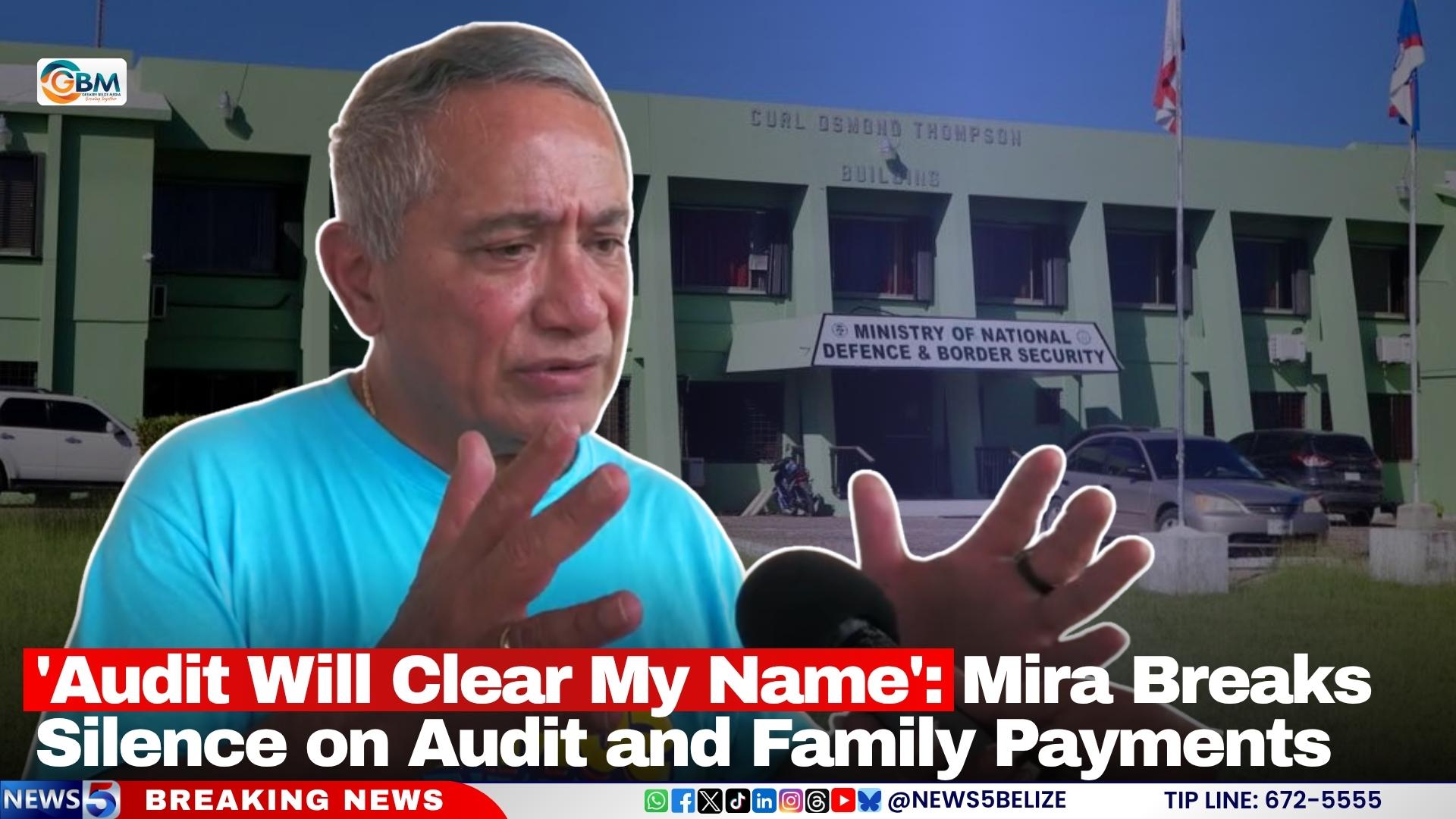
    On July 3, 2026, Belizean Prime Minister John Briceño made a public commitment that his administration will not conceal any findings from an ongoing investigation into procurement irregularities at the Ministry of National Defence and Border Security, framing the probe as a critical test of his government’s core campaign pledge of more accountable, transparent governance.

    In a live-streamed interview with CTV3 News hosted on Briceño’s personal Facebook page, the prime minister pushed back against growing public scrutiny surrounding what has become known as the ‘Mira Millions’ procurement controversy. He emphasized that he took immediate executive action as soon as allegations of misconduct emerged, rejecting any claims that his government would protect implicated officials.

    ‘We ran on a promise to govern differently, and as Prime Minister, it was my duty to act swiftly the moment these allegations came to light,’ Briceño stated. ‘I made no attempt to hide the issue, no attempt to sweep it under the rug. We have a binding commitment to the Belizean people that we would change how business is done in government, and that is exactly what we are doing now.’

    The full independent investigation is being led by the Office of the Auditor General, with full cooperation from the defense ministry. Ministry CEO Francis Usher has personally confirmed to Briceño that all relevant departmental staff are providing full access to documents and testimony required for the probe. Briceño stressed that any individual found to have engaged in wrongdoing – whether career public servants or elected political officials – will face full accountability for their actions.

    ‘If there is any misconduct, whoever is involved will have to answer for their choices,’ Briceño said. ‘We will not cover this up, because this kind of behavior has no place in any Belizean government.’

    Despite the prime minister’s public pledges of full transparency, growing skepticism has emerged around whether the auditor general’s office has the sufficient expertise and capacity to deliver the thorough, independent accountability that the public demands. Unnamed sources familiar with the internal operations of the auditor general’s office have told local outlet News 5 that concerns have been raised about the experience levels of auditors assigned to the high-stakes probe. While a special dedicated team has been assembled to lead the investigation, multiple team members have fewer than 10 years of professional auditing experience, and some have less than five years of on-the-job practice, sources confirmed.

  • Marlensky J. Salien of the Baptist Academy of Antigua Named Top Male Student in 2026 Grade Six National Assessment

    Marlensky J. Salien of the Baptist Academy of Antigua Named Top Male Student in 2026 Grade Six National Assessment

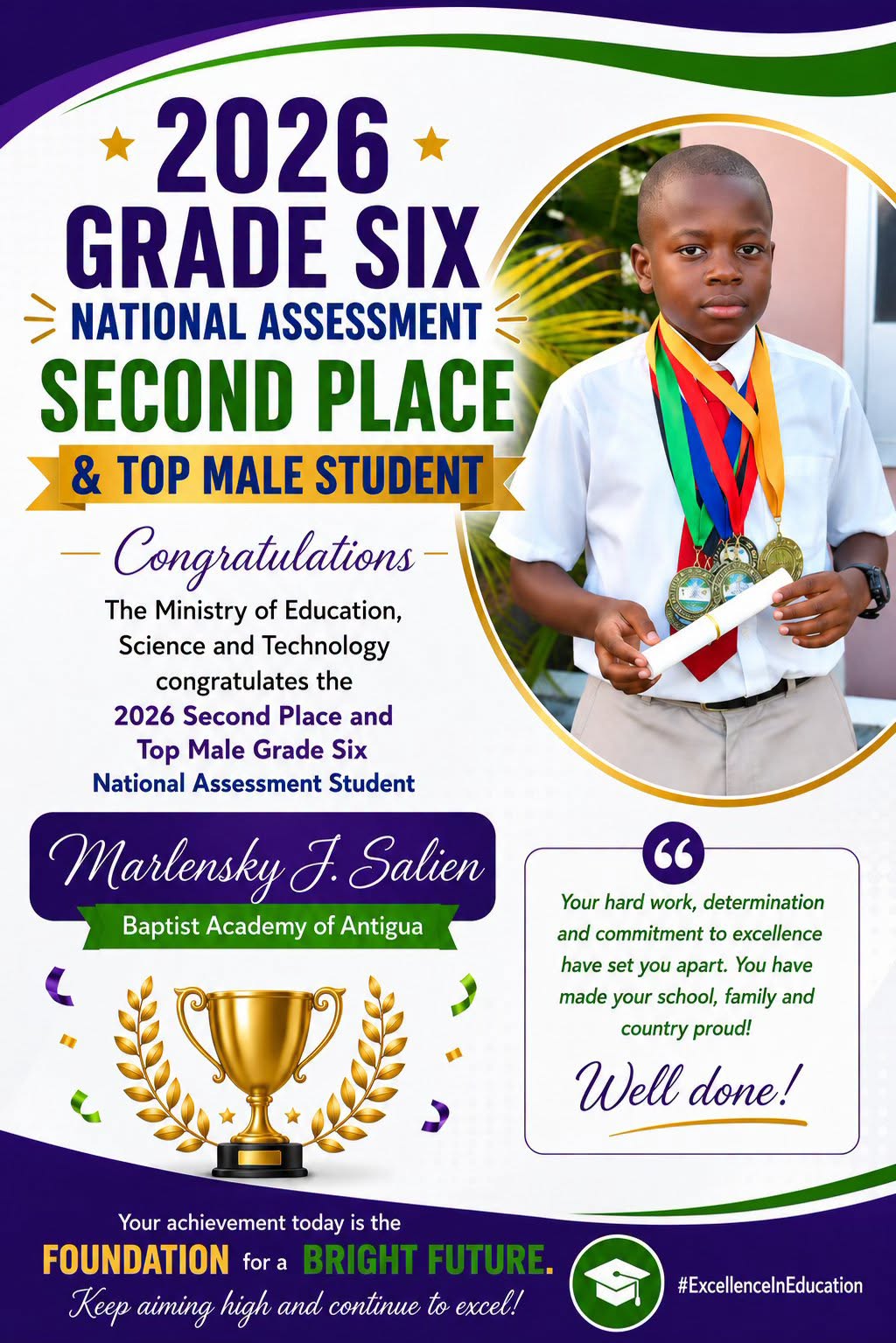
    Following the official release of 2026 Grade Six National Assessment results last Friday, Antigua and Barbuda’s Ministry of Education, Science and Technology has extended formal congratulations to Marlensky J. Salien, a standout Grade 6 student from the Baptist Academy of Antigua. Salien secured an impressive second-place ranking across all participating test-takers nationwide, and claimed the title of the highest-scoring male student in this year’s assessment.

    In an official statement acknowledging the achievement, ministry officials highlighted that Salien’s exceptional results were no accidental success. Rather, they framed his top performance as a direct product of consistent dedication, relentless daily effort, and an unwavering commitment to upholding high standards of academic excellence. Beyond celebrating the student himself, government education leaders also extended recognition to the network of supporters that helped Salien reach this milestone: his parents, who have provided foundational support at home, his teachers who guided his learning throughout primary school, and the entire Baptist Academy school community that fostered an environment conducive to academic growth.

    Ministry representatives emphasized that Salien’s accomplishment carries broader meaning for young learners across the nation. His success, they noted, stands as a powerful, tangible example of what dedicated students can achieve when they maintain focus on their goals and persist through academic challenges. As Salien now prepares to make the key transition from primary education to secondary school, the Ministry of Education, Science and Technology has extended its warm wishes for continued academic achievement and growth in all his future educational endeavors. This recognition is part of the ministry’s ongoing tradition of celebrating the nation’s highest-performing primary school students after the annual release of national assessment results.

  • 2026 GSNA Schools Assigned

    2026 GSNA Schools Assigned

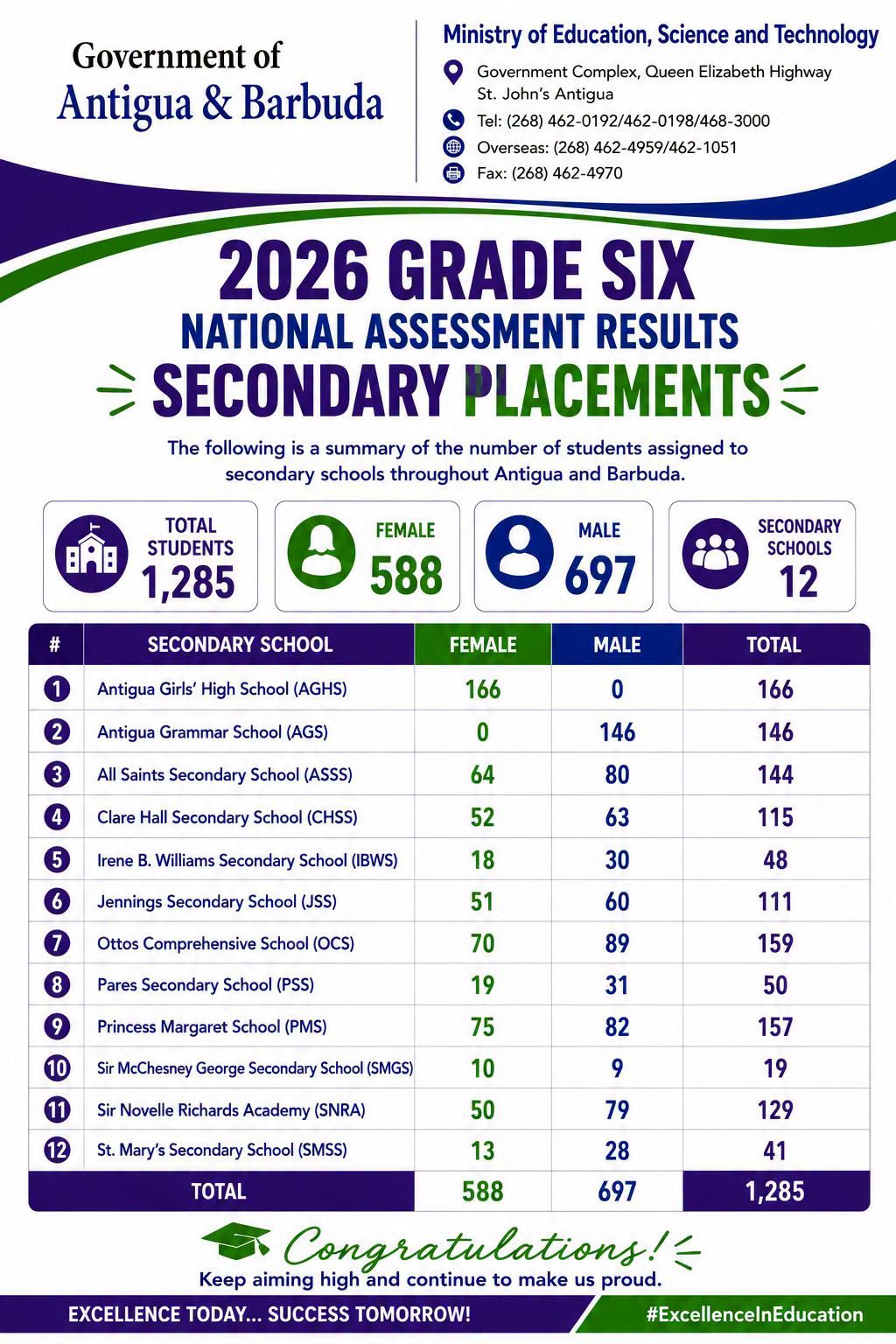
    As of the latest update, official assignments for schools under the 2026 Global School Navigation Alliance (GSNA) framework have been finalized and released to participating institutions and prospective students. While limited additional details about the specific allocation criteria, participating school names, or student placement outcomes have been made publicly available at this stage, the announcement marks a key milestone in the organization’s annual planning cycle for the upcoming academic year. Stakeholders, including educational administrators, families, and prospective enrollees, are awaiting further disclosure from GSNA leadership to clarify how the assignments align with the alliance’s strategic goals for improving educational access and collaborative programming across member institutions in the 2026 academic term. Industry observers note that this pre-term allocation process typically sets the foundation for enrollment logistics, cross-school partnership initiatives, and resource distribution that will unfold over the coming months.

  • Two Antigua & Barbuda Officials Selected For 2026 ECVA Beach Volleyball Referee Course

    Two Antigua & Barbuda Officials Selected For 2026 ECVA Beach Volleyball Referee Course

    The Eastern Caribbean Volleyball Association (ECVA) has announced the selection of two promising officiating representatives from Antigua & Barbuda to participate in its highly anticipated 2026 Beach Volleyball Referee Course, marking a key milestone for the nation’s volleyball development agenda.

    This competitive selection process drew applications from dozens of aspiring volleyball officials across 11 member territories of the ECVA, with the two Antigua & Barbuda candidates standing out for their demonstrated on-court experience, thorough understanding of international volleyball rules, and commitment to advancing the sport at both the grassroots and regional levels. The specialized training course, scheduled to kick off in early 2026, is designed to elevate the standard of officiating across the Eastern Caribbean by providing participants with advanced instruction on match management, conflict resolution, adaptive rule interpretation for beach volleyball’s unique outdoor conditions, and modern referee fitness standards.

    Local volleyball governing bodies in Antigua & Barbuda have welcomed the announcement, noting that the opportunity will not only boost the professional development of the two selected officials but also create long-term benefits for domestic beach volleyball competitions. By gaining international-level certification and training, the officials will bring back updated knowledge and best practices to train newer local referees, strengthening the overall officiating ecosystem in the country. For the ECVA, the initiative aligns with its broader strategic goal of growing beach volleyball as a popular recreational and competitive sport across the Caribbean, building a pipeline of qualified officials to support upcoming regional tournaments, including qualifiers for the Central American and Caribbean Games and FIVB international events.

  • The UWI Celebrates 14 Top Postgraduate Presentations and Prepares for 2026 Regional Conference

    The UWI Celebrates 14 Top Postgraduate Presentations and Prepares for 2026 Regional Conference

    As one of the Caribbean’s leading higher education institutions with a 75-year legacy of regional impact, The University of the West Indies (The UWI) has formally announced plans for its 4th Annual One UWI Postgraduate Student Conference, scheduled to run from November 18 to 21, 2026. The upcoming gathering will center on the forward-thinking theme “Advancing Knowledge, Shaping Futures: Research, Innovation, and Impact Across the Caribbean and Beyond,” a vision shaped by the overwhelming success of the conference’s third iteration held earlier this year.

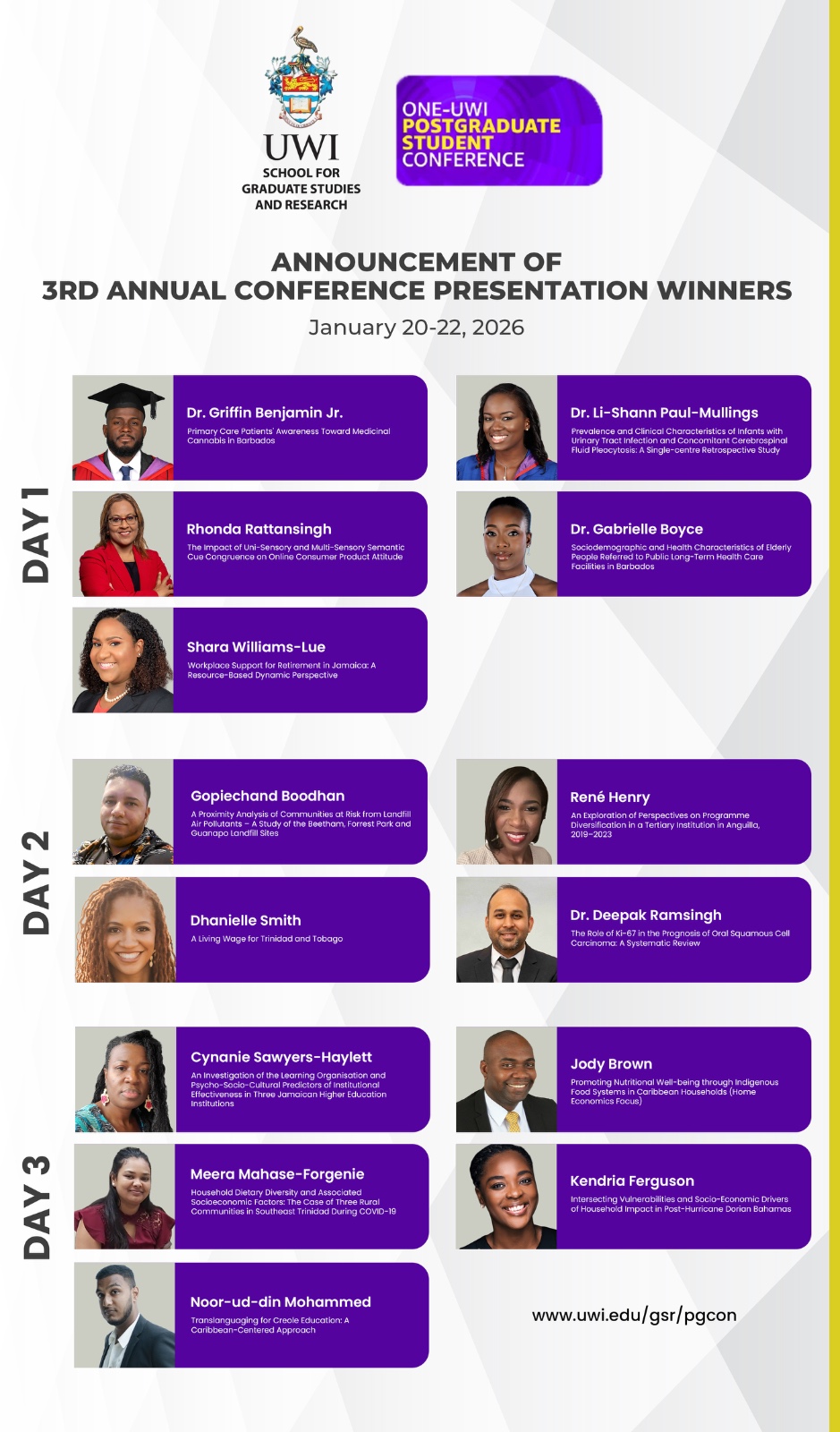
    Originally planned for November 2025, the third annual conference was rescheduled and held as a fully virtual event between January 20 and 22, 2026. The event drew more than 600 registered attendees from across the region and beyond, showcasing 51 original research presentations spanning a diverse range of pressing topics: public health, climate resilience, education, governance, and sustainable development, all aligned with the Caribbean’s most urgent development priorities. Following the conclusion of the virtual event, organizers awarded honors to 14 standout oral presentations, recognizing the exceptional quality of postgraduate scholarship across the university’s five regional campuses.

    The 14 award recipients, who recently received electronic gift cards and commemorative prizes, were selected based on three core criteria: research originality, strict academic rigor, and direct relevance to Caribbean community and policy needs. The winning projects represent the full breadth of postgraduate research at The UWI, spanning public health, social science, agricultural sustainability, education reform, and economic justice. Standout winning works include a retrospective analysis of pediatric urinary tract infection comorbidities from the Mona Campus’ Faculty of Medical Sciences, a study of primary care patient awareness of medicinal cannabis in Barbados from the Cave Hill Campus, and an analysis of socioeconomic drivers of post-hurricane household vulnerability in the Bahamas, among other high-impact projects.

    The third annual conference opened with a keynote address from The UWI’s Vice-Chancellor Professor Sir Hilary Beckles, and featured a lineup of distinguished international speakers including Nadine Bushell of Lions Clubs International, Rodolpho Gonçalves da Silva from Brazil’s Universidade Estadual Paulista (UNESP), and Indian sustainability entrepreneur Ishaan Sudan. Across their remarks, speakers centered on the critical roles of community resilience, interdisciplinary innovation, youth leadership, and cross-sector service in addressing interconnected global challenges from climate change to public health inequality.

    In comments following the award ceremony, Professor Aldrie Henry-Lee, Pro Vice-Chancellor for Graduate Studies and Research (SGSR), highlighted the real-world value of the research presented at the conference. “These presentations demonstrate the exceptional quality of postgraduate research across The UWI and direct application to real-world challenges. They reflect a strong commitment to producing knowledge that matters to the Caribbean,” she said. Professor Henry-Lee also extended gratitude to all contributors to the conference’s success, including session chairs, discussants, campus graduate study directors, student and guild representatives, presenters, attendees, and the central organizing team.

    Beyond academic exchange, the third annual conference integrated a tangible community outreach component: on January 23, 2026, a team of postgraduate students and institutional partners traveled to Hanover, Jamaica, to deliver disaster relief and practical support to more than 200 families impacted by Hurricane Melissa. The outreach effort, organized in partnership with the Lions Clubs of Jamaica and the Kiwanis Club of New Kingston, aligned with The UWI’s longstanding institutional commitment to civic engagement. It will also serve as a pilot program for the proposed UWI Give Back Day, scheduled to coincide with the 4th annual conference in November 2026.

    Founded in 1948 as a small affiliate university college of the University of London with just 33 medical students based in Jamaica, The UWI has grown exponentially over the past seven decades to become a globally recognized research university serving nearly 50,000 students across five regional campuses: Mona in Jamaica, St. Augustine in Trinidad and Tobago, Cave Hill in Barbados, Five Islands in Antigua and Barbuda, and a distributed Global Campus. The university also maintains global academic partnership centers across North America, Latin America, Asia, Africa, and Europe, offering more than 1,000 credential programs ranging from professional certificates to doctoral degrees across nine broad academic disciplines.

    Consistently ranked among the world’s top universities by Times Higher Education (THE) since 2018, The UWI holds the distinction of being the only English-speaking Caribbean institution featured in four separate THE ranking categories: the overall World University Rankings, the Golden Age University Rankings for institutions founded between 50 and 80 years ago, the Latin America and Caribbean Regional Rankings, and the Impact Rankings that evaluate institutional contributions to the United Nations’ Sustainable Development Goals (SDGs). This global recognition has supported the recent launch of The UWI’s International School for Development Justice (ISDJ), an innovative global online graduate business school focused on training the next generation of leaders in equitable sustainable development.

  • PHOTOS: Digicel Supports Barbuda’s Next Generation of Entrepreneurs

    PHOTOS: Digicel Supports Barbuda’s Next Generation of Entrepreneurs

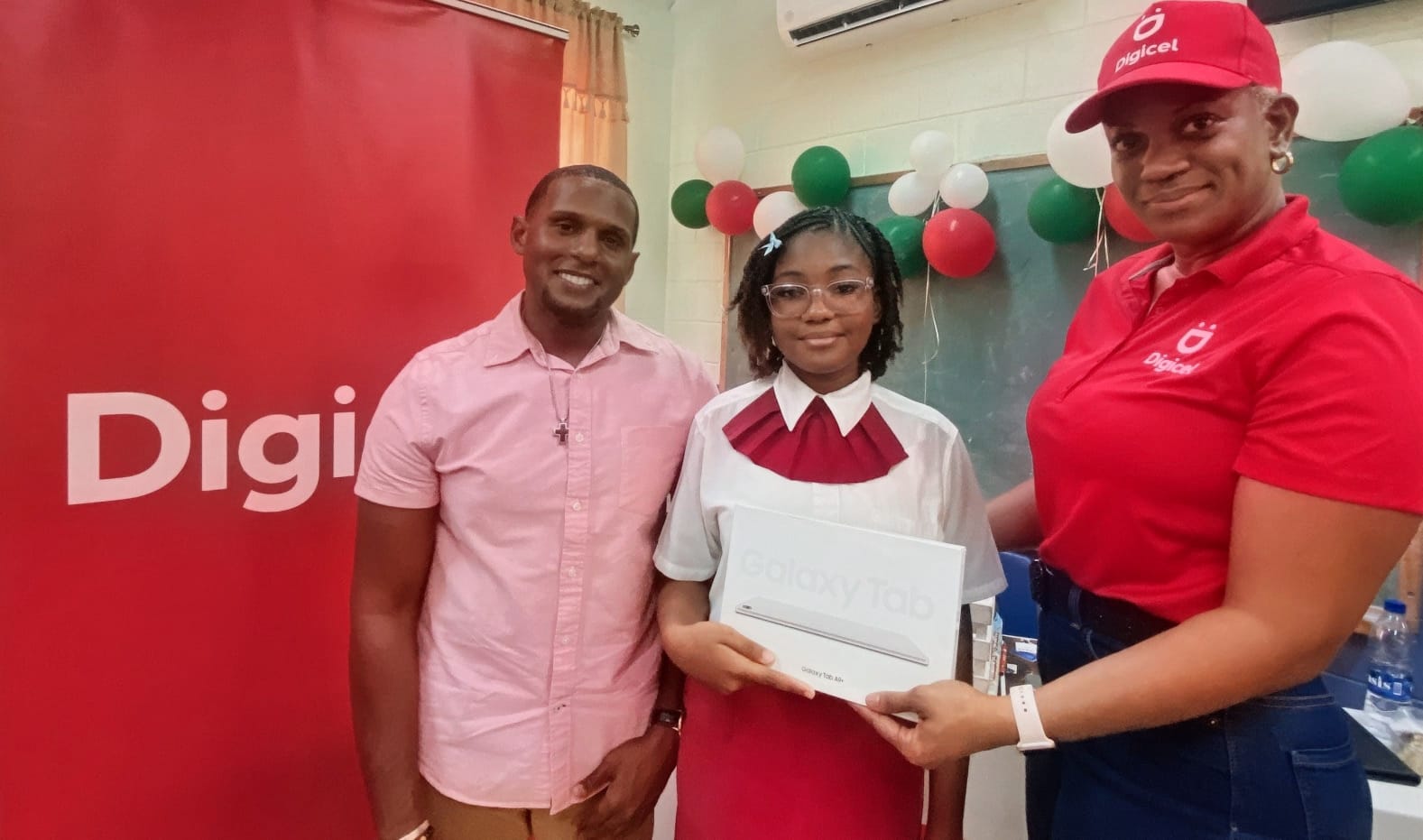
    On the Caribbean island of Barbuda, a new wave of young business creators is beginning to carve out their paths in local commerce, and regional telecommunications giant Digicel has stepped forward to provide critical support for this rising generation.

    The initiative, centered on empowering homegrown entrepreneurial talent, addresses a longstanding gap in resources for early-stage small business owners on the island, many of whom have struggled to access funding, mentorship, and digital infrastructure to grow their ideas. Digicel’s support package includes not only financial grants for selected startup projects but also access to low-cost connectivity, digital skills training, and networking opportunities that connect emerging Barbuda entrepreneurs to regional business networks.

    Local community leaders have welcomed the intervention, noting that sustainable economic growth on Barbuda depends heavily on retaining young talent and encouraging them to build businesses that serve local needs, from tourism-focused services to community-focused retail and agricultural ventures. Unlike many external development programs that prioritize outside investment, Digicel’s initiative centers Barbuda’s own residents as the drivers of long-term prosperity, creating a pathway for young people to turn their creative business ideas into viable, job-creating enterprises.

    Participants in the program have already highlighted how the support has removed key barriers to launching their projects, with many planning to expand their operations within the next year. For a small island community still recovering from the economic and infrastructure impacts of recent major hurricanes, this targeted investment in local entrepreneurs offers a tangible boost to long-term community resilience and economic self-determination.

  • Acting Corporal Steven Celestine completes international maritime security training

    Acting Corporal Steven Celestine completes international maritime security training

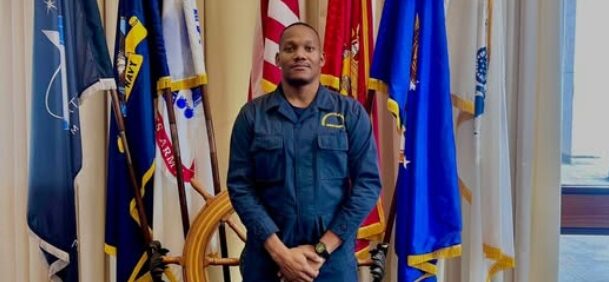
    A rising member of the Commonwealth of Dominica Police Force (CDPF) has marked a key milestone for the island nation’s maritime security capabilities, graduating from one of the world’s leading specialized training programs focused on the legal frameworks of maritime safety operations.

    Acting Corporal Steven Celestine successfully wrapped up the 2026 iteration of the Legal Aspect of Maritime Security Operations (LAMSO) course, an intensive four-week educational initiative run by the Defense Institute of International Legal Studies at the Defense Security Cooperation University. Held from May 22 through June 18 this year, the program brought together 23 national delegations, creating a collaborative space for maritime security professionals from across the globe to exchange knowledge and build cross-border partnerships.

    Unlike generic maritime training courses, the LAMSO program was intentionally designed to meet the needs of frontline practitioners and leaders working in the maritime security space: it caters specifically to military commanders, in-house legal advisors, active maritime law enforcement personnel, and civilian experts whose work touches on ocean governance and security. Over the course of the month, participants dove deep into the complex international legal architecture that regulates both military activities and civilian maritime law enforcement operations at sea. Trainees also analyzed U.S. maritime law enforcement regulations and procedural frameworks, exploring how these models could be adapted to strengthen operational capacity in their home jurisdictions.

    Core curriculum topics spanned critical areas of maritime governance, including the United Nations Convention on the Law of the Sea, standardized rules of engagement for security operations, the long-standing international law of armed conflict, and legal protocols for coordinating humanitarian assistance and disaster relief responses in maritime settings.

    In an official statement announcing Celestine’s completion of the program, CDPF leadership emphasized that the achievement reflects the force’s sustained, long-term investment in professional development for its ranks. The organization also noted that expanding training opportunities like this aligns with two core strategic priorities: growing collaborative international partnerships in the maritime security space, and upgrading Dominica’s overall ability to secure its territorial waters and coastal communities.

    Closing the statement, CDPF extended formal congratulations to Celestine, noting that his commitment to professional excellence brings significant pride to both the police force and the entire Commonwealth of Dominica.