博客

  • New police commissioner pledges reform, accountability, public trust

    New police commissioner pledges reform, accountability, public trust

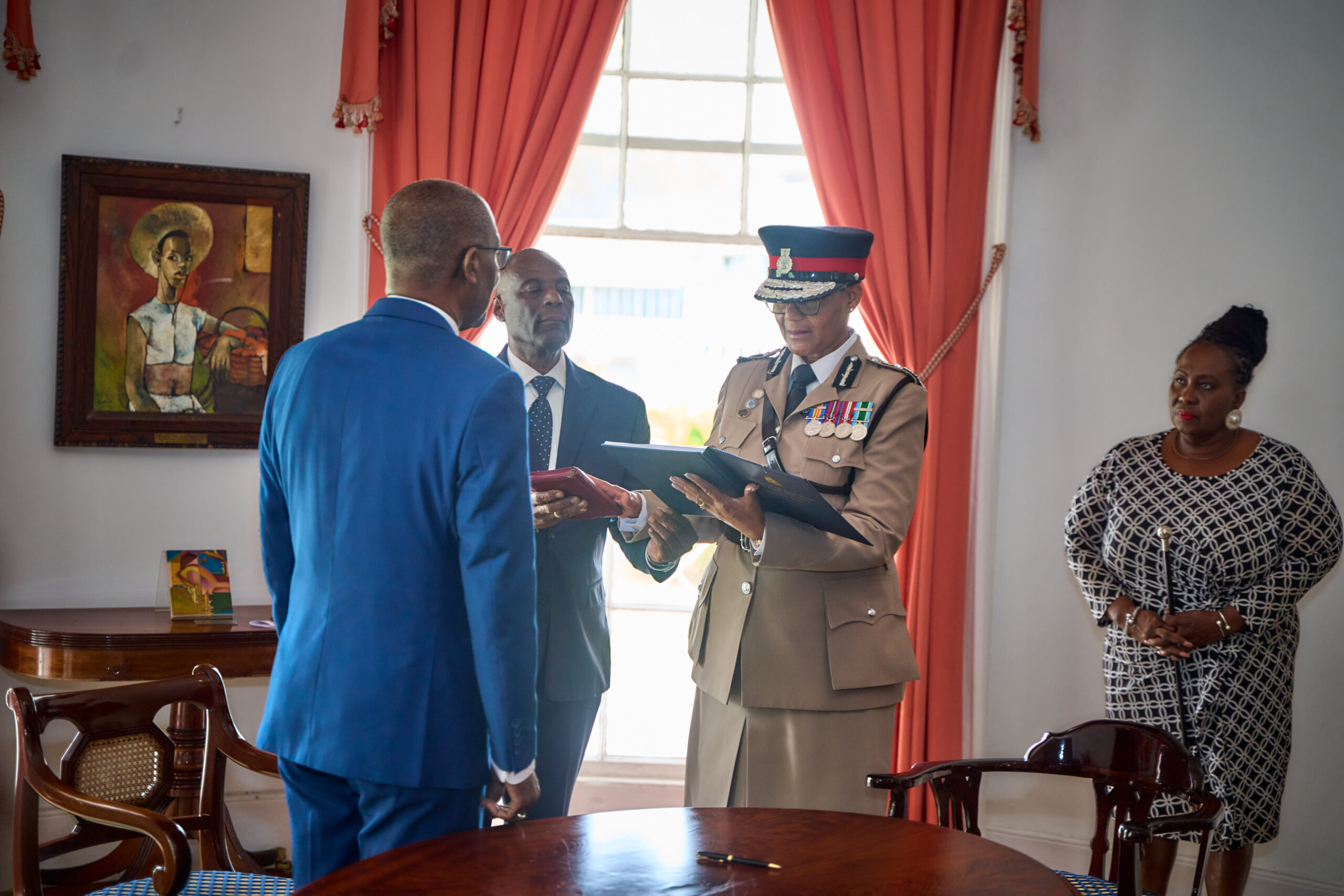
    In a landmark inauguration ceremony held Friday at Barbados’ State House, Sonia Boyce made history as the first woman to take office as Commissioner of the Barbados Police Service, unveiling an ambitious plan to overhaul the force, boost public trust, and tackle growing community concerns over crime.

    The swearing-in event drew a host of senior national leaders, including acting President Jeffrey Gibson and Prime Minister Mia Mottley, alongside top security officials and members of the country’s law enforcement community. Standing before the assembled guests, Boyce emphasized from her first day in office that earning and retaining the public’s confidence would be the north star of her administration.

    “Today, I take this oath with profound respect for the office, for the Constitution, and for the people whom The Barbados Police Service is sworn to protect,” Boyce said in her inaugural address. “I am grateful for the confidence shown in me through this appointment, and I accept the responsibility with a clear understanding that public trust must be earned every day.”

    She opened her remarks by paying homage to her predecessor, Richard Boyce, noting that the seamless transition of power underscored a core truth about the institution: the Barbados Police Service is far greater than any individual leader, rooted in decades of discipline, sacrifice, courage, and consistent commitment from both uniformed officers and civilian support staff.

    Addressing the historic nature of her appointment, Boyce expressed hope that her breakthrough would open doors for more women and young people to pursue careers in public service and law enforcement leadership. At the same time, she made clear that her tenure would be judged not on symbolism alone, but on tangible results delivered with integrity, competence, and fairness.

    “If this moment encourages more women and young people to see public service, policing and leadership as places where they belong, then it will have meaning beyond this ceremony,” she explained. “Still, the work ahead must be measured not by symbolism alone, but by integrity, competence, fairness and results.”

    Outlining her core policy priorities for the force, Boyce laid out a multifaceted agenda centered on building safer communities, strengthening investigative capacity, increasing police visibility across the island, improving public communication, integrating data intelligence and modern technology more effectively into daily operations, and forging deeper collaborative partnerships with local communities, citizens, and regional and international law enforcement bodies.

    Acknowledging widespread public anxiety about shifting crime trends in Barbados, Boyce gave a firm assurance that the police force would respond decisively to emerging threats, while upholding strict standards of accountability to the public. “We will be firm where firmness is required, fair in how we exercise authority, and transparent wherever the law and the integrity of investigations permit,” she said.

    Professionalism, accountability, and respect for all citizens will serve as the foundational pillars of her leadership, Boyce declared. She also added that improving officer welfare, expanding access to high-quality training, strengthening internal communication across ranks, and boosting staff morale would be key internal priorities for her administration.

    In a call to action for the Barbadian public, Boyce urged community members to continue partnering with law enforcement by sharing critical information and engaging with local officers, stressing that effective policing relies on mutual trust between police and the communities they serve. “Policing is most effective when trust moves in both directions,” she noted.

    Boyce also committed to maintaining open, responsible lines of communication with the national media, confirming that her leadership team would provide timely, accurate updates to the public and correct misinformation wherever it arises, without compromising ongoing investigations, or endangering victims and witnesses.

    Closing her inaugural address, Boyce framed the moment as a call to deliberate, consistent public service rather than celebration. “This is a moment for steady service, not self-congratulation; for action, not noise; and for partnership, not division,” she said. “I look forward to working with the government, the leadership and ranks of The Barbados Police Service, our communities and all stakeholders in service of a safer, more confident Barbados.”

  • Minister defends judicial limits, diaspora role in draft immigration law

    Minister defends judicial limits, diaspora role in draft immigration law

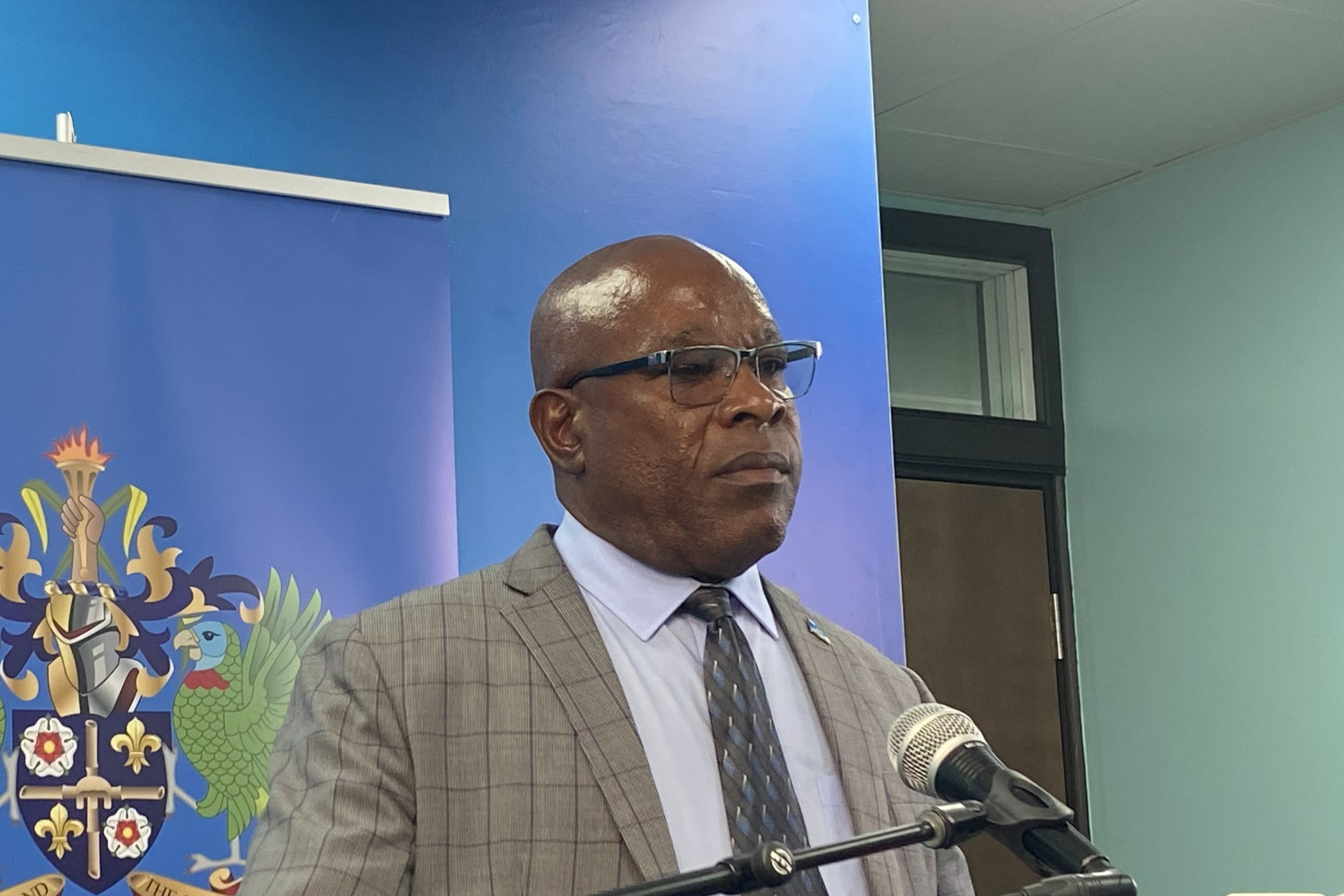
    Barbados’ Minister of Home Affairs Gregory Nicholls has vigorously pushed back against growing criticism of two landmark immigration and citizenship bills, defending the proposed legislation’s provisions as constitutionally sound and aligned with decades of legal convention amid ongoing parliamentary scrutiny.

    Appearing before Parliament’s joint select committee tasked with reviewing the draft Immigration Bill and Citizenship Bill, Nicholls rejected claims that the legislation would grant the executive branch unchecked unilateral authority, framing the proposed powers as consistent with long-standing legislative and governance norms in the country.

    A core point of criticism raised by the Barbados Employers Confederation centered on Section 13 of the new legislation, which codifies the finality of ministerial decisions on granting, denying, or revoking Barbadian citizenship. Nicholls clarified that this grant of authority is not a new expansion of executive power, nor is it open to arbitrary, personal decision-making by a sitting minister.

    “This is in keeping with the scheme of the legislation that currently exists. This is not a new provision,” Nicholls told committee members. “Sometimes you hear the Chief Parliamentary Counsel or other drafters speak about the Carlton principle, which basically means that the references in legislation to the minister is not the person, but the minister is the overall head responsible to Parliament for the actions taken within the ministry and the departments that operate under that ministry.”

    Under this long-standing convention, Nicholls explained, any ministerial decision is required to draw on technical guidance from career department officials, and all final determinations are ultimately subject to approval by the Cabinet. He stressed that this framework eliminates the risk of unregulated personal discretion, adding that this drafting style has been a standard part of Barbados’ legislative process for generations. “So this is not a personal or individual discretion being exercised, or a discretion being exercised outside of the law or the whim and fancy of a minister,” he said.

    Nicholls further argued that high-stakes government functions, particularly those tied directly to national security, must remain the exclusive purview of the executive branch rather than the judiciary. He emphasized that decisions on granting or denying citizenship rooted in the broader national interest are inherently executive actions, for which elected officials — not unelected judges — bear ultimate democratic responsibility.

    “No judge, in my respectful view, should have the right to determine national security considerations,” Nicholls argued. “It is not something that two lawyers on opposite sides can argue to the satisfaction of any judge, because the judge is not the person responsible for getting it wrong when the country’s security is at risk.”

    That said, the minister acknowledged that the judiciary retains a critical check on executive power through judicial review, which allows courts to assess whether state actions comply with legal standards of proportionality. He also noted that Barbados’ obligations under regional integration agreements require the government to retain full authority over border management decisions, pointing to the Revised Treaty of Chaguaramas and the Caribbean Court of Justice’s landmark Shanique Myrie ruling, which outlines the narrow, state-approved grounds on which CARICOM nationals can be denied entry to Barbados.

    “As minister responsible for immigration, I will exercise that discretion on the advice of the Chief Immigration Officer and the officers working in that department to CARICOM nationals where permitting the entry would not be in the best interest of Barbados,” Nicholls said. “The treaty does provide for exemptions to be made on the basis of the determination of the state actor, and that is what this provision is intended to continue.”

    Beyond regulatory and national security concerns, Nicholls highlighted a pressing policy motivation for advancing the legislation: unlocking the full potential of Barbados’ global diaspora, particularly in international sports. The current outdated legal framework, he explained, blocks the country from recruiting foreign-born athletes with Barbadian ancestral roots who want to represent the island in global competition. He cited the specific case of a world championship gold medalist who was barred from competing for Barbados despite qualifying through her grandparents’ lineage, a barrier the new legislation would eliminate.

    “One of the reasons why I am very anxious to get this legislation passed is to make sure that we can strengthen our national teams,” the minister said. “I really would want to give our Barbados Olympic athletes, the CARIFTA athletes, and all the other sporting teams the opportunity to dig deep into the wider pool of talent that is available.”

    Beyond sports, Nicholls added that the legislation strengthens cultural security by enshrining a formal connection to the nation for first- and second-generation Barbadians living overseas. “This bill that we are proposing here will give the diaspora that comfort, and that connection is maintained, because Barbadian culture can only be defended and embraced if the full diaspora has a connection to its commitment and purpose,” he said.

  • Employers, sporting bodies back immigration reforms amid workforce, competitiveness concerns

    Employers, sporting bodies back immigration reforms amid workforce, competitiveness concerns

    Barbados’ top business and sporting organizations have publicly thrown their support behind two transformative immigration and citizenship bills, framing the proposed legislative changes as a critical solution to the island nation’s pressing demographic crisis and a long-awaited boost for its international athletic competitiveness. But the reform package is not without its critics, with key stakeholders raising red flags over a controversial provision that grants unfettered final authority to government ministers, warning it could conflict with constitutional protections.

  • Gov’t says it will not interfere in police investigation involving Frederick

    Gov’t says it will not interfere in police investigation involving Frederick

    After days of public speculation, the government of Saint Lucia has finally broken its silence surrounding an ongoing police investigation targeting Richard Frederick, the country’s incumbent Minister for Housing, Local Government and Urban Renewal, confirming it will not intervene in the active law enforcement process.

    In an official statement distributed to media outlets on Friday evening, the administration confirmed it had received official notification that Frederick was taken into police custody for questioning as part of the ongoing investigation before being released shortly after the interrogation.

    “Since this matter remains an active, ongoing legal process, we will not offer any public comment on details that could risk prejudicing or interfering with any lawful investigation,” the statement noted. The government went on to reaffirm its unwavering respect for both the operational independence of the Royal Saint Lucia Police Force and the core principle of the rule of law that underpins the island nation’s governance.

    “We remain fully committed to upholding the constitutional order, ensuring that all legal processes move forward without improper interference, and in full alignment with the Constitution and laws of Saint Lucia,” the statement added.

    The administration also emphasized its long-standing commitment to government transparency and public accountability, noting that it would update the public on key developments appropriately as confirmed official information becomes available to share.

    The investigation first came to public light when Frederick himself revealed details during his weekly online public program *Can I Help You?* on Thursday night. The minister told viewers that plainclothes law enforcement officers arrived at his private residence early that same morning, and that he voluntarily accompanied officers to the central police station to cooperate with their inquiries.

    While Frederick chose not to disclose the specific nature of the allegations underpinning the investigation, he offered a brief, personal remark to reassure his audience: “There are certain lines I have never crossed, and I will never cross them…. I am a father of five daughters.”

  • Super Nationals Wraps Up, Bigger Things to Come

    Super Nationals Wraps Up, Bigger Things to Come

    After two weeks of intense, cross-country athletic competition, Belize’s first-ever Super Nationals youth sporting event has officially drawn to a close. Organizers are hailing the tournament as a historic success that extends far beyond the distribution of medals and podium finishes, laying the groundwork for a new era of youth sports development in the Central American nation. Nearly 800 young competitors, representing primary and secondary schools from all six of Belize’s administrative districts, went head-to-head across four major sporting categories: track and field athletics, football, volleyball, and basketball. The event brought together emerging talent from every corner of the country, creating a unified platform for young athletes to showcase their skills and potential. Anthony Mahler, Belize’s Minister of Tourism, Youth and Sports, framed the inaugural tournament as the first milestone in a long-term strategic vision to identify and nurture the nation’s most promising young sportspeople. “This is a shared vision between Minister Devin Daly and myself,” Mahler explained in remarks following the competition’s closing ceremony. “Our goal is to put the right resources and support behind our young athletes, to give them every possible opportunity to reach their full potential.” Beyond athletic achievement, Mahler emphasized the transformative role that organized sports plays in building critical life skills for young people. “Sports teaches you core life competencies that serve you every single day,” he added. “Every competitor here has the chance to use sports as a guiding light to further their education and build a better future for themselves.” Looking ahead to the 2027 iteration of the tournament, Mahler made a formal pledge to increase government investment to expand the scope and reach of the event. He also revealed an exciting new initiative to bring international talent scouts to the 2027 games, opening doors for Belize’s young athletes to pursue opportunities beyond the country’s borders. “We will see all of you again next year,” Mahler told competitors. “Our goal is to bring in top scouts from around the world, who can give you access to advanced training opportunities and help you go as far in your athletic journey as you dream of going.” In addition to bringing in international scouts, the National Sports Council of Belize has confirmed plans to add new sporting disciplines to the 2027 Super Nationals lineup, expanding participation opportunities for even more young athletes across the country. Full in-depth coverage of the inaugural Super Nationals, including athlete interviews and behind-the-scenes highlights, will air on News 5 Live at 6 p.m. local time this evening.

  • Did The Simpsons Really Predict the 2026 World Cup Final?

    Did The Simpsons Really Predict the 2026 World Cup Final?

    In the weeks leading up to the 2026 FIFA World Cup, social media platforms have been flooded with a viral claim that the long-running animated sitcom *The Simpsons* once predicted the tournament would culminate in a historic final between Mexico and Portugal. This circulating claim, which has gained massive traction among online users and casual fans of the show, has officially been debunked by fact-checkers as false and misleading misinformation.

    The core of the viral claim centers on a brief scene from the show’s 1997 episode *The Cartridge Family*. In the clip, which has been widely reshared in truncated, out-of-context clips across TikTok, X (formerly Twitter) and Instagram, a satirical commercial in the fictional town of Springfield advertises an exhibition football match between the two national sides. According to proponents of the prediction theory, this throwaway gag is proof the series’ writers foresaw the 2026 final matchup decades in advance.

    A full rewatch of the original 1997 episode, however, tells a different story. At no point in the scene or the surrounding episode does the segment reference the FIFA World Cup, the year 2026, or any official international tournament structure. The sequence is nothing more than a throwaway satirical joke written for the episode’s B-plot, with no narrative connection to future global football events, and the gag never specifies what match or competition the advertisement promotes.

    This latest viral claim is far from a unique incident. For decades, *The Simpsons* has garnered a widespread online reputation for supposedly “predicting” major future global events. Fans have pointed to seemingly prescient gags that they claim foreshadowed everything from Donald Trump’s 2016 presidential election victory, to Disney’s 2019 acquisition of 21st Century Fox, to the 2015 FIFA corruption scandal that toppled multiple top association officials. In recent years, as viral social media content has grown in reach, unrelated clips from the series have increasingly been shared out of context to tie *The Simpsons* to nearly every major global event.

    Fact-checkers and media analysts note that this specific Mexico vs Portugal prediction claim is not even new. The same out-of-context clip has resurfaced and gone viral ahead of every recent World Cup, including the 2018 tournament in Russia and the 2022 edition held in Qatar. The false claim typically gains new traction every four years, when global public interest in football reaches its peak, before being debunked once again. For media analysts, the recurring spread of this misinformation highlights how out-of-context old media content can be repurposed to create viral false narratives that spread rapidly across unmoderated social media platforms.

  • NTUCB Asks: ‘Did Everyone Get a Fair Shot at Government Contracts?’

    NTUCB Asks: ‘Did Everyone Get a Fair Shot at Government Contracts?’

    In a developing story out of Belize dated July 3, 2026, the National Trade Union Congress of Belize (NTUCB), the nation’s leading umbrella labor organization, has launched a public inquiry into the transparency and equity of government contracting processes, while keeping close watch over an ongoing investigation at the country’s Ministry of Defence.

    Ella Waight, president of the NTUCB, clarified that the union’s core focus is not merely on the prevalence of family connections in securing public contracts, but on upholding a fair, open competitive process for all eligible bidders across the country.

    Waight told local outlet News 5 that preliminary observations point to a pattern of concentrated contract awards, with a single family securing multiple public contracts despite the presence of many other qualified local vendors capable of delivering comparable services and goods. She raised a series of critical questions: were competing vendors given equitable access to bidding opportunities? Were they properly informed that contracts were up for award? And were the tender notices advertised widely enough to reach all interested parties?

    Waight emphasized that the union is not targeting familial participation in public contracting outright, noting the unique context of Belize’s small geographic and demographic landscape. “As a realist, Belize is a very small country,” she explained. “Many of us are related to each other, whether it’s cousins or second cousins or whatever it may be. And I don’t want it to come across that NTUCB is against any family member getting a contract in any aspect of government. That is not the case.”

    The NTUCB has adopted a cautious, watch-and-wait approach for the time being, continuing to monitor mounting public allegations of improper contracting while committing to base any future actions on the findings of the official Ministry of Defence investigation.

  • Young Indonesian Couple Publicly Caned Over TikTok Kiss

    Young Indonesian Couple Publicly Caned Over TikTok Kiss

    On a recent Thursday in Banda Aceh, the capital of Indonesia’s conservative Aceh province, a young unmarried couple faced a harsh public corporal punishment after their intimate moment captured on a TikTok livestream went viral across social media. The case, first reported by The Guardian UK, has drawn international scrutiny over the province’s strict application of Islamic Sharia law, the only such legal framework enforced nationwide in Indonesia.

    The pair—a 22-year-old man and a 25-year-old woman—were each sentenced to 21 strokes of a rattan cane, carried out by masked officials in Bustanussalatin City Park. Local reports confirm that over 100 onlookers gathered to witness the sentence. This public punishment comes four months after the couple’s arrest in April, which followed a wave of public complaints to Sharia authorities over a clip from their February 27 livestream, which showed them kissing inside a private vehicle. Alongside the caning sentence, a court ordered the destruction of the mobile phone and USB drive that held the viral video used as key evidence in the case.

    Originally, the court had handed down a sentence of 25 lashes per person, but the punishment was reduced by four strokes to account for the four months the couple spent in pretrial detention. They were not the only ones facing public caning that day: four additional people were also punished simultaneously after being convicted of separate morality offenses, including adultery and illegal online gambling.

    Aceh holds a unique position in Indonesia’s legal landscape. It was granted the authority to enforce Sharia law in 2006 as part of a landmark peace agreement that brought an end to a 30-year separatist conflict that had cost thousands of lives. Under the province’s regulations, public caning is the prescribed punishment for a range of offenses labeled as morality violations, including adultery, gambling, consumption of alcohol, same-sex relations, and public displays of intimacy between unmarried people.

    Human rights advocates have swiftly spoken out against the sentence. Amnesty International Indonesia issued a strong condemnation of the public caning, labeling the practice cruel, inhumane, and degrading treatment that violates basic international human rights standards. Usman Hamid, the organization’s executive director, questioned whether the couple’s consensual, private intimate act warranted either imprisonment or corporal punishment, arguing that the state’s response was wildly disproportionate to the offense.

  • Can Insurance Fraud Finally Be Stopped?

    Can Insurance Fraud Finally Be Stopped?

    For years, honest motorists across Belize have unknowingly carried the financial burden of dishonest insurance claims, as widespread fraud pushes up industry-wide costs that are ultimately passed to legitimate policyholders. That long-standing unfair dynamic is set for a major shift, however, with the official launch of ClaimsVAULT Belize on July 3, 2026 — the nation’s first shared motor claims intelligence system designed to root out fraudulent activity.

    The groundbreaking platform is the result of a collaborative development effort between the Organisation of Insurance Companies of Belize (ORINCO) and Jamaica-based EPIC Technologies. Unlike fragmented internal data systems that have limited insurers’ ability to spot pattern-based fraud across the market, ClaimsVAULT creates a secure, centralized network that lets all participating providers share real-time claims data with one another. This cross-industry visibility empowers insurers to flag suspicious claims faster, accelerate the pace of fraud investigations, and make more informed, accurate underwriting decisions that reflect a driver’s actual risk profile.

    Andrew Roe, CEO of the Roe Group Companies, emphasized that ordinary law-abiding drivers stand to be the biggest beneficiaries of the new system. For decades, safe drivers who have gone years without accidents or claims have been forced to pay higher premiums to cover losses from fraudulent claims submitted by bad actors. With the new intelligence platform in place, Roe explained, insurers can now clearly distinguish between low-risk safe drivers and repeat offenders or those submitting dishonest claims, ending the practice of penalizing honest motorists for others’ misconduct.

    Industry data underscores just how pressing the problem of unaddressed insurance fraud and unpaid losses has become in Belize. Alma Gomez, Supervisor of Insurance at the Office of the Supervisor of Insurance & Private Pensions, revealed that in the first quarter of 2026 alone, total motor vehicle insurance claim payouts hit $5.3 million, with an additional $5.5 million in outstanding claims carried forward from previous periods. The issue is not isolated to motor insurance, either: Gomez noted that health insurance has seen similarly staggering levels of outstanding and paid claims, with $5.1 million paid out in the first quarter and another $2.3 million still pending. Both core sectors are currently reporting sustained losses, driven in large part by undetected fraudulent activity that the new ClaimsVAULT system is designed to eliminate.

  • Suriname en Frankrijk werken aan strategische samenwerking

    Suriname en Frankrijk werken aan strategische samenwerking

    Diplomatic relations between Suriname and France are poised for deepening collaboration across multiple key sectors, after top foreign policy officials from both nations reached a series of preliminary agreements during a high-stakes bilateral meeting held this week in Fort-de-France, Martinique.

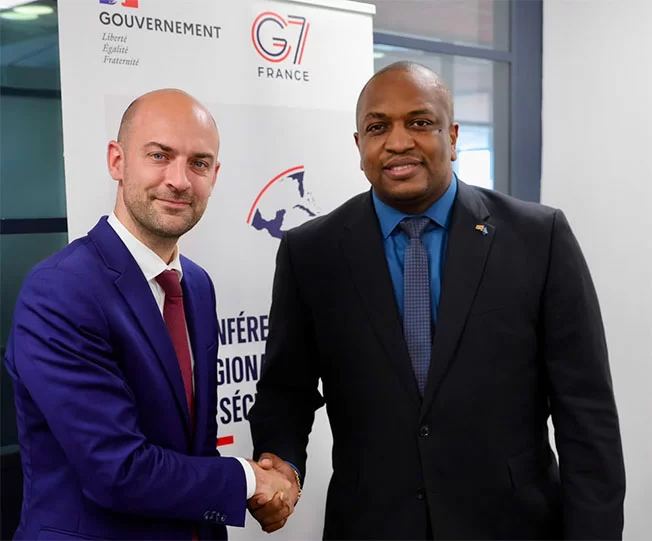
    The gathering brought together Suriname’s Minister of Foreign Affairs, International Trade and Cooperation Melvin Bouva, and his French counterpart, Minister for Europe and Foreign Affairs Jean-Noël Barrot, to advance long-standing bilateral and regional cooperation goals. Both ministers underlined that their shared commitment to good neighborly relations and a forward-looking strategic partnership is aimed at delivering tangible, mutually beneficial outcomes for the populations of both countries.

    Central to the discussions was work on a cross-border cooperation protocol, which the two leaders say will inject new momentum into the development of shared border regions and strengthen both economic and social collaboration along the boundary. Bouva highlighted the untapped potential for expanding trade and investment ties between Suriname, France, and France’s overseas department of French Guiana. According to official statements from Suriname’s foreign ministry, the recent growth of Suriname’s oil and gas sector opens new, promising avenues for joint economic development and collaborative projects.

    Infrastructure and connectivity were another core focus of the talks. Both sides agreed to advance upgrades to cross-border connections across land, air, and river routes. Bouva reiterated Suriname’s priority of restoring the critical ferry link between the Surinamese border town of Albina and Saint-Laurent, the French Guiana town located across the Maroni River. The Surinamese minister also pushed for more streamlined rules for cross-border person movement, including simplified visa procedures, as part of a more robust shared border and neighborhood policy framework.

    The talks also covered cooperation across a wide range of additional sectors, including education, public healthcare, culture, tourism, and public safety. The two ministers prioritized expanding joint action to combat transnational organized crime, a shared priority for neighboring territories. Suriname formally expressed its full support for the Martinique Declaration, a regional framework focused on strengthening collective cross-border cooperation on security and crime reduction.

    Beyond bilateral engagement, the two nations also committed to closer collaboration in multilateral forums. The agreement includes a pledge to mutually support each other’s candidatures for international positions and to coordinate shared policy positions within global multilateral organizations. All of the preliminary strategic agreements reached during the Martinique meeting are scheduled to be formally ratified this coming September.