博客

  • Historic Swing Bridge Rebuild Moves Belize Forward

    Historic Swing Bridge Rebuild Moves Belize Forward

    A decades-long wait for critical infrastructure upgrades is set to end for Belize City, as plans for a full reconstruction of the city’s iconic 100-year-old Swing Bridge – the last remaining manually operated swing bridge in Central America – move forward. The landmark project, backed by a $28 million partnership between the governments of Belize and Japan, is the centerpiece of a sweeping city-wide modernization initiative that will reshape transportation, trade and public space across the capital.

    Belize City Mayor Bernard Wagner framed the reconstruction as a transformative step for the city, acknowledging that construction will bring short-term disruptions for local residents and commuters but emphasizing that the long-term gains far outweigh temporary inconveniences. “You have to go through the fire to grow. You can’t want good things without being willing to accept temporary challenges,” Wagner said in a public address, noting that the bridge upgrade is one of multiple interconnected infrastructure improvements underway across Belize. These include renovations to the Belcan Bridge, comprehensive upgrades to the George Price Highway and Philip Goldson Highway, the development of an entirely new Port of Belize, and the construction of a new floating waterfront boardwalk.

    To mitigate traffic congestion expected during construction when schools reopen and commuter volumes rise, city officials have already formally approved a new one-way street system that will launch in the coming weeks to manage vehicle flow. Wagner added that the city’s team is working in close collaboration with the Ministry of Infrastructure Development and Housing (MIDH), a well-organized government body that will oversee on-time, on-budget delivery of the project. The administration is prioritizing transparent, regular communication to keep residents updated on construction timelines and traffic adjustments.

    In a complementary move to streamline the project and cut long-term costs, the Government of Belize has acquired the San Cas Bottom Dollar property on North Front Street for $5 million. Officials confirmed that purchasing the parcel eliminates the need for costly utility relocations that would have otherwise driven up project expenses, saving taxpayers millions of dollars in unplanned overhead. The site will also serve as dedicated storage and office space for contractors working on the bridge reconstruction, further simplifying project logistics.

  • Calls Grow for National Action on Horse Abuse in Belize City

    Calls Grow for National Action on Horse Abuse in Belize City

    A growing public outcry has erupted over the persistent horse abuse crisis in Belize City, where widespread reports of injured, malnourished equines wandering urban streets have reignited demands for sweeping national action to address the issue. The long-unresolved problem has pitted local animal welfare advocates against municipal authorities, who argue that outdated national legislation and resource gaps leave them powerless to crack down on abuse and neglect.

    Animal welfare activists have renewed their calls for a full ban on horses within Belize City limits, pointing to a years-long string of unaddressed abuse cases as clear evidence that the existing regulatory framework is fundamentally broken. They argue that allowing horses to remain in the urban environment, where many are subjected to inadequate care, unsafe living conditions, and unregulated racing, creates both unacceptable animal suffering and public safety risks for local residents.

    However, Belize City Mayor Bernard Wagner says municipal leaders are hamstrung by systemic barriers that prevent meaningful enforcement of existing protections. In comments to local media, Wagner explained that current laws are outdated, misaligned with 21st-century public needs, and do not grant local authorities the legal power to seize abused animals or penalize negligent owners. Compounding the challenge, the city also lacks dedicated, appropriate facilities to house any horses that would be confiscated from abusive situations, even if officials had the authority to act.

    Wagner emphasized that local government is not empowered to create new national legislation, and can only advocate for higher-level policy change to address the crisis. “The problems of yesteryear are different from the problems of today,” Wagner said. “We really require updates to the current legislation and statutory guidance on the books. Those have to be modernized to meet the demands of today’s society.”

    City council members have previously confirmed that the municipal government lacks the legal jurisdiction to take action against unregulated horse keeping and street racing within city boundaries, leaving the issue falling through the cracks of local and national governance. The renewed public anger over recent sightings of neglected horses has now pushed the issue back to the top of the public agenda, with both advocates and local leaders pushing national policymakers to update animal welfare laws that protect both equines and the Belize City public.

    This report is adapted from a transcript of a televised evening news broadcast.

  • Special Sitting Held for Two Pillars of Belize’s Justice System

    Special Sitting Held for Two Pillars of Belize’s Justice System

    On July 6, 2026, members of Belize’s legal fraternity came together at the Supreme Court building in Belize City to pay tribute to two pioneering women whose decades of work fundamentally shaped the nation’s justice system. The special memorial sitting drew sitting judges, practicing attorneys, family members, and longtime colleagues of former Senior Counsel Robertha Magnus-Usher and Agnes Segura-Gillett, two legal professionals whose influence on Belizean law continues to resonate long after their passing.

    Jose Alpuche, president of the Belize Bar Association, opened reflections on the legacy the pair left behind, emphasizing that their contributions extend far beyond their individual careers to touch every corner of the nation’s legal community. “Unfortunately, two very great women in our profession. I am sure you have heard all the remembrances and stories shared. These were women who certainly left their mark on the legal profession in Belize, and they were excellent members of the Belizean community. So, it was only fitting that us as professionals as attorneys gather to celebrate them and remember them and their legacy,” Alpuche told reporters following the event.

    For many younger legal professionals who worked alongside Segura-Gillett, her impact extended far beyond her formal professional achievements. Giann Ramclam, who once worked as an employee for the late legal figure, described the shock of her passing in May 2026, and highlighted the mentorship she offered to everyone joining the profession. “Her passing came as a shock. She was a determined person, lively, ambitious. No matter what she accomplished in life, she never settled. She kept striving for more. I was privileged to know Ms. Gillett not just as a boss, but a mentor,” Ramclam shared. “She was a brilliant mind, generous, loving and welcoming, and she welcomed us as a part of her family and she never failed to teach us and share her knowledge.”

    Magnus-Usher, the first of the two legal leaders to pass away, died in July 2025, leaving behind a decades-long legacy of public service and legal excellence. Today’s gathering marked a rare moment of collective pause for the Belizean justice system, bringing together competitors and colleagues alike to honor the two women who broke barriers and set new standards for service in the country’s legal community.

    This report is adapted from a transcript of an evening television newscast, with all quoted content preserved for accuracy.

  • Spectator MMA Knockout by Rising Star; OW Rebels Equalizes Series

    Spectator MMA Knockout by Rising Star; OW Rebels Equalizes Series

    Broadcast on July 6, 2026, the weekly *Sports Monday* program from Belize opens with a spotlight on one of the country’s most promising emerging combat sports talents, 18-year-old amateur MMA fighter Dominic Beaino. The SJC student and rising lightweight contender has turned heads across Belize’s amateur fight circuit after delivering one of the most impressive knockout performances in recent regional amateur history, ending his latest bout in just four seconds with a lightning-quick, lethal combination that left his opponent unable to continue.

    Competing out of the Prevail Combat Club, Beaino carries an unblemished 4-0 amateur record, with no draws or losses to date. Weighing in at 153 pounds, the young athlete has drawn on the resilience tied to his Lebanese heritage, framing his approach to the sport around a philosophy that echoes the work of iconic poet Khalil Gibran: that pain fuels growth and deeper understanding. Beaino trains twice a day, four days a week, splitting his schedule between MMA technique work in the evenings and strength and weight training to build power and endurance. For the teenager, pain is not an obstacle to avoid, but a tangible, authentic experience that serves as a foundation for improvement. Beaino has his sights set on a professional MMA career, and the program extended well wishes for his future athletic pursuits.

    Shifting to other key regional sports developments, the Orange Walk Running Rebels secured a critical comeback victory to even the best-of-five finals series against the Belize City Defenders. Heading into Friday’s match, the Rebels trailed the series one game to zero, but pulled off a hard-fought 60-55 win to level the bracket. The series will now return to Belize City for the next round of competition this coming weekend.

    In fast pitch softball action, the ongoing Marconi Leal Fast Pitch Tournament hosted in Sandhill saw a dominant performance from the Guardian Bombers against the hometown Sandhill De-Trop team. The Bombers’ explosive batting and athletic defense overwhelmed the home side, putting up six runs in the third inning and an additional three runs in the fourth to seal a lopsided victory before the final frames.

    Rounding out the week’s coverage, Belize’s under-17 women’s national volleyball team put up a valiant fight at the 2026 Central American Championships, narrowly missed out on a podium finish with a hard-fought five-set loss to Costa Rica in the bronze medal match. Despite the team’s close defeat, Belizean standout Jamielle Espejo turned in a historic individual performance, taking home three awards: Best Receiver, Second Best Attacker, and the tournament’s Top Scorer. Looking ahead, more international volleyball action is on the horizon for Belize, as the country’s under-21 women’s national team is currently competing in the Pan American Cup in Columbus, Ohio. This broadcast of *Sports Monday* was brought to viewers by the National Sports Council of Belize.

  • Relatives: Slain Black Rock businessman may have been targeted for jewellery

    Relatives: Slain Black Rock businessman may have been targeted for jewellery

    A quiet residential neighborhood in Black Rock was shaken by a violent pre-dawn killing on Monday, when a 40-year-old local father was shot multiple times outside his family home, in a attack relatives believe was carried out for robbery. Local law enforcement confirmed that officers were dispatched to Belfield Road just after 5:10 a.m. following an emergency call about the shooting. When first responders arrived at the scene, they found the victim, identified by family as Deon Pilgrim, suffering from several gunshot wounds across his body. Despite quick arrival of authorities, Deon was pronounced dead at the site of the attack.

    When journalists from Barbados TODAY arrived at the family property hours after the shooting, visible bloodstains still marked the concrete of the front verandah and the nearby muddy ground where Deon’s body was found. Grieving relatives had gathered inside the home, struggling to come to terms with the sudden, violent loss of their loved one.

    Davidson Pilgrim, Deon’s uncle, spoke to reporters about the frantic moments after the shooting. He explained that he received an urgent early morning call from his mother and sister notifying him of the incident, and he reached the property by around 5 a.m. “His body was lying there by the verandah, no life,” Davidson recalled.

    Deon shared the home with his mother, grandmother, and his only daughter. Both older women were inside the residence when the gunshots rang out. According to Davidson, Deon’s mother heard four shots ring out, with the final sound she caught being her son calling out for his grandmother.

    Family members say several pieces of valuable gold jewelry that Deon was wearing are now missing, including two thick gold chains, a bangle, and multiple rings, leading them to conclude the attack was a targeted robbery that turned deadly. The shooting triggered such severe distress for Deon’s mother that her blood pressure spiked dangerously, and she was rushed to a local hospital for emergency medical care.

    In remembrance of their nephew, Davidson described Deon as a gentle, hardworking man who built his livelihood selling food at a weekly Friday canteen. “Deon was a cool guy, no violence or nothing, he work for what he want… he’s a loving person. To my knowledge, you can’t say nothing bad about him,” Davidson shared.

  • Police service appoints five senior command officers

    Police service appoints five senior command officers

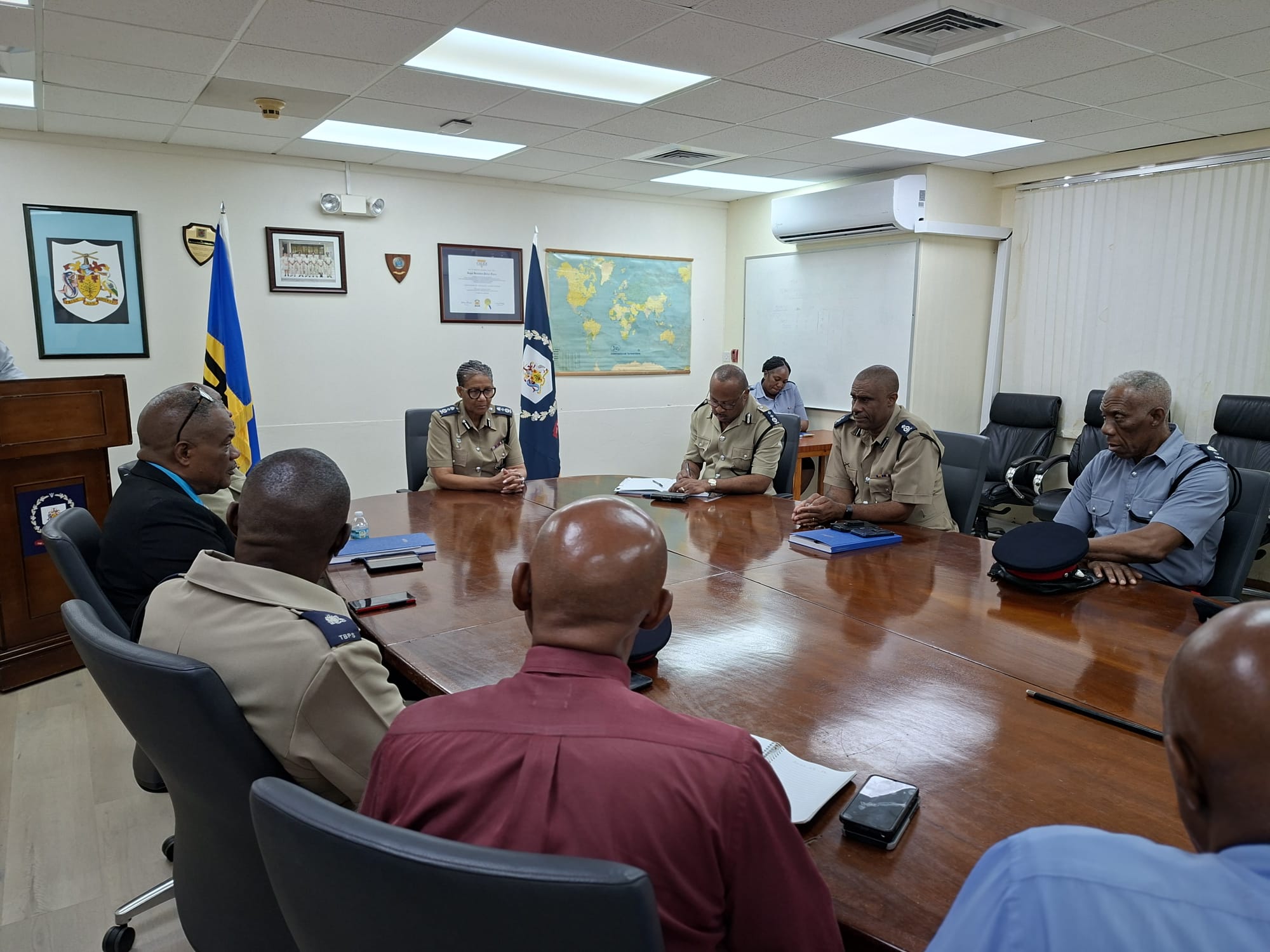
    In a landmark move to strengthen the Barbados Police Service’s top leadership structure just days after the historic swearing-in of the island nation’s first female police commissioner, five senior officers have been formally appointed to key command positions. The new appointments, which went into effect this past Friday, follow closely on the heels of Sonia Boyce’s inauguration as Commissioner of Police, marking a new era for the TBPS.

    At a formal ceremony held at Police Headquarters, Commissioner Boyce presented official letters of appointment to the newly promoted leadership team. Barry Hunte and Adrian Broomes received confirmation as Deputy Commissioners, while Stephen Herbert, David Welch and John Boyce were formally named Assistant Commissioners.

    Opening the ceremony, Boyce described the moment as “a joyous morning”, noting that most of the appointed officers had already been serving in acting capacities for some time, proving their competence in the roles. In her address to the new senior command, the commissioner emphasized that effective policing requires collective effort rather than individual leadership. “The Barbados Police Service is not a one woman or one man show,” she stated, urging the entire team to move forward “hand in hand” to drive progress across the organization. Boyce also laid out the leadership’s core long-term goal: to continue transforming the TBPS into a law enforcement agency that ranks not only among the finest in the Caribbean region, but among the most effective in the world.

    Each new appointee brings a unique set of experience and expertise to the senior command. Deputy Commissioner Hunte has an extensive track record of senior leadership within the TBPS, including previous oversight of the service’s special operations and management divisions. He has earned widespread recognition across the service for his focus on strengthening leadership standards, improving organizational performance, leading successful change management initiatives, and delivering consistent results in executing the TBPS’s core policing strategy.

    Deputy Broomes, for his part, has built his career around key roles in disaster response and inter-agency coordination, and is currently continuing advanced training in executive leadership. Notably, Broomes was unable to attend Friday’s ceremony, as he is currently overseas completing a specialized police executive training course.

    The three newly appointed Assistant Commissioners also oversee distinct, critical portfolios: Herbert takes responsibility for human resources and administration, with a core focus on expanding workforce development, rolling out strategic training programs, and strengthening collaboration between the TBPS and other government agencies. Welch leads change management and technology services, tasked with modernizing the force’s digital capabilities and driving organizational evolution. John Boyce, who already has extensive experience in senior command, takes charge of the TBPS’s crime-fighting operations.

    The reshuffle and formalization of senior command comes as the TBPS enters a new period of renewal under its first female leader, setting the foundation for the service’s planned modernization and excellence efforts in the coming years.

  • High demand, limited supply and delays reshape property landscape

    High demand, limited supply and delays reshape property landscape

    Barbados’ real estate sector is experiencing a broad upswing, with both foreign and domestic investment on the rise, though gaps in regulatory oversight are creating serious risks for consumers and the island’s global reputation, the head of the country’s leading real estate industry body has revealed in an exclusive interview with Barbados TODAY.

    Chris Hassell, president of the Barbados Estate Agents and Valuers Association (BEAVA), framed the current market challenges as growing pains of a rapidly maturing industry, arguing that targeted, incremental legislative changes rather than sweeping overhauls are enough to address existing gaps. The association is committed to working alongside policymakers to build a sector that grows sustainably with confidence, fairness and full transparency for all market participants, he said.

    Hassell outlined three core challenges currently facing the market, starting with the proliferation of unlicensed, unregulated real estate operators. Buoyed by high demand and tight supply, many unqualified people have entered the space as side earners, operating outside the strict anti-money laundering rules and Financial Intelligence Unit best practices that govern all formally registered agents. Under current global standards, real estate agents are classified as Designated Non-Financial Business Professionals (DNFBPs), requiring adherence to rigorous compliance standards that registered agents have embraced, Hassell noted. He added that two recent high-profile cases of attempted fraud by unlicensed actors have already damaged the sector’s reputation, and called for mandatory minimum practice standards enshrined in legislation, aligned with frameworks used across other CARICOM member states. BEAVA is currently partnering with a senior local law firm to develop formally drafted, legally grounded regulatory recommendations to submit to the government, he confirmed.

    The second key pain point is duplicated Know Your Customer (KYC) compliance requirements. Under current rules, real estate agents, mortgage lenders and legal representatives are all required to collect the same customer identification information separately, forcing clients to fill out identical disclosures up to three times per transaction. Hassell proposed a single centralized KYC repository for property transactions, which would cut redundant work for customers and streamline compliance processes for all industry stakeholders.

    Third, the sector lacks accessible, reliable aggregated sales data, making it difficult for agents and valuers to identify accurate comparable properties to inform valuations. Hassell said expanding valuers’ access to centralized sales data would improve the speed and accuracy of property valuations, in turn boosting investor confidence in the market. He also highlighted a related opportunity to encourage more Barbadian property owners to formalize land ownership through registered title. State-backed registered title provides definitive proof of ownership, speeds up future sales transactions, and prevents costly family land disputes that often leave properties underutilized. While the registration process has its own barriers that require case-by-case consideration, Hassell noted it is a valuable tool for estate planning that strengthens the entire market by making transactions cleaner and more certain.

    Despite these challenges, Hassell emphasized that most current frictions stem from a busy, growing market rather than systemic decline, and noted key differences in the barriers facing foreign versus domestic buyers. For international purchasers, the length of time required to close a Barbadian real estate transaction remains a major pain point, even in ideal scenarios, compared to other global property markets. Traditional bureaucratic delays related to Central Bank foreign currency registration, title searches and town planning approvals all extend closing timelines, while the lack of reliable comparable data makes it harder to accurately assess property values.

    For domestic Barbadian buyers, two core challenges stand out. First, there is a critical shortage of inventory at the lower end of the market. General construction costs per square foot have risen sharply across the board, leaving very few affordable housing options available. This leaves local buyers caught between a lack of available properties matching their budgets and the significant cost uncertainty and logistical hurdles of building a custom home. Second, there is widespread inconsistency in domestic mortgage lending processes. Too often, buyers receive pre-approval certificates confirming eligibility for a specific mortgage amount, find their desired property, and are ultimately denied the full loan amount after full due diligence is completed, causing sales to collapse. Greater consistency between pre-approval and final approval would eliminate significant unnecessary stress for buyers, Hassell said.

    Turning to the overall health of the sector, Hassell confirmed the market is currently thriving in a clear seller’s market defined by limited inventory, strong widespread demand, and growing competition that often leads to multiple offers at or above listing price. He identified three core drivers of the current boom: the long-term legacy of the popular Welcome Stamp remote work residency program, Barbados’ successful removal from international financial watchlists, and the country’s longstanding political and economic stability. Increased air connectivity from new source markets has further boosted demand for property, he added.

    Foreign and local buyers currently dominate distinct segments of the market. Foreign investment continues to lead growth in the luxury and ultra-luxury property tiers, with international buyers increasingly viewing Barbados not just as a vacation destination, but as a long-term base for extended living, family relocation, and wealth preservation. Domestic buyers dominate the higher-volume mid-market, concentrated in standalone homes and land lots. The Welcome Stamp program, which attracted thousands of long-term international residents to the island, has been a resounding success that reshaped the market and opened new opportunities, Hassell said, lifting rental yields for landlords while tightening affordable housing supply – a gap that now represents a major development opportunity.

    Hassell noted there is clear unmet domestic demand for apartments priced between $750 and $1,250 per month in rent, and freehold homes priced between $250,000 and $500,000, creating a clear opening for developers to meet this need. He also pointed to encouraging growth in demand for commercial warehouses and storage facilities, a key sign of a diversifying, maturing local economy.

    Hassell pushed back against concerns that the current market represents an unsustainable speculative bubble, framing it instead as a tight but rational market positioned for steady growth. As long as Barbados maintains its political and economic stability, he remains cautiously optimistic, noting the market is mid-cycle and settling into sustainable growth rather than experiencing an unsustainable price spike.

    Foreign investors consistently favor well-known, high-amenity properties, with gated communities, condos and townhouses close to beaches and core services remaining in highest demand. Many international buyers first visit as tourists, develop an attachment to the island and its people, and ultimately purchase a second home or investment property, Hassell explained. Modern buyers increasingly prioritize turnkey, low-maintenance properties within managed developments that can be locked and left empty when not in use, generating rental income during the parts of the year the owner is not in residence.

    Hassell added that high-end property investment is not limited to foreign buyers, with Barbadian buyers increasingly active in the luxury segment too. Luxury villas hold their value well through economic cycles, anchored by iconic west coast developments such as Sandy Lane Estates, Royal Westmoreland and Apes Hill, with a growing new trend for ultra-luxury developments on smaller footprints. Hassell pointed to small boutique developments of 13 to 15 units close to the sought-after Platinum Coast as a fast-growing segment. Many buyers are also willing to look further inland from the beach to get more space and value for their investment.

    For local buyers, demand is strongest for affordable homes and rentals in the mid-price range, but local investment extends across the market, with more Barbadian investors taking on renovation projects in prime locations to convert old family properties into short-term vacation rentals or small commercial office spaces.

    Hassell stressed that for most people, a real estate transaction is the largest financial purchase they will ever make, making it critical to work with a registered BEAVA agent to navigate the process. Real estate transactions in Barbados require specialized knowledge of conveyancing rules, and foreign buyers must navigate additional requirements related to Central Bank registration and exchange control regulations. Working with a qualified registered professional who understands local protocols is the best way to avoid risk, he said.

    While Hassell declined to share a specific annual figure for total real estate transaction volume or investment, he confirmed the sector is a substantial core contributor to Barbados’ economy, with wide-ranging spillover impacts across the tourism, construction and financial services sectors. It also serves as a key leading indicator of global confidence in Brand Barbados, he added.


  • The CDPF are investigating skeletal remains found in Castle Bruce

    The CDPF are investigating skeletal remains found in Castle Bruce

    Law enforcement authorities in the Commonwealth of Dominica have opened an active investigation following the unsettling discovery of human skeletal remains in the Milbranche district of Castle Bruce. According to official reports, the remains were located at approximately 2:10 p.m. on Sunday, July 15, 2026, in a densely vegetated, bushy tract of land close to the banks of the Calice River.

    As of the latest updates from the Commonwealth of Dominica Police Force, investigators have not yet been able to confirm the identity of the deceased. For evidentiary and procedural purposes, the recovered remains have been transported to a local funeral home, where they will be held until a forensic autopsy can be conducted and formal identification processes are completed.

    Police officials confirmed that the inquiry into the circumstances leading to the individual’s death remains ongoing, with investigators working methodically to piece together key details about the case. No further information, including potential causes of death or victim demographics, has been released to the public as the investigation progresses.

  • Landbouwers Brokopondo getraind in duurzame agroforestry

    Landbouwers Brokopondo getraind in duurzame agroforestry

    Nine smallholder farmers from the Brownsweg and Upper Suriname regions recently completed a two-day intensive training program focused on sustainable agricultural practices at Djankakondre, a small rural community in central Suriname. Organized under the banner of Tropenbos Suriname’s Agroforestry Farmer Field School initiative, the workshop received full funding from energy firm TotalEnergies, marking a public-private partnership focused on rural development and environmental conservation.

    The core focus of this training was twofold: educating participants on the responsible application of crop protection chemicals, and highlighting the growing importance of supply chain traceability for agricultural products. The entire initiative is designed to support local farmers as they transition away from traditional slash-and-burn shifting cultivation, a long-practiced method that has contributed to widespread soil degradation and deforestation across the region. In its place, the program promotes agroforestry, an integrated land management system that combines food crop cultivation with strategic tree planting.

    Capacity building for local rural communities stands as a central pillar of the broader Agroforestry Farmer Field School project. To deliver consistent, hands-on learning, a dedicated training center has been constructed in Djankakondre, outfitted with all the infrastructure and tools required to provide practical, on-site guidance to participating farmers.

    This most recent training session was led by agricultural specialist Natali Waal. Waal walked participants through best practices for safe, sustainable chemical crop protection, emphasizing reduced usage and environmental protection, before breaking down the value of traceability in modern agricultural supply chains. According to event organizers, traceability has become an increasingly critical requirement for regional and international buyers, as consumers increasingly demand transparency around the origin and production conditions of the food they purchase.

    Proponents of the agroforestry model highlight its multiple long-term benefits: the mixed crop-and-tree system prevents soil nutrient depletion that plagues repeated shifting cultivation, protects native biodiversity by preserving tree cover, and creates more stable, diversified income streams for farming households that are less vulnerable to climate shocks and market fluctuations. With new skills in hand and expanded training infrastructure now available locally, participating farmers are far better positioned to complete their transition to this sustainable, forest-friendly model of agriculture, laying the groundwork for broader adoption across other Surinamese rural communities.

  • Fire cadet programme marks 26 years with expanded intake

    Fire cadet programme marks 26 years with expanded intake

    A landmark summer for Barbados’ long-running youth development initiative has brought a record-breaking cohort of new recruits to the Fire Cadet Programme, which is celebrating 26 years of operation by expanding its intake from 50 to 100 available spots — a doubling of capacity that marks the largest expansion in the programme’s history.

    The milestone was formally marked at an opening ceremony hosted at Parkinson Memorial School, drawing senior government officials, fire service leadership, program instructors, and family members of the new cadets. Speaking to attendees under the 2025 theme “Empowering Tomorrow’s Future Leaders”, program coordinator Rozel Davis outlined that the initiative extends far beyond basic emergency response training, with its core mission centered on nurturing the next generation of Barbadian leaders through intentional character building.

    Davis explained that foundational soft skills — including personal discipline, collaborative teamwork, and adaptive resilience — are the central focus of the summer experience, alongside structured, hands-on fire safety instruction. The program also works to embed a sense of community responsibility by centering values of service, mutual respect, and national pride.

    “This is far more than a seasonal training program,” Davis emphasized in her welcoming address. “It is a direct investment in the future of Barbados. Every cadet joining this year embodies the strength, courage, and untapped potential of our nation’s young people. By arming them with critical knowledge, practical skills, and strong core values, we are not just training them to respond to emergencies — we are preparing them to live with integrity in their schools, communities, and across our country.”

    Davis extended gratitude to the program’s full-time and part-time instructors for donating their professional expertise, and to parents and guardians for entrusting the Barbados Fire Service with their children’s development. She urged the new recruits to approach the summer opportunity with open enthusiasm, noting that the lessons they gain over the coming weeks will serve them for decades to come.

    Minister of Home Affairs and Information Gregory Nicholls delivered the ceremony’s keynote address and officially declared the 2025 cohort’s program open. He praised the steady evolution of the scheme, which has grown far beyond its origins as a small seasonal summer activity to become a widely respected national youth institution over its 26-year history. While the expansion to 100 spots represents a major milestone of growth, Nicholls noted that a small number of slots remain unfilled, and encouraged interested young Barbadians to reach out to the Barbados Fire Service to claim the remaining opportunities.

    Nicholls highlighted the uniquely important role the program fills at a time when countries across the globe are grappling with how to meaningfully engage young people, who face growing social pressures and rapid societal shifts driven by digital transformation. He observed that young people are too often defined by their perceived limitations rather than their potential achievements, and framed the Fire Cadet Programme as a critical counter to that narrative.

    “It is my hope that the programme will continue to offer a powerful, positive alternative for our youth,” Nicholls said. “It will turn passive interests into purposeful action, it will convert curiosity into confidence, and channel young people’s energy into strong leadership. Most importantly, it proves that our young people are not problems to be solved — they are our partners in building the future of our nation.”

    The minister reminded new cadets that their uniform carries a deep responsibility, representing honor, respect, commitment, and the willingness to step forward to serve when others step back. Over the coming weeks, the 2025 recruits will complete rigorous training across a range of core disciplines: fire safety protocols, first aid, disaster preparedness, water safety, physical fitness, and ceremonial drill.

    In a moving interlude during his address, Nicholls paused to recognize the Barbados Fire Service officers who recently deployed to Venezuela to support international rescue and recovery efforts. He shared that the Barbadian contingent delivered exceptional performance on the mission, earning top commendations and medals from the Venezuelan government. Nicholls shared plans for the new cadets to attend the officers’ official welcome-home event on Thursday, to see first-hand how Barbadian skill and compassion can contribute to global crisis response.

    Closing his remarks, Nicholls reaffirmed the Barbadian government’s commitment to youth development as a foundational pillar of national resilience. He told cadets that true leadership is measured not by status, but by character, humility, integrity, and a lifelong commitment to service.

    “National resilience is not built only through infrastructure, equipment, or institutions. It is built through people,” Nicholls said. “When we invest in our youth, we invest in the resilience of our nation.”