博客

  • Environmental Awareness Group Announces New Leadership Appointments

    Environmental Awareness Group Announces New Leadership Appointments

    The Environmental Awareness Group (EAG), a leading non-profit focused on conservation work across the twin-island nation of Antigua and Barbuda, has revealed two high-impact leadership appointments that are set to steer the organization’s expanding mission and amplify its conservation outcomes in the region.

    The first appointment elevates long-time EAG team member Monifa Thomas to the position of Executive Director. Thomas first joined the EAG’s ranks in 2020, spending three years serving as the organization’s Accountant. Over her tenure, she has built comprehensive, hands-on knowledge of every operational area of the EAG, and played an integral role in stabilizing the group’s daily operations and laying the groundwork for its long-term organizational sustainability.

    Jermaine Jarvis, President of the EAG Board of Directors, emphasized that Thomas’s intimate familiarity with the organization’s core culture, mission and strategic goals, paired with her proven organizational acumen and natural leadership abilities, make her uniquely equipped to guide the EAG into its next phase of growth. “Monifa’s internal experience and strategic focus make her the ideal person to lead the EAG forward,” Jarvis noted. “Her unwavering commitment to the organization and deep understanding of our work will help strengthen our impact and ensure continued growth in environmental conservation and community engagement across the islands.”

    In response to her appointment, Thomas expressed humility and excitement for the work ahead. “I am honoured to serve as Executive Director of the Environmental Awareness Group,” she said. “Having worked within the organization for a few years, I deeply value the work we do and the difference we continue to make throughout Antigua and Barbuda and beyond. I look forward to working alongside our dedicated staff, partners, and communities as we continue advancing environmental protection and sustainability initiatives.”

    The EAG also took the opportunity to publicly recognize the contributions of former Executive Director Dr. Mareba Scott, extending sincere gratitude for her years of service and leadership, and wishing her success in all upcoming professional and personal endeavours.

    Alongside Thomas’s promotion, the EAG also announced that Joshel Wilson will step into the new role of Antigua Marine Conservation Programme Coordinator. Like Thomas, Wilson is a long-time internal team member, previously holding the position of Wildlife Officer with the organization. In that role, he made major contributions to a wide range of conservation projects and led critical on-the-ground field operations across the islands.

    In his new position, Wilson will take charge of coordinating and rolling out targeted marine conservation programs designed to protect the rich marine biodiversity and fragile coastal ecosystems of Antigua and Barbuda. His responsibilities will also include expanding environmental education programming for local communities and growing public participation in grassroots conservation efforts across the island.

    The appointment of Wilson, another internal promotion, reflects the EAG’s board’s strong confidence in his existing experience, proven dedication, and consistent professional growth during his time with the organization. “Joshel has consistently demonstrated commitment and passion in his work as Wildlife Officer,” Jarvis explained. “This appointment represents a natural progression in his career, and we are excited to see him take on this expanded leadership role within the organization.”

    Wilson shared his gratitude for the new opportunity and his enthusiasm for the work ahead. “I am grateful for the opportunity to continue growing within the Environmental Awareness Group,” he said. “Serving as Wildlife Officer gave me valuable experience in conservation work and community engagement, and I look forward to building on that foundation as Antigua Marine Conservation Programme Coordinator. I am excited to contribute even further to the protection and sustainable management of our marine environment.”

    Moving forward, the EAG remains firmly committed to advancing its core mission areas: biodiversity conservation, public environmental education, ecosystem restoration, and sustainable development across Antigua and Barbuda. For additional information about the organization and its ongoing programming, visit the EAG’s official website at https://eagantigua.net.

  • Solid Waste confirms fire at Landfill site

    Solid Waste confirms fire at Landfill site

    On Monday evening, June 15, 2026, officials from St. Kitts’ Solid Waste Management Corporation (SWMC) officially confirmed what local residents had already observed: large dark plumes of smoke visible across the Conaree region were caused by an active major fire at the area’s municipal landfill site.

    The blaze first ignited in the facility’s dedicated Construction and Demolition (C&D) waste cell, SWMC explained in an official public statement. Although the corporation deployed all of its on-site fire suppression resources immediately after detecting the fire, the intense heat and rapid spread of the flames outpaced local containment efforts. The fire has since expanded to the site’s adjacent tyre storage section, intensifying smoke production and complicating suppression work.

    Given the landfill’s close geographic proximity to Robert L. Bradshaw (RLB) International Airport, one of the region’s most critical travel hubs, local residents and industry stakeholders quickly raised concerns that the smoke and fire could disrupt flight operations or threaten airport infrastructure. But the St. Christopher Air and Sea Ports Authority (SCASPA) moved quickly to reassure the public, confirming that the airport faces no immediate danger from the incident and that all arrival, departure, and ground operations continue to run on schedule as normal.

    In public health guidance released alongside their incident confirmation, SWMC urged residents of nearby communities to stay alert to shifting smoke levels and changing local air quality, and to take appropriate safety precautions to protect their health. The guidance advises local households to keep windows and exterior doors closed as much as possible to prevent smoke from seeping into indoor spaces, and to cut back on unnecessary outdoor activities. Special warnings were issued for vulnerable groups including children, elderly residents, and individuals living with chronic respiratory conditions, who face higher risk of health complications from smoke exposure.

    SWMC confirmed that cross-agency response and fire containment operations are currently active and ongoing at the site. The corporation also expressed public gratitude for the rapid support provided by partner agencies, including the Royal St. Christopher and Nevis Police Force, SCASPA, and the St. Kitts and Nevis Fire and Rescue Services, which have deployed personnel and resources to assist with the response effort.

    Acknowledging the disruption and concern the fire has caused across the local community, SWMC issued a formal apology for the inconvenience brought by the incident. The agency also committed to publishing timely, transparent updates as suppression and containment work progresses, to keep residents and stakeholders fully informed of any changes to the situation.

  • Executors, administrators and AML risk in estate administration

    Executors, administrators and AML risk in estate administration

    For decades, estate administration has been widely understood as a straightforward legal process centered on three core tasks: cataloging a deceased person’s assets, settling any outstanding debts, and distributing remaining property to designated heirs. But according to industry expert Kevon K K Charles, Managing Partner at Trinidad-based KC Legal Consultancy, this traditional description no longer captures the full complexity of modern estate practice, particularly across the Caribbean, where shifting regulatory expectations have redefined the role of executors and administrators.

    Charles notes that the work of estate professionals extends far beyond simply identifying which assets fall into a deceased’s estate. Beyond basic asset collection, practitioners are now routinely required to verify formal ownership of property, confirm asset valuations, cross-verify beneficiary identities, and meet strict institutional requirements before any assets can be accessed or transferred. While this process follows predictable, routine steps for many estates, it can quickly become complicated for assets with non-traditional holding structures.

    Common scenarios that trigger extended due diligence include when a deceased held bank accounts across multiple international jurisdictions, owned property through a corporate entity, or held assets through informal, unrecorded arrangements that persisted for decades. In these cases, executors are forced to answer a series of probing questions that go far beyond basic asset gathering: Who holds the ultimate beneficial ownership of the asset? Can the original source of funds be fully documented? Are all beneficiaries clearly identifiable with official paperwork? Do existing records meet the strict requirements set by banks and regulatory bodies?

    Charles emphasizes that these complications rarely point to intentional wrongdoing. Across the Caribbean, many long-standing family and property arrangements were established generations before modern anti-money laundering, transparency, and compliance standards became embedded in global legal and financial practice. What was once accepted as a common informal arrangement now must fit into a formal regulatory framework, creating unforeseen hurdles for estates.

    One of the most common points of friction in modern estate administration comes from interactions with financial institutions. Many executors and beneficiaries grow frustrated when faced with extensive documentation requests, especially when family relationships and entitlement claims are undisputed and well-known. But from the perspective of financial institutions, these requirements are not arbitrary: global regulatory rules now mandate that banks verify all parties to asset transfers and confirm the legitimacy of fund sources to mitigate financial crime risk.

    As a result, institutions now routinely request a broad suite of materials that were not required in past decades, including government-issued identification for all beneficiaries, proof of residential address, full documentation of the source of funds used to acquire estate assets, corporate records for assets held through business entities, and formal legal verification of each beneficiary’s entitlement. What was once handled as a private family matter is now processed through a highly structured, regulated compliance environment.

    Even the basic task of identifying beneficiaries can become far more complex than many families anticipate. In some cases, beneficiaries live abroad, lack standard official identification, or hold entitlement through informal family arrangements that were never formally documented with legal records. The challenge is rarely a question of legal entitlement itself, Charles explains; the obstacle is proving that entitlement in the formal format required by financial institutions and regulators.

    For estate practitioners across the region, these shifting requirements reflect a fundamental redefinition of the estate administrator’s role. No longer confined to just collecting and distributing assets, modern executors must also navigate overlapping due diligence mandates, institutional compliance protocols, and broad new transparency and verification requirements. This shift does not inherently make estate administration an adversarial process, Charles notes, but it does require a level of advance planning and procedural structure that was not necessary for past generations of practitioners.

    In closing, Charles reflects that while estate administration has always depended on responsibility and public trust, verification has become an increasingly central core of the work. While this added layer of process can create delays and frustration, it is an unavoidable new reality for modern estate practice across the Caribbean. This commentary is part of an ongoing series examining the evolving intersection of wealth, property rights, and regulatory compliance across the Caribbean region.

  • Joseph, Rutherford power WI to record chase and series victory

    Joseph, Rutherford power WI to record chase and series victory

    On a tense Sunday night at Kingston’s Sabina Park, the West Indies men’s cricket team claimed a landmark 2-1 three-match T20 International series win against Sri Lanka, pulling off their highest successful run chase at the ground to seal the result. The series had been set up as a perfect decider: the Caribbean side, known universally as the Men in Maroon, took the opening match, before a resurgent Sri Lanka side bounced back to claim victory in the second fixture, leaving everything to play for in the final encounter. After West Indies captain Shai Hope won the pre-match coin toss, he elected to put Sri Lanka in to bat first, a decision that would pay off by the end of the night. The Caribbean bowling attack made consistent breakthroughs throughout the Sri Lankan innings, with young fast bowler Shamar Joseph turning in a career-best performance, taking five wickets for just 33 runs to destabilize the opposition batting order. Despite the early collapses, late-order hitting from Dunith Wellalage, who struck a rapid 43 off only 28 balls, and Vanindu Hasaranga, who contributed 21 runs from 13 deliveries, helped Sri Lanka post a competitive total of 169 all out, setting a challenging target for the hosts. The West Indies’ run chase got off to a disastrous start, with captain Hope departing for a golden duck without adding a single run to the scoreboard. Shimron Hetmyer injected much-needed momentum into the innings with an aggressive 32, but his departure left the middle order needing to rebuild the chase. That rebuilding work was delivered brilliantly by Rovman Powell and Sherfane Rutherford, who combined for an 81-run fifth-wicket stand – the highest fifth-wicket partnership in West Indies T20I history. When Powell fell with the target still out of reach, experienced all-rounder Jason Holder stepped up to finish the job. In the penultimate over of the innings, Holder smashed three monstrous sixes off the Sri Lankan bowling, finishing an unbeaten knock of 21 runs from just 5 deliveries to turn the tide firmly in the hosts’ favor. Rutherford anchored the innings with a polished half-century, ending on 54 not out, and guided the West Indies across the finish line with five wickets in hand and two full deliveries remaining. This win marks a much-needed turning point for the West Indies side: it is their first series victory in four attempts, and their first home T20I series win of 2025. Speaking after the final wicket fell, captain Hope summed up the significance of the result, noting that consistent success is built through small, repeated habits, and that “winning is a habit.”

  • DDA launches ‘Summer the Nature Island Way’ initiative to showcase diverse visitor experiences

    DDA launches ‘Summer the Nature Island Way’ initiative to showcase diverse visitor experiences

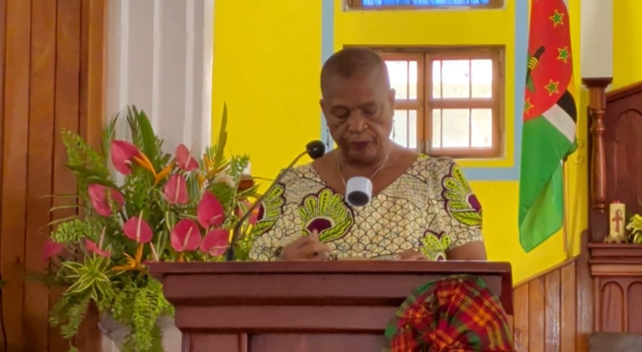
    The Caribbean island nation of Dominica is ramping up its tourism growth strategy with the launch of a new seasonal travel program, designed to highlight its unrivaled natural and cultural offerings while driving inclusive economic benefits for local communities. The Discover Dominica Authority (DDA), the country’s official tourism governing body, announced the rollout of “Summer the Nature Island Way” in an official press release, a new curated experience initiative nested under the destination’s broader flagship “Nature of Love” marketing campaign.

    At the core of the new program are eight custom-built travel itineraries, crafted to cater to a wide spectrum of traveler preferences, from adventure seekers and wellness enthusiasts to couples seeking romantic getaways and families looking for memorable shared experiences. The collection is split evenly between four multi-day vacation packages and four single-day exploratory tours, designed as a hands-on planning resource to help visitors navigate the island’s diverse attractions, extend their length of stay, and deepen their interactions with local communities across the country.

    Marva Williams, Chief Executive Officer of the Discover Dominica Authority, emphasized the core mission behind the new initiative in a statement accompanying the launch. “Summer the Nature Island Way highlights the many ways visitors can experience Dominica,” Williams said. “These itineraries provide inspiration and practical guidance for exploring the island while connecting with our people, culture, and natural environment. Whether visitors are seeking adventure, wellness, romance, or quality time with loved ones, Dominica offers experiences that create meaningful and lasting memories.”

    The launch of this new initiative comes at a moment of growing international acclaim for Dominica’s unique approach to nature-focused experiential tourism. The DDA press release highlighted the island’s recent string of high-profile industry recognitions: it was named among National Geographic’s 2026 Best Places in the World to Travel, secured the top spot on BBC Travel’s 2025 ranking of the 25 best global travel destinations, and was singled out by Caribbean Travel Trends 2026 as the strongest-performing tourism destination across the entire Caribbean region.

    Beyond simplifying trip planning for visitors, the program carries clear economic benefits for local tourism stakeholders across the island. Every itinerary is structured to direct travelers to small businesses, local tour operators, community attractions and service providers across every region of Dominica, spreading tourism revenue more broadly beyond major resort hubs. The initiative also reinforces Dominica’s growing global reputation as a premier wellness travel destination, centering experiences that tie together outdoor recreation, immersion in untouched natural landscapes, cultural connection, and holistic personal well-being.

    Breakdown of the four multi-day itineraries reveals options tailored to every travel style: a four-day family-focused package that showcases iconic waterfalls, coastal marine activities, and interactive cultural attractions; a five-day romantic getaway designed for couples; a six-day adventure itinerary centered on challenging hiking, canyoning, and river exploration; and a five-day wellness retreat focused on relaxation, mindfulness, and sustainable healthy living. The four single-day tours round out the offering, highlighting distinct regional attractions across the island: the Roseau Valley Day Tour, which explores landmarks in and around the UNESCO-listed Morne Trois Pitons National Park; the Northern Treasures Day Tour, which combines old-growth rainforest hikes, cultural heritage experiences, and scenic coastal stops; Calibishie Indulgence: Rum, Rocks & Relaxation, which highlights the unique offerings of Dominica’s northeast coast; and City Treasures & Jungle Gems, which pairs historic walking tours of the capital city of Roseau with nearby tropical natural attractions.

    Travelers can access the full “Summer the Nature Island Way” itinerary collection, including booking details and activity information, through the official Discover Dominica Authority website.

  • Fighting eases in Lebanon as US and Iran reach tentative agreement

    Fighting eases in Lebanon as US and Iran reach tentative agreement

    Just one day after the United States and Iran announced a tentative breakthrough agreement that the international community hopes will calm broader tensions across the Middle East, United Nations officials have confirmed a sharp reduction in hostilities along Lebanon’s southern border. This de-escalation comes after months of rising regional instability that brought the Israel-Lebanon border to the brink of a larger, all-out regional conflict.

    In a press briefing at UN Headquarters in New York, Stéphane Dujarric, spokesperson for UN Secretary-General, shared on-the-ground observations from the UN Interim Force in Lebanon (UNIFIL), the peacekeeping mission tasked with monitoring the border. Between midnight and 4 p.m. local time Monday, just hours after the U.S.-Iran deal was made public, UNIFIL recorded only 133 projectile trajectories and 2 air strikes carried out by the Israel Defense Forces (IDF). Critically, no fire was documented from Hizbullah or other non-state actors active along the border during that same window. Even with the drop in active fighting, the mission still counted 25 violations of Lebanese airspace by the IDF, totaling roughly 40 hours of overflight time.

    This marked a dramatic shift from the intense violence that unfolded over the preceding weekend, before the agreement was announced. During that 48-hour period of peak escalation, UNIFIL documented 135 IDF airspace violations and a total of 1,374 projectile trajectories – 1,328 of which were attributed to the IDF, with the remaining 46 coming from non-state actors believed to be Hizbullah.

    As soon as security conditions began to improve, UN peacekeeping teams moved rapidly to restore critical infrastructure for local communities impacted by weeks of fighting. At the request of Lebanese local authorities, a UNIFIL team spent most of Monday reopening the key highway connecting the southern Lebanese communities of Rmeich and Naqoura. The roadway, which suffered severe damage from cross-fire during the escalation, had been closed to traffic, cutting off access to basic goods and emergency aid for thousands of local residents.

    Equipped with earthmoving machinery, explosives ordnance disposal (EOD) units and engineering specialists, peacekeepers filled craters left by shelling, cleared roadblocks, repaired damaged pavement and removed unexploded ordnance from the route. The reopened highway is expected to serve roughly 6,000 residents who remained in the area throughout the fighting, and will also streamline the delivery of humanitarian aid and essential supplies to all nearby affected communities.

    While welcoming the de-escalation, the United Nations reiterated its longstanding commitment to upholding Security Council Resolution 1701, the 2006 measure that ended the last major war between Israel and Hizbullah and established the current border peace framework. Dujarric reminded reporters that the Secretary-General had issued a formal statement the previous day strongly condemning recent Israeli strikes on Beirut, and reaffirmed the UN’s call for all parties to fully respect the terms of Resolution 1701.

    Even with the reduction in active hostilities, UN humanitarian officials have stressed that the security situation remains fragile, and conditions are still not safe for the large population of displaced civilians who fled southern Lebanon earlier amid the escalation. While a small number of families have begun traveling back to parts of the region, particularly around Nabatieh, to assess damage to their homes, no large-scale population returns have been recorded. UN officials have issued clear guidance that civilians should not attempt permanent returns until security is fully stabilized.

    Local Lebanese authorities confirm that emergency shelters across the country are still operating near full capacity, as displaced families wait for clearer signals that violence will not resume. The Lebanese Armed Forces and local government leaders have joined the UN in urging residents to avoid returning to high-risk border areas for the time being. The United Nations has reiterated its core demands moving forward: full protection for civilian populations, safe and voluntary return for displaced residents, and unimpeded, continuous access for humanitarian workers to deliver aid to all affected communities.

  • Liberta resident raises concerns after reporting woman carrying knife

    Liberta resident raises concerns after reporting woman carrying knife

    A member of the public has spoken out to question how police responded to two separate sightings of a woman reportedly carrying a large blade in a public area on Friday, warning that a potential safety hazard was left unaddressed.

    The witness first caught sight of the individual just before 9 a.m. in the Liberta district. According to their account, the woman was dressed in a bikini top paired with denim jeans, and was positioned close to a local fresh produce stall, clutching what the observer described as a sizable knife. Worried that the open carrying of the weapon put nearby community members at risk, the resident immediately went to the Liberta Police Station to file an official report.

    Despite the visit, the resident claims that while an on-duty officer recorded their name and contact telephone number, no formal incident report was logged into police systems. Several hours after the first encounter, the same resident crossed paths with the same woman again, this time close to the main entry point of All Saints. They further allege that the woman remained in possession of the large knife, and was seen throwing a vehicle hubcap directly into an active roadway while moving traffic was passing through the area.

    In response to this second, more dangerous incident, the resident placed an emergency call to 911, which was subsequently routed to the All Saints Police Station. Officers were given clear directions to the woman’s exact location to enable them to intervene. The resident later returned to the Liberta Police Station to share details of the second sighting as an update to their original report, but once again, they claim no notes of the new information were taken, and no officer asked for additional context or evidence to support their claims.

    To date, the allegations made by the resident have not been independently confirmed by third-party outlets or official investigations. It also remains unclear whether responding police officers ever successfully located the woman, or made contact with her to question her about the reported incidents. Frustrated by the perceived lack of action, the resident chose to reach out to local media to highlight their concerns, arguing that what they view as a potentially dangerous public situation has not received the urgent attention it deserves.

  • Modernisering rechterlijke macht: Wet WIPA, de rechtsstaat tussen retoriek en procedure

    Modernisering rechterlijke macht: Wet WIPA, de rechtsstaat tussen retoriek en procedure

    A sitting member of Suriname’s National Assembly, Jennifer Vreedzaam, is pushing for a robust public and legislative evaluation of the country’s 19-year-old Law on the Incrimination of Political Officeholders (Wet In Staat van Beschuldigingstelling Politieke Ambtsdragers, WIPA), arguing that longstanding procedural gaps and political interference have eroded the law’s ability to uphold the rule of law it was designed to protect.

    In a new opinion piece published June 15, Vreedzaam builds on her previous commentary on judicial modernization and recent debates over proceedings against former public officials to make the case that Suriname’s conversations about the rule of law too often stay surface-level, avoiding deep dives into how the country’s legal framework should be structured and updated to meet modern democratic standards.

    Enacted to protect due process and prevent ruling political majorities from weaponizing judicial bodies to target political opponents for supposed offenses, the WIPA in theory establishes a clear checks-and-balances system: all requests to prosecute political officeholders are vetted by the National Assembly against democratic and legal norms before moving forward. But in practice, Vreedzaam says, missing procedural protocols, systemic delays, selective handling of cases, and lingering institutional legacies from past governments have gutted the law’s effectiveness. A law that exists only on paper, with no clear pathways for consistent, timely implementation, is effectively dead letter, she argues.

    The National Assembly positions itself as the guardian of constitutional principles and the rule of law, charged with reviewing prosecution requests against core democratic standards. Yet Vreedzaam points to a striking gap in how cases are treated: the speed and thoroughness of review are often determined by political context rather than legal urgency, turning what should be a substantive legal assessment into a politically driven procedural process. Equal application of the law, a cornerstone of the rule of law, requires that similar cases receive similar treatment — a standard that is not currently being met.

    Opposition leaders have repeatedly called for upholding the rule of law and ensuring justice prevails, a principle Vreedzaam agrees is the very foundation of any functional democracy. What the current debate ignores, however, is the lasting impact of institutional choices made by past administrations that shape how the WIPA operates today. Key judicial appointments, regulatory changes, and administrative restructuring from previous governments created the current framework for the WIPA, and any discussion of the law’s performance that ignores this history relies on an incomplete understanding of its modern challenges. “Today’s rule of law is in part a product of yesterday’s choices,” Vreedzaam writes.

    The core principle that “justice must prevail” requires that the procedures designed to deliver justice are simple, transparent, and timely, Vreedzaam argues. Cumbersome, overly slow processes directly undermine effective legal protection, and when the national procedural framework itself becomes the biggest bottleneck to justice, the system fails to achieve its intended purpose. This widespread inefficiency, she says, makes it past time for the National Assembly to launch a full review of the WIPA to assess whether it is meeting its core goals in practice.

    In her conclusion, Vreedzaam lays out three non-negotiable conditions for the WIPA to regain meaningful purpose and authority: political neutrality in all implementation steps, simplified and speedier procedural processes, and consistent, equal treatment of all prosecution requests regardless of political context. As long as requests are handled selectively, the historical institutional context is sidelined, and procedural delays outlast the merit of the cases themselves, the purpose of the WIPA will remain a matter of public debate. The core question is not whether the law exists on paper, but whether it works in practice. If the answer depends on who submitted the request and what the current political alignment is, the system does not serve justice — procedural politics do, and the rule of law loses out, no matter who claims to uphold the principle.

  • 11 qualifying spots within reach as Grenada prepares for CAC Games selection decisions

    11 qualifying spots within reach as Grenada prepares for CAC Games selection decisions

    As the qualification window for track and field events at the 2026 XXV Central American and Caribbean (CAC) Games closed officially on 8 June 2026, Grenada has emerged with a strong showing, locking in 11 qualification slots — 6 for male athletes and 5 for female athletes — for the regional tournament. Now, all attention turns to administrative preparations, with Grenada’s national sporting bodies facing a tightly packed timeline of key deadlines to finalize their travelling delegation ahead of the games, which are set to run from 2 to 8 August 2026 at the Félix Sánchez Olympic Stadium in Santo Domingo, Dominican Republic.

    This edition of the CAC Games holds extra historical significance: it marks not only the 25th iteration of the regional multi-sport event but also the 100th anniversary of Centro Caribe Sports (CCS), the governing body that oversees the games. Final qualification rankings published on the official website of the North America, Central American and Caribbean Athletics Association (NACAC) confirm that Grenada will field a balanced, highly competitive squad that blends elite, globally accomplished veterans with exciting emerging collegiate prospects.

    In field events, two-time World Championship gold medallist and Olympic bronze medalist Anderson Peters leads Grenada’s medal hopes as the top-ranked javelin thrower across the entire CAC region. Peters booked his spot with an outstanding seasonal best throw of 89.53 metres, cementing his status as one of the tournament’s top contenders for gold. Joining him in the javelin competition is Suerena Alexander, a collegiate competitor based in the United States, who qualified for the women’s event with an impressive personal mark of 49.66 metres.

    Grenada’s squad also boasts exceptional depth in sprints and 400-metre events. Olympic gold medallist Kirani James, along with Gamali Felix, Devonni Ferguson, and Joshem Sylvester, all hit the automatic qualification standard for the men’s 400 metres. However, strict CAC regulations cap the number of competitors per nation at two athletes per individual event, meaning national selectors will have to make a difficult decision on which two runners will get the chance to compete in Santo Domingo.

    The outlook for Grenada’s relay teams is mixed as they work toward finalizing the team roster. The men’s 4×400-metre relay squad fell just short of automatic qualification, finishing ninth overall at the 2025 NACAC Senior Championships with a season-best time of 3:07.94 — one spot outside the top-eight cutoff required for automatic entry. In contrast, the men’s 4×100-metre relay team delivered a breakout performance at the 2025 Barbados Grand Prix, setting a blistering new national record of 39.16 seconds that has placed them firmly among the top eight ranked teams in the region, securing their automatic qualification spot.

    One of the most impressive individual performances of the qualification period came from sprinter Nazzio John, who earned a coveted double qualification across both the 100-metre and 200-metre individual events. John clocked a 10.13-second qualifying run in the 100m and matched the existing national senior record with a 20.27-second finish in the 200m.

    On the women’s side, Grenada has multiple elite athletes ranked high enough to contend for medals in their qualified events. Kelsie Murrel-Ross qualified for the women’s shot put with a dominant throw of 18.07 metres, while Ahshareah Enoe enters the high jump competition ranked joint-second in the CAC region after clearing an outstanding 1.93 metres. Jamora Alves secured her spot in the discus throw with a new national record mark of 57.56 metres, and Jamora Patterson rounded out the women’s automatic qualifiers on the track with a swift 50.98-second run in the 400 metres.

    With the final roster still pending confirmation from national sporting bodies, several key administrative milestones must be met before the Grenada Olympic Committee and the Grenada Athletics Association (GAA) formalize the full travelling delegation. 15 June 2026 marks the deadline for Grenada to accept any reallocated qualification slots, followed by final confirmation of reallocated entries on 17 June. The official finalized list of qualified athletes will be published on 20 June, and the nominal entry window for the tournament will close on 25 June.

    As CCS puts the finishing touches on the official competition rosters, Grenada enters the final pre-tournament phase in a position of clear athletic strength. The small tri-island nation has combined proven global competitive excellence with a fast-rising new generation of young talent, putting it in a strong position to deliver notable results at this historic centennial edition of the CAC Games.

  • GAA powerhouse 25-member roster for NACAC U18/U23 Championships

    GAA powerhouse 25-member roster for NACAC U18/U23 Championships

    The Grenada Athletics Association (GAA) has officially announced its most competitive developmental athletics squad in recent memory: a 25-strong national team set to compete at the 2026 North America, Central American and Caribbean Athletics Association (NACAC) Under-18 and Under-23 Championships, taking place July 10–12 in Apizaco, Mexico.

    This tri-island nation’s delegation blends decorated regional medalists and standout collegiate talents competing in the United States, with five women athletes and 20 men athletes split across the Under-18 and Under-23 age divisions. The women’s roster is led by Suerena Alexander, the current United States National Junior College Javelin champion, and backed by an impressive supporting cast: five-time All-American sprint hurdler Shantay Augustine, 2025 CARIFTA Triple Jump title holder Christana Charles, 2025 CARIFTA Mixed Relay bronze medalist Ameiah Samuel, and 2026 CARIFTA 800m silver medalist Annalisa Brown, who is the team’s sole Under-18 female competitor.

    The men’s roster carries an equally formidable competitive pedigree, with 11 athletes slotted for the Under-23 division and nine set to compete in the Under-18 group. The Under-23 men’s squad features a high-profile 4x400m relay pool anchored by Devonni Ferguson, Joshem Sylvester, and Shaquane Toussaint. Ferguson enters the championship in peak form, fresh off earning All-American honors with a runner-up finish at the 2026 National Junior College Athletics Championships. Sylvester and Toussaint return to regional competition after claiming 4x400m relay bronze at the 2025 NACAC Athletics Championships, with Sylvester also holding an individual Under-20 400m bronze medal from the 2024 CARIFTA Games.

    Five-time CARIFTA medalist Ethan Sam joins national champions Ian George and Samuel Greene on the Under-23 squad. Sam and George were core members of the 2026 CARIFTA bronze medal 4x100m relay team that set a new Grenadian Under-20 national record of 40.18 seconds. Field and distance events for the Under-23 division are led by three-time All-American thrower Jaylon Calder, who recently took second place in discus and sixth in shot put at the 2026 US National Junior College Championships. He is joined by 2026 CARIFTA 800m silver medalist Nicholas Frederick and up-and-coming sprint hurdler Kyle Nedd, a 2025 CARIFTA 4x400m bronze medalist.

    Grenada’s Under-18 boys’ squad is packed with emerging talent primed to deliver standout performances. It features 2025 CARIFTA Octathlon silver medalist Shyiem Phillip, who will contest the decathlon in Mexico, 2024 CARIFTA Triple Jump champion Christophe Calliste, and 2026 CARIFTA Javelin champion Deshawn Smart. Two-time CARIFTA throws silver medalist Kazim Telesford, 2025 CARIFTA 4x100m silver medalists Karmal Joseph and Nathaniel Douglas, and InterCol standouts Nathaniel Alfred and Phillip Mitchell round out the young men’s group. With final team entries now officially confirmed, GAA officials note this 25-member delegation stands as one of the strongest young teams Grenada has ever sent to a continental developmental championship, with high hopes for strong performances and medal finishes in Mexico.

    Full Official GAA National Team Roster

    Under-18 Boys
    – Karmal Joseph: 400m, 4x100m, 4x400m
    – Nathaniel Douglas: 100m, 4x100m
    – Phillip Mitchell: 100m, 200m, 4x100m, 4x400m
    – Nathaniel Alfred: 200m, 4x100m
    – Jovanie Greene: 400m, 4x100m, 4x400m
    – Deshawn Smart: Javelin
    – Kazim Telesford: Discus, Shot Put
    – Christophe Calliste: Long Jump, Triple Jump, 4x400m
    – Shyiem Phillip: Decathlon

    Under-23 Boys
    – Ian George: 100m, 200m, 4x100m
    – Kanick Nixon: 4x100m, 4x400m, 4x400m Mixed Relay
    – Ethan Sam: 100m, 4x100m, 4x400m
    – Shaquane Toussaint: 200m, 4x100m, 4x400m, 4x400m Mixed Relay
    – Joshem Sylvester: 400m, 4x400m, 4x400m Mixed Relay
    – Devonie Ferguson: 400m, 4x100m, 4x400m, 4x400m Mixed Relay
    – Samuel Greene: 4x100m
    – Kyle Nedd: 110m Hurdles, 4x400m
    – D’Angelo Brown: 800m, 4x400m
    – Nicholas Frederick: 800m, 1500m
    – Jaylon Calder: Discus

    Under-18 Girls
    – Annalisa Brown: 800m, 1500m, 4x400m Mixed Relay

    Under-23 Girls
    – Ameiah Samuel: 800m, 4x400m Mixed Relay
    – Shantay Augustine: 100m Hurdles
    – Christiana Charles: Long Jump, Triple Jump
    – Suerena Alexander: Javelin