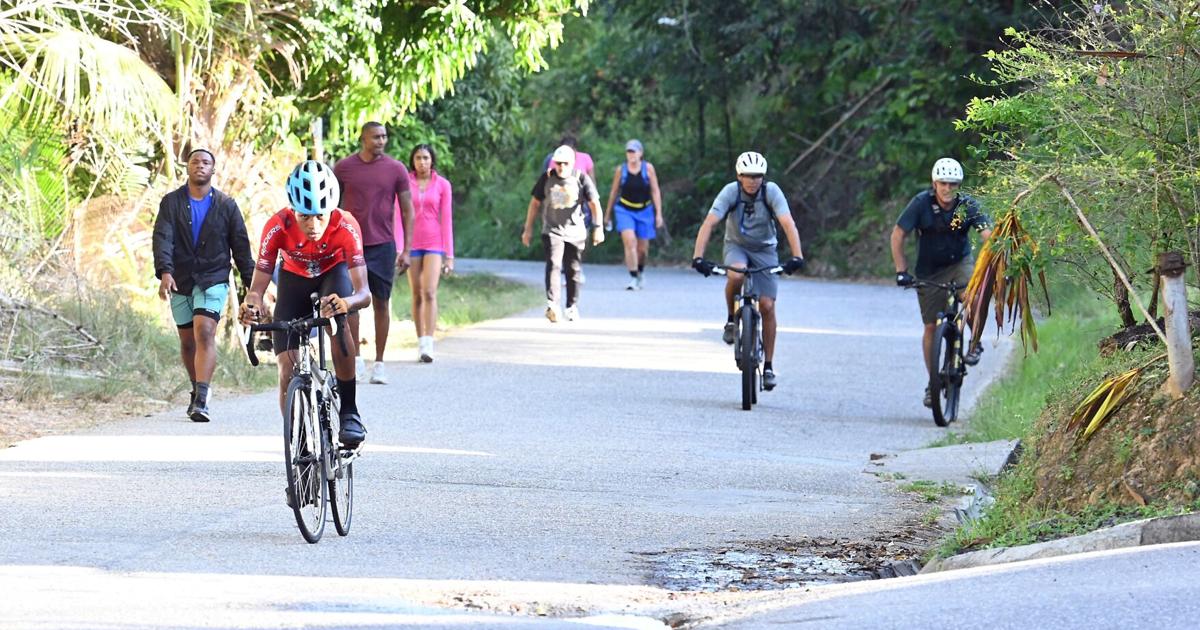
Early yesterday morning, a female jogger was attacked and bitten by two dogs, widely reported to be pitbulls, on Lady Chancellor Hill – a popular recreational trail adjacent to Queen’s Park Savannah in Port of Spain, according to initial local reports.
Law enforcement officials confirmed they have received informal notification of the incident, which unfolded at approximately 6 a.m., but as of press time, the victim has not yet lodged a formal complaint with the Belmont Police Station.
In response to the attack, Superintendent Raymond Thom, head of the Port of Spain Police Division, ordered immediate stepped-up patrols on Lady Chancellor Hill. Thom also extended the enhanced security measures to other high-traffic outdoor exercise areas across Port of Spain, including Nelson Mandela Park and the broader Queen’s Park Savannah grounds. The move comes after months of repeated public complaints from recreational users about un-muzzled and untethered dogs roaming freely across these public spaces.
When reporters from the Express visited the Lady Chancellor Hill trail yesterday afternoon, most regular joggers they spoke to said they were aware of the morning attack but had no plans to abandon the trail, noting it remains one of the safest and most accessible places for outdoor fitness in the capital.
One couple who spoke to reporters said they learned of the attack shortly after it occurred, and drove up the hill specifically to check whether the aggressive dogs were still loose. “We were worried, so we drove up ahead of our walk to make sure the dogs weren’t here and the area was safe,” a woman in the couple explained. “But there will always be that lingering concern now, because this could happen to anyone at any time.”
A local jogger who asked to only be identified by his initials TC said he is a dog lover, but believes owners of potentially dangerous breeds have a non-negotiable responsibility to keep their animals contained in public. “Dogs really are man’s best friend, but owners need to stay with their pets at all times and keep them leashed so they can control them,” he said. “We all get to enjoy these public spaces, so it’s up to owners to make sure their pets don’t put other visitors at risk.”
The attack has brought renewed attention to the existing Dog Control Act enacted between 2013 and 2014, which outlines strict regulations for restricted breeds in Trinidad and Tobago. Under the legislation, six breeds classified as high-risk – including the American Pit Bull Terrier, American Staffordshire Terrier, American Bully, Dogo Argentino, Japanese Tosa and Fila Brasileiro – are required to be licensed, carry a minimum of $250,000 in insurance coverage per animal, and remain muzzled and leashed any time they are in public spaces.
Owners who violate these rules by keeping unlicensed or unsecured restricted dogs face heavy penalties, ranging from fines of $50,000 to $100,000 to up to one year of imprisonment. If a restricted dog injures or kills a person, the animal’s owner is held fully legally liable for the outcome. The Act also grants police officers explicit authority to seize and impound any dog that is not kept in compliance with regulations. Seized dogs may be placed with a new responsible owner, transferred to a stray dog facility, or humanely euthanized by a licensed veterinarian if necessary.