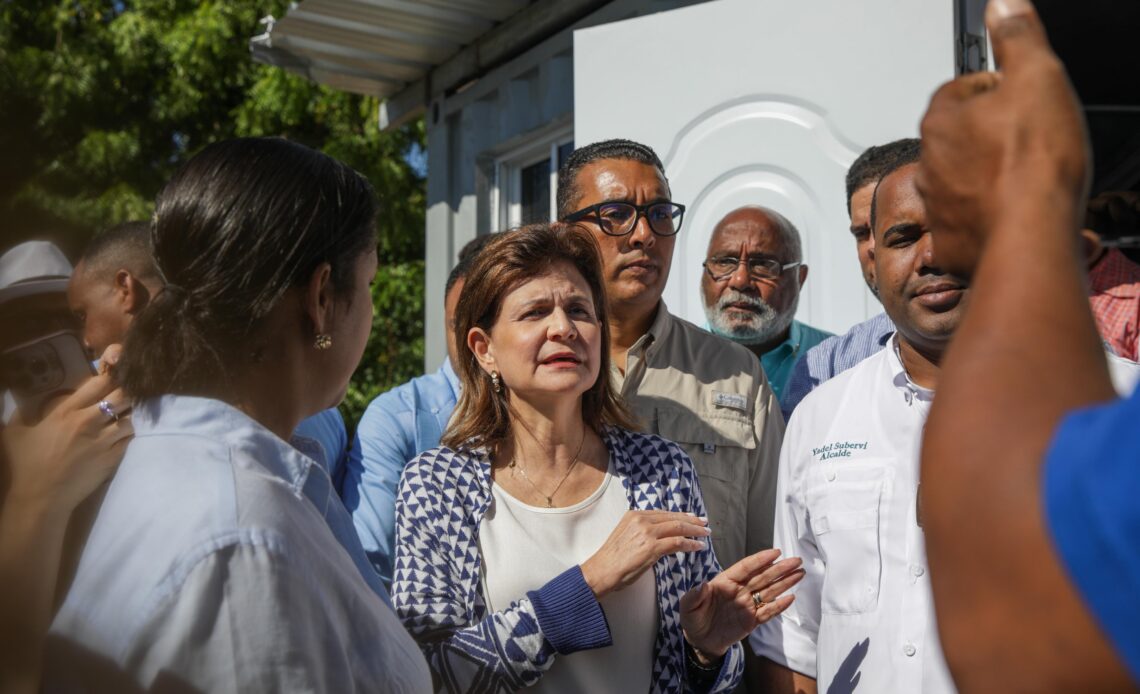
Recent heavy rainfall has triggered destructive flooding in the southern Dominican province of Bahoruco, after the El Manguito River overflowed its banks, leaving widespread damage to residential areas, infrastructure, and farmland across local communities. In response to the disaster, Vice President Raquel Peña launched an official on-site visit to the hard-hit neighborhoods of El Estero and Jaragua, carrying out a presidential mandate from head of state Luis Abinader to evaluate the scope of the crisis and meet directly with affected populations.
During her tour of flood-impacted zones, Peña walked through waterlogged neighborhoods to inspect collapsed home foundations, washed-out road segments, and saturated agricultural plots, holding face-to-face talks with local residents, small-scale farmers, and community organizers to catalog their most pressing unmet needs. The vice president’s visit prioritized centering community voices, allowing local stakeholders to outline how the flood has disrupted their daily lives, destroyed livelihoods, and left hundreds of families without basic resources.
To deliver immediate relief to impacted communities, the national government rolled out emergency support within days of the disaster: 800 pre-packaged food rations were distributed to vulnerable households through the country’s Directorate of Social Assistance and Community Food. Beyond this initial aid, officials announced that a team of technical specialists will conduct a systematic, full-scale assessment to calculate the total economic and structural damage caused by the flooding. This assessment will inform the distribution of additional long-term support, including replacement household goods and targeted funding for roof repairs for damaged homes.
Top government officials have reaffirmed that the national administration will maintain a sustained presence in Bahoruco, continuing to monitor evolving flood conditions, coordinate closely with local government teams and community organizations, and address both the immediate aftermath of the disaster and long-term resilience needs. The commitment extends to preparing for potential future rainfall events, with plans to implement mitigation measures that reduce the risk of similar damage for local communities going forward.