博客

  • Column: De laatste ontmoeting die misschien niet komt; kille visumprocedure

    Column: De laatste ontmoeting die misschien niet komt; kille visumprocedure

    Seated in her favorite rocking chair, an 85-year-old Surinamese woman waits, her gaze fixed on a door that will not open this month. She celebrates her milestone birthday this week, and her son, who lives across the Atlantic in Suriname, has longed to hold her, speak to her without a crackling phone line between them, and see her one last time before it is too late. He will not make it — not for lack of desire, not for lack of money to pay for the trip, but because the rigid Dutch Schengen visa system has shut him out.

    For Surinamese citizens hoping to travel to the Netherlands, entering the country is not a simple matter of planning a trip. It is an exhaustive, dehumanizing gauntlet of bureaucratic requirements that reduces a deeply personal family reunion to a mountain of paperwork and invasive checks. Applicants must surrender full access to their private financial lives, turning over three months of bank statements, employment verification letters, pre-booked flight tickets and travel insurance. Every document is meant to prove one thing: that they are not a “risk” that will overstay their visa, and that they will definitely return to Suriname after their visit — even when their only goal is to spend time with an aging parent.

    Even having a sibling already residing in the Netherlands who agrees to sponsor the trip is not enough to cut through the red tape. The sponsor must also disclose all of their personal financial details, submit pay stubs, share private identifying information and take on full financial guarantee for the traveler’s entire trip, covering all food and travel costs. What should be a heartfelt family gathering is reduced to nothing more than spreadsheets, numbers and constant government scrutiny.

    After applicants complete the extensive online paperwork, the real waiting begins. Securing an in-person appointment through the visa processing system is already an ordeal, with waiting times stretching more than a month for an available slot. Once a traveler finally makes it to a VFS Global processing center, they walk out €90 poorer and no less uncertain about the outcome of their application. The response is coldly corporate: applicants can expect to wait a minimum of one month just to get a decision. As of mid-April 2026, applications submitted all the way back in January are still being processed, making travel in the same month impossible, and forcing applicants to reschedule their appointments from scratch.

    The crushing nature of the system becomes even clearer when checking for new appointment slots. On April 13, 2026, the earliest available appointment date was May 29, 2026. Even after that appointment, the processor requires a minimum of another month to review the application — despite all documents already being submitted electronically more than a month prior. By that time, the financial guarantee submitted by the family and the purchased travel insurance will both expire. What this all means is simple: the son will not get his chance to celebrate his mother’s birthday with her in person.

    A comparison to U.S. visa processing highlights how deeply dysfunctional the Dutch system is. Even under the often unpredictable U.S. immigration system, the process is clear and fast. Applicants know what to expect, receive an immediate decision after their in-person interview, and get their passports back within a week — often with a multi-year five-year visa that allows future travel. The rules may be strict, but the process is organized, efficient, and treats applicants with basic dignity.

    That human element has been completely erased from the Dutch visa system. Dutch officials routinely deflect blame, pointing to Brussels, Schengen Area rules, and shared European policy as justification for the strict process. But for applicants, who bears responsibility does not change their lived experience: the system is slow, cold, demeaning, and inhumane.

    This disconnect is all the more striking given the centuries-long deep historical and social ties between the Netherlands and Suriname. Lofty diplomatic rhetoric and official state visits do nothing to change the reality on the ground for ordinary Surinamese families. The contrast becomes even more glaring when the situation is reversed: Dutch citizens traveling to Suriname can apply for an e-visa online and receive their approval via email within a matter of days, with no stacks of paperwork, no months-long waiting, no constant uncertainty. They get straightforward, simple access.

    For Surinamese people, a visa to the Netherlands is never just a travel document — it is an almost insurmountable barrier. It is a weeks-long journey marked by constant stress, crippling uncertainty, and total dependence on a bureaucratic system that does not care about individual circumstances. The system makes no exceptions for advanced age, for running out of time, for the need to say goodbye to a dying loved one.

    Today, families are trapped on opposite sides of the Atlantic, a distance that modern air travel could easily bridge in a single day on KLM or Surinam Airways flights. Surinamese people who hold Dutch passports often note that a purple EU passport is just a travel document, but the reality is that it grants them the freedom to travel between the two countries whenever they want, to enjoy life in both nations, and pack a suitcase at a moment’s notice. This painful family separation exposes that the fight is about far more than just a piece of paper: it is about equal access, basic human dignity, and freedom of movement. One group can travel whenever they choose; the other must jump through endless hoops just to prove they deserve the right to see their own family.

    As the 85-year-old mother waits for a son who will not come, the system’s failure is laid bare. It has forgotten the human core of what it is meant to facilitate: people who want to see each other one last time, before it is too late. There will be no visa for a birthday visit. If the worst comes to pass, the family may only qualify for an emergency visa for a funeral.

  • Indomet forecasts continued rain, thunderstorms across Dominican Republic

    Indomet forecasts continued rain, thunderstorms across Dominican Republic

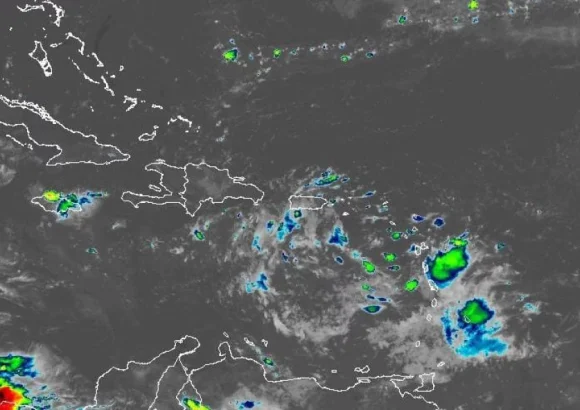
    Residents across the Dominican Republic are preparing for another day of disrupted weather on Tuesday, as the Dominican Institute of Meteorology confirms ongoing unstable conditions driven by a low-pressure trough penetrating multiple layers of the troposphere. The atmospheric system has locked the nation in a pattern of persistent rainfall that is expected to hold throughout the day, bringing varied hazards across different regions.

    Early morning brings the first round of precipitation, with scattered showers forecast to sweep across the country’s northern and northeastern provinces. Popular tourist and population hubs including Puerto Plata, Santiago, and Samaná will see this initial wave of rain, which the meteorological service projects will ease temporarily midday before gaining strength once again as afternoon sets in.

    Meteorologists explain that the combination of accumulated daytime heat and the underlying atmospheric instability will create ideal conditions for intense precipitation development. From mid-afternoon through early evening, moderate to heavy downpours, rolling thunderstorms, and sudden strong wind gusts are most likely to impact Greater Santo Domingo, as well as central, eastern, and southwestern sections of the country.

    Hazard outlooks extend beyond heavy rain for higher elevation zones: the national weather agency has issued a special warning that isolated hail events are possible across mountainous areas, paired with localized severe wind bursts that could bring down tree branches or disrupt utility service. As a result of the multi-day rainfall risk, a large swath of the country remains under active weather alerts, with officials flagging dangers including sudden urban flash flooding, overflowing rivers and streams, rain-triggered landslides, and dangerous electrical activity from thunderstorms.

    Temperatures will remain unseasonably hot in the hours before rain arrives, pushing heat indexes into potentially dangerous ranges for outdoor activity. In response, health and weather officials are urging the public to prioritize consistent hydration and stay in well-ventilated spaces to avoid heat-related illness ahead of the afternoon downpours.

    Marine hazards are also in effect for one stretch of the country’s coastline: along the Dominican Republic’s Atlantic shore, running from Cabo San Rafael to Punta de Manzanillo, small and medium-sized recreational and commercial vessels have been urged to avoid non-essential travel and navigate with extreme caution due to elevated rough sea conditions. By contrast, marine conditions along the country’s southern Caribbean coast remain within normal ranges, with no special advisories in place for that area.

    Authorities closed their update by reminding the public that weather conditions can shift rapidly amid this unstable pattern, and that residents should closely monitor official weather updates from the Dominican Institute of Meteorology, and follow all published public safety guidelines to avoid preventable risk during the weather event.

  • CIP report to be presented in the House Tuesday

    CIP report to be presented in the House Tuesday

    A highly anticipated audited annual report for Saint Lucia’s flagship Citizenship by Investment Programme (CIP) is set to be formally presented to the country’s House of Parliament this Tuesday, marking a resolution to months of political debate over transparency and delayed disclosure ahead of the upcoming national election.

    In a pre-sitting briefing issued Monday, Prime Minister and Finance Minister Philip J Pierre clarified that the completed audit, which covers the 2024-2025 program cycle and has been finalized since March 1 this year, will be laid before the legislative body to address long-running public and political questions about the program’s operations. Pierre noted that he had previously referenced the report’s existence during the recent budget throne speech to acknowledge widespread public interest in the document.

    The CIP report has emerged as a flashpoint in national politics ahead of the December 1, 2025 general election. The opposition United Workers Party (UWP) and its leadership have repeatedly criticized the ruling administration for the report’s delay, framing the hold-up as a major failure of government transparency and accountability. Originally scheduled for release earlier in 2025, the report became one of the most contentious political issues in the lead-up to the poll.

    According to the parliamentary agenda, Deputy Prime Minister and Minister for Tourism and Investment Dr Ernest Hilaire will formally table the Citizenship by Investment Saint Lucia Annual Report 2024-2025. Alongside the audit, Hilaire will also introduce the order paper for proposed amendments to the Citizenship by Investment Regulations, opening the door for potential adjustments to the program’s rules and operations.

    Tuesday’s sitting will feature a packed legislative agenda beyond the CIP report, with Prime Minister Pierre set to present a slate of high-stakes financial and infrastructure resolutions for parliamentary approval. These include a resolution under the Public Finance Management Act to authorize government investment in the International Finance Corporation, as well as a separate borrowing approval for capital works on Section 1 of the Sir Julian R. Hunte Highway Project.

    Additional resolutions up for consideration cover a range of critical public infrastructure and utility projects across the island. Pierre will seek parliamentary backing for borrowing to fund the full rehabilitation and upgrade of the Theobalds Water Supply System, a government guarantee for a loan taken out by the Saint Lucia Air and Sea Ports Authority to fund the reconstruction of Port Castries’ heavily used Berth No. 4, and additional financing for the ongoing Patience Community Water Supply Project, among other budgetary measures.

  • AdeKUS richt blik op kloof tussen beleid en uitvoering tijdens Bestuurskundeweek

    AdeKUS richt blik op kloof tussen beleid en uitvoering tijdens Bestuurskundeweek

    On a recent Monday, the Anton de Kom University of Suriname (AdeKUS) officially launched the fourth iteration of its annual Public Administration Week, an event tailored to connect academic learning with real-world governance challenges. This year’s programming centers on a timely and critical theme: moving beyond Suriname’s traditional reliance on natural resource extraction to build inclusive, long-lasting sustainable development, with a specific focus on bridging the gap between policy design and on-the-ground execution. The opening ceremony was led by Suriname’s President Jennifer Simons, who used her opening address to emphasize that closing this implementation gap remains one of the most pressing ongoing challenges for the South American nation.

    Public Administration Week is structured to give undergraduate and graduate students in the public administration degree program hands-on learning opportunities that go far beyond traditional classroom instruction. Over the course of the five-day event, students will take part in interactive workshops led by practicing policymakers, site visits to regional government agencies, and panel discussions with leading governance experts from across Suriname and the Caribbean region. Every activity ties back to the event’s core theme: “From Natural Resources to Sustainable Development: Policy Choices for the Next Generation”.

    President Simons noted that the chosen theme cuts straight to the heart of Suriname’s most critical development questions. In her remarks, she outlined that effective governance relies on three non-negotiable pillars: full transparency, public accountability, and a consistent commitment to centering community input in policy design. She also pushed back on common framing of sustainable development, noting that it extends far beyond narrow metrics of economic growth or natural resource sector diversification. “Sustainable development is not just about drafting innovative policy ideas,” Simons said during her address. “It is about turning those ideas into tangible, effective action that improves lives for current and future generations.”

    Despite Suriname’s abundance of development ideas and access to skilled technical expertise, Simons acknowledged that turning plans into action frequently hits roadblocks. A range of systemic and institutional barriers often slow or fully block policy implementation across sectors, she explained. In response to this persistent gap, the president called on participating public administration students to bring fresh perspectives and innovative thinking to solve this challenge, as highlighted in an official release from the Communication Service of Suriname.

    Simons also stressed that building broad public buy-in is a non-negotiable component of successful policy execution. Even the most well-intentioned policy initiatives will face uncrossable barriers without widespread support from local communities and broader society, she noted. She further called for deeper, more structured collaboration between Suriname’s academic institutions and national government, including a proposal to integrate student graduation research more directly into government policy development processes.

    Loraine Arsomedjo, program coordinator for AdeKUS’s Public Administration degree, echoed the president’s remarks, underscoring that this year’s theme could not be more relevant to Suriname’s current context. Arsomedjo pointed out that while Suriname holds vast reserves of valuable natural resources, these assets alone are not enough to deliver equitable, sustained national development. “Without strong public institutions and thoughtful, intentional policy design, natural resource wealth can easily become a source of systemic vulnerability rather than national prosperity,” she explained.

    Arsomedjo added that the public administration program at AdeKUS is designed to培养 students who do not just understand how existing policy processes work, but who are also willing and able to think critically about how to improve governance systems. “You are not here to be passive observers of public affairs,” Arsomedjo told participating students. “You are the thinkers, the designers, and the leaders who will shape Suriname’s future.”

    Through the full week of programming, Public Administration Week aims to prioritize cross-sector knowledge sharing, critical reflection on Suriname’s governance challenges, and targeted preparation for students who will go on to fill key roles in Suriname’s public administration sector after graduation.

  • Concrete action for the benefit of vulnerable Haitian families

    Concrete action for the benefit of vulnerable Haitian families

    On April 13, 2026, Haiti’s Ministry of Social Affairs and Labor (MAST), led by Minister Marc-Elie Nelson, in partnership with the country’s Social Assistance Fund (CAS), hosted a large-scale solidarity event focused on delivering tangible support to two of Haiti’s most marginalized groups: vulnerable elderly citizens and people living with disabilities.

    During the gathering, Minister Nelson publicly commended CAS Director General Jhonny Raphaël for spearheading the initiative, which aligns with the government’s broader goals of reinforcing national social safety nets and fostering social stability across Haiti, a country that has long grappled with systemic socioeconomic challenges. The event was not merely a ceremonial gathering; it delivered multiple concrete, immediate interventions for attendees and local residents.

    A core highlight of the day was the distribution of 13,600 monthly allowance checks to eligible beneficiaries, 3,600 of whom were first-time recipients who had recently completed their registration for the program. Complementing this financial support, CAS also deployed a fully operational mobile medical clinic on-site, which brought free primary health care and routine medical monitoring to more than 5,000 residents living in the surrounding area, addressing a critical gap in access to basic health services for low-income communities.

    Minister Nelson acknowledged that Haiti continues to face widespread social hardship, and that unmet needs across vulnerable populations far outpace current government capacity. Even so, he emphasized that the initiative represents a deliberate, rapid response to the ongoing social emergency facing disadvantaged Haitian families.

    In addition to rolling out immediate support, Minister Nelson used the event as a platform to announce a long-overdue administrative change at CAS: the government is preparing to formally appoint roughly 600 long-serving contract workers as full-time CAS employees. Many of these workers have remained in contract positions for more than 15 years without permanent status or the benefits that come with it, and the appointment initiative addresses this longstanding worker inequity within the institution.

    For his part, Director Raphaël outlined CAS’s upcoming plans to improve service delivery to beneficiaries. The fund will roll out new administrative systems designed to streamline the monthly distribution process, ensuring beneficiaries receive their allowance checks more reliably and with fewer delays. Raphaël also confirmed that CAS is expanding its eligibility pool to include new beneficiaries from displacement and accommodation centers, extending state social support to more Haitians who have been left without formal assistance. He added that in the coming months, the fund will also process and distribute long-awaited grants to individuals and community activists who have already submitted requests for support.

  • Drug Plane Intercepted in High‑Stakes Belizean Operation

    Drug Plane Intercepted in High‑Stakes Belizean Operation

    On a Friday in April 2026, a cross-border law enforcement operation delivered a major blow to transnational drug trafficking, intercepting a suspected smuggling plane carrying over 1,000 pounds of cocaine before it could complete its journey to a remote landing strip in northern Belize. The operation traces its origins to early morning air surveillance, when U.S. authorities first detected an unregistered aircraft moving over Pacific waters near Costa Rica. Alerted immediately to the threat, Belizean security agencies activated a rapid joint response framework, mobilizing personnel across the country within minutes to prepare for the plane’s expected arrival. The initial break in the ground operation came when a customs enforcement patrol conducting sweeps near the coastal Neuland Community discovered a suspicious SUV parked off-road. Inside the vehicle, officers found nine canisters of aviation fuel, an unregistered firearm, and a satellite phone, confirming their intelligence that Neuland was the aircraft’s intended landing site. As law enforcement locked down the area, the suspect plane continued its erratic northbound journey, zigzagging between the airspaces of El Salvador, Nicaragua, and Honduras to evade detection. By 2:40 p.m., projections placed the aircraft just one hour from entering Belizean airspace, with security teams already strategically positioned around the Neuland landing zone. At 5:03 p.m., after receiving formal airspace clearance, the Belize Defense Force deployed its air assets to intercept the incoming plane. Seventeen minutes later, Mexican military aircraft were also granted permission to enter Belizean airspace to support the operation, marking a rare example of cross-border security cooperation against drug trafficking. Radar contact with the suspect plane was confirmed at 5:21 p.m., roughly six nautical miles east of Carmelita Village, as it traveled northeast toward its intended landing. The aircraft touched down in Neuland Village at 6:14 p.m., and two Mexican men—identified as pilot Paul Valenzuela Osuna and co-pilot Edgar Aguilar Trinidad—were taken into custody immediately after exiting the plane. Authorities confirmed the two suspects were carrying thousands of dollars in mixed U.S. and Mexican currency, alongside the 1,000+ pounds of cocaine. The seized narcotics have an estimated street value of $11 million, marking one of the largest drug seizures in Belize so far this year. Both men now face formal charges of drug importation and violations of immigration law, and remain in custody ahead of their upcoming trial. The operation’s success has, however, been overshadowed by a lingering controversy surrounding the suspicious SUV that tipped off authorities to the landing site. Shortly after customs officers discovered the vehicle, the SUV was destroyed by fire, sparking widespread public speculation that law enforcement personnel deliberately set the blaze to cover up procedural missteps or corruption. Belize’s top police official has forcefully rejected these claims, offering a clarified timeline of events to clear his department of wrongdoing. “The claim that law enforcement burned the SUV holding the suspected aviation fuel is completely false,” said Commissioner of Police Dr. Richard Rosado in an official press briefing. After the initial discovery of the vehicle, “certain circumstances on the ground required the customs enforcement team to withdraw for their safety. I will not go into specific details at this time, but the withdrawal was a prudent and necessary decision. When our officers returned to the site with additional security support, the vehicle was already engulfed in flames.” Assistant Superintendent Stacy Smith, a staff officer with the department, acknowledged that the loss of the vehicle and the aviation fuel has complicated evidence collection for the upcoming prosecution. “It would have been ideal to preserve all of this evidence for court,” Smith explained. “Of course losing the fuel does detract from some of the evidential material we can present in the case. But we have already recovered enough critical evidence to support the prosecution, and the investigation remains active.” Three individuals were initially in the SUV when it was discovered: two Belizean nationals and one Mexican national. However, Dr. Rosado confirmed that the Office of the Director of Public Prosecutions (DPP) has ruled there is insufficient evidence to file charges against the two Belizean suspects at this time. The pair remain persons of interest in the ongoing investigation, which authorities say will continue to uncover the full network behind this smuggling attempt. The successful interception highlights the growing cooperation between North American and Central American security agencies to disrupt drug trafficking routes that have increasingly shifted through smaller Caribbean and Central American nations in recent years. While the burned vehicle remains an unsolved complication in the case, authorities say the seizure of the cocaine and the arrest of the two pilots marks a critical win against transnational organized crime operating in the region.

  • How Joint Security Forces Pulled Off Major Drug Bust

    How Joint Security Forces Pulled Off Major Drug Bust

    In a major announcement from Belize’s top security leadership Wednesday, a sweeping collaborative drug interdiction operation between the country’s national police, defense force, and coast guard has been hailed as one of the most impactful anti-narcotics missions in the nation’s recent history. The joint press conference on April 13, 2026 pulled back the curtain on the complex, multi-domain operation that resulted in the seizure of a modified smuggling aircraft, offering new details on the operational hurdles and coordinated work that led to the bust’s success.

    Belize Police Commissioner Dr. Richard Rosado led the briefing, outlining unforeseen communication challenges that tested the mission’s air coordination early on. He explained that faulty communication equipment prevented the operation’s pilots from maintaining consistent contact with their ground-based contacts, adding layers of uncertainty to the already high-stakes mission. When pressed by reporters on whether the plane’s landing site was pre-planned or the result of an emergency, Rosado confirmed that all available evidence points to the location being the smugglers’ intended landing zone.

    Brigadier General Anthony Velasquez, commander of the Belize Defense Force (BDF), detailed the findings of BDF technicians who inspected the seized aircraft immediately after it was taken into custody. The plane, a modified Cessna, had been extensively reconfigured to enable large-scale smuggling, with added structural modifications to expand fuel capacity and accommodate heavier illicit cargo. Notably, Velasquez confirmed that the aircraft still held a substantial amount of unused fuel when recovered — enough to allow the smugglers to continue to a secondary destination after landing, had they not been intercepted.

    Belize Coast Guard Commandant Captain Gregory Soberanis emphasized the whole-of-government approach that made the operation possible, noting that the bust required coordinated action across land, air, and maritime domains. The landing site, located close to Belize’s coastline, fell within a zone the Coast Guard regularly patrols, allowing the service to deploy rapid support to police at a moment’s notice. “This is an area we are familiar with. So, we were able to respond quickly when called upon for support by the police department,” Soberanis explained.

    Officials have framed the successful operation as proof of the effectiveness of interagency collaboration in countering transnational drug trafficking, which remains a persistent threat to Caribbean and Central American nations like Belize due to their strategic location along major smuggling routes. This report is adapted from a transcript of an evening television news broadcast.

  • Why Now? Belizeans Question Sudden Prescription Enforcement

    Why Now? Belizeans Question Sudden Prescription Enforcement

    In the small Central American nation of Belize, a routine trip to the local pharmacy has become the center of a fierce national conversation over healthcare access, after the Ministry of Health and Wellness launched a sudden crackdown on the unregulated sale of prescription-only medications. What has left thousands of Belizeans confused and frustrated is that the requirement for a doctor’s prescription for these drugs is not a new policy – but the abrupt shift to strict enforcement, after decades of informal over-the-counter access, has upended long-standing patient habits and exposed deep gaps in the country’s public health system.

    The enforcement sweep, which the ministry framed as a patient safety measure, covered a range of medications that Belizeans have purchased without medical documentation for years, including hormonal contraceptives and maintenance drugs for chronic conditions. The public pushback was almost immediate, with vulnerable patient groups – long-term chronic illness patients, young people, and women of reproductive age – leading the outcry, warning that the new barriers would cut off access to life-sustaining and essential care.

    Facing mounting public pressure, the Ministry of Health and Wellness has already backed away from its immediate full enforcement plan, and is now revising its approach to address community concerns. Dr. Melissa Diaz-Musa, Director of Health Services at the ministry, clarified in a public statement that the new rules would not require monthly doctor visits for medication refills. Under the revised framework, she explained, doctors and nurses are permitted to issue multi-month prescriptions, including up to three months of contraceptive refills for stable patients, to reduce unnecessary burdens on people seeking ongoing care.

    Most notably, the ministry has announced a 12-month phased implementation of the prescription requirements, a concession designed to create time for outreach, stakeholder collaboration, and public education. Diaz-Musa also openly acknowledged two key missteps that fueled the public backlash: the ministry had underestimated how many Belizeans relied on over-the-counter access to prescription medications, and it failed to conduct meaningful pre-enforcement consultation or launch a public education campaign to explain the difference between over-the-counter and prescription-only drugs, and the reasoning behind the rules.

    “A large scale public health campaign should have been conducted simultaneously with the discussions that we had with store owners and the pharmacy association, and this is acknowledged here today,” Diaz-Musa said.

    Even with the revised phased plan, health advocacy groups warn that the new requirements still carry serious public health risks, particularly for reproductive health. Belize already struggles with high rates of adolescent pregnancy: the latest Multiple Indicator Cluster Survey data puts the national adolescent birth rate at 58 births per 1,000 girls aged 15 to 19, with 13.4% of young people giving birth before their 18th birthday. Advocates note that 15% of Belizean women already have unmet demand for family planning, a number that will almost certainly rise if access to contraception becomes more complicated.

    “My reaction, and it’s also an appeal to the decision makers, to let’s rethink this,” said Joan Burke, Executive Director of the Belize Family Life Association. “Because I look back now at the last census or the last survey that was done to look at the unmet needs for family planning unmet needs was at fifteen percent. And I can see that just increasing when, especially when compared to other Caribbean countries and to Central America.”

    Medical professionals have also pushed back on the ministry’s original rushed approach, even as many support the long-term goal of regulated prescription access. Gynecologist Dr. Marcello Coyi recently addressed the debate on social media, noting that more than 90% of women can use hormonal contraceptives safely, with only a small share of high-risk patients facing potential complications. He echoed calls for a slow, phased rollout paired with widespread public education, a framework the ministry has now adopted.

    A second controversial regulation has added to public frustration: an existing rule banning children under 12 from purchasing any medication has also been suddenly enforced. In many Belizean households, pre-teens and teenagers are often tasked with picking up prescription medications for elderly or disabled family members who cannot travel to pharmacies easily. Critics argue that enforcing this ban without adaptation will unintentionally harm low-income and multigenerational families who rely on this informal arrangement to access care.

    While ministry officials have repeatedly emphasized that none of the enforced regulations are new policy changes, they have conceded that the timing and method of enforcement were poorly planned, and that adjustments to how the rules are applied will be necessary to protect patient access. As the 12-month phase-in period gets underway, all stakeholders – from public health officials to pharmacists to patient advocates – will work to find a balance between the ministry’s goal of improving patient safety and the public’s demand for accessible, affordable care.

  • NTUCB Slams Prescription Requirement for Contraceptives

    NTUCB Slams Prescription Requirement for Contraceptives

    Just weeks after a national period of reflection and celebration focused on advancing women’s rights across Belize, a controversial policy proposal has emerged that is drawing fierce pushback from the country’s largest labor organization. The National Trade Union Congress of Belize (NTUCB) has publicly and unreservedly condemned plans that would require women to obtain a physician’s prescription before accessing over-the-counter birth control, framing the move as a dangerous step backward for gender equity and public health.

    In a formal statement released this week, NTUCB leaders called the proposed mandate deeply outdated, arguing that it undermines decades of progress toward expanding women’s autonomy and access to basic reproductive health care. Beyond rolling back hard-won rights, the union warns the requirement would erect substantial new barriers that prevent thousands of women from accessing the contraception they rely on. For working-class women across the country, organizers say the policy would impose disproportionate burdens: extra costs for doctor’s visits that many already cannot afford, lost work hours to squeeze in necessary appointments, and an erosion of personal dignity that comes with added gatekeeping to critical health care.

    The union also pointed to broader systemic strains on Belize’s public health system to bolster its opposition. The country’s health care infrastructure has long operated with limited resources and overstretched staff, and NTUCB argues that forcing routine prescription checks for contraception would add unnecessary volume to an already overloaded system. This would not only create longer wait times for contraceptive access but also divert limited clinical time and resources away from other pressing public health needs that already go unmet.

    Coming off a month of national dialogue and action centered on women’s progress, NTUCB says the proposal sends an unacceptably wrong signal for the country’s future. The organization is calling on Belize’s policymakers to immediately abandon the plan, and is urging grassroots supporters and public health advocates to join the opposition to protect access to birth control for all women.

  • Three Days Later, Investigation Continues into Jaheil Westby’s Killing

    Three Days Later, Investigation Continues into Jaheil Westby’s Killing

    Three days after the body of 18-year-old Jaheil Westby was recovered in the Port Loyola area, law enforcement authorities have released a new public update on the ongoing homicide investigation. Confirming that Westby died from multiple gunshot wounds, officials confirmed that the intensive, wide-ranging probe into his killing remains active as of Monday evening, with no suspects taken into custody to date. Investigators are once again issuing a public appeal for community cooperation, urging any resident with even minor details related to the case to come forward to help law enforcement piece together the full sequence of events that led to the teen’s death.

    In an official statement provided to reporters, Assistant Superintendent of Police Stacy Smith, Staff Officer for the department, walked through the timeline of the investigation that launched earlier this week. “The probe opened on Friday, April 10, at approximately 6:45 a.m., when a relative of Westby arrived at a police booth on Central American Boulevard to report the teen missing,” Smith explained. “The relative told officers that Westby had not returned home overnight, and that the last confirmed sighting of him was around 3:00 p.m. the previous Thursday. She added that Westby was with a friend identified as Alwin Marin at the time, and that the pair had planned to travel to the Dyke area to hunt iguanas.”

    Following the missing person report, officers immediately dispatched a search team to comb the Dyke area for the teen. Slightly more than an hour after the search began, just after 8:00 a.m. Friday, searchers located Westby’s unresponsive body, with visible apparent gunshot wounds on his remains. Smith confirmed that alongside the homicide probe into Westby’s killing, investigators are also continuing to look into the unexplained disappearance of Marin, who has not been seen since the pair went hunting Thursday afternoon.

    This report is adapted from a transcript of an evening television newscast produced by this outlet. All dialogue from speakers has been preserved for accuracy, with Kriol language statements rendered using a standardized spelling system for the published transcript.