博客

  • El Niño cuts drinking water production in Greater Santo Domingo by up to 68%

    El Niño cuts drinking water production in Greater Santo Domingo by up to 68%

    A severe climate-driven water crisis is unfolding across Greater Santo Domingo, where the El Niño phenomenon has triggered a sharp decline in rainfall that has crippled drinking water production across four major regional aqueduct networks, according to the Santo Domingo Water and Sewerage Corporation (Caasd).

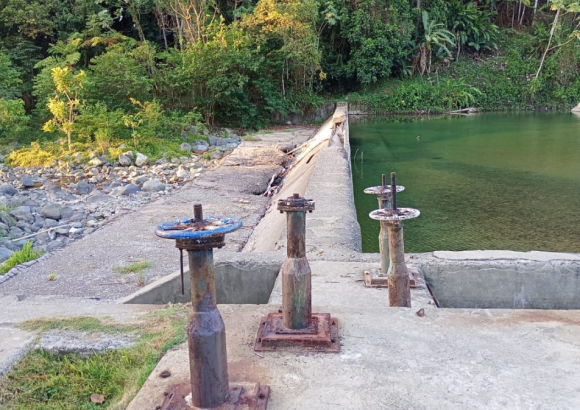
    Since May, the key river watersheds that feed the region’s water infrastructure—including the Haina, Isa, Mana, Duey, Isabela and Nizao rivers—have received far less precipitation than historical averages, draining the natural water reserves that supply local distribution systems. The most dramatic drop has been recorded at the Haina-Manoguayabo Aqueduct, where output has plummeted 68% from its standard 91 million gallons per day to just 29 million gallons daily. The nearby Isabela Aqueduct has fared similarly poorly, seeing a 65% production reduction that brings its daily output down to 3 million gallons from the usual 9 million. Even the Isa-Mana and Duey aqueducts have each sustained production cuts of more than 60% amid the ongoing drought conditions.

    These sharp reductions in water output have translated to widespread service disruptions for dozens of communities across the region. Affected areas include the municipalities of Los Alcarrizos, Pedro Brand, Pantoja, and multiple neighborhoods along República de Colombia Avenue, along with large swathes of the National District south of John F. Kennedy Avenue. Populations served by the Haina-Manoguayabo system, including the central districts of Gascue, Zona Universitaria, El Cacique, and 30 de Mayo, are also grappling with interrupted water access.

    In response to the growing crisis, Caasd has rolled out emergency mitigation measures to reallocate water resources and bring relief to hard-hit neighborhoods. The agency is diverting additional water from the Valdesia-Santo Domingo Aqueduct to affected zones; while the Nizao River (a key source for the Valdesia system) has also seen lower flows, the two reservoirs feeding the network hold enough reserve water to maintain full normal operations, making it the region’s most stable water source at present.

    To expand last-mile distribution to underserved communities, Caasd has also boosted its fleet of water tanker trucks. The agency recently purchased 40 new dedicated tankers, 16 of which are already active on routes, with the remaining 24 set to join the fleet within the coming week. Complementing this public fleet, 76 additional privately contracted tankers are currently delivering emergency water supplies to residential areas facing the most severe outages.

    Moving forward, Caasd announced it will maintain continuous monitoring of El Niño’s evolution and its projected impact on local rainfall and water reserves, working closely with forecast data from the Dominican Institute of Meteorology (Indomet) to adjust mitigation strategies as conditions change.
  • Haiti: deadly gang attack in Kenscoff leaves at least 20 dead

    Haiti: deadly gang attack in Kenscoff leaves at least 20 dead

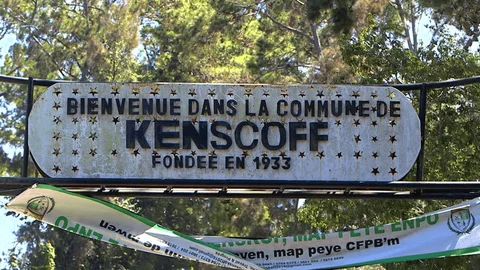
    A devastating armed gang incursion in the mountain commune of Kenscoff, located just east of Haiti’s capital Port-au-Prince, has left a yet undetermined number of residents dead and hundreds displaced following a night of coordinated violence between August 23 and 24, news agency EFE has confirmed. Initial on-the-ground reporting from EFE journalists verified at least 20 fatalities in areas accessible to reporters, while some local Haitian media outlets have put the potential death toll as high as 40, as active gunfire and explosions blocked access to more remote parts of the commune in the immediate aftermath of the attack. The widespread brutality has prompted Haiti’s national government to activate all available security forces and place the country’s law enforcement contingent on maximum operational alert.

    During the coordinated assault, members of the attacking armed group set residential homes and civilian vehicles ablaze, sending panicked residents fleeing for safety across the commune. EFE correspondents on site documented at least 20 bodies recovered in the first hours after the violence broke out, while exchanges of gunfire between gangs and responding security forces continued to rock outlying neighborhoods through the morning of August 24.

    Haitian national police were quickly deployed to the area to repel the attacking gang members, but the hours-long violence still left dozens of injured civilians and forced more than 500 residents to abandon their homes for safer territory. In a chilling turn that has deepened the humanitarian impact of the attack, a local church that was already serving as a temporary shelter for people displaced by earlier gang violence was also targeted during the assault.

    Among the residents directly affected by the attack are multiple high-profile Haitian public figures, including Dr. William Pape, the founder of the well-known Gheskio network of community health centers, whose private residence in Kenscoff was stormed and damaged during the incursion.

    In an official statement following the violence, Haiti’s government issued a firm condemnation of the gang attack, announcing it would deploy additional reinforcements to Kenscoff to reestablish full state authority over the strategically located commune. While authorities have not yet released an official confirmed death toll, they have made a public pledge that the area will not be ceded to criminal armed groups.

    Preliminary investigations into the attack link the violence to the Viv Ansanm gang coalition, a powerful criminal alliance that has been waging a campaign to expand its territorial control across the region. Kenscoff holds major strategic value for the coalition, as it sits along key travel routes connecting Haiti’s capital to the Southeast department and the major coastal city of Jacmel.

  • Tropical Storm Dolly forms as fourth named storm of 2026 Hurricane Season

    Tropical Storm Dolly forms as fourth named storm of 2026 Hurricane Season

    The 2026 Atlantic hurricane season has marked its fourth official named storm, with the Dominican Institute of Meteorology (Indomet) confirming the formation of Tropical Storm Dolly over open Atlantic waters.

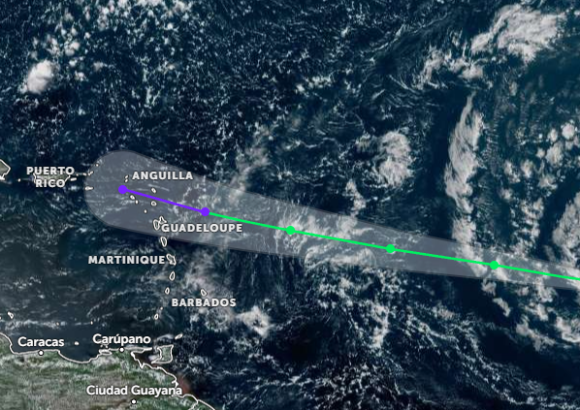
    As of the latest official update from Indomet, the newly formed storm is positioned hundreds of miles east of the Lesser Antilles island chain, currently packing maximum sustained winds of 65 kilometers per hour. Meteorologists tracking the system confirm that Dolly is maintaining a steady westward track across the Atlantic basin, a trajectory that brings it closer to Caribbean landmasses over the coming days.

    In response to the storm’s development, Indomet has issued a public advisory urging all residents in potentially affected regions to remain vigilant, closely monitor real-time updates on the storm’s changing path and intensity, and follow all guidance released by local and national emergency management officials. Climate and weather experts note that the early formation of multiple named storms in a single Atlantic hurricane season is consistent with shifting oceanic and atmospheric patterns that have increased storm activity in the basin in recent decades, underscoring the need for ongoing preparedness across Caribbean and North American coastal communities.

  • U.S. temporarily pauses immigrant visa appointments worldwide

    U.S. temporarily pauses immigrant visa appointments worldwide

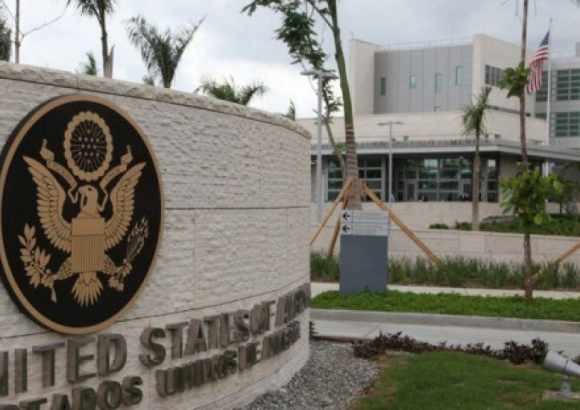
    In an unexpected shift to global consular operations, the U.S. Department of State has ordered a temporary suspension of all immigrant visa interviews at American embassies and consulates across the globe. The pause has been implemented to give all consular staff time to complete mandatory training on revised screening guidelines for visa hopefuls, one key component of which is an updated assessment of whether an applicant may become a public charge during their time in the United States.

    The policy change has already disrupted hundreds of previously scheduled interviews for prospective permanent residents. According to official guidance, any applicant whose appointment is canceled or rescheduled will be notified directly by the local embassy or consulate managing their application, with a new interview date provided. As of press time, the State Department has not issued any timeline for when standard appointment scheduling will resume, leaving many applicants in limbo.

    Crucially, the suspension is limited exclusively to immigrant visas – the classification issued to people seeking permanent residency in the U.S., covering both family-sponsored and employment-based visa categories. Travelers seeking nonimmigrant visas for temporary visits including tourism, short-term business trips, and academic study will face no changes to their application processes or scheduled appointments.

    Officials have issued guidance for applicants affected by the pause to stay vigilant for communications from consular authorities. They advise all impacted candidates to closely monitor the email address linked to their visa application, including spam and junk folders, where notifications about rescheduling may be filtered. Additionally, applicants are encouraged to check their case status regularly via the State Department’s Consular Electronic Application Center (CEAC), the official online portal for U.S. visa application tracking.

    For candidates based in the Dominican Republic, specific additional guidance has been released: all applicants must follow direct instructions from the U.S. Embassy in Santo Domingo, and take proactive steps to ensure all required supporting documentation remains valid throughout the waiting period for a new interview date.

  • Partial lunar eclipse will be visible across Dominican Republic tonight

    Partial lunar eclipse will be visible across Dominican Republic tonight

    Stargazers and astronomy enthusiasts across the Dominican Republic are marking their calendars for a striking celestial event in late August 2026, when a deep partial lunar eclipse will glide across the night sky, fully visible across the country if weather conditions cooperate. This astronomical showcase, which unfolds across the night of August 27 and into the early hours of August 28, will offer one of the most dramatic lunar events visible from the Caribbean nation in recent years.

    The eclipse follows a clear, step-by-step timeline for viewers based in the capital city of Santo Domingo, with the first subtle phase of the event kicking off at 9:23 p.m. local time on August 27. This opening stage is the penumbral eclipse, when the Moon begins to enter Earth’s faint outer shadow, a change that is often barely perceptible to the untrained eye. Roughly an hour later, at 10:33 p.m. the same night, the partial eclipse officially begins: the Moon starts moving into Earth’s darkest, central shadow, called the umbra, creating a distinct, gradually growing dark bite across the lunar surface.

    The peak of the event, known as maximum eclipse, is scheduled for 12:12 a.m. local time on August 28. At this exact moment, nearly 93% of the Moon’s entire diameter will be tucked inside Earth’s umbra, turning that portion of the lunar disk a deep, coppery red for observers. Following the peak, the partial eclipse concludes at 1:51 a.m., when the Moon exits the umbra, and the final penumbral phase wraps up entirely by 3:01 a.m.

    In total, the full sequence of the eclipse from the start of the penumbral phase to the end stretches approximately 5 hours and 38 minutes, with the partial phase — the most visually striking portion of the event — lasting roughly 3 hours and 18 minutes. For viewers in Santo Domingo, the geometry of the event adds to its viewing appeal: at the time of maximum eclipse, the Moon will sit roughly 61 degrees above the horizon in the south-southeast direction, a position that creates ideal viewing conditions as long as skies remain clear of cloud cover.

    While the Dominican Republic is positioned perfectly to watch the event, it is far from the only region with front-row seats. According to NASA data, the eclipse will also be visible across most of North America and South America, as well as portions of western Europe and western Africa. Astronomy groups across the Caribbean are already encouraging casual observers to head to locations with minimal light pollution to get the clearest view of the rare deep partial eclipse, which will bring a dramatic celestial display to skywatchers across the hemisphere.

  • COE and UN World Food Programme sign agreement to strengthen disaster response

    COE and UN World Food Programme sign agreement to strengthen disaster response

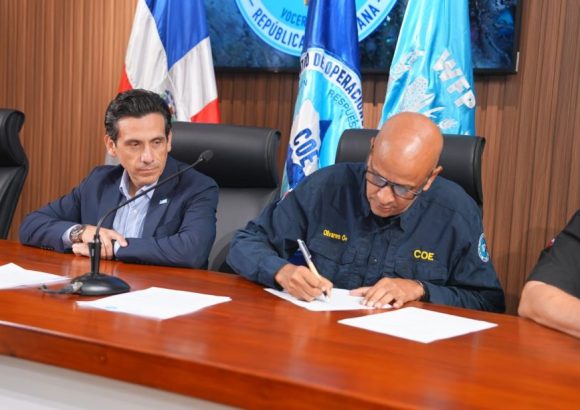
    In Santo Domingo, the Dominican Republic’s national Emergency Operations Center (COE) has formalized a new strategic partnership with the United Nations World Food Programme (WFP) through a signed Memorandum of Understanding, aimed at lifting the country’s ability to prepare for, respond to and recover from major emergencies and natural disasters.

    This collaborative agreement centers on three core pillars: targeted technical assistance, systematic institutional capacity building, and innovative advancement in risk management practices. The overarching objectives are to streamline cross-agency coordination, upgrade national early warning infrastructure, strengthen humanitarian logistics networks, and improve the speed and accuracy of emergency decision-making at all levels of government.

    Under the terms of the partnership, the two organizations will implement a series of coordinated initiatives. These include upgrading national information gathering and analysis systems, scaling up functional early-warning frameworks and early-intervention mechanisms that allow for faster action before disasters strike, optimizing humanitarian aid mobilization through the existing Sectoral Logistics Committee, and enhancing public communication systems to ensure life-saving alerts reach at-risk communities without delay.

    To embed these improvements in long-term operations, the partnership will also deliver targeted training programs, practice drills and joint full-scale exercises designed to upskill emergency management personnel and boost both their technical expertise and on-the-ground operational effectiveness. Additionally, the collaboration will reinforce national Damage Assessment and Needs Analysis (DANA) processes, which play a critical role in guiding the allocation of humanitarian resources and prioritizing post-disaster recovery work across affected regions.

    This new cooperation comes at a critical moment for the Dominican Republic, which faces repeated annual exposure to a wide range of natural hazards, including Atlantic hurricanes, tropical storms, flash floods, prolonged droughts, seismic activity, dangerous landslides and seasonal forest fires. All WFP activities carried out under this agreement will align with the organization’s 2024–2028 Country Strategic Plan for the Dominican Republic, a framework that prioritizes advancing food security, improving nutritional outcomes, expanding social protection systems, and helping local communities build long-term resilience to climate change and recurring emergencies.

    Overall, the agreement is projected to significantly strengthen the Dominican Republic’s ability to safeguard civilian lives and protect household livelihoods across the country, by building a more coordinated, faster-acting and community-centered national disaster management system.

  • Pintard rebukes Ingraham and insists he’s best person to lead FNM

    Pintard rebukes Ingraham and insists he’s best person to lead FNM

    Bahamas’ Free National Movement (FNM) leader Michael Pintard has publicly pushed back against former Prime Minister Hubert Ingraham, who recently made an unprecedented public call for the party to find a new electable leader, asserting firmly that he remains the best candidate to steer the opposition back to power.

    Pintard’s comments, delivered during an interview on Guardian Radio’s *Z Live with Zhivargo Laing*, came in direct response to Ingraham’s remarks at the FNM’s 34th anniversary celebration marking the party’s landmark 1992 general election victory. In that address, Ingraham argued the party urgently needed leadership that could inspire voter confidence instead of demanding forced loyalty, urging members to actively search for a candidate capable of winning the next election. He pointed to past FNM leaders Sir Kendal Isaacs and Cecil Whitfield as examples of respected figures who voluntarily stepped aside when they recognized they could not lead the party to victory.

    While Pintard emphasized that his respect for Ingraham, one of the FNM’s most successful past leaders, remains unaltered, he condemned the timing and setting of the intervention as deeply inappropriate. Pintard argued that if he had been in Ingraham’s position, he would never have raised divisive leadership questions at an event designed to celebrate the party’s collective achievements and legacy. He added that Ingraham had multiple private opportunities to share his concerns with the party, which still holds the former leader in high esteem, making the public rebuke unnecessary.

    Some FNM insiders have interpreted Ingraham’s comments as a clear rejection of Pintard’s leadership, coming after the FNM lost the most recent general election – leaving Pintard the first opposition leader in nearly 30 years to take the party into an election and emerge defeated. Pintard did not push back against the core premise that the FNM must have a leader capable of winning power, noting that regular internal party conventions are explicitly held to address that question. However, he argued that Ingraham’s public comments were misplaced at a moment when the Bahamian public is grappling with persistent national crises, including widespread rolling blackouts and growing concerns over government financial transparency.

    Pintard shared that he has already taken full accountability for the FNM’s election defeat, conducting an internal self-assessment that identified areas for personal improvement, including strengthening public communication and expanding his national profile across the country. While he says he accepts the broader advice that the party must evaluate its leadership’s electability, he made clear that he alone will make the final decision about his political future, rejecting external pressure to step aside.

    He has not yet announced whether he will seek to remain in the leadership role, explaining that he is waiting for the party’s formal post-election review process to conclude. That ongoing process includes a full examination of the leadership’s performance, as well as an analysis of how party missteps contributed to the election defeat. Even so, Pintard asserted that he still believes he is the best option to lead the FNM forward.

    Framing himself as a committed party loyalist who has repeatedly prioritized FNM interests over his own personal political advancement, Pintard recalled being drafted from his home base in East Grand Bahama to run twice for the Cat Island, Rum Cay and San Salvador constituency against current Prime Minister Philip “Brave” Davis. He said he never complained about the challenging assignments, even when they risked damaging his political career, because he believed Ingraham was the best leader for the FNM at the time. He also highlighted his key role in organizing and running Dr Hubert Minnis’ successful 2017 general election campaign, further underscoring his longstanding commitment to the party’s success.

    Pintard described his leadership style as fundamentally democratic, noting that he has opened the door for diverse perspectives to shape the party’s policy and strategic direction. He acknowledged that he needs to invest more time in grassroots engagement to allow Bahamian voters to get to know him better, but pushed back against critics who have labeled him a lame duck leader following the election defeat.”I will make the determination of what I do next,” he said. “But while I am here, the hell with what The Tribune talking about or what the Guardian talking about in terms of lame duck and what’s not. My head is unbowed, save and except when I pray to God. I am a soldier for the Bahamian people.”

    He added: “I am more committed to the success of The Bahamas than I am to the FNM. I’m more committed to the FNM’s success than I am to my personal advancement. That’s the kind of person I am, and I’ve demonstrated it over time.”

    Speculation over a potential leadership contest has grown steadily since the FNM’s election defeat. Deputy leader Shanendon Cartwright, former Member of Parliament for St Barnabas, and East Grand Bahama MP Kwasi Thompson are both seen as likely potential contenders. Long Island MP Dr Andre Rollins has also attracted growing interest following a series of fiery, high-profile speeches in the House of Assembly. As of yet, none of the potential candidates have publicly announced a plan to challenge for the FNM leadership.

  • Dominican Republic launches initiative to mobilize US$100 million for blue economy

    Dominican Republic launches initiative to mobilize US$100 million for blue economy

    Against a backdrop of escalating climate pressures and growing demand for sustainable economic development across the Caribbean, the Dominican Republic has launched an ambitious new initiative designed to unlock $100 million in targeted investment for high-priority environmental and climate resilience projects. The program centers on restoring critical watersheds, advancing sustainable water management systems, expanding sanitation access, strengthening natural resilience to climate shocks, and protecting vulnerable marine and coastal ecosystems that underpin regional livelihoods.

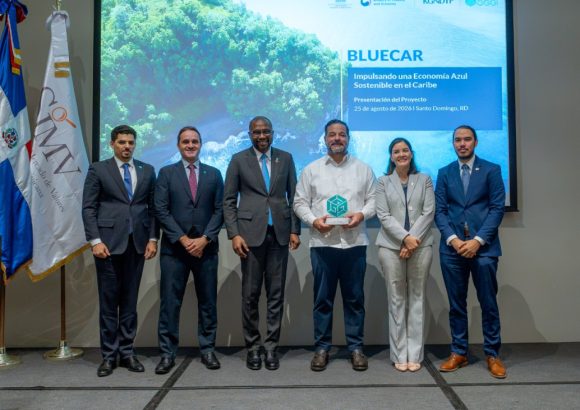
    This cross-sector initiative is led by three key stakeholders: the Dominican Republic’s Ministry of Environment and Natural Resources, the Superintendency of the Securities Market (SIMV), and the Global Green Growth Institute (GGGI) through the specialized Bluecar platform. It was formally introduced at a high-profile stakeholder meeting titled “Blue Economy and Capital Market: Opportunities for Securities Issuers,” which received diplomatic and financial backing from the Government of South Korea.

    To lay the groundwork for investment, organizers have opened a public call for proposals through Bluecar, which aims to identify qualified capital market entities that can access GGGI technical support. This assistance will help participating institutions structure and issue blue bonds, a specialized sustainable finance instrument tied explicitly to marine and water-focused environmental projects.

    A broad range of projects qualify for funding under the initiative. Eligible work spans from watershed protection and ecosystem restoration to improved water and sanitation infrastructure, climate-resilient public and private development, circular economy innovations, sustainable coastal tourism, low-impact port operations, responsible fisheries management, and environmentally sound aquaculture development.

    Dominican Republic Environment Minister Paíno Henríquez emphasized that the core mission of the initiative is to bridge the gap between untapped global capital and on-the-ground projects that deliver measurable dual benefits: tangible environmental progress and inclusive long-term economic growth. Henríquez highlighted that safeguarding the region’s watersheds is not just an environmental priority, but a foundational requirement for national water security, as well as the stability of key economic sectors including agriculture, manufacturing, and tourism.

    The launch of this new initiative builds on the Dominican Republic’s growing track record of success in the global sustainable finance market. In June 2024, the country issued its first $750 million sovereign green bond, which saw overwhelming investor demand that reached six times the original offering size. Around $142.5 million of the proceeds from that bond have already been allocated to projects focused on efficient, climate-resilient water and wastewater management across the country.

    As an early milestone for the Bluecar initiative, two leading financial institutions — Banco BHD and Scotiabank — have already been selected to develop specialized thematic bond frameworks. Projects led by the two banks account for the first $10 million committed to the $100 million overall investment target, putting the initiative on solid footing to reach its fundraising goal.

    Looking beyond the Dominican Republic’s borders, the Bluecar initiative is designed to accelerate the development of a sustainable blue economy across the wider Caribbean, with a focused secondary focus on supporting progress in Saint Lucia. By aligning private capital with environmental action, the program aims to deliver simultaneous progress on climate adaptation, ecosystem conservation, and equitable, long-term sustainable economic growth across the region.

  • 911 and COE strengthen coordination to improve emergency response

    911 and COE strengthen coordination to improve emergency response

    In a scheduled working gathering held this Tuesday at the headquarters of the National Emergency and Security System 911 in Santo Domingo, the agency’s top leader welcomed the newly appointed head of the Dominican Republic’s Emergency Operations Center (COE).

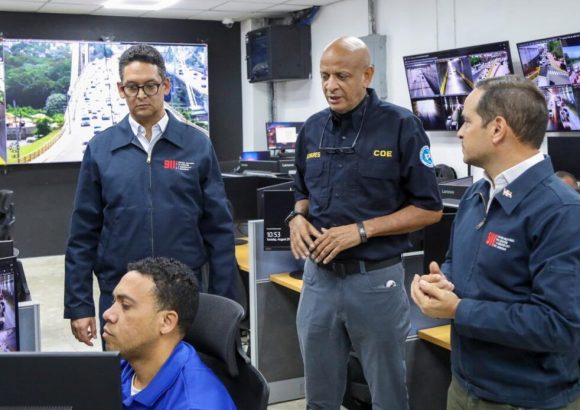
    Colonel Randolfo Rijo Gómez, executive director of 911 and a member of the Dominican Army (ERD), hosted Colonel Erdwin Robert Olivares Luciano, who recently stepped into the role of COE director, for in-depth discussions on a range of priority topics shared by both organizations.

    During the closed-door working session, the two senior officials walked through existing operational frameworks and mapped out adjusted collaborative strategies designed to tighten coordination between the two leading Dominican emergency response bodies. The overarching objective of these adjustments is to boost the nation’s overall capacity to react quickly and effectively when emergencies and natural disasters strike.

    By the end of the meeting, both directors publicly reaffirmed their shared commitment to sustaining consistent, close institutional collaboration. They also agreed to move forward with a series of joint projects in the coming months, all centered on delivering faster, more reliable emergency assistance to Dominican residents across the country.

    This high-level meeting forms part of a broader, ongoing push across Dominican Republic’s public safety sector to strengthen inter-agency alignment for emergency management. The initiative aims to break down potential communication barriers and create a more integrated, comprehensive response system that can fully address all citizen needs during crisis events.

  • Dominican Republic strengthens position in MICE tourism at IBTM Americas 2026

    Dominican Republic strengthens position in MICE tourism at IBTM Americas 2026

    MEXICO CITY – The Dominican Republic has wrapped up its participation in IBTM Americas 2026, using the high-profile industry event to cement its rapidly expanding reputation as a top-tier global destination for meetings, incentives, conferences and exhibitions (MICE) tourism.

    Hosted in the Mexican capital on August 19 and 20, this year’s trade gathering drew a robust contingent from the Caribbean nation: more than 45 Dominican stakeholders across the tourism sector, ranging from boutique and large-scale hotels, coastal resorts, and inbound tour operators to destination management firms and specialized industry suppliers. Over the two-day event, the Dominican delegation arranged and held roughly 1,500 targeted business engagements with international buyers, professional event planners, and global tourism sector leaders who are actively seeking new MICE destination partnerships.

    The country’s showcase at IBTM Americas 2026 comes on the heels of consistent, robust expansion in its MICE tourism segment. Preliminary data for 2025 shows that nearly 330,000 non-resident travelers visited the Dominican Republic specifically to attend business meetings, incentive trips, industry conferences and other professional events, marking a steady upward trajectory for the niche. To support this growing demand, the nation currently boasts 117 hotels purpose-built with dedicated event facilities, offering flexible capacity to accommodate gatherings of all sizes, from small executive retreats to large-scale international conventions.

    Tammy Reynoso, Vice Minister of Tourism Development for the Dominican Republic, emphasized that the country’s long-term tourism strategy centers on strengthening and diversifying its offerings beyond traditional leisure travel. By prioritizing growth in the MICE segment, Reynoso noted, the nation can attract high-spending visitors, generate new cross-sector business opportunities, and highlight its world-class infrastructure, improved global connectivity, and one-of-a-kind tourism experiences that set it apart from competing destinations.