博客

  • British national, 65, shot dead

    British national, 65, shot dead

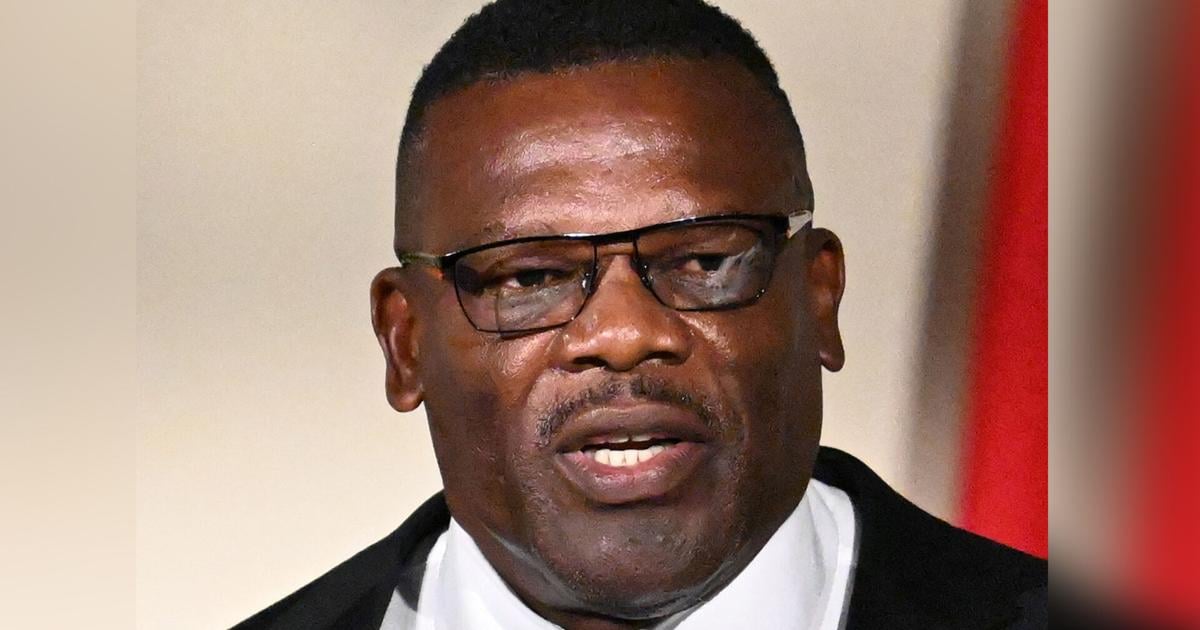
    A fatal shooting in the Trincity neighborhood of Trinidad has claimed the life of a 65-year-old British citizen, leaving local law enforcement with no clear leads on what prompted the public attack. The victim has been formally identified as Elaine Mc Jouan, a resident of Mohammed Ville in San Juan.

    According to official police accounts, the violence unfolded shortly before 11 a.m. on Sunday, July 5. Mc Jouan was standing in the outdoor yard of a private residence along Fifth Street East, off Delamare Avenue, alongside her husband when an unmarked silver Nissan Tiida pulled up to the front boundary of the property.

    Investigators familiar with the case have confirmed that a lone male suspect exited the vehicle carrying a loaded firearm. The gunman immediately fired multiple rounds directly toward Mc Jouan before retreating back into the getaway vehicle and fleeing the area at speed. No other bystanders or individuals, including Mc Jouan’s husband, were reported injured in the attack.

    First response units from the North Central Division Task Force Area East arrived at the scene quickly and rushed the wounded victim to the Eric Williams Medical Sciences Complex, the island nation’s leading public health facility. Despite emergency medical efforts, Mc Jouan was pronounced dead shortly after arriving at the hospital.

    Multiple law enforcement units contributed to the initial response and ongoing investigation. Uniformed officers including PC Scott, PC Noreiga and PC David were among the first first responders to arrive. Investigative teams from the Arouca Criminal Investigations Division, led by Sergeant Scipio with support from PC Soyer, WPC Valere and PC Pierre, also responded to the scene alongside patrol officers PC Kirton and PC Thomas from the Arouca Police Station.

    Forensic processing of the crime scene was handled by specialists from the Special Evidence Recovery Unit. Officers including PC Fuentes and WPC Ramroop recovered key physical evidence from the area: two spent 9mm shell casings that will undergo forensic testing to help identify the weapon used in the killing.

    The homicide investigation is now being led by a team from the Homicide Bureau Region Two, headed by Woman Sergeant Davis alongside WPC Francis and PC Mathews. As of the latest update, law enforcement has not established a clear motive for the targeted attack, and no suspects have been taken into custody.

    The killing pushes the national murder toll to 198 for the year to date, a slight decrease from the same period in the previous year, when the toll stood at 200. Police have not yet indicated whether the attack is linked to organized crime or other patterns of violence in the region, and they are appealing to any members of the public who saw the suspect vehicle or the shooting to come forward with information.

  • SVG rights group calls on new PM to repeal same-sex laws

    SVG rights group calls on new PM to repeal same-sex laws

    Against a backdrop of ongoing legal battles over LGBTQIA+ rights in the eastern Caribbean, the leader of St. Vincent and the Grenadines’ (SVG) leading queer rights organization has issued a urgent public call for the newly sworn-in national government to roll back colonial-era laws that criminalize private, consensual same-sex relations between adults.

    Jeshua Bardoo, founder, president and chief executive of Equal Rights, Access and Opportunities SVG Inc. (ERAO SVG), made the demand in an official press statement marking the fourth consecutive year of the nation’s Pride celebrations, wrapping up the successful 2026 Pride SVG series of community and educational events. As a practicing lawyer, Bardoo framed the policy request as a moral and legal imperative for the new administration led by Prime Minister Dr. the Honourable Godwin Friday.

    “I continue to call upon the Government of SVG, and in particular, I urge our new Prime Minister and cabinet, to do the right thing and repeal the laws under the Criminal Code that criminalise private adult consensual same-sex relations,” Bardoo said. Beyond decriminalization, he also called for the passage of new, explicit anti-discrimination legislation that would protect LGBTQIA+ Vincentians across key sectors including employment, education, housing, healthcare, and public and private goods and services.

    Pride SVG, now in its fourth year, serves as a space for queer people and their allies to build solidarity, push back against systemic violence and discrimination targeting the LGBTQIA+ community, and celebrate queer identity in SVG, Bardoo explained. “While we wait and fight for various forms of social and legal change, we will continue to celebrate, educate, and advocate for our rights,” he added.

    The renewed push for legal reform comes amid a pending appeal in a high-profile 2024 case challenging SVG’s existing buggery and gross indecency laws. The challenge was brought by Javin Johnson and Sean Macleish, two gay Vincentian men who currently reside outside of the country. In February 2024, the High Court dismissed the case, ruling that Johnson and Macleish lacked legal standing to bring the claim due to their residency outside SVG. Justice Esco Henry, who has since been elevated to the Court of Appeal, also rejected the men’s argument that they were forced to flee SVG because of systemic discrimination based on their sexual orientation. The ruling upheld the government’s longstanding position that the anti-queer laws are “reasonably required for public health and morality,” a position advocates say is outdated and discriminatory.

    Bardoo described the 2026 edition of Pride SVG as “amazing,” noting that he was encouraged by the turnout of first-time attendees across the slate of events hosted by ERAO SVG. Funded by a coalition of local, regional, and international donors and sponsors, the 2026 celebration featured five distinct events designed to serve the needs of the local queer community and educate the broader public: three in-person community gatherings, a televised educational panel, and an international webinar focused on Caribbean LGBTQIA+ rights.

    The celebration kicked off on June 6 with the “Pride SVG 2026 Launch Party: Colours,” a masquerade-themed gathering that brought queer people and allies together for dancing, food, and celebration. The event included a series of fun competitive categories with cash prizes, including Best Dressed, Best Walk, Most Confident, and the top crown of Winner of the Royal Pride SVG Ball 2026. Per the organization’s press release, the night was defined by joy, connection, and mutual support for the community.

    Two weeks later, on June 13, ERAO SVG hosted “Mental Health and Wellness Day: Mental Health, Tote Bag Painting and Pilates,” an event centered on the unique mental health needs of queer Vincentians. The gathering included three interactive segments: an educational session on evidence-based stress management techniques, a group Pilates class for physical activity, and a creative tote bag painting workshop that let attendees express their identity through art. The event filled a key gap in accessible wellness resources for the local LGBTQIA+ community, organizers said.

    The final in-person event, held June 20, focused on legal and conceptual education: “Defining, Exploring and Discussing Key Concepts and the Law Surrounding Human Sexuality and Gender in SVG.” Attendees gained access to clear information about existing legal frameworks for gender and sexual minorities in SVG, and took part in open discussion about ongoing gaps in rights protection.

    In addition to in-person programming, ERAO SVG reached a broad national audience on June 10 with a televised panel, “Conversation on Sex, Sexuality and Gender in SVG.” During the broadcast, organization members worked to correct widespread misinformation and harmful myths about LGBTQIA+ people that persist in Vincentian society, and introduced the public to core concepts of queer rights. The series concluded on June 25 with a public webinar that delved into the intersection of economic, social, cultural, and environmental rights for LGBTQIA+ people across the Caribbean region.

    Looking ahead, Bardoo extended an early invitation to all Vincentians — including cisgender, straight allies — to take part in the 2027 Pride SVG celebrations, highlighting the inclusive mission of the annual event. “I was happy to see new faces attending our various events,” Bardoo said, “and I’m already looking forward to bringing the community back together next year.”

  • PM TO LEADERS: refer TO CCJ

    PM TO LEADERS: refer TO CCJ

    As diplomatic cordialities played out on the sidelines of the 51st Caricom Heads of Government Conference in St. Lucia, a significant constitutional dispute has moved to the center of regional discussions, with Trinidad and Tobago Prime Minister Kamla Persad-Bissessar refusing to back down from her demand that Carla Barnett’s reappointment as Caricom Secretary-General be reviewed by the Caribbean Court of Justice (CCJ).

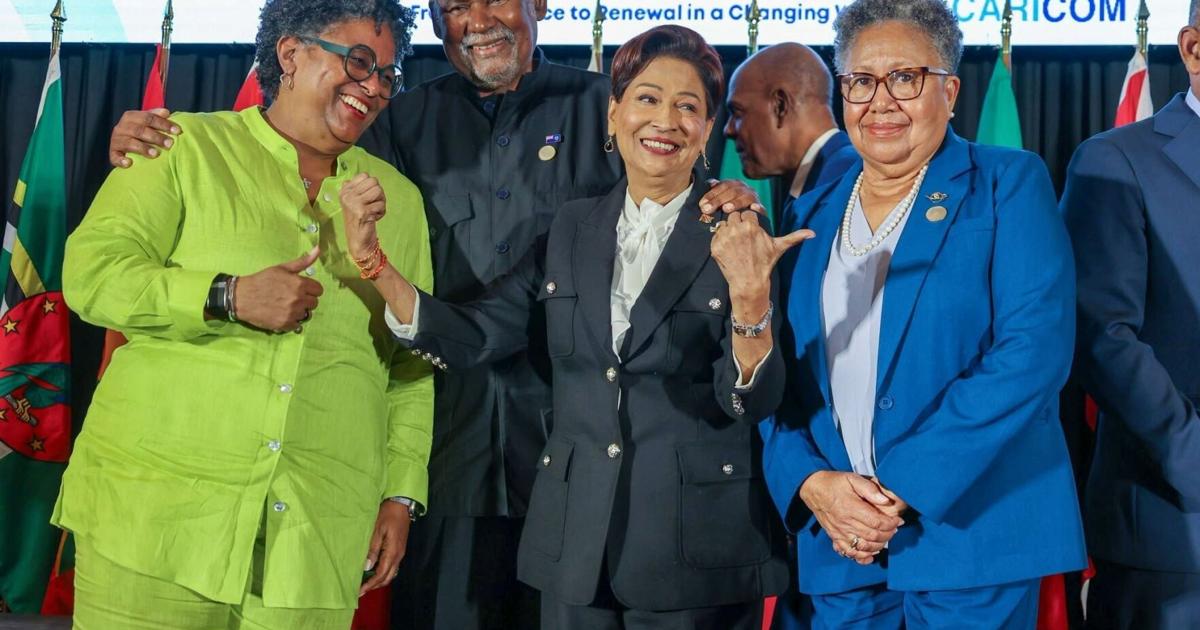
    Persad-Bissessar touched down in St. Lucia on Sunday to join the gathering of regional leaders, though logistical complications kept her from attending Barnett’s opening address to the conference. Footage from the event confirmed she participated in the official group photograph and held informal, polite discussions with both Barnett and fellow heads of government, including Mia Mottley, Prime Minister of Barbados. According to reporting from the Express, Persad-Bissessar planned to formally table her constitutional concerns during the closed-door leaders’ retreat held the following day.

    Weeks ahead of the summit, the Trinidad and Tobago Prime Minister circulated a 22-page formal letter dated July 3 to Caricom Chairman and St. Lucia Prime Minister Philip J Pierre, as well as every sitting head of government and head of state across the bloc. In the document, she laid out detailed claims of severe procedural and constitutional violations surrounding the process that led to Barnett’s purported second term, and put forward a slate of interim measures to govern the bloc while the CCJ evaluates the dispute.

    Central to Persad-Bissessar’s argument is that her objection is not a personal attack on Barnett, but a defense of foundational principles: the rule of law, constitutional governance, and the institutional integrity of the 15-member regional integration body. She reaffirmed Trinidad and Tobago’s unwavering commitment to Caricom and the broader project of regional unity, but stressed that unity cannot be built on “expediency and irregular practices masquerading as precedent.” Instead, she argued, all Caricom business must be rooted in strict adherence to the Revised Treaty of Chaguaramas, the bloc’s founding legal document.

    As a result of the procedural failures, Persad-Bissessar confirmed that Trinidad and Tobago does not recognize the legality of the process that led to Barnett’s reappointment, and cannot accept the validity of her second term. “This matter is advanced not in a spirit of disagreement, but in a spirit of constitutional responsibility,” she wrote in the letter, repeating that the dispute centers on process, not Barnett’s personal suitability for the role.

    Persad-Bissessar’s core proposal is that Caricom activate Article 212 of the Revised Treaty to formally request an authoritative advisory opinion from the CCJ. She argued that the regional supreme court is the only body with the mandate to deliver a binding, legitimate interpretation of the treaty clauses that govern the appointment and reappointment of the Secretary-General. She called on the Conference of Heads of Government to fast-track the referral to the CCJ, request an expedited hearing, and commit in advance to abiding by whatever ruling the court issues.

    Seeking judicial intervention, she added, is not an act of confrontation, but a demonstration of trust in Caricom’s own established legal institutions. “The framers of the Revised Treaty wisely recognised that disagreements concerning the interpretation of our constitutional instruments should be resolved by law, rather than by competing political interpretations,” the letter read.

    The letter also laid out a full chronological breakdown of the process that led to Barnett’s reappointment at a February 2026 retreat in Nevis, highlighting multiple alleged violations. Persad-Bissessar noted that the reappointment was never listed as an official agenda item in any provisional agenda, work program, or working paper circulated to member states ahead of the conference. She also claimed that three member states – Trinidad and Tobago, Antigua and Barbuda, and The Bahamas – were blocked from exercising their treaty-guaranteed right to participate through their properly designated representatives. Most notably, she argued that the Heads’ Retreat itself lacks any constitutional authority to appoint or reappoint a Secretary-General, a power reserved for the full plenary conference.

    Per Persad-Bissessar’s accounting, only 10 of Caricom’s 15 member states were able to participate in the vote: the three blocked states were shut out, while Haiti and Montserrat were absent from the gathering. She stated that this participation level falls far short of the minimum voting threshold required by the founding treaty. Even if preliminary discussions were held during the retreat, she added, no formal confirmation vote was held during the conference’s plenary session, and without plenary approval, the decision can never gain legal force.

    Persad-Bissessar also raised a conflict of interest concern, noting that Barnett, as the sitting Secretary-General, took part in administrative arrangements for her own reappointment process. While she acknowledged Barnett was not in the room during the actual deliberations on her term, she pointed out that Barnett issued the decision restricting attendance at the retreat to only sitting heads of government – the policy that blocked the designated representatives of three member states from participating. This, Persad-Bissessar argued, creates at minimum the appearance of improper conflict of interest, as Barnett was directly involved in setting the terms of a process that determined her own continued tenure.

    Pending a final ruling from the CCJ, Persad-Bissessar has called for both Barnett and Caricom’s General Counsel to recuse themselves from all aspects of the advisory opinion proceedings. She also proposed that independent officials appointed directly by the Conference of Heads of Government manage all logistics related to the CCJ referral. Additional temporary measures have been put forward to ensure administrative continuity within the Caricom Secretariat while protecting the legal standing of all parties involved in the dispute.

    The challenge has gained at least partial support from another major regional leader: Jamaica Prime Minister Andrew Holness submitted his own letter to the Caricom Chairman, noting that while Jamaica is not seeking to overturn the regional leaders’ decision to reappoint Barnett, it shares concerns that the current process has failed to resolve the dispute or uphold the core principles and goals of the Revised Treaty of Chaguaramas. “It has become clear that we were not all on the same page. Therefore, it is important that any concerns be addressed in a meaningful manner to restore cohesion, if not unity, which is indispensable to the effective functioning of Caricom,” Holness wrote.

    As of reporting, the leaders’ retreat continued late into the evening, with discussions on the constitutional dispute expected to dominate closed-door talks among regional heads.

  • Alexander denies passport stock running low

    Alexander denies passport stock running low

    Trinidad and Tobago is set to roll out a nationwide shift from traditional machine-readable passports to modern electronic passports (e-passports), according to Homeland Security Minister Roger Alexander, who also vowed to crack down on exploitative vendor practices that have crippled the country’s immigration system for years.

    In a frank address outlining the government’s reform agenda, Alexander made clear that no third-party contractor would be permitted to hold the ministry hostage to unfair pricing or anti-competitive practices. Moving forward, he emphasized, all public procurement of goods and services will be structured to deliver maximum value for public funds and drive greater operational efficiency.

    Alexander slammed the previous People’s National Movement (PNM) administration for allowing select immigration service providers to gain monopolistic control over the department’s core operations, creating a system where vendors dictated the pace and functionality of government services.

    “Under the PNM, certain providers tied the immigration department and its systems in a noose, letting them call the shots on when the department could operate effectively,” Alexander said. “They charged rates far out of line with what other suppliers offered, delivering no benefit to this country or its people. This new government will not allow anyone to hold Trinidad and Tobago ransom, and we have already activated fully developed backup plans to keep services running.”

    The minister pushed back against recent public claims that ongoing passport processing delays were intentionally engineered by the current administration to cover low stockpiles of machine-readable passports. He explained that when he took office, he inherited an immigration system mired in disorganization and mismanagement. Active investigations are still ongoing into widespread allegations of corruption across multiple core immigration services, including corrupt allocation of passport appointments, and irregularities in work permit and residency applications, he confirmed.

    Pushing forward with the planned e-passport rollout in strict compliance with formal procurement rules, Alexander revealed that three qualified vendors have already submitted formal expressions of interest in response to the government’s public call for candidates. Back in May, the Ministry of Homeland Security published an open Expression of Interest (EOI) on its official website, inviting bids to upgrade the Immigration Division’s legacy machine-readable passport (MRP) infrastructure to a fully integrated e-passport system. The submission deadline closed on June 19.

    The EOI specifically seeks public and private sector entities capable of upgrading the entire passport issuance and control framework from the outdated MRP model to a modern e-passport system. The winning bidder will be required to design, build, and launch a fully operational end-to-end online e-passport application platform, including integrated secure online payment processing for applicants.

    Alexander argued that the transition to digital passports is a critical step to both strengthen Trinidad and Tobago’s national security framework and improve cross-border data coordination with regional and international partners. He noted that continuing to expand the use of obsolete machine-readable passports makes no practical sense at a time when the entire world is moving to digital travel documentation, and Trinidad and Tobago cannot afford to fall behind global digital standards.

    “The world is transitioning to e-passports, so it makes very little logical sense to order more machine-readable passports now,” he said. “Trinidad and Tobago is keeping pace with the digital age, and we intend to launch this new travel document system in the near future.”

    The minister also highlighted the current government’s broader commitment to digital public sector transformation, pointing to Prime Minister Kamla Persad-Bissessar’s decision to establish a dedicated Ministry of Public Administration and Artificial Intelligence to drive focused, coordinated progress on digital reform. Under the current administration, he noted, Trinidad and Tobago has already moved away from the “dinosaur age” of paper-based immigration forms to fully digital electronic processing. These sweeping changes, he added, did not require overly complex technical expertise—what they did require was political will and decisive action to break from past failed practices.

  • SVG Postal Corporation announces ‘strategic leadership appointments’

    SVG Postal Corporation announces ‘strategic leadership appointments’

    The St. Vincent and the Grenadines Postal Corporation has announced two high-impact strategic leadership appointments, a key step forward in its ongoing efforts to reinforce its executive team, upgrade operational infrastructure, and grow its portfolio of commercial and customer-centric services. Both appointments officially took effect on July 1, bringing two distinct, complementary skill sets to the institution’s modernization agenda.

    Raffique Samuel has stepped into the role of Assistant Director of Operations and Business Development, closing out more than 20 years of dedicated service to the postal organization. According to an official press release from the corporation, Samuel began his career as a frontline postman and worked his way steadily up the organizational ladder, a progression driven by consistent hard work, strict professional standards, and an unshakable dedication to public service. His internal promotion underscores the corporation’s stated commitment to honoring merit, rewarding exceptional performance, and cultivating accessible, meaningful career growth pathways for long-tenured staff.

    The second new appointment, Esteban Richard-Hernández, takes on the position of Manager of Expedited Services and Customer Solutions. Richard-Hernández joins the leadership team with a robust professional background spanning banking, finance, auditing, and corporate governance, bringing cross-sector expertise that the corporation says will be pivotal to advancing its strategic goals. His specialized skills, established leadership track record, and commitment to public service are expected to strengthen the corporation’s efforts to scale its expedited delivery offerings, enhance customer-focused solutions, and unlock untapped new commercial opportunities. His appointment also aligns with the organization’s priority of nurturing a new cohort of forward-thinking leadership equipped to drive innovation and long-term sustainable growth.

    Marlon Bute, Chairman of the Postal Corporation’s Board of Directors, framed the dual appointments as a defining milestone in the organization’s multiphase transformation journey. “The Postal Corporation is entering a new era. These appointments are not simply about filling vacant roles; they are about building a leadership team that will reshape this organization into a modern, innovative, commercially driven institution,” Bute explained in his remarks. He emphasized that the board’s core commitment is building a postal service that delivers operational efficiency, long-term financial sustainability, and unwavering focus on meeting the needs of the people of St. Vincent and the Grenadines.

    That vision includes expanding commercial service options, strengthening expedited and logistics capacity, integrating new technological innovations, and delivering a customer experience that matches global best practices, Bute added. He highlighted Samuel’s decades-long progression from entry-level postman to senior assistant director as a powerful, inspiring example of what commitment, persistence, and operational excellence can achieve within the organization. “It sends a clear message that hard work is recognised and rewarded within this organisation,” Bute noted.

    For his part, Bute said Richard-Hernández embodies the next generation of professional leadership the organization needs to achieve its transformation goals. “He brings fresh ideas, technical expertise, and the energy that will help drive the Corporation’s transformation as we position it for sustained growth and long-term success. Together, these appointments reflect our confidence in the future of the Postal Corporation and our determination to build an institution that every Vincentian can be proud of,” Bute concluded.

  • Cricket West Indies Announces ODI Squad for the First Three Matches against New Zealand

    Cricket West Indies Announces ODI Squad for the First Three Matches against New Zealand

    ST JOHN’S, Antigua – In a key step ahead of its 2027 ICC 50-over World Cup build-up, Cricket West Indies (CWI) has unveiled a 15-player squad for the first three matches of its upcoming five-match One-Day International (ODI) series against New Zealand, with matches set to be hosted across Guyana and Barbados.

    Leading the new call-ups is 19-year-old wrist spinner Vitel Lawes, who earns his first ever selection to the senior men’s international squad. The young prodigy has already impressed selectors after spending weeks training with the senior side during the pre-series preparatory camp, and capped an outstanding start to 2026 with a spot on the ICC Under-19 World Cup Team of the Tournament. During that youth competition, Lawes delivered a standout performance, claiming 10 wickets and bowling more dot balls than any other competitor, cementing his reputation as one of Caribbean cricket’s most promising young prospects.

    To support Lawes through his first senior international assignment, veteran spinner and current team coach Nikita Miller has been added to the team management group for the Guyana leg of the series, where he will provide ongoing specialized coaching to the teenager.

    The squad announcement also brings a series of adjustments to the planned selection following off-field commitments and personal tragedy. Shimron Hetmyer has received pre-approved clearance via a No Objection Certificate (NOC) to take part in this season’s Major League Cricket competition in the United States, ruling him out of the opening leg of the New Zealand series. All-rounder Shamar Springer withdrew his name from selection entirely following the recent passing of his mother, with CWI issuing a formal statement of condolence to Springer and his entire family as they navigate this difficult period. Keemo Paul, who was only recently called up as reinforcement to the West Indies Test squad facing Sri Lanka, has been named as Springer’s replacement in the ODI squad.

    Outside of these adjustments, the squad retains the core group of players that competed in West Indies’ recent ODI series against Sri Lanka, hosted in Jamaica earlier this season. For head coach Daren Sammy, the New Zealand series is a critical milestone in the team’s long-term preparations for the 2027 50-over World Cup, and every fixture between now and the tournament carries high stakes.

    “Every series we play from here on leading up to the 50 Over World Cup, we view them as must-win scenarios,” Sammy explained in a statement following the squad announcement. “The matches against New Zealand provide the best opportunity for us to continue our improvement as an ODI unit while winning more matches for the people of the Caribbean.”

    Sammy added that Lawes’ inclusion is part of a deliberate, long-term strategy to build depth ahead of the World Cup, by giving emerging talent opportunities at the senior level in conditions that match their individual skill sets. “The inclusion of Vitel Lawes is strategic as we continue our long-term vision of exposing players who can complement the team in conditions that best suit their skill sets,” he said.

    The full squad is set to assemble in Guyana on July 8, immediately following the conclusion of the ongoing Test series against Sri Lanka in Antigua. The three opening ODIs will all take place at Guyana National Stadium in Providence, with the first fixture scheduled for July 11 at 2:30pm AST (1:30pm Jamaica time), the second on July 13 at the same time, and the third on July 16.

    The full 15-member squad for the Guyana leg of the series is: Shai Hope (captain), Ackeem Auguste, John Campbell, Keacy Carty, Roston Chase, Matthew Forde, Justin Greaves, Amir Jangoo, Alzarri Joseph, Shamar Joseph, Vitel Lawes, Gudakesh Motie, Keemo Paul, Sherfane Rutherford, and Jayden Seales.

  • Tourism Ministry leads ‘Love SVG’ cleanliness initiative for Vincymas

    Tourism Ministry leads ‘Love SVG’ cleanliness initiative for Vincymas

    A cross-sector collaboration led by St. Vincent and the Grenadines’ Ministry of Tourism, Civil Aviation and Sustainable Development has launched a nationwide environmental campaign, calling on both local residents and international visitors to prioritize waste responsibility and preserve the nation’s natural cleanliness.

    The unifying initiative brings together six key national stakeholders: the Solid Waste Management Unit, the Royal St. Vincent and the Grenadines Police Force, the Public Health Department, the Kingstown Town Board, and the Carnival Development Corporation. Financial backing for the project is provided through two existing development programs: the Global Environment Facility and the National Ozone Unit projects.

    Centered around the rallying slogan “Love SVG”, the campaign targets the elevated waste risks that accompany the annual Vincymas carnival, one of the nation’s biggest cultural events. With large crowds flocking to the capital Kingstown and other high-traffic hubs for festivities, poor waste disposal and widespread littering have historically become common challenges during the peak celebration period. To address this gap, the partnership has already distributed 85 purpose-placed waste bins to street vendors, event organizers and relevant government ministries. These bins have been positioned at high-footfall locations across Kingstown and Arnos Vale, areas expected to draw the largest number of carnival attendees this season.

    Beyond infrastructure upgrades, the campaign is also ramping up public education to drive long-term behavioral change. Partner organizations will run coordinated awareness campaigns across both traditional and digital media channels, using targeted advertising, public service announcements and on-the-ground community outreach to spread the message of responsible waste management. Organizers emphasize that the goal extends far beyond the carnival season: the initiative seeks to embed sustainable waste habits that keep St. Vincent and the Grenadines clean year-round, while maintaining a welcoming, attractive environment for both locals and tourists.

    In an official press statement announcing the campaign, the ministry noted: “The Ministry and its partners are urging everyone to demonstrate their love for SVG by actively protecting our country’s environment and disposing of waste responsibly while enjoying the local vibe.”

  • Duggins sees cultural tourism as key to St. Kitts and Nevis’ economic future

    Duggins sees cultural tourism as key to St. Kitts and Nevis’ economic future

    BASSETERRE, St. Kitts – As global travel patterns continue to shift and the international tourism sector becomes increasingly competitive, Samal Duggins, St. Kitts and Nevis’ Minister responsible for the Creative Economy, is positioning cultural tourism as the driving force behind the federation’s next chapter of inclusive, sustainable economic expansion. Duggins’ bold vision comes fresh off the high-profile, widely acclaimed 2026 St. Kitts Music Festival, a three-night cultural showcase that drew thousands of music lovers from across the Caribbean and around the globe to Basseterre’s iconic Warner Park.

    While Duggins acknowledged that traditional cruise tourism will remain a central pillar of the federation’s local economy for the foreseeable future, he emphasized that cultural tourism unlocks an untapped pathway to resilient, long-term growth that spreads economic benefits more broadly across local communities.

    “Cultural tourism opens an entirely new frontier for our small nation,” Duggins explained in an interview with SKNVibes Entertainment. “Across just 60 square miles, we bring together iconic regional artists, authentic cultural expressions, and globally influential creative voices – this convergence brings the world directly to our shores. The St. Kitts Music Festival is a perfect example of this power, and our annual National Carnival follows the same successful model.”

    Duggins pointed to concrete economic data to back his argument, citing the 2025-2026 National Carnival which drew more than 22,000 international visitors to the federation and generated nearly EC$30 million in total economic activity across the hospitality, retail, and transportation sectors. Beyond direct event revenue, he argued that strategic investments in the creative sector deliver far-reaching dividends: they create sustainable local jobs, stimulate widespread economic activity, and elevate St. Kitts and Nevis’ profile as a dynamic cultural destination among both regional and global audiences.

    The minister also celebrated the exceptional turnout for the 2026 St. Kitts Music Festival, noting that opening night drew one of the largest crowds he has observed in his decades of engagement with the event. For Duggins, the overwhelming success of festivals and cultural events like this makes an irrefutable case: the creative industries can no longer be dismissed as casual side hobbies, but must be recognized as a formal, high-potential economic sector capable of generating substantial revenue and life-changing professional opportunities.

    Today’s creative professionals, he added, can build thriving, lucrative careers in the industry, a reality that reflects the growing global value of the creative economy. Drawing from his own personal experience, Duggins shared that he dreamed of working as an entertainer as a child, but faced widespread social pressure to pursue a more traditional, corporate or public service career path.

    “I don’t regret my academic journey – I thrived in school and learned skills that serve me well today,” Duggins said. “But at my core, I always wanted to be an entertainer.” As minister, his top priority is removing the outdated social stigma that still surrounds creative careers, so that future generations of young talent can pursue their professional passions without facing the same pressure he encountered.

    Duggins also reserved praise for the outstanding quality of local performers featured at this year’s music festival, highlighting the dramatic progress local artists have made over the past two decades. Having performed on the St. Kitts Music Festival stage himself back in 2004, he has witnessed the evolution of the federation’s local creative ecosystem first-hand.

    “Today, our local artists stand shoulder to shoulder with the best talent in the world,” he said. “It’s often hard to distinguish between local and international acts, because the quality of their performances and the energy they bring to the crowd are on par with the biggest names in the industry.”

    This ongoing growth and refinement of local artistic talent, Duggins argued, reinforces his confidence that St. Kitts and Nevis is well on its way to establishing itself as a leading regional hub for the creative economy, with cultural tourism leading the federation’s economic future.

  • Cuba getroffen door eilandbrede stroomuitval

    Cuba getroffen door eilandbrede stroomuitval

    On Monday, the entire Caribbean nation of Cuba, home to nearly 10 million residents, was plunged into a complete national power outage, with authorities blaming chronic fuel scarcity and a crumbling, overstretched national electrical grid for the unprecedented disruption.

    The state-run Electric Union confirmed that the twin pressures of shrinking fuel supplies and an aged, fragile distribution network triggered the island-wide blackout, prompting the Ministry of Energy and Mines to immediately activate emergency response protocols to restore service as quickly as possible.

    Cuba’s fuel crisis has escalated dramatically since January, when former U.S. President Donald Trump threatened to impose new tariffs on any nation that supplies crude oil to the island. This external pressure has deepened Cuba’s already years-long economic and financial collapse, bringing most public transportation to a standstill and forcing the cancellation of tens of thousands of scheduled medical procedures across the country.

    Energy Minister Vicente de la O Levy noted that small-scale backup power systems were brought online to protect critical essential services within hours of the outage starting. “Even in this complex scenario, worsened by the energy blockade we face, we continue to prioritize protection for vital services,” the minister stated.

    Cuban President Miguel Díaz-Canel directly blamed the United States for the crisis, accusing Washington of intentionally choking off the island’s fuel access to stoke social unrest. “The work of electricity workers amid this genocidal energy blockade is nothing short of heroic,” Díaz-Canel wrote on the social platform X.

    For ordinary residents in Havana, the blackout has created immediate, life-altering hardship. Thirty-six-year-old Lina May told reporters she had no idea when power would return to allow her to cook rice for her family, forcing her to send her father to buy charcoal to avoid going hungry. “If we don’t get charcoal, we have no way to cook and we will go hungry,” she explained. Forty-year-old Richard Valdés called the outage the latest in a long string of devastating blows for the Cuban people. “We’re without power again, and now we also have no water, no gas — nothing works until service comes back,” he said.

    Cuba currently produces only 40% of the fuel it needs to meet domestic demand. A major delivery of roughly 730,000 barrels of oil delivered by a Russian tanker at the end of March was completely exhausted by the end of April. Even before this full national outage, the Cuban government had implemented rolling planned blackouts for months, with scheduled outages sometimes stretching more than 24 consecutive hours to conserve limited fuel supplies.

  • EU Reportedly Urges Caribbean CBI States to End Programmes or Risk Losing Visa-Free Access

    EU Reportedly Urges Caribbean CBI States to End Programmes or Risk Losing Visa-Free Access

    BASSETERRE, St. Kitts – In a high-stakes diplomatic development that has sent ripples across the Eastern Caribbean, the Government of Antigua and Barbuda has confirmed that the European Union has issued an ultimatum to regional nations running Citizenship by Investment (CBI) programmes: wind down these schemes by 2028, or face suspension of visa-free entry to the Schengen Area.

    For years, Western powers including the EU, the United States, and the United Kingdom have raised sustained security concerns over Caribbean CBI initiatives. These programmes grant full citizenship to foreign investors in exchange for substantial capital contributions to local economies, a structure that EU regulators argue creates an open pathway for high-risk individuals to bypass standard European immigration and security checks. The core worry is that nationals from countries subject to EU travel restrictions and enhanced screening – including Russia, China, Iran, and Iraq – can obtain Caribbean passports through investment, then access the Schengen Area without the pre-arrival vetting they would otherwise require.

    Antigua and Barbuda’s Prime Minister Gaston Browne confirmed that his government received a formal, dated June 25, 2026 communication from European Commissioner Magnus Brunner that lays out the EU’s explicit demand: Antigua and Barbuda must phase out its CBI programme no later than June 1, 2028. Browne emphasized the ultimatum is not isolated to his country; it applies to all five Organisation of Eastern Caribbean States (OECS) members that currently operate active CBI schemes, including Dominica, Grenada, St. Kitts and Nevis, and Saint Lucia. While the government of St. Kitts and Nevis has not yet released an official public statement on the matter, Antigua’s confirmation confirms all regional CBI programmes are targeted.

    The EU’s new demand is grounded in the bloc’s revised Visa Suspension Mechanism, which entered into force on December 31, 2025. A notable shift from the previous regulatory framework, the updated rules stipulate that the mere existence of a citizenship-by-investment programme qualifies as sufficient grounds to suspend visa-free access – even for nations that maintain rigorous due diligence and vetting protocols for CBI applicants.

    Brunner’s letter outlines a 24-month transition period for the phase-out, and lays out mandatory interim requirements that targeted states must implement by September 2026. These interim measures include a permanent ban on CBI applications from individuals already subject to EU sanctions and restrictive measures, alongside mandatory strengthening of vetting procedures for all applicants regardless of nationality. The European Commission plans to incorporate responses from affected Caribbean states into its upcoming Visa Suspension Mechanism Report, scheduled for publication in December 2026.

    For the affected Eastern Caribbean nations, CBI programmes are far more than a niche economic policy: they are a foundational source of non-tax revenue that has funded core public infrastructure and services for decades. Browne made clear that the ultimatum did not catch his administration off guard – Antigua and Barbuda had advance warning of the incoming correspondence and has already begun coordinated consultations with other affected regional partners. Even in the face of EU pressure, however, the prime minister stressed that Antigua and Barbuda has no plans to unilaterally abandon its programme.

    “CBI revenue has built our hospitals, our schools, our critical infrastructure, and funded our recovery after major natural disasters,” Browne noted of the programme’s outsize role in the small island nation’s economy.

    Despite its pushback on the demand to eliminate the programme, the Antigua and Barbuda government said it remains committed to constructive diplomatic engagement with the European Commission under the framework of the Samoa Agreement. The administration also acknowledged the EU’s stated willingness to support the country’s sustainable development priorities through the bloc’s Global Gateway Investment Agenda and other partnership initiatives.