博客

  • Regional Agencies Join Forces to Strengthen Caribbean Response to Hurricanes and Disease Outbreaks

    Regional Agencies Join Forces to Strengthen Caribbean Response to Hurricanes and Disease Outbreaks

    On July 6, 2026, two key Caribbean Community (CARICOM) institutions—the Caribbean Disaster Emergency Management Agency (CDEMA) and the Caribbean Public Health Agency (CARPHA)—formalized the extension of their long-standing collaborative relationship with the signing of a renewed Memorandum of Understanding (MOU) aimed at strengthening cross-regional coordination for disaster response and public health emergency preparedness. The updated agreement builds on decades of existing cooperation to streamline joint action across the full cycle of crisis management, from prevention and advance preparation to on-the-ground response and long-term post-emergency recovery.

    For years, the two agencies have partnered to support Caribbean nations through a wide range of crises, from powerful tropical hurricanes to large-scale infectious disease outbreaks. Under CDEMA’s existing Regional Response Mechanism (RRM), CARPHA has long contributed specialized public health technical knowledge during regional emergencies, supporting individual member states with critical services including disease surveillance, laboratory testing support, population health assessments, public risk communication, environmental health interventions, and emergency response plan development.

    Two of the most high-profile examples of this successful collaboration played out in recent years, during the regional responses to Hurricane Beryl in 2024 and Hurricane Melissa in 2025. After both storms caused catastrophic damage across multiple Caribbean island nations, CARPHA integrated its health response teams into the CDEMA-led RRM, deploying technical specialists to conduct rapid needs assessments, inspect the safety of emergency shelters and damaged healthcare facilities, expand regional disease monitoring systems, and deliver evidence-based guidance to local national health authorities.

    Speaking at the signing ceremony, CDEMA Executive Director Elizabeth Riley framed the new MOU as a critical response to the region’s evolving risk profile. “The Caribbean’s risk landscape is changing rapidly. Climate change, increasingly intense weather events, public health emergencies, and other emerging threats demand that we move beyond traditional approaches and strengthen collaboration across sectors,” Riley explained. “This MOU between CDEMA and CARPHA reflects our shared recognition that resilience can only be achieved through integrated action and strong regional partnerships.”

    CARPHA Executive Director Dr. Lisa Indar echoed this sentiment, highlighting the inherent interconnectedness of the two agencies’ core mandates. “Health and disaster management are inseparable,” Indar emphasized. “This MOU brings together CARPHA’s public health expertise and CDEMA’s disaster coordination leadership to strengthen regional preparedness, build more resilient health systems, and better protect the people of the Caribbean from increasingly complex threats.”

    CARICOM Assistant Secretary-General Alison Drayton also offered remarks at the event, noting that the renewed partnership embodies the regional bloc’s core commitment to building collective resilience through cross-agency cooperation. “By combining CARPHA’s technical leadership in health security with CDEMA’s expertise in disaster mitigation and emergency management, we are strengthening the regional architecture that protects Caribbean people before, during, and after crises,” Drayton said.

    The renewed MOU expands and formalizes joint work across multiple priority areas, starting with enhanced operational coordination during active regional emergencies that leverages CDEMA’s authority in overall disaster coordination and CARPHA’s specialized public health technical capacity. Key priorities outlined in the agreement include protecting vulnerable affected populations, integrating public health priorities into all levels of regional disaster planning and response, aligning shared operational standards and evidence-based best practices, and delivering joint capacity-building initiatives through targeted training, large-scale crisis simulation exercises, cross-agency technical exchanges, and centralized knowledge sharing to boost the entire region’s resilience capacity.

    Beyond emergency response, the partnership will also strengthen joint advance planning, systemic capacity building, collective resource mobilization, and day-to-day operational coordination. These improvements will position Caribbean nations to more effectively anticipate and address emerging transboundary threats, while strengthening both regional health security and overall disaster resilience across the bloc.

    As the Caribbean continues to face growing, increasingly interconnected risks driven by climate change and shifting global health patterns, the strengthened CDEMA-CARPHA partnership is expected to improve emergency coordination outcomes, protect the region’s most vulnerable populations, reinforce local and regional health system resilience, and further embed public health priorities into core disaster risk management frameworks. Regional leaders frame the new MOU as a landmark step forward in the long-term effort to build a safer, healthier, and more resilient Caribbean for all residents.

    Established in 1991 as the Caribbean Disaster Emergency Response Agency (CDERA) and reorganized into its current form in 2009, CDEMA serves as CARICOM’s regional intergovernmental body focused on comprehensive disaster management across its 20 participating states. Its core mandate centers on an integrated approach to reducing disaster risk, strengthening community-level resilience, and supporting sustainable regional development.

    CARPHA, CARICOM’s dedicated regional public health agency, serves 26 member states by providing strategic leadership, specialized technical expertise, and coordinated collective action to prevent disease, strengthen health systems, and advance regional health security. Through core work including disease surveillance, laboratory services, public health research, capacity building, and emergency preparedness and response, the agency partners with member states and global stakeholders to protect and improve population health outcomes across the Caribbean.

  • Ministry Agriculture Interns Gain Hands-On Poultry Farming Experience

    Ministry Agriculture Interns Gain Hands-On Poultry Farming Experience

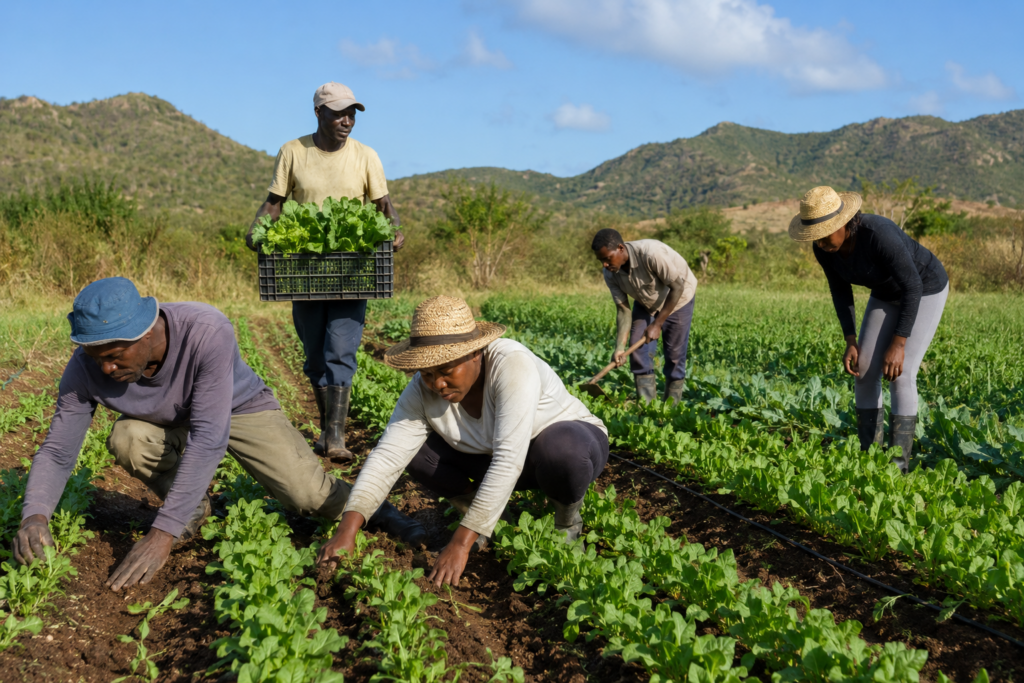
    Antigua and Barbuda’s Ministry of Agriculture is pressing forward with its annual Summer Internship Programme this week, delivering hands-on, immersive learning for young participants through guided educational visits to two distinct local farming operations. The 11th day of the program was dedicated entirely to building practical expertise in poultry rearing and avian management, taking interns first to privately owned Pelle Farm, followed by the educational farm facility of All Saints Secondary School.

    Owned by Kelvin Pelle, a former Agricultural Science educator, Pelle Farm introduced interns to a diverse roster of avian species far beyond the common commercial chicken, including rheas, domestic ducks, and rare black chicken breeds. Experienced farm staff walked the group through species-specific protocols for daily care, nutritional needs, and population management, breaking down the unique requirements of raising each type of bird for commercial or small-scale production.

    After concluding their tour of Pelle Farm, the intern cohort traveled to All Saints Secondary School’s on-site farm, where the school’s specialized agricultural education team led an interactive workshop focused on core poultry production concepts and the critical role of pure breed conservation. During this session, participants examined a wide range of poultry, from quail, pheasants, and partridges to commercial layer hens and broiler chickens. They gained clear insight into the key functional differences between lines bred specifically for consistent egg output and those developed for meat production.

    The workshop also covered advanced foundational topics, including selective breeding practices designed to preserve and enhance desirable genetic traits in poultry flocks. Farm instructors demonstrated a simple, longstanding industry technique that allows producers to assess whether a hen is actively laying eggs by measuring the spacing between the bird’s pelvic bones—wider spacing indicates consistent egg production. Interns also learned a key biological fact about layer chickens: the species is photoperiodic, meaning the length of daily daylight directly impacts laying rates, with longer daylight hours typically driving higher egg output.

    Food safety, a critical component of successful poultry production, was another core focus of the day’s learning. The agricultural team clarified a common industry misconception, explaining that washing raw eggs with tap water actually compromises food safety by stripping away the cuticle, the natural protective coating on the egg shell that blocks bacterial infiltration. Instead, producers and handlers should only gently wipe eggs with a dry cloth when dirt needs to be removed, to preserve the shell’s natural defenses.

    Many participants got the rare chance to safely interact with and handle different poultry birds, allowing them to directly observe avian behavior and temperaments first-hand—an opportunity few entry-level learners get in traditional classroom settings.

    In a statement following the day’s visits, the Ministry of Agriculture outlined the core mission of the Summer Internship Programme: to give emerging agricultural professionals exposure to the full breadth of the sector through experiential, practical learning that builds in-demand technical skills and fosters long-term interest in agricultural careers. The program will continue in the coming weeks with additional on-site field visits and targeted training sessions, all aimed at expanding participants’ understanding of agriculture’s outsize role in supporting Antigua and Barbuda’s national economy and strengthening the country’s domestic food security.

  • 10 Killed in Bahamas Plane Crash as Flamingo Air Flights Suspended

    10 Killed in Bahamas Plane Crash as Flamingo Air Flights Suspended

    On a day meant for national celebration, The Bahamas was plunged into grief on Friday when a small passenger aircraft crashed in North Andros, claiming the lives of all 10 people on board. What should have been a joyous observance of the country’s 53rd Independence Day quickly turned into an official national day of mourning after the crash.

    The aircraft involved in the accident was a Bahamian-registered Cessna 402, operated by domestic carrier Flamingo Air. The plane was mid-route between the capital city of Nassau and the island destination of San Andros when it went down. Emergency response teams were dispatched to the crash site immediately, and official investigations into the exact cause of the tragedy are now underway.

    In the immediate aftermath of the crash, Prime Minister Philip Brave Davis initially told reporters that one person had managed to survive the impact. However, that update was later corrected, with Davis confirming that the injured individual had ultimately succumbed to their wounds, bringing the final confirmed death toll to 10. As of the latest official update, the identities of the victims have not been released to the public, pending notification of all next of kin.

    Speaking at an official press conference shortly after the crash, Davis acknowledged the nation’s collective shock and sadness. “We gather beneath a cloud of great sorrow,” he said. “It has become a day of mourning.” The prime minister extended the country’s deepest sympathies to the families and loved ones of those killed, noting, “To every family that has received the devastating news that someone they love will not be coming home, we offer our deepest condolences.”

    Davis emphasized that investigators are still working to piece together the sequence of events that led to the crash. “At this stage, the facts are still being established, and the relevant authorities are working to determine exactly what occurred,” he stated. “The families affected deserve compassion, privacy, and support as the investigation proceeds.”

    In a precautionary move that came shortly after the fatal crash, the Bahamian Ministry of Energy, Utilities and Aviation announced it had suspended Flamingo Air’s Air Operator Certificate, halting all of the airline’s operations while investigators examine the full context of the crash. The suspension was not issued solely in response to the North Andros crash: the ministry confirmed that two separate aviation safety incidents involving Flamingo Air occurred on the same day.

    Earlier Friday, before the fatal crash, another Flamingo Air plane headed for the island of Mayaguana was forced to turn back to Nassau after the pilot reported a mechanical issue of concern. All passengers on that flight got off the plane safely, but the aircraft subsequently caught fire. No injuries were reported in that second incident. To date, officials have not confirmed whether the two separate incidents are linked, and active investigations are continuing for both events.

  • Para-social workers being trained in hinterland communities

    Para-social workers being trained in hinterland communities

    On Friday, Guyana’s Ministry of Human Services and Social Security officially launched a groundbreaking free training initiative to cultivate paraprofessional social workers, a response to the decades-long shortage of fully qualified social work professionals in the country’s remote interior, or hinterland, communities.

    The Certificate in Paraprofessional Social Services (CPSS) program, launched in Mahdia, Region Eight (Potaro-Siparuni), aims to close a critical service gap that has left marginalized interior communities underserved for years. Speaking at the launch, Human Services and Social Security Minister Dr. Vindhya Persaud framed the program’s first cohort of trainees as pioneers trailblazing a new model of accessible social care for Guyana’s most remote regions.

    For generations, key hinterland regions including Barima-Waini (Region One), Cuyuni-Mazaruni (Region Seven), Potaro-Siparuni (Region Eight) and Upper Takutu-Upper Essequibo (Region Nine) have lacked consistent access to specialized social services, a gap that has harmed outcomes for vulnerable groups across these areas. The new initiative directly advances the Guyanese government’s public commitment to expanding qualified social care coverage across the entire country, where demand for these critical services remains highest in remote interior zones.

    Developed as a collaborative effort between the Ministry of Human Services and Social Security, the Guyana Association of Professional Social Workers (GAPSW), and the accredited University of Guyana, the program delivers no-cost foundational social work training that carries formal academic accreditation. Unlike ad-hoc community outreach, the initiative is designed to create long-term, meaningful career pathways for local hinterland residents, while simultaneously strengthening the country’s overall social services infrastructure. Upon successful completion of the course, graduates will be prioritized for open social services roles across government agencies, including the Childcare and Protection Agency, the central Social Services Department, and the Survivor Advocate Programme.

    Minister Persaud emphasized that the program is far more than a short-term training course: it serves as a permanent launchpad for a lifelong career in social work, empowering local trainees to drive tangible, lasting change within their own communities. “This is more than free training. It is a launchpad into a career in Social Work. So, think about this as a lifelong path, where you will make a tangible impact on the future of the people of your community, your region, and your country,” she told participating trainees.

    The minister also outlined the critical, multifaceted role that social workers play in advancing community well-being, from addressing child protection and family welfare to supporting survivors of gender-based and domestic violence and expanding access to mental health support. Strengthening these frontline services, she noted, is a non-negotiable foundation for building safer, healthier, more cohesive communities across Guyana.

    She further stressed the importance of rigorous professional standards for the new cohort of paraprofessional social workers, including accurate case documentation, adherence to national standard operating procedures, and unwavering ethical conduct. Because social workers often serve as key stakeholders in the national justice system, contributing evidence and support during court proceedings and ongoing case management, upholding principles of integrity, transparency, and accountability is central to the role. “Justice must always be served, and as a social worker, you become part of that wheel of justice. So when you get into this profession, integrity, transparency and accountability is what will drive you further,” Persaud said.

    Framed as a aligned investment paired with Guyana’s ongoing rapid economic expansion, the program reflects the government’s strategy to grow human capital in lockstep with national development. As Guyana experiences unprecedented economic growth driven largely by new offshore oil discoveries, the administration has prioritized ensuring that all communities — including remote interior regions left behind in past development cycles — gain access to the professional services and opportunities they deserve. “This programme is an investment in the education of the people of Guyana. As our country develops, we must ensure our human capacity develops alongside it, so that every community has access to the support and professional services it deserves,” the minister added.

  • Court Grants Interim Injunction Halting Leeward Islands Cricket Board Elections

    Court Grants Interim Injunction Halting Leeward Islands Cricket Board Elections

    In a last-minute ruling that has thrown regional cricket governance into uncertainty, the High Court of Justice of Antigua and Barbuda has granted an interim injunction blocking the Leeward Islands Cricket Board (LICB) from holding its planned annual general meeting and leadership elections set for July 11. The stay on the vote will remain in effect until the court hears a full legal challenge brought by the Anguilla Cricket Association and Carlisle Powell, president of the Nevis Cricket Association.

    Handing down the decision on July 10, one day before the scheduled vote, Justice Jan Drysdale concluded that the dispute raised substantial legal questions that require full adjudication. The judge further ruled that financial compensation would not be a sufficient remedy if the election went forward before the court could resolve the underlying conflict, ordering that the existing governing structure remain unchanged until a full inter partes hearing can be held.

    At the heart of the claimants’ case are multiple grievances over the LICB’s nomination process. The applicants argue that a nomination for candidate Dr. Hodge was improperly rejected on the grounds that his letter of acceptance was submitted late. They emphasize that at no point prior to the rejection did the LICB indicate that this separate acceptance document would be a mandatory requirement for eligibility. Compounding this issue, the claimants state that neither Dr. Hodge nor a second candidate, Kieron Powell, were notified of any perceived issues with their nomination paperwork, nor were they given the opportunity to fix any deficiencies before the final list of candidates was publicly released on July 9.

    In a further challenge to the election’s legitimacy, the claimants’ affidavit questions the eligibility of incumbent LICB president Enoch Lewis. According to the filing, Lewis has held the presidency for roughly 12 consecutive years, a tenure that far exceeds the two-term limit explicitly written into the LICB’s own governing constitution.

    The applicants warn that allowing the disputed election to proceed would cause permanent harm to the board’s democratic standing and erode public and stakeholder trust in the organization’s leadership. Their requested remedies include a full postponement of the election until the entire nomination process can undergo a formal review, or alternatively, a court order requiring that both Kieron Powell and Dr. Hodge be added to the ballot as valid, nominated candidates.

    Justice Drysdale’s injunction applies broadly to the LICB, its current officers, and all authorized agents, banning any action to convene the AGM, hold the election, or enact any results from the vote until the court issues a new order following the full hearing. Procedural timelines have already been set: respondents in the case have until July 15 to submit a responding affidavit, while the claimants will have until July 16 to file their reply. Formal skeleton legal arguments are due by July 20, and the full inter partes hearing is scheduled to begin at 11 a.m. on July 22.

  • Banks DIH Ltd hands over grand prize in “Crown the Road” promotion

    Banks DIH Ltd hands over grand prize in “Crown the Road” promotion

    Guyana’s leading beverage and consumer goods manufacturer Banks DIH Limited has formally concluded its highly anticipated ‘Crown the Road’ customer loyalty promotion, awarding the campaign’s top prize – a brand-new SWM SUV valued at $5.5 million – to Vijay Latchminarine, a resident of East Canefield, Canje, Berbice.

    Running over 10 consecutive weeks from April 10 to June 19 this year, the promotion was structured to reward regular patrons of Banks Beer at 15 participating bars scattered across Guyana. Throughout the campaign, organizers held regular draws that delivered instant $350,000 cash prizes to 15 lucky winners, bringing the total value of secondary consolation rewards to $5.25 million, before the much-awaited grand prize draw for the SUV that served as the event’s centerpiece.

    The awarding of the SUV to Latchminarine marks the successful completion of a campaign crafted specifically to celebrate and acknowledge the long-term loyalty of Banks Beer consumers across the country. Speaking on the wrap-up of the promotion, Lee Baptiste, Sales and Marketing Executive at Banks DIH, emphasized that the initiative was rooted in meeting customers where they already connect with the brand.

    “Crown the Road was about putting Banks Beer where our customers already are, at their favourite bars, enjoying time with friends and giving them a real chance to be rewarded for their loyalty,” Baptiste explained. “Seeing Mr. Latchminarine drive away in the grand prize SUV is exactly the kind of moment we hoped this promotion would create.”

    Banks Beer, the flagship product at the center of the campaign, holds a Monde Selection Gold Quality award and has maintained its position as one of the most popular beer choices among Guyanese consumers. The brand is backed by its parent company’s more than seven decades of proven manufacturing excellence in the region.

    As a cornerstone of Guyana’s consumer goods sector, Banks DIH Limited employs more than 1,600 local workers and holds a dominant position as a manufacturer and distributor of beverages, food items, and household products across the country. Beyond Banks Beer, the company’s extensive brand portfolio includes other well-known local favorites such as GT Beer, Guinness, XM Rum, Coca-Cola, Malta, Icee, and Qik Serv, alongside a wide range of other everyday consumer products. For decades, the firm has anchored its operations in three core priorities: delivering consistent high-quality products, investing in local community development, and supporting the long-term economic growth of Guyana.

  • Geen enkel duurzaam ontwikkelingsdoel ligt op schema voor 2030

    Geen enkel duurzaam ontwikkelingsdoel ligt op schema voor 2030

    Five years ahead of the 2030 deadline for the United Nations’ Sustainable Development Goals (SDGs), the newly released 2026 Sustainable Development Report (SDR 2026) delivers a stark warning: none of the 17 global SDGs are currently on course to be achieved by the target year. The report’s data paints a sobering picture of global progress, noting that only 16.5% of all SDG targets are tracking on schedule globally, 67% are showing only minimal incremental progress, and a full 16% are actually moving backwards. Against this concerning global backdrop, the report also includes a detailed assessment of Suriname’s performance, where the South American nation ranks 78th globally with an SDG score of 70.0, nearly matching the 70.5 average for the Latin America and Caribbean region.

    A key innovation included in this year’s SDR is the addition of retrospectively calculated SDG rankings, a new feature that allows for reliable, cross-country comparisons of national performance across multiple years, filling a longstanding gap in global SDG progress tracking.

    Breaking down Suriname’s results, the report identifies critical persistent challenges alongside notable areas of progress. The country’s largest setbacks are recorded on SDG 2 (Zero Hunger) and SDG 15 (Life on Land), both of which show negative development trajectories. For SDG 2, Suriname grapples with a relatively high national obesity rate of 29%, while SDG 15 progress is undermined by growing pressure on the nation’s biodiversity and terrestrial ecosystems. Suriname also lags behind on SDG 16 (Peace, Justice, and Strong Institutions), with its low score dragged down by poor performance on global corruption perception indices, reflecting ongoing concerns over the quality of governance and public institutional capacity in the country.

    Despite these challenges, the report highlights clear positive gains for Suriname in several key areas. The nation has made consistent progress on SDG 3 (Good Health and Well-being), with life expectancy rising to 73.9 years and child mortality rates continuing to decline. Suriname also scores highly on access to basic infrastructure and services: 99.6% of the population has access to electricity, and 98% has reliable access to clean drinking water. The country has also maintained steady, positive results for gender equality in the labor market.

    Ten years after the SDGs were first formally adopted, the 2026 SDR is calling for a dramatic acceleration of global and national action to get the 2030 agenda back on track. The report outlines eight core priority areas to close the current progress gap, including advancing peace and effective governance, scaling up investment in sustainable development, deepening regional cooperation, developing innovative financing mechanisms for global public goods, and establishing clear international frameworks for emerging technologies such as artificial intelligence and biotechnology. Report authors also argue that the United Nations needs a stronger coordinating role in advancing the global sustainable development agenda.

    For Suriname specifically, the report emphasizes that targeted extra efforts will be required over the coming years in environmental protection, climate adaptation, and public institutional strengthening. It calls for collaborative action across the national government, private sector, and civil society organizations to reverse declines in underperforming SDGs and get closer to the 2030 targets.

    In conclusion, the report underscores that the global sustainable development agenda is at a critical juncture. Without sweeping policy changes and a rapid acceleration of implementation efforts, the globally agreed 2030 SDGs will remain out of reach when the deadline arrives in 2030.

  • PDOs for 5 kidnap accused

    PDOs for 5 kidnap accused

    Nearly four months after a dramatic high-seas rescue foiled a cross-border kidnapping plot in Trinidad and Tobago, five men have been formally charged with the abduction of 73-year-old landlady Tara Poliah from her San Juan residence. The accused, identified as Hakeem Amzad Ali, Hector Jimenez, Reynaldo Alexander Martinez, John Evans and Johniken Gonzales, have remained in preventive detention at Golden Grove Prison in Arouca since authorities first disrupted the scheme in March. On July 9, investigators from the country’s Anti-Kidnapping Unit, led by Woman Corporal Rajkumar, carried out the formal charging process at the prison, with a Spanish interpreter on hand to assist with procedural communications. The five defendants are scheduled to make their first court appearance next week before a master of the District Court in North Trinidad. The investigation into the kidnapping has been overseen by a team of senior officers led by ASP Lazarus, Inspector Phillip, Sgt Katerson and Rajkumar.

    The kidnapping unfolded on March 25, when four assailants confronted Poliah inside the garage of her San Juan home, forced her into a waiting vehicle, and fled the area. By midnight that same day, investigators confirm the kidnappers had moved Poliah to a small vessel, with plans to sail her across the Caribbean to Venezuela. The plot was derailed before it could be completed, however, when the Trinidad and Tobago Coast Guard intercepted the boat roughly one nautical mile off the country’s North Coast, acting on advance radar intelligence that tracked the vessel’s movement. Poliah was recovered unharmed from the vessel, and multiple suspects were taken into custody immediately during the interception. Authorities later confirmed that eight people—six Venezuelan nationals and two citizens of Trinidad and Tobago—were on board the intercepted boat.

    In additional details of the operation, the Trinidad and Tobago Defence Force confirmed that two other suspects tried to avoid capture by jumping overboard during the coast guard chase. The pair was rescued by a local fisherman the following day, March 26, and turned over to the coast guard before being transferred to police custody. In total, law enforcement detained 11 suspects in connection with the kidnapping: the eight intercepted at sea, plus three additional suspects—two men and one woman—who were arrested at Tyrico Bay shortly after the interception. While unofficial police sources have confirmed that some detainees were released without charge, the Trinidad and Tobago Police Service has not issued an official public update on the status of the other six detainees not named in the recent charges.

    The five charged men were first listed in 23 preventive detention orders (PDOs) signed by Homeland Security Minister Roger Alexander on April 13. In those orders, 12 people total were identified as members or associates of a dedicated kidnapping enterprise that operates across national borders. The five charged men, alongside seven other uncharged co-conspirators named in the PDOs, are accused of participating in coordinated, multi-offender criminal operations that rely on cross-border infrastructure, including dedicated maritime vessels and pre-established land transport networks. The PDO documents outline that different network members take on specialized roles: some act as facilitators, others as drivers or coordinators, while core participants directly carry out the abduction, transport and holding of kidnap victims. Of the five men now formally charged, only Martinez is listed as having a residential address in Venezuela. The seven other people named in the April 13 PDOs are Diogenes Adrian Arcia, Crystal Le Blanc, Daniel Williams (also known as “Kimba”), Eduardo Jose Febres Rodriguez, Ishmael Salvary, Nathaniel Rojas, and Jorge Casadilla Caldea.

    Shortly after the March rescue and arrests, Police Commissioner Allister Guevarro announced that law enforcement had successfully dismantled a well-established transnational kidnapping ring. “This successful operation represents a significant breakthrough in our ongoing efforts to dismantle organised criminal groups involved in cross-border kidnappings,” Guevarro said in a statement following the operation. “The speed, precision, and professionalism displayed in this rescue demonstrates that Trinidad and Tobago’s law enforcement agencies are prepared, united, and resolute in protecting our citizens.”

  • FERRY FEARS

    FERRY FEARS

    A plan announced by Trinidad and Tobago’s Prime Minister to launch a temporary regional cargo ferry service aimed at cutting inter-island trade costs has sparked concerns from top Tobago business leaders, who warn that domestic transportation capacity for the island is already stretched dangerously thin. The proposal was brought forward by Prime Minister Kamla Persad-Bissessar in the wake of the 51st Regular Meeting of the Conference of Heads of Government of Caricom held in St Lucia, where she reaffirmed the government’s commitment to easing regional cargo expenses by offering a Trinidad and Tobago-owned vessel for cross-regional cargo movement.

    In comments following the announcement, Minister of Works and Infrastructure Jearlean John told local media on Thursday that the prime minister had extended the offer of ferry access to Caricom member states, and confirmed the government has a actionable plan to roll out the regional service. But Diane Hadad, a prominent Tobago businesswoman and former head of the Tobago Division of the Trinidad and Tobago Chamber of Industry and Commerce, is pushing for clear answers before the government moves forward with implementation. Hadad says she broadly supports efforts to strengthen regional trade, but argues that putting Tobago’s already overburdened domestic seabridge at risk is not an acceptable trade-off.

    Hadad pointed to the fragile state of Tobago’s current cargo infrastructure, noting that the island relies on just one dedicated cargo vessel, the Blue Wave Harmony, whose reliability she described as precarious. “It is only in God we trust that it performs right,” she told reporters. Hadad says her working assumption is that the government plans to reassign one of the country’s existing fast ferries to the new regional route, but she questions whether any vessel can be pulled from domestic service without crippling Tobago’s supply chains. She highlighted that Tobago already struggles with inadequate service during peak travel periods, including long weekends, summer holidays, and the Easter and Christmas seasons, when additional sailings are rarely approved by the Port Authority.

    Tobago depends entirely on the Blue Wave Harmony for consistent cargo movement, Hadad explained, with fast ferries only used to carry limited extra cargo when the dedicated vessel is out of service for maintenance or repairs. “When that cargo vessel goes down, we then rely on any one of the fast ferries that they allow us to put certain tonnage vehicles on, and that’s what brings the necessary items across. Other than that, we are crippled,” she said. Hadad says she remains unconvinced that the country’s existing ferry fleet can support both the new regional service and meet Tobago’s domestic transportation needs. “I’m not sure what capacity we have to go up the islands and make food cheaper for anybody,” she said. “I think a lot more information needs to be given so that we can make informed decisions. There has been no proper communication with the real stakeholders.”

    She also raised additional concerns about the reliability of the country’s existing ferry fleet: the Galleons Passage, while capable of carrying cargo, has drawn frequent complaints from passengers over its poor performance in rough seas compared to older vessels the Buccoo Reef and APT James. Meanwhile, the T&T Spirit remains out of service for unspecified reasons, and the operational status of the T&T Express is unclear, Hadad added.

    Curtis Williams, current chairman of the Tobago Division of the Trinidad and Tobago Chamber of Industry and Commerce, echoed Hadad’s measured approach. Williams welcomed the regional ferry proposal in principle, calling it “a positive and forward-thinking initiative” that has the potential to cut transportation costs, expand regional trade, stimulate cross-Caribbean tourism, and bring down the overall cost of living across the region. But like Hadad, he says the success of the project hinges entirely on whether Trinidad and Tobago actually has the excess maritime capacity to sustain the new service without harming domestic operations.

    Williams noted that the idea of a regional ferry service is not new – a similar plan was proposed by the previous national administration but never moved forward. He says ongoing concerns about vessel availability and reliability persist, particularly because the domestic seabridge between Trinidad and Tobago has already dealt with regular service disruptions caused by mechanical failures and a limited active fleet. “The Government must first ensure that there is sufficient maritime capacity, reliable vessels, adequate maintenance arrangements and a sustainable operational model before committing to such an undertaking,” Williams said in a written response to media inquiries.

    Williams added that long-term success for any regional ferry service depends on consistent, uninterrupted operations. “Businesses and travellers must have confidence that schedules will be maintained and that the service can operate without recurring interruptions. Without these assurances, the initiative could face the same challenges that prevented previous proposals from becoming a reality,” he said.

  • Woman charged with  businessman’s murder

    Woman charged with businessman’s murder

    A fatal violent incident in Trinidad’s Woodford Gardens neighborhood has led to a formal murder charge for a 25-year-old local woman, following weeks of investigative work and legal review. Aaliyah Naipal, a resident of the Woodford Gardens area at the intersection of Oak Avenue and Coconut Drive, has been accused of killing Gregory Reece, a local Chaguanas businessman who died from multiple stab wounds on the night of June 28.

    Naipal made her first court appearance on Monday before a High Court Master, after Director of Public Prosecutions officials reviewed the case file and provided formal legal advice authorizing the murder charge. Following the brief hearing, the accused was remanded into state prison custody to await further legal proceedings in the capital case.

    Law enforcement investigators have outlined the timeline of the fatal incident: Reece traveled to the Woodford Gardens apartment the evening of June 28, and shortly after his arrival, he became involved in a verbal altercation with an individual at the property. During the confrontation, Reece was stabbed multiple times.

    Emergency Health Services first responders were dispatched immediately to the scene after emergency calls were placed. When they arrived, medics found Reece already unresponsive, and he was officially pronounced dead at the apartment by medical personnel. Naipal was taken into police custody at the scene directly after the stabbing, and has remained in detention throughout the ongoing investigation.

    Reece, a 50-something-year-old local businessman, was laid to rest in a public funeral service held this past Sunday. Court records also show Reece had a prior interaction with the Trinidad and Tobago justice system: in 2017, he was arrested and charged with two criminal offences – uttering forged valuable securities and obtaining funds by false pretences. Those charges stemmed from allegations that more than TT$1.4 million in fraudulent cheques, issued from an official account controlled by the Arima Borough Corporation, were illegally deposited into a commercial bank account linked to Reece. At the time of his death, that earlier 2017 case was still pending in the court system.