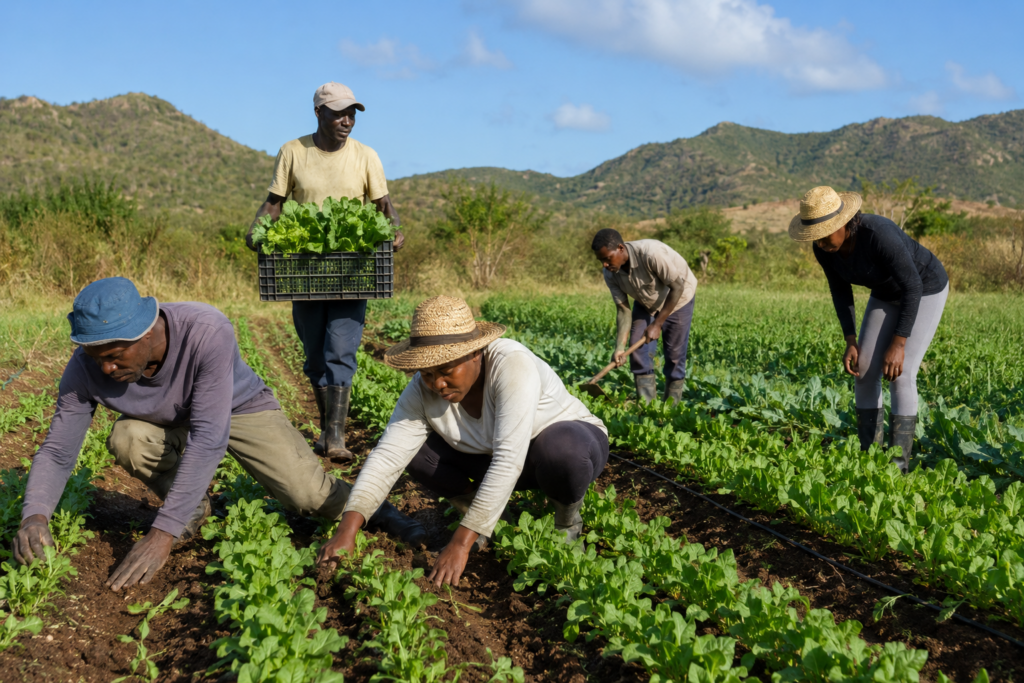
The twin-island nation of Antigua and Barbuda is exploring a new policy proposal that would bring agricultural laborers from Haiti to its shores, a move designed to counter persistent worker shortages and lift domestic food production to new levels. Prime Minister Gaston Browne recently outlined the dual crises currently holding back the country’s agriculture industry: limited access to reliable water infrastructure and a growing gap in available farm labor that has left fields understaffed and production below demand.
To resolve the water access challenge, Browne confirmed the government is moving forward with plans to expand water storage capacity by constructing additional ponds and small dams across key agricultural regions. The administration is also exploring targeted relocation support for small-scale farmers currently operating in areas with insufficient natural water reserves, helping them move to regions with more reliable access to the resources they need to grow crops.
For decades, Antigua and Barbuda drew seasonal and permanent agricultural labor from neighboring Caribbean countries, with Guyana serving as the primary source of migrant farmworkers. But Browne explained that this traditional labor pipeline has dried up in recent years, leaving farm owners across the country struggling to fill open roles and maintain consistent production. After evaluating multiple alternative labor sources, the prime minister confirmed that recruiting workers from Haiti has emerged as the most viable solution to fill the gap.
Browne emphasized that expanding large-scale, commercial agricultural production is a core priority for his administration, noting that small-scale subsistence farming alone is incapable of meeting the total food demand of Antigua and Barbuda’s population. Currently, the country spends more than 250 million Eastern Caribbean dollars on imported food every year, a level of dependency that creates long-term economic and food security risks for the small island nation.
The plan to recruit Haitian agricultural workers is not an isolated policy, but rather a central component of a broader national strategy to strengthen domestic food security, cut the country’s reliance on costly foreign food imports, and grow the contribution of agriculture to the national economy. Administration officials note that the proposal is still under consideration, with further discussions planned to address logistics, worker protections, and integration before any final decision is made.