博客

  • Ezra, Kisha Kay capture Soca Monarch titles

    Ezra, Kisha Kay capture Soca Monarch titles

    On a historic Friday night at the Saint Lucia Athletics Association (SAB) facility in Vigie, the 2026 Soca Monarch competition delivered two landmark victories, breaking long-standing barriers and capping a 12-year comeback journey for two standout performers.

    In the hotly contested Groovy Soca division, Kisha Kay etched her name into the history books as the first woman ever to claim the Groovy Soca Monarch title. She secured the crown in one of the tightest competitions in recent memory, finishing with a total of 388 points — just a single point ahead of first-time contender Deevon, who claimed second place. Imran Nerdy, the defending Groovy Soca Monarch, finished third with 385 points, while veteran competitor Arthur Allain took fourth place with 368 points to round out the top four.

    Along with her historic title, Kisha Kay took home a top prize of EC$40,000 for her win. Second-place finisher Deevon received EC$30,000, with Imran Nerdy collecting EC$20,000 for his third-place finish and Arthur Allain earning EC$15,000 for fourth.

    The drama continued in the Power Soca Monarch division, where Ezra D’Funmachine completed a stunning 12-year comeback to reclaim the title he last won over a decade ago. Like the Groovy division, the Power Soca competition was decided by a razor-thin margin: Ezra notched a winning score of 384 points, edging out runner-up Shemmy J by just one point. Shemmy J finished with 383 points to take second place, while the trio of Tension, Bobo and Samo secured third with 361 points. The collaborative entry from Sedale, HP and Deevon finished fourth with 344 points.

    Ezra matched Kisha Kay’s prize winnings, taking home EC$40,000 for his first-place finish. Shemmy J received EC$30,000 for second, Tension, Bobo and Samo earned EC$20,000 for third, and Sedale, HP and Deevon collected EC$15,000 for their fourth-place showing.

    In a notable upset, the defending Power Soca Monarch duo of Dezral and Jardel failed to crack the top four in their bid to retain the title, missing out on a spot in the winners’ circle after returning to compete.

    Photographs of both new champions were captured by photographer McAllister Hunt, documenting the historic night for Caribbean soca music.

  • More Details Behind Santa Elena’s Latest Murder

    More Details Behind Santa Elena’s Latest Murder

    On a Friday in Santa Elena Town, a quiet community in the country’s western region, a senseless act of violence has left one man dead and a family grappling with unthinkable grief. Ricky Dawson Jr., a 33-year-old construction worker from the Santa Cruz area of the town, was gunned down in a public attack just steps from his own home, law enforcement authorities confirmed this week.

    According to official police accounts, Dawson had only just returned to his residential neighborhood when the incident unfolded. He was on a phone call when an unmarked black SUV drove toward his location. Multiple people inside the vehicle opened fire, discharging several rounds directly at Dawson before fleeing the scene. First responders found Dawson unresponsive roughly 100 yards from his front door, with the victim suffering a broken leg and multiple fatal gunshot wounds from the attack.

    Emergency medical teams immediately transported Dawson to the nearby San Ignacio Community Hospital, but medical staff pronounced him dead on arrival. As of Tuesday, investigators have not released any confirmed suspects or identified a clear motive for the killing. Law enforcement teams are still processing forensic evidence from the scene and interviewing witnesses to piece together the sequence of events.

    The killing has left Dawson’s family and close friends in mourning, as they remember him as a hardworking man focused on building a stable life for his young daughter. In a public statement shared on social media, Dawson’s father shared a heartbreaking tribute: “Rest in peace my son Rick! we will forever love an miss you!!” One of Dawson’s relatives pushed back against early unsubstantiated rumors that the killing stemmed from personal grudges, emphasizing that Dawson never antagonized anyone or made enemies in the community. “He Neva hurt anybody or create enemies!! All about making your money and build a future fu your daughter! People just badmind and jealous!!!” the relative said.

    Local community leaders have called for anyone with information about the black SUV or the shooting to contact the Santa Elena police department to help advance the investigation and bring those responsible to justice.

  • Births to Haitian women in the Dominican Republic are decreasing, according to the National Health Service: What was the percentage and what is the reason?

    Births to Haitian women in the Dominican Republic are decreasing, according to the National Health Service: What was the percentage and what is the reason?

    In a recent televised interview on RNN Channel 27’s weekly current affairs program *Esferas de Poder*, hosted by journalist Federico Méndez, Dr. Martín Ortiz, National Director of Maternal, Child, and Adolescent Health at the Dominican Republic’s National Health Service (SNS), has outlined major demographic and systemic shifts in the country’s maternity care landscape, driven by newly implemented migration controls and years of public health infrastructure upgrades.

    Ortiz confirmed that tightened migration regulations introduced between March and April last year have driven a dramatic decline in the share of total annual births attributed to Haitian mothers. Prior to the policy rollout, 2024 data showed Haitian women accounted for 37% of all births in the country — meaning 37 out of every 100 newborns delivered in Dominican hospitals were born to Haitian nationals. Within months of enforcement, that share has fallen sharply to 24%, translating to 16,500 fewer births to Haitian women over the past year.

    The policy adjustment was implemented to address longstanding overcrowding in the country’s largest maternity facilities, where Haitian patients had come to make up a disproportionate share of visits, crowding out local Dominican women seeking care. Ortiz noted that since the controls took effect, access for Dominican women has improved dramatically at major facilities including the Nuestra Señora de la Altagracia Maternity Hospital and the San Lorenzo de los Minas Maternity Hospital. He emphasized that the SNS still provides emergency and necessary care to all patients who arrive at its facilities, regardless of immigration status, and the reduction in service volume is a direct result of lower cross-border migration rather than a blanket denial of care.

    Beyond the shifts driven by migration policy, Ortiz detailed years of sustained progress across multiple domains of maternal and child public health. Over the past six years, the Dominican government has invested heavily in upgrading health infrastructure, completing renovations for more than 200 large hospitals and nearly 2,500 primary care units across the country. This decentralized expansion has helped reduce overcrowding at major urban facilities by routing routine care to local community clinics. The SNS has also rolled out universal insurance acceptance across all public hospitals and upgraded diagnostic imaging laboratories with high-resolution equipment to cut wait times and improve same-day care outcomes.

    One of the most notable achievements highlighted by the health director is a more than 50% reduction in adolescent birth rates nationwide. Using 2019 as a baseline, when roughly 32,000 teenage girls gave birth annually (accounting for 24% of all national births), that number fell to 16,000 last year, a 50% drop in absolute terms. In the first half of this year alone, the country recorded 1,000 fewer teen births than in the same period last year, with the overall share of teen births falling from 24% of total national births to 18.7%. This progress has been supported by the opening of 39 specialized comprehensive care units to meet the sexual and reproductive health needs of adolescent populations across the country.

    Ortiz also addressed broader national fertility trends, noting that the Dominican Republic’s overall birth rate has declined to a global-aligned average of roughly 2.1 children per family, a stark contrast to neighboring Haiti’s rate of 8 children per family. He flagged ongoing challenges, including a persistently high rate of premature births, which remains the leading contributor to neonatal mortality within the country’s first 28 days of life. Even so, the country has recorded significant improvements in overall infant and maternal mortality, driven by expanded neonatal and pediatric intensive care capacity, upgraded facility infrastructure, enhanced staff training, and broader vaccination coverage.

    In line with the declining share of births to Haitian mothers, the proportion of national maternal mortality involving Haitian women has also fallen sharply: from 56% in 2024, to 52% last year, and to 33% today following the decline in birth volume among Haitian patients.

  • Noise from neighbors, vehicles, and grocery stores is among the main problems in households.

    Noise from neighbors, vehicles, and grocery stores is among the main problems in households.

    A newly released national survey has shed sharp new light on how substandard local environmental conditions are eroding daily life and public well-being across the Dominican Republic, documenting that nearly half of all households across the country contend with at least one form of pollution or disruptive environmental nuisance near their homes.

    The key findings are laid out in the ENHOGAR-MICS 2025 Basic Report, a comprehensive assessment of living conditions that links local environmental quality directly to population mental health and overall quality of life.

    Geographic breakdowns from the report show that environmental burdens fall disproportionately on large urban centers, where dense development and concentrated activity amplify pollution and nuisance issues. Nowhere is this gap more pronounced than in the Ozama region, which encompasses the National District and the province of Santo Domingo—this country’s most populated urban hub. In this area, more than 57% of households report being negatively impacted by local environmental problems, a rate well above the national average.

    Among all documented environmental issues, noise pollution stands out as the most pervasive complaint across the nation. The most common source of disruptive noise is loud music originating from neighborhood commercial outlets including grocery stores and bars, as well as from adjacent residential properties. This source disturbs roughly 40.4% of Dominican households, edging out other major urban noise contributors such as vehicle traffic, motorcycle activity, and power plant operations, which affect 38% of homes nationwide.

    Right alongside noise pollution, the survey identifies inadequate solid waste management as a second critical threat to community environmental health. Nationwide, nearly 40% of surveyed families named accumulated garbage piled on public streets, sidewalks, and unused vacant lots as a pressing problem in their immediate neighborhood.

    The report also catalogs a range of additional environmental hazards that degrade residential living conditions across the country. Stagnant standing water and unmaintained open ravines, which can breed disease-carrying pests and create sanitation hazards, impact roughly 26.3% of households. Meanwhile, emissions of harmful smoke, dust, and industrial or vehicular gases were cited as a direct negative impact on living conditions by 21.8% of survey respondents.

  • Family seeks financial assistance for Life-Saving Heart Transplant

    Family seeks financial assistance for Life-Saving Heart Transplant

    For Denis Milvis Feliz Mejía, a woman living with a life-threatening late-stage cardiac condition, the clock is ticking to secure a second chance at life. After years of managing her deteriorating heart health through conventional interventions and ongoing medication, her medical team has reached a stark conclusion: a heart transplant is the only remaining treatment that can save her life.

    In an open public letter shared with local communities and regional institutions, Feliz Mejía laid out the difficult path her health has taken in recent months. Multiple rounds of medical assessments, specialized testing, and exhaustive trials of all available non-surgical treatments have failed to slow the progression of her heart disease. As the condition has advanced, medication can no longer keep her symptoms in check, drastically eroding her quality of life and leaving her unable to carry out routine daily activities.

    The gravity of her diagnosis has placed more than just physical strain on Feliz Mejía and her family. Alongside the emotional toll of facing a life-threatening illness, the staggering cost of the transplant procedure, pre-operative specialized studies, lifelong post-transplant immunosuppressant medication, and extended post-surgery recovery has pushed the family far beyond their financial limits. With no other options to cover the tens of thousands of dollars in associated medical costs, Feliz Mejía has made a heartfelt public appeal to civic institutions, private companies, and all people of goodwill to offer whatever financial support they can spare.

    “This transplant is my only hope to get back the life I love, and to spend more years with the people I care about,” Feliz Mejía shared in her appeal. Every contribution, no matter how small, will bring her closer to accessing the life-saving procedure she needs to survive.

    Those who wish to stand in solidarity with Feliz Mejía and contribute to her medical fund can make donations directly to her savings account at Banco de Reservas (Banreservas), account number 9602595977, held under the name Denis Milvis Feliz Mejía. Feliz Mejía’s family and close friends have extended their advance gratitude to every person who chooses to offer support, noting that even the smallest donation will make a difference in her fight for a healthy future.

  • The PUJ is consolidating its position: it attracts 53% of the tourists who visited the Dominican Republic in June

    The PUJ is consolidating its position: it attracts 53% of the tourists who visited the Dominican Republic in June

    The Dominican Republic’s tourism sector is riding a wave of robust expansion, with rising air transport activity serving as the leading engine of its sustained growth. Fresh official data reveals that in the first six months of 2026, the Caribbean nation recorded 37,895 commercial flights — an all-time high that marks a 7.7% year-over-year increase from the same period in 2025, translating to 2,694 additional flight operations. Even more notably, current flight volumes have surged 24.5% above pre-pandemic levels seen in the first half of 2019, representing 7,448 more commercial flights than the 2019 benchmark.

    Industry analysts attribute this strong performance to two core factors: steadily growing international demand for Dominican travel experiences, and ongoing investments that have expanded the country’s global air connectivity. Both drivers have worked in tandem to push up tourist arrivals across the nation’s top leisure and resort destinations.

    When broken down by airport, Punta Cana International Airport continues to reinforce its standing as the Dominican Republic’s busiest air entry point. In June alone, the eastern airport handled 53% of all national commercial flight operations. It is followed by Las Américas International Airport (AILA) with 28% of operations, and Cibao International Airport with 12%. Puerto Plata and El Higüero each account for 3% of monthly flights, while La Romana and Samaná contribute 1% apiece, according to data compiled by areocoa.com and published by the Dominican Ministry of Tourism (Mitur).

    This geographic distribution underscores the outsized role of the Dominican Republic’s Eastern region in driving national tourism growth. The area’s popularity stems from its extensive inventory of accommodation, world-famous white-sand beaches, and extensive non-stop flight connections to the world’s largest travel source markets.

    Market breakdown by origin shows the United States retains its position as the top source of incoming flights, representing 53% of all commercial operations into the country. Next in line are Panama at 7%, Colombia at 6%, Puerto Rico at 6%, and Canada at 5% — all markets that maintain consistent, year-round air connectivity with the Dominican Republic.

    The busiest routes on the network reflect the dominance of key regional and North American markets: top connections include the routes between New York’s JFK International Airport and Santiago’s Cibao International Airport, JFK to Santo Domingo’s Las Américas International Airport, as well as inbound flights to Punta Cana from Panama City’s Tocumen International Airport, San Juan’s Luis Muñoz Marín International Airport, and Miami International Airport.

    The uptick in flight operations has directly translated to a matching rise in tourist arrivals. Between January and June 2026, the Dominican Republic welcomed 4,963,542 air arrivals, a 10% increase from the same period in 2025. This equals 449,449 additional visitors compared to last year. Compared to pre-pandemic 2019 first-half figures, air arrivals have grown a staggering 38.8%, confirming the Dominican Republic’s status as one of the fastest-recovering and fastest-expanding tourist destinations across the entire Caribbean and Latin American region.

    Tourism officials note that these strong results are the product of deliberate policy focused on expanding global air links, launching new direct routes to under-served markets, and increasing flight frequencies on popular existing routes. These strategic moves have cemented the Dominican Republic’s reputation as the Caribbean’s leading travel hub and one of the most competitive tourist destinations in Latin America.

  • Complaints about prolonged power outages affect parts of Sosúa

    Complaints about prolonged power outages affect parts of Sosúa

    In the coastal municipality of Sosúa, Puerto Plata, widespread frustration has boiled over among local residents after widespread, extended power cuts left thousands without electricity for up to four hours on Monday, right in the middle of a record heat wave gripping the northern Dominican region. Neighborhoods spanning from the entrance of Maranatha down to the lower sections of the municipality, including the densely populated communities of Sosúa Abajo and Maranatha itself, bore the brunt of the unannounced service disruption. With temperatures hovering well above 30 degrees Celsius, the outage hit particularly hard for residents already struggling with stifling indoor conditions, with many taking to social media to voice their anger and demand urgent intervention from the national power distributor EDENORTE. One affected resident, speaking on condition of anonymity, summed up the widespread frustration: “We’ve gone four full hours without power, and the distributor has not even acknowledged the issue, let alone fixed it. All we want is to be able to rest comfortably, not swelter through this oppressive heat.” The outages come as part of a growing pattern of complaints across the region over inconsistent electricity reliability, with consumers increasingly pushing for both more stable service delivery and clearer, faster communication from EDENORTE when outages do occur. Critics point out that the distributor frequently fails to alert local communities of planned outages, leaving residents unprepared to cope with extended blackouts during hot weather. Notably, EDENORTE has already published its official planned maintenance schedule for the period between June 27 and July 3, 2026, which lists areas targeted for scheduled power cuts. As of Tuesday morning, the company had not issued any public confirmation linking the Monday Sosúa outages to either its planned maintenance work or an unexpected equipment failure. Local news outlet InfoENN has confirmed it has reached out to EDENORTE leadership to request an official statement addressing the complaints and clarify the root cause of the disruption, and will publish an update as soon as a response is received.

  • Innovation: More than half of Dominican households now have internet access, but significant disparities remain.

    Innovation: More than half of Dominican households now have internet access, but significant disparities remain.

    The latest ENHOGAR 2025 household survey has delivered mixed news for digital progress in the Dominican Republic, marking a landmark milestone in the country’s push for broader digital access while highlighting stubborn gaps that continue to block equitable connectivity for marginalized communities. According to the official survey results, more than 50 percent of all Dominican households now have consistent internet access – a jump that represents one of the most significant advances in national digital inclusion efforts in recent years. Despite this measurable forward momentum, the research team behind the survey has issued a clear warning that deep territorial and socioeconomic disparities still act as major barriers to universal, equal access across the nation.

    The gap between urban and rural regions is particularly stark, the report reveals. In densely populated urban centers, internet connectivity reaches more than 70 percent of all families, giving most city-based households regular access to the digital tools that have become a core requirement for daily life in the 21st century. By contrast, in scattered rural communities across the country, household internet penetration barely climbs above 30 percent, leaving nearly two-thirds of rural families disconnected from the broader digital ecosystem.

    This connectivity gap does not only represent a lack of access to entertainment or communication – it creates tangible, long-lasting limitations that cut across critical areas of daily opportunity. Students in disconnected households struggle to complete remote schoolwork and access digital educational resources, working-age adults cannot take advantage of remote work opportunities that would boost their incomes, and all residents are locked out of essential government, healthcare and commercial digital services that have shifted online in recent years.

    Socioeconomic status further widens this territorial divide, the survey confirms. For households in the highest income brackets, internet penetration is almost universal, with nearly every high-income Dominican home enjoying reliable, high-speed connectivity. For low-income households, by comparison, most can only afford basic prepaid mobile data plans that come with strict data caps, slow speeds and frequent interruptions. These low-cost plans do not support the reliable, high-quality connection needed for activities like remote work, online classes or telehealth appointments, trapping low-income communities in a cycle of digital exclusion.

    Leading Dominican economist Winston Marte, who specializes in development and digital economy policy, argues that closing this persistent divide requires targeted action on two core fronts. To Marte, expanding hard technological infrastructure into underserved rural and low-income urban areas, paired with policy interventions that bring down the cost of internet access for low-resource households, are the two non-negotiable pillars of any effective strategy to bridge the digital gap. In its concluding findings, the ENHOGAR 2025 survey underscores that delivering universal, equitable internet access remains one of the most pressing unmet challenges for Dominican public policy makers as the country works to build a fully inclusive digital economy.

  • Frontier launches daily flight between Punta Cana and Puerto Rico

    Frontier launches daily flight between Punta Cana and Puerto Rico

    The ongoing wave of consolidation in the U.S. ultra-low-cost air travel sector has spurred a major strategic expansion from Frontier Airlines, which is moving to capture new market share by launching eight new routes across the Caribbean and Latin America. The move comes in direct response to scaled-back operations from rival Spirit Airlines, which recently reduced service to multiple high-demand destinations across the region, opening a gap that Frontier is now positioned to fill.

    One of the most critical additions to Frontier’s network is the new daily service connecting San Juan, Puerto Rico to Punta Cana, Dominican Republic. This route links two of the Caribbean’s most popular year-round tourist hubs, and preserves a key air connection that supports regional tourism economies that rely heavily on visitor mobility. The daily service caters to a broad range of travelers, from leisure vacationers to family visitors and business passengers, while delivering the budget-friendly fares that define Frontier’s business model.

    Beyond the San Juan-Punta Cana link, Frontier has added seven additional routes that were previously operated by Spirit Airlines. The full expanded network includes connections between San Juan and Medellín, Colombia; Fort Lauderdale, Florida and Armenia, Colombia; Barranquilla and Bucaramanga, Colombia; Orlando, Florida and Guatemala City, Guatemala; Orlando and San Pedro Sula, Honduras; and Atlanta, Georgia and San Pedro Sula, Honduras.

    In a statement accompanying the expansion announcement, Frontier emphasized that its core goal is to maintain affordable travel options for passengers in high-demand markets. To kick off the new services, the carrier has launched promotional fare offers designed to build early passenger volume and boost occupancy on the new routes. The expansion aligns with Frontier’s long-term growth strategy, which prioritizes moving into under-served routes with strong existing tourism and passenger demand.

    “We are pleased to expand our service to ensure that consumers continue to have access to affordable travel options,” said Josh Flyr, Vice President of Network Design and Operations at Frontier Airlines. Industry analysts note that the expansion solidifies Frontier’s position as a leading ultra-low-cost carrier in the Caribbean and Latin American travel market, leveraging ongoing industry restructuring to grow its footprint in high-traffic regions.

  • Meteorological Service Warns More Rain Coming

    Meteorological Service Warns More Rain Coming

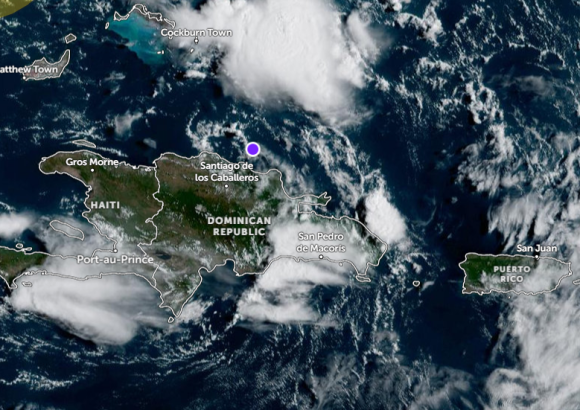
    On July 11, 2026, the National Meteorological Service (NMS) issued an urgent Excessive Rainfall Warning for central regions of Belize, forecasting another 2 to 4 inches of rain within the next four to six hours. This new precipitation will come on top of the 4 to 6 inches of rainfall that already drenched the area earlier the same morning.

    The early downpours have already triggered destructive flash flooding across multiple communities, with Belmopan’s Las Flores neighborhood among the hardest-hit locations. In response to flood damage from the unrelenting rain, the Ministry of Infrastructure Development and Housing (MIDH) announced the complete closure of the George Price Highway at Mount Pleasant for all small vehicles.

    The government statement, released via official online channels, noted that MIDH emergency response teams have already deployed to the affected site. Personnel are currently conducting continuous monitoring of flood levels and infrastructure conditions, and will begin mitigation and recovery work as soon as conditions safely allow. Beyond the closed highway segment, MIDH has issued a broad appeal for all motorists traveling through rain-impacted zones across the country to exercise extreme caution and adjust their driving to match hazardous conditions.

    Local residents in flood-affected neighborhoods have also been advised to avoid unnecessary travel on flooded roadways. Officials emphasized that navigating flood waters present hidden dangers: water depth and submerged hazards cannot be reliably assessed from the surface, putting both drivers and pedestrians at serious risk.

    In addition to the immediate warning for central areas, a broader Excessive Rainfall Watch remains active across the entire nation. Forecasters predict an additional 2 to 4 inches of rain could fall across most of Belize over the next 12 to 18 hours, with southern regions facing the highest risk of heavy accumulation. Complementing the rainfall alerts, the NMS has also issued a Small Craft Caution for coastal waters. The advisory warns of sudden gusty winds and choppy, dangerous sea conditions in the vicinity of heavy showers and thunderstorms, and urges all small watercraft operators to avoid unnecessary voyages and maintain heightened situational awareness during the weather event.