博客

  • Republic Bank CPL Delivers US$19.5 Million for Antigua & Barbuda in 2025

    Republic Bank CPL Delivers US$19.5 Million for Antigua & Barbuda in 2025

    An independent economic evaluation carried out by research firm GSIQ has revealed that the 2025 edition of the Republic Bank Caribbean Premier League (CPL) injected a total of US$19.5 million into the economy of Antigua & Barbuda, marking a significant win for the island nation’s tourism and business sectors.

    Five matches of the popular T20 cricket tournament were hosted at the iconic Sir Vivian Richards Stadium, splitting the total impact into two key components: a direct on-the-ground economic contribution of US$10.7 million, and an additional US$8.8 million in earned international media value that positioned Antigua & Barbuda as a top travel and events destination across global broadcast, digital, and social media channels.

    Fan attendance data underscores the tournament’s role as a driver of international tourism for the twin-island nation. A total of 23,553 spectators passed through the stadium gates over the course of the match series, with 1,733 of those attendees traveling from outside Antigua & Barbuda specifically for the event. On average, international visitors stayed 4.5 nights per trip and spent roughly US$3,100 each, translating to a total of US$4.1 million in direct visitor spending that flowed to local accommodation providers, restaurants, transportation companies, and small businesses across the country.

    Beyond tourist spending, CPL’s own local investments created tangible long-term benefits for Antigua & Barbuda’s workforce and local supply chains. In 2025 alone, the tournament spent US$3.7 million on domestic goods and services, which supported the creation of 169 new local jobs. Of that local spend, US$2.8 million went directly to domestic suppliers, while an additional US$321,000 was allocated to local worker salaries. The tournament also extended its impact beyond cricket and commerce, backing a range of community-focused initiatives including grassroots youth cricket development programs and corporate social responsibility projects—most notably a school supply donation drive for children attending match-day events at the Sir Vivian Richards Stadium.

    The 2025 results build on a deepening partnership between CPL and Antigua & Barbuda that has already delivered substantial returns. Over the past two tournament seasons, combined investments from CPL and the local franchise Antigua & Barbuda Falcons have reached US$7.1 million, a clear indicator of the growing mutual economic benefit of the ongoing collaboration.

    The media exposure generated by the tournament stands as one of its most valuable non-economic contributions, putting Antigua & Barbuda in front of hundreds of millions of cricket fans worldwide. Of the US$8.8 million in total international media value, US$8.4 million came exclusively from global broadcast coverage, highlighting the tournament’s unmatched ability to showcase the islands’ natural beauty, world-class sports infrastructure, and hospitality to a global audience of potential future visitors.

    Pete Russell, Chief Executive Officer of the Caribbean Premier League, emphasized the ongoing importance of Antigua & Barbuda to the tournament’s annual calendar. “Antigua & Barbuda continues to play an important role in the CPL calendar,” Russell said. “Delivering an event impact of US$19.5 million highlights the positive impact the tournament brings to the country, supporting tourism, creating jobs and generating global exposure. The Sir Vivian Richards Stadium provides a fantastic stage for CPL cricket and we are proud to continue growing our partnership with Antigua & Barbuda.”

  • Rotary Club of Dominica announces the winners of the 11th Annual National Secondary Schools Literacy Quiz Competition

    Rotary Club of Dominica announces the winners of the 11th Annual National Secondary Schools Literacy Quiz Competition

    ROSEAU, April 2026 — After a tightly contested battle of knowledge and critical thinking, the Rotary Club of Dominica has officially crowned the winners of its 11th annual National Secondary Schools Literacy Quiz Competition, held March 27 at the Prevost Cinemall Ballroom.

    Claiming the first-place title was the team from St. Mary’s Academy, made up of students Arion Bozel and Thierry Lauture. The pair secured victory by a narrow margin over runners-up from Dominica Grammar School, represented by Qitara Beaupierre and Jeanmik LaPinard. Convent High School’s team of Jaël Lloyd and Mazhira Marie rounded out the top three positions.

    Six schools advanced to the final round of the competition, selected from a pool of eight semi-finalists that competed across two qualifying rounds held on consecutive Fridays earlier in March. The other finalist teams included North East Comprehensive School’s Nai Auguiste and Nyssi Nelson, Castle Bruce Secondary School’s Micah Tyson and Mathew J. Alexander, and Isaiah Thomas Secondary School’s Ken-G Delsol and Azariah Johnson.

    Prizes were awarded to all finalists to recognize their hard work and achievement. First and second-place teams took home laptop computers alongside smaller accessory prizes, while third-place winners received tablets. All competing students also received branded participation tokens and personalized certificates of achievement for reaching the final stage of the national contest.

    The annual literacy quiz is just one of dozens of youth-focused education initiatives the Rotary Club of Dominica has organized over decades of community service. The organization has a long track record of supporting local needs across the island: it runs a popular annual Grotto lunch program during the Creole cultural season, and organizes annual holiday visits to bring gifts and cheer to residents of the Dominica Infirmary every Christmas morning. None of these service projects would be possible without the support of local residents who attend the club’s signature annual Carnival fundraiser, Souse ‘n Punch, organizers noted.

    The club also extended public gratitude to its network of corporate sponsors that made the 2026 literacy quiz possible. Gold sponsorships were provided by the National Co-operative Credit Union and the Insurance Company of the West Indies (ICWI), while Central Co-operative Credit Union joined as a silver sponsor. Bronze sponsorship came from the National Bank of Dominica and Dominica Broadcasting Corporation (DBS Radio), which also broadcast the entire final competition live for audiences across the island.

    As part of the global Rotary International network, the Rotary Club of Dominica upholds the organization’s core mission of taking local action to strengthen communities worldwide. Rotarians across the globe donate their time, energy and passion to build sustainable, meaningful projects that advance peace, expand access to healthcare, deliver clean drinking water to underserved areas, support maternal and child health, boost educational access, grow local economies, and protect the natural environment.

  • “Archaic” Law or Safety Measure?: Groups Slam Contraceptive Enforcement Policy

    “Archaic” Law or Safety Measure?: Groups Slam Contraceptive Enforcement Policy

    In Belize, a new enforcement push for existing contraceptive prescription regulations has ignited fierce public pushback from women’s advocacy groups and national labor organizations, who warn the policy will deepen healthcare inequities and roll back decades of progress on women’s reproductive autonomy.

    The controversy erupted just ahead of a scheduled press briefing by Belize’s Ministry of Health and Wellness (MOHW) earlier this week, when Promoting Empowerment Through Awareness for Lesbian and Bisexual Women (PETAL) issued a formal statement raising alarms about the new enforcement requirements. The organization emphasized that mandatory prescriptions for contraceptive access would create unnecessary, life-altering barriers for women and girls across the country, particularly those facing systemic economic and geographic disadvantages.

    PETAL’s statement noted that the policy threatens core principles of women’s bodily autonomy, equal access to critical healthcare, and economic security for marginalized groups. The National Trade Union Congress of Belize (NTUCB) joined the opposition shortly after, doubling down on criticism by labeling the enforced regulation as “archaic legislation” that demands immediate revision.

    Both organizations point to disproportionate harm the policy will inflict on low-income women and residents of rural communities. Out-of-pocket consultation fees, costly transportation to distant healthcare facilities, and lost wages from taking time off work will put contraception out of reach for many, the groups argue. Left unaddressed, they warn, the policy will drive a rise in unintended pregnancies, widen existing gender and economic inequality gaps, and add even more strain to Belize’s already overburdened public health system.

    “This policy drags us nearly 50 years backward, to an era when women had barely any control over their own personal reproductive choices,” NTUCB representatives said in their statement. “Coming right off a month dedicated to celebrating women’s rights and advancing gender progress, this step backward is completely unacceptable to our movement.”

    During Monday’s briefing, Dr. Melissa Diaz-Musa, Director of Public Health and Wellness at MOHW, pushed back against criticism by addressing the concerns raised by advocacy groups. Dr. Diaz-Musa clarified that the prescription requirement is not a new policy, and that Belize already maintains a robust, multi-layered healthcare access system designed to meet contraceptive demand across all regions.

    She explained that every district in the country is home to well-resourced primary care facilities, many of which operate seven days a week. These facilities employ trained nurses who are explicitly authorized to dispense prescription contraceptives, eliminating the need for many women to seek out separate physician appointments. For residents of remote, smaller communities, Belize has also expanded mobile clinic services that deploy doctors, nurses, pharmacists and other healthcare staff to underserved areas on a regular basis.

    On the topic of ongoing access for current contraceptive users, Dr. Diaz-Musa stressed that repeat prescriptions have long been a standard, streamlined part of the existing system. “This process has been in place for years,” she said. “Thousands of women regularly collect three, six, even 12 months of contraceptive refills through routine channels with no issue.”

    According to Dr. Diaz-Musa, the current public debate stems largely from widespread misunderstanding of how the existing system operates, and a misperception that the prescription rule is a new restriction, rather than an enforcement of long-standing regulation. To smooth the transition and clear up public confusion, MOHW has planned a 12-month phase-in period for the enforcement policy. This window will be dedicated to public education campaigns and ongoing collaborative discussions with pharmacists and other key healthcare stakeholders to address any gaps in access.

  • Alcalde Goes Missing in Indian Creek; “Riot” Erupts

    Alcalde Goes Missing in Indian Creek; “Riot” Erupts

    In the remote community of Indian Creek Village, Toledo District, a developing crisis is unfolding after 41-year-old local Indigenous leader Marcos Canti, who serves as the village’s alcalde, was reported missing on Monday, April 13, 2026, triggering violent unrest that has left local property damaged and residents on edge over personal safety.

    Canti was last documented working his farm earlier that day, and by 3 p.m., his abandoned personal items — including his machete, bicycle, and traditional cuxtal bag — were discovered at the site where he had been working. As news of his disappearance spread through the tight-knit village, community tensions that had been building for years boiled over into public unrest.

    By early evening, a large crowd had gathered, and around 6:30 p.m., demonstrators marched to the residence of Domingo Choc, chair of the village council, who was not home at the time of the incident. Protesters, who accused Choc of being complicit in Canti’s disappearance, pelted his home with stones and damaged his adjacent shop and bar. Local residents report that community members called for police intervention immediately after the violence began, but law enforcement officers arrived after an extended delay.

    The unrest quickly spread beyond Choc’s property, with demonstrators targeting the home of the village’s second alcalde — a leader aligned with Choc, as the two top officials have been publicly at odds for months. Threats were also issued against the home of local resident Anselmo Cholom and the Ya’axché Conservation Trust’s local field station.

    As of April 14, Belizean law enforcement has issued an official missing person bulletin for Canti, and one person of interest is currently in custody for questioning. In a public statement posted to social media on April 14, global Indigenous rights advocacy group Indigenous Peoples Rights International claimed that Canti was kidnapped amid ongoing illegal land grabs targeting Indigenous communities in the region. The organization also alleged that community police received an audio clip sent from Canti’s phone in which the leader can be heard being assaulted and tortured, pleading for assistance in his native Maya language. These claims have not yet been independently verified by official law enforcement.

    The unrest and Canti’s disappearance come against a backdrop of a deepening, long-running land conflict that has divided the community for months. On April 6, just one week before Canti went missing, he issued 200 communal land certificates for territory at Boden Creek that is claimed as private property by the Ya’axché Conservation Trust. Canti justified the distribution by referencing the Caribbean Court of Justice’s landmark 2015 Consent Order, which formally recognizes customary land tenure rights for Maya communities in Belize.

    The move drew immediate condemnation from the Toledo Private and Lease Landowners Ltd. (TPLL), which labeled the issued certificates fraudulent and warned that the unilateral action would directly fuel community conflict. Shortly after the distribution began, Dr. Louis Zabaneh, head of Belize’s Ministry of Indigenous Affairs, ordered Canti to halt the process, issuing a formal clarification that alcaldes hold no legal authority to grant formal land rights until national enabling legislation is passed to codify the 2015 CCJ ruling.

    For decades, Indian Creek has operated under two overlapping systems of governance: the traditional Alcalde system, which was formally legitimized for land matters by the 2015 CCJ ruling, and the state-established Village Council system. While the two structures coexisted uneasily for many years, disputes between the two factions have sharpened dramatically in recent years as demand for land and pressure for formal land rights recognition have grown. This remains an actively developing story, with more updates expected as the search for Canti and investigation into the unrest continue.

  • LETTER: Give the Man His Flowers Now, Not Later

    LETTER: Give the Man His Flowers Now, Not Later

    In an impassioned open letter to the editor, an anonymous long-time observer has broken a long-held public silence to demand long-overdue respect and honest assessment for Antigua and Barbuda’s Hon. Melford Nicholas, the Member of Parliament for St. John’s City East. Writing not as a constituent with a personal agenda nor as a political operative seeking favor, the author makes a rare public appeal that many in political circles have only whispered about privately.

    Critics and even unfaithful allies within Nicholas’s own political party have spent years framing the parliamentarian’s legacy through a distorted lens of complaint, half-truths, and politically opportunistic narratives, the letter argues. What the public rarely sees is the deliberate, steady style of leadership that has delivered tangible progress despite steep systemic and environmental challenges.

    Unlike the bombastic, confrontation-driven politicians that dominate media headlines, Nicholas does not court attention through empty rhetoric or public fights. His measured, deliberate approach to governance is often misread as slowness or weakness, but the author notes that this preference for collaborative problem-solving over shutting out opposition has achieved results that many louder politicians have failed to deliver.

    Across three consecutive election cycles, Nicholas has carried dual burdens: tending to the daily needs of his St. John’s City East constituency while leading two critical national ministries, most notably the high-stakes Utilities portfolio. The water management brief alone, the letter argues, has ended the political careers of far more ambitious politicians, given Antigua and Barbuda’s persistent drought conditions, historic underinvestment in water infrastructure, and chronic rainfall shortages. While the author acknowledges that inconsistent water access remains an unresolved challenge for many communities, they stress that these longstanding problems predate Nicholas’s tenure—and that measurable progress has been made under his leadership, a fact that critics consistently omit from their assessments.

    Critics also regularly dismiss Nicholas’s 2014 electoral victory as a narrow, insignificant win decided by just six votes. The letter pushes back firmly against this framing, noting that those six votes were the decisive margin that put the Antigua and Barbuda Labour Party into national power, shaping the entire trajectory of the country’s governance. To trivialize that outcome is to ignore its critical impact on the nation’s political direction, the author argues.

    Turning to local development in St. John’s City East, the author notes that progress requires shared responsibility between leadership and community. While infrastructure upgrades, improved roads, and expanded public services are core commitments of Nicholas’s tenure, residents also hold a responsibility to maintain their own communities and embrace opportunities for advancement. The author acknowledges that no politician can force change for community members who are unwilling to invest in their own progress, emphasizing that meaningful development is a collaborative effort.

    Beyond his constituency and the Utilities portfolio, Nicholas’s work across the Information, Broadcasting, and national development portfolios has also delivered clear, underrecognized benefits to the country. Balancing the competing demands of ministerial work and constituent service is a grueling task, one that deserves far more acknowledgment than it has received to date.

    The letter closes with a urgent plea: that political allies, constituents, and critics give Nicholas his due recognition now, while he remains an active, working leader. Steady, enduring, committed leadership should not have to fight for respect from the very movement it helped elevate, the author argues. It should be acknowledged, respected, and supported today, not after the fact when recognition no longer matters.

  • Beazer pledges people-centred leadership ahead of Barbuda vote

    Beazer pledges people-centred leadership ahead of Barbuda vote

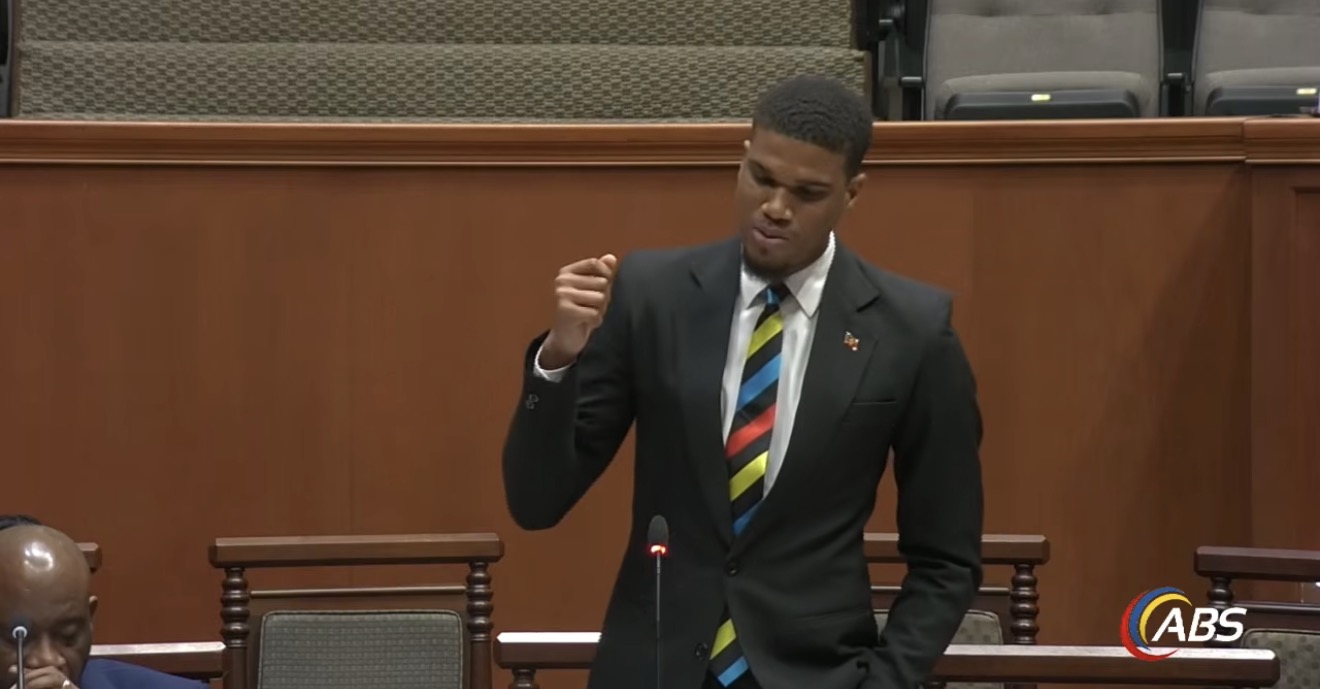
    As Antigua and Barbuda prepares for its upcoming general election on April 30, a new voice has stepped forward with a people-first pledge for the island of Barbuda. Kendra Beazer, the candidate representing the Antigua and Barbuda Labour Party (ABLP) for the Barbuda constituency, used the opening of his official campaign to lay out a clear, service-centered vision for his term if voters give him their support.

    Addressing a crowd of enthusiastic supporters at the campaign launch event, Beazer emphasized that meaningful political leadership must be rooted in selfless service to the community, not personal gain. In a direct promise to the people he hopes to represent, he stated, “I vow to represent your best interest at every point in this journey,” reinforcing his commitment to governing with unwavering integrity.

    Beazer pushed back against the idea that the election should be decided purely along party lines, urging registered voters to frame their decision around what will lift up the Barbuda community rather than loyalty to long-held political affiliations. “You are electing a representative to look out for your best interest, not somebody that is going to look out for themselves,” he explained, highlighting the stark difference between his community-focused approach and self-serving politics.

    Framing his candidacy as more than just an individual run for office, Beazer described his campaign as a grassroots “labour movement for the people of Barbuda,” built on three core pillars: collective unity, local resilience, and community empowerment. A key point of his platform is the need to address the unique challenges and needs that come with representing a small island constituency, arguing that a generic “one size fits all” policy approach fails to meet the specific realities of Barbuda and its residents.

    When votes are cast on April 30, Beazer will face off against incumbent Trevor Walker, the candidate nominated by the Barbuda People’s Movement (BPM), in a competitive race for the Barbuda parliamentary seat.

  • OPINION: Kentish pledges full support to the victor of the St George race

    OPINION: Kentish pledges full support to the victor of the St George race

    April 13, 2026 will stand as one of the most transformative dates in modern political history for Antigua and Barbuda, marking an unprecedented shift in the nation’s political landscape that few could have foreseen decades ago. For generations, political leadership in the country followed long-established patterns that left little room for this unexpected turn of events. No observer living through the 1970s, 1980s, 1990s or even the early 2000s would have guessed that two homegrown Antiguan men—one raised in the tight-knit community of Barnes Hill, the other hailing from New Winthorpes—would one day step forward as their respective parties’ leading candidates, going head-to-head in a national general election.

    This historic matchup transcends the longstanding partisan divide between the Antigua Barbuda Labour Party and the United Progressive Party; it is far more than a battle between the traditional red and blue party colors. At its core, this contest is a source of community pride for both New Winthorpes and Barnes Hill, a moment that puts two working-class hometown neighborhoods in the national spotlight.

    For commentator and local resident Jermaine G Kentish, the moment carries deeply personal weight. A lifelong native of New Winthorpes who once resided in Barnes Hill, Kentish shares long-standing personal connections to both candidates’ families. He recalls childhood days when Wilma, mother of candidate Dalso, cared for him when he was hungry, tending to him like her own child. He also holds vivid memories of Junie, mother of candidate Freeland, who nursed his wounded foot after a severe cutting accident when he was just 9 or 10 years old, and who helped him through life-threatening asthma attacks by administering emergency oxygen.

    For Kentish, seeing two men he has known as colleagues, friends and neighbors advance to contest the highest local office to represent the St. George constituency in Parliament is an immense source of joy. Regardless of which candidate ultimately claims victory, he says both men will have his full respect and unwavering support to lift up the entire constituency, which spans not only New Winthorpes and Barnes Hill, but also Piggots, Carlise, Cedar Valley Gardens, Potters, Scott’s Hill, Herberts, Powells and surrounding communities. Kentish extended his warm congratulations to both candidates, noting that the entire region is proud of the historic milestone they have achieved together, as the race now moves toward election day.

  • Cuba Hits Back at Trump: ‘We Will Die Defending Cuba’

    Cuba Hits Back at Trump: ‘We Will Die Defending Cuba’

    In a recent public interview, former U.S. President Donald Trump has signaled that if he takes new policy action, Cuba could become the next major focus of U.S. foreign policy after Iran. During the conversation, Trump dismissed the Caribbean island nation, which has operated under a communist system for decades and faced prolonged economic strain, as a “failing nation” grappling with systemic collapse.

    Cuban President Miguel Díaz-Canel delivered a sharp, unyielding response to Trump’s comments during an exclusive interview with NBC News, pushing back against any suggestion of U.S. military intervention in Cuban affairs. “There is no possible justification for the United States to launch any act of military aggression against our country,” Díaz-Canel stated.

    The Cuban leader made clear that any foreign incursion would be met with fierce national resistance. “An invasion of our territory would not come without a heavy price,” he said. “If such an event occurs, our people will fight, we will struggle, and we will defend every inch of our homeland. If we must give our lives to protect Cuba, we will do so. As our national anthem reminds us: ‘Dying for the homeland is to live.’”

    Díaz-Canel also emphasized that Cuba remains open to constructive, respectful dialogue with the United States, but warned that any move to escalate tensions against the island would be an irrational act that threatens stability across the entire Latin American and Caribbean region.

    This exchange of words comes as Cuba navigates one of the most severe economic downturns it has faced in 30 years. According to reporting from Reuters, widespread fuel shortages have paralyzed the country’s transportation networks, forcing ordinary commuters to rely on bicycles and severely overcrowded public buses to get around. In multiple regions across the country, daily power outages can last as long as 22 hours, crippling daily life and economic activity. Meanwhile, tourism — one of Cuba’s most critical sources of foreign revenue — has plummeted in recent years, further squeezing the national economy.

    Even amid widespread domestic hardship and decades of persistent U.S. pressure pushing for political change on the island, Díaz-Canel rejected any calls to alter Cuba’s existing political system. He placed full blame for the country’s ongoing economic struggles on the long-standing U.S. trade and financial sanctions that have been in place for decades, which have cut off Cuba from most global trade and investment opportunities.

  • Sports Ministry Engages Barbuda Stakeholders to Strengthen Grassroots Programmes

    Sports Ministry Engages Barbuda Stakeholders to Strengthen Grassroots Programmes

    On a working visit to Barbuda this Monday, government officials from Antigua and Barbuda’s sports ministry held productive roundtable discussions with key local stakeholders to advance long-overdue improvements to the island’s grassroots sports ecosystem. In attendance at the talks were representatives of the Barbuda Council, alongside active sports coaches and leaders from the island’s primary and secondary schools.

    Central to the conversations was the collective goal of breathing new life into Barbuda’s community sports programs, which have long lacked structured support for emerging athletic talent. Attendees prioritized designing a clearer, more organized development framework that would nurture young athletes from their first introduction to sport through to competitive play. A core focus of this framework is building clear progression pathways that allow local standouts to earn opportunities to compete against top talent from across the Caribbean region and on the global stage.

    As an immediate first step toward turning these plans into action, the Antigua and Barbuda Football Association has contributed tangible support to the initiative, donating a full set of new football equipment to serve the training and development needs of young players on the island. The contribution marks the start of what organizers frame as a sustained push to unlock Barbuda’s untapped athletic potential and create more inclusive, accessible sports opportunities for local youth.

  • A 16-year-old from Florida is charged with sexually assaulting and killing stepsister on a cruise ship

    A 16-year-old from Florida is charged with sexually assaulting and killing stepsister on a cruise ship

    The U.S. Department of Justice announced Monday that a 16-year-old Florida teenager has been formally indicted on charges of murder and aggravated sexual abuse connected to the November death of his 18-year-old step-sister aboard a Carnival cruise ship.

    Identified in court documents only as T.H. to protect his minor status prior to adult prosecution, the teen was first charged as a juvenile in early February. The proceedings remained sealed until U.S. District Judge Beth Bloom granted prosecutors’ request to move forward with trying the defendant as an adult, opening the case to public disclosure.

    The victim, Anna Kepner, was an 18-year-old high school cheerleader at Temple Christian School in Titusville, Florida, a small community roughly 40 miles east of Orlando. Kepner was traveling with her family on the Carnival Horizon cruise liner when her body was discovered shortly before the vessel was set to return to its home port in Florida. She had been sharing a room with two other teenagers, including her younger stepbrother, and her body was found hidden under a bed in that shared accommodation.

    An official autopsy determined Kepner’s cause of death on November 6 was mechanical asphyxia, a form of suffocation caused by physical force or an obstruction that cuts off a person’s ability to breathe.

    In an official statement following the indictment, U.S. Attorney Jason Reding Quiñones expressed condolences to the victim’s loved ones, saying, “Our hearts go out to the victim’s family during this unimaginable loss.” He added that a federal grand jury had returned the indictment covering the serious charges, which were alleged to have occurred on a cruise ship operating in international waters.

    At Kepner’s memorial service held shortly after her death, family members asked attendees to forgo traditional black mourning attire in favor of bright clothing, a tribute to what they described as her “bright and beautiful soul.”

    The transfer of T.H.’s case to federal court for adult prosecution is an unusual step. Juvenile prosecutions are almost always handled at the state level in the U.S., and federal cases involving teenage defendants are extremely rare. Legal experts explain the federal jurisdiction stems from the fact that Kepner’s death occurred in international waters, which falls under federal maritime law rather than state judicial authority.

    T.H. was first spotted at a Miami federal courthouse in February, where he arrived wearing a baseball cap and a hooded sweatshirt pulled up to obscure most of his face. Details of his initial court status were not publicly released at the time, as U.S. privacy laws restrict public disclosures about juvenile defendants.

    Court records show that on February 6, a judge ordered T.H. to wear an electronic monitoring ankle tether while he stays in the home of his uncle ahead of trial. The monitoring order was later modified to grant him permission to work temporarily alongside his father at a landscaping business.