Trinidad and Tobago’s political landscape has erupted in fresh tension this week, as opposition leaders ramp up scathing criticism of the ruling government over the ongoing state of emergency (SoE), heavy-handed police action against protesters, and claims the administration is steering the nation toward authoritarian rule.
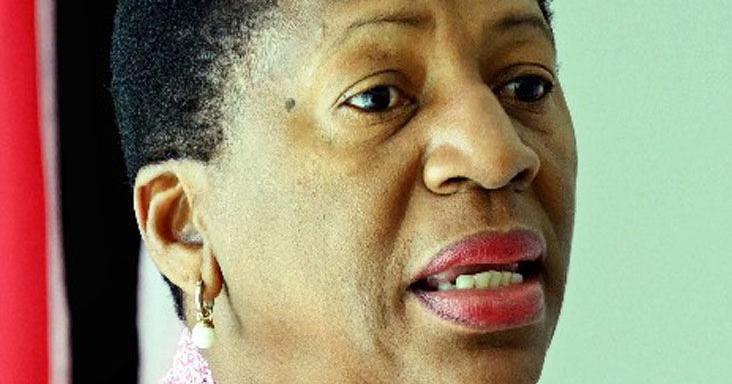
Opposition Leader Pennelope Beckles made the most high-profile condemnation in an official statement released Thursday, calling directly on Prime Minister Kamla Persad-Bissessar to immediately lift the emergency order that has granted expanded powers to state security forces. Beckles’ criticism was triggered by this week’s arrest of two people — social media commentator Jason De Silva and Alyssa Phillip — who participated in a Wednesday demonstration outside the Office of the Director of Public Prosecutions in Port of Spain.
That protest was organized by loved ones of Kaia Sealy, a woman who faces charges connected to the January police-involved shooting death of her common-law husband Joshua Samaroo in St Augustine. Protesters gathered to demand transparency and answers about the circumstances of the case, a demonstration that ended with the two arrests.
Beckles warned that the island nation is now drifting dangerously close to becoming a policing state, a shift that runs counter to its foundational democratic values. “Freedom trembles in these times. Trinidad and Tobago should never, ever find itself on the brink of becoming a policing state,” she said. The arrests, she argued, have alarmed right-minded citizens across the country, with a police response that appears wildly disproportionate to the actions of peaceful demonstrators. She also took aim at the prime minister, condemning what she called “callous gun talk” from a leader she labeled as absent on key governance issues.
Beyond calling for an end to the SoE, Beckles urged Persad-Bissessar to restore full democratic protections as outlined in the country’s Constitution. She further accused the government of applying a double standard to protests across the country, noting that a separate demonstration held the same day in Siparia by members of the ruling United National Congress (UNC) drew no pushback from police or political leadership. That protest was organized by UNC members of the Siparia Borough Corporation, who demanded the resignation of alderman Victor Roberts after he crossed the floor to join the opposition People’s National Movement (PNM).
Beckles claimed the prime minister deliberately turned a blind eye to the UNC-aligned protest, while harshly condemning demonstrations critical of the government. She also warned that Persad-Bissessar’s public comments on the Sealy case threaten to prejudice ongoing legal proceedings. The prime minister, a Senior Counsel, dismissed Wednesday’s protesters as engaging in “victim gimmickry”, but Beckles argued that as a legal professional, Persad-Bissessar understands full well that her public statements create damaging pre-trial publicity that can undermine a fair trial.
To back up her argument that the arrests were unjustified, Beckles pointed to a May 24 media release from the Trinidad and Tobago Police Service (TTPS), which explicitly confirmed that protests are not prohibited under existing SoE regulations. “No country can survive when peaceful citizens are treated like enemies of the State,” she added.
The criticism extended to other opposition figures, who also pushed back against the prime minister’s recent comment that she would have no issue extending the SoE if recommended by the National Security Council — a body she chairs. Opposition Chief Whip Marvin Gonzales dismissed the claim as self-serving, arguing that any extension of the emergency order would amount to a clear admission of failure by the administration. It would also, he said, prove that the prime minister lied to the public when she campaigned on a promise of a credible plan to reduce violent crime.
Mickela Panday, political leader of the smaller Patriotic Front party, added her own rebuke in a public Facebook post Thursday, calling out Persad-Bissessar for labeling the Sealy protesters “grifters”. Panday argued that the prime minister’s words reflect not strength, but deep contempt for citizens exercising their democratic rights.
“If anyone breaks the law, let the law take its course. But citizens must not be broadly smeared because they speak, gather, question, or express concern about the use of State power,” she said. Panday stressed that when citizens are mocked for raising legitimate concerns, democratic institutions become weaker across the board. She echoed the opposition’s core argument that emergency powers have become a lazy replacement for actual policy, saying: “When emergency powers become the substitute for an anti-crime strategy, everyone should be concerned. Trinidad and Tobago does not need badjohn talk. It needs a crime plan.”