博客

  • Exclusieve WK-2026-rechten voor STVS kosten US$ 450.000

    Exclusieve WK-2026-rechten voor STVS kosten US$ 450.000

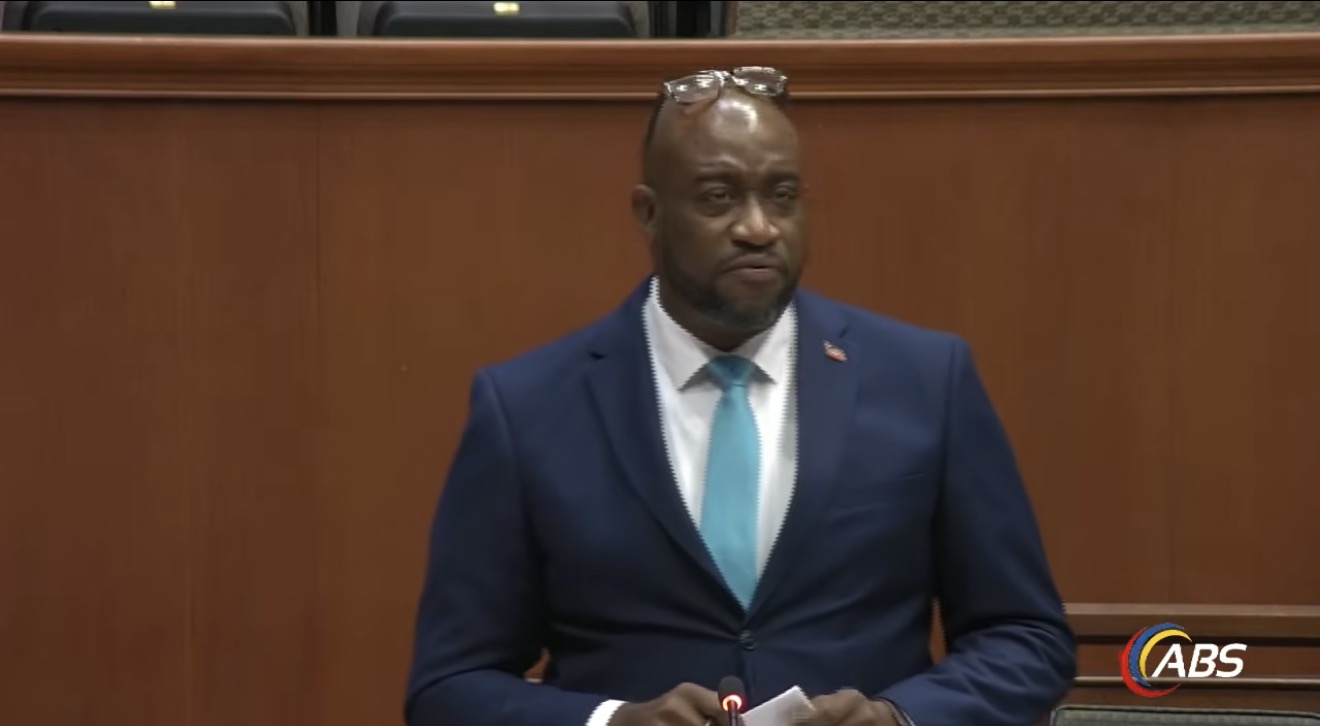
    Suriname’s acting president Gregory Rusland has publicly confirmed the total cost of securing exclusive broadcast rights for the 2026 FIFA World Cup, ending days of public and parliamentary speculation over the undisclosed sum. The $450,000 price tag for the rights, which include live coverage of all tournament matches, was announced by Rusland during a public plenary session of the National Assembly on Wednesday, answering repeated questions from sitting parliamentarians who had demanded transparency on the public expenditure.

    Under the agreed financial arrangement, the national government has covered the full $450,000 payment upfront, but state-owned public broadcaster STVS will ultimately be required to cover 50% of the total cost through its own revenue streams, primarily expected to come from commercial sponsorships. The confirmation from the presidency came hours after STVS held its own press conference, where director Raoul Abisoina declined to share the exact total, deflecting all questions on the financial details to Rusland — who as vice president holds oversight responsibility for state media outlets in the country.

    During that press briefing, Abisoina did confirm key procedural details surrounding the rights acquisition. The deal was negotiated and purchased through regional media firm IRIS-LATAM LIMITED, which held the regional tender for broadcast rights. The STVS chief refuted widespread local rumors that the total cost had reached $500,000, noting only that the actual sum was “far lower” than the circulated figure before the official confirmation from the presidency. He also acknowledged that the broadcaster would be responsible for covering half of the cost, matching the structure Rusland later outlined to parliament.

    Abisoina told reporters he personally took part in negotiations alongside STVS’s board of commissioners to secure the deal. Multiple domestic Surinamese companies submitted bids for the exclusive rights in the tender launched by IRIS-LATAM, and STVS was ultimately selected as the winning bidder, according to Abisoina. To date, IRIS-LATAM has not released any information on the other competing bidders that participated in the process. Abisoina explained that the selection of STVS was based on two core criteria: the bid value submitted by the broadcaster, and the guarantee that all legal requirements and contractual terms would be fully met. He added that full public disclosure of the contract between STVS and IRIS-LATAM is not possible, as all financial management of the deal falls under the purview of the national government.

    Addressing concerns over access for other media outlets, Abisoina pushed back on claims that STVS’s acquisition of exclusive rights would block private media from airing any World Cup content. He clarified that sublicensing agreements with other outlets have been part of the planning process from the earliest stages, and STVS is currently in active negotiations with at least two additional media organizations to share broadcast rights. That said, he emphasized that STVS’s exclusive status means no outlet may use the broadcast feed without the organization’s explicit written approval.

    STVS also acknowledged a current gap in its broadcast infrastructure: Abisoina admitted that the existing transmission capacity of STVS and partner public broadcaster ATV (operated via state-owned telecom Telesur) is not currently sufficient to deliver World Cup coverage to all regions of Suriname. But he stressed that the state broadcaster is working aggressively to resolve all infrastructure gaps before the tournament kicks off, with full government funding already allocated for the necessary upgrades. “The government has freed up the required resources. I can assure the public that STVS will make sure coverage reaches even the areas that do not currently receive our signal,” Abisoina said during the press conference. He added that the Surinamese government views universal access to the 2026 World Cup as a core public responsibility, and has no intention of denying citizens the opportunity to watch the global tournament.

    Speaking to parliament, Rusland noted that this acquisition marks the 12th consecutive time that STVS has secured broadcast rights for the FIFA World Cup. “The government has always covered the cost of these rights, and we will always meet the expectations of the Surinamese people,” Rusland told the legislative body. The requirement for STVS to contribute half the cost via sponsorship revenue is a new arrangement for this 2026 tournament, he confirmed.

  • Police mounting search for missing Chinese national

    Police mounting search for missing Chinese national

    BASSETERRE, St. Kitts – A large-scale coordinated search operation is ongoing across the rugged Mt. Liamuiga mountain range after a 33-year-old Chinese national went missing during a solo hiking trip, local law enforcement confirmed Friday.

    The Royal St. Christopher and Nevis Police Force (RSCNPF) is leading the effort, with joint support from the St. Kitts-Nevis Defence Force, the Fire and Rescue Department, and the National Emergency Management Agency (NEMA) to locate the missing hiker, identified as Wang Zyuan, born August 29, 1992.

    According to official police records, Wang was last spotted on the mountain’s hiking trail around 10 a.m. local time on Wednesday, May 27, 2026. He had set out on the hike unaccompanied, with no professional guide, and was wearing black outerwear paired with red athletic shoes when he was last seen.

    Roughly four hours after he was first noted on the trail, Wang placed an emergency call to 911 to report he had become disoriented and lost in the mountain wilderness. But shortly after that initial distress call, all communication with Wang cut off, leaving search teams with no updated information on his location or condition.

    A combined search and rescue deployment was assembled within hours of the lost contact, with crews working through the evening of May 27 to cover accessible sections of the range. Search operations were suspended overnight as a safety precaution for crews, and resumed at dawn on Thursday, May 28. Search teams advanced across steep hillsides all the way to the mountain’s crater area on Thursday, but failed to turn up any trace of the missing hiker.

    Operations were again paused for the night of May 28, with plans to restart search efforts on the morning of May 29. Investigators have obtained cell tower location data from local network providers, which authorities say will help narrow search zones and direct rescue teams to high-priority areas to maximize the chances of locating Wang.

    In addition to deploying official emergency resources, local authorities have put out a public call for civilian volunteers to join the search effort, to expand the coverage of teams across the large, rugged mountain range.

    Mt. Liamuiga has a history of similar incidents: over recent years, multiple hikers have been reported missing after straying into unmarked or difficult sections of the range, though most of those individuals were eventually located and rescued by emergency response teams.

  • Opening of the National Conference of Religious Leaders in Haiti

    Opening of the National Conference of Religious Leaders in Haiti

    Against the backdrop of long-standing political and social unrest that has shaken Haiti to its core, a landmark two-day gathering focused on national healing got underway on May 28, 2026, at Port-au-Prince’s Royal Oasis Hotel in the district of Pétion-Ville. Headlined by Prime Minister Alix Didier Fils-Aimé and Foreign Affairs and Religious Affairs Minister Raina Forbin, the National Conference of Religious Leaders for Peace, Stability, and Civic Engagement has drawn a diverse cross-section of stakeholders to build collective solutions for the crisis-battered country.

    More than 100 religious leaders representing every major faith tradition across Haiti — from Catholic and Protestant communities to practitioners of Vodou — joined sitting government officials, members of the diplomatic and consular corps, representatives from leading international organizations, and civil society advocates for the convening. The conference is structured around four core pressing themes: violence prevention, civic education, targeted support for Haiti’s large youth population, and the development of long-term, sustainable strategies to embed lasting peace, strengthen democratic civic engagement, and rebuild fractured social cohesion across the nation.

    In her opening remarks, Minister Forbin underscored the Haitian government’s formal commitment to embedding religious leaders as core partners in all state-led reconstruction initiatives. She emphasized that no project aimed at rebuilding Haiti can achieve lasting success without drawing on the deep spiritual, moral, and community-rooted human capital that faith leaders bring to the table. “Peace is not a task for the government alone — it is a collective project that requires every sector of society to come together,” Forbin stated, adding that sustainable national reconstruction depends on a strategic, peace-centered alliance between the state, faith leaders, local communities, and Haiti’s young people.

    Prime Minister Fils-Aimé echoed this framing, praising religious authorities as an “essential moral force” that is critical to rebuilding Haiti’s tattered social fabric and restoring public trust in national institutions. He also reaffirmed his administration’s core priorities: securing the country against ongoing violence, delivering support to the hundreds of thousands of displaced Haitians, and paving the way for a return to full constitutional order through the organization of transparent, credible general elections.

    The conference turned next to the socio-economic roots of Haiti’s instability, with Social Affairs and Labour Minister Marc-Élie Nelson bringing a critical focus on equity to the discussions. Nelson argued that efforts to root out widespread insecurity cannot be separated from a broader push for meaningful social justice. Framing religious leaders as the “guardians of the collective conscience” of the Haitian people, he called for a people-centered approach to shaping public policy that centers the needs of the most vulnerable, rather than elite interests. He urged faith leaders to lean into their unique community role to advance solidarity and cohesion across the country.

    Pédrica Saint-Jean, Haiti’s Minister for the Status of Women and Women’s Rights, joined a slate of cultural and religious leaders to highlight the urgent work of rebuilding frayed social ties at the local level. Saint-Jean emphasized the critical need to expand social protection for marginalized groups including children, women, and girls, and to empower every Haitian citizen to act as an agent of peace in their own communities.

    Following the formal opening ceremony, attendees split into working groups focused on three key strategic priorities: preventing further violence and delivering support to survivors of conflict; expanding civic education to foster a culture of civic responsibility across the country; and developing sustainable economic and social alternatives for Haitian youth, who make up a large majority of the country’s population and have been disproportionately impacted by ongoing instability.

    In a break from past national gatherings that have been concentrated exclusively in the capital, the Haitian government has plans to expand the conference model to outlying regions in the coming months. After concluding the inaugural convening in Pétion-Ville, the government will replicate the gathering in Haiti’s Great North and Far South regions, ensuring that community and faith leaders from across the country have a seat at the table shaping Haiti’s reconstruction agenda. The conference marks a major step forward in the government’s effort to position religious communities as core, ongoing partners in building a more stable and peaceful future for Haiti.

  • Bus Operators Push for Hands-On Role in Electric Bus Pilot

    Bus Operators Push for Hands-On Role in Electric Bus Pilot

    As Belize moves forward with its transition to electric public transportation, a growing rift has emerged between the national bus industry’s leading body and government transport officials over how local operators should be integrated into the country’s electric bus initiative.

    The Belize Bus Association (BBA), which represents more than 50 operators spanning intercity highway routes, rural village services, tour routes, and school transportation, is calling on the government to give its members direct, hands-on access to the current electric bus pilot. Currently, the testing phase is limited to routes in Belize City and the western transportation corridor, and no BBA members have been permitted to operate the pilot vehicles themselves.

    In an official letter addressed to the Ministry of Transport, BBA leadership argues that firsthand real-world experience is a non-negotiable prerequisite for operators to make informed long-term investment decisions. Without direct exposure to the vehicles, the association says, members cannot accurately measure key operational metrics including total cost of ownership, routine maintenance requirements, and performance across varying route types, from dense urban streets to long-distance national highways. To address this gap, the BBA is proposing a rotation system that would allow its members to test the electric buses on a diverse range of routes, a change the group says would not only strengthen the pilot’s data but also expand access to the new green technology for commuters across the country.

    BBA president Phillip Jones emphasized that the association has sought inclusion since the project’s launch, when it was first developed under the auspices of the United Nations Development Programme (UNDP) and the United Nations. “From the inception of the EV program under the UNDP and UN we have wrote letters to the UNDP and the president and representatives in this area that we wanted to be a apart of the pilot project. However we were denied at that time,” Jones explained. “Hence the reason we find it prudent that we revisit that, because if you are saying you want the entire country to have the knowledge or use the service or go green in order for that to be the case, you need to have anyone involved and we are a major stakeholder in the bus industry. […] You can’t just be going based on analysis going second hand. We want firsthand experience.”

    But government officials say the pilot phase has already concluded, and no test vehicles are available to reallocate for broader industry testing. Transport Minister Dr. Louis Zabaneh confirmed that the government is shifting its focus away from the trial period and toward a permanent structural transition to electric bus fleets, and laid out two clear paths for BBA members looking to join the electric future. Under the first option, independent operators can join the National Bus Company (NBC), a public-private partnership aligned with the government’s green transportation policy. The second option allows operators to remain independent by forming their own collective entities and investing directly in procuring their own electric buses, with the ministry offering full access to all lessons learned during the pilot to support the transition.

    Zabaneh noted that the model of joining the National Bus Company is already gaining traction among BBA members, with recent signs of growing buy-in: after the last remaining holdout operator from southern Belize joined the NBC, two additional operators from the northern region have submitted applications to join. “So that is clearly, in my opinion, the preferred path because now you have a public private partnership that comprises government and reflects the policy of the government that they can benefit from. Or they can continue being independent operators and we can work together and share whatever knowledge we have with them,” Zabaneh explained. “The NBC is a private company, so whatever e-buses it buys is for the use for services to commuters who use NBC services. They would have to, as independent operators, organize, form a company and procure e-buses. Now, we as the ministry are very pleased to share with them what we have learnt in setting up the National Bus Company and we told them that already.”

    This content is adapted from a transcript of an evening television newscast.

  • Same Deadly Scenario Took Coach Villamil’s Father

    Same Deadly Scenario Took Coach Villamil’s Father

    The small but tight-knit football community of Belize is united in grief and support this week, after a catastrophic highway collision in Corozal left beloved former national player and youth coach Miriam Villamil with permanent, life-altering injuries. The crash, which has reignited longstanding safety concerns about unmarked agricultural vehicles on Belize’s roadways, carries an unthinkable echoes of tragedy that has deepened the shock across the country’s sporting landscape.

    On the evening of the incident, Villamil was traveling in a passenger coaster alongside a group of young aspiring footballers who had just completed a celebratory practice session. The vehicle collided head-on from behind with an unlit sugar cane truck parked along the side of the highway, according to initial accounts from the Football Federation of Belize (FFB). The impact was so severe that Villamil was trapped inside the wreckage for hours. When emergency responders finally extracted her and rushed her to Karl Heusner Memorial Hospital (KHMH), surgeons were forced to amputate one of her legs to save her life. Medics fought desperately to save her second leg, and after extensive intervention, they successfully preserved it, FFB executive member Marlon Kuylen confirmed in an interview.

    What makes this already devastating accident even more cruel is that it mirrors almost exactly the crash that killed Villamil’s father decades earlier. “It’s like deja vu all over again,” Kuylen told reporters. “Years ago, her father died in the exact same manner: the bus he was traveling in crashed into the back of a cane truck, and protruding canes penetrated his body and skull, killing him instantly. Emotionally, this tragedy is hitting our entire football family extraordinarily hard, compounded by that terrible shared history.”

    Beyond the urgent focus on Villamil’s ongoing recovery, attention has now turned to the group of young players who witnessed the horrific crash firsthand. The athletes had been in high spirits after a successful practice, excited to have been selected for a new national youth development program, when the disaster struck in an instant. “One negligent choice left Miriam’s life changed forever, and this event will leave long-term emotional and mental scars on these young kids,” Kuylen explained. “They watched their coach trapped and gravely injured, and that image will stay with them for a long time.”

    Remarkably, even in the immediate aftermath of the crash while enduring extreme pain, Villamil’s first thoughts were for the young players in her care. “Her first questions weren’t about her own condition — she kept asking, ‘What about my boys? What about the kids?’ She remembered one had suffered a broken jaw, and she insisted we check on him first,” Kuylen recalled. “That’s just who Miriam is: she puts her players ahead of everything, even when she’s facing the unthinkable.”

    In response to the tragedy, Kuylen and the FFB are calling on Belizean transportation authorities to immediately address the longstanding hazard of unlit, parked cane trucks along public roadways at night. The entire Belize football community has rallied around Villamil and the young players, organizing support for her medical costs and counseling services for the young athletes who survived the crash.

  • San Pedranos Struggle with Rising Fuel Costs

    San Pedranos Struggle with Rising Fuel Costs

    On the popular Belizean island of Ambergris Caye, what has become a quiet crisis for daily life is now erupting into open frustration, as skyrocketing fuel costs stretch household budgets to their absolute limit. For the tight-knit community of San Pedro Town, where golf carts are not a recreational luxury but the primary mode of daily transportation, even the shortest commute now comes with a steep financial cost that is eating deep into already modest incomes. Many low-wage workers on the island earn between $200 and $300 per week, and fuel expenses now claim a disproportionate share of these earnings – leaving barely enough to cover other critical needs like rent and groceries. Local resident Celestino Tzul, one of the many voices sounding the alarm over the crisis, explained that the burden has become unsustainable for working families. “When it’s your livelihood, when it’s your transportation to work and everything, you have to consider: do I keep using my golf cart? Do I need to change from golf cart to something?” Tzul said. “You take away rent, you take away the expenses on gas, and then you take away the expense of food. Some people are barely even making it through the week. The gas price is very, very high.” The crisis has been compounded by a lack of viable, affordable alternatives to personal golf cart and car travel. While local authorities recently launched a small new bus service (dubbed the “busito”) to expand public transit options, residents say the new system has failed to close the affordability gap that leaves most families dependent on personal vehicles. Residents also point to ongoing supply-side issues that have kept fuel prices artificially high, with current costs reaching as much as $14.29 per gallon. This high-cost fuel also drives frequent, unplanned maintenance expenses for the island’s fleet of aging golf carts, adding another layer of financial strain for owners. Faced with stalled relief efforts and steadily rising costs of living that show no sign of easing, community members have had enough. A group of residents is currently organizing a peaceful protest scheduled for next week, where they plan to bring their demands for action directly to policymakers. Island residents are unified in their call for national government intervention to address both the exorbitant fuel prices and the longstanding gap in affordable public transit options. Without immediate, targeted relief, residents warn that reliable transportation for work, school, and daily needs could soon become completely out of reach for low- and middle-income families across the island. This report is adapted from a transcribed evening television news broadcast focused on local Belizean issues.

  • Immigration Ministry Reports Missing Funds to Police

    Immigration Ministry Reports Missing Funds to Police

    A high-stakes internal investigation is unfolding at Belize’s Ministry of Immigration after $160,000 in public funds disappeared from the department’s Belize City headquarters, prompting senior officials to formally refer the case to national police and launch an independent financial audit.

    The incident, first disclosed in official updates on May 28, 2026, has already drawn the attention of Belize’s Cabinet, which received a full briefing following the completion of an initial preliminary review last week. Tanya Santos, Chief Executive Officer of the Ministry of Immigration, confirmed that authorities have documented multiple suspicious incidents with hallmarks of criminal activity, falling clearly within the investigative jurisdiction of Belize’s police force.

    “We highlighted instances of those activities to them so they can come in do a deeper dive, a deeper investigation and find out more details of what was going on,” Santos said in an official briefing to reporters.

    When asked whether law enforcement had narrowed the focus of the probe to a single person of interest, Santos confirmed that as of the latest update, investigators are centering their work on one individual, though she added that the scope could expand if new evidence emerges pointing to additional co-conspirators.

    Alongside the probe into the missing public funds, the ministry has also submitted a separate police report over the unexplained disappearance of two official nationality certificates, documents that are critical for processing citizenship claims and verifying legal status for Belizean residents. Senior ministry officials have stressed that they are leaving no stone unturned in the parallel investigations, committing to full transparency and a complete public accounting once probes are complete.

    Authorities have moved quickly to tighten internal financial oversight across all ministry departments in the wake of the discovery, with investigators following every potential lead to trace the missing funds and hold responsible parties accountable. This report is adapted from a transcribed broadcast transcript of Belizean evening news, with all statements verified for accuracy prior to publication.

  • CEO Santos Reveals Corruption Concerns at Western Border

    CEO Santos Reveals Corruption Concerns at Western Border

    In a bombshell revelation that has shaken Belize’s immigration sector, Chief Executive Officer Tanya Santos of the country’s Ministry of Immigration has confirmed that an internal probe launched amid widespread rumors of a coordinated worker sickout at the western border has uncovered alleged corruption incidents at the key crossing.

    The controversy traces back several weeks, when reports of a mass staff absence at the western border checkpoint sparked speculation that employees had organized a coordinated sickout to protest working conditions or agency policies. That mass absence put significant strain on border processing operations, prompting the Ministry of Immigration to launch a full internal investigation to get to the bottom of the incident.

    Following the conclusion of the probe, Santos announced that investigators found no concrete evidence to back up claims of a pre-planned, coordinated sickout. Every employee who missed work provided apparently legitimate medical documentation approving their leave, and Santos noted that as head of the agency, it is not within her authority to override certified medical excuses for absence.

    Even without proof of a coordinated action, however, Santos made clear that the timing of the mass absences, the pattern of employees returning to work immediately after the peak of the protest-related tensions, and other surrounding circumstances still raise serious questions about the true nature of the sick leave. The investigation also captured multiple complaints from frontline staff about poor working conditions and unaddressed grievances within the western border division.

    Most notably, the probe uncovered separate allegations of ongoing corruption at the western border checkpoint, a critical port of entry for trade and travel between Belize and its neighbors. Santos confirmed that the corruption allegations are now being actively investigated by immigration officials, with new oversight measures being put in place to root out misconduct.

    To address both the staff grievances uncovered in the probe and the emerging corruption claims, the Ministry of Immigration has established a new independent internal grievance committee. The multi-stakeholder body includes senior immigration staff, external administrative experts, a retired senior public officer, in-house legal counsel, and the CEO herself, designed to deliver impartial reviews of both employee complaints and allegations of institutional misconduct.

    The original on-air broadcast of this report notes that all transcribed comments from speakers who used Kriol were converted to text using a standardized spelling system to preserve accuracy for online readers.

  • From Call Centers to Remote Work, Belize Labor Laws Lag Behind

    From Call Centers to Remote Work, Belize Labor Laws Lag Behind

    More than half a century after Belize’s foundational Labor Act was written into law, the Central American nation has launched a comprehensive review to bring outdated workplace regulations in line with the profound shifts that have reshaped its labor market in recent years. Driven by the explosion of new work models — from the booming call center sector to the growing popularity of remote and digital work — the Ministry of Labor has made updating the legislation a top policy priority ahead of evolving economic demands.

    Tanya Santos, Chief Executive Officer of the Belize Ministry of Labor, emphasized that the decades-old regulatory framework no longer aligns with how Belizeans currently work and earn incomes. “It’s been decades since our standing legislation was enacted, and it does not reflect our modern labor realities in many areas,” Santos explained in comments to local media. “We have seen many new emerging industries, new work structures, and entirely new ways people earn a living — from remote work and tech roles to the fast-growing call center business. We need legislation that reflects the current makeup of our labor force and meets the demands of today’s economy. There’s never a bad time to update outdated rules.”

    Beyond accommodating new work models, the reform process will tackle a range of pressing 21st-century labor challenges that were not prominent when the original act was drafted. These include persistent national labor shortages, cross-border labor migration, and the growing demand for skilled workers across expanding sectors. The review will also address gaps in workforce development, with a focus on aligning training programs to equip Belizean workers with the specialized skills that growing industries now require.

    To ensure the final reforms balance worker protections and economic competitiveness, the Ministry of Labor has launched a broad consultation phase, bringing together key stakeholders from across the country’s economy. Participants include national labor unions, representatives from the critical tourism sector, the Belize Chamber of Commerce, and other industry groups, all of whom will contribute input to shape the final draft of the updated legislation. The process aims to close regulatory gaps, support the nation’s transitioning economy, and ensure all workers — whether in traditional roles or new emerging sectors — receive adequate legal protection.

  • High-level meeting on securing production areas in Tabarre, Haiti

    High-level meeting on securing production areas in Tabarre, Haiti

    On May 27, 2026, Haitian government officials held a high-stakes inter-ministerial meeting in Tabarre to address escalating threats to local industrial operations, marking a critical milestone in the country’s efforts to reverse economic stagnation and protect thousands of private-sector jobs.

    The gathering grew out of commitments first made by Haiti’s Ministry of Public Works (MTPTC) in May 2025, when ministry leadership held initial consultations with major industrial firms operating across Tabarre municipality. This latest meeting expanded the conversation to include cross-government stakeholders from national security and economic portfolios, answering repeated calls for a coordinated, whole-of-government response to the region’s overlapping crises.

    Attendees included three top cabinet members: Public Works Minister Joseph Almathe Pierre Louis, Defense Minister Mario Andrésol, and Trade and Industry Minister James Monazard. They joined C-suite executives and official representatives from some of Haiti’s most prominent private companies, including iconic rum producer Société du Rhum Barbancourt, leading beverage manufacturer Brasserie de la Couronne, energy firms ECEM S.A. and E-Power, and local industrial leaders Comme Il Faut and Séjourné.

    Over the course of frank, solution-focused discussions, participants mapped out the two most pressing barriers to stable production: crumbling road infrastructure that disrupts supply chains, and a worsening regional security crisis that has brought many industrial operations to a standstill. Both challenges have put thousands of direct and indirect jobs at immediate risk, making swift intervention a priority for both government and private sector leaders.

    By the close of the working session, attendees agreed on a concrete next step: the establishment of a dedicated, cross-agency Task Force to oversee progress. The new body will be responsible for coordinated, rigorous monitoring of all ongoing discussions and action initiatives, aligning road rehabilitation projects led by the Ministry of Public Works, security enhancement strategies developed by the Ministry of Defense, and economic support programs rolled out by the Ministry of Trade and Industry.

    Through the creation of this Task Force, the Haitian government has reaffirmed its public commitment to turning rhetorical pledges into tangible action. The overarching goal of the initiative is to rebuild a stable, secure investment climate and clear the way for the safe, full resumption of economic activity across Tabarre’s key production zones.