博客

  • Who Approved HRCU’s Forty-Million-Dollar BEL Loan?

    Who Approved HRCU’s Forty-Million-Dollar BEL Loan?

    A brewing public controversy centered on a $40 million unsecured loan extended by Belize’s Holy Redeemer Credit Union (HRCU) to state-owned Belize Electricity Limited (BEL) is putting the member-owned financial institution under intense public scrutiny, with opposition leaders demanding full transparency and HRCU defending its processes behind a veil of legally mandated confidentiality.

    At the heart of the dispute is a long-simmering question: how much access do HRCU’s 100,000+ member-owners have to details about large-scale investments that put their collective savings at risk? Opposition Leader Tracy Taegar Panton, who counts herself as a long-standing HRCU member, has laid out specific demands for the credit union, citing BEL’s public audited financials that confirm the $40 million facility carries a 5% annual interest rate and a five-year repayment term. Panton is calling for full disclosure of the internal committee that approved the transaction, the independent risk assessments conducted before committing members’ funds, the specific safeguards in place for the unsecured debt, and whether the favorable terms extended to BEL would ever be offered to ordinary HRCU members or small local businesses.

    Panton’s core argument pushes back against the idea that working Belizeans’ savings should be used as a convenient financing pool for government-linked entities, framing the controversy as a matter of accountability for member-owned cooperative institutions. HRCU has struck back sharply against the criticism, releasing an official statement that accuses Panton of intentionally maligning the institution’s reputation. The credit union has defended its due diligence process, noting that every transaction adheres to written internal policies, approval protocols, and external regulatory oversight. HRCU also emphasized that the institution’s decades-long business relationship with BEL stretches back to 2003, and past investments in BEL debt have generated more than $24 million in cumulative interest for the credit union’s membership over the past two decades. According to HRCU’s account, BEL approached the credit union seeking new capital investment in 2023, and HRCU opted to structure the arrangement as a loan facility to grow its overall lending portfolio rather than purchase additional debentures.

    While HRCU has reaffirmed that all members’ savings remain secure, and that consistent returns from investments like the BEL loan support annual dividend payouts, interest rebates, and the expansion of the credit union’s branch network across Belize, its response has left a series of critical questions unanswered. Most notably, the credit union has not named the individuals or internal body that signed off on the $40 million facility, nor has it shared details of the independent risk evaluation completed for the unsecured debt. HRCU has cited confidentiality requirements outlined in Belize’s Credit Union Act, which prohibits its leadership, auditors, and staff from disclosing protected client business information publicly. The institution also notes that the deal was reviewed by multiple internal departments including internal audit, compliance, finance, and risk management, before being cleared by external auditors and the Central Bank of Belize.

    The legal claim of confidentiality, however, has failed to quiet calls for greater transparency from members and political leaders. Critics argue that confidentiality rules do not bar HRCU from providing its own member-owners with a general overview of the institution’s credit exposure, its approval framework, and the risk controls put in place for the transaction. Without access to these basic details, members are unable to independently verify the safety of their own savings, Panton argues. Beyond the specifics of the BEL loan, the controversy raises larger questions about the core obligations of member-owned cooperative financial institutions: how can these entities balance legitimate commercial confidentiality requirements with the transparency and accountability that their member-owners are entitled to? The Opposition Leader has called for a full independent review of the transaction to resolve outstanding questions. HRCU maintains it followed all required safeguards and acted in the best interest of its membership. Ultimately, it will fall to HRCU’s member-owners to decide whether the institution’s current assurances are sufficient, or whether a full public accounting is required to preserve long-term public trust in one of Belize’s largest member-owned financial institutions.
  • Briceño and Dennison Clash Over Affordability

    Briceño and Dennison Clash Over Affordability

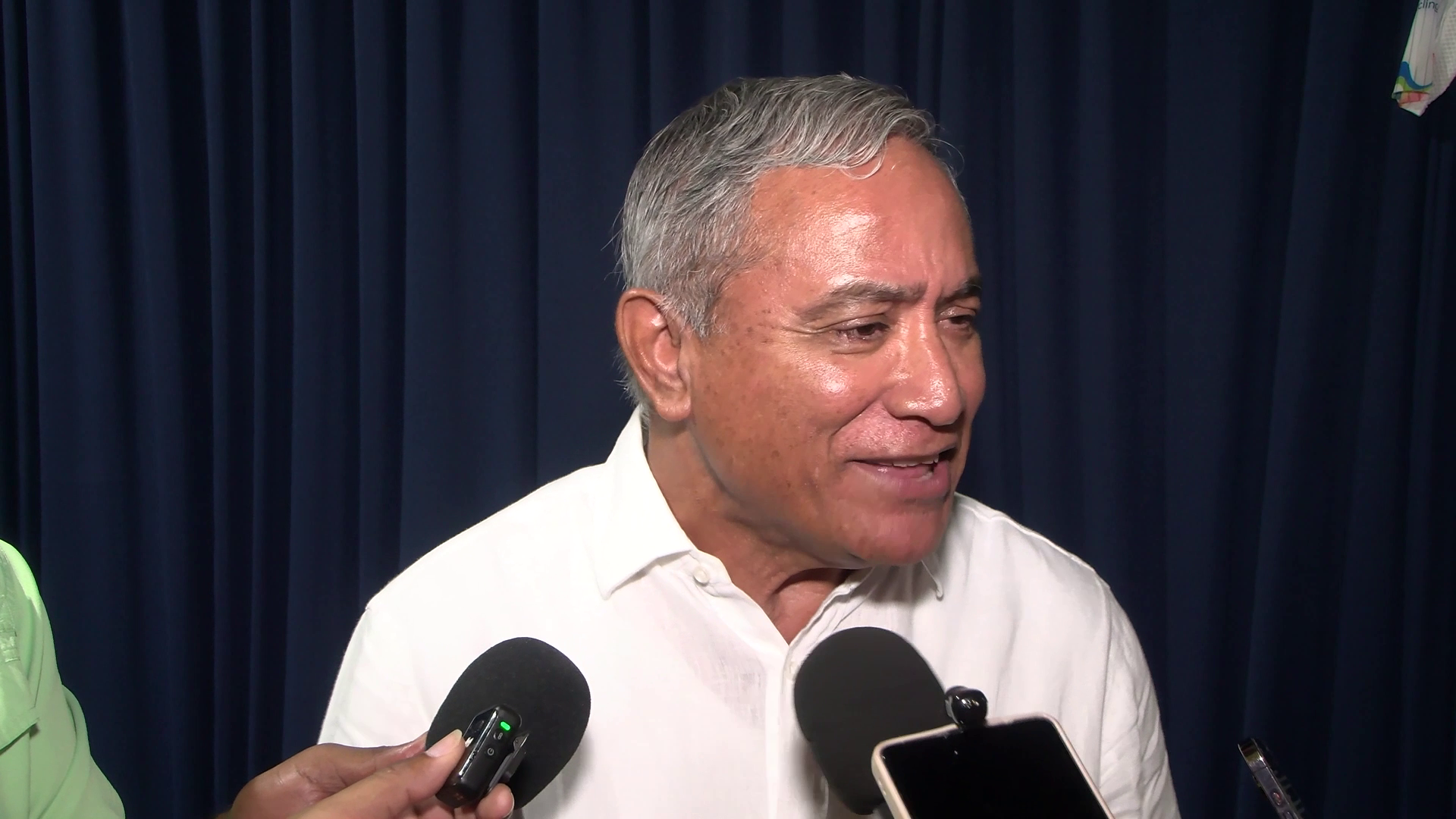
    A heated public exchange has erupted between Belize’s Prime Minister John Briceño and Union Senator Glenfield Dennison, centered on the question of whether the nation’s political leaders truly understand the crippling cost-of-living crisis that is squeezing ordinary household budgets across the country. What began as a pointed critique from the senator has spiraled into a back-and-forth that highlights a growing disconnect between elected officials and the communities they serve.

    The confrontation kicked off when Dennison argued that politicians and senior public officials who benefit from taxpayer-funded perks – most notably fuel allowances that offset their own travel costs – are shielded from the financial strain that ordinary Belizean families face every day. Briceño quickly pushed back against that criticism, challenging the senator to leave institutional spaces and spend more time engaging directly with Belizean residents in local communities to hear their concerns firsthand. The prime minister emphasized that his own record of on-the-ground engagement proves he remains connected to the struggles of working people.

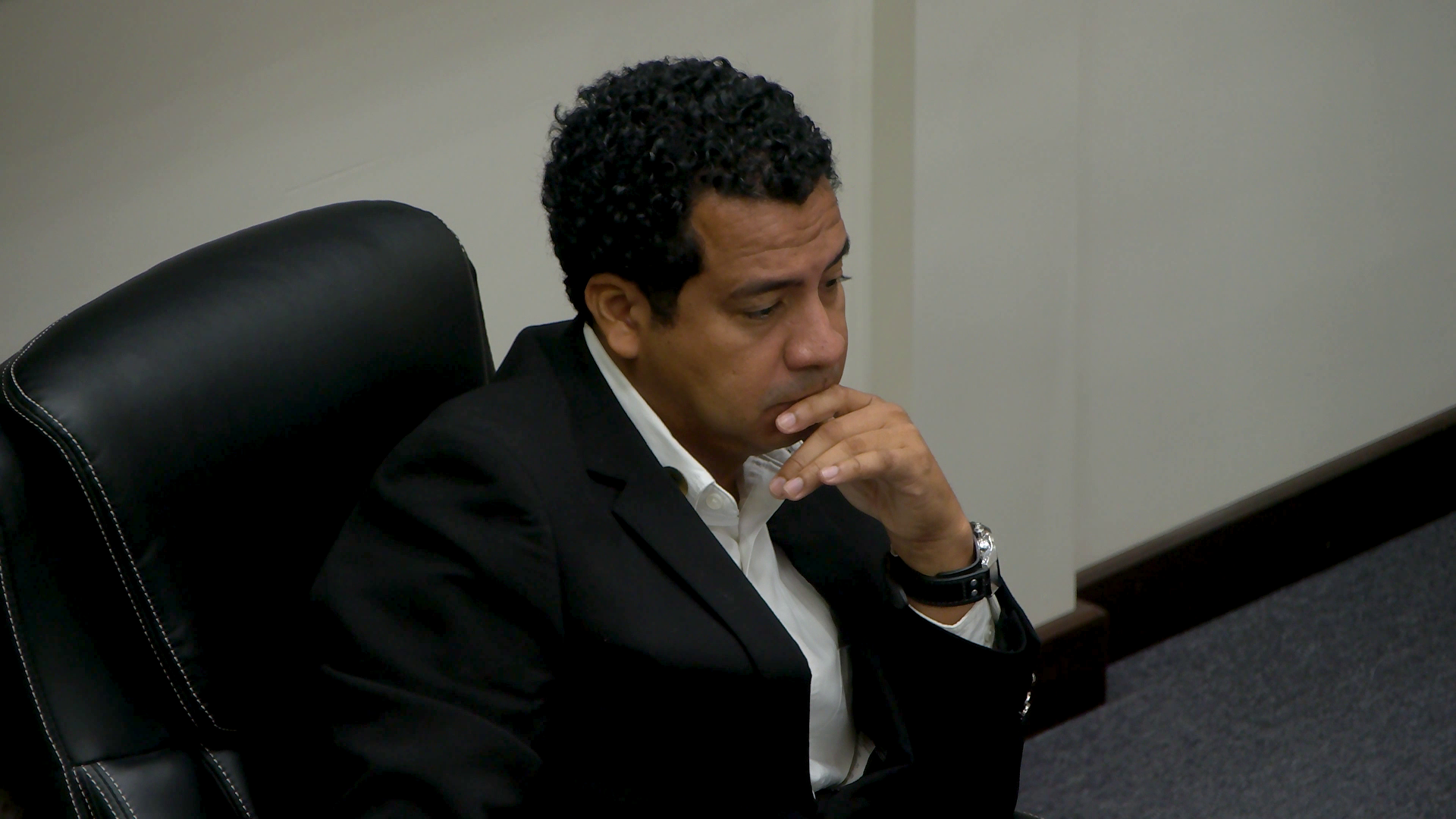
    Now, Dennison is firing back, characterizing Briceño’s response as overly emotional and doubling down on his core critique. In an address that carried deeply personal weight, the senator clarified that his earlier comment was not solely aimed at the prime minister. He explained that the remark was rooted in his own experience of navigating sky-high living costs as a young person in Belize’s current economy – a shared experience he says is common among his peers. “It is me I was talking about. So, I don’t think he can tell me that I can’t relate to myself,” Dennison said, noting that his story is far from unique.

    Unlike narrow debates focused exclusively on minimum wage levels, Dennison’s criticism centers on the broader struggles of young working people who are forced to make impossible trade-offs between basic needs and basic quality of life. He singled out sky-high transportation costs as one of the most pressing burdens for most households: after covering mortgage or rent payments, transportation ranks as the single largest monthly expense for most Belizean families, often outstripping even grocery costs.

    In a surprising point of partial agreement, Dennison acknowledged that he and Briceño actually share one core belief: politicians who lose touch with their constituents will ultimately be removed from office by voters. The senator went a step further, arguing that this disconnection is the core reason why sitting incumbents are so often caught off-guard when they lose elections. When leaders rise through the political ranks, he argued, they become surrounded by insular circles of advisors that cut them off from the grounded, on-the-ground perspective they held when they first entered public life – a disconnect that eventually costs them at the ballot box.

    This exchange comes as cost-of-living affordability has emerged as one of the most volatile and electorally consequential issues in Belizean politics, with working voters across the country increasingly voicing frustration over stagnant wages and rising essential expenses.

  • Dennison Responds to Growing Calls for Candidacy

    Dennison Responds to Growing Calls for Candidacy

    On September 8, 2026, a growing movement of Belizean voters has pushed independent-leaning Senator Glenfield Dennison, a well-known figure recognized for his unfiltered, straightforward commentary in the upper legislative chamber, to transition from legislative advocacy to running as an electoral candidate in upcoming elections. Local political observers and ordinary citizens alike have rallied around the union-aligned senator, urging him to bring his no-nonsense style to a general election contest. The call for Dennison’s candidacy came after a recent public challenge from sitting Prime Minister John Briceño, who questioned the senator’s connection to everyday voters. Briceño argued that before commenting on the needs and priorities of ordinary electors, Dennison needs to first cut his teeth in grassroots politics, completing the on-the-ground work of door-to-door campaigning and community outreach across the country’s districts. In response to direct questions from reporters about whether he had seriously considered entering the electoral race, Dennison delivered a blunt, unexpected reply that has already sparked debate across Belize’s political circles. “I don’t wish to put my name on a ballot. I don’t think the government wishes for me to put my name on a ballot either,” the union senator stated. He went on to warn critics and supporters alike, “be careful what you wish for. Be very careful what you wish for because me and my AI have already ran the numbers and I can tell you which divisions are up for grab.” Dennison pulled back the curtain on internal political calculations, naming multiple incumbent candidates he claims are vulnerable to defeat. He confirmed that local figure Eluide has long aspired to the mayoral office in his district, and argues that Eluide would be an easy incumbent to unseat. Contrary to common narrative that the ruling People’s United Party (PUP) is an unbeatable political force in Belize, Dennison argued the party’s current hold on power stems not from inherent popularity, but from the failures of the main opposition United Democratic Party (UDP). He explained that the PUP’s current majority grew out of widespread public frustration over historic corruption within the UDP, compounded by the opposition’s ongoing failure to organize and unify ahead of the last election – a weakness that persists to this day. “But it is not that the PUP is unbeatable,” Dennison emphasized, pointing to specific electoral divisions, including his home constituency, which he described as “the one with the pliers,” as easily winnable for a strong challenger. He named polling area 73 incumbent Micho Chebat, as well as Alex Balona, as two other vulnerable candidates, asserting “Just any strong candidate like me would beat them.” Despite his confidence that he could oust multiple sitting officeholders, Dennison firmly ruled out entering the race, citing a deep-seated distrust in Belize’s electoral framework. “But I don’t wish to put my name on a ballot because the election itself, the election system itself, I fundamentally believe, is rigged in favor of the two-party system in Belize.” This report is a full, accurate transcript of an evening television news broadcast, with Kriol-language phrases transcribed using a standardized spelling system for accessibility.

  • NTUCB Extends Deadline as Cabinet Weighs Eleven Demands

    NTUCB Extends Deadline as Cabinet Weighs Eleven Demands

    On September 8, 2026, a key development in Belize’s labor-government relations unfolded as the National Trade Union Congress of Belize (NTUCB) chose to push back its original response deadline, granting the country’s Cabinet additional time to deliberate on 11 core demands put forward by the umbrella labor organization.

    The original deadline set by the NTUCB had already passed before the extension was announced, but union leadership opted for flexibility amid ongoing government deliberations. Union Senator Glenfield Dennison shared details of the decision in an interview, confirming that the extension was granted specifically to align with a scheduled Cabinet meeting held in Belmopan on the same day.

    Dennison explained that the NTUCB’s leadership had made a deliberate choice to pause and await the outcome of the meeting, in line with commitments previously made by the Prime Minister to address the unions’ concerns. “We are monitoring that Cabinet meeting because we made the decision to wait until after this Cabinet meeting to hear whether this Cabinet really addressed our issues as the Prime Minister said he would,” Dennison stated.

    When asked whether the 11 demands had been discussed during an earlier Cabinet meeting the previous week, Dennison acknowledged that union leadership had not received any official update on the matter. “Well we don’t know but it was not brought back to us. Being mindful of that and all that the prime minister has to deal with right now, we took the decision to wait until after this meeting,” he added.

    Looking ahead, the NTUCB has outlined a clear expectation for what it hopes to receive following the conclusion of the Cabinet’s deliberations. Dennison confirmed that the unions are seeking a formal letter of engagement from the government. This document would serve two key purposes: either open the door to formal bilateral dialogue on each of the 11 proposed points, or result in the removal of business leader Mark Lizarraga from his position, as the unions have previously requested.

    This report is a transcribed excerpt from an evening television newscast, with all Creole-language statements converted to standard English spelling for clarity.

  • Dennison Rallies Senators Against Revenue Authority Bill

    Dennison Rallies Senators Against Revenue Authority Bill

    September 8, 2026 — Though the contentious Revenue Authority Bill was pulled from the Senate’s official agenda for this week’s sitting, organized opposition to the proposed legislation is far from dissipating. Glenfield Dennison, a senator aligned with the national labor movement, has launched an aggressive lobbying campaign aimed at convincing his fellow legislative members to vote down the bill when it eventually comes up for formal debate.

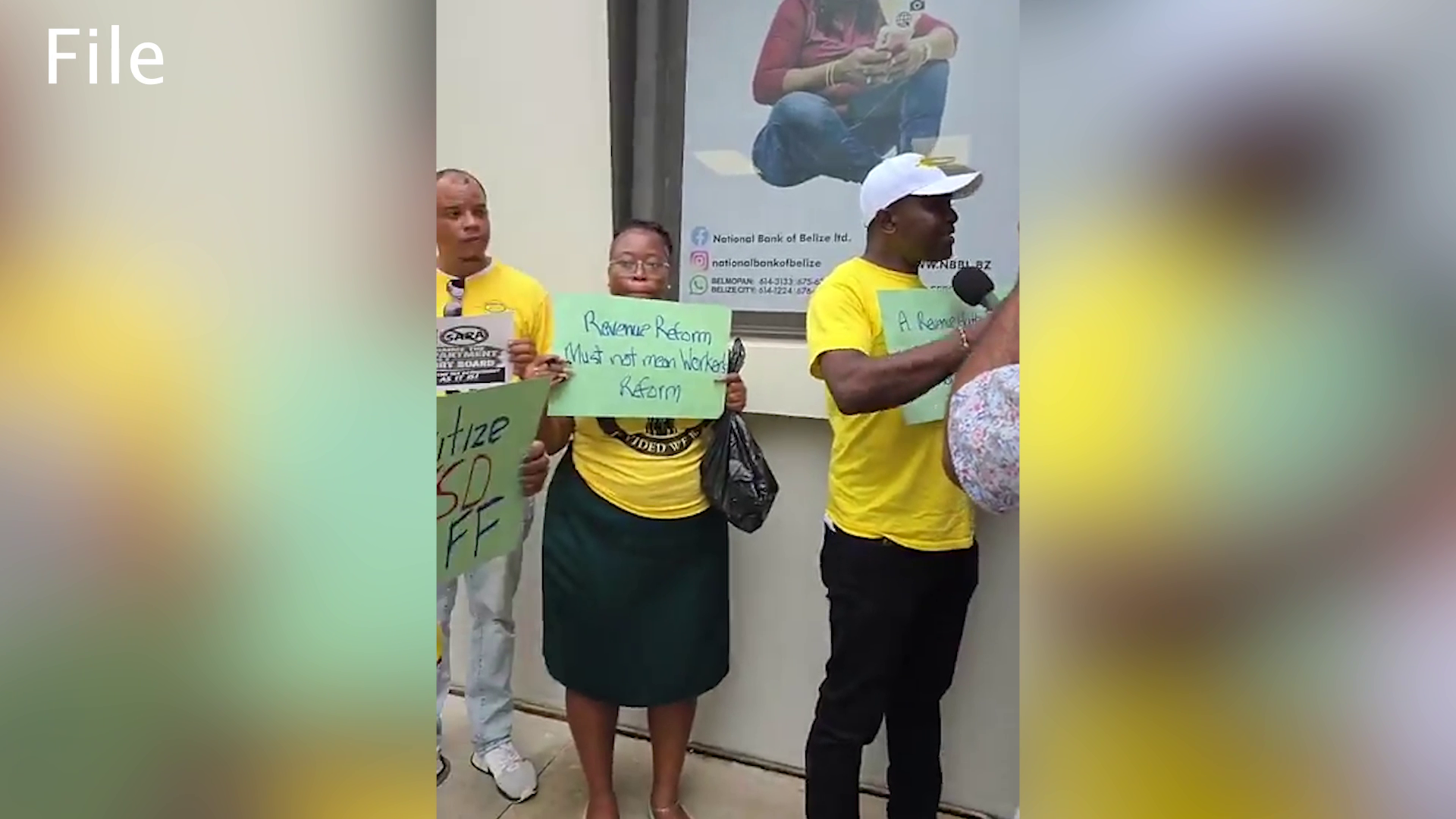
    The bill, which would establish a semi-autonomous revenue authority to manage the country’s tax and collection functions, has drawn fierce pushback from trade unions across multiple sectors. Organized labor groups had prepped large-scale public demonstrations for Wednesday, ready to mobilize immediately if the bill was added to the Senate’s order paper as a last-minute supplementary item. While the planned showdown was averted this week after the bill remained off the agenda, Dennison confirmed that opposition forces are maintaining a state of high alert and are prepared to resume protest action at a moment’s notice.

    Speaking in an interview with reporter Paul Lopez, Dennison, who serves as a representative for the National Trade Union Council of Belize (NTUCB), reaffirmed that he stands in full solidarity with the Public Service Union (PSU) in their demand to scrap the bill entirely. “It was not on the order papers, but the unions are very alert in relation to whether it would be added as a supplemental and we had some protest action ready to be triggered in the event I came to the Senate this morning and it was on the order paper,” Dennison explained. “As the representative for the NTUCB I am very much aligned with the protest action by the PSU in relation to this Semi-autonomous Revenue Authority not being brought into force and I myself lobby in relation to having that bill killed.”

    When asked when the bill could return to the Senate for a vote, Dennison struck a confident tone: “If my lobbying is successful then it should not come.” To date, Senate leadership has not released an updated timeline for when the Revenue Authority Bill will be brought up for debate, leaving the legislation’s future uncertain amid sustained pushback from labor groups. Dennison emphasized that opponents will not ease their pressure, vowing to challenge the proposal at every stage — from closed-door lobbying on the Senate floor to mass public demonstrations outside the legislature.

    This report is adapted from a televised evening newscast transcript.

  • SARA Promises Efficiency, but at What Cost?

    SARA Promises Efficiency, but at What Cost?

    As of September 8, 2026, a highly debated piece of tax reform legislation in Belize — the Revenue Authority Bill that would establish the Semi-Autonomous Revenue Authority (SARA) — has failed to advance to the Senate floor, leaving lingering questions about its long-term financial impacts on ordinary Belizean taxpayers unresolved. The proposal, which aims to restructure the existing Belize Tax Service Department into an independent agency with expanded operational control, has drawn sharp criticism from public sector advocates and legal experts, even as government officials frame it as a critical modernization step for the country’s tax system.

    The Public Service Union (PSU), one of the most vocal opponents of the bill, has issued an urgent call for lawmakers to reject the legislation entirely. PSU President Dean Flowers argues that the restructuring would impose a massive, unplanned fiscal burden on national taxpayers. Under the proposed framework, current public tax service roles would be eliminated, and displaced employees would qualify for immediate full pensions calculated as if they had reached the standard retirement age of 55, regardless of their actual years of service. “The Belizean people need to understand that once this bill is enacted, effectively you’ve abolished these offices and you, taxpayers, now have a duty and an obligation to pay these people a pension for life,” Flowers explained. “If you abolish somebody’s office, you will treat them as if they worked up to the age of fifty-five, and you will pay them their benefits due, and they become immediately pensionable.” Flowers warns that this sudden expansion of pension liabilities will drive up government’s long-term wage and pension obligations significantly, with no guarantee that the promised efficiency gains will offset these new costs.

    Government and tax agency leaders defend the restructuring as a necessary update for Belize’s tax system to keep pace with a rapidly changing digital economy. Michelle Longsworth, Director General of the current Belize Tax Services, noted that greater autonomy would allow the new authority to manage its own workforce, budget, hiring practices, and daily operations, giving the agency the flexibility it needs to meet growing international regulatory obligations and support professional growth for staff. “We have a lot of international obligations that we have to ensure that we meet,” Longsworth said in an August 28, 2026 statement. “We need to ensure that our staff continues to evolve, and also that we have the opportunity to ensure that they have opportunities within the organization to grow. I am saying that given the opportunity for us to have more autonomy in our workforce management, it provides for better efficiency that we must provide as we continue to evolve in a digital economy.” Government officials also push back on concerns about pension costs, clarifying that pension benefits will only be awarded for the years employees already served as public sector workers.

    Beyond fiscal concerns, critics warn that the proposed structure would grant SARA too much independence with insufficient public oversight. Under the plan, the new authority would report primarily to its own CEO and the Minister of Finance, with limited checks on its decision-making. For months, stakeholders have pressed for clarity on the distribution of power under SARA and who will ultimately absorb the projected additional costs, but clear answers from the government have remained elusive.

    Prominent Belizean attorney Darrell Bradley argues that the proposal is an unnecessary distraction from deeper public sector reform. Bradley points out that the government has failed to produce substantive research or conduct broad, inclusive public consultation to demonstrate that the restructuring would benefit national development. “Where is the research or where is the collaboration and discussion in relation to knowing and recognizing appreciating that that is a good move for national development? There is none,” Bradley said. “So you have a situation where few people may want to take the country in a certain direction but the country belongs to all of us.”

    As the bill stalls in the legislative process, the core debate remains: will the promised gains of a streamlined, modern tax system outweigh the near-term fiscal costs and long-term oversight risks for Belize? While government asserts that SARA will deliver a faster, more effective system that benefits all Belizeans, opponents warn that the new authority’s broad autonomy will serve institutional interests rather than the public it is mandated to serve. The report is from News Five’s Britney Gordon.

  • Did Washington’s Deadline Drive Senate’s MCC Vote?

    Did Washington’s Deadline Drive Senate’s MCC Vote?

    On September 8, 2026, the Briceño Administration of Belize successfully advanced the landmark Millennium Challenge Account (MCC) Bill and two accompanying pieces of legislation through the country’s Senate, overcoming hours of heated debate and widespread lawmaker concerns over what critics call an unnecessarily accelerated approval process tied to a U.S. deadline. The final vote came just 10 days before the Belizean government’s scheduled official launch of the MCC compact program, fueling persistent speculation that the administration rushed the legislative process to honor its pre-existing commitments to the U.S. government.

    Alongside the core MCC bill, senators also debated two related pieces of legislation: the Education Bill and the Technical and Vocational Education and Training (TVET) Bill. Multiple lawmakers pushed back on key provisions of the package, calling for extended scrutiny and targeted amendments before a final vote was held. To address these growing concerns, Eamon Courtenay, the ruling party’s lead senator, offered a formal commitment to lawmakers: the full package of legislation will return to the National Assembly for open debate and amendment within three months of the initial approval.

    In his floor address to the Senate, Courtenay openly acknowledged that the rushed process was far from ideal. “It is not a satisfactory state of affairs. I confess that immediately and the request made by the government is unusual and extraordinary,” he told the chamber. He went on to explain the urgency driving the timeline, noting that Belize and the U.S. have already finalized a compact agreement that delivers a $125 million USD grant intended to fund sweeping reforms across Belize’s education and energy sectors. Courtenay also referenced a formal September 4 letter from Opposition Leader Francis Fonseca, distributed to all senators, which confirms 21 pre-negotiated amendments will be introduced for full debate during the next sitting of the Belizean House of Representatives. Once the House approves these changes, Courtenay assured, the full package of three bills will return to the Senate for a second full round of debate and review.

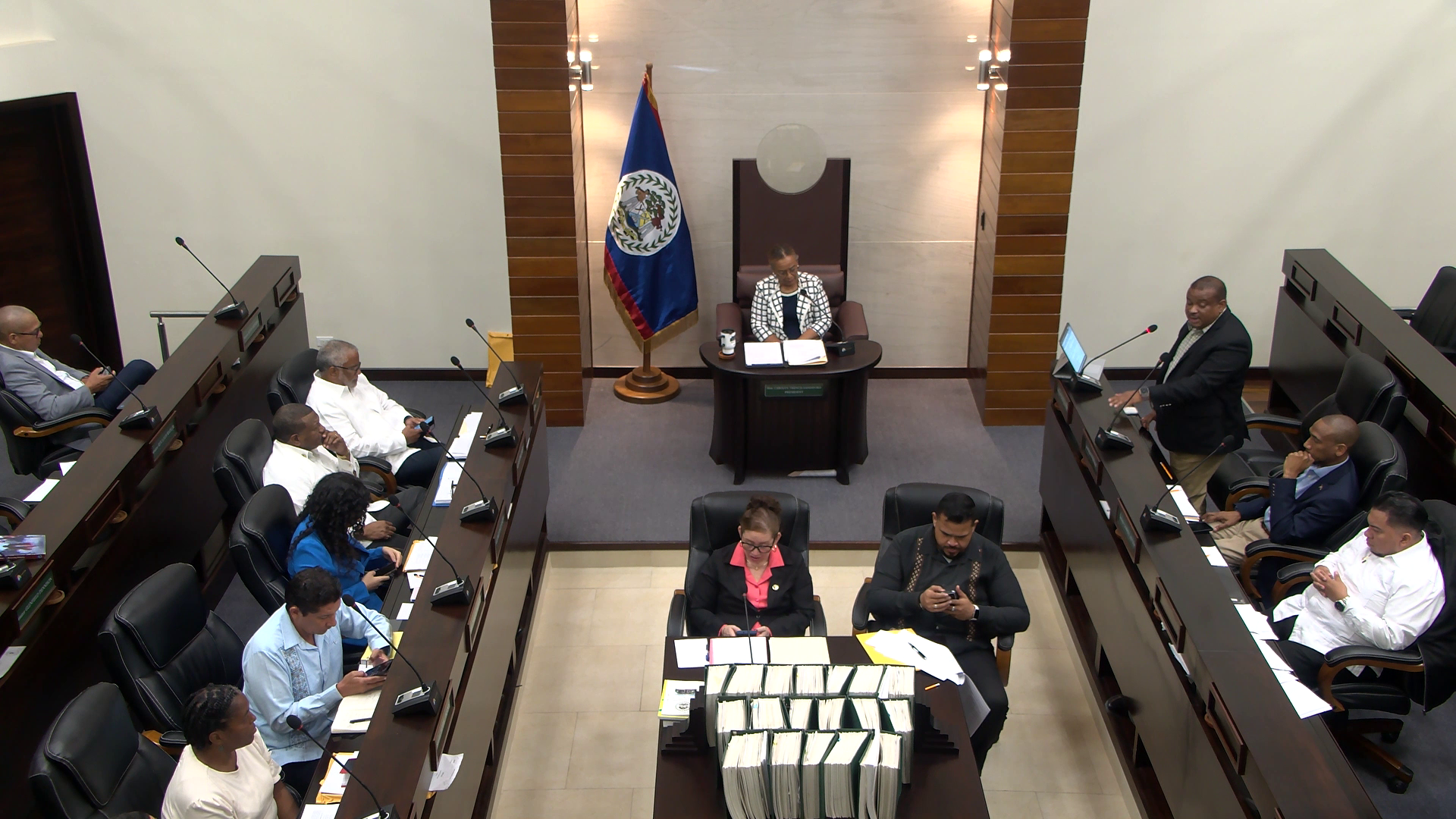
    When the initial debate concluded, opposition-aligned Union Senator Glenfield Dennison made a formal request for a recorded division vote, which forced every senator to publicly declare their position on the controversial package of legislation. In the final recorded vote, three senators abstained from the vote: Dennison, NGO representative Senator Janelle Chanona, and business sector Senator Kevin Herrera. All remaining members of the Senate voted in favor of advancing the three bills to the next stage of the legislative process.

    This report is a transcribed excerpt from an evening television newscast, with Kriol language statements standardized to written spelling for accessibility.

  • Eight Thousand BDF Uniforms, One Closely Watched Bid

    Eight Thousand BDF Uniforms, One Closely Watched Bid

    In a high-stakes procurement move that has drawn sharp public and regulatory attention, Belize’s Ministry of Defense has launched an open competitive bid for 8,000 new camouflage uniforms and complementary gear for the Belize Defense Force (BDF), scheduled to close on September 18, 2026. Beyond the order itself, which also includes 1,000 pairs of jungle boots, 1,000 Bergen backpacks and 1,000 sets of tactical webbing, the bidding process is the center of focus: it unfolds concurrently with an ongoing review of the ministry’s financial records by the Auditor General, triggered by widespread concerns over past irregular payments and suspected conflicts of interest in government contracting.

    The open tender format has prompted urgent questions about whether this represents a deliberate shift toward greater accountability in defense procurement, and what measures are in place to block suppliers with political ties from securing an unfair advantage. In an on-the-record interview with reporter Paul Lopez, Ministry of Defense CEO Francis Usher addressed these growing public concerns.

    Usher explained that government procurement protocols in Belize are structured to match the specific needs of each purchase, with options ranging from open competitive tenders to selective or limited bidding processes. The selection of a specific process, he emphasized, depends entirely on the nature of the required equipment, funding availability, and pre-existing planning timelines. “Every time things are put out to bid or tenders go out, the government procurement process is very clear and the details surrounding what is going on at the time, the different types of items needed, specialized or not, that determines what type of procurement is used,” Usher stated.

    Confirming that this particular procurement is being carried out as a full open tender, Usher noted that this is a rare instance where the ministry was able to complete advance planning, secure dedicated allocated funding, and clearly define quality standards for the required tactical gear before launching the bid. “This is one of the few times where we were able to plan accordingly. We have the funding allocated and we realize the need. So, we are putting it out. We have a good idea of what we are looking for in terms of the quality of the kit and equipment so the subject matter experts will have to evaluate the submissions of each company or individuals that submit bids, then we go from there,” he added.

    When pressed on how regulators will prevent the contract from being awarded to politically connected or favored suppliers — a common criticism of past defense procurement processes in the country — Usher outlined multi-step oversight mechanisms built into the process. All submitted bids undergo independent assessment before being reviewed by both the Ministry of Finance and the Contractor General, he said. “All of these are steps in the process that ensures the process is open, fair and we get quality for the Belize Defense Force,” Usher argued.

    Lopez pushed back, noting that many observers argue these existing oversight processes failed in past procurement rounds, allowing politically aligned suppliers to win contracts improperly. Usher responded by pushing any conclusions about past misconduct to the ongoing Auditor General’s review, urging the public to wait for official audit findings before drawing judgments. “I think you are jumping ahead to the findings of the audit. As you say, one could argue that, but I think we could wait for the findings of the audit before jumping to any conclusions,” he said.

    This report is a transcribed excerpt from an evening television newscast, with all spoken content preserved for accuracy. Bid submissions from qualified suppliers will be accepted only through September 18, 2026.

  • National Pride Takes Flight at Belize Zoo

    National Pride Takes Flight at Belize Zoo

    As Belize kicks off its annual September national identity celebrations, the latest installment of Kolcha Tuesday turns the spotlight to one of the country’s most beloved national symbols: the Keel-Billed Toucan. At the Belize Zoo, three rescued toucans are not just surviving — they are thriving, serving as living reminders of Belize’s rich natural heritage and the critical work of wildlife conservation.

    The colorful trio — named Tea, Kettle and Ignacio — each carries a unique story of second chances. Gerson Garcia, lead zookeeper at the Belize Zoo, shared the backgrounds of the three birds, who make up three of the zoo’s four Keel-Billed Toucan residents. Ignacio, named for his origin in the town of San Ignacio, suffered a permanent wing injury that left him unable to survive in the wild after receiving care at a local wildlife clinic. The Belize Zoo became his permanent, safe home. For orphaned chicks Tea and Kettle, their name combination honors their origin in Belize’s Teakettle region, where they were found as helpless hatchlings in a farming area. Too young to survive on their own, they were turned over to the zoo’s care.

    Adopted as Belize’s official national bird shortly after the country gained independence in September 1981, the Keel-Billed Toucan has long stood as a symbol of the nation’s deep ties to its tropical ecosystems and extraordinary biodiversity. With its iconic, multicolored beak, bold black plumage, bright yellow chest, crimson undertail coverts and bright blue feet, the species perfectly encapsulates the vibrant natural beauty and energetic spirit that defines Belize.

    Beyond their symbolic role, these three rescued toucans have taken on a new purpose as wildlife ambassadors, welcoming visitors from across the globe to learn about their species and the importance of protecting Belize’s native wildlife. Zookeepers share little-known facts with guests to deepen their appreciation for the iconic bird: for example, while the toucan’s distinctive beak can grow up to six inches long — nearly one-third of the bird’s total body length — it is far lighter than it appears, made of a hollow, keratin-based structure that keeps it lightweight for daily use. Keel-Billed Toucans are omnivorous, feeding on a mix of native fruits, insects and small prey in the wild, and they are naturally highly social, which is why Tea, Kettle and Ignacio live harmoniously together in their spacious, naturalistic zoo habitat. On the day of the interview, Tea, the most outgoing of the trio, stole the show, repeatedly demanding slices of his favorite treat — ripe papaya — from reporting team. Garcia notes that all three birds enjoy comfortable lives in the zoo, with access to fresh daily food, clean water and plenty of space to fly, free from the threats they faced in the wild.

    As Belize celebrates its national identity throughout September, this trio of rescued toucans offers a meaningful connection to the country’s natural roots. Their stories of survival, resilience and purpose demonstrate how wildlife rescue and conservation not only save individual animals, but also help preserve the symbols that bind a nation together. This report is a transcript of an evening television broadcast for News Five, by Paul Lopez.

  • Should Children and Adults Celebrate Carnival Separately?

    Should Children and Adults Celebrate Carnival Separately?

    As 2026’s annual Carnival Road March wraps up in Belize, a long-simmering public debate has reignited over a fundamental question: should child and adult Carnival revelers be split into separate celebrations? The beloved festival, which honors freedom, cultural expression and community connection, has long united Belizeans across all age groups, but growing divisions over appropriate content for young participants have thrown the future of the intergenerational tradition into question.

    The Belize Council of Churches has repeatedly pushed for formal separation of junior and adult Carnival events, arguing that current arrangements expose children to inappropriate adult behavior and displays that run counter to healthy development. Church Senator Louis Wade emphasized that while children currently march in their own designated sections with more modest costumes, this partial separation does not go far enough. Before and after the official parade, children and adults still mix in the same public spaces, he explained, and adult revelers set an unavoidable example for young participants. Public spaces, Wade noted, are shared by all members of the community, not just those taking part in Carnival celebrations. He called on event organizers, the Ministry of Culture, and the national government to take the separation recommendation seriously, warning that keeping all participants together puts children in inappropriate environments.

    Not everyone opposes the call for separation outright, but many warn that splitting events into a separate children’s day and adult day could carry unexpected costs for the Belizean Carnival community. Pauline Bradley, the leader of Soca Massive, one of Belize’s most prominent and successful junior Carnival bands, acknowledged that the proposal has some potential benefits. It could, she said, lead to greater participation and support from parents and local schools, which have long raised concerns about adult content. Still, Bradley argued that splitting the events could backfire: most spectators come out to the parade to see adult revelers, she explained, so moving the junior parade to a separate date would likely result in smaller crowds and rob young participants of the public recognition and support they have earned. She also pushed back on the church’s criticism, noting that religious doctrine instructs against judging others and that she has no desire to criticize the church’s position beyond that point.

    The debate extends beyond moral concerns to touch on cultural identity and the country’s vital tourism economy. Event promoter John Marsden, who has experience with Carnival celebrations around the globe, pointed out that Belize’s intergenerational Carnival is a unique selling point that sets it apart from other Carnival destinations around the world. Marsden personally supports separating adult and child events, but he acknowledged that the current mixed model draws international tourists who want to bring their whole families to take part in the celebration. As a billion-dollar global industry, Carnival offers major growth opportunities for Belize, and any change to the traditional structure would need careful consideration to protect its economic and cultural appeal.

    For now, Belize’s Carnival remains an entirely shared intergenerational space, but the growing pressure for change means the debate is far from settled. The core question remains unanswered: if the event is marketed as a family-friendly experience, what responsibility do adult participants have to adjust their behavior and attire to accommodate children? Does protecting children require a full split into separate events, as the church and some organizers argue, or should adults adapt their celebrations to fit a shared space? As community stakeholders continue to negotiate the future of Belize’s most iconic annual tradition, the public remains divided on how to balance freedom of expression, cultural tradition, child protection, and economic opportunity.