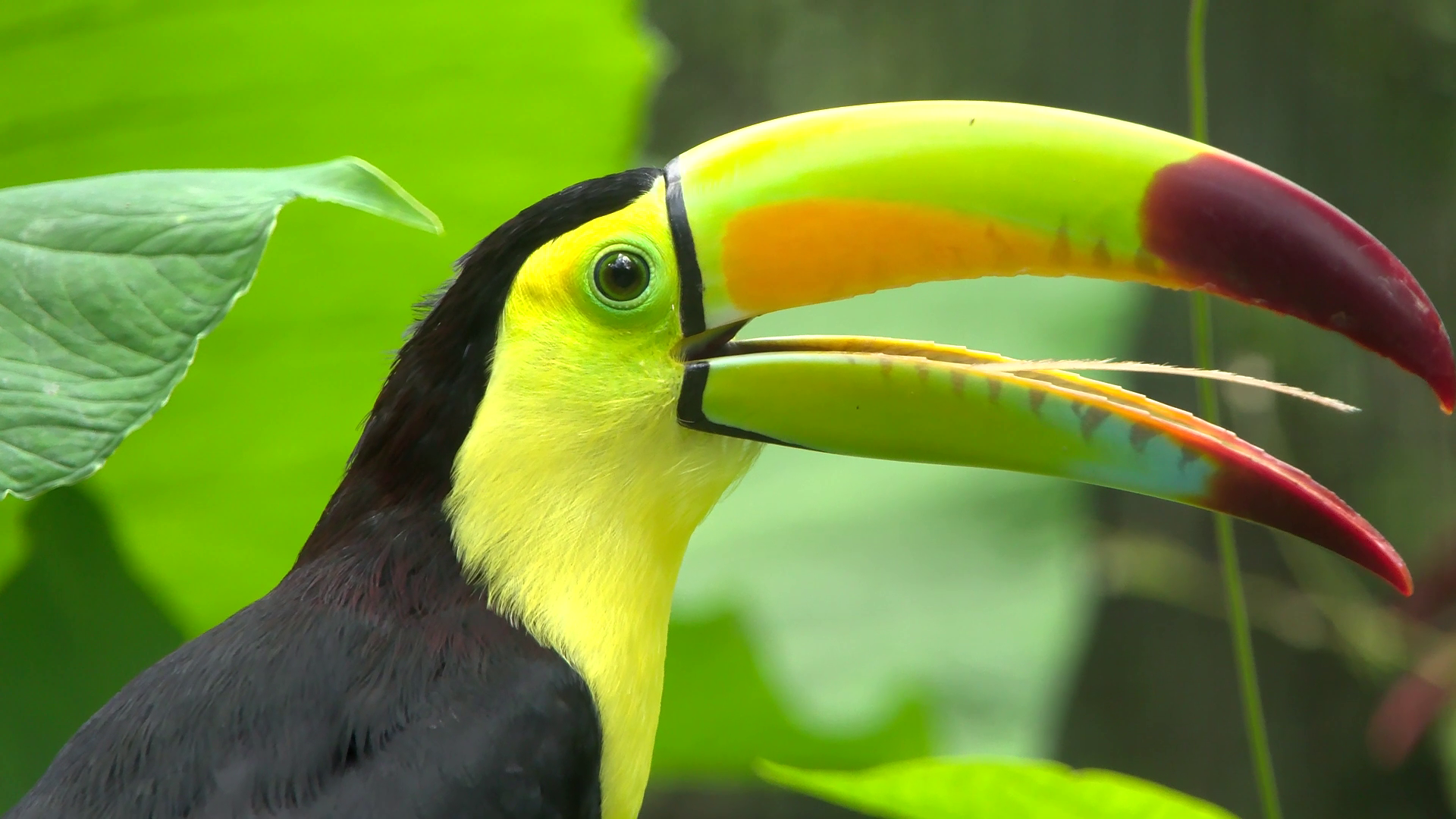
As Belize kicks off its annual September national identity celebrations, the latest installment of Kolcha Tuesday turns the spotlight to one of the country’s most beloved national symbols: the Keel-Billed Toucan. At the Belize Zoo, three rescued toucans are not just surviving — they are thriving, serving as living reminders of Belize’s rich natural heritage and the critical work of wildlife conservation.
The colorful trio — named Tea, Kettle and Ignacio — each carries a unique story of second chances. Gerson Garcia, lead zookeeper at the Belize Zoo, shared the backgrounds of the three birds, who make up three of the zoo’s four Keel-Billed Toucan residents. Ignacio, named for his origin in the town of San Ignacio, suffered a permanent wing injury that left him unable to survive in the wild after receiving care at a local wildlife clinic. The Belize Zoo became his permanent, safe home. For orphaned chicks Tea and Kettle, their name combination honors their origin in Belize’s Teakettle region, where they were found as helpless hatchlings in a farming area. Too young to survive on their own, they were turned over to the zoo’s care.
Adopted as Belize’s official national bird shortly after the country gained independence in September 1981, the Keel-Billed Toucan has long stood as a symbol of the nation’s deep ties to its tropical ecosystems and extraordinary biodiversity. With its iconic, multicolored beak, bold black plumage, bright yellow chest, crimson undertail coverts and bright blue feet, the species perfectly encapsulates the vibrant natural beauty and energetic spirit that defines Belize.
Beyond their symbolic role, these three rescued toucans have taken on a new purpose as wildlife ambassadors, welcoming visitors from across the globe to learn about their species and the importance of protecting Belize’s native wildlife. Zookeepers share little-known facts with guests to deepen their appreciation for the iconic bird: for example, while the toucan’s distinctive beak can grow up to six inches long — nearly one-third of the bird’s total body length — it is far lighter than it appears, made of a hollow, keratin-based structure that keeps it lightweight for daily use. Keel-Billed Toucans are omnivorous, feeding on a mix of native fruits, insects and small prey in the wild, and they are naturally highly social, which is why Tea, Kettle and Ignacio live harmoniously together in their spacious, naturalistic zoo habitat. On the day of the interview, Tea, the most outgoing of the trio, stole the show, repeatedly demanding slices of his favorite treat — ripe papaya — from reporting team. Garcia notes that all three birds enjoy comfortable lives in the zoo, with access to fresh daily food, clean water and plenty of space to fly, free from the threats they faced in the wild.
As Belize celebrates its national identity throughout September, this trio of rescued toucans offers a meaningful connection to the country’s natural roots. Their stories of survival, resilience and purpose demonstrate how wildlife rescue and conservation not only save individual animals, but also help preserve the symbols that bind a nation together. This report is a transcript of an evening television broadcast for News Five, by Paul Lopez.