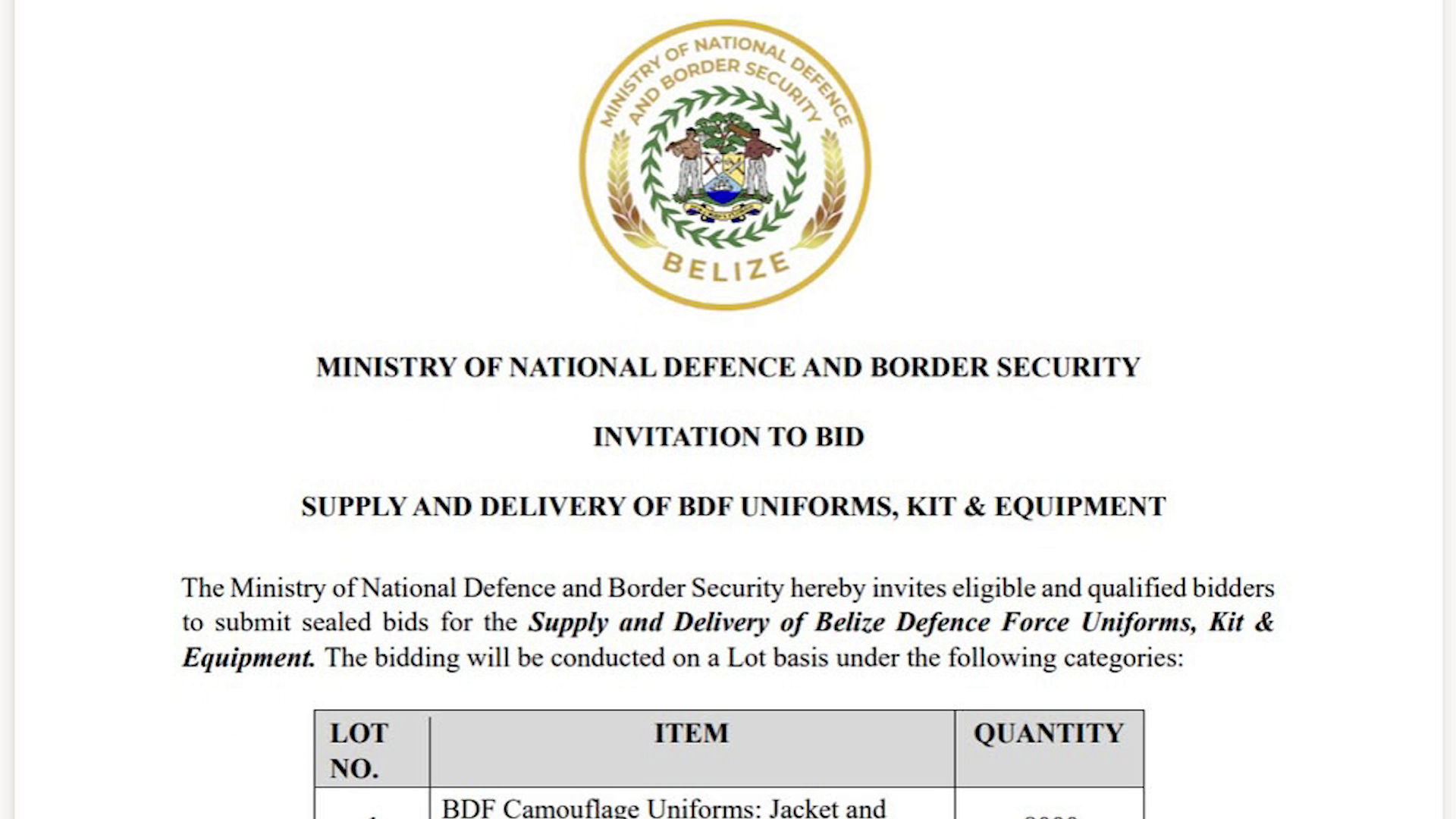
In a high-stakes procurement move that has drawn sharp public and regulatory attention, Belize’s Ministry of Defense has launched an open competitive bid for 8,000 new camouflage uniforms and complementary gear for the Belize Defense Force (BDF), scheduled to close on September 18, 2026. Beyond the order itself, which also includes 1,000 pairs of jungle boots, 1,000 Bergen backpacks and 1,000 sets of tactical webbing, the bidding process is the center of focus: it unfolds concurrently with an ongoing review of the ministry’s financial records by the Auditor General, triggered by widespread concerns over past irregular payments and suspected conflicts of interest in government contracting.
The open tender format has prompted urgent questions about whether this represents a deliberate shift toward greater accountability in defense procurement, and what measures are in place to block suppliers with political ties from securing an unfair advantage. In an on-the-record interview with reporter Paul Lopez, Ministry of Defense CEO Francis Usher addressed these growing public concerns.
Usher explained that government procurement protocols in Belize are structured to match the specific needs of each purchase, with options ranging from open competitive tenders to selective or limited bidding processes. The selection of a specific process, he emphasized, depends entirely on the nature of the required equipment, funding availability, and pre-existing planning timelines. “Every time things are put out to bid or tenders go out, the government procurement process is very clear and the details surrounding what is going on at the time, the different types of items needed, specialized or not, that determines what type of procurement is used,” Usher stated.
Confirming that this particular procurement is being carried out as a full open tender, Usher noted that this is a rare instance where the ministry was able to complete advance planning, secure dedicated allocated funding, and clearly define quality standards for the required tactical gear before launching the bid. “This is one of the few times where we were able to plan accordingly. We have the funding allocated and we realize the need. So, we are putting it out. We have a good idea of what we are looking for in terms of the quality of the kit and equipment so the subject matter experts will have to evaluate the submissions of each company or individuals that submit bids, then we go from there,” he added.
When pressed on how regulators will prevent the contract from being awarded to politically connected or favored suppliers — a common criticism of past defense procurement processes in the country — Usher outlined multi-step oversight mechanisms built into the process. All submitted bids undergo independent assessment before being reviewed by both the Ministry of Finance and the Contractor General, he said. “All of these are steps in the process that ensures the process is open, fair and we get quality for the Belize Defense Force,” Usher argued.
Lopez pushed back, noting that many observers argue these existing oversight processes failed in past procurement rounds, allowing politically aligned suppliers to win contracts improperly. Usher responded by pushing any conclusions about past misconduct to the ongoing Auditor General’s review, urging the public to wait for official audit findings before drawing judgments. “I think you are jumping ahead to the findings of the audit. As you say, one could argue that, but I think we could wait for the findings of the audit before jumping to any conclusions,” he said.
This report is a transcribed excerpt from an evening television newscast, with all spoken content preserved for accuracy. Bid submissions from qualified suppliers will be accepted only through September 18, 2026.