博客

  • Speurhondenbrigade Surinaamse politie versterkt met nieuwe voertuigen

    Speurhondenbrigade Surinaamse politie versterkt met nieuwe voertuigen

    In a formal handover ceremony held Wednesday, the Embassy of the Netherlands delivered two specially modified Isuzu D-Max pickup trucks to Suriname’s Ministry of Justice and Police, expanding the operational capacity of the Suriname Police Corps’ canine detection unit. The donation is part of a broader bilateral partnership aimed at cracking down on transnational drug trafficking, and comes as Suriname faces growing pressure on border security amid a regional energy boom.

    Purpose-built to support detection dog operations, the new vehicles feature enclosed cargo beds fitted with permanent dog kennels, plus specialized ventilation systems designed to keep canines healthy and alert during long deployments. Police attaché Lion Theuns, speaking at the handover, emphasized the importance of responsible stewardship of the donated assets. “We know firsthand how disruptive and costly unplanned repairs can be — they cause lengthy delays that directly impact operational capacity,” Theuns noted. “The ventilation system is a critical feature to maintain the dogs’ fitness; only well-trained, physically healthy canines can carry out their detection work effectively.”

    The vehicle keys were officially transferred to Commissioner Eshita Hunte, head of Suriname’s Serious Crime Combating Division. Hunte highlighted that the canine unit has already notched multiple successful drug seizures and investigations, and demand for its services is rising rapidly. This growth is directly tied to Suriname’s expanding oil and gas sector, which has driven a steady increase in air traffic arriving into the country.

    Under the unit’s new expansion plans, canine detection teams will be deployed to screen every incoming flight at Suriname’s two main airports: Johan Adolf Pengel International Airport (also known as Zanderij) and the Eduard Alexander Gummels (EAG) Airport in northern Paramaribo. “To scale up our services to meet this new demand, we need additional resources: more detection dogs, more specialized trainers, and more purpose-built vehicles like these,” Hunte explained.

    This latest donation follows a similar contribution to Suriname Customs in June, when the Netherlands provided two additional vehicles to support that agency’s own canine detection program. That unit already includes a Dutch-trained handler and detection dog working to intercept illicit shipments at borders. The full cost of the vehicles and associated training programs has not been publicly disclosed, but all expenses are fully covered by the Netherlands as part of its ongoing counter-narcotics cooperation program with Suriname.

  • Cricket West Indies Announces 15-Member Squad for Test Series Against Pakistan

    Cricket West Indies Announces 15-Member Squad for Test Series Against Pakistan

    ST JOHN’S, Antigua – Cricket West Indies (CWI) has officially named its 15-player squad for the highly anticipated two-match Test series against Pakistan, set to kick off later this month across two venues in Trinidad, with play running from July 25 to August 6.

    This upcoming series carries historic weight for Caribbean cricket: the opening fixture, hosted at the Brian Lara Cricket Academy in Tarouba from July 25 to 29, will mark the first men’s Test match ever held at this venue. This milestone makes the academy the 13th cricket ground in the Caribbean region to earn the distinction of hosting international Test cricket. The second Test will follow at one of the region’s most iconic venues, the Queen’s Park Oval in Port of Spain, with matches scheduled for August 2 to 6.

    In building the squad for the series, CWI has opted to retain the core group of players that delivered a 1-0 series win over Sri Lanka earlier this July, keeping continuity for the side ahead of the Pakistan clash. The selection panel also made room for new talent, handing 26-year-old left-arm orthodox spinner Joshua Bishop his first-ever call-up to a Test squad, a reward for his consistent standout performances in regional domestic competitions.

    Over the past three seasons of the West Indies Championship, Bishop has dominated bowling statistics, claiming an impressive 91 wickets for the Barbados Pride and the West Indies Academy – the highest wicket tally recorded by any bowler in the competition across that period. His selection reflects CWI’s commitment to promoting domestic talent that consistently performs at the regional level.

    Jamaica Scorpions batsman Kirk McKenzie, a product of the West Indies Academy development program, also earns a place in the squad, marking his first Test recall since 2024. McKenzie’s inclusion comes after opening batsman John Campbell was forced to withdraw from the roster after sustaining a left hamstring strain during the recently completed One-Day International series against New Zealand. Like Bishop, McKenzie earned his spot through strong domestic form, notching 323 runs across six innings in this season’s West Indies Championship at an average of 64.60, turning in match-winning performances for his side.

    Leading fast bowler Alzarri Joseph was not available for selection for the upcoming series due to unreported personal reasons, a key absence that the West Indies side will need to account for in their bowling rotation.

    The full 15-member West Indies Test squad for the Pakistan series is as follows: Roston Chase (Captain), Jomel Warrican (Vice-Captain), Joshua Bishop, Tagenarine Chanderpaul, Joshua Da Silva, Justin Greaves, Kavem Hodge, Shai Hope, Amir Jangoo, Shamar Joseph, Brandon King, Kirk McKenzie, Keemo Paul, Kemar Roach, and Jayden Seales.

    With the series just two days away from the announcement, Caribbean cricket fans are gearing up for what promises to be a competitive series between two closely matched international sides, with the added excitement of witnessing history at the new Brian Lara Cricket Academy venue.

  • Column: Voetbal of commercie?

    Column: Voetbal of commercie?

    The 23rd edition of the FIFA World Cup, the first to be co-hosted by three nations, has wrapped up, with a new champion crowned. Beyond the on-pitch action and moments of celebration that captured global audiences, the tournament has left a trail of growing controversy around opaque, unconsulted governance changes that have fundamentally altered the core nature of the sport, critics say.

    Unlike the incremental, behind-the-scenes adjustments FIFA has become known for rolling out shortly before major tournaments without member consultation, the changes introduced at this 23rd edition go far beyond incremental tweaks, fundamentally shifting how the game of football is experienced by players and fans alike.

    One of the most high-profile controversial changes came during the final itself: match officials extended the half-time break to a full 30 minutes, double the 15-minute maximum laid out in official tournament rules. Critics say this last-minute, unvetted rule change illustrates a worrying culture within FIFA’s leadership, where top officials believe they can alter core rules of the sport on a whim without meaningful consultation with key stakeholders across the global football community. This pattern of unilateral decision-making was also seen in the reversal of a red card issued to a United States forward, a call made by a single individual rather than through agreed institutional processes.

    Beyond individual match calls, controversy has also swirled around questionable Video Assistant Referee (VAR) decisions that many observers say consistently favored tournament favorites, helping to steer top-ranked sides through to the knockout rounds and final. This bias, critics note, lines up with a broader commercial priority at the heart of this year’s tournament: while FIFA has publicly expanded World Cup access to smaller nations by growing the tournament field, the organization has systematically undermined small countries’ chances of advancing deep into the competition, all to ensure marquee matchups between global favorites that fill stadiums and drive broadcast revenue. This has made clear that commercial interests are now taking precedence over the integrity of the sport itself at the World Cup, critics say.

    Widespread anger over these decisions has erupted across social media, with a growing number of voices calling for FIFA’s top leadership to step down. However, the path to leadership change faces steep structural barriers: while rank-and-file football stakeholders overwhelmingly oppose the current leadership’s approach, they do not hold the voting power that would oust the current top official. Convincing a majority of voting members that intervention is necessary to roll back the controversial changes introduced at this tournament will be an uphill battle.

    Critics warn that if these unvetted changes are allowed to stand, the fundamental identity of football as a sport will be eroded over time. Allowing host nations to exert such sweeping influence over tournament operations has also set a damaging precedent for future events. For these reasons, member nations cannot stay silent on the issue, critics argue, and must hold FIFA’s top leadership accountable for its actions that have undermined the sport’s integrity.

  • Saint Kitts and Nevis positioned as a strategic gateway linking Africa, the Caribbean and Global Capital

    Saint Kitts and Nevis positioned as a strategic gateway linking Africa, the Caribbean and Global Capital

    LONDON, UK – July 23, 2026 – At a landmark anniversary business gathering hosted at the London Stock Exchange, the Prime Minister of Saint Kitts and Nevis has framed the small Caribbean federation as an unmatched strategic connector between African markets, Caribbean regional opportunity, United Kingdom professional expertise and global investment capital. Speaking as the keynote presenter for the Royal African Society’s 125th Anniversary Flagship Business Event, Prime Minister Dr. Terrance Drew positioned his nation as an emerging hub for cross-regional investment, innovative collaboration and economic diplomacy, anchored by the country’s ambitious Sustainable Island State Agenda, a holistic development framework already gaining global attention as a model for 21st-century resilient growth.

    Dr. Drew used the high-profile platform to outline the federation’s expanding leadership in building formal, productive ties between the African continent and the Caribbean region. Key initiatives that underpin this role include a landmark strategic partnership with the African Export-Import Bank (Afreximbank), a groundbreaking policy granting visa-free entry to all African nationals, active participation in the Afri-Caribbean Investment Summit, and the federation’s recent selection as the official host of the fifth AfriCaribbean Trade and Investment Forum (ACTIF), a major event set to bring hundreds of regional stakeholders and investors together in the coming years.

    “Saint Kitts and Nevis is ready to serve as a bridge connecting African enterprise, Caribbean opportunity, British expertise and global capital,” Dr. Drew told attendees of the invitation-only event, which drew investors, business leaders and policymakers from more than 40 countries.

    In a call to action for global stakeholders, the prime minister extended an open invitation for mission-aligned investors to partner with the federation across seven high-priority sectors: renewable energy, healthcare, sustainable agriculture, digital technology, education, ecotourism and the creative economy. These partnerships are structured to advance the core goals of the Sustainable Island State Agenda, a comprehensive national transformation plan that extends far beyond environmental action to center water security, just energy transition, food sovereignty, resilient infrastructure, circular economy development and inclusive social progress.

    Dr. Drew emphasized that the strategy is designed to deliver dual value: lifting quality of life and expanding economic opportunity for all citizens of Saint Kitts and Nevis, while creating a transparent, welcoming regulatory environment for responsible international investment. “We welcome investors who share this vision. We seek investment that creates jobs, transfers knowledge, strengthens local businesses, respects our environment and leaves strong institutions behind,” he added.

    Beyond attracting private capital, Dr. Drew used his keynote to call for deeper institutional collaboration between three blocs: the African continent, the Caribbean region, and the United Kingdom. He encouraged cross-sector partnerships that combine global capital with cutting-edge technology, educational exchange, innovative practice and long-term local capacity building, rather than short-term extractive investment models. He closed by reaffirming Saint Kitts and Nevis’ long-term commitment to acting as a trusted intermediary, advancing a modern, mutually beneficial relationship between Africa and the Caribbean rooted in shared economic growth, knowledge exchange and equitable sustainable development that benefits current and future generations across all regions.

  • Trinbago Knight Riders unveil overseas contingent for CPL 2026

    Trinbago Knight Riders unveil overseas contingent for CPL 2026

    Ahead of the 2026 Republic Bank Caribbean Premier League (CPL), defending champions Trinbago Knight Riders have officially announced their lineup of five overseas players, assembling a roster that blends elite international experience, proven franchise success and emerging young talent to bolster their bid for a consecutive title.

    The confirmed contingent features a mix of returning fan favorites and exciting new additions, with high-profile batsman Alex Hales headlining the group. The English power hitter, who won the 2022 ICC T20 World Cup with his national side, brings a proven track record of destructive batting across the world’s top T20 competitions, from the Big Bash League to the Vitality T20 Blast. Hales, who returns to the Knight Riders for another campaign, ranked as the fifth-highest run-scorer in the 2025 CPL, cementing his reputation as a reliable match-winner at the top of the order.

    Joining Hales in the group is New Zealand veteran Colin Munro, who is set to compete in his ninth season with the Trinbago side. One of the most decorated overseas players in CPL history, Munro holds the record for the most runs scored by an international player across the league’s history, and has been regarded as one of the most dangerous opening batters in global franchise cricket for more than a decade. He adds additional explosive power to the Knight Riders’ top order.

    Rising off-spinner Usman Tariq also returns to the squad after a standout title-winning campaign in 2025. The young spinner, who earned his first T20I cap for Pakistan against South Africa in November 2025, finished the 2025 CPL as Trinbago Knight Riders’ leading wicket-taker. Known for his tight line and clever variation in middle overs, he has established himself as one of the most promising young spin talents in international cricket.

    South African batting prospect Matthew Breetzke makes his way to the squad as one of the most anticipated young signings of the 2026 CPL off-season. Breetzke shot to global fame after scoring a record-breaking 150 runs on his ODI debut against New Zealand earlier this year, and previously featured for the Lucknow Super Giants in the 2025 Indian Premier League. He adds solidity and depth to the Knight Riders’ middle order.

    Completing the five-man overseas group is Sri Lankan batting all-rounder Amshi de Silva. A product of Sri Lanka’s renowned youth development system, de Silva represented his nation at the U19 World Cup before earning selection for Sri Lanka A. He brings additional balance and versatility to the middle order, giving head coach Dwayne Bravo a wider range of tactical options throughout the tournament.

    The new overseas recruits will join a strong core of domestic West Indian talent led by captain Nicholas Pooran, with star all-rounder Kieron Pollard, veteran spinner Sunil Narine and pace bowler Akeal Hosein also set to feature. Bravo, the legendary former West Indian cricketer, returns for his second season in charge as head coach, with the side now boasting well-rounded depth across batting, spin and pace bowling as they prepare to defend their 2025 crown.

  • Leisure : Did you know ? #44

    Leisure : Did you know ? #44

    HaitiLibre, one of Haiti’s leading local news and information platforms, has launched a popular twice-weekly general knowledge quiz segment called “Did You Know?”, designed to help readers deepen their understanding of Haitian culture, history, and natural heritage. In the 44th installment of the series, published on July 23, 2026, the feature poses a question that many casual observers of Haitian life may not know the answer to: What is Haiti’s official national flower?

    The answer reveals the hibiscus, scientifically named *Hibiscus rosa-sinensis* and widely known locally by its Haitian Creole name “Choublack”, holds the honor of being the country’s national floral emblem. More than just a decorative plant, the hibiscus carries deep meaning for Haitian national identity, symbolizing both the striking natural beauty of the Caribbean island and the enduring vitality of its people.

    This hardy, colorful plant grows across every region of Haiti, thriving everywhere from small rural family gardens to compact urban courtyards. Its blooms display a vivid spectrum of warm hues, from brilliant crimson to soft orange-yellow, bringing bright pops of color to communities across the country. Beyond its visual appeal, the hibiscus plays an important role in traditional Haitian culture: its petals are commonly harvested for use in folk medicine, valued for their natural soothing properties, and often brewed into refreshing herbal infusions enjoyed by locals.

    As a national symbol, the hibiscus also stands as a quiet marker of the Haitian people’s well-documented resilience in the face of ongoing social and environmental challenges. Preserving the habitats where this native plant grows is critical to maintaining this important cultural symbol for future generations. Planting hibiscus also delivers tangible ecological benefits: the flowering plant attracts key pollinators including butterflies and hummingbirds, helping to support and strengthen the balance of Haiti’s local ecosystems.

    This fact was shared as part of the official answer key for the latest quiz segment hosted on HaitiLibre’s dedicated QuizHaitiLibre platform, which launched to public interest earlier this year. The platform has expanded rapidly since its debut, with a monthly update cycle that adds new content on a regular basis. On July 1, 2026, the platform added 31 new quiz games, pushing its total catalog of interactive content to 180 unique games covering a wide range of topics.

    Designed to be accessible to learners of all ages and backgrounds, QuizHaitiLibre’s games are completely free to access and do not require users to register for an account to play. Every game offers three tiered difficulty levels—easy, intermediate, and hard—to suit different knowledge bases, and the entire platform is available in both French and English to serve a diverse audience. Topics covered extend beyond Haitian culture and natural history to include global general knowledge, giving curious users the chance to explore a wide range of subjects and test their existing knowledge.

    HaitiLibre encourages users to explore the platform, share it with family and friends, and submit feedback through a dedicated form available at the end of each quiz. The platform’s team emphasizes that the core goal of the segment is to encourage lifelong learning: even if users do not know an answer when they start a quiz, the segment gives them the chance to discover new facts and expand their general knowledge to share with their communities.

  • In Havana, a cycle of exchanges with municipalities ends, but not a working method

    In Havana, a cycle of exchanges with municipalities ends, but not a working method

    On a Wednesday afternoon in July, Cuban President Miguel Díaz-Canel Bermúdez, who also serves as First Secretary of the Central Committee of the Communist Party of Cuba, wrapped up a series of grassroots working visits with stops at the Municipal Defense Councils of Cotorro and Habana del Este, two municipalities in the country’s capital Havana.

    This tour brought direct exchanges between Cuba’s national leadership and local governance teams across all 15 of Havana’s municipalities to a close, but Díaz-Canel emphasized that the practice of on-the-ground problem-solving will not end. Following this round of engagements, new direct consultations will be organized in the near future to keep national leadership connected to local realities.

    The president framed the ongoing challenges facing Cuban communities as largely rooted in the relentless economic pressure exerted by foreign powers against the island nation. As Diaz-Canel noted during discussions in both Cotorro and Habana del Este, these external constraints create massive daily obstacles for ordinary Cubans working to build stable, prosperous lives.

    During Wednesday’s meetings, local leaders highlighted that while each municipality has its own unique set of circumstances, Cotorro and Habana del Este share many pressing priority issues. Two of the most urgent concerns for both local governments are reliable electricity distribution and consistent access to clean drinking water, topics that were laid out clearly for national leadership during the talks.

    Joining the president for these discussions were other senior Cuban officials, including Roberto Morales Ojeda, a member of the Political Bureau and Secretary of Organization of the Central Committee of the Communist Party of Cuba; Liván Izquierdo Alonso, President of the Havana Provincial Defense Council; and Yanet Hernández Pérez, Governor of Havana, alongside multiple other local and provincial leaders.

    Beyond utility access, shared challenges across the two municipalities include expanding support for vulnerable populations, boosting domestic food production, and ensuring fair and efficient distribution of food supplies to residents. Listening directly to public feedback and aligning political work with community needs has long been a core strategy for Cuban governance, a principle that was clearly on display during these meetings.

    During the consultations, the Cuban head of state asked granular questions about key community demographics: the total number of retirees residing in each area, the count of residents who are neither employed nor enrolled in education, the size of vulnerable populations, and the untapped potential for local solutions from emerging grassroots economic actors.

    Two key policy areas received particular attention from the president. First, he revisited the operation of the Family Care System (SAF), the government program that connects low-income and vulnerable residents with targeted food assistance, noting its critical role in supporting community well-being. Second, expanding adoption of Renewable Energy Sources (RES) occupied a central spot on the discussion agenda, with national leadership calling for sustained effort to help more public and private entities transition to these clean energy resources.

    Díaz-Canel also pressed for updates on a series of outstanding local priorities: How many retirees are still waiting to receive their pension payments? Are regular community food fairs being held as planned to improve access to affordable goods? What progress has been made on expanding the Community Youth Network? Local leaders responded with full updates on the incremental, daily work underway to address each of these issues, framing the effort to improve quality of life as a persistent, meticulous battle that matches the pace of emerging challenges.

    In closing reflections, Díaz-Canel emphasized that local municipal-level governance is the frontline where battles for improved quality of life are won, and will continue to be won. This is particularly true, he noted, for efforts to unlock all available societal capacity to build shared prosperity, and to advance municipal autonomy — a reform priority that has become a central topic of national debate as Cuba implements 176 sweeping economic and social transformations to modernize the country.

  • President Díaz-Canel reaffirms Cuba’s commitment to the promotion and protection of human rights

    President Díaz-Canel reaffirms Cuba’s commitment to the promotion and protection of human rights

    On Wednesday, July 23, 2026, Miguel Díaz-Canel Bermúdez, First Secretary of the Central Committee of the Communist Party of Cuba and President of the Republic of Cuba, welcomed United Nations Human Rights Council Independent Expert George Katrougalos for a high-level meeting at Havana’s Palace of the Revolution. Katrougalos, who is in Cuba for an academic working visit, was joined at the talks by Cuban Foreign Minister and Political Bureau member Bruno Rodríguez Parrilla.

    Opening the discussion, Díaz-Canel expressed gratitude for Katrougalos’ visit at what he described as a uniquely challenging global moment, and reflected on their productive exchange at the International Conference for the Balance of the World held in January 2025. The Cuban leader reaffirmed his nation’s unwavering commitment to advancing and protecting human rights, emphasizing that Cuba will maintain open collaboration with all relevant United Nations mechanisms on the issue.

    Díaz-Canel used the meeting to outline the devastating, long-standing harm Cuba has endured from the United States’ more than 60-year economic, financial, commercial, and recently expanded energy blockade against the island. He stressed that the most damaging dimension of the policy is its unprecedented longevity, calling it “the longest-lasting blockade in the history of humanity” imposed by the world’s most powerful nation. Despite the ongoing pressure, Díaz-Canel made clear that Cuba’s position is not one of surrender: instead, the country remains committed to resisting adversity and advancing development through the dedication, effort, and ingenuity of its own people.

    In response, Katrougalos thanked Cuban authorities for the warm welcome and cooperation that has made his academic visit a productive success. He turned discussion to the growing threats facing multilateralism and the United Nations system in the current global context, marked by widespread violations of foundational international law. The independent expert highlighted multiple formal pronouncements within the Human Rights Council that have condemned the illegality of both the U.S. blockade and energy embargo against Cuba, noting that the international community is increasingly recognizing the severe harm these policies inflict on the everyday lives of the Cuban people. He also acknowledged Cuba’s long-standing tradition of open cooperation with United Nations human rights frameworks.

    Beyond his meeting with the Cuban president, Katrougalos’ schedule has included a series of engagements across academic, civil society, and diplomatic sectors. He delivered a keynote address at an academic conference on the future of the international order, co-hosted by the Union of Jurists of Cuba, the University of Havana, and the university’s Faculty of International Relations. He also held in-depth discussions with Ministry of Foreign Affairs officials, ICAP President Fernando González Llort, representatives of Cuban civil society, and United Nations delegation members based in Havana.

    As part of his tour of Cuban institutions advancing social welfare and global public good, Katrougalos visited two landmark facilities: the Latin American School of Medicine, which has trained more than 31,000 medical professionals from 122 countries around the world, many from low-income and marginalized communities, and the Quisicuaba Assisted Living Center, which offers housing, care, and social reintegration support for vulnerable Cubans.

    In an official statement released following the meeting, Cuba’s Ministry of Foreign Affairs emphasized that Katrougalos’ visit underscores Cuba’s consistent commitment to cooperation with the United Nations’ universal, non-discriminatory human rights mechanisms, aligned with the country’s long-standing support for respectful multilateral dialogue and a more equitable global order.

  • Inflatie in jaartijd 10,5%; vooral groente, fruit en vlees werden duurder

    Inflatie in jaartijd 10,5%; vooral groente, fruit en vlees werden duurder

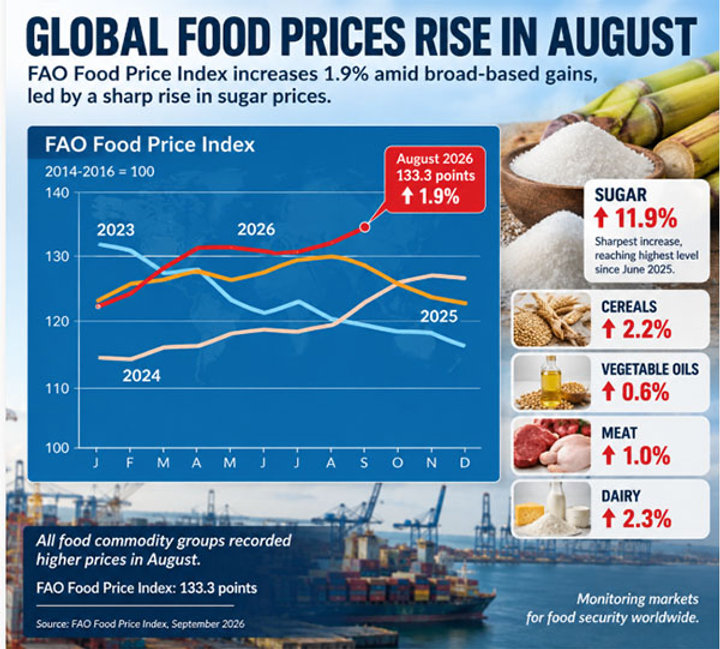
    New preliminary inflation data released by Suriname’s General Bureau of Statistics (ABS) has confirmed that consumer prices continued their upward trend in June, pushing the country’s 12-month average inflation rate to 10.5%. Month-over-month, overall inflation hit 1.2% in June, with food products emerging as the single largest driver of rising living costs across the nation.

    Fresh produce recorded the most dramatic price surge among all food categories. Between May and June, the price of fruits and vegetables jumped 7.8%, and compared to June 2025, these staple goods are now 32.5% more expensive for consumers.

    Meat and meat products also saw significant price growth, with a 4.9% month-over-month increase and a 16.6% year-over-year rise. Bread and cereal products followed close behind, posting a 4.7% monthly price hike and a 6.5% annual increase. Additional price increases were recorded across other food and beverage segments: other food and non-alcoholic drinks rose 1.6% month-over-month, out-of-home beverages increased 1.2%, and out-of-home meals went up 0.5% in June.

    Sugar and sugar products stood as the only food category that became cheaper in June. Prices fell 0.7% compared to May, and are also slightly lower than they were one year prior.

    Across the 12 main categories that make up the consumer price index, food and non-alcoholic beverages recorded the strongest overall price growth. This was followed by alcoholic beverages and tobacco, household goods, and out-of-home dining. Two categories, healthcare and transportation, remained largely price-stable through June.

    ABS officials noted that the headline 10.5% annual inflation rate is an average calculated across a basket of 316 different goods and services, and substantial variation exists across individual products. Price changes for specific items ranged from a 39% decrease to a 600% increase compared to previous periods. It should also be noted that ABS does not conduct consumer price measurements in the inland districts of Marowijne, Brokopondo and Sipaliwini, where consumer prices are known to be many times higher than measured averages in other regions.

  • Rotaract Club of St. Kitts Signals Bold Return with Cockleshell Bay Clean-up

    Rotaract Club of St. Kitts Signals Bold Return with Cockleshell Bay Clean-up

    BASSETERRE, ST. KITTS – July 22, 2026 – After a period of reorganization, the Rotaract Club of St. Kitts has officially kicked off the 2026-27 Rotary service year with a bold new chapter, launching its tenure with a community-focused environmental initiative: a comprehensive clean-up of Cockleshell Bay held on Saturday, July 18.

    Dozens of club members and local volunteers turned out for the event, spending hours traversing the bay’s shoreline and adjacent coastal areas to clear away improperly discarded trash and debris. By the end of the day, the team had collected a total of 17 full bags of waste, dominated by single-use plastics, paper products, and other non-biodegradable materials that pose severe risks to marine ecosystems and coastal biodiversity.

    Beyond the immediate tangible improvement to the bay’s landscape, the clean-up initiative served a larger purpose: it drew public attention to the persistent, growing challenge of coastal pollution across St. Kitts, while underscoring the critical role that ordinary individuals and local community groups play in safeguarding the island nation’s iconic natural environments. For the newly relaunched Rotaract Club of St. Kitts, this opening action aligns directly with both its core mission of grassroots community service and one of Rotary International’s key global priority areas: environmental stewardship.

    Club leaders emphasized that hands-on initiatives like coastal clean-ups are designed to do more than just remove existing waste; they aim to shift public behavior and build broader environmental awareness across the island. “When we see the volume and variety of trash we pulled from just one stretch of beach, it’s clear that environmental protection cannot fall solely to government agencies,” a club spokesperson noted in remarks following the event. “Every single person has a responsibility to dispose of waste properly and commit to caring for our beaches and coastal spaces that draw visitors and sustain local life.”

    The club is calling on both St. Kitts residents and the thousands of tourists who visit the island’s world-famous beaches annually to be more intentional about preserving coastal cleanliness, and to consider the far-reaching damage that littering and improper waste disposal cause to native wildlife, marine habitats, and local community well-being. “Our beaches, coastlines, and marine resources are among the most valuable assets we have as a nation,” the spokesperson added. “Protecting them cannot be achieved with one single clean-up event. It requires a full mindset shift around who owns our natural spaces and who is responsible for protecting them.”

    The organization also highlighted that healthy coastal environments are deeply tied to St. Kitts’ economic health, which relies heavily on nature-driven tourism and sustainable fishing. For that reason, the club has committed to hosting regular quarterly beach clean-ups across the island throughout the 2026-27 service year. To expand the scale and impact of its environmental programming, the Rotaract Club of St. Kitts is actively seeking partnerships with other local community groups, primary and secondary schools, non-governmental environmental organizations, and private sector businesses that share its commitment to protecting St. Kitts’ natural heritage.