博客

  • NDP fixed in months what ULP didn’t in 25 years — PM

    NDP fixed in months what ULP didn’t in 25 years — PM

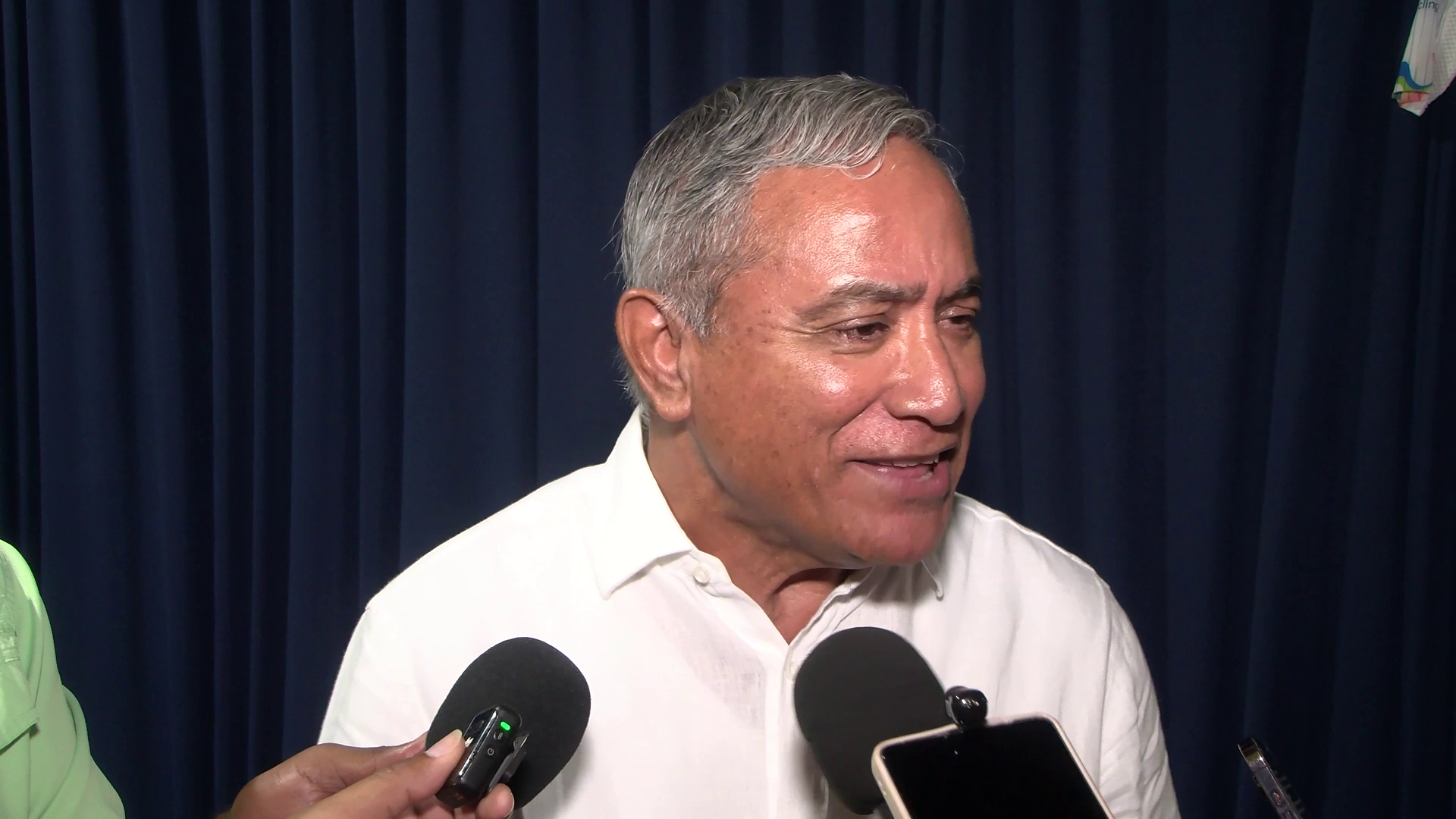
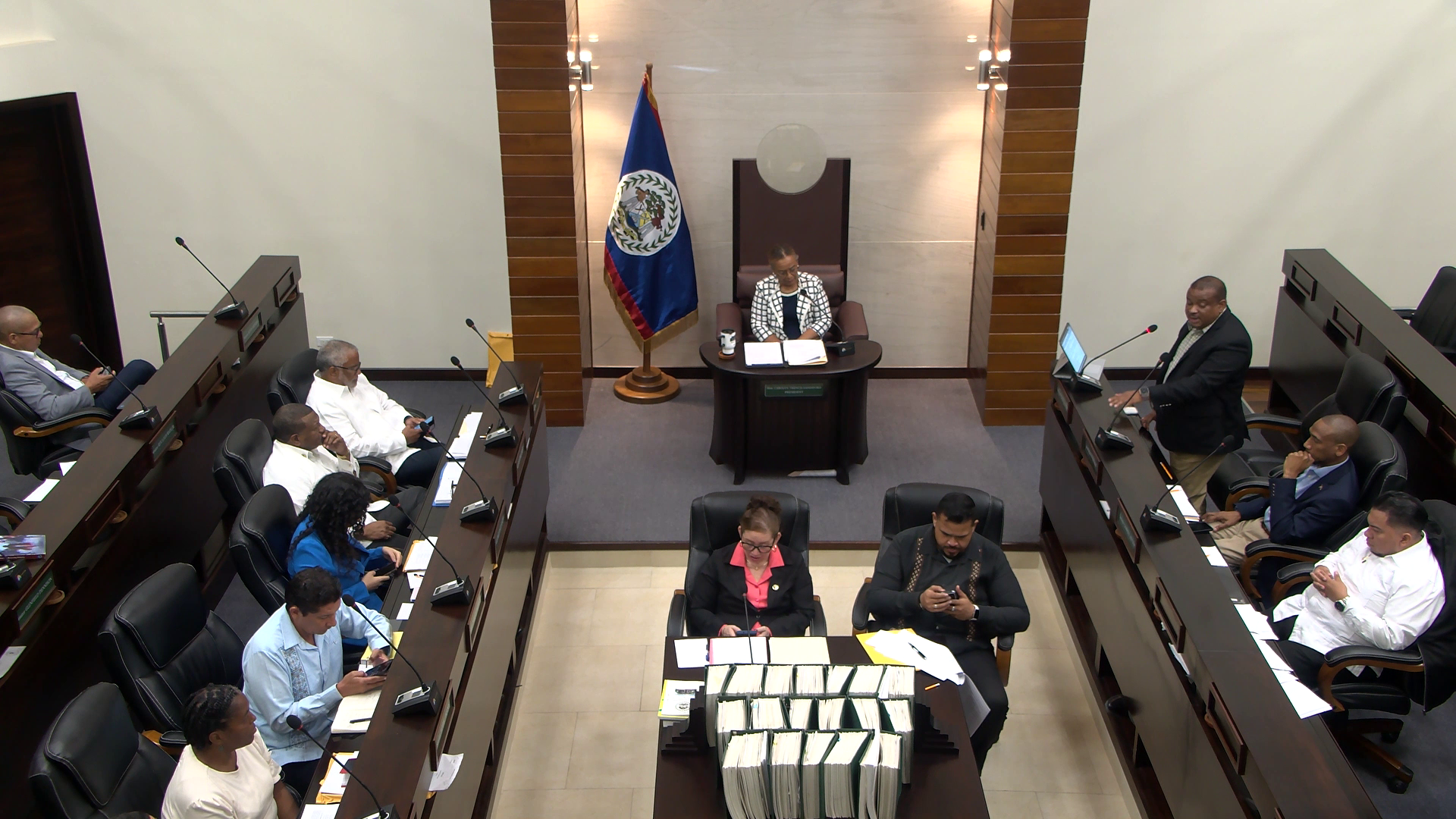
    During Tuesday’s parliamentary debate on the 2026 Daily Paid and Minor Salaried Officers (Compassionate Gratuity) Bill, Saint Vincent and the Grenadines Prime Minister Godwin Friday framed the long-awaited legislation as a landmark correction of a decades-old injustice targeting the nation’s most vulnerable public employees. Speaking to lawmakers, Friday described the bill as a “big deal” for non-pensionable low-wage public workers, noting that his Unity Labour Party-led predecessor administrations failed to address the gap for 25 years, while his current government advanced the measure in just months.

    Friday opened the debate by calling the moment a significant victory for all Vincentians, emphasizing that the legislation centers a group of public workers that have long been sidelined by policy makers. The bill specifically targets daily paid workers and minor salaried public officers, including cleaners, facility attendants, ancillary healthcare staff, government drivers, security guards and other frontline low-wage employees excluded from the traditional public service pension scheme. “These are the lowest-paid workers at the bottom of the public service ladder, and they have long received far too little attention from policymakers,” Friday told the chamber.

    The prime minister reminded lawmakers that prioritizing this group of workers was one of his administration’s first policy actions after taking office. Early in his term, Friday’s government extended public service salary bonuses to include daily paid and part-time public workers, a move that required reallocating funds from other budget lines to deliver support to the workers who needed it most. “More than any other group, these workers need that little extra money in their pockets,” Friday said. “If other groups have to accept a little less to make sure these workers are included, that is a trade worth making.” The decision, he added, made clear that his administration was committed to prioritizing “the little person” in all policy decisions.

    Contrary to some claims that the policy is entirely new, Friday acknowledged that an informal compassionate gratuity system for non-pensionable workers has existed for decades. Previously, retiring workers eligible for the benefit had to submit a formal request to Cabinet for a one-time lump sum payment with no standardized rules or guarantees. The new bill codifies this ad-hoc practice into formal law and expands protections for workers, introducing clear, legally defined eligibility criteria that outline exactly who qualifies for the benefit. It also establishes a minimum service requirement, and extends coverage to both workers who retire after long service and those who die while still employed.

    A key structural update is the formalization of a standardized calculation formula, which allocates two weeks of pay for every full year of service completed by the worker. The new legislation also extends the maximum number of service years that can be counted toward the gratuity payout, raising the cap from the previous 26 years under the old informal system to 33 and one-third years. This change, Friday explained, directly increases the final lump sum payout for long-serving workers, putting more much-needed money into the pockets of low-wage employees as they exit the workforce.

    The bill also addresses a critical emerging income gap created by ongoing National Insurance Services (NIS) pension reforms, which have gradually raised the national pensionable age from 60 to 65. Unlike pensionable public workers, non-pensionable public employees do not receive a government-funded pension, meaning they now face a five-year gap between the old retirement age of 60 and when they become eligible to receive their NIS benefits. Friday called this gap a major financial risk for low-wage workers nearing retirement, noting that the compassionate gratuity acts as a critical safety net rather than a discretionary benefit. The lump sum can be used to launch a small income-generating business, cover outstanding personal debts, purchase essential assets, or cover living costs until NIS pension payments begin. For workers who die while still employed, the benefit also provides immediate financial support to their grieving families.

    One of the most impactful user-centric changes introduced by the bill is a pre-designated beneficiary system for workers who die in service. Under the old informal system, families often had to complete lengthy, expensive probate processes to access the relatively modest gratuity funds, which typically range between 10,000 Eastern Caribbean dollars and 12,000 Eastern Caribbean dollars. The new law allows workers to name a beneficiary in advance via an official form attached to the legislation, ensuring funds are transferred directly to the intended family member without unnecessary legal delays.

    In response to widespread public complaints about long wait times for gratuity payouts under the old system, the bill also enshrines strict mandatory payment timelines. For retiring workers, payouts must be issued within three months of application approval, with a hard maximum deadline of six months. The same timeline applies to beneficiaries of workers who die in service. Friday stressed that the clear timeline is non-negotiable for public administrators: “We didn’t want vague language saying payment would come in ‘due course’ or ‘reasonable time.’ We put a clear deadline: three months. When we say three months means three months, that is exactly what we mean.”

  • St Philip folk push for safe spaces, restored heritage sites

    St Philip folk push for safe spaces, restored heritage sites

    Residents of St Philip parish in Barbados have secured formal commitments from Prime Minister Mia Mottley and local parliamentary representatives to advance long-delayed projects restoring and expanding the parish’s recreational and heritage spaces. The pledges came out of the latest community Ideas Forum, held Monday night at Princess Margaret Secondary School, where locals gathered to lay out pressing needs for shared public spaces that serve young athletes, aging residents, community organizers, and the island’s tourism sector.

    Many of the appeals centered on expanding access to safe recreational infrastructure, a need framed by residents as critical to supporting youth development and steering young people away from involvement in criminal activity. Long-time community advocate Jones, a committee member of the popular Long Bay 5K run, opened the call for increased public investment in recreational facilities to keep local youth productively engaged.

    Sherwin Greenidge, a Gemswick resident, expanded on this demand, putting forward a detailed proposal for a combined community recreation and wellness center on a vacant, previously used plot of land in his neighborhood. Greenidge noted that for more than 25 years, local residents have advocated for development on this site, pointing to unmet needs across multiple demographic groups. Talented young football and cricket players who currently hone their skills at the Dodds detention facility would gain a dedicated public space to practice, while older residents like himself would no longer need to compete with vehicle traffic to walk for exercise in the Gemswick area.

    Under Greenidge’s plan, the multi-use facility would include outdoor playing fields, a pavilion, a gym, and a dedicated walking and jogging track, supporting both elite youth athletic development and routine healthy activity for all residents. He added that the center could also double as an emergency resource hub during natural disasters, expanding its public value beyond recreation.

    Fellow Gemswick resident Jim Brown echoed Greenidge’s call, delivering an impassioned appeal for upgrades to the neighborhood’s existing playing field—an improvement he has lobbied consecutive governments to deliver for more than 30 years. Brown noted that the upgraded field could host cricket, netball, walking groups, and provide a safe gathering space for local youth.

    Responding to these requests, St Philip South Member of Parliament Indar Weir confirmed that preliminary talks over land acquisition for the proposed Gemswick recreation center began with former housing minister Dwight Sutherland, and that Prime Minister Mottley first committed to the project ahead of the 2018 general election. Progress was derailed by the global COVID-19 pandemic, but Weir reaffirmed the government’s commitment to delivering both the new center and the playing field upgrades.

    “I am strongly supporting Jim Brown and Sherwin to make sure we have the facility delivered to the people at Gemswick,” Weir said. “This also came up in the last election campaign, and I can also give you the assurance that I discussed it with the prime minister…The youngsters, when I canvassed the area, also reminded me that they needed to make sure they have that facility delivered to them.”

    Weir also addressed resident calls for dedicated safe walking spaces, revealing that negotiations are already underway with the private owner of Oldbury Woods to open the land for public use. He added that there are ongoing discussions to redevelop the wooded area, which is home to a large concentration of mahogany trees, into a national mahogany park that would include public vending opportunities for local entrepreneurs, leveraging its strategic location to drive community economic activity.

    Beyond recreational infrastructure, long-time local educator Betty-Lyn Estwick pushed for urgent restoration of the iconic Ragged Point Lighthouse, a key historical and tourist site that has fallen into disrepair. Estwick argued that the rusted, unmaintained site is not fit to welcome visiting tourists, and called for it to be redeveloped into a safe public recreational space with new landscaping and seating. She also highlighted the need for improved maintenance and restoration for other Barbados heritage sites including Mount Hillaby and the Morgan Lewis Windmill, and called for the reinstatement of the Parks and Beaches Commission, the former agency replaced by the National Conservation Commission that previously oversaw management of public recreational and heritage spaces.

    “How do we feel comfortable telling visitors, these are our places of interest, and then we don’t take care of them? If tourism is our business, let us take it seriously and let us really play our part,” Estwick said. “If you bring back parks and beaches and you give them good supervisors, let them see that you’re serious, they can have responsibility for looking after these places and keeping them looking the way they should look.”

    Attorney General Wilfred Abrahams backed Estwick’s call, noting that expanding and diversifying Barbados’ tourism and recreational offerings beyond the island’s most well-known sites is a key priority, and he would personally advocate for moving forward with the lighthouse restoration. St Philip North MP Dr. Sonia Browne also confirmed support for the project, adding that a formal proposal for a lighthouse museum centered on the site’s historical heritage has already been submitted to government for consideration.

    In closing out the forum, local resident Carl Padmore called for a new performance space at Princess Margaret Secondary School to be named in honor of pioneering Barbadian theatre figure Osbert McLean, and pushed for greater preservation of Six Roads’ unique historical heritage and its contributions to St Philip’s development.

    Addressing attendees after the public comment period, Prime Minister Mottley delivered a firm pledge that her government would deliver a permanent auditorium and amphitheater facility for St Philip during its current term, contingent on the island avoiding major natural disasters that would disrupt government budget priorities. “I give you a commitment that we will have a proper amphitheater auditorium-type facility for the people of St Philip that will happen in this term, God willing and God willing that there are no further natural disasters that will take us off track,” Mottley said.

  • DNA behandelt toetreding Suriname tot VN-protocol tegen de doodstraf

    DNA behandelt toetreding Suriname tot VN-protocol tegen de doodstraf

    On July 23, Suriname’s National Assembly (DNA) began consideration of a draft bill that would pave the way for the South American nation to join the Second Optional Protocol to the International Covenant on Civil and Political Rights (ICCPR), a United Nations agreement focused on permanently eliminating capital punishment.

    Adopted by the UN General Assembly in 1989, the Second Optional Protocol binds all participating states to legally commit to ending all use of the death penalty. Signatory nations are prohibited from carrying out executions, and are barred from reintroducing capital punishment into their national legal systems, with only extremely narrow exceptions permitted under the treaty’s terms.

    While Suriname has not executed any prisoners or applied the death penalty in judicial proceedings for decades, accession to the protocol would enshrine the country’s de facto abolition as a binding international legal obligation. This creates an additional layer of legal protection that prevents future governments from reversing the current practice and reinstating capital punishment, aligned with the limited reservations allowed under the protocol for accession states.

    Suriname is already a full party to the core International Covenant on Civil and Political Rights, a foundational human rights treaty that codifies fundamental protections including the right to life, the right to a fair trial, and other core civil and political guarantees for all citizens. The Second Optional Protocol is a supplementary agreement that builds on these core commitments, with its sole focus being the permanent abolition of the death penalty globally.

    If the draft bill receives final approval from the National Assembly, the move will mark another significant milestone in Suriname’s implementation of its international human rights obligations. For years, the United Nations and global human rights monitoring bodies have repeatedly urged all countries that still retain capital punishment in their legislation to join this protocol and advance global abolition efforts.

    Per the official DNA agenda, the draft bill will be debated at a public plenary session scheduled to begin at 10:00 a.m. local time on Thursday. Preparatory review of the legislation has already been completed by a special committee of rapporteurs led by chair Ebu Jones, with additional members including Dew Sharman, Jennifer Vreedzaam, Iona Edwards, Hakiem Lalmohamed, Genevievre Jordan and Poetini Atompai.

  • US judge sets June 2027 trial date for Venezuela’s Maduro

    US judge sets June 2027 trial date for Venezuela’s Maduro

    A federal judge in New York has formally scheduled a June 1, 2027, jury trial for former Venezuelan President Nicolas Maduro and his wife Cilia Flores, who face sweeping U.S. drug trafficking charges stemming from allegations they exploited their state leadership positions to move large quantities of cocaine into the United States. The scheduling decision came out of a 20-minute hearing Wednesday in Manhattan federal court, overseen by veteran U.S. District Judge Alvin Hellerstein, marking one of the most high-profile and politically charged criminal cases against a foreign head of state in modern U.S. history.

    The case stems from a nighttime January 3 military raid on Maduro and Flores’ heavily secured Caracas residence, carried out by U.S. special operations commandos on orders from then-U.S. President Donald Trump. The pair, aged 63 and 69 respectively, were transferred immediately to New York to face a previously unsealed indictment that accuses them of abusing their authority in oil-rich Venezuela to coordinate large-scale cocaine trafficking operations. During Wednesday’s hearing, the couple appeared in the courtroom dressed in standard beige correctional facility attire.

    Both Maduro and Flores have entered not guilty pleas to all charges brought against them. Maduro faces four felony counts, including charges of narcoterrorism conspiracy and cocaine importation conspiracy, charges that carry a potential mandatory life sentence if he is convicted.

    Lead defense counsel Barry Pollack confirmed to the court Wednesday that his legal team will move to have the entire case dismissed before trial, arguing that Maduro holds sovereign immunity from prosecution as a sitting head of state at the time of his capture, a position long held by his legal team. Judge Hellerstein set a September 2 deadline for Maduro’s legal team to file the first round of dismissal motions, with an oral argument hearing on the motions scheduled for November 17. Notably, both federal prosecutors from the Manhattan U.S. Attorney’s Office and Maduro’s defense team had jointly proposed a June 2027 trial start date in a joint court filing submitted Tuesday night, a timeline both sides described as realistic.

    “All parties agree that this schedule is workable and realistic. We do not anticipate delays, but of course we will keep the court informed if any unforeseen issues arise,” Pollack told the judge during Wednesday’s proceeding.

    Maduro, a socialist leader who held Venezuela’s presidency from 2013 until his capture and maintained a long history of tense, antagonistic relations with successive U.S. administrations, previously labeled himself a “prisoner of war” during his initial court appearance on January 5. As U.S. marshals led Maduro out of the courtroom following Wednesday’s hearing, he was observed waving toward an unidentified person seated in the public gallery.

  • The Commonwealth’s greatest prize lies beyond the games

    The Commonwealth’s greatest prize lies beyond the games

    For decades, the Commonwealth Games have stood as the most visible public face of the 56-nation Commonwealth bloc, drawing millions of viewers who tune in to watch elite athletes compete for gold, silver, and bronze. But long-time observers and policy analysts argue that the organization’s most meaningful impact extends far beyond the playing fields, touching areas of global cooperation, sustainable development, and shared progress that rarely make headline news.

    Founded in the aftermath of the British Empire’s collapse, the Commonwealth has evolved from a loose association of former colonial territories into a modern intergovernmental body focused on addressing 21st-century challenges that cross national borders. Unlike high-profile sporting events that capture public attention every four years, the bloc’s ongoing work spans critical areas from climate action and gender equality to trade facilitation and public health capacity building for small island developing states, many of which are among the most vulnerable to global shocks.

    One of the Commonwealth’s underrecognized strengths is its ability to bridge divides between high-income and low-income nations, creating a space for dialogue that is often harder to achieve in larger, more fragmented global institutions. For small nations that might otherwise be sidelined in international negotiations, the Commonwealth provides a platform to amplify their voices on issues ranging from sea-level rise to debt relief. It also supports grassroots initiatives, from youth leadership programs to anti-corruption campaigns, that strengthen democratic governance at the local and national levels.

    Critics have occasionally questioned the relevance of the Commonwealth in a modern geopolitical landscape, arguing that its historical ties create unnecessary divisions and that its impact is limited by a lack of binding enforcement power. But supporters counter that the organization’s soft power and collaborative approach are its greatest assets, enabling it to drive incremental, meaningful change through consensus and shared values. As the next Commonwealth Games approach, many experts are reminding the public that the bloc’s greatest contribution to global good is not the thrill of competition, but the steady, ongoing work of building connections and solving shared problems across 2.5 billion people spread across every continent.

  • Scientists satellite-tag Hawksbill Turtle ‘Sandy’ in Nevis to track her Caribbean journey – WIC News

    Scientists satellite-tag Hawksbill Turtle ‘Sandy’ in Nevis to track her Caribbean journey – WIC News

    In a key step to advance marine conservation for one of the world’s most at-risk reptile species, researchers with the Sea Turtle Conservancy (STC) have outfitted an adult female hawksbill turtle with a satellite tracking tag following her nesting on Nevis’ Lovers Beach. Named Sandy by the conservation team, this critically endangered marine animal will have her post-nesting journey across the Caribbean monitored in real time by both scientists and interested members of the public.

    Sandy joins the 2026 iteration of Tour de Turtles, STC’s flagship annual conservation program that leverages cutting-edge satellite telemetry to map the long-distance migratory patterns of sea turtles after they complete nesting cycles. Beyond generating critical scientific data, the initiative also works to build global public awareness of the growing array of threats pushing sea turtle species toward extinction.

    This year, Sandy’s participation is sponsored by Four Seasons Resort Nevis, a partner that has collaborated with STC for 20 consecutive years to support turtle research, on-the-ground conservation action, and public education across the Caribbean region. The resort’s long-term commitment has already yielded meaningful progress, from protecting vulnerable nesting sites to expanding scientific understanding of how hawksbills move through the region’s waters.

    Hawksbill sea turtles are officially classified as Critically Endangered on the International Union for Conservation of Nature (IUCN) Red List, with populations plummeting over the past century due primarily to illegal poaching for their uniquely patterned shells. Historically, these shells were harvested to produce high-demand decorative “tortoiseshell” goods including jewelry, hair combs, and ornamental household items. In modern times, the species faces additional growing threats: widespread coastal habitat destruction, accidental bycatch in commercial fishing gear, pervasive marine plastic pollution, and climate-driven changes to nesting beaches and ocean ecosystems.

    Data transmitted from Sandy’s satellite tag will fill critical gaps in existing research by helping scientists pinpoint key feeding grounds, migratory corridors, and habitats that require urgent long-term protective designation. Researchers emphasize that this tracking work is particularly vital because hawksbill turtles often travel hundreds, even thousands, of kilometers across international waters after nesting, a migratory range that makes coordinated protection challenging without clear data on their routes.

    Sandy was released back into the Caribbean on July 22, 2026, just after completing her nesting on Lovers Beach. Conservation biologists recorded her curved carapace length at 83 centimeters and width at 71 centimeters, confirming that she is a fully mature breeding adult, a valuable demographic for research on reproductive and migratory behavior.

    Early tracking data collected in the hours immediately following her release shows Sandy remained close to the Nevis coastline, a behavior researchers note is typical for newly nested hawksbills before they embark on their long journeys to distant foraging grounds.

    Unlike many research projects that keep data restricted to scientific teams, Tour de Turtles opens Sandy’s journey to public observation via the program’s online tracking platform. STC officials note that public access not only builds awareness of sea turtle conservation but also turns a single research project into a tool that engages global audiences in protecting one of the ocean’s most imperiled species.

  • St Kitts and Nevis Olympic Committee (SKNOC) Announces Delegations for 2026 Commonwealth Games and C.A.C Games

    St Kitts and Nevis Olympic Committee (SKNOC) Announces Delegations for 2026 Commonwealth Games and C.A.C Games

    BASSETERRE, St. Kitts – In an official announcement aligned with its 2025–2029 Strategic Plan focused on advancing athlete growth and competitive support, the St. Kitts and Nevis Olympic Committee (SKNOC) has formally confirmed its national delegations set to compete at two of the year’s most prestigious regional and Commonwealth multi-sport events in 2026.

    From July 23 to August 8, 2026, St. Kitts and Nevis athletes will travel to two host locations: Glasgow, Scotland for the 2026 Commonwealth Games, and the Dominican Republic for the Central American and Caribbean (CAC) Centro Caribe Sports Games. For the SKNOC, this year’s participation carries extra historic weight, as the federation will make its competitive debut in two new sporting disciplines: sailing and 3×3 basketball, both at the CAC Games.

    Leading the seven-person 2026 Commonwealth Games delegation is Lester Hanley, who serves as the event’s Chef de Mission. All competing athletes will compete across two core sports: track and field athletics and swimming. In athletics, Shamarie Roberts will contest the men’s 100-meter sprint, while Alexander Caines is set to compete in the men’s 800-meter run. For swimming, Jonathon Essien is scheduled to race in both the men’s 100-meter butterfly and 50-meter butterfly, and Skyla Connor will compete in the women’s 50-meter breaststroke and women’s 50-meter freestyle. The delegation is supported by head coach Eldon Thomas and physiotherapist David Steven to keep athletes in peak competitive condition.

    The larger CAC Games delegation, totaling 18 members, will be headed by Senior Chef de Mission Leroy Greene, with Brenda Allen stepping in as General Team Manager and Dwain Archibald handling all on-team medical responsibilities as the delegation’s official doctor. St. Kitts and Nevis will field competitors across four distinct disciplines at the Dominican Republic event: tennis, beach volleyball, 3×3 basketball, and sailing, the latter two being historic first appearances for the federation.

    In tennis, Khalil Burroughs and Omar Mongerie will each compete in both men’s singles and men’s doubles, guided by head coach Watkins Chiverton. For beach volleyball, two national teams will compete: Zendai Richards and Elkreen Morton in the men’s division, and Jontette Hensley Philip and Shajunee Gumbs in the women’s division, with Richard Swan serving as the team’s coach. The historic debut 3×3 basketball roster includes Cecil Angel, Daivique Osbourne, Makari Gumbs, and Tyquan Rogers, led by coach Wendell Pemberton. Rounding out the delegation in the other debut discipline, sailing, Amadi Byron-Hendrickson will compete in the men’s dinghy class, with Nicholas Dupre acting as the team’s coach.

    Competition schedules for both events place swimming at the Commonwealth Games running from July 24 to July 29, with track and field events taking place from July 27 to July 29. At the CAC Games, tennis competition is scheduled from July 24 to July 30, beach volleyball from July 25 to July 30, 3×3 basketball from August 1 to August 2, and sailing running from August 1 to August 6.

    In closing, the SKNOC extended its full well wishes to all members of Team St. Kitts and Nevis, wishing athletes safe travel, strong performances, and success as they represent the small island federation on the global and regional international sports stages.

  • Guyana: Dodental MV Barima stijgt naar 103

    Guyana: Dodental MV Barima stijgt naar 103

    Three full days of coordinated search, rescue and recovery operations involving Guyana’s coast guard, private boat operators and local fishermen have pushed the confirmed death toll from the capsizing of the MV Barima ferry to 103, with 77 people rescued alive from the disaster, according to official updates from the government.

    The latest fatality count follows the recovery of 22 additional bodies recovered on the third day of response to the maritime tragedy, Public Works Minister Juan Edghill announced during a press briefing confirming the updated casualty and rescue figures.

    The deadly incident has triggered fierce public and political backlash, with widespread demands for Minister Edghill’s resignation from his cabinet post. Opposition political groups including WIN, APNU, FGM and VPAC have accused the national government of systemic failures and leadership negligence, arguing that ministerial accountability must extend beyond the low-level staff directly involved in the MV Barima’s operations. Calls for resignation have also been extended to Public Utilities and Aviation Minister Deodat Indar and MARAD Director Stephen Thomas. In a preliminary administrative move ahead of a full formal investigation, the government placed the entire management team responsible for cargo loading and safety oversight of the MV Barima on administrative leave on Monday.

    Responding to the opposition’s demands during a press conference, Prime Minister Mark Phillips asserted that any decisions on ministerial removals fall exclusively under the authority of the presidency. He dismissed the criticism as “noise”, emphasizing that the national priority must remain focused on ongoing search, rescue and recovery efforts. Phillips also noted that the government has already collaborated with opposition parties on response operations, and called for calm and stability across the country.

    After the coordinates of the sunken wreck were confirmed, search and recovery operations have been significantly expanded. Currently, 16 vessels from both government and private sectors are deployed across a search area expanded to 2,100 square kilometers, extending all the way to the Waini Point region, in a bid to increase the chances of locating any remaining survivors.

    French and local divers are currently conducting underwater operations around the wreck site. While one body has been identified inside the capsized vessel, challenging conditions have so far prevented recovery teams from retrieving it. Additional divers, including specialist salvage experts from Trinidad and Brazil, are expected to arrive imminently to speed up recovery work.

    All search and recovery activities are coordinated and supported by the Guyana Coast Guard and other relevant state agencies. Authorities have confirmed that all recovered remains are immediately transferred to police at a dedicated staging facility at the Charity River Dam, to support identification efforts. To support bereaved family members, special flights are being operated to transport people from remote inland communities to hospital facilities to formally identify deceased loved ones, with the process supported by Minister of Health Frank Anthony and his team. As of the latest update, 44 recovered bodies have been formally identified, and 23 of those have already been released to their families for burial.

    Opposition leader Azruddin Mohamed has issued scathing criticism of the government’s handling of the ferry sector and the disaster response, pointing to inconsistent passenger manifests, documented overloading of the vessel, and longstanding negligence within the responsible ministry. He has repeated calls for Minister Edghill’s immediate resignation, describing the MV Barima tragedy as one of the worst national disasters Guyana has faced since the 1978 Jonestown mass killing.

    Mohamed also claimed that required maintenance for the aging ferry was repeatedly delayed despite allocated budget for the work, and that internal disputes over service contracts had compromised safety oversight. The MV Barima was 90 years old at the time of its capsizing, and should have been decommissioned years ago due to safety concerns, according to the opposition leader.

    In response to the tragedy, President Irfaan Ali has declared three days of national mourning, and has pledged to launch a full, transparent investigation into every aspect of the disaster. The president affirmed that the government’s top priorities remain saving any remaining lives, supporting impacted families and communities, and delivering full, clear answers to relatives of those lost in the incident.

  • Captain dies after rescue

    Captain dies after rescue

    An eight-day nightmare of being lost adrift in the open Atlantic ended in mixed tragedy and relief for the crew of the missing Trinidadian fishing vessel St Vincent VII, after the captain of the vessel died just hours after he and his five crewmates were pulled to safety by a passing commercial ship. The Ministry of Defence of Trinidad and Tobago confirmed the devastating turn of events in an official statement released Wednesday, just hours after a morning announcement that all six crew members had been found alive.

    The ordeal for the St Vincent VII’s crew began on July 6, when the vessel, carrying six yellowfin tuna fishermen employed by local operator Renita Enterprises Ltd, departed the Chaguaramas marine yard for a fishing expedition. On July 13, the vessel caught fire roughly 30 nautical miles off the maritime border of Suriname and French Guiana, disabling its power systems and cutting off all communication with shore. For more than a week, the vessel drifted aimlessly with the Atlantic’s trade winds and currents, leaving families in the dark and sparking a widespread regional search effort.

    The dramatic rescue unfolded at approximately 9 p.m. on Tuesday, when the Maritime Operations Command Centre received an unexpected report from the crew of the MV Marvel Kite, a cargo ship bound for the United States. While traveling west around 349 nautical miles east of Galeota, the Marvel Kite’s crew spotted the listing, disabled St Vincent VII in open water. After approaching the distressed vessel, they confirmed that all six missing fishermen were on board, alive. Early reports from the rescue team described the men as being in reasonably good health, a update that brought immediate waves of relief to anxious relatives who had spent more than a week pleading for help to locate the vessel.

    That hope quickly turned to grief, however, when 66-year-old captain Anthony Murray, a Trinidadian national, began experiencing severe respiratory distress just hours after being taken aboard the MV Marvel Kite. According to the Ministry’s statement, Murray initially showed no signs of pain or discomfort, but his breathing gradually became shallower, and he was pronounced lifeless before the rescue vessel could reach its planned rendezvous with the Trinidad and Tobago Coast Guard’s CG25 vessel off the coast of St. Lucia.

    Following Murray’s passing, the decision was made to divert the MV Marvel Kite to St. Vincent, where local authorities will complete a formal death declaration, conduct a medical examination, and provide any required care for the five surviving crew members. Once cleared by medical teams, the remaining fishermen will be flown back to Trinidad by the Trinidad and Tobago Air Guard.

    The Ministry of Defence has issued a formal apology for two separate delays in communicating updates to the public and the crew’s families. Officials first apologized for withholding the announcement of Murray’s death until after his immediate family had been notified, a step the ministry said was taken out of respect for the Murray family. In a signed statement, Defence Minister Wayne Sturge also extended the government’s gratitude to the crew of the MV Marvel Kite for their life-saving intervention, and offered sincere condolences to Murray’s family following his “untimely and unfortunate passing.”

    But the apology has not quelled frustration from the families of the surviving crew, who say they have been kept in the dark for days despite promises of immediate updates. Amanda Suraj, wife of crew member Shannon “Joey” Mohammed, told local reporters that while she was overjoyed to hear her husband had survived, she had yet to receive direct official notification from authorities or speak to her husband by phone, even after the Ministry of Defence published its initial rescue announcement to the media.

    Speaking from her family home in Claxton Bay Wednesday, Suraj criticized officials for prioritizing media statements over notifying next of kin, saying the ongoing uncertainty remains deeply traumatizing for waiting relatives. “I believe our prayers were answered because they were rescued, but I still haven’t heard my husband’s voice,” she said. “It is disrespectful that the Ministry of Defence issued a media release about the rescue, yet no one has contacted the families or allowed the crew members to call us.”

    Suraj added that conflicting rumors about the crew’s location have only heightened anxiety: reports have placed the rescued men in St. Lucia, Barbados, and St. Vincent, with no official confirmation of their whereabouts. After eight days adrift on a disabled vessel following the fire, Suraj said her family has already endured enough sleepless nights. “We’re thankful they are alive, but we deserve to hear from them after all this uncertainty,” she said.

  • DEATH TOLL 65

    DEATH TOLL 65

    The tragic capsizing of the MV Barima off the coast of Guyana last weekend has seen its death toll climb to 65, official updates confirmed on Thursday, as multi-national rescue teams join ongoing efforts to refloat the 87-year-old vessel that sank en route from Georgetown to the remote inland village of Port Kaituma, located in Guyana’s Barima-Waini administrative region.

    Speaking at an official press briefing, Guyana Prime Minister Mark Phillips announced that five additional bodies had been recovered in 24 hours of search operations, bringing the total number of fatalities recovered since search and rescue work began to 65. Of the recovered remains, 44 have been formally identified by next of kin, and 23 of those identified have already been released to families to proceed with funeral arrangements, Phillips said.

    Regional government agencies, alongside the national Ministry of Health and Ministry of Human Services and Social Security, are working around the clock alongside bereaved relatives to streamline the process of releasing remains for funeral rites and burials, the prime minister confirmed. He added that the number of survivors who were rescued from the incident remains unchanged at 76.

    Phillips emphasized that the government’s top immediate priority remains twofold: supporting grieving families through this crisis and bringing the search and recovery operation to a complete conclusion. “Our focus right now is not on compensation,” he stated. “We are concentrated on recovering remaining victims, covering all costs for burials and funeral ceremonies, and delivering whatever immediate assistance families require to get through this tragedy.” He clarified that the emergency support being provided to families is not classified as compensation, but rather a core responsibility of the government during a national crisis. Once the recovery operation is wrapped up, the government plans to launch a formal public commission of inquiry into the disaster as quickly as possible, he said. Compensation claims will only be addressed after the commission completes its investigation and submits its findings and policy recommendations.

    In a boost to recovery efforts, specialized maritime assets and personnel from the Trinidad and Tobago Coast Guard and the Brazilian Navy have now arrived at the incident site and joined the search, rescue and recovery mission. Phillips noted that these international teams will support deep diving operations and other technical recovery work that local teams are not fully equipped to carry out. In total, 19 vessels and three aircraft are currently deployed to the operation, with smaller craft from the Guyana Defence Force, Guyana Coast Guard and Maritime Administration Department searching inland waterways for any remaining passengers who may have been swept away from the main wreck site.

    Technical teams are currently conducting detailed structural assessments of the capsized vessel to identify the safest and most efficient strategy to improve access for diving teams working at the site. The current recovery plan calls for repositioning the vessel before deploying large marine salvage airbags around the hull. These buoyancy devices will restore enough buoyancy to refloat the MV Barima, after which the vessel will be towed closer to shore to allow for more thorough search and recovery of any remaining remains.

    To honor the lives lost in the disaster, the Guyanese government has declared three days of national mourning, which began Thursday. During the mourning period, all national flags will be flown at half-mast across the country, and Thursday was also designated a national day of prayer. Phillips announced that the public is invited to gather at the Kingston seawall at 6 p.m. local time for a national service of collective prayer and reflection. Additional prayer and reflection services will be held tomorrow in both Port Kaituma, the vessel’s destination, and Mabaruma, the regional capital.

    “The government remains fully committed to seeing the recovery effort through, supporting affected families in every way we can, and keeping every available resource deployed until the operation is fully complete,” Phillips said.

    As investigations into the cause of the disaster progress, law enforcement authorities have announced that a third person has been taken into custody for questioning. The latest detainee is the senior superintendent who oversaw the loading of cargo and passengers onto the MV Barima before the vessel departed Georgetown. According to Phillips, the superintendent voluntarily attended a questioning session with the Criminal Investigations Department alongside his legal representative, and was subsequently detained for further interrogation. Earlier this week, the vessel’s captain and a senior crew member were arrested after both failed mandatory post-incident drugs tests.

    Phillips cautioned that it is too early to confirm whether formal charges will be filed against any of the three detainees, noting that investigators are following standard legal procedure. “Investigators will collect all statements, the Director of Public Prosecutions will complete their technical legal review and submit recommendations,” he explained. “If investigators need additional time to build their case, they will request a 72-hour extension, as is allowed by law. We must follow due process every step of the way, and the public can be assured that we are adhering to all established protocols for police investigations.”

    Official records for the voyage list 116 passengers and a 17-member crew, but authorities estimate that as many as 179 passengers and crew were actually on board the vessel when it capsized.