博客

  • Court ruling triggers  prison review

    Court ruling triggers prison review

    A recent High Court ruling awarding over TT$2.5 million in damages to a former female inmate who endured sexual abuse at the hands of a serving prison officer has sparked urgent calls for a comprehensive audit of operational, administrative, and record-keeping frameworks across Trinidad and Tobago’s national prison service, according to the Prison Officers’ Association of Trinidad and Tobago (POATT).

    In the wake of the landmark judgment, acting Prisons Commissioner Elvin Scanterbury has already launched an internal review into all case-related prison documentation, with plans to conduct a full line-by-line review of the court’s ruling to map the alleged sequence of events and identify any required disciplinary or policy changes.

    Speaking exclusively to local outlet *Express* on Thursday, POATT General Secretary Lester Logie acknowledged the gravity of the allegations, noting that public scrutiny of the case has already taken a significant toll on the accused officer and their family. However, he stopped short of drawing definitive conclusions, explaining that he has not yet reviewed the full court judgment to understand the legal basis for the damages award or the court’s specific factual findings.

    Logie highlighted several systemic red flags raised by the case, starting with gaps in administrative accountability. “The devil is in the details. I would like to read the judgment to see exactly what the justice said,” he explained, pointing to concerns over missing or incomplete prison records and documentation that could have been critical to the court proceedings. He also questioned why the sexual assault allegations, a criminal offence under Trinidad and Tobago law, were resolved through a civil claim rather than criminal prosecution, saying, “Why this matter was not brought before [the criminal courts] beats me.”

    Drawing on established prison protocol, Logie noted that the alleged incident reportedly occurred in the early hours of the morning, a window when strict movement controls are already in place. Under standard policy, inmates are not permitted to leave their cells as early as 4 a.m. unless they are assigned to work in the facility’s ration room, and all off-hours movements require pre-approval from supervisory staff, formal logging in official records, and specific key access that only senior supervisors can grant. “We have procedures in place that have a check and balance,” Logie said, adding that all relevant documentation of these protocols and movements must be fully examined as part of the internal review.

    Another key point of concern for Logie is the quality of legal representation provided to the Prison Service and the accused officer during the civil proceedings. Based on his current understanding of the case, the accused officer never provided in-person testimony, and the court ruled solely on the basis of sworn affidavits submitted by both parties. “My opinion on the matter, so far, is that this matter probably wasn’t defended well,” Logie said. He added that the physical layout of prison dorms and common areas, as well as the presence of other inmates and staff on duty at the time of the alleged incident, are critical details that should have been brought forward to the court.

    Logie emphasized he is not seeking to downplay or dismiss the serious sexual abuse allegations, stressing that the claims demand full, transparent investigation. He said he supports Scanterbury’s internal review and hopes the process will not only bring clarity to the current case but also identify gaps in existing policies that can be closed to prevent similar allegations and systemic failures from arising in the future.

  • ‘Nelson’s conviction caused losses’

    ‘Nelson’s conviction caused losses’

    A high-stakes legal battle over a $96 million compensation claim against the state has reached the Court of Appeal, with the Office of the Attorney General arguing that the claimant, British King’s Counsel Vincent Nelson, is essentially seeking public payout for harms directly resulting from his own criminal conviction.

    The case stems from a 2017 indemnity agreement Nelson struck with the Trinidad and Tobago government, under which he agreed to cooperate as an informer and prosecution witness in an investigation into an alleged kickbacks-for-legal-fees conspiracy targeting former attorney general Anand Ramlogan, SC, and former United National Congress senator Gerald Ramdeen. In exchange, the then-attorney general Faris Al-Rawi committed to recommending to the independent Director of Public Prosecutions (DPP) that no criminal charges be brought against Nelson for matters covered in his notarized statement.

    After Nelson pleaded guilty to conspiracy to commit money laundering and corruption in 2019, he was stripped of his ability to practice law by the UK Bar Standards Board, leading to millions in alleged lost income and related financial losses. Nelson argues that these harms trace back to the government’s breach of the 2017 agreement: former prime minister Stuart Young disclosed his confidential notarized statement to the UK’s National Crime Agency (NCA) without following formal procedural requirements under the Mutual Assistance in Criminal Matters Act or other relevant legislation. He contends the High Court erred in dismissing his full claim after finding a breach of contract, arguing he is at minimum entitled to nominal damages or a formal declaration of state wrongdoing.

    Representing the Attorney General’s Office, King’s Counsel Tom Poole laid out the state’s defense before a three-judge panel of the Court of Appeal led by Justices Gillian Lucky, Carla Brown-Antoine and Maria Wilson. Poole emphasized that the core of the case turns on a clear legal distinction: Nelson’s loss of earnings and professional standing stem directly from his own criminal conviction and the resulting regulatory action by the Bar Standards Board, not from the government’s disclosure of his statement.

    “There’s a danger of conflating confidentiality with immunity,” Poole told the court, arguing Nelson has misinterpreted the 2017 agreement to stretch far beyond what parties actually negotiated. Poole explained that the agreement only guaranteed confidentiality protections for Nelson’s statement, not a blanket promise of immunity from prosecution. Under clause four of the agreement, Al-Rawi only committed to making a recommendation to the DPP – a distinction that reflected the constitutional independence of the DPP’s prosecutorial authority. Al-Rawi made clear in his evidence he could not grant immunity unilaterally, as that power rests solely with the DPP, Poole added.

    Poole further noted that Nelson’s own pre-action correspondence explicitly acknowledged he was barred from practicing law because the Bar Standards Board refused to issue him a practising certificate following his conviction. “That is his own explanation for why he could not practise,” Poole said, adding that the “immediate and operative impediment” to Nelson’s claimed income is his conviction, not the NCA disclosure.

    The state’s position aligns with a key finding from the initial High Court hearing: while Justice Jacqueline Wilson, KC, ruled the government did breach the confidentiality terms of the agreement by disclosing Nelson’s statement, she concluded the losses Nelson claimed fell outside the scope of the 2017 indemnity, leading her to dismiss the full $96 million claim. Poole told the appeal panel the High Court judge was correct on this central point.

    Nelson’s appeal also challenges the High Court’s finding that his potential liability to UK tax authorities is unrelated to the NCA disclosure. His claim includes compensation for lost earnings, lost insurance benefits, a $2.5 million conviction fine, and potential tax liabilities stemming from his guilty plea.

    In addition to defending the High Court’s dismissal of Nelson’s claim, the Attorney General’s Office has filed a cross-appeal, challenging the High Court’s core finding that the disclosure of Nelson’s notarized statement amounted to a breach of the 2017 agreement.

    The case carries broader procedural context: after Nelson refused to testify in the criminal case against Ramlogan and Ramdeen until his civil claim was resolved, the DPP discontinued all charges against the two men in October 2022, though the prosecution reserved the right to reinstate proceedings at a later date.

    Following the conclusion of legal submissions from both parties, the Court of Appeal panel has reserved its ruling, with Justice Lucky confirming that a judgment will be issued no later than six months from the hearing.

  • ‘Drought’ could mean higher Christmas prices

    ‘Drought’ could mean higher Christmas prices

    Aranjuez, long recognized as one of Trinidad and Tobago’s most critical agricultural heartlands, is bracing for projected dry conditions in the coming months, with local producers pushing for urgent government dialogue and intervention to mitigate widespread damage to crops and livelihoods.

    The Trinidad and Tobago Meteorological Service (TTMS) recently updated its seasonal forecasts, placing mainland Trinidad under a drought watch for September, with northern-eastern regions of the island and the entire island of Tobago at risk of upgrading to full drought warnings by October. The agency flagged the agriculture sector as particularly vulnerable, warning that inconsistent rainfall, growing frequency of prolonged heatwaves, and plummeting soil moisture levels create significant threats to both standing crops and livestock.

    During an on-the-ground visit to Aranjuez this week, multiple farmers were observed working through the scorching midday sun, deploying emergency misting and flood irrigation techniques to protect their plants from soaring temperatures that have already begun to stress vegetation.

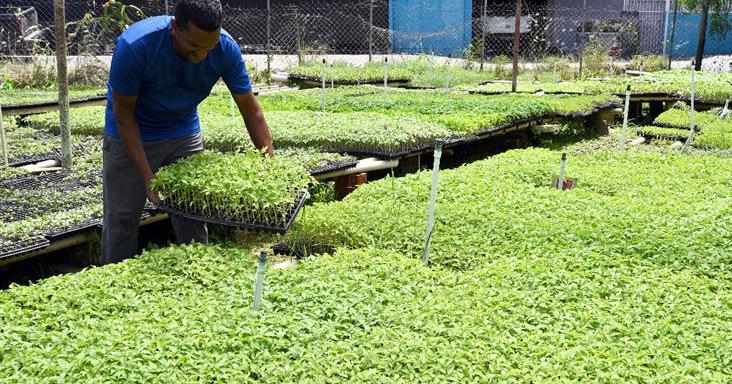
    At 3R’s Nursery, a major local seedling supplier and commercial farm, owner Sheldon Monsoon has emerged as a leading voice calling for the Ministry of Agriculture and key state agencies including the Water and Sewerage Authority (WASA) to launch immediate consultations with all members of the local agricultural community, including livestock rearers. The goal of these talks, Monsoon says, would be to map projected water supply shortfalls and co-develop targeted mitigation strategies ahead of the dry season.

    Monsoon explained that most Aranjuez agricultural operations rely on gravity-fed channels that draw water from the Aranjuez River for irrigation. However, many of these channels have become choked with sediment and overgrown vegetation, a problem that would cut off access to water as river levels drop in coming months. Clearing these channels is a low-cost, urgent fix that would vastly improve water access for small and large producers alike, he noted.

    Already, rising temperatures are taking a visible toll on a wide range of produce, from pumpkin, root vegetables, and cucumbers to sweet peppers, pimento, eggplant, hot peppers, and leaf salad greens, Monsoon added.

    Veteran farmer Hassan Cambridge echoed these concerns, saying he has had to double his daily labor to keep crops healthy under the current heat stress. Cambridge supports calls for full dredging of the Aranjuez River to boost water storage and ensure enough water can flow through the cleared channels to meet farmer needs if drought conditions fully develop.

    Trevor Maharaj, a local producer specializing in seasoning crops, warned that significant crop losses could ripple through to consumer prices all the way to the Christmas holiday season in 2026. Short-season crops and green seasonings including chives, multiple thyme varieties, ginger, and chadon beni are already at high risk, alongside popular vegetables for traditional dishes like choka — baigan, pumpkin, and tomatoes. Maharaj added that even tree crops popular for the upcoming Divali festival, such as mangoes, face reduced yields and higher price tags, as extreme heat causes flower drop and disrupts regular fruiting cycles.

    Compounding drought and heat stress, local farmers are also battling an ongoing infestation of giant African snails, an invasive species that consumes a wide range of native and agricultural vegetation, causing additional widespread losses.

    Maharaj noted that Aranjuez and surrounding communities have long struggled with inconsistent pipe-borne water access, meaning farmers cannot rely on municipal supplies as a backup if river irrigation fails. Producers are calling on responsible authorities to develop and implement a formal contingency plan to guarantee adequate water access for agricultural operations through the projected dry period.

    “When farmers take major losses, consumers end up paying the price at the end of the supply chain,” Maharaj emphasized.

    Beyond agricultural risks, Trinidad and Tobago’s Ministry of Health has issued a public health advisory warning the general population about the dangers of unprotected exposure to extreme heat. The ministry notes that extended time in high temperatures can lead to heat exhaustion, and in severe unaddressed cases, progress to life-threatening heat stroke.

    The advisory outlines key warning signs for public awareness: heat exhaustion typically presents with cold, pale, clammy skin, a fast weak pulse, muscle cramps, headaches, nausea, dizziness, and fatigue. Heat stroke, by contrast, often brings a core body temperature of 39°C or higher, a rapid strong pulse, confusion, fainting, and vomiting, and requires immediate medical attention.

    To reduce heat-related health risks, the ministry urges the public to drink ample water throughout the day, avoid strenuous outdoor activity during the hottest hours of the day, and take regular water and shade breaks if outdoor work is unavoidable. Indoor cooling tips include closing windows and exterior shutters on sides of the building facing direct sun to trap cool air inside. The ministry also recommends wearing loose, light clothing, using broad-spectrum sunscreen with an SPF of 30 or higher (reapplied per label instructions) for anyone spending time outdoors, and prioritizing time in shaded or air-conditioned spaces when possible.

    The ministry closed its statement by reminding residents that extreme heat is a serious health hazard, particularly for those spending extended time outdoors or engaging in physically demanding work, and should not be underestimated.

  • Students suspended after fight

    Students suspended after fight

    Just 24 hours after the 2025 academic year kicked off for secondary schools across Trinidad and Tobago, a violent public altercation near North Eastern College in Sangre Grande has left four male students facing suspension and reignited ongoing conversations about school discipline, parental responsibility, and youth behavior in the digital age.

    The clash unfolded on Monday afternoon, within walking distance of the North Eastern College campus, outside a local church and nearby primary school. A 33-second video of the brawl quickly spread across social media platforms, drawing widespread public attention to the incident just one day into the new school term.

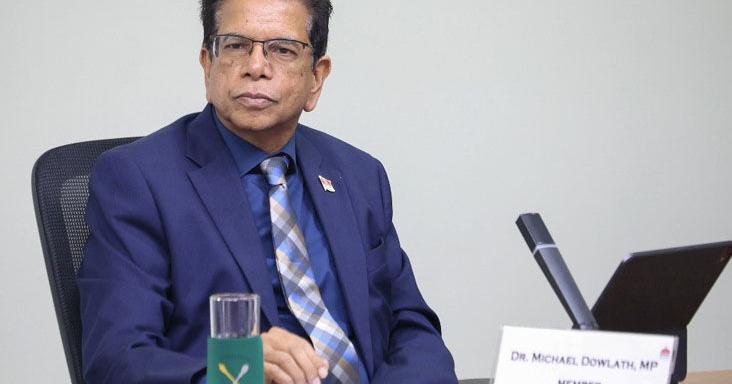
    By Tuesday, local law enforcement confirmed the four involved students had been issued an initial seven-day suspension, requiring them to report to the Sangre Grande Suspension Centre for the duration of their disciplinary leave. Education Minister Dr. Michael Dowlath confirmed Wednesday that the school’s principal has already convened an initial meeting with the students and their guardians, and has formally recommended extending the suspensions through the ministry’s official approval process.

    “The Schools Supervisor III for the North Eastern Education District has been informed, and the principal has recommended an extended suspension,” Dowlath shared in a WhatsApp message with the *Trinidad Express*. “That recommendation is subject to the required approval process. A formal case conference will be organised, and further action will be determined in accordance with Ministry procedures. The response must reflect the evidence and each student’s involvement.”

    The minister made clear he was deeply disappointed by the outbreak of student violence so early in the academic year, noting that his immediate priorities were protecting students impacted by the incident, supporting school leadership, and resolving the matter fairly but firmly. He aligned his response with recent remarks from Prime Minister Kamla Persad-Bissessar, who has publicly called for greater respect for educators, responsible student conduct, and more active engagement from caregivers.

    “A positive start to the school year and firm discipline go hand in hand,” Dowlath emphasized. He reiterated that the Ministry of Education’s zero-tolerance policy for school violence leaves no room for aggressive behavior on or near campus, referencing the National School Code of Conduct, which mandates prompt, proportional responses to incidents — ranging from temporary suspension to police referral when appropriate, all while upholding due process and legal protections for students.

    Beyond immediate disciplinary action, Dowlath outlined the ministry’s whole-of-system approach to curbing school violence, which combines clear conduct guidelines, on-campus police liaisons, targeted parental engagement, and dedicated student support services. “Counselling and structured reintegration, where appropriate, do not replace accountability for serious violence; they are intended to help prevent it from happening again,” he explained. The minister also issued a direct call to caregivers across the country, stressing that schools cannot address discipline challenges alone: parents must partner with education institutions, respond promptly to concerns raised by school staff, and reinforce norms of acceptable behavior within the home.

    Walter Stewart, president of the National Parent-Teacher Association (NPTA), echoed the education ministry’s zero-tolerance stance in a separate WhatsApp statement. Stewart noted that the start of a new academic year should set a foundation for a safe, productive term, making this early incident all more concerning. “This is clearly a reminder that school indiscipline requires sustained attention and a coordinated response by all stakeholders,” he said.

    When the *Express* visited the Sangre Grande incident site Tuesday, local residents shared mixed perspectives on how authorities should address the altercation and broader school discipline issues. Jesse Jordan, a 24-year-old local resident who passes the area regularly, told reporters that violent clashes between students are rare in the generally quiet neighborhood, though he had heard widespread discussion of Monday’s fight.

    Jordan pushed back on Prime Minister Persad-Bissessar’s recent suggestion that chronically undisciplined students should be sent home to their parents, arguing instead for a more supportive, intervention-focused approach. “I think she should have a system of mentorship for the students. Children these days are not learning the same because they are getting brain rot with TikTok and these different things,” he said.

  • OPINION: What Are Telecom Providers’ Obligations In Crime Fighting?

    OPINION: What Are Telecom Providers’ Obligations In Crime Fighting?

    As escalating crime in Antigua and Barbuda pushes government officials into a state of frantic panic, a growing crisis over the balance between public safety and constitutional liberties has emerged. Critics warn that leaders, desperate to regain control of a spiraling security situation, are abandoning long-held legal safeguards and risking overreach that could undermine the foundations of a free society. The core concern? That the push to crack down on crime is translating into a willingness to suspend core constitutional freedoms and the rule of law — a line that separates accountable democratic states from unaccountable regimes. At the heart of the current controversy is a standoff between national police and local telecommunications providers, first reported by Antigua News Room. An Assistant Police Commissioner has publicly accused telecom firms of deliberately delaying criminal investigations by failing to turn over requested subscriber and device data in a timely manner. Law enforcement has specifically singled out disputes around access to information stored on seized mobile phones, leaving officials frustrated by what they frame as non-cooperation. In response, the government has moved to punish providers with threats of $50,000 fines for non-compliance. What has not been addressed in official statements, however, is a critical detail: whether police have secured proper judicial warrants for the data they are demanding. This omission raises serious red flags for privacy advocates and legal observers, who argue that unfettered, warrantless access to personal citizen data violates core constitutional protections. While there is broad public sympathy for the challenges law enforcement faces as crime rates rise, critics argue that police should never receive unchecked authority to bypass privacy rights without proof of just cause. That authorization, they emphasize, must come from an independent magistrate or judge, who reviews the evidence police present before granting approval for data requests from telecom providers. No member of law enforcement, cabinet minister, or public official should be entitled to automatic access to a private citizen’s call records or device data without either a valid court warrant or explicit consent from the individual under investigation, argues the commentator. Warrantless requests represent a clear violation of the constitutionally guaranteed right to privacy, a safeguard put in place specifically to prevent unlawful overreach by government and law enforcement. History offers plenty of cautionary examples: the region is no stranger to documented cases of police officers and public officials abusing their access to privileged personal information for improper, often nefarious ends, with little to no accountability. Just recently, a sitting government minister made public, unauthorized comments about the private bank balance of a citizen, illustrating the very real risk of abuse when checks on executive power are removed. Adding further confusion to the dispute is the lack of clarity around exactly what police are demanding from telecom providers. Critics point out that unlocking password-protected seized mobile devices falls far outside the scope of service providers’ capabilities; telecom companies do not maintain access to the locked internal storage of personal handsets, and law enforcement would typically need to coordinate with device manufacturers like Apple or Google to unlock devices, not local service providers. Given the lack of mention of warrants in official complaints, the commentator suggests that telecom providers’ hesitation to comply is not only reasonable but commendable. It is highly likely that providers are holding back information while seeking legal guidance on potential liability for releasing private data: without a court warrant shielding them from legal action, providers open themselves up to major legal risk if they turn over user information. This, the argument goes, is almost certainly the root of the current impasse, not deliberate obstruction of justice. A core principle of democratic constitutional governance is often misunderstood by the public: constitutions are not merely documents outlining government structure, they are tools designed explicitly to limit the power of the state over private citizens. This is why all government leaders are required to swear a public oath to uphold the constitution — a promise to protect citizens from abuse of state power. To put the principle in perspective, the argument notes that no ordinary citizen would be granted the right to demand private telecom records just because they suspect a neighbor of defaming them to their employer. The same standard of protection must apply to actions by police and government officials. Requiring judicial oversight of data requests is not an unnecessary barrier to fighting crime; it is the critical protection that guards ordinary people against arbitrary abuse of power by the state.

  • ABIA to Host Customer Service Training Workshop

    ABIA to Host Customer Service Training Workshop

    Against a backdrop of growing regional competition and a push to elevate Antigua and Barbuda’s service-focused sectors, the Antigua and Barbuda Investment Authority (ABIA) has announced an interactive, skills-building customer service workshop open to a wide range of professionals and organizations across the twin-island nation.

    Titled *From Challenge to Opportunity: Mastering the Fundamentals of Great Customer Service*, the upcoming session is crafted to address a common pain point for businesses of all sizes: consistent, high-quality customer experience. Rather than a theoretical lecture, the workshop centers on hands-on learning that participants can immediately bring back to their teams and daily operations.

    Over the course of the event, attendees will dive into core topics that underpin reliable customer service, from identifying the root causes of common service breakdowns to laying strong operational foundations for consistent delivery. The curriculum also covers setting clear customer service standards, structuring effective internal staff training, building systems of accountability and employee recognition, executing successful service recovery after missteps, and exploring how leadership shapes a long-term culture of service excellence.

    The learning experience will leverage real-world case studies from local and regional businesses, collaborative group problem-solving exercises, and guided role-playing to help participants practice navigating tricky service scenarios. Through these activities, attendees will build the skills to spot unaddressed service gaps in their own organizations, communicate more clearly with both customers and team members, and de-escalate and resolve issues when they arise.

    Garfield Joseph, an industry professional with a Master of Business Administration, will lead the workshop, which is scheduled to take place on October 22, 2026, from 5:00 PM to 7:00 PM at the Antigua and Barbuda Inland Revenue Department. The participation fee is set at $200 Eastern Caribbean dollars per person.

    ABIA encourages employers to register teams of customer-facing and administrative staff to help strengthen their organization’s overall service delivery, boost customer retention and satisfaction, and embed a sustainable culture of service excellence. The workshop is open to a broad cross-section of professionals, including small business owners, entrepreneurs, team managers, supervisors, frontline customer service representatives, administrative staff, and any other professional tasked with delivering or improving customer service at their organization.

    Spots for the training are limited due to the interactive, small-group format of the session, so ABIA urges both individual participants and employers to complete their registration early through the official form at https://forms.gle/atm5zysm75QTby8y6. For any additional questions about the workshop content, registration, or logistics, interested parties can contact the ABIA directly by phone at 468-4077.

  • LVV en Invitroplants willen landbouwproductie opschalen

    LVV en Invitroplants willen landbouwproductie opschalen

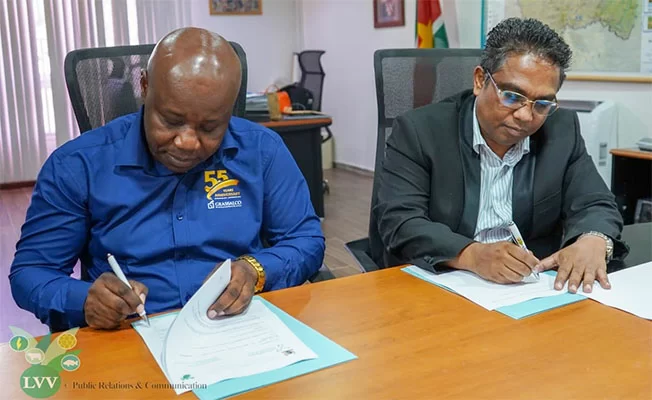
    A new strategic three-year partnership has been struck between Suriname’s Ministry of Agriculture, Livestock and Fisheries (LVV) and Invitroplants Grassalco N.V., aimed at scaling up national agricultural production and strengthening the sector’s long-term competitiveness. The collaboration, formalized via a signing ceremony attended by LVV Minister Mike Noersalim, acting Invitroplants Grassalco director Iwan Winson, Grassalco president-director Johan Seymor and relevant staff members, sets out multiple core priorities to transform Suriname’s agricultural landscape, with an option for extension following a mid-term performance review.

    Central to the partnership is expanding access to consistently high-quality planting material across the country. Invitroplants Grassalco brings existing advanced laboratory capacity, specialized technical expertise and established operational infrastructure to the table, enabling large-scale local production of standardized, quality planting material that was previously less accessible for Surinamese producers. The collaboration also targets support for medium-sized agricultural operations, with tailored programming for each of Suriname’s districts designed to help these businesses transition to larger-scale, market-focused production models. Joint project development and investment proposal drafting will be a core ongoing activity to deliver on this goal.

    Another key pillar of the agreement is the joint development of a national gene bank, a critical initiative for long-term agricultural conservation and innovation. The gene bank will work to preserve genetic material from both cultivated and native wild crop varieties, protecting Suriname’s unique agricultural biodiversity for future research and development.

    The partnership also includes a regional trade focus, with commitments to identify and resolve logistical bottlenecks that currently hinder regional agricultural trade and export growth. A specific highlighted priority is improving trade connectivity between Suriname and Barbados, to unlock new market opportunities for Surinamese agricultural producers.

    Ultimately, both parties aim to build a more diversified, competitive agricultural sector through this collaboration. Beyond just increasing total production volume, the partnership is structured to create the foundational conditions for Suriname’s agriculture industry to better meet the needs of local and regional markets over the long term.

  • FM Chet Greene Meets UK Minister Chris Elmore Ahead of CHOGM 2026

    FM Chet Greene Meets UK Minister Chris Elmore Ahead of CHOGM 2026

    As preparations for the 2026 Commonwealth Heads of Government Meeting (CHOGM) enter a critical phase, Antigua and Barbuda has stepped up high-level diplomatic engagement with the United Kingdom, holding a productive working meeting between top foreign policy officials from both island nations this week in London.

    Leading the Antigua and Barbuda delegation was E.P. Chet Greene, the country’s Minister of Foreign Affairs, Trade and Immigration, who met face-to-face with Chris Elmore, Parliamentary Under-Secretary of State at the UK’s Foreign, Commonwealth and Development Office. The gathering forms a core part of Greene’s ongoing London consultation schedule leading up to the upcoming Commonwealth summit scheduled for November. Also in attendance for the discussions were Her Excellency Karen-Mae Hill, Antigua and Barbuda’s High Commissioner to the UK and official Focal Point for 2026 CHOGM, and Caleb Gardiner, Third Secretary at the Antigua and Barbuda High Commission in London.

    During the talks, Minister Greene emphasized the critical value of robust bilateral and multilateral partnerships as Antigua and Barbuda makes final arrangements to host the entire 56-member Commonwealth bloc. He noted that the 2026 CHOGM represents a landmark opportunity to expand on-the-ground cooperation, unlock new targeted investment, and advance collective shared priorities across all member states of the association. The meeting also served as a key platform to reaffirm the deep, long-standing diplomatic and people-to-people ties that have bound Antigua and Barbuda and the UK for decades, with both sides exploring new avenues for sustained collaboration within the Commonwealth framework.

    High Commissioner Hill led specific portions of the discussion focused on UK engagement and coordinated support for Antigua and Barbuda’s core policy priorities for the 2026 summit. Scheduled to be hosted by Antigua and Barbuda, CHOGM 2026 will carry the official theme “Accelerating Partnerships and Investment for a Prosperous Commonwealth”, a framing that aligns directly with the host nation’s goals of forging deeper cross-bloc collaboration and delivering tangible, impactful results that benefit all Commonwealth member states.

  • Community First Cooperative Credit Union Donates Ec$15,000 To The Victory Centre

    Community First Cooperative Credit Union Donates Ec$15,000 To The Victory Centre

    A regional financial cooperative has stepped up to champion inclusive education for neurodiverse and disabled children, with Community First Cooperative Credit Union announcing a EC$15,000 donation to The Victory Centre, a specialized school focused on supporting learners with special educational needs.

    Unlike traditional mainstream schools, The Victory Centre designs its learning spaces, curricula, and support systems around the unique abilities, challenges, and developmental goals of each student. Beyond academic instruction, the institution delivers holistic care and social development opportunities, creating a safe, personalized environment where young people can grow personally and build confidence alongside their academic progress. For the families of these students, the centre serves as a critical lifeline that meets needs often unaddressed by standard education systems.

    Leaders at Community First say the donation is rooted in a deep recognition of the irreplaceable work The Victory Centre carries out for local families. The funding will go toward the school’s ongoing operations and its mission to maintain a warm, inclusive learning culture that empowers every student to thrive. In making the contribution, the credit union emphasized a core institutional belief: quality education for all children is one of the most powerful investments a community can make in its shared future. It also highlighted that supporting children with special needs cannot fall to educators and families alone – it requires intentional partnership and collective effort from local businesses, community organizations, and residents across the area.

    For Community First, this donation is far more than a one-off charitable gesture. The cooperative has long positioned itself as more than a traditional financial institution, built on a founding mission of “people helping people.” This commitment to local impact drives its ongoing support for grassroots initiatives that create tangible, lasting change for individuals and neighborhoods across the region it serves.

  • ABHTA Member Properties and Chef Mentors Invest in The Next Generation of Culinary Talent

    ABHTA Member Properties and Chef Mentors Invest in The Next Generation of Culinary Talent

    The 2026 iteration of the Taste of Wadadli Junior Chef Academy, a six-week hands-on culinary training initiative for young aspiring chefs in Antigua and Barbuda, has officially drawn to a close after successfully equipping 15 emerging culinary talents with practical industry experience and professional skills. Hosted and organized by the Antigua & Barbuda Hotels and Tourism Association (ABHTA), the program would not have been possible without the generous commitment of local hospitality industry stakeholders, who dedicated time, expertise and operational resources to nurture the next generation of culinary professionals.

    Each of the 15 participating young Junior Chefs was paired with a dedicated Chef Mentor and hosted at an ABHTA member property, opening the doors of professional commercial kitchens to learners who would otherwise rarely access these immersive training spaces early in their careers. Over the six-week program, rather than limiting participation to passive observation, participating venues integrated the young trainees directly into daily kitchen operations, giving them first-hand insight into the fast pace, rigorous quality expectations, and exacting operational standards that define professional culinary work. Working shoulder-to-shoulder with seasoned culinary teams, the Junior Chefs built tangible practical skills, gained confidence in their cooking abilities, and learned industry insights that cannot be taught in a traditional classroom setting, all under the guided mentorship of experienced head chefs.

    In total, 13 ABHTA member hotels and restaurants opened their kitchens to the program: Cocos Hotel, Charr’d Wood Fire Grill, Keyonna Beach Resort, Hodges Bay Resort & Spa, Blue Waters Resort & Spa, The Hut at Little Jumby, St. James’s Club & Villas, Royalton CHIC Antigua, The Verandah Antigua, Hammock Cove Antigua, Galley Bay Resort & Spa, Hermitage Bay and Jumby Bay Island. Two venues, Keyonna Beach Resort and Hodges Bay Resort & Spa, earned special recognition from the ABHTA for going above and beyond by hosting two Junior Chefs each, expanding the total number of young people able to participate in the initiative.

    Fifteen skilled Chef Mentors were the backbone of the program’s success, taking on the responsibility of guiding the young participants through every step of their skill development: Chef Fay Lewis, Chef Andre Bennett, Chef Hensley Pryce, Chef Patrick Brown, Chef Brian Abbott, Chef Cavel Porter, Chef Ronald Wilson, Chef Starrete Anthony, Chef Caden Dobson, Chef Leandra Julien, Chef Kimone Stewart, Chef Justin Pascal, Chef Guven Uyanik, Chef Desroy Spence, Chef Marvin Grant, Chef Travis Simon and Chef Jeremiah Nathaniel. Beyond teaching core culinary techniques, the mentors instilled in trainees the foundational soft skills that drive long-term success in hospitality: rigorous preparation, consistent quality, cross-team collaboration, efficient time management, unwavering professionalism, and a commitment to upholding the industry’s high standards. They also supported the Junior Chefs in preparing for the program’s capstone Cook-Off competition, helping learners translate the skills they built over six weeks of training into original, well-executed final dishes.

    A formal Awards and Graduation Ceremony was held on Thursday, 3 September at The People’s Place to honor the hard work and achievements of all participants. Both the 15 Junior Chefs and their supporting Chef Mentors received official Certificates of Achievement in recognition of their commitment and growth over the program.

    For the ABHTA, this cross-industry collaboration between member businesses, culinary professionals, and young learners represents a strategic investment in the long-term future of Antigua and Barbuda’s core hospitality and tourism sector. “We extend our sincere gratitude to our ABHTA members, whose support made the Taste of Wadadli Junior Chef Academy possible,” said Patrice Simon, Executive Director of the ABHTA. “Special thanks to our Chef Mentors for their dedication to developing and inspiring our students. As these young people enter Fifth Form, their final year of secondary school, the practical skills gained — from food costing and kitchen management to teamwork and professional standards — will support them in their examinations and provide a strong foundation for their future.”

    The ABHTA also extended special thanks to Antigua Cruise Port, whose generous sponsorship and continued partnership enabled the association to offer this developmental opportunity to 15 young participants this year. Though the 2026 Academy has now concluded, the professional connections, hands-on skills, and industry exposure gained through the program mark a critical early starting point for the Junior Chefs as they progress through their secondary education and begin planning their professional careers.

    The ABHTA closed the program by reiterating its appreciation to every participating member property, Chef Mentor, and culinary team that welcomed, trained, encouraged, and invested in the 15 young participants. “Their contribution reflects an industry taking an active role in developing its future talent, one young professional at a time,” the association noted.

    Founded to support the growth of Antigua and Barbuda’s tourism sector, the ABHTA collectively represents local hospitality businesses through three core priorities: education for industry professionals, advocacy for sector-wide policy and infrastructure improvements, and promotion of Antigua and Barbuda as a top travel destination to drive visitor numbers and expand the economic benefits of tourism for local communities. The association centers its work on advancing the needs and interests of its member base, which is open to all hotels, restaurants, airlines, and businesses directly or indirectly connected to Antigua and Barbuda’s tourism industry. Membership in the association offers local businesses a way to demonstrate their commitment to strengthening the island nation’s tourism product and supporting the continued sustainable growth of the sector.