博客

  • Rechtstaat ondermijnd door vrijlopende moordenaar

    Rechtstaat ondermijnd door vrijlopende moordenaar

    Four decades after the devastating December 8, 1982 killings that shook Suriname, the legacy of unresolved justice remains a open wound for grieving families and a stain on the country’s democratic institutions. In a forceful statement released September 16, Stichting 8 December 1982 (the December 8, 1982 Foundation) has issued a sharp condemnation of the Surinamese government’s ongoing failure to detain Leendert Dijksteel, a convicted murderer directly implicated in the 1982 mass killing case, who remains at large decades after his conviction.

    For the relatives of the 15 unarmed civilian victims killed in the 1982 incident, this unaddressed injustice has turned a court verdict into a hollow promise. While a court has formally handed down a guilty finding against Dijksteel, no authority has moved to enforce that ruling, leaving the convicted killer free to move across the country while victim’s families continue to grapple with the pain of losing their loved ones. The foundation describes this reality as completely unacceptable: a core violation of the basic promise of justice that a state owes to its citizens.

    Worse, the foundation argues, this ongoing failure to enforce the conviction undermines the very foundations of Suriname’s rule of law. A nation that allows convicted violent offenders to evade custody and lets suspects disappear without trace cannot credibly claim to be a functioning, rights-respecting state. The persistent impunity for Dijksteel carries four far-reaching harms that damage Suriname’s social and political fabric, the foundation outlines.

    First, it enables outright impunity for a severe crime against humanity, sending a dangerous message that grave violence against civilians can go unpunished. Second, it systematically erodes public trust in the country’s judiciary and law enforcement agencies, when citizens see that even finalized court rulings are not enforced. Third, it poses a direct, ongoing threat to public safety: a convicted mass murderer is able to move freely through communities, with no oversight to prevent further harm. Fourth, the failure to act violates Suriname’s binding international human rights obligations, as the country is a signatory to multiple international treaties that require states to guarantee equal access to justice and uphold the rule of law for all.

    In closing, the foundation issued an urgent demand to Suriname’s national authorities: launch immediate, full-scale efforts using every available resource to locate and take Dijksteel into custody without delay. Only through decisive, forceful action can Suriname demonstrate that its legal system does not bend to political convenience or bureaucratic apathy, the foundation says. Only by enforcing this conviction can the country prove that its justice system exists first to protect its citizens, and to honor the memory of the 15 people killed on December 8, 1982.

    The statement was signed by Sunil Oemrawsingh, chair of Stichting 8 December 1982.
  • Dominican Republic faces extreme heat with temperatures above 37°C

    Dominican Republic faces extreme heat with temperatures above 37°C

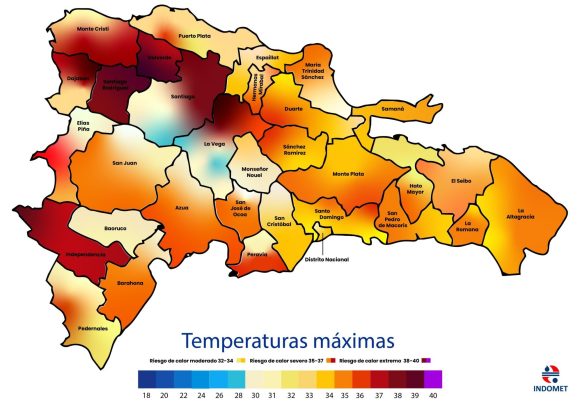
    The Dominican Republic is bracing for an extended stretch of record-breaking intense heat, with official forecasts predicting temperatures and combined heat indexes will climb above 37°C across much of the country through September 22, the Dominican Institute of Meteorology (Indomet) has confirmed. The extreme heat event, classified as ranging from severe to exceptional intensity, will hit the nation’s northwestern region hardest, where the mercury is projected to hold above 37°C for no fewer than three consecutive days.

    Meteorologists have linked this extreme heat event to a combination of overlapping climatic factors: the Dominican Republic’s annual warm seasonal peak, a mass of unusually dry and stable atmospheric conditions, and an incoming plume of Saharan dust that is expected to settle over the region over the weekend. This confluence of conditions has amplified temperatures beyond typical seasonal averages, creating a dangerous public heat risk.

    Data from the U.S. National Oceanic and Atmospheric Administration (NOAA)’s September 16–22 heat risk map aligns with Indomet’s assessments, marking the northwestern Dominican Republic as an area of significant extreme heat risk. Other major regions, including the central, eastern, and southeastern parts of the country, are forecast to face moderate to severe heat hazards through the end of the period. In these areas, temperatures and combined heat indexes will range between 33°C and 37°C, levels that are sufficient to trigger dangerous heat stress for vulnerable populations.

    In response to the looming hazard, Indomet has issued urgent public guidance urging heightened precautions, particularly for people at higher risk of heat-related illness: pregnant people, young children, older adults, and individuals living with chronic underlying health conditions. The institute has outlined clear, actionable steps for residents to stay safe during the heatwave, including maintaining consistent water intake to stay hydrated, wearing lightweight, loose-fitting garments in light, sun-reflective colors, avoiding unprotected exposure to direct sunlight between the peak heat hours of 11 a.m. and 4 p.m., and taking proactive steps to keep companion pets cool and protected from high temperatures. National authorities have additionally advised all residents to curtail extended outdoor activities during the hottest hours of the day to reduce the risk of heat exhaustion or heat stroke as the extreme conditions persist.

  • Dominican Republic to host Dominican Week in France in October

    Dominican Republic to host Dominican Week in France in October

    Starting October 17 through 22, 2026, the Caribbean nation of the Dominican Republic will bring a landmark cross-sector event, Dominican Week in France (SD26), to the heart of Paris. This multi-focal gathering will unite senior government representatives, private business leaders, and global investment stakeholders to advance economic, commercial and cultural connections between the Dominican Republic and France. Coinciding with SIAL Paris 2026, one of the planet’s most prominent food industry trade exhibitions, SD26 is jointly developed by three host institutions: the Dominican Embassy in France, the Dominican Republic’s investment and export promotion agency ProDominicana, and the Franco-Dominican Chamber of Commerce and Industry (CCIFD).

    SD26’s agenda is structured around three core pillars that align with the countries’ shared strategic priorities: economic and trade diplomacy, political and parliamentary exchange, and cultural diplomacy. The initiative builds directly on the momentum of recent high-level diplomatic engagement, growing out of official meetings between Dominican President Luis Abinader and French President Emmanuel Macron that set the stage for deeper bilateral cooperation.

    Three industry-specific forums will lead the economic and investment track of SD26, each targeting a high-growth segment of the Dominican economy. The opening forum, titled “Dominican Republic: Strategic Platform in the Caribbean”, will center the country’s competitive advantages in free trade zones, advanced manufacturing, cross-regional logistics, and untapped investment openings, followed by structured one-on-one business-to-business networking sessions. A second forum, the “Green Light” initiative, will turn focus to renewable energy development and climate-aligned investment opportunities, while the third panel “Digital Dominican Republic” will explore the country’s expanding tech ecosystem, covering emerging innovation, fintech development, and modern cybersecurity strategy.

    Beyond these thematic forums, the event packs a full schedule of commercial engagement activities: tailored B2B matching sessions, a targeted buyer-exporter partnership program for the food and agriculture sector, and a dedicated ProDominicana exhibition pavilion within the SIAL Paris 2026 venue. These components are designed to give Dominican exporters a high-visibility space to showcase their goods to European buyers and forge new long-term commercial partnerships. On the political and diplomatic side, the agenda includes an official working visit to the French National Assembly and collaborative policy working sessions hosted at the Organisation for Economic Co-operation and Development (OECD) headquarters in Paris.

    The cultural track of SD26 will bring Dominican art and creative talent to Paris’ cultural landscape. A major new exhibition, “The Dominican Worlds of José Castillo”, will open at the Maison de l’Amérique Latine, and event organizers will formally launch the Dominican Republic X International Arts City Artist Residency Program to support cross-cultural creative exchange between the two nations.

    Overall, SD26 is positioned as a transformative platform to expand Dominican exports, increase foreign direct investment inflows from France, and broaden bilateral business ties, while growing the country’s profile and market access across the European Union.

  • Port Cabo Rojo named finalist for 2026 Seatrade Cruise Award

    Port Cabo Rojo named finalist for 2026 Seatrade Cruise Award

    The global cruise industry’s prestigious 2026 Seatrade Cruise Awards, one of the sector’s most respected international honors, has named Port Cabo Rojo in Pedernales, Dominican Republic as one of three finalists for the coveted Port of the Year title.

    The Dominican terminal went head-to-head with two established European ports: the United Kingdom’s Portsmouth International Port and Norway’s Skjolden Port. Final judging and the awards ceremony took place on September 16 during the Seatrade Cruise Med industry gathering, hosted this year in Las Palmas de Gran Canaria, Spain. Ultimately, Norway’s Skjolden Port claimed the top prize, with Cabo Rojo and Portsmouth International Port finishing as runners-up.

    The journey to the finals was already a significant achievement for Port Cabo Rojo. Initially, an independent panel of 15 seasoned cruise industry professionals narrowed down more than 20 initial nominees to the three finalists, selecting the Dominican port to advance to the final round. This nomination put the relatively new Pedernales terminal in the same global spotlight as long-standing, well-known European cruise ports, shining a well-deserved spotlight on the rising international profile of Pedernales and the Dominican Republic’s entire southern tourism region.

    Since launching commercial operations, Port Cabo Rojo has emerged as a cornerstone of the Dominican Republic’s strategy to grow tourism in its southwestern region. The terminal has opened Pedernales to entirely new cruise routes, dramatically boosting the destination’s visibility and accessibility across the competitive international cruise market.

    This landmark recognition comes at a time when the Dominican Republic is actively expanding its national port infrastructure and working to diversify its cruise tourism offerings beyond the country’s traditional, well-established cruise hubs. Even though Port Cabo Rojo did not take home the 2026 Port of the Year award, its selection as a finalist stands as a meaningful international validation of the terminal’s rapid development and its growing, transformative role in the Dominican Republic’s burgeoning cruise tourism sector.

  • Dominican Republic returns to top 10 long-haul destinations for French tour operators

    Dominican Republic returns to top 10 long-haul destinations for French tour operators

    After a two-year absence driven by market disruption, the Dominican Republic has earned its way back into the top 10 most popular long-haul destinations for French tour operators, new data from the Syndicat des entreprises du tour-operating (SETO) confirms. The Caribbean nation has recorded a 7% rise in customer volume for the ongoing fiscal year, capping a steady rebound from a sharp 2023 market downturn.

    In 2023, the Dominican Republic tumbled out of the top 10 rankings after major carriers Air France and Corsair paused direct flights to the country, pushing SETO-measured sales down by 22% year-over-year. Signs of a full recovery emerged clearly in 2025, when the destination reported a 35.1% jump in business volume and a 28% rise in customer traffic from the French market. That positive momentum carried into the 2025–2026 winter season, which delivered a 7.7% increase in business volume, followed by the most recent 7% growth in customer numbers that secured the country’s 10th place return to the rankings.

    Industry analysts and tourism leaders attribute the Dominican Republic’s steady rebound to two core factors: expanded air connectivity and targeted marketing engagement with European travel trade. The nation is currently gearing up to participate in IFTM Top Resa 2026, one of Europe’s most influential annual tourism trade exhibitions hosted in Paris, as part of its ongoing push to strengthen its footprint in the French market. Dominican Republic Tourism Minister David Collado noted that the country typically welcomes roughly 220,000 French visitors annually, and consistent participation in major trade shows like IFTM Top Resa has been key to rebuilding traveler awareness.

    Above all, expanded direct air access has been the linchpin of the recovery. Starting November 30, 2026, Air France will increase its direct service between Paris and Punta Cana to three weekly flights operated by Boeing 777 aircraft, expanding options for French travelers seeking direct access to the country’s most popular beach destination. Regional carrier Air Caraïbes already operates regular routes to three key Dominican hubs: Punta Cana, the capital city of Santo Domingo, and the coastal destination of Samaná. To further expand the country’s connectivity across Europe, ITA Airways is also set to launch a new direct route between Rome and Santo Domingo on the same date, opening up additional access for French travelers connecting through Italy.

    Notably, the Dominican Republic’s growth comes against a broader downturn across France’s tour operating sector. SETO’s latest industry report shows that overall customer volume across member tour operators fell by 2.6% in the current period, while total business volume dropped by 1.4%. The Dominican Republic is one of just a handful of top long-haul destinations to record positive growth amid this broader contraction. Egypt leads the recovery among growing destinations with an 18.7% rise in customer volume, followed by the United Kingdom with an 18.1% increase.

    For the Dominican Republic’s tourism sector, the return to SETO’s top 10 rankings underscores a key lesson for small island nations dependent on international tourism: consistent, expanded direct air connectivity is a critical driver of attracting long-haul travelers and rebuilding market share after disruptions. The steady growth trajectory from 2025 to 2026 positions the country to continue expanding its share of the French and broader European tourism markets in coming years.

  • DP World reports 86% survival rate in Boca Chica mangrove restoration

    DP World reports 86% survival rate in Boca Chica mangrove restoration

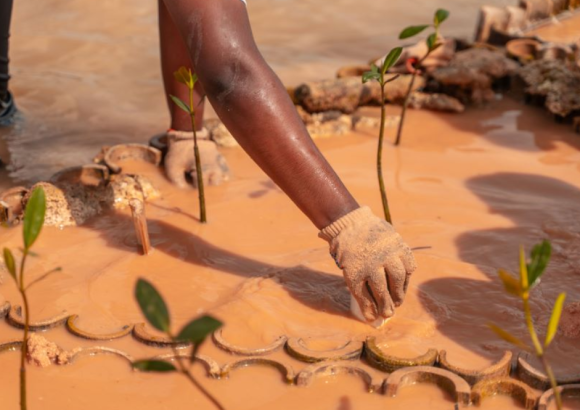
    A year after more than 400 mangrove seedlings were planted in the Boca Chica Reef Lagoon of the Dominican Republic as part of a collaborative coastal restoration initiative, DP World Dominican Republic and the Deep Green Foundation have announced promising early results: an 86% survival rate for the young vegetation. To track the project’s progress and reinforce local conservation efforts, the two partners recently hosted a new volunteer monitoring event, bringing together environmental advocates and technical experts to assess how the young mangroves have adapted to their new habitat.

    During the on-site evaluation, environmental technicians and leadership representatives from both organizations documented key signs of healthy growth. Beyond the high overall survival rate, the team found that 48% of the surviving seedlings have already developed distinct aerial roots – a critical morphological milestone that signals successful long-term adaptation to the coastal wetland environment. Even more encouraging are the early ecological changes already observed in the area: project biologists have confirmed the return of diverse native marine life, including mollusks, crustaceans, and juvenile fish, to the restored mangrove zone. This early recolonization confirms that the growing mangrove forest is already beginning to deliver on its core ecological purpose: providing critical shelter and feeding habitat for local coastal species.

    This on-the-ground restoration work forms a local component of DP World’s global sustainability framework, “Our World, Our Future,” a company-wide strategy centered on preserving critical natural ecosystems and minimizing the environmental footprint of global trade operations. Manuel Martínez, Chief Executive Officer of DP World Dominican Republic, emphasized that meaningful economic progress does not need to come at the cost of environmental health, arguing that the two goals can and must advance hand in hand. Tasha Gough, CEO of the Deep Green Foundation, outlined the long-term vision for the partnership: the organizations aim to plant a total of 1,000 mangrove seedlings across the Boca Chica Reef Lagoon by the end of 2026, expanding the restored habitat and amplifying its ecological benefits.

    Looking ahead, the two partners will continue regular maintenance of the site and carry out periodic technical monitoring to support the mangroves’ ongoing development. Beyond supporting marine biodiversity, the project is designed to deliver tangible coastal resilience benefits: mature mangrove forests improve sediment retention along coastlines, which in turn strengthens natural defenses against storm surges, sea level rise, and other hydrological threats facing low-lying Caribbean coastal communities.

  • Dominicans among top migrant groups arriving in Philadelphia, AP data shows

    Dominicans among top migrant groups arriving in Philadelphia, AP data shows

    A new comprehensive analysis conducted by The Associated Press, drawing from U.S. federal immigration records obtained via a Freedom of Information Act request, has uncovered shifting patterns in migration destinations and demographics across the United States, with Philadelphia emerging as an unexpected major hub for new arrivals. The dataset examined by AP tracks roughly 4.5 million migrants who crossed the U.S.-Mexico southern border and were released into the country between October 2018 and July 2025, capturing self-reported intended destinations, nationality, age, gender, and other key personal details.

    Unlike historic migration trends that concentrated new arrivals in longstanding gateway cities such as New York and Miami, the analysis reveals that the ongoing national migration surge is spreading outward to smaller urban centers and mid-sized communities across the country. Philadelphia stands out as one of the primary cities attracting migrants from an extraordinarily diverse set of national origins. At least 11 different countries have recorded 1,000 or more new arrivals intending to settle in the city, with Dominicans making up one of the largest groups, trailing only Brazil and Haiti in total arrivals. Significant numbers of migrants from Venezuela and Russia have also relocated to Philadelphia, while the broader Philadelphia metropolitan area has welcomed more than 1,000 new arrivals from Georgia in the same period.

    Beyond shifting destination patterns, the data highlights a striking demographic shift reshaping modern U.S. migration. For the first time in recent history, women and children make up nearly 60 percent of all migrants released into the country after crossing the southern border — a sharp reversal from earlier eras where working-age men represented the clear majority of new arrivals.

    AP researchers did note an important limitation to the data: the intended destinations provided by migrants upon entry are not officially verified by authorities, meaning some of those recorded as planning to settle in Philadelphia may have since relocated to other parts of the U.S., departed the country, or been deported. Even with this caveat, the detailed records offer an unprecedented clear snapshot of how the ongoing migration surge is redefining demographic and community landscapes across the United States, including Philadelphia, where the Dominican community is rapidly growing.

  • Abinader tours Cibao Airport expansion as first phase reaches 90% completion

    Abinader tours Cibao Airport expansion as first phase reaches 90% completion

    Dominican Republic President Luis Abinader recently conducted an on-site inspection of the ongoing expansion and modernization initiative at Cibao International Airport, located in the country’s northern city of Santiago. During his tour of the new terminal construction site, senior airport leadership walked the president through every key detail of the project, from its cutting-edge architectural design to current construction milestones and the full scope of work already delivered.

    In remarks following the site briefing, Abinader emphasized the outsized strategic role the airport already plays in linking the economically vital Cibao region to global markets and travel routes, especially high-demand travel corridors connecting to major metropolitan centers across the United States. The head of state noted that the comprehensive upgrade will not only boost the facility’s total passenger throughput but also act as a foundational catalyst for long-term tourism growth and broad-based economic development across the entire northern region of the country.

    Once fully completed, the new terminal is projected to double the airport’s current annual passenger capacity of roughly 2.3 million travelers, a jump that will dramatically strengthen air connectivity out of Santiago. The first phase of the multi-stage project carries a total investment price tag of more than $200 million U.S. dollars. According to Teófilo Gómez, the administrator of Cibao International Airport, structural construction for this initial phase is already 90% finished, putting the initiative solidly on schedule to meet its mid-2027 completion deadline.

    Gómez added that the expansion will meaningfully boost the airport’s overall operational capacity, allowing the facility to accommodate the steady growth in passenger demand that the region has recorded in recent years. Abinader’s site visit was joined by members of the airport’s board of directors, senior operational leadership, and senior representatives from the Dominican Republic’s national aviation sector. Stakeholders broadly expect that once finished, the expansion will cement Santiago’s standing as a critical air travel hub for the Dominican Republic’s northern region and create the infrastructure needed to support continuing growth in both tourism and overall passenger traffic for years to come.

  • Finance Minister: Cost of royal visit is still being worked out

    Finance Minister: Cost of royal visit is still being worked out

    As The Bahamas prepares to welcome King Charles III and Queen Camilla for their first visit to the island nation since Charles ascended to the British throne in 2022, Bahamian officials remain unable to disclose how much public money will be spent on the trip, igniting fresh debate over the constitutional role of the monarchy and calls for reparations for colonial-era harms.

    Finance Minister Michael Halkitis confirmed last week that interagency working groups are still calculating the total financial burden of the royal tour, scheduled to take place between October 27 and November 4 as part of a broader Caribbean trip that will also include stops in Guyana and Antigua and Barbuda, where the monarch will attend the Commonwealth Heads of Government Meeting. While Halkitis confirmed a cost-sharing agreement is in place between the Bahamian government and the United Kingdom’s Sovereign Grant, which funds official royal duties, he said no final figures have been submitted for cabinet review.

    “I can’t put any numbers to it,” Halkitis told reporters. “I understand that the various agencies are meeting, the Ministry of Finance and some of the other agencies are meeting. I’ll get a report on what it is… When we get that information, we’ll share it.”

    Unlike visits from heads of state of foreign countries, this tour carries unique constitutional weight: King Charles remains the official Head of State of The Bahamas, a Commonwealth realm that gained independence from the United Kingdom in 1973 but retains the British monarch as its ceremonial head of government. This marks Charles’ second official trip to The Bahamas, and his first since succeeding his mother Queen Elizabeth II following her death in September 2022.

    The lack of transparency around costs has fueled online speculation and drawn sharp criticism from the Bahamas National Reparations Committee, which is organizing advocacy for reparations to address the harms of British chattel slavery and colonial rule in the country. The committee argues that requiring Bahamian taxpayers to cover any portion of the royal visit’s cost is unacceptable amid ongoing calls for the country to transition to a republican system of government that cuts formal ties to the British monarchy.

    “The time is now for reparations. The time is now for the republic,” the committee said in a statement. “And the time is long past for our governments to stop preparing this country for guests and then hand us the bill.”

    Public discussion around the upcoming visit has drawn comparisons to the 2022 royal tour of The Bahamas by Prince William and Catherine, Princess of Wales, held to mark Queen Elizabeth II’s Platinum Jubilee. For that trip, the Bahamian government earmarked $636,194 in public funds to cover event costs. Budget breakdowns from that tour showed most of the public funding went to local vendors and businesses on New Providence, with additional allocations covering accommodation for the royal party, security provisions, digital infrastructure upgrades for local schools, the official royal ball, a commemorative regatta, and charter flights on national carrier Bahamasair between the country’s major islands.

  • Pintard demands answers over more than $400m

    Pintard demands answers over more than $400m

    A growing political controversy over public fund management has intensified in the Bahamas, as opposition leader Michael Pintard is demanding full transparency from the current administration over more than $400 million in unaccounted funds allocated to the country’s National Investment Fund (NIF).

    The government previously disclosed that it transferred roughly $700 million in excess borrowing proceeds into the NIF, a dedicated vehicle for infrastructure and national development projects. During a recent address to Parliament, Finance Minister Michael Halkitis outlined how $310.9 million of the total funds had been allocated to public infrastructure projects: $210.6 million went toward general building and road upgrades, while an additional $100.3 million was earmarked for aviation infrastructure improvements.

    What Halkitis did not address, Pintard argues, is the fate of the remaining $400 million that the government itself confirmed was moved into the fund. In his remarks to reporters, Pintard pushed the administration to release a full line-item breakdown of all NIF transactions and disclose the exact banking location of the unaccounted funds. “Rather than be distracted by the minister speaking about all of the projects that they are working on, we want to first start this discussion with where is the money? Account for the 700 million. Which account is it on?” Pintard said.

    Questions about the fund’s legitimacy deepened after Central Bank Governor John Rolle confirmed a key, troubling detail: despite the existence of an NIF-named account held at the Central Bank, the NIF’s legally mandated Board of Governors has never formally convened. Under the existing National Investment Funds Act, a board of governors is required to oversee the fund’s management, governance, and spending activities.

    To address this gap, Halkitis told Parliament that the Ministry of Finance has been administering NIF funds through the ministry and the national Treasury, under the framework of the Public Finance Management Act, while permanent governance structures for the NIF were being finalized. He added that the government sought formal legal guidance from the Office of the Attorney General to clarify how the Public Finance Management Act, the National Investment Funds Act, and Parliament’s official borrowing authority intersect in this scenario. Halkitis also confirmed that Parliament authorized up to $300 million in borrowing for the NIF in March 2025, and that the NIF’s Board of Directors was officially appointed effective June 30, 2025, though the government has acknowledged that some governance frameworks remain incomplete.

    This explanation has done little to ease opposition concerns, with Pintard rejecting the administration’s justification and accusing the government of operating outside the legal parameters laid out in NIF legislation. “His legal basis for moving millions of dollars out of the National Investment Fund was not the National Investment Act,” Pintard said. “They did not follow the law.” Pintard argues that the funds have been held directly by the Ministry of Finance without the independent oversight required under the NIF’s founding law, creating two alarming possibilities: either NIF resources were managed in violation of existing legislation, or the funds are being held in a separate Ministry of Finance account entirely outside the NIF structure. If the latter is true, Pintard noted, new questions emerge about how these transactions have been recorded in the government’s official fiscal accounts.

    In response to the growing lack of clarity, Pintard announced that the opposition-controlled Public Accounts Committee (PAC) has approved a formal investigation into the NIF, with the national Treasurer expected to be called to testify as early as next week. The opposition is pursuing multiple avenues to secure full disclosure, Pintard confirmed, including the PAC probe and potential future court action if necessary. “We will go to court at the appropriate time once we are armed with the right advice,” he said.

    Pintard pushed back against criticism that the opposition failed to aggressively question the government during the recent parliamentary sitting, noting that the PAC probe provides a formal, structured mechanism to thoroughly scrutinize all NIF transactions. For his part, Halkitis has stated that the government will fully cooperate with the committee’s investigation. Pintard emphasized that the opposition does not oppose the infrastructure projects the government has outlined, but insists on full accountability for how public funds are handled. “What we do not believe is that he’s giving a proper explanation on where the money came from and by what rules did he apply those money to those projects,” Pintard added.