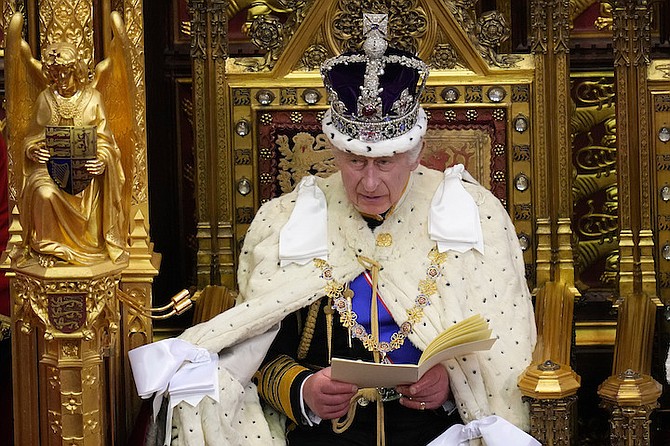
As The Bahamas prepares to welcome King Charles III and Queen Camilla for their first visit to the island nation since Charles ascended to the British throne in 2022, Bahamian officials remain unable to disclose how much public money will be spent on the trip, igniting fresh debate over the constitutional role of the monarchy and calls for reparations for colonial-era harms.
Finance Minister Michael Halkitis confirmed last week that interagency working groups are still calculating the total financial burden of the royal tour, scheduled to take place between October 27 and November 4 as part of a broader Caribbean trip that will also include stops in Guyana and Antigua and Barbuda, where the monarch will attend the Commonwealth Heads of Government Meeting. While Halkitis confirmed a cost-sharing agreement is in place between the Bahamian government and the United Kingdom’s Sovereign Grant, which funds official royal duties, he said no final figures have been submitted for cabinet review.
“I can’t put any numbers to it,” Halkitis told reporters. “I understand that the various agencies are meeting, the Ministry of Finance and some of the other agencies are meeting. I’ll get a report on what it is… When we get that information, we’ll share it.”
Unlike visits from heads of state of foreign countries, this tour carries unique constitutional weight: King Charles remains the official Head of State of The Bahamas, a Commonwealth realm that gained independence from the United Kingdom in 1973 but retains the British monarch as its ceremonial head of government. This marks Charles’ second official trip to The Bahamas, and his first since succeeding his mother Queen Elizabeth II following her death in September 2022.
The lack of transparency around costs has fueled online speculation and drawn sharp criticism from the Bahamas National Reparations Committee, which is organizing advocacy for reparations to address the harms of British chattel slavery and colonial rule in the country. The committee argues that requiring Bahamian taxpayers to cover any portion of the royal visit’s cost is unacceptable amid ongoing calls for the country to transition to a republican system of government that cuts formal ties to the British monarchy.
“The time is now for reparations. The time is now for the republic,” the committee said in a statement. “And the time is long past for our governments to stop preparing this country for guests and then hand us the bill.”
Public discussion around the upcoming visit has drawn comparisons to the 2022 royal tour of The Bahamas by Prince William and Catherine, Princess of Wales, held to mark Queen Elizabeth II’s Platinum Jubilee. For that trip, the Bahamian government earmarked $636,194 in public funds to cover event costs. Budget breakdowns from that tour showed most of the public funding went to local vendors and businesses on New Providence, with additional allocations covering accommodation for the royal party, security provisions, digital infrastructure upgrades for local schools, the official royal ball, a commemorative regatta, and charter flights on national carrier Bahamasair between the country’s major islands.